Buyer Fit Snapshot
| Best fit | Poly Mailers Supplier projects where brand print, material claims, artwork control, MOQ, and repeat-order consistency need to be specified before quoting. |
|---|---|
| Quote inputs | Share finished size, material target, print colors, finish, packing count, annual reorder estimate, ship-to region, and any compliance wording. |
| Proofing check | Approve dieline scale, logo placement, barcode or warning zones, color tolerance, closure strength, and carton packing before bulk production. |
| Main risk | Vague material claims, crowded artwork, missing packing details, or unclear freight terms can make a low unit price expensive after revisions. |
Fast answer: Poly Mailers Supplier: Material, Print, Proofing, and Reorder Risk should be specified like a repeatable production item. The safest quote records material, print method, finish, artwork proof, packing count, and reorder notes in one written spec.
Production checks before approval
Compare the actual filled-product size with the drawing, then confirm tolerance on folds, seals, hang holes, label areas, and retail display edges. Reserve space for logos, QR codes, warning copy, and material claims before decorative graphics fill the panel.
Quote comparison points
Review material grade, print process, finish, sampling route, tooling charges, carton quantity, and freight assumptions side by side. A quote is only useful when the supplier can repeat the same color, closure quality, and packing count on the next order.
I’ve walked enough warehouse aisles to know this: a lot of shipping delays don’t start in the software, they start with a bad mailer choice, a weak adhesive strip, or a supplier that promised “just fine” and delivered cartons that split on the stretch-wrap line. That’s why a practical poly mailers supplier guide matters so much for apparel brands, subscription boxes, and any operation shipping soft goods by the thousands. I remember one especially miserable Monday in a Newark, New Jersey facility where the team had to rework half a pallet because the flap adhesive failed once the cartons sat near a drafty dock door overnight at about 38°F. Nobody was thrilled. Least of all the freight coordinator, who looked like he had aged six years before lunch.
In my experience, the supplier you choose affects far more than unit cost. It affects seal strength, print consistency, line speed, damage rates, and the way your customer sees your brand the second that package hits the doorstep. I’ve seen a 0.5 mil thickness change save a client from 3% returns on lightweight knitwear, and I’ve also watched a “cheap” mailer turn into expensive rework because the adhesive failed in a cold loading dock in Chicago, Illinois. A solid poly mailers supplier guide should help you avoid those mistakes before the purchase order is signed. Honestly, I think packaging buyers get stuck on the quote screen too long and forget the whole point is to move product without creating a small disaster in the warehouse.
Poly Mailers Supplier Guide: What They Are and Why They Matter
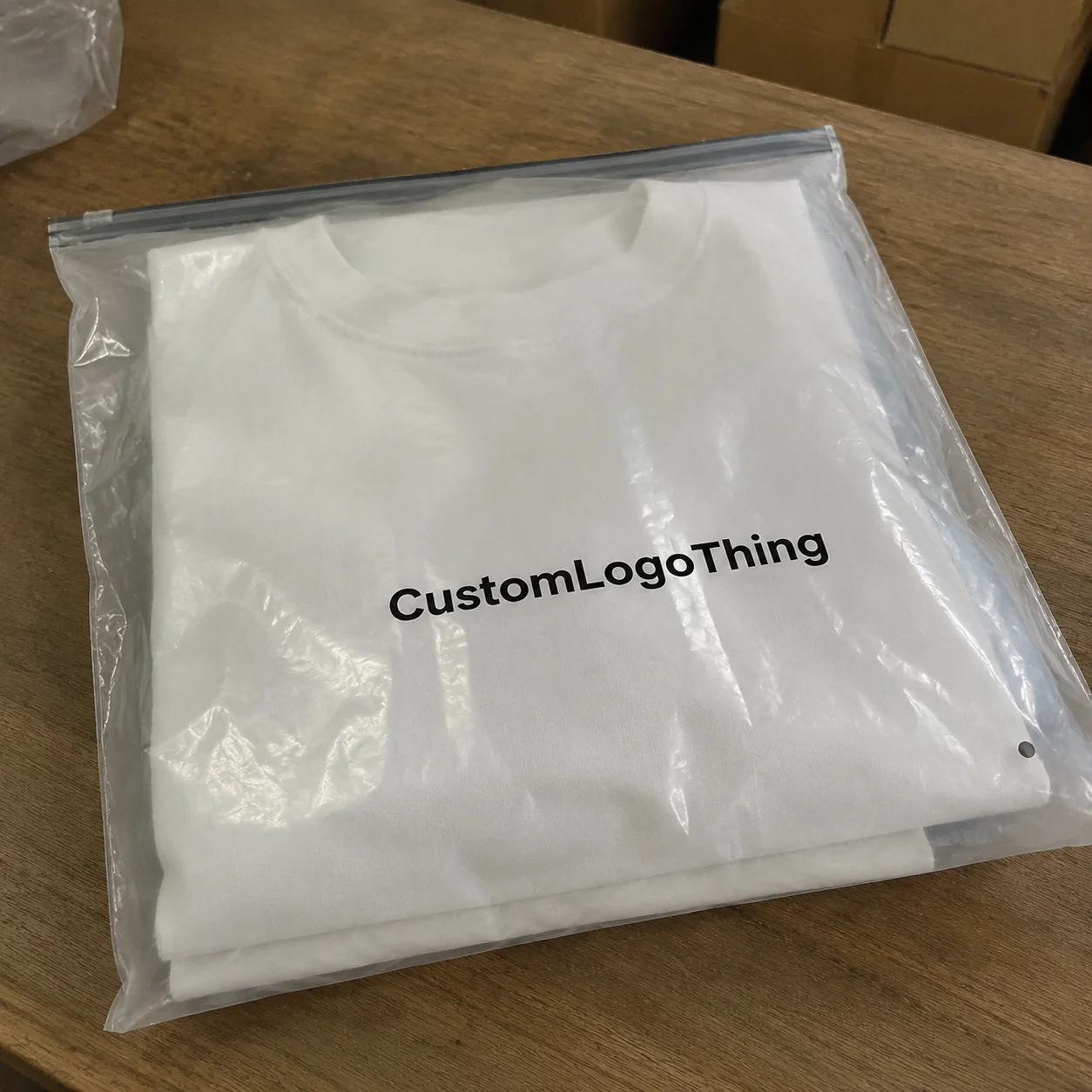
Poly mailers are lightweight, flexible shipping bags made from polyethylene film, usually LDPE, LLDPE, or a co-extruded blend. They’re the workhorse for non-fragile e-commerce items like T-shirts, leggings, socks, scarves, and small accessories, because they take up very little space, weigh almost nothing, and move quickly through packing stations. A good poly mailers supplier guide starts here, because if you don’t understand the product category, it’s hard to compare suppliers fairly. I’ve always thought poly mailers are the quiet heroes of apparel fulfillment; nobody gets excited about them until a box of cartons starts tearing open like a bad joke.
The reason supplier quality matters goes well beyond the sticker price. Seal strength determines whether the bag survives conveyor handling, especially on a 45-foot belt run or a 90-degree transfer. Film thickness influences puncture resistance and opacity. Print clarity affects how premium your brand looks on arrival. Even small variations in cut accuracy can cause a mailer to be awkward on the pack line, and that slows people down in a way software never shows on a dashboard. Honestly, I think many buyers underestimate how much a mailer can influence the whole fulfillment rhythm. A bag that feeds badly can make a smooth operation feel like everyone is suddenly packing with oven mitts on.
I still remember standing on a contract pack-out line in Secaucus, New Jersey where the team was stuffing 8,000 units a day into glossy black mailers. The film looked great, but the adhesive strip was inconsistent in winter, and pallets that sat near the dock lost seal integrity before they left the building. The manager kept blaming the picker team, but the real issue was the mailer spec. That’s the kind of thing a practical poly mailers supplier guide should help you spot early.
Think of the supplier as a production partner, not just a vendor. The good ones understand extrusion, printing, slitting, converting, carton packing, and even how finished cartons behave in humid warehouses in Guangdong, Jiangsu, or Dongguan. They’ll ask about your monthly volume, your SKU mix, and whether your packers use hand insertion or semi-automatic mailer openers. That level of detail is the difference between a quote that looks nice and a supply relationship that actually holds up. The great suppliers I’ve dealt with in Guangzhou and Suzhou never started with price; they started with questions that made me realize they had probably seen every packing mistake under the sun already.
For buyers comparing Custom Poly Mailers, the rest of this poly mailers supplier guide will help you sort through Specs, Pricing, Timing, and quality checks without getting lost in sales language. We’ll cover what they are, how they’re made, which features matter, where the hidden costs sit, and how to choose a partner who can keep pace when your orders jump from 5,000 to 50,000 pieces.
How Poly Mailers Work in Real Shipping Operations
A standard poly mailer is a simple structure, but there’s real engineering behind the simplicity. Most use a single-layer or co-extruded polyethylene film, then a heat-sealed bottom and side seam, a peel-and-seal adhesive flap, and sometimes a tear notch, tear strip, or second adhesive strip for returns. A well-built mailer opens cleanly, seals with firm pressure, and survives a transit cycle without splitting at the corners. The humble part of that sentence is deceptive; I’ve watched a “simple” mailer cause enough aggravation to fill an afternoon with angry phone calls and one very tired operations manager.
The manufacturing flow is straightforward on paper and more demanding in practice. Resin pellets are melted and extruded into film, the film is cooled and wound, artwork is printed by flexographic, gravure, or digital methods, then the rolls are slit, formed into bags, sealed, inspected, counted, and packed into master cartons. At a plant I toured in Shenzhen, the biggest quality difference came not from the printer, but from how carefully the converting crew controlled the seal temperature at the bag-forming stage. A 5 to 8 degree swing made a visible difference in seal consistency. I still think about that line every time someone tells me “it’s just a plastic bag,” because, no, it really isn’t.
In warehouse operations, poly mailers earn their keep by speeding up the last mile. They’re easy to load, don’t add much tare weight, and shrink the carton footprint compared with folding cartons or rigid mailers. That means lower dimensional weight in some carrier models, fewer bulk storage pallets in the back room, and better handling on conveyors that don’t appreciate bulky packages. For brands shipping apparel, that efficiency can free up a surprising amount of dock space. And if you’ve ever tried to squeeze one more pallet into an already packed staging lane in a 20,000-square-foot warehouse, you know how valuable that extra space can feel.
Barrier properties also matter. A decent polyethylene mailer protects garments, accessories, and other soft goods from dust, light moisture, and incidental scuffing during transit. It won’t replace a rigid box when crush resistance is needed, but for products like hoodies, yoga pants, or soft home textiles, it often does exactly what you need with less material and lower shipping weight. That’s why a strong poly mailers supplier guide always ties product choice to the actual use case, not just the catalog photo. The catalog photo is usually smiling at you under perfect studio lights; the actual warehouse floor is less photogenic and considerably less forgiving.
There are plenty of times when poly mailers are the wrong answer. If you’re shipping fragile glass, framed goods, liquid-filled items, or anything that needs crush protection, a mailer alone is usually a bad idea. I’ve also seen overstuffed mailers fail at the seal line because the product stack was too thick and the flap had no clean surface to bite onto. That’s not a mailer problem; that’s a specification problem. And yes, I have seen people argue with a package as if volume alone would negotiate a better outcome (it won’t).
“The mailer that looks cheapest on paper is often the one that costs you the most in labor, damage claims, and customer complaints.”
Key Factors to Compare in a Poly Mailers Supplier Guide
If you want a useful poly mailers supplier guide, start with the specs that actually affect performance. Thickness, print method, closure style, sizing, and quality control should carry far more weight than a low quote that doesn’t tell you what you’re really getting. The trick is to compare like with like, because a 2.5 mil mailer and a 1.8 mil mailer are not direct substitutes even if the artwork looks identical. I’ve sat through quote reviews where everyone nodded at the numbers, then quietly discovered later that one supplier was quoting a completely different film build. That sort of thing makes me want to crawl under the conference table.
Material thickness and film structure
Thickness is often measured in mils, and it directly affects strength, puncture resistance, and opacity. A 1.5 mil mailer may be enough for lightweight tees, but heavier fleece or items with zippers often need 2.0 to 2.5 mil or more, depending on how sharp the edges are. Co-extruded structures can also improve durability and printability, especially if you need one side to carry branding while the other side focuses on tear resistance. On a run I reviewed in Dongguan, a 2.2 mil co-ex film held up far better than a 1.7 mil single-layer bag once cartons were stacked six high on a humid loading dock.
I’ve seen buyers insist on the thinnest possible bag to save a few tenths of a cent, only to discover that the bags wrinkle badly, show contents through the film, or split during carton loading. That’s false economy. A thoughtful poly mailers supplier guide should make it clear that the “right” thickness is the one that survives your actual packing and carrier conditions, not the one that wins a spreadsheet contest by a fraction. Honestly, if a mailer savings plan depends on hoping nobody notices the seam popping open, it is not a savings plan, it’s a future headache.
Printing method and branding quality
Flexographic printing is common for longer runs because setup is efficient once the plates are made, and it handles solid brand colors very well. Gravure can produce crisp, repeatable results for high-volume work, though setup costs are higher and lead times can stretch. Digital printing is useful for shorter runs, variable artwork, or multiple SKUs, but unit cost usually sits higher. Each method changes not just cost, but also the lead time, proofing cycle, and the kind of artwork that reproduces cleanly. If you’ve ever waited on a plate correction because someone spotted a typo after the ink had already been approved, you know exactly why I say the proof stage deserves real respect.
Ask whether the supplier can hold Pantone targets and whether they use a densitometer or other color control system. A supplier who says “close enough” about brand colors may create a visible mismatch across reorders. In one supplier meeting, I watched a brand team reject 40,000 mailers because the navy print shifted toward purple under store lighting in a Dallas showroom. That wasn’t a design problem; it was a process-control problem. And the look on the merchandiser’s face said everything—equal parts disbelief and the kind of quiet rage that probably kept the entire plant from taking a lunch break.
Sizing, fit, and closure details
A mailer should fit the product with enough room for insertion, fold allowance, and adhesive closure, but not so much room that the item sloshes around inside. I usually want buyers to think in terms of product dimensions plus at least 1 to 2 inches of useful sealing space, with extra room if the item has seams, hang tags, or polybags inside. If you need one size to cover several SKUs, test the largest and the smallest products before committing to an order. A 10 x 13 inch mailer may work beautifully for folded tees, while a 12 x 15.5 inch format may be the safer choice for bulkier knits or multi-item sets.
Closure options matter too. Permanent peel-and-seal adhesive is standard. Tamper-evident seals help with higher-value goods. Dual adhesive strips can support returns, which is useful for apparel brands trying to simplify reverse logistics. Tear notches and tear strips add convenience, but they also require tighter manufacturing control. Every feature should earn its place, because every feature adds some cost or complexity. I’m a big fan of features that solve a real problem, and a big skeptic of features added because somebody in a meeting said “customers like options” without checking whether customers actually asked for that option.
Quality, consistency, and compliance
Good suppliers should speak plainly about quality control. That includes seal integrity checks, visual print inspection, dimensional tolerances, and sometimes drop or burst testing. For brand and sustainability claims, ask about recycled content, resin source, and whether the factory can document FSC-related paper inserts or supporting packaging materials where relevant. For general packaging standards, organizations like the Institute of Packaging Professionals and the International Safe Transit Association are good references for broader transit and pack-testing thinking. A factory in Foshan that can show sealed sample records from a 200-piece QC pull is usually far easier to trust than one that waves off documentation altogether.
Honestly, the best poly mailers supplier guide mindset is to treat quality as measurable. If a supplier cannot tell you their tolerance on width, seam position, print registration, or adhesive placement, that’s a red flag. Even a small 2 or 3 mm drift can create packing headaches at scale. I’ve watched a line supervisor try to “just make it work” with off-spec seams, and by the end of the shift the whole team was moving like they had been asked to assemble puzzles with missing pieces.
If sustainability is part of your brief, ask whether recycled-content resin is post-industrial, post-consumer, or blended. Those terms matter, and so do local regulations and customer expectations. For environmental context, the EPA recycling guidance is a helpful starting point, though the exact acceptance rules for polyethylene mailers depend on local collection systems and whether the material is clean and dry. That “clean and dry” detail seems tiny until someone tries to recycle a contaminated batch and everyone gets annoyed by the bins, the sorting line, and the memo nobody wanted to write.
Poly Mailers Supplier Guide: Pricing, MOQ, and Hidden Cost Drivers
Pricing in a poly mailers supplier guide needs more than a single unit rate, because the real cost is built from several layers: resin, extrusion, printing, plate charges, bag converting, carton packing, and freight. I’ve sat in enough procurement meetings to know that the cheapest quote often hides the highest total spend once the cartons land at the dock. I’ve seen a buyer celebrate saving a penny a unit, only to spend the next month paying extra freight because the bag size bumped pallet counts out of whack. That kind of “savings” always ages badly.
The biggest cost driver is usually resin. When resin prices shift, mailer pricing shifts with them, especially on thicker films or larger bags that use more raw material per unit. Print setup also matters. A simple one-color logo is much easier to produce than a six-color full-bleed design with metallic ink, fine type, and multiple proof rounds. If your artwork changes often, expect more proofing labor and more setup effort. Flexo shops in particular can be very efficient once the plates are set, but getting there requires patience, accuracy, and a steady hand with the art files.
MOQ, or minimum order quantity, affects price in a very direct way. A 5,000-piece run usually carries a much higher per-unit cost than a 50,000-piece run because the setup burden gets spread across fewer bags. On one custom project, a client wanted 3,000 mailers with four print colors, a matte finish, and return-strip functionality. The final unit cost was almost double what they expected, not because the supplier was overcharging, but because each option added labor and material waste. I’m not saying custom packaging should be boring—I’m just saying the laws of production tend to be rude about it.
Hidden costs show up in the details. Carton size, for example, can change freight efficiency. A wider bag may fit fewer cartons per pallet, which raises transport cost. Extra proof cycles can add time and sometimes fees. Imported product may look attractive on paper, but ocean freight from Ningbo to Los Angeles, customs handling, and inland transport can erase a few cents of advantage fast. This is exactly why a good poly mailers supplier guide should push buyers to ask for landed cost, not just ex-works or factory price.
| Option | Typical Price Range | Best For | Tradeoff |
|---|---|---|---|
| 1-color standard mailer, 2.0 mil, 5,000 pcs | $0.12 to $0.18/unit | Simple apparel shipping | Lower print complexity, limited branding detail |
| Custom 2-3 color mailer, 2.5 mil, 10,000 pcs | $0.16 to $0.28/unit | Branded e-commerce orders | Higher setup and proofing cost |
| Returnable mailer with dual adhesive, 2.5 mil, 10,000 pcs | $0.22 to $0.35/unit | Fashion and exchanges | More material and converting steps |
| Short-run digital custom mailer, 3,000 pcs | $0.28 to $0.55/unit | Seasonal launches, small brands | Higher unit price, lower MOQ |
Those ranges are directional, not a promise, because bag size, thickness, artwork coverage, resin type, and shipping lane can move the number in either direction. Still, they give you a real starting point for discussions with a supplier. A practical poly mailers supplier guide should help you compare quotes on the same basis: same dimensions, same film gauge, same print count, same pack count, same destination. If one supplier is comparing apples to oranges and calling it a market quote, I’d keep my eyebrows raised.
If you’re buying through Custom Packaging Products or sourcing directly for a private-label program, ask every supplier to show the cost breakdown in writing. Resin, setup, printing, packaging, inspection, and freight should all be visible. If one quote is 18% lower and the supplier can’t explain why, dig deeper before you commit. That is usually the point where a “great deal” starts acting suspiciously like a future apology.
What Should You Ask in a Poly Mailers Supplier Guide?
A practical poly mailers supplier guide should give you a set of questions that expose the real differences between suppliers, not just their polished sales decks. Ask what resin grade they use, how they control seal temperature, what their dimensional tolerance is, how many bags they pack per carton, and whether they can provide a production sample before the full run. If you’re shipping into multiple regions, ask whether the mailers have been tested for colder docks, humid storage, or rough conveyor handling. I’ve seen one good question about dock temperature uncover an adhesive issue that would have cost a client weeks of rework.
You should also ask how the factory handles artwork verification. Does the team check barcodes, registration marks, and Pantone targets before printing? Do they send a digital proof, a pre-production sample, or both? A supplier with a clear proofing process usually has fewer surprises downstream. In one factory visit near Suzhou, I watched the prepress team catch a seam alignment issue before the printer even warmed up, and that kind of discipline is exactly what you want behind a recurring order.
Another useful question: what happens if the first production batch misses spec? A reliable supplier can describe their corrective-action process without hesitation. They should be able to explain whether off-spec goods are reworked, scrapped, or replaced, and what documentation you’ll receive. If the answer sounds vague, that’s a warning sign. A solid poly mailers supplier guide is not just about buying well; it’s about knowing how the supplier behaves when something goes wrong.
Finally, ask who will be your day-to-day contact after the order is placed. A responsive account manager can save days of email chasing, especially if your packaging calendar is tight or your freight window is fixed. I’ve worked with suppliers where one person handled quoting and another handled production, and the handoff was clean enough to keep the whole project moving. I’ve also worked with suppliers where nobody seemed quite sure who owned the file, and those days tend to become very long very quickly.
Step-by-Step Process: From Sample Request to Final Production
A good poly mailers supplier guide should make the buying process feel manageable, because the sequence is usually predictable when the supplier is organized. I like to break it into five stages: define the brief, test samples, approve artwork, lock the production proof, and track the run through inspection and shipment. The process sounds orderly, and with a competent supplier it usually is. With the wrong supplier, it can turn into a scavenger hunt for missing artwork files and mysterious delays (my personal favorite kind of not-fun).
Step 1: Define the brief
Start with product dimensions, weight, monthly volume, shipping method, and branding goals. Are you shipping a 6 oz T-shirt or a 3 lb hoodie? Are you packing by hand, with a small team, or in a semi-automated line with scanners and conveyor belts? Do you need a plain mailer, a branded mailer, or a returnable format with a second adhesive strip? The more specific the brief, the better the quote. A supplier quoting from a factory in Dongguan or Xiamen can only be as precise as the numbers you give them.
Step 2: Request samples and test them in real conditions
Never judge a sample only by holding it in your office. Put it on the same worktable, in the same room temperature, with the same product and fold pattern you use in production. I once watched a retailer approve a mailer because it felt “tough” by hand, then reject the production run after the warehouse team showed that the adhesive failed when the bags were packed in a cooler dock area near 40°F. Real tests beat impressions every time.
A strong poly mailers supplier guide should push you to run at least 20 to 30 test packs with the actual SKU. Check insertion speed, adhesive grab, slip resistance, and how the sealed bag holds up after a small drop from waist height. If your carrier uses rough handling or long transfer lanes, that test becomes even more useful. I’d also recommend having at least one packer who is not “the most patient person in the room” try the samples, because the real world rarely sends you your best employee under ideal conditions.
Step 3: Review artwork files carefully
Confirm Pantone targets, resolution, bleed, safe area, and print orientation before anything goes to plate or press. If the artwork includes fine legal text, barcodes, or QR codes, test readability at actual size. I’ve seen beautiful packaging designs ruined because a barcode was placed too close to a seam and stopped scanning once the mailer was folded.
Ask for a digital mockup or pre-production proof. Good suppliers will also confirm whether the print is on the front, back, or both sides, and whether the white underlay is required for dark films. That detail matters a lot when you’re printing on black, kraft-look, or high-opacity films. If the supplier shrugs and says the press team will “figure it out,” that is usually the moment to start asking sharper questions.
Step 4: Approve carton counts, pack configuration, and timeline
Before production starts, confirm how many bags per carton, carton dimensions, pallet counts, and target ship date. A supplier that knows its process will give you something like “12 to 15 business days from proof approval” for standard custom runs, though complex artwork or busy seasons can add time. That’s the kind of specificity buyers need when launch dates are already tight, especially if freight is moving out of a factory near Shenzhen or Shanghai.
Step 5: Track production milestones
The best factories will keep you informed through material sourcing, printing, sealing, QC inspection, pack-out, and dispatch. On a visit to a Guangdong converting facility, I saw how much that discipline mattered: a QC checkpoint after sealing caught a batch with slightly offset seams before the cartons were closed. That saved a 20,000-piece repeat order from becoming a customer complaint. I still remember the QC lead smiling with the kind of relief that only exists after a problem gets caught while it is still cheap.
When you’re working with Custom Poly Mailers, this step-by-step approach reduces surprises and makes reorder planning much easier. That’s the practical heart of a good poly mailers supplier guide: fewer assumptions, more written details. Nobody ever regretted having one more line item confirmed before the truck left the dock.
Common Mistakes When Choosing a Poly Mailers Supplier
The most expensive mistake is buying only on price. I know that sounds obvious, but I still see it constantly. A buyer gets a quote that is two cents lower, skips the sample test, and ends up with thin film, weak adhesive, or inconsistent print registration that makes the brand look careless. A strong poly mailers supplier guide should remind you that packaging is part of the product experience, not just a shipping accessory. Customers may never compliment your mailer, but they absolutely notice when it fails.
Another common mistake is ignoring warehouse testing. A mailer that looks fine on a sample table may be too slippery for gloved hands, too narrow for folded sweatshirts, or too brittle in a cold storage room. I’ve seen operations try to force a mailer that was 15 mm too tight, and the packers ended up slowing down while the adhesive flap fought them on every third bag. That kind of friction turns a decent shift into a long, grumpy one, and nobody needs that before lunch.
Buyers also forget to ask about resin type. Virgin resin, recycled content, and blended films can all behave differently. Recycled content can be perfectly suitable, but it may affect opacity, softness, or seal behavior depending on the formulation. That’s not a reason to avoid it; it’s a reason to specify it carefully. A supplier who can explain the formulation without dodging the question usually deserves a closer look.
Lead times cause trouble too. Proof approval cycles, artwork revisions, and freight booking all add time, especially on overseas orders from ports like Yantian or Ningbo. If you wait until the week before a launch to start sampling, you’re setting yourself up for rush charges or a compromise. I tell clients to treat mailers like any other production item: build the calendar backwards from the ship date, not forwards from the quote date. It sounds simple because it is, and it still gets ignored more often than I’d like.
One more mistake: failing to ask about QC standards. A supplier should be able to talk about burst checks, seal checks, visual inspection, and accepted tolerances without sounding evasive. If they cannot explain what gets rejected and why, that’s a risk. The best poly mailers supplier guide advice I can give is simple: ask for the inspection logic before you ask for the discount. Discounts are nice; fewer surprises are nicer.
Expert Tips for Choosing the Best Poly Mailers Supplier
Look for a supplier who can explain its factory setup in practical terms. I want to hear about the extrusion line, the printing presses, the converting area, the packing tables, and the in-house QC process. When a supplier can walk you through that flow clearly, it usually means they understand where quality can drift and how to control it. That’s a strong signal in any poly mailers supplier guide. It also tells me I’m not going to spend the next three weeks translating vague promises into actual production reality.
Ask for a pilot run before a large order, especially if you are changing gauge, switching from plain to printed film, or adding a return strip. A small run of 1,000 to 3,000 pieces can expose problems in adhesive tack, artwork registration, or carton configuration long before the big PO ships. That kind of test is cheap insurance. I’m a big believer in spending a little to avoid spending a lot later, which is not a novel thought but somehow remains a rare one in procurement meetings.
Choose a partner who is honest about tradeoffs. For example, a heavier gauge may protect the product better, but it also raises material use and freight cost. A thinner mailer may save money, but only if it still survives your pack line and carrier network. Honestly, I trust suppliers more when they tell me what the product cannot do, not just what it can do. The ones who admit limitations tend to know the material better than the ones who toss out superlatives like confetti.
Request written specs and tolerance ranges. Width, length, seam position, print placement, adhesive area, and thickness should all be documented. That way, reorder consistency stays stable even if the supplier changes shifts, presses, or raw material lots. In the packaging world, consistency is often more valuable than a one-time bargain. A mailer program lives or dies on repeatability; I’ve watched teams chase “a little cheaper” all the way into a lot more chaos.
Finally, score suppliers with a simple matrix. Give points for responsiveness, sample quality, QC detail, on-time delivery, and clarity of communication. I’ve seen teams save themselves a lot of pain by using a 1-to-5 scorecard instead of going with whoever sounds the friendliest on the first call. A practical poly mailers supplier guide always benefits from a little structure. Friendship is lovely; consistent cartons are better.
Next Steps for Working With a Poly Mailers Supplier
The easiest way to move forward is to prepare a one-page brief before you reach out. Include product dimensions, monthly quantity, target mailer size, print colors, seal preference, shipping destination, and whether you need plain, custom, or returnable bags. If you can add actual packed product photos and carton stacking notes, even better. That saves time on the supplier side and usually improves the quote quality. I’ve found that the clearer the brief, the fewer weird back-and-forth emails about details that should have been settled on day one.
Order two to three sample options and test them against your top three packed products. Don’t just use the lightest item you ship. Use the thickest one, the odd-shaped one, and the one that gives packers trouble. That’s where the weak spots show up. A good poly mailers supplier guide should always end with real testing, because that’s where theory meets the dock. Or, as I like to say after watching a bad test run: the warehouse has a very honest way of telling you what your spreadsheet forgot.
Compare suppliers using the same landed-cost format. Ask for unit cost, setup fees, carton pack counts, freight, and any proofing charges. If one quote includes freight and the other does not, normalize them before deciding. A lower unit rate can disappear fast once pallets and customs are added. I’ve seen more than one team learn that lesson the hard way, usually after somebody says, “Wait, that didn’t include delivery?” in a tone that can only be described as deeply personal.
Confirm all milestones in writing: sampling, artwork approval, production, inspection, and delivery. If you are planning a seasonal push, give yourself a buffer of at least 10 business days beyond the supplier’s optimistic estimate. That extra cushion has saved more than one launch I’ve worked on, especially when customs or port congestion at Long Beach or Savannah added a delay that nobody wanted but everyone had to absorb. The calendar never gets kinder just because the product is ready.
Bring your artwork files and packaging specs together before outreach. A supplier can only quote accurately when the facts are stable. Once you do that, you’ll be in a much better position to select the right partner and build a mailer program that supports your brand instead of fighting it. That’s the real goal of a smart poly mailers supplier guide. Not perfection, just fewer preventable problems and a lot less shouting at cartons.
FAQs
What should I ask a poly mailers supplier before placing an order?
Ask about film thickness, adhesive strength, print method, MOQ, lead time, and whether samples reflect the final production spec. I’d also request factory QC details and confirm whether the quoted price includes freight, proofing, and packaging so there are no surprises later. If the supplier can’t answer those questions without dancing around them, that tells you plenty already.
How do I compare poly mailers supplier pricing fairly?
Compare landed cost, not just unit price, because freight, setup fees, and packaging can change the real total. Make sure every quote uses the same bag size, material thickness, print colors, and order quantity, or the comparison won’t mean much. It’s amazing how often a “lower” quote only looks lower because someone quietly changed three variables and hoped nobody noticed.
What is the usual process timeline with a poly mailers supplier?
Most timelines include sample review, artwork approval, production, inspection, and shipping, with each step affecting the final delivery date. For standard custom orders, production is typically 12 to 15 business days from proof approval, while complex printing or overseas freight can add another 7 to 21 days depending on the lane. If a supplier promises miracle-speed production with custom printing and ocean freight, I’d ask them to show me the clock they’re using.
How can I tell if a poly mailers supplier is reliable?
Reliable suppliers give clear specs, answer technical questions directly, and provide samples that match the promised quality. They also communicate on QC, production status, and shipping milestones without needing to be chased repeatedly, which says a lot about how they run their floor. I trust the factories that talk plainly far more than the ones that answer everything with three emojis and a smile.
Can a poly mailers supplier help me choose the right material thickness?
Yes, a good supplier should recommend thickness based on product weight, puncture risk, and branding expectations. They should also explain the cost and performance tradeoff so you do not overpay for more film than you actually need. If they push the thickest option for every SKU, that’s usually not expert advice; that’s just a sales habit wearing a lab coat.
If you’re building a sourcing plan from scratch, keep this poly mailers supplier guide close as you talk to vendors, compare samples, and pressure-test quotes. The right partner will speak plainly about film, adhesive, print, tolerances, and timing, and that kind of clarity is worth more than a slightly lower number on a spreadsheet. From my side of the factory floor, that’s the difference between a one-off purchase and a supply relationship you can trust. So start with the product dimensions, test the samples in your real packing environment, and insist on a written spec before you place the order; that one habit will save you a lot of nonsense later.