Custom compostable mailers sit in a narrow but growing category: they need to protect goods in transit, carry a brand’s visual identity, and support a sustainability claim that can stand up to scrutiny. They often look close to standard poly mailers on the shelf, which is exactly why buyers can underestimate them. The material, the seal, the print system, and the claim language all have to work together. Miss one of those pieces, and the mailer becomes expensive packaging with a weak story.
For brands shipping apparel, soft goods, or light accessories, the format makes practical sense. Mailers are lighter than corrugated boxes, easier to store, and faster to pack. That helps with freight and fulfillment labor, which are the two cost centers buyers feel most often. The sustainability angle matters too, but only if the claim is accurate. A compostable package that confuses customers, arrives damaged, or requires a disposal pathway they do not have access to is not a win. Good packaging balances material science, operations, and brand presentation instead of treating any one of them as the whole job.
There is another reason these mailers keep appearing in packaging programs: they make the unboxing moment feel intentional without adding much handling complexity. A plain shipping envelope gets the parcel from A to B. A printed compostable mailer can do that while also carrying logo placement, color, and a cleaner environmental message. That said, the best projects are usually restrained. Buyers who ask for too much print coverage, too much complexity, or a too-thin material often end up paying more for a result that performs worse.
Why Custom Compostable Mailers Stand Out in Shipping
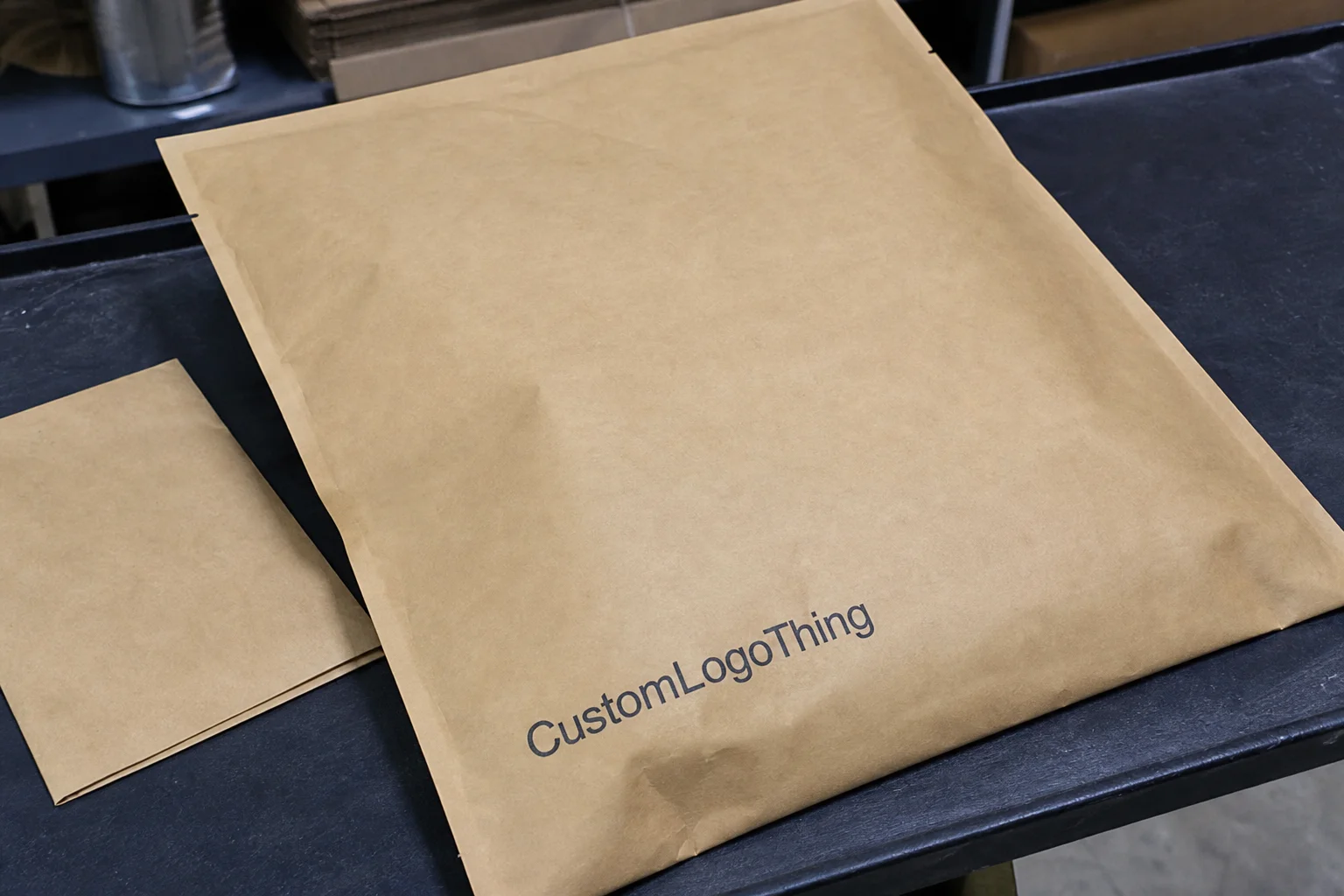
What surprises many packaging teams is how familiar custom compostable mailers feel when they are designed well. They fold, seal, and ship much like conventional mailers. The difference is in the film structure and the claim behind it. Compostable materials are formulated to break down under defined composting conditions, not simply disappear in a landfill, roadside environment, or home bin.
That distinction matters because the customer often assumes the package can be disposed of anywhere once it has served its purpose. It cannot. A compostable claim should be tied to the exact material and the specific certification, and the printed language should stay inside that boundary. If the material is certified only under industrial composting conditions, the package should not be presented as if it will break down in a backyard pile. Overstating the claim creates confusion and can damage trust faster than a plain, unlabeled mailer ever would.
For brands, the appeal usually comes down to a few practical advantages:
- Cleaner sustainability messaging for apparel and accessory shipments.
- Lower shipping weight than corrugated packaging, which helps control dimensional cost.
- Space-efficient storage in a fulfillment area.
- A more polished first impression than stock packaging.
- A chance to align mailer graphics with branded packaging and inserts.
The strongest use cases are soft goods and flat products: folded tees, socks, scarves, lightweight accessories, and similar items. Those products are forgiving because they do not create much puncture risk or corner pressure. Once the item becomes heavy, sharp, or irregularly shaped, the conversation changes. At that point, the buyer may need a thicker film, an inner pouch, or a different packaging structure altogether.
There is also a perception benefit that is easy to miss. A custom mailer can make a product feel more considered before the customer even opens it. That can help direct-to-consumer brands, subscription programs, and retail shipments that want the parcel itself to feel like part of the product experience. Still, appearance should follow function. A nice-looking mailer that tears at the seam is just a fast way to generate returns.
“The right compostable mailer earns its place by surviving transit first and supporting the sustainability message second.”
How Compostable Mailers Are Built and Sealed
Most custom compostable mailers use a multilayer film structure with a printable outer surface and a sealable inner layer. The exact blend varies by supplier, but the questions buyers should ask are consistent: What is the thickness? How strong is the seal? Does the print hold cleanly? How much moisture resistance does the material offer? Can it survive sorting, stacking, and repeated handling?
The basic formats are simple. Flat mailers work well for slim items. Gusseted mailers add expansion and are better when folded garments or a slightly bulkier item need a little more room. A flat bag that is packed too tightly will stretch at the seams and can fail where the material is most stressed. A gusset that is oversized, on the other hand, may trap excess air and waste material. The right choice depends on the product dimensions, not on a catalog photo.
Closure style matters more than many first-time buyers expect. Peel-and-seal strips are common because they are quick on a packing line and easy for fulfillment staff to use. Heat seals can offer stronger tamper resistance, but they usually require a different production workflow. Some projects also use fold-over closures, though those are less common for higher-volume shipping. Each option affects speed, security, and cost.
Print performance is another place where compostable materials reveal their limits. Clean logos, simple icons, and solid brand colors often print well. Fine reversed text, heavy gradients, and very dark full-bleed artwork can be less forgiving, especially if the surface has a matte finish or a slightly softer hand feel. If brand guidelines depend on precise color matches, ask for a proof or sample. Screen imagery often flatters the artwork more than the production line will.
For a quick comparison, it helps to look at the main options side by side:
| Mailer type | Typical strengths | Common trade-offs | Best fit |
|---|---|---|---|
| Standard poly mailer | Low cost, strong seal, broad size range | Not compostable, weaker sustainability story | High-volume shipping where cost is the main concern |
| Custom compostable mailers | Brand-friendly, lighter-footprint messaging, premium presentation | Higher unit cost, stricter claim language, fewer material options | Apparel, soft goods, eco-focused retail packaging |
| Paper-based mailers | Easy to understand, good print surface | Can add weight and may lose moisture resistance | Products that need a paper-forward look and moderate protection |
For buyers comparing formats, Custom Poly Mailers can be a useful benchmark for cost, strength, and lead time. Even when the final decision lands on compostable, the comparison helps clarify what the additional material cost is buying.
Cost, Pricing, and MOQ: What Actually Drives the Quote
Pricing for custom compostable mailers is driven by a fairly predictable set of variables: size, film structure, thickness, print coverage, certification requirements, and order quantity. The more custom the spec, the higher the quote usually climbs. A small bag for one folded garment will price very differently from a large gusseted mailer with full-coverage graphics, a stronger closure, and a requirement for specific certification documentation.
For many buyers, a run of 5,000 pieces may land somewhere around $0.18 to $0.42 per unit, depending on size, material, color count, and the complexity of the order. Larger volumes can reduce the unit price, sometimes meaningfully, if the design stays efficient and the material spec is standard enough to source consistently. Those numbers are not a promise; they are a practical range. Compostable raw materials are more constrained than conventional films, and that constraint affects both cost and lead time.
Minimum order quantities exist because setup costs do not disappear just because the run is small. Prepress, plate or print preparation, material sourcing, finishing, and packing all require labor and machinery time. If a buyer wants 1,000 pieces, those fixed costs are spread across very few units. If the order is 10,000 or 25,000, the same setup costs are diluted much better. That is why smaller brands often get a better result by simplifying the spec rather than trying to make the packaging more elaborate.
The most common cost drivers look like this:
- Dimensions, especially if the size is outside standard tooling.
- Thickness, since heavier film usually costs more and may require more careful sourcing.
- Print coverage, especially full bleed, multiple colors, or dense artwork.
- Closure type, including the strength and style of seal strip.
- Certification and documentation tied to compostable claims.
- Freight, which can be significant for larger cartons.
There are also costs that buyers sometimes miss when budgeting. Sample production and proofing can add expense, especially if the artwork is not final. Rush charges can appear if the timeline shrinks after the order is already in motion. And late changes to size or print layout can force a rework of both the artwork and the production plan. In packaging, small revisions are rarely small to the factory schedule.
If the goal is to lower unit cost without undermining the packaging, start with the structure. Standardize one or two sizes. Keep the print simple. Use the exact amount of material needed for the product, not more. A mailer that is well matched to the contents often costs less over time because it moves faster through fulfillment and creates fewer packing errors.
Process and Timeline: From Artwork to Production
The cleanest projects move through a straightforward sequence: Request a Quote, confirm the material and size, approve artwork, review a proof, sample if needed, then enter production and shipping. That sounds basic, but timing usually slips because one of those steps is incomplete. Missing dimensions, unclear claim language, and late artwork revisions are the most common causes of delay.
Artwork approval is the point where many mailer projects slow down. If the dieline is missing, if the safe print zone is not clear, or if the logo placement still needs debate, production has to wait. Compliance text can also create a pause if the buyer has not determined exactly what should appear on the mailer. Even seemingly small edits, such as shifting a barcode or changing the logo scale, can require new prepress work.
A realistic production window for custom compostable mailers is often 12 to 20 business days after final proof approval. More complex designs, material sourcing delays, or certification checks can push that longer. If the project requires a physical sample first, the timeline expands again. Buyers who want a faster order tend to get it by doing the prep work early rather than by asking for a rush at the end.
Several details help keep a project moving:
- Final flat width, length, and gusset dimensions.
- Exact product weight and what will be inside the mailer.
- Brand color references, ideally Pantone values if color matching matters.
- Approved claim language for compostable messaging.
- Shipping destination and whether fulfillment is manual or automated.
If the packaging program also includes custom printed boxes or other formats, it is usually smarter to align the mailer schedule with the broader packaging calendar. That reduces the chance that artwork, freight, and inventory planning collide in the middle of a launch.
Specs That Matter Before You Approve a Run
Before production is approved, the spec sheet needs to be complete. For custom compostable mailers, even small dimension changes can affect how the package closes, how it stacks, and how much risk it carries in transit. A mailer that is technically the right size but too tight in the closure area can fail under pressure. One that is too loose may look sloppy and take up more room in the packing flow.
The core specs to confirm are straightforward:
- Flat width and length
- Gusset depth, if the mailer needs expansion
- Seal style and closure strength
- Thickness, usually in microns or mils depending on the supplier
- Opacity if contents should not be visible
- Print area and whether full bleed is truly necessary
The product being shipped should drive those choices. Folded apparel is usually the easiest case. Socks, tees, and lightweight tops rarely need a complicated structure. Accessories become more difficult when they include rigid edges, metal, or sharp corners, because puncture risk rises. In those cases, seam integrity and material thickness matter far more than a decorative print layout. For fragile items, an inner pouch or additional protection may still be the better decision.
Compostable claims should also be verified before print approval. Ask what certification supports the material, whether the claim applies to the full mailer or only a portion of it, and what disposal conditions are required. Standards such as ASTM are not there for decoration; they are part of the evidence chain behind the claim. For general composting guidance, the EPA composting resources are a useful reference, and transport testing expectations are often framed by groups like ISTA.
Handling also matters more than many buyers expect. Will the mailer run through automatic bagging equipment? Will it be stacked in a humid warehouse? Will it sit in a bin for long periods before packing? These conditions affect real-world performance. A material can look excellent in a mockup and still wrinkle, scuff, or seal poorly if the operating environment was never considered.
Common Mistakes That Raise Costs or Delay Orders
One of the most expensive mistakes is approving artwork before the size is final. It happens often. A layout that feels balanced on screen can look crowded once seams, margins, and closure zones are added. That usually forces rework or results in a less effective design than the buyer expected.
Another issue is vague sustainability language. “Eco-friendly” is broad enough to be nearly useless on a spec sheet. If the printed claim does not match the actual material and certification, approvals can stall. It can also create credibility problems with customers who know the difference between compostable, recyclable, and biodegradable. The claim has to match the documentation, not the marketing mood.
Late quantity changes can also raise the price. A quote built around 10,000 units does not translate cleanly to 4,000 once proofing is underway. The material plan changes, the pricing tier changes, and the production slot may no longer fit. That is one reason buyers should treat quantity as part of the packaging design, not just as a procurement decision made at the end.
There is also the temptation to choose a thinner or more decorative spec simply because it looks good in a render. That can backfire quickly if the shipment travels far, gets machine sorted, or lands in wet weather. A mailer has to survive the route it actually takes. If the item being shipped needs more protection, it is better to choose a more durable structure than to rely on appearance alone. Comparing the project against other Custom Packaging Products can make that trade-off easier to see.
For packaging programs built around sustainability, the goal is not to make every package look virtuous. The goal is to create a format that protects the product, communicates clearly, and fits the operational reality. That is where package branding becomes useful rather than ornamental.
Next Steps for Ordering the Right Mailer
If you are preparing to request pricing, keep the brief short but complete. The most useful starting information includes product dimensions, item weight, required order quantity, number of print colors, and whether compostable certification is mandatory for your brand or retailer. If the mailer has to fit a specific packing line or fulfillment process, mention that early. It can save several rounds of clarification later.
Ask for a sample or proof before committing, especially if the product is fragile, the closure has to be secure, or the color matching is strict. For first-time runs, it often helps to compare two versions: one optimized for price and one optimized for presentation and handling. That side-by-side view usually reveals whether the extra spend is actually buying something meaningful or just adding decoration.
A practical spec sheet should answer these questions before anyone has to chase them down:
- What product is going inside the mailer?
- How much does it weigh?
- What outer size is required?
- Do you need a certification-backed compostable claim?
- How many pieces are needed for the first run?
When those details are clear up front, the quote is cleaner, the proof cycle is shorter, and the finished mailer has a better chance of matching the original intent. That usually matters more than chasing the lowest possible unit price. For brands building a more disciplined retail packaging system, custom compostable mailers can be a strong fit if the spec is honest and the performance expectations are grounded in real shipping conditions.
Done well, custom compostable mailers offer three things that are hard to combine: practical shipping performance, a credible sustainability message, and a branded finish that feels deliberate. Start with the product, confirm the claim, and let the structure do the work.
What makes custom compostable mailers different from recyclable mailers?
Compostable mailers are designed for specific composting conditions, while recyclable mailers depend on local recycling systems and accepted materials. The construction, certifications, and disposal claims are not interchangeable. Buyers should confirm the exact material standard before approving artwork or printing disposal language.
Are custom compostable mailers strong enough for apparel shipping?
Yes, if the thickness, seam strength, and closure are matched to the product weight and handling conditions. Folded apparel and soft goods usually ship well in this format. Heavier items, sharp edges, or unusual shapes may need a different structure or extra protection inside the mailer.
What certifications should I ask for before ordering custom compostable mailers?
Ask for the certification that supports the specific claim you want to print, not just a general eco statement. Confirm whether the certification applies to the full mailer or only one layer or component. The printed claim, supplier documentation, and product structure should all line up.
How long does production usually take for custom compostable mailers?
A typical range is 12 to 20 business days after final proof approval, though more complex orders can take longer. Lead time depends on artwork readiness, order size, material availability, and whether sample approval is required. Adding a proof stage usually extends the schedule.
How can I lower unit cost on custom compostable mailers?
Use efficient dimensions, simplify the artwork, and avoid unnecessary print coverage or special options. Larger quantities usually improve unit pricing because setup costs are spread over more pieces. Standardizing one or two sizes can also reduce long-term packaging expense.