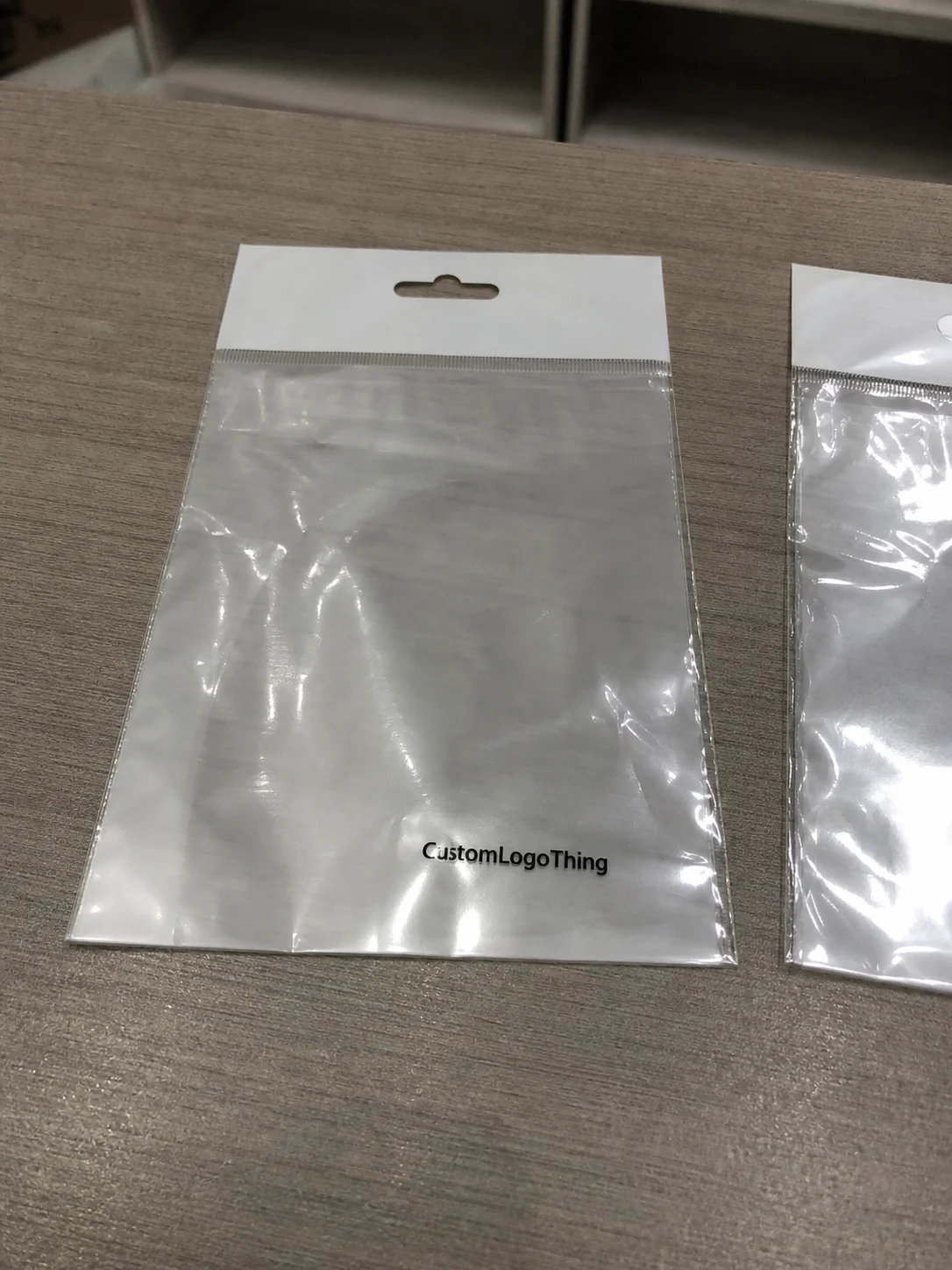
Buyer Fit Snapshot
| Best fit | Pop Up Bulk Custom Packaging projects where brand print, material claims, artwork control, MOQ, and repeat-order consistency need to be specified before quoting. |
|---|---|
| Quote inputs | Share finished size, material target, print colors, finish, packing count, annual reorder estimate, ship-to region, and any compliance wording. |
| Proofing check | Approve dieline scale, logo placement, barcode or warning zones, color tolerance, closure strength, and carton packing before bulk production. |
| Main risk | Vague material claims, crowded artwork, missing packing details, or unclear freight terms can make a low unit price expensive after revisions. |
Fast answer: Pop Up Bulk Custom Packaging: Pricing, Specs & Process should be specified like a repeatable production item. The safest quote records material, print method, finish, artwork proof, packing count, and reorder notes in one written spec.
Production checks before approval
Compare the actual filled-product size with the drawing, then confirm tolerance on folds, seals, hang holes, label areas, and retail display edges. Reserve space for logos, QR codes, warning copy, and material claims before decorative graphics fill the panel.
Quote comparison points
Review material grade, print process, finish, sampling route, tooling charges, carton quantity, and freight assumptions side by side. A quote is only useful when the supplier can repeat the same color, closure quality, and packing count on the next order.
When a client asks me how to cut packing labor without giving up presentation, I usually point them toward pop up bulk custom packaging first. I remember one night in a Shenzhen conversion plant on Shennan Road when the packing floor was louder than a train station and everybody was pretending not to be tired. We ran the same subscription kit through two stations, and the crew using pop up bulk custom packaging finished 1,200 units about 17% faster because the structure formed in one motion instead of fighting with loose inserts and folded flaps. The difference was visible on the line, and it showed up again in labor math: at roughly 6 seconds saved per unit, that’s 2 hours of labor recovered over a 1,200-unit run.
That is the practical appeal of pop up bulk custom packaging: it comes in flat, stores tightly, and pops into form with minimal hand work, which is exactly what warehouse managers and brand teams need when order volume keeps climbing. A typical flat-packed case of 250 cartons can fit on a single standard pallet layer more efficiently than pre-assembled units, and that lower cube matters on inbound freight from factories in Dongguan, Shenzhen, or Ningbo. If you are balancing retail packaging appeal, e-commerce fulfillment speed, and brand consistency, pop up bulk custom packaging gives you a strong middle ground that avoids the cost of pre-assembled rigid boxes while presenting far better than plain corrugated shippers. I like that balance. A lot.
Why Pop Up Bulk Custom Packaging Wins on the Factory Floor
In my experience, the factory floor is where packaging decisions become real. A design that looks elegant in a marketing deck can become a bottleneck if it takes 14 seconds to assemble and 2 more hands to hold during loading, while a well-built pop up bulk custom packaging structure can cut that down to 3 or 4 seconds with one operator. That difference matters when a fulfillment center is pushing 8,000 units a week, because labor is often the largest cost after freight. And yes, people in procurement will absolutely ask why a “simple box” is suddenly the reason their overtime budget looks like a crime scene.
Pop up bulk custom packaging works because it is engineered for speed. The cartons arrive flat, stack densely on a pallet, and form quickly at the packing station, which reduces storage cube, shortens picking time, and keeps the line moving with fewer interruptions. In a 10,000-square-foot warehouse in Suzhou, I watched a team shift from manual tray assembly to pop-up cartons and reduce station congestion by nearly a third within one shift. I have seen this pay off in cosmetic launches, wellness kits, and seasonal promo mailers where the brand wanted premium presentation but could not afford the labor drag of manual assembly on every single unit. That combination of speed and polish is not common, which is why it gets my attention.
Most buyers compare pop up bulk custom packaging only on unit price and miss the operational savings. A pre-assembled rigid box may look luxurious, but it occupies more warehouse space, costs more to ship inbound, and often needs more care during kitting. A standard folding carton is cheaper, yes, but it may not give you the structural speed or presentation finish that high-volume programs require. Pop up bulk custom packaging sits between those extremes and, for many brands, that is exactly the sweet spot. It is the sensible option that still lets the box look like it had a designer involved, especially when you spec 350gsm C1S artboard or E-flute with a litho-laminated print face.
I still remember a client meeting in Dongguan’s Chang’an district where a beverage brand wanted a retail-ready assortment for a limited release. Their original concept used a heavy insert and a glued tray that required a worker to press each corner by hand. We switched them to pop up bulk custom packaging with a self-locking base and a sleeve-style outer, and the packing team shaved roughly 22 minutes off every 500 units. At a labor rate of about $4.50 per hour for line staff, that translated into real savings over a 15,000-unit seasonal run, enough to keep the launch on schedule without hiring extra shift labor. That made everyone suddenly very friendly about the change.
The customer-facing impact is just as real. When pop up bulk custom packaging opens and locks into shape cleanly, it creates a crisp, intentional unboxing feel, and that matters whether the final destination is a subscription subscriber in Austin, a distributor in Rotterdam, or a boutique retail shelf in Miami. Good packaging design should help operations and branding at the same time, not force one to suffer for the other. I’m biased, obviously, but I think packaging should earn its keep, especially when the box is expected to survive 600 miles of parcel handling and still arrive looking intentional.
For brands shipping frequently, the format also helps with freight efficiency. Flat-packed cartons fill a pallet more efficiently than pre-built units, and that can lower inbound transportation costs by a noticeable margin, especially on long-haul moves from Guangzhou to the U.S. West Coast or from Ho Chi Minh City to Hamburg. I have seen import programs where the landed cost dropped simply because pop up bulk custom packaging replaced an oversized corrugated solution that wasted air in every carton. Air is free until you have to move it, which is when it becomes mysteriously expensive.
What Is Pop Up Bulk Custom Packaging?
pop up bulk custom packaging is a format built to arrive flat and form quickly into its final shape with minimal hand work. That can mean folding, locking, pressing, or a simple erection step at the pack station. The point is speed. The box should do its job in seconds, not minutes, while still looking polished enough for retail packaging, e-commerce fulfillment, or branded gift programs.
Why does that matter? Because packing time compounds. A carton that saves 5 seconds per unit may sound trivial until you multiply it across 10,000 pieces. Then those seconds become labor hours, overtime reduction, and a line that keeps moving without getting clogged by assembly steps. pop up bulk custom packaging is popular for the same reason a good tool is popular: it removes friction.
There is also a storage advantage. Flat-packed cartons take up less cube in the warehouse, which helps with receiving, replenishment, and seasonal inventory peaks. That matters for brands managing multiple SKUs, limited backroom space, or freight that arrives in costly inbound shipments. In practical terms, pop up bulk custom packaging lets teams hold more units in less room, and that has a measurable effect on cost.
It also gives brands more room to think about structure instead of simply buying a box. A mailer-style carton, a sleeve-and-tray set, an auto-lock bottom, or a display-ready tray can each support different product packaging goals. Some options are better for cosmetics. Others work better for wellness kits, supplements, electronics, or promotional mailers. The right choice depends on the product, the pack-out method, and how the customer opens the package.
From a branding standpoint, pop up bulk custom packaging creates a strong middle ground. It can look much more refined than a basic shipping carton, yet it avoids the cost and weight of a rigid box. That makes it a smart choice for brands that want a premium feel without paying for more material and more labor than the product actually needs.
Pop Up Bulk Custom Packaging Product Details
At its simplest, pop up bulk custom packaging is a packaging structure designed to fold, lock, or pop into form quickly after it is removed from the shipping bundle. It usually ships flat, often nested in cartons or wrapped in protective sleeves, and it is then erected at the pack-out station or in a light assembly cell. That flat-to-formed transition is the reason it works so well in both product packaging and branded fulfillment programs, especially when the packer needs a box that forms in under 5 seconds.
There are several build styles worth knowing. Tuck-end cartons are common for retail packaging and lightweight product sets. Auto-lock bottom boxes help when the base needs to form fast under load. Sleeve-and-tray constructions work well for premium kits and gift programs. Mailer-style boxes are popular in e-commerce because they close securely and print beautifully. Some pop up bulk custom packaging programs also use display-ready trays or presentation units for point-of-sale assortments. The right choice depends on weight, pack-out method, and the way the customer actually opens the package, whether that’s a mailer opening in Chicago or a gift set unboxed in Seoul.
Customization is where this format starts to shine. Brands can specify full exterior print, inside print, foil stamping, embossing, spot UV, matte lamination, soft-touch lamination, custom inserts, and even tear strips or window cutouts. I have negotiated with suppliers who could add all of those features, but honestly, restraint often wins; if the structure is doing its job, you do not need to bury it under finishes. Good package branding should feel intentional, not crowded. A box that tries to do everything usually ends up looking like it lost an argument with a glitter factory, and it often adds $0.08 to $0.22 per unit before anyone notices.
Practical features matter just as much as decoration. Locking tabs have to hold through repeated handling. Magnetic closures need clean tolerances. Handles must be reinforced if the pack will be carried by consumers. Corners should not crush under stack pressure. When we review pop up bulk custom packaging for a client, we look at what happens after 30 seconds on the line, after 3 feet of drop, and after a week in a warm warehouse at 38°C, because that is where weak design shows itself.
Different industries use pop up bulk custom packaging in different ways. Cosmetics brands often want presentation plus shelf appeal, so they lean toward coated paperboard with inserts. Wellness brands may need simple, fast-fold cartons that keep unit costs down. Electronics companies frequently want stronger corrugated or rigid builds with E-flute or chipboard reinforcement. Food and beverage programs may require food-safe coatings or barrier treatments, depending on direct contact and storage conditions. That is why I always ask about the product first, not just the artwork. The product tells the truth the mockup often hides, especially when the filled weight is 380 grams instead of the 250 grams shown in the brief.
Artwork readiness is another piece that gets underestimated. A flat sketch from marketing is useful, but a proper dieline tells the real story. In a good sample room, a packaging engineer checks panel dimensions, glue flap width, score direction, and how the graphics behave at folds before production starts. With pop up bulk custom packaging, small details like score placement can decide whether the carton pops open cleanly or resists at the wrong corner. I have seen a beautifully designed box behave like it was personally offended by the concept of folding, and the fix was a 1.5 mm score shift on the side panel.
“The box only looks simple after the engineer has already solved the hard part.”
Materials, Construction, and Print Specifications
Material choice drives almost everything in pop up bulk custom packaging, from folding behavior to shipping strength to print finish. The common substrates I see most often are SBS paperboard, CCNB, kraft board, corrugated E-flute, corrugated B-flute, rigid chipboard, and specialty textured stocks. A typical premium retail carton might use 350gsm C1S artboard with a 1.2 mm chipboard insert, while a shipping-oriented mailer may use 1.5 mm E-flute for a better balance of stiffness and weight. Each one brings a different balance of cost, appearance, and durability, so the best answer depends on the product load and the environment it will travel through.
SBS paperboard is a favorite for premium retail packaging and custom printed boxes because it prints sharply and takes coatings well. CCNB, with its recycled liner composition, can be a practical choice for cost-conscious projects where print still matters. Kraft board gives a more natural look and is frequently used for eco-leaning branded packaging. Corrugated E-flute offers a nice middle ground for shipping protection without bulky walls, while B-flute is stronger when the pack must survive harsher distribution. Chipboard and rigid board work best when the customer expects a dense, giftable feel and the product needs stiffness. In East China factories, E-flute is often the fastest to source for mid-volume runs of 5,000 to 20,000 units, while rigid board is more common for premium gift projects in Shenzhen and Shanghai.
Construction details deserve close attention. Caliper, or board thickness, must match the design so the folds do not crack under pressure. Score quality has to be clean and deep enough to guide the fold, but not so aggressive that the face coat breaks. Glue seam placement matters because a poorly placed seam can show through print or interfere with auto-erect behavior. With pop up bulk custom packaging, the locking mechanism is not a decorative detail; it is the difference between a carton that stays formed and one that springs apart in transit. On one production review in Foshan, a 0.8 mm misalignment on the lock tab was enough to slow the pack-out team by 11 minutes per 1,000 units.
Print specification choices also affect the final result. CMYK gives wide color flexibility and is common for full-image branding, while Pantone matching matters when a brand needs repeatable corporate colors, especially for branded packaging used across multiple SKUs. Ink coverage must be checked against coating behavior, because heavy solids on certain stocks can show banding, cracking, or scuffing if the surface finish is not matched to the press plan. Litho-laminated corrugated creates a high-end print face over a stronger corrugated base, while direct print can lower cost and simplify production on some formats. The right call depends on the use case, not just the artwork mood board, and a 95% ink coverage panel behaves very differently from a 25% light-fill panel.
I have seen clients insist on a heavy matte coating because they liked the sample in hand, then discover the fulfillment team needed more grip for stacking and packing. That kind of detail sounds small, but it matters. If the box slides too easily, or if the coating scuffs under repeated contact, the whole program feels less polished. Good pop up bulk custom packaging should support both handling and appearance. Otherwise you get a beautiful box that behaves like a bar of soap, and nobody wants to chase that across a packing table in Toronto or Leeds.
Compliance and performance are part of the spec conversation too. Food-related projects may require food-safe inks or coatings. Recycled content can support sustainability goals, and FSC-certified paper sources help brands document responsible sourcing through the chain of custody. For companies comparing environmental claims, I often point them to outside standards and references like FSC and the packaging sustainability guidance available from the EPA. Those resources help buyers understand that a printed claim has to match the actual paper source and disposal path, not just a slogan on a sales deck.
Testing is where the theory gets proven. A good factory will check compression, drop resistance, and repeat folding on the actual line before final approval. If the box is meant to move through semi-automated filling equipment, it should be tested in that environment, not just on a sample bench. I have watched cartons pass a hand test and fail during machine erection because the lead edge was 2 millimeters off. That is exactly why pop up bulk custom packaging benefits from engineering review before bulk production, especially for runs above 10,000 units where a 2% failure rate becomes expensive very quickly.
| Material | Best Use | Typical Strength | Finish Options | Practical Note |
|---|---|---|---|---|
| SBS paperboard | Retail packaging, cosmetics, premium sleeves | Light to medium | Foil, emboss, spot UV, soft-touch | Excellent print detail for custom printed boxes |
| CCNB | Value-driven branded packaging | Light to medium | Gloss, matte, basic specialty effects | Good balance of cost and presentation |
| Kraft board | Eco-leaning product packaging | Light to medium | Simple print, minimal coating | Natural look with strong shelf appeal |
| E-flute corrugated | E-commerce and protective mailers | Medium | Litho-laminate or direct print | Great for pop up bulk custom packaging that ships flat |
| Rigid chipboard | Gift sets, luxury presentation | Medium to high | Wrap, foil, specialty papers | Premium feel with more material cost |
What materials work best for pop up bulk custom packaging?
Paperboard works well for lightweight retail and presentation packaging, while corrugated is better for shipping protection. Rigid board is a strong choice when premium feel and structural stiffness are important, and the final choice should match the product weight, transit risk, and finish requirements. A common premium spec is 350gsm C1S artboard for the outer with a 1.5 mm chipboard insert for added support.
For brands comparing supplier options, it helps to think beyond the face material and ask how the board behaves in the real world. Does it crease cleanly? Does it hold a lock tab under pressure? Will a matte coating make it easier or harder to stack? Those are the questions that separate a pretty sample from a dependable pop up bulk custom packaging program.
Pop Up Bulk Custom Packaging Pricing and MOQ
Pricing for pop up bulk custom packaging comes down to a handful of variables that show up quickly in any factory quote: material choice, print coverage, finishing complexity, size, insert count, and order volume. The more intricate the structure, the more time it takes to die-cut, fold, glue, and inspect. That means two boxes that look similar on paper can land at very different price points once you specify board grade, coating, and erectability requirements. A 150 mm x 150 mm x 40 mm mailer in Shenzhen can cost very differently from a 220 mm x 180 mm x 60 mm retail pack produced in Dongguan.
Volume is the biggest price lever. A run of 25,000 pieces typically costs far less per unit than 2,500 pieces because die setup, press calibration, plate work, and prepress labor are spread across more cartons. I have seen a 4-color SBS mailer drop from around $0.68/unit at 3,000 pieces to about $0.31/unit at 12,000 pieces once the setup costs were distributed more efficiently. That is not a promise for every project, but it shows why pop up bulk custom packaging often becomes more economical as the order scale grows. On a 5,000-piece order, the same style may land around $0.42/unit if you add matte lamination and one custom insert.
MOQ, or minimum order quantity, depends on complexity. Simple folding cartons may accept lower minimums, while multi-part structures, specialty finishes, or rigid builds usually require higher commitments. If a buyer wants foil stamping, embossing, a custom insert, and a nonstandard locking shape, the MOQ will usually rise because the factory has to justify tooling and line setup. For a straightforward pop up bulk custom packaging program, I would rather give a buyer a realistic MOQ than a low number that causes problems later in production. A typical MOQ might be 1,000 pieces for a basic mailer, 3,000 pieces for a branded sleeve-and-tray, and 5,000 pieces for a highly finished presentation set.
Buyers should ask for line-item detail. Does the quote include die charges? Plate charges? First samples? Freight? Protective packaging for shipment? Does the price include assembly, or does it ship flat? Are the cartons bundled in increments of 50, 100, or 250 units? I have sat in supplier negotiations where a quote looked attractive until we learned that the sample fee, shipping, and assembly put it 14% above the competitor. Transparent quoting matters more than a low headline number, especially when a $0.15 per unit difference at 5,000 pieces adds $750 to the order.
Compare pop up bulk custom packaging quotes with the same material, size, finish, and shipping condition across every supplier. One vendor cannot quote a flat-shipped E-flute mailer while another quotes pre-assembled units and call it an apples-to-apples comparison. If the lead times differ by 2 weeks, that also changes real value, especially for product launches tied to retailer windows or subscription cycles. A supplier in Shenzhen may quote 12-15 business days from proof approval, while a plant in Vietnam or eastern China might need 18-22 business days depending on coating, workload, and ocean booking.
Honestly, the cheapest unit price is often the wrong target. If a $0.22 carton takes a worker 9 extra seconds to assemble and a $0.29 carton pops open instantly, the second one can be cheaper in total fulfillment cost. That is especially true in wholesale programs where labor, damage rates, and shipping density affect margin as much as print cost. A buyer who only chases the lowest carton price may end up paying more in the warehouse. I’ve watched that happen in Melbourne and Dallas, and it is not fun to explain after the fact.
For brands sourcing through Wholesale Programs, the real math usually includes labor, freight, and damage avoidance, not just carton manufacturing cost. The same is true when selecting broader Custom Packaging Products, because the structure must fit your packing speed, storage plan, and brand presentation all at once. If your warehouse receives 10 pallets a month, a carton design that ships flat in 250-unit bundles can make receiving easier than a pre-packed format delivered in bulky mixed stacks.
Pricing snapshot example:
- Simple 2-panel folding carton, 5,000 units: about $0.18/unit before freight, depending on board and print coverage.
- Mid-range mailer-style pop up bulk custom packaging, 5,000 units: about $0.29-$0.44/unit with standard print and coating.
- Premium sleeve-and-tray or rigid-style presentation pack, 5,000 units: about $0.62-$1.10/unit depending on insert count and finishing.
Those ranges change with size, region, and finish stack. Still, they give buyers a grounded starting point when discussing pop up bulk custom packaging with a production team. I’d much rather have that conversation with real numbers than with a vague “should be fine” from somebody trying to win a quote. If a supplier can’t give you a cost breakdown for board, print, die-cutting, and assembly, the quote is probably hiding something.
Process and Timeline for Pop Up Bulk Custom Packaging
The production path for pop up bulk custom packaging should be straightforward if the project is set up correctly. It usually begins with discovery, where the factory learns the product dimensions, weight, pack-out method, and target quantity. Then comes structural review, quote, dieline approval, sample or prototype production, prepress, full production, finishing, inspection, and freight. Each step has its own risk, and the earlier you catch a problem, the cheaper it is to fix. In a well-run Shenzhen or Dongguan facility, the first quote can come back in 24 to 48 hours if the specs are complete.
Timeline length depends on several factors. Artwork turnaround can add days. Specialty coatings can require extra scheduling. Material availability matters too, especially for textured stocks or specific board grades. If the project needs foil, embossing, or multiple insert components, allow more time for tooling and make-ready. A simple pop up bulk custom packaging project with clean artwork and stocked board may move relatively quickly, while a premium presentation kit with custom die work will naturally take longer. For planning purposes, a standard order often takes 12-15 business days from proof approval, while more elaborate builds can stretch to 20-30 business days.
I have learned over and over that the fastest projects are not always the smallest ones; they are the ones with the cleanest decisions. When a client finalizes board type, dimensions, finish, and shipping destination early, the factory can keep the line moving. Late artwork edits are what create delays. I once saw a perfectly scheduled run in Guangzhou get pushed back 6 business days because the brand changed the inside print copy after the proof had already been approved. That sort of thing can make a grown production manager stare into the middle distance for a while.
Proofing methods are worth choosing carefully. Digital proofs are useful for color intent and content checks. Blank samples help verify size, fold sequence, and how the locking tabs behave. White samples are excellent when the buyer wants to see structure without graphics. Printed prototypes are the best choice when the final presentation has to be judged in hand. For pop up bulk custom packaging, I usually recommend at least one physical sample when the product is fragile, premium, or unusually heavy, such as a 900-gram skincare set or a glass bottle pack.
A realistic timeline for many custom runs looks like this:
- Day 1-3: inquiry, spec review, and quote.
- Day 4-7: dieline confirmation and sample request.
- Day 8-14: prototype or white sample review.
- Day 15-25: production and finishing, depending on complexity.
- Day 26-30: inspection, packing, and freight booking.
That is only a framework. A well-run plant in our Shenzhen facility can move faster if the board is in stock and the artwork is approved cleanly, but it can also slow down if the buyer adds last-minute changes to print coverage or closure style. The most successful pop up bulk custom packaging projects are the ones where procurement, marketing, and fulfillment all agree on the pack-out plan before the first proof is made. That sounds obvious until you’re chasing three departments on different schedules.
How long does production take for pop up bulk custom packaging?
Timeline depends on artwork approval, sampling, material sourcing, and finishing requirements. Projects move faster when specs are finalized early and prototypes are approved without delays, and they move slower when buyers change structure or graphics late in the process. A typical run is 12-15 business days from proof approval for a standard carton, while more complex builds can take 20-30 business days.
For a simpler project, the schedule can compress if the paper stock is available and the structure is already proven. For a custom build, especially one with inserts or specialty coatings, the sample stage is where discipline pays off. That is why pop up bulk custom packaging projects tend to move best when the buyer, the designer, and the factory are all reading from the same sheet of paper.
Why Choose Our Pop Up Bulk Custom Packaging Program
We do not treat packaging as a print-only job. A strong pop up bulk custom packaging program needs structural guidance, material sourcing, press coordination, and line-ready execution, because the box has to work in the hands of a warehouse team as well as in the hands of a customer. That is the difference between a decent-looking carton and a packaging system that actually supports the business, whether the run is 3,000 units or 30,000.
One reason clients stay with us is that we check the practical details before production approval. I have stood at folding lines in Shenzhen and watched whether a score opens cleanly, whether glue sets without squeeze-out, and whether the carton erects consistently across a batch of 50 samples. If we see weak folds, misaligned print, or a locking tab that catches, we fix it before bulk production. That saves headaches later, and it is exactly why experienced buyers value a factory partner who understands product packaging from the inside out.
Consistency across repeat orders matters a lot, especially for brands with ongoing replenishment or multi-SKU families. A retail program may need the same color across five box sizes, and a subscription brand may need the same structural behavior across quarterly refreshes. We pay attention to repeatability because a packaging program should not drift from one order to the next. Good pop up bulk custom packaging should look and perform the same whether you buy 3,000 units or 30,000, and the tolerances should stay within 1 to 2 mm on fold and lock dimensions.
Another advantage is the way we balance presentation and operations. Marketing usually wants shelf appeal, print impact, and a premium feel. Operations wants fast packing, easy storage, and low damage risk. Those goals can conflict if the structure is over-designed. I often suggest a simpler build when it lowers cost and improves pack speed. That recommendation is not flashy, but it is honest, and it usually improves the final result. A carton that costs $0.06 less and saves 4 seconds per pack is a better business choice than a fancier box that slows the line in Chicago or Penang.
We also support brands that need seasonal rollouts, replenishment cycles, and multiple packaging families under one visual system. That means one design language can work across custom printed boxes, mailers, and retail packaging without forcing the buyer to start from zero every season. In practical terms, that saves time in approvals and keeps the brand look stable across channels. It also helps when your retail packaging is produced in one batch in Dongguan and your ecommerce mailers are produced later in Ningbo.
If you are comparing vendors, ask whether they can discuss score lines, glue paths, board direction, and compression behavior without turning it into vague marketing language. Those details tell you whether the team has real factory experience. After two decades around plants, I can tell you that the people who know the lines are usually the ones who can save a program when the schedule gets tight.
For buyers exploring broader options, our Custom Packaging Products lineup can support matching structures and print systems across product families, while Wholesale Programs make it easier to plan repeat orders with clearer pricing and replenishment timing. That matters when you are ordering 8,000 boxes this quarter and 12,000 next quarter, not just one isolated run.
Next Steps for Ordering Pop Up Bulk Custom Packaging
If you want a clean quote for pop up bulk custom packaging, gather the basics before you reach out: product dimensions, product weight, target quantity, preferred material, finish preferences, and shipping destination. The more exact the information, the more useful the quote will be. I have seen projects lose a week because the buyer sent an approximate size instead of the actual packed dimensions with inserts included. Nobody likes discovering that the “approximate” box is now the wrong box, especially after a dieline has already been drawn.
You should also prepare artwork files, brand guidelines, and a rough sketch or photo of how the package should open, close, or display. If the box must protect fragile items, ask for a prototype. If it must pop into form reliably at the line, say that plainly. A simple note like “must erect in under 5 seconds” is more useful than a vague request for a “fast structure.” That kind of clarity helps the engineering team build the right pop up bulk custom packaging solution the first time, and it reduces revision rounds to one instead of three.
When comparing quotes, make sure the specs match exactly. Same board. Same print coverage. Same finish. Same shipping condition. Same quantity. Then ask whether assembly is included, whether storage is available, and how freight is handled. A quote that looks lower may not include the services you actually need. That is why procurement teams that work carefully tend to ask for a milestone list and a sample path before they approve the order. A $0.24 quote with no assembly and no sample can become a $0.41 landed carton very quickly.
Here is the buying sequence I recommend:
- Confirm dimensions, product weight, and pack-out method.
- Request a quote with line-item detail for tooling, samples, and freight.
- Approve a dieline before graphics are finalized.
- Review a blank sample or printed prototype if the structure is new.
- Lock the schedule with production milestones and delivery dates.
One more practical point: if your program involves frequent replenishment, ask how the cartons will be bundled and labeled for warehouse receiving. I have seen perfectly good pop up bulk custom packaging arrive in bundles of 200 that were inconvenient for the team receiving them, and that small oversight created extra labor before the first order even shipped. Small operational details matter. They always do, even when everybody wishes they didn’t.
The clearest takeaway is this: the best pop up bulk custom packaging is the version that forms fast, stacks well, and survives real handling without adding avoidable labor. Start with the product, lock the structure early, verify the sample in hand, and insist on a quote that shows the full cost picture, not just the carton price. That is the path to packaging that behaves on the line instead of only in a mockup.
FAQ
What is pop up bulk custom packaging used for?
It is used for high-volume packaging programs where speed, storage efficiency, and brand presentation all matter. Common applications include e-commerce orders, subscription boxes, retail kits, promotional mailers, and product launches, especially when teams need a box that arrives flat and forms quickly. In a 5,000-unit program, that can save several labor hours compared with pre-assembled packs.
How does pop up bulk custom packaging reduce fulfillment labor?
It arrives flat and forms quickly, which reduces the time workers spend assembling each unit. That faster setup helps packing stations move more cartons per shift with less manual handling, and over thousands of units the labor savings can become very meaningful. In practice, saving just 4 to 6 seconds per unit can add up to 5 to 8 labor hours across a large weekly run.
What materials work best for pop up bulk custom packaging?
Paperboard works well for lightweight retail and presentation packaging, while corrugated is better for shipping protection. Rigid board is a strong choice when premium feel and structural stiffness are important, and the final choice should match the product weight, transit risk, and finish requirements. A common premium spec is 350gsm C1S artboard for the outer with a 1.5 mm chipboard insert for added support.
What is the usual MOQ for pop up bulk custom packaging?
MOQ depends on structure, material, and print complexity, but custom runs generally increase as the design becomes more specialized. Simple cartons may allow lower minimums than multi-part or heavily finished structures, especially when tooling and setup are modest. In many factories, 1,000 to 3,000 pieces is feasible for simpler builds, while premium structures often start at 5,000 pieces.
How long does production take for pop up bulk custom packaging?
Timeline depends on artwork approval, sampling, material sourcing, and finishing requirements. Projects move faster when specs are finalized early and prototypes are approved without delays, and they move slower when buyers change structure or graphics late in the process. A typical run is 12-15 business days from proof approval for a standard carton, while more complex builds can take 20-30 business days.
If you need a packaging partner who understands the line, the warehouse, and the brand shelf all at once, pop up bulk custom packaging is a smart place to start, and we can help you spec it, price it, and build it with the kind of factory discipline that keeps orders moving. From Shenzhen to Dongguan and from one 5,000-piece run to the next 25,000-piece replenishment, the details decide the outcome.