A plain poly bag can do its job and still disappear. pre Printed Poly Bags do the opposite. They make the package visible, readable, and harder to ignore. That matters in retail, kitting, fulfillment, and subscription work, where the bag may be the first branded surface a buyer sees before opening the product.
In practice, these bags carry logos, product names, handling instructions, compliance text, barcodes, or campaign graphics directly on the film before filling. That cuts down on loose labels and extra handling steps, and it gives the package a more finished look without adding much complexity for the buyer.
The decision is rarely just about printing a logo. Film type, print method, order size, bag format, and lead time all move the number. A quote that looks attractive at first can get expensive after artwork revisions, freight, or reprints. A quote that looks higher can be cheaper once it replaces labels, reduces labor, or lowers damage risk.
If the job is still being scoped, compare the bag against the rest of the packaging stack instead of treating it like a standalone purchase. For broader packaging programs, the fit often becomes clearer alongside Custom Packaging Products or ship-ready formats such as Custom Poly Mailers.
Why pre printed poly bags can outperform plain packaging
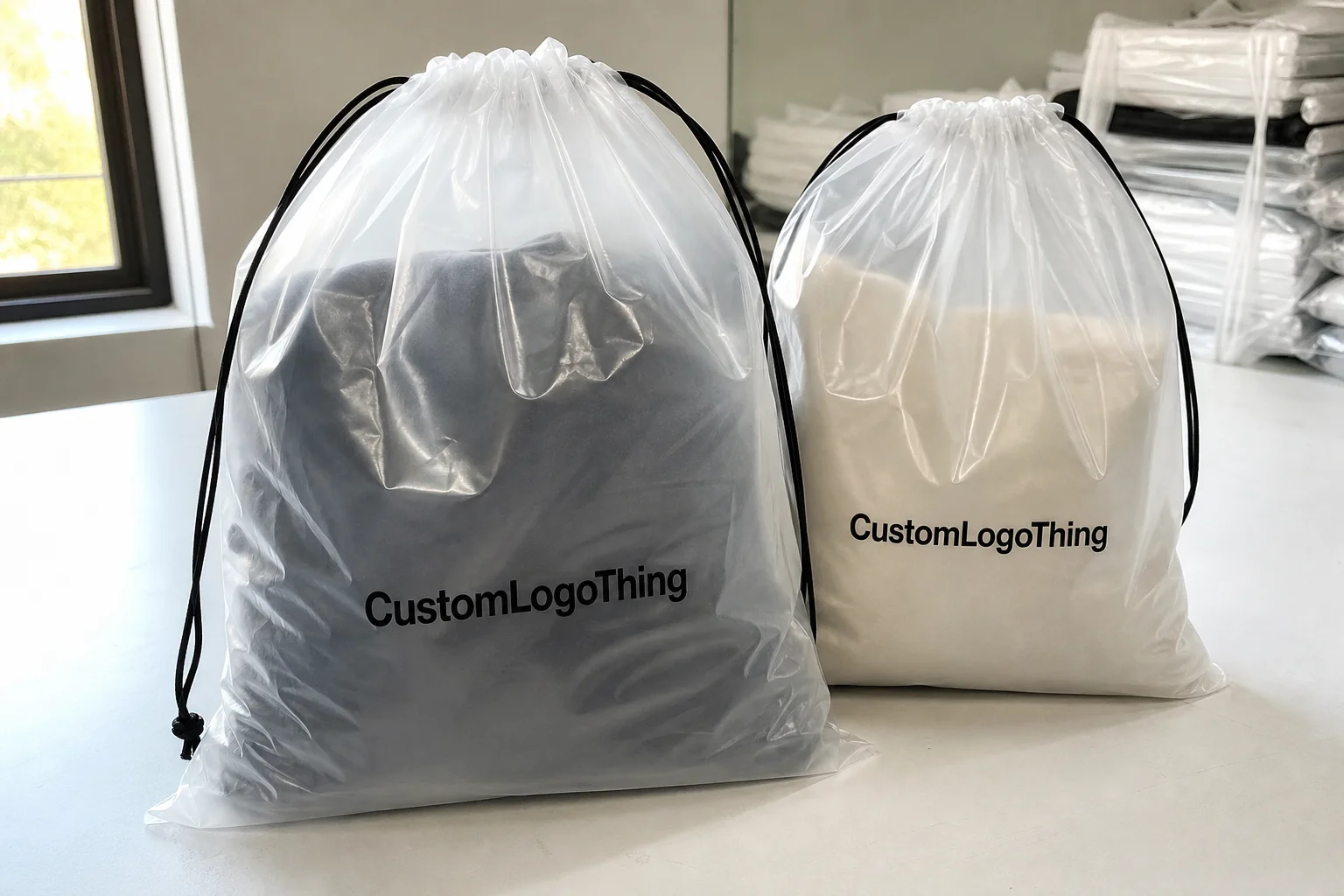
A blank bag with a sticker added later is a workaround. A printed bag is a system. That is the main difference. pre Printed Poly Bags remove a step from the packing flow and replace it with packaging that already carries the information it needs. That matters once line speed, label errors, and SKU mix-ups start showing up in the numbers.
On a manual packing table, a printed bag saves time because there is one less action per unit. On a warehouse line, it reduces the chance of labels being crooked, missing, or applied to the wrong SKU. In retail, the bag becomes part of shelf presence. In fulfillment, it helps staff identify product variants quickly.
There is also a cost side that gets missed. A printed bag can replace separate stickers, inserts, or overpackaging. That does not sound dramatic, but in volume it adds up. Fewer components means fewer touchpoints, fewer chances for human error, and fewer things to source when a launch changes late.
The catch is simple. Printed bags are not automatically the right choice. If artwork changes constantly, if the run is temporary, or if the product is still being tested, plain stock may be the better move. But if the bag is expected to carry branding, instructions, or a shelf-facing message, the printed version usually earns its keep.
A package never stays neutral once it reaches the customer. If the surface is visible, it is part of the product.
How the printing process turns artwork into finished bags
The production path usually starts with artwork setup. The supplier checks the bag dimensions, confirms the dieline, and prepares the file for the chosen print method. Then comes proofing, plate or digital setup, printing, drying or curing, converting, inspection, and final packing. Each step is ordinary. None is optional if the goal is to avoid sloppy output.
Print method matters more than most buyers expect. Flexographic printing is common for repeat volume because it scales well once the setup is done. Rotogravure can produce very sharp detail and is often a better fit for larger programs with longer runs. Digital printing works well for shorter quantities, versioned artwork, and faster design changes. The wrong process can make the quote look efficient while the bag itself looks mediocre.
Color count and coverage affect both cost and appearance. A simple one- or two-color layout is easier to set up than full-coverage art. Large solid panels make registration issues easier to spot. White ink on clear film, metallic accents, fine lines, and tight type all need more scrutiny. If color accuracy matters, the approval range should be spelled out before production starts.
Proof review catches the expensive mistakes. Barcodes that do not scan, phone numbers that are too small, or logos that sit too close to a seal line are all fixable before the run. After production starts, they become waste. A good supplier should flag problems early, but the buyer still owns the final approval. The proof should be checked against the actual bag size, not the concept rendering in a slide deck.
For larger shipping programs, transit testing is worth discussing before signoff. Buyers often use ISTA guidance when the bag is part of a larger pack-out that has to survive compression, vibration, or drop handling.
Pricing, MOQ, and unit cost tradeoffs
Pricing for pre printed poly bags usually breaks into a few pieces: setup or plate charges, print preparation, film type, bag size, number of colors, and any finishing details such as zippers, perforations, wicketing, or gussets. Add freight, proof revisions, and rush handling, and the total can move faster than buyers expect. The headline number rarely tells the whole story.
MOQ exists because setup cost has to be spread across enough units to make the run workable. That is why a 5,000-piece order often looks very different from a 25,000-piece order. The unit price drops as quantity rises, but total spend climbs. The buyer has to balance cash flow, storage, and design stability.
A simple way to judge quantity is this: if the bag design will stay live for months and the SKU is stable, moving up a price tier often makes sense. If the bag is tied to a campaign, seasonal launch, or early-stage product test, a smaller run may be the safer choice even if the unit price is higher.
| Print path | Typical MOQ | Typical unit cost range | Best fit | Main tradeoff |
|---|---|---|---|---|
| Plain stock bag with label | Low | $0.04-$0.10 | Temporary runs, changing SKUs | Extra labor and less polished presentation |
| Flexo printed bag | Medium to high | $0.08-$0.22 | Repeat orders, branded retail, fulfillment | Setup cost and artwork discipline |
| Digital printed bag | Lower to medium | $0.14-$0.35 | Short runs, version changes, seasonal work | Higher unit cost at scale |
| Premium print with specialty finish | Usually higher | $0.20-$0.45+ | High-visibility retail, brand-forward launches | More cost and more approval steps |
Three hidden cost drivers show up a lot. First, artwork cleanup: if the file needs resizing, redrawing, barcode corrections, or color fixes, the quote changes. Second, freight: a small production saving can disappear if the bags ship in multiple cartons or require special handling. Third, revisions: every new proof cycle costs time. If internal sustainability review is part of the process, the EPA is a useful reference point for packaging teams sorting through plastic-use questions and material recovery concerns.
If a quote comes in suspiciously low, check the assumptions. It may be based on a thinner film, fewer colors, a larger MOQ, or a slower turnaround than the buyer actually needs. Those are not savings. They are delays waiting to happen.
Film gauge, closure style, and sizing choices
Film gauge is one of those specs people ignore until the bag splits in transit. Then it matters immediately. Thicker film usually improves puncture resistance, hand feel, and general protection, but it also costs more and can feel heavier than some brands want. Thinner film may be fine for apparel, lightweight accessories, or promotional items, but it can be a poor fit for sharp edges, heavier goods, or packages that get handled a lot.
Closure style deserves the same attention. Layflat bags are simple and economical. Gusseted bags create more room and handle bulkier shapes better. Zip seal bags add convenience and support reclosability. Wicketed formats are useful where packing speed matters because the bags are stacked on a wicket and pulled in sequence. On a manual line, that detail can save real minutes.
Size is where buyers often get it wrong. Too large, and the bag looks sloppy while wasting film and carton space. Too tight, and the print can distort, the seal can be stressed, or the product edge can take damage. The best fit usually leaves enough room for clean insertion without letting the package look loose.
Surface finish is another practical choice. Clear film keeps the product visible, which is useful when the product itself should stay front and center. Matte or frosted surfaces can cut glare and give the package a more premium feel. If the artwork uses small type or fine contrast, a glossy surface under store lighting may read differently than it does on a proof screen.
For spec-heavy projects, request a sample that reflects the real film gauge, closure style, and dimensions. A mockup that looks right but handles differently is not much help. Packaging lives in the hand, not on the spreadsheet.
Production steps and lead time: proof to shipment
The cleanest orders follow a straightforward sequence: request quote, submit artwork, confirm proof, approve sample or mockup, run production, inspect, pack, and ship. The jobs that stay on schedule usually follow the pattern. The ones that drift usually stall at artwork approval or in a late decision about bag details.
Lead time gets stretched by a few familiar bottlenecks. Artwork revisions can add days. Color matching can add more, especially if the buyer wants to match a specific brand tone on a particular film. Film sourcing matters too, because the supplier may need a gauge, resin blend, or finish that is not sitting in inventory. Then there is queue time. If the press schedule is full, even a perfect proof waits its turn.
Standard turnaround is often manageable when the specification is simple and the art file is clean. Rush jobs are possible in some cases, but rush work usually increases cost and cuts down flexibility. It also raises risk. A buyer who compresses the timeline too hard has less room to fix a proof problem before production starts.
For custom work, the earlier the order starts, the better. A repeat run is easier to reorder than a new format. If the launch date is fixed, count backward and leave room for proofing, production, and transit. A tight calendar can be managed. A calendar with no slack usually cannot.
One additional planning point: if the packaging program includes cartons or paper inserts, ask whether any secondary component should use FSC-backed sourcing. That is not a bag spec by itself, but it often comes up once the broader packaging review starts.
Common mistakes that create waste or reprints
The most common failure is the easiest to avoid: approving artwork before checking bleed, safe area, resolution, barcode readability, and placement against the actual bag dieline. A logo that looks fine in a PDF can drift into a fold or sit too close to a seal once it becomes a physical bag. That is how reprints happen.
Another mistake is underspecifying film strength or closure type. Buyers sometimes assume a lower-cost bag will be “good enough,” then absorb damage claims, product loss, or rework labor later. A bag that tears, opens, or fails under normal handling is not cheaper. It is just cheaper at the quote stage.
Inventory planning creates its own problems. Order too little and the SKU runs out before the next batch arrives. Order too much and the business sits on dead stock, especially if the design changes or the product line gets cut. Packaging is inventory. It does not sit outside the planning process just because it looks simple.
Comparing quotes by headline price alone is another trap. A low number may hide a higher MOQ, weaker material, a slower schedule, or fewer print colors. A real comparison looks at landed cost: unit price, setup, lead time, freight, proof revisions, and how long the design is expected to stay active.
Treat the bag like a production part. If it touches the customer-facing shipment, it needs a spec sheet, not a guess.
Actionable next steps for a cleaner quote
Cleaner quotes start with better inputs. Gather the exact bag size, product weight, print colors, artwork file, and any compliance text before asking for pricing. Suppliers can work with partial information, but the quote gets less reliable when the brief is vague.
Ask for five things in the same conversation: proof, MOQ, lead time, price-break schedule, and freight estimate. That combination makes the offer usable. Without it, you are comparing fragments instead of real landed cost. If the project is new, ask whether a pilot run makes sense before committing to a full quantity. A small run can uncover handling issues, size problems, or print visibility concerns before they turn into expensive mistakes.
For repeat programs, keep a spec sheet on file. Document the finished size, film gauge, closure style, ink count, color references, and proof approval. The next time you order pre printed poly bags, the process will move faster and the discussion will get shorter.
If you are still choosing between printed film and other custom packaging formats, review the fit alongside Custom Packaging Products and Custom Poly Mailers. The right answer is usually the one that matches the product, the packing line, and the storage or shipping environment, not the one with the lowest first quote.
What should I know before ordering pre printed poly bags for the first time?
Start with exact dimensions, product weight, print colors, and the closure style you need, such as seal, zip, or wicketed format. Ask for a proof and confirm material, thickness, and MOQ before approving the run.
How are pre printed poly bags priced compared with plain bags?
Printed bags usually add setup and print-preparation costs, so the first run costs more than plain stock bags. At higher quantities, the unit cost can become competitive because the setup expense gets spread across more bags.
What affects the lead time for pre printed poly bags?
Artwork revisions, proof approval, print method, film availability, and production queue time are the biggest schedule drivers. Rush orders are possible in some cases, but they usually increase cost and reduce flexibility.
What MOQ should I expect for custom printed poly bags?
MOQ depends on print method, bag size, number of colors, and material complexity. If your quantity sits just below a price break, it may be cheaper overall to move up to the next tier.
How do I avoid artwork mistakes on pre printed poly bags?
Check bleed, safe area, font size, barcode quality, and color contrast against the actual bag dieline or spec sheet. Request a proof and verify placement before production starts, because post-print corrections are expensive.


