Buyer Fit Snapshot
| Best fit | Price of Personalized Kraft Mailer Sets projects where brand print, material claims, artwork control, MOQ, and repeat-order consistency need to be specified before quoting. |
|---|---|
| Quote inputs | Share finished size, material target, print colors, finish, packing count, annual reorder estimate, ship-to region, and any compliance wording. |
| Proofing check | Approve dieline scale, logo placement, barcode or warning zones, color tolerance, closure strength, and carton packing before bulk production. |
| Main risk | Vague material claims, crowded artwork, missing packing details, or unclear freight terms can make a low unit price expensive after revisions. |
Fast answer: Price of Personalized Kraft Mailer Sets: What Drives It should be specified like a repeatable production item. The safest quote records material, print method, finish, artwork proof, packing count, and reorder notes in one written spec.
Production checks before approval
Compare the actual filled-product size with the drawing, then confirm tolerance on folds, seals, hang holes, label areas, and retail display edges. Reserve space for logos, QR codes, warning copy, and material claims before decorative graphics fill the panel.
Quote comparison points
Review material grade, print process, finish, sampling route, tooling charges, carton quantity, and freight assumptions side by side. A quote is only useful when the supplier can repeat the same color, closure quality, and packing count on the next order.
Price of Personalized Kraft Mailer Sets: What Drives It is one of those questions that looks straightforward until the first quote arrives with freight, tooling, inserts, and assembly folded into the total. A buyer can start with one logo and a rough 240 mm by 180 mm footprint, then end up comparing different factory routes, different insert specs, and a freight lane that shifts the landed price by 8% to 14%. On a 5,000-piece run, a plain outer shell may start near $0.15 per unit, but once you add a 350gsm C1S artboard insert, a seal sticker, and one-color print, the number often lands in a very different bracket. The math is rarely about one material alone, and the price of personalized kraft mailer sets usually reflects the full packaging system, not just the outer mailer.
The price of personalized kraft mailer sets rises and falls with handling complexity, not just paper weight. A set that moves through two touchpoints in a Guangzhou plant will usually cost less to assemble than one that needs six manual steps in a smaller workshop in Shenzhen. A clean pack can save 20 to 40 seconds per order, and at 500 orders a day that becomes 2.8 to 5.5 labor hours saved every shift. That is not a tiny detail; it is the kind of operational change that shows up in payroll and in the shipping queue. It also explains why Custom Kraft Mailers can look affordable in a quote and expensive on the floor.
I keep coming back to the same point: packaging pricing behaves more like a production workflow than a shopping cart. The outer kraft shell is visible, but the real cost sits in dielines, insert alignment, fold tolerance, and the time it takes a packer in Dongguan to close the final flap without checking it twice. A quote can look affordable at 250 pieces and then behave very differently at 1,000 or 5,000 pieces, especially if the artwork needs a second proof or the insert is cut to a 1.5 mm tolerance instead of 3 mm. For branded mailer sets, the line item that matters most is often the one no buyer sees first.
Early in my years of sourcing packaging briefs, I sat across from a fulfillment manager in Chicago while his team compared two nearly identical mailer sets. One was priced $0.27 higher per unit, but it eliminated a manual tape step that was costing 14 minutes per hour on a 2,000-order weekly line. The lower quote looked better until we traced the labor: one design was friction-free, the other was not. I have seen that pattern repeat in Los Angeles, Houston, and a warehouse outside Rotterdam; the cheapest material often becomes the costliest process. That is why the price of personalized kraft mailer sets deserves the same scrutiny as any production line decision.
Why the Price of Personalized Kraft Mailer Sets Surprises Buyers
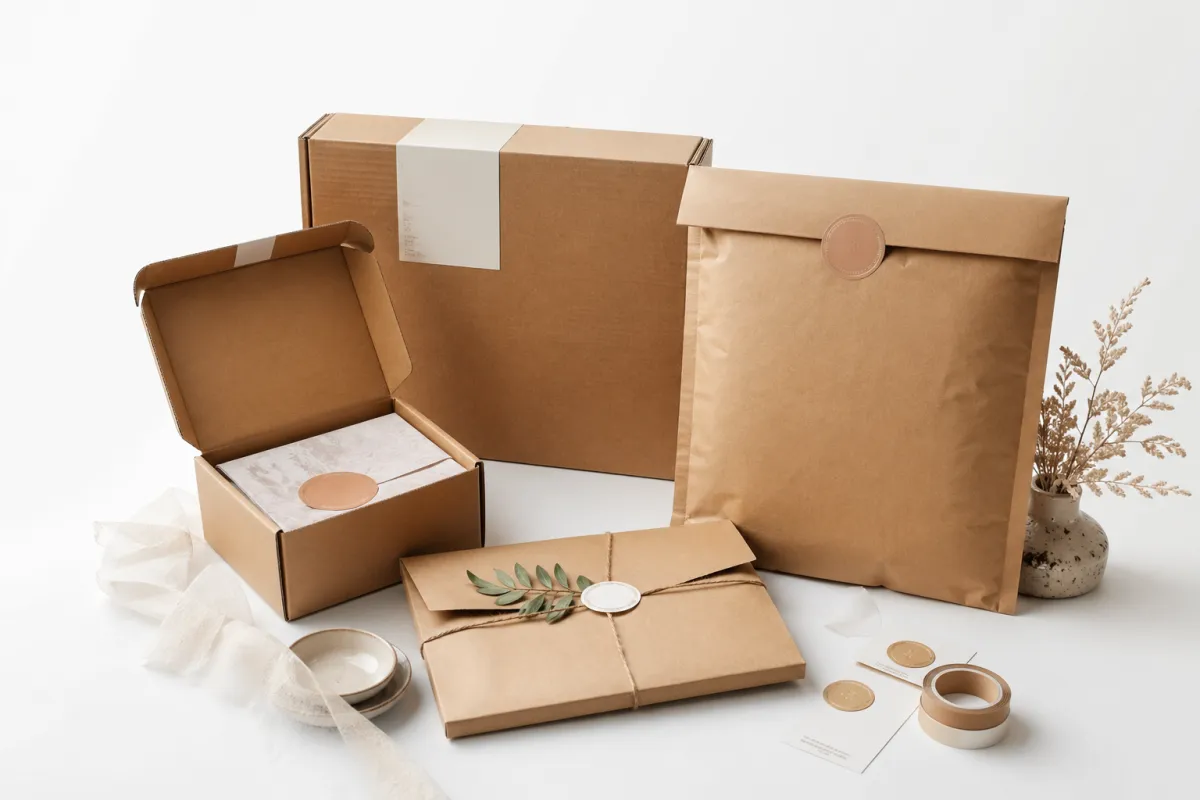
Buyers often assume the outer mailer is the only expensive part. Then the quote arrives with a 1-color logo, a die-cut insert, a branded seal, and a tissue wrap, and suddenly the total feels like it jumped 30% overnight. The surprise makes sense once you map the build. The price of personalized kraft mailer sets is usually driven less by the shell and more by the number of discrete operations required to turn flat stock into a fulfillment-ready pack. Mailer inserts, closures, and packing labor all matter more than most first-time buyers expect.
I remember a planning call with a subscription brand that wanted a “simple” starter set for 1,000 monthly shipments. Their first benchmark showed a cheap outer mailer at $0.23 per unit, so they expected the rest to stay minimal. But the packing sequence needed a mailer, an insert card, tissue, a seal sticker, and a foam-free cradle. The line test was the turning point: 52 seconds per order dropped to 31 seconds after we removed one unnecessary sleeve and corrected the insert slot width from 92 mm to 96 mm. Twenty-one seconds per package changed the monthly labor line more than a 3% paper discount ever could, and the price of personalized kraft mailer sets became easier to justify once the labor math was visible.
A plain shell can win on headline price, especially at 250 or 500 pieces. A personalized set can remove separate labels, reduce oversized outer cartons, and cut repeat mistakes in manual packing. If you are shipping 2,000 orders a week, saving even $0.08 on rework and $0.12 on label stock per order matters more than shaving $0.05 off the kraft board itself. That is why the price of personalized kraft mailer sets needs to be measured as total packaging cost per order, not as a single printed unit price. The same logic applies to every custom kraft mailer quote that includes inserts, tissue, or sealing details.
“We thought we were buying packaging, but we were really buying labor savings and consistency.” A buyer at a cosmetics launch in Chicago told me that after we compared a $1.14 branded set against a $0.79 plain alternative, and the carton still accounted for only 18% of total packaging spend.
Packaging teams learn fastest when they compare process outcomes, not sticker prices. A set that costs $0.38 more per order can still be cheaper once you calculate less label stock, fewer replacements, and lower damage-related rework. I have seen a beauty subscription run in Toronto absorb a $0.31 increase per kit and still save more than $2,700 over a quarter because the return rate fell from 3.8% to 2.1%. That is the tradeoff: the cheapest-looking quote can carry a very expensive afterlife, while a better-built set can reduce the effective price of personalized kraft mailer sets over time.
The brand effect is not just aesthetics. A mailer with a clear logo, a fitted insert, and a consistent closure style creates a more intentional reveal and reduces human error in the warehouse. In one shared parcel line handling 14 DTC brands in Manila and Singapore, teams using branded sets had fewer mixed-pick incidents because each order matched an expected visual structure and slot depth. Complaint volume dropped, repack rates dropped, and customer support had fewer “my corner was crushed” calls by roughly 12% month over month. You cannot fake that with one extra color or a louder headline, and you cannot ignore it if you want the price of personalized kraft mailer sets to match actual business value.
For the record, bad packaging planning usually shows up in the least glamorous place: the packing bench. Teams obsess over Pantone 448 C at 2 a.m., then discover the 4 p.m. shift is stalled because no one agreed on a 2 mm slot tolerance or a 12 mm flap length. I have watched that exact failure happen in a plant near Ningbo, where the print proof was perfect and the assembly plan was not. The quote did not fail on ink. It failed on geometry.
What Comes in a Personalized Kraft Mailer Set
A personalized kraft mailer set is not simply “a box with a logo.” That phrase still appears in almost every first draft I see, and it always hides the same problem: vague scope. The outer mailer is only one line item, and in many projects it is the least interesting one. If you want the price of personalized kraft mailer sets to make sense, list every piece at the quoting stage: mailer, inserts, tissue, sleeves, seals, and support cards. The same spec can look cheaper or more expensive depending on whether a supplier bundles the 350gsm C1S artboard insert separately or folds it into the print component. That detail alone can move pricing on a custom kraft mailer order more than the outer shell does.
I have learned to ask for a teardown before anyone approves a build. The first list should show every layer because layer count is a direct proxy for handling cost. Structure comes first: a 300gsm to 400gsm kraft shell, or sometimes an E-flute base if the product weighs more than 450 g. Presentation follows: printed inserts, tissue, stickers, sleeves. Protection closes the loop: cradles, folded dividers, and fitment inserts that keep a serum bottle or apparel stack from shifting more than 3 mm in transit. Every layer is labor, and every layer changes the price of personalized kraft mailer sets.
- Outer mailer: Usually uncoated kraft stock with straight tuck, self-locking flap, or tab closure depending on opening speed and stack strength.
- Insert: Die-cut board, molded paper, or corrugated spacer sized to the product footprint, often specified at 350gsm C1S artboard for premium kits.
- Tissue or sleeve: Commonly 17gsm to 30gsm tissue for surface protection and a cleaner reveal.
- Sticker or seal: Tamper cue, brand recall point, or closure reinforcement depending on route risk and the number of handoffs.
- Support card: 350gsm stock for instructions, campaign copy, or QR follow-up, usually printed in Shenzhen or Guangzhou.
Use case decides whether you need all of it. Lightweight apparel, books, and sample kits can often run on a simpler configuration with a single insert and no tissue. Gifts, PR drops, and influencer campaigns usually need a more layered reveal because the unboxing step is part of the offer, and that adds 8 to 18 seconds of packing time per order. So the price of personalized kraft mailer sets climbs with narrative complexity, not just size. I have watched teams add components because the mockup looked sparse, then complain that the pack felt random instead of premium. That kind of fixable confusion is more common than people admit.
A true workflow mistake is removing the wrong piece. One client cut the insert card to save $0.06 per unit and then saw damage complaints rise in the first 500 shipments because the product moved inside the mailer. We reintroduced the card, removed a redundant sticker, and the set stabilized without raising the final assembly time by more than 2 seconds. The result was simpler, not busier, and the price of personalized kraft mailer sets stopped drifting upward with every repack. That part felt kinda obvious in hindsight, but it rarely does when the budget is under pressure.
For a useful benchmark, compare with Custom Poly Mailers. Poly often wins on lightweight, simple fulfillment efficiency for apparel shipped from hubs like Ho Chi Minh City or Shenzhen. Kraft usually wins on a paper-first premium reveal, especially where feel, recycling optics, and brand framing matter in the first three seconds after opening. Neither is automatically better. Route, shape, moisture exposure, and customer expectation decide.
Specifications That Affect Fit, Strength, and Brand Impact
Specifications are the difference between “looks fine” and “fits the line, survives the route, and opens well.” Finished internal dimensions should be the first number I ask for, because a 2 mm width change can turn a stable setup into a floating problem. The price of personalized kraft mailer sets moves quickly with these dimensions since footprint changes affect board usage, freight volume, and how much extra fill or spacer material you need for a bottle, book, or apparel stack. Better measurements also reduce waste in Custom Kraft Mailers, which is where many procurement teams quietly save money.
Board thickness is another quiet multiplier. A 350gsm sheet behaves very differently from a 250gsm sheet when packages are stacked 8 high in a warehouse and handled again at the regional sort center. If the set needs to survive courier handling, I check whether testing expectations are defined with ISTA-style drop logic or an internal equivalent. A 1.2 m drop onto a corner can reveal a weakness that no mockup photograph will ever show. The ISTA framework is useful as a baseline for shipment behavior, even when the mailer is made in Dongguan or printed in Ningbo.
Print area is where marketing and production first disagree. Minimal branding is not always cheap print, and broad full-coverage art is not always expensive in the obvious way. I once approved a “minimal” visual in concept review, then learned it covered nearly every visible panel in production and required a second registration check. Drying windows increased, the proof moved back one day, and the price of personalized kraft mailer sets shifted in a way that looked mysterious until the dieline and panel coverage were reconciled line by line.
Closure choice matters. Self-locking flap, tear strip, tray style, and insert geometry all influence assembly speed and the first customer touchpoint. In a skincare run of 3,000 units, a tab closure reduced assembly by 11 seconds per order versus a decorative sleeve setup and cut packing errors from 27 per week to 8 per week. That is not a style note; it is a direct cost, time, and consistency decision. The price of personalized kraft mailer sets should show closure method as a named specification, not a generic finish option.
Sustainability requirements deserve front-end clarity, not a final note at the proof stage. Recycled content, FSC certification, and water-based or low-odor inks all need to be written down before quoting begins. The FSC standard helps with chain-of-custody validation, but if a product is food-adjacent or cosmetic-adjacent you may also need odor, migration, and storage constraints. Those add a small but real compliance layer, and they narrow the supplier pool to factories that can document paper origin in Zhejiang, Jiangsu, or Guangdong.
Route conditions are frequently ignored, then blamed later. A package moving through a humid regional network in Bangkok or Ho Chi Minh City has different demands than one kept in a dry warehouse in Arizona. Glossy surfaces on kraft can look excellent in studio photos, but they are not a universal answer if cartons sit 72 hours in a damp transfer hub. If the route and storage climate are mismatched, no amount of visual polish saves a poor material choice. The right price of personalized kraft mailer sets comes from matching the build to the route, not adding features because they sound premium.
Price of Personalized Kraft Mailer Sets: What Drives It
If you strip a quote to the raw ingredients, the main cost drivers are visible: size, print method, component count, finish level, and order quantity. Many buyers ask for one number, but the price of personalized kraft mailer sets only becomes comparable when the scope is clear: inserts included or not, proofing included or not, setup included or not, freight included or not, assembly included or not. Leave these out and two seemingly different quotes can end up neck-and-neck after the missing line items are added back in.
Setup is usually where fixed cost enters first. Plate charges, dieline prep, sample tooling, and color matching can all land before the first finished unit is packed. On one beverage startup’s order in Guangzhou, the quote improved by 9% only because the buyer came in with a corrected dieline and a ready-to-run print file at 300 dpi. Good files cut production friction. Bad files cost money in every department, from prepress to dispatch, and that is just as true for branded mailer sets as it is for outer cartons.
Quantity is the most misunderstood lever. A run of 250 spreads fixed setup across very few units, so per-unit cost is naturally higher. At 500, efficiency starts to improve. At 1,000 or 5,000, the curve can drop sharply as cutting, folding, and finishing efficiencies compound. A plain outer shell may land near $0.15 per unit at 5,000 pieces if it is a single-color build with no insert, while a fully branded set with a 350gsm C1S artboard insert and seal sticker often lands much higher. The key point is simple: read the curve, not the first number, because the price of personalized kraft mailer sets depends on scale as much as style.
| Quantity | Typical Build | Illustrative Unit Price | What Usually Changes the Quote |
|---|---|---|---|
| 250 sets | 1-color print, 1 insert, standard kraft shell | $2.10-$3.60 | Setup cost is spread across a small run, so the price of personalized kraft mailer sets is highest here. |
| 500 sets | 1-color print, die-cut insert, tissue wrap | $1.35-$2.40 | Better absorption of setup and more efficient press time lower the per-unit rate. |
| 1,000 sets | 2-color print, insert, seal sticker, packed flat | $0.92-$1.65 | Material purchasing improves and assembly becomes more efficient. |
| 5,000 sets | Full branded set, multiple components, optimized dieline | $0.58-$1.05 | Higher volume often unlocks the strongest price of personalized kraft mailer sets, especially if artwork is locked early. |
These ranges are illustrative, not promises. A single change in board grade, print coverage, or freight lane can move the numbers by 10% to 25%. I have seen a smaller cosmetics mailer cost more than a larger shipping shell because tighter tolerances forced slower assembly and more inspection time in a plant outside Guangzhou. That is why the price of personalized kraft mailer sets should be compared by construction logic, not by exterior dimensions alone.
Print method deserves its own decision tree. Single-color flexo is usually excellent for a clean logo and a short slogan. Digital printing works well for short runs, variable artwork, or fast iteration cycles, especially under 500 units. Multi-color full coverage can be excellent for brand expression, but if ink spreads across multiple panels, approval flow and registration checks expand and your quote changes accordingly. The same art can look simple on screen and behave like a four-step production job in the press room.
Finish can quietly become expensive. Matte varnish, soft-touch lamination, and spot UV all alter process time and potential rework. I once watched a team request a soft-touch finish plus foil logo plus decorative tray on only 300 units. Half the discussion was styling, and the real problem was timeline and cost. Once we removed one layer that did not change customer impact, the project became much healthier. You keep the brand story and remove decorative noise that adds $0.12 to $0.28 per unit without helping the product arrive safely.
Freight distortion is another place teams get a shock. A lightweight pack can look cheap until bulk packing changes the pallet economics. Ask early for packed dimensions, carton efficiency, and estimated gross weight. A supplier that quotes board, print, assembly, and freight side by side is giving you a realistic decision map. I would trust that quote more than a glossy PDF with no carton counts and no pallet specs.
For eco-conscious sourcing, recycled and certified paper can raise unit cost modestly but improve brand positioning and procurement scorecards. The EPA’s sustainable materials guidance is a useful checkpoint when reuse, recycling, or waste targets matter. The real value is choosing a material strategy that matches route and volume, not picking “sustainable” as a checkbox without operational context. A recycled kraft set made in Zhejiang and shipped to Seoul may be cheaper in waste terms than a virgin board set with a long ocean lane and a more fragile build.
All of this reinforces a line I tell teams repeatedly: a plain shell may appear cheaper, but the unglamorous costs are often labor, void, and rework. A personalized set can be costlier per unit and still be better value if it removes 2 or 3 production steps and avoids damage events. If that saves even $0.08 to $0.12 on each shipped order, the business case is stronger than many “cheaper” first quotes. The quote is not the answer; the fulfillment math is, and that is exactly where the price of personalized kraft mailer sets should be judged.
How Much Is the Price of Personalized Kraft Mailer Sets?
The short answer is that the price of personalized kraft mailer sets usually falls into a wide band because structure and quantity matter more than any single headline number. A simple kraft mailer with one-color print and a basic insert can be relatively economical at higher volumes, while a branded set with tissue, stickers, and tight-fit mailer inserts will price higher from the start. For many buyers, the real comparison is not between “cheap” and “expensive,” but between a set that reduces labor and one that creates avoidable handling work.
If you want a practical estimate, ask for three quotes: a minimal build, a mid-range build, and a premium build. That gives you a clean picture of where the price of personalized kraft mailer sets bends upward. It also shows whether the extra spend is going into better print quality, stronger materials, or simply unnecessary decorative detail. The fastest way to avoid overpaying is to see which features actually change your packing flow.
In my experience, the price of personalized kraft mailer sets becomes easier to justify once the packaging is tied to a real use case. A subscription box, a PR drop, and a plain apparel shipment do not need the same build. Once the route, product weight, and brand role are defined, the quote usually stops feeling arbitrary. That is when sourcing moves from guesswork to comparison.
MOQ, Proofing, and Production Timeline
The path looks simple on paper, but the order sequence is what protects your budget. Start with dimensions, quantity, colors, insert requirements, and sustainability requirements. Then confirm structure, request proofing format, and only after first approval move to sample and production. Each revision costs time, and sometimes money, because tooling and handling are involved at every turn. The price of personalized kraft mailer sets is tightly linked to this sequence, especially when the factory is running on a 10-hour shift in Dongguan or a split shift in Shenzhen.
MOQ is where assumptions break first. Lower MOQ usually means higher unit cost because setup is spread across fewer pieces. Bigger orders can be easier to run but may sit longer in press scheduling or cutting windows if materials and die setup collide. I have seen a 5,000-unit run move faster than a 1,500-unit run because the larger batch fit a press cycle better and skipped a midweek reroute. Production plans obey machine rhythm, not buyer optimism, and the price of personalized kraft mailer sets follows that rhythm closely.
Design approval is still the most common bottleneck. A clean, complete file can move to proof in 24 to 48 hours. Add dieline changes, image edits, and color tweaks and suddenly everyone starts asking for “just one more adjustment.” One adjustment can be minor. Three usually means your timeline is already stretching into late-launch territory, especially if the sample has to be reprinted in a different city or reworked after the first review.
A practical timeline for many jobs is: 1 to 2 days for spec confirmation, 2 to 4 days for proofing, 3 to 5 days for sample approval when required, and 10 to 15 business days for production after artwork lock. If you need a tighter benchmark, many standard runs ship 12 to 15 business days from proof approval, not counting freight. Then add shipping time based on the lane: 2 to 4 days by air from South China to Singapore, or 14 to 28 days by ocean to the West Coast. I usually suggest a 5 to 7 day buffer for launch-critical campaigns. Tight schedules are the silent tax on the price of personalized kraft mailer sets.
Here is a personal cautionary tale: one wellness brand sent artwork at 9:40 a.m. with a missing insert slot note and a wrong bleed. By noon everyone knew it was salvageable. By Thursday, they had lost two business days waiting for corrected proof, and I could hear the frustration in the email chain. The machine was not broken. The brief was. Cleaner input lowered the price of personalized kraft mailer sets more than any discount could.
Sampling helps avoid expensive surprises. A blank sample verifies size and structure, a digitally printed sample shows layout and color direction, and a production-matched sample confirms the actual manufacturing result. If you have tight tolerances, especially die-cut inserts for glass, cosmetics, or electronics, I would not sign off on full production without a physical sample. Fixing a 4 mm fit issue on one sample is manageable. Fixing it at 4,000 units can cost more than the original artwork.
A comparison habit that consistently works is side-by-side quoting. Ask for a kraft set quote and a Custom Poly Mailers quote at the same quantity. For lightweight apparel, I have seen this one move settle a week of indecision and remove emotional debate. It turns the price of personalized kraft mailer sets into a practical decision instead of a branding argument, and practical decisions usually survive procurement meetings better.
Why Choose Us and Next Steps for the Price of Personalized Kraft Mailer Sets
Custom Logo Things exists for teams that need operational clarity, not poetic packaging language. We focus on print consistency, transparent pricing, and specs that fit actual warehouse flow. If you are comparing options for the price of personalized kraft mailer sets, the right partner helps refine dimensions, remove unnecessary parts, and prevent rework before it starts. Polished templates may look nice, but what matters at the end of a shift is whether the line is faster, cleaner, and easier to repeat in a factory in Shenzhen or Dongguan.
I have watched a “cheapest” quote become the most expensive one because the carton was off by 8 mm, the insert tolerance was too loose, and 700 units had to be repacked by hand. That is an expensive lesson, and I will say it plainly: your cheapest supplier can become the costliest one when workflow fails. I have seen that happen on 600-unit promo drops and on 6,000-unit subscription runs, and the pattern is always the same: a small spec mistake multiplies. The price of personalized kraft mailer sets only makes sense when the build and the production process are both controlled.
Think in landed cost from the start. Ask for at least two quantity tiers, a proof format, and a line-by-line breakdown. Are freight charges hidden in a note? Are sample costs embedded or extra? Are insert tooling fees included? The better suppliers make this explicit. They should tell you, not make you reverse-engineer it at approval time, and they should be able to name the production city, the paper grade, and the expected pack-out method in one reply.
For teams like mine and yours, here is a simple decision path I recommend across ecommerce, subscription, and promo programs:
- Share finished dimensions, product weight, print colors, and insert requirements in one package.
- Request pricing at 250, 500, and 1,000 units to map the unit-cost curve.
- Ask for proof format, sample method, and acceptance deadline before production commitment.
- Confirm whether FSC paper, recycled content, or special coatings are required.
- Compare landed cost, not just printed unit price.
This approach is straightforward, and it solves most first-round sourcing failures. When specs are complete on day one, teams compare three offers in an afternoon. When they send only a logo and rough dimensions, they can burn 10 days on avoidable corrections. The price of personalized kraft mailer sets is manageable when your request is specific, measured, and tied to a real shipment plan.
One practical detail from the warehouse side: “natural,” “premium,” and “simple” are inspiration words, not production instructions. What works in a quote is specific language: “350gsm kraft, 1-color black print, self-locking flap, 350gsm C1S artboard insert for a 12 oz bottle, FSC preferred.” That clarity is how we quote faster, sample faster, and waste less material. It is also how the price of personalized kraft mailer sets stays tied to decisions you control instead of assumptions you have to correct later.
If you want an actionable quote, send three inputs first: dimensions, quantity, and number of printed sides. Then add insert details, target ship date, and sustainability requirements. That is the fastest way to get a realistic number and avoid a generic estimate that sounds like a brochure. A supplier in Guangdong or Zhejiang can usually turn that into a clean draft within 24 to 48 hours if the dieline is complete.
For anyone comparing formats, do not forget the fit check. Lightweight apparel, sample kits, and subscription mailers often perform well in paper-forward sets. Lower-cost shipping-heavy programs may still be better with another format, especially if they move through humid routes or long pallet holds. In the end, your decision should balance damage risk, labor time, and customer experience. Send complete specs, and we can help you benchmark the price of personalized kraft mailer sets against alternatives without another round of guesswork.
What is the typical price of personalized kraft mailer sets for small orders?
Small orders usually have the highest unit cost because setup, proofing, and finishing are spread across fewer units. A 100-unit run can be far more expensive than a 500-unit run, especially when a die-cut insert or two-sided print is included. For a simple build in kraft stock, I have seen quotes land around $2.65 per unit at 100 pieces and drop to roughly $1.48 per unit at 500 pieces. The fastest way to estimate the price of personalized kraft mailer sets is to request quotes at 100, 250, and 500 units and compare where the cost curve bends.
How does MOQ affect the price of personalized kraft mailer sets?
Lower MOQ usually means higher per-unit cost because fixed setup cost is not spread across a larger run. Higher MOQ can unlock better board pricing, steadier press scheduling, and lower assembly cost per order. A 250-piece run may carry a $120 to $180 setup burden, while a 5,000-piece run can dilute the same setup to just a few cents per unit. Ask for stepped pricing so you can compare each level clearly and decide whether the price of personalized kraft mailer sets improves enough to justify bigger production.
Which print method gives the best value for kraft mailer sets?
Single-color printing is often the most efficient option for simple marks and strong brand clarity. Digital printing works well for short runs, variable artwork, or fast iteration cycles, especially under 500 units. Flexo tends to become more efficient as quantity rises and the art is production-ready. Color count, coverage, and drying time determine whether your price of personalized kraft mailer sets stays clean or spikes. A one-color black logo on brown kraft can be far cheaper than full-panel artwork, even if the design looks simpler on screen.
How long does it take to produce personalized kraft mailer sets?
Timing depends on artwork readiness, sample requirements, production method, and order quantity. A clean file can move quickly, while dieline revisions and color correction can add days before production starts. A common schedule is 24 to 48 hours for proof prep, 12 to 15 business days from proof approval for production, and then freight time based on the route. Ask for a stage-by-stage schedule with separate proofing, production, and shipping windows, then evaluate it against the quoted price of personalized kraft mailer sets.
Can I order a sample before placing a larger order?
Absolutely, and for inserts, tight fit, or high-touch unboxing formats, I strongly recommend it. A sample reveals size accuracy, print clarity, and assembly behavior before full production risk hits. Specify whether the sample is blank, digitally printed, or production-matched, because that tells you how closely it reflects final build quality and the actual price of personalized kraft mailer sets. A blank sample from Shenzhen may arrive in 2 to 3 days by courier, which is fast insurance compared with correcting 3,000 misfit units later.
Send finished dimensions, quantity tiers, print sides, insert details, and your ship date in one brief, and you will get a quote that reflects real production instead of wishful thinking; that single packet of information is the cleanest way to judge the price of personalized kraft mailer sets without paying for preventable surprises.


