If you need a Printed Clothing Labels Quote for apparel, the price usually comes down to a few practical variables: label format, attachment method, wash performance, and how much information has to stay readable after repeated use. Two labels can look almost identical in a mockup and still end up in different price bands once fold style, base material, ink coverage, and finishing are taken into account.
From a buyer's point of view, the quickest path to a reliable quote is to send the garment type, label size, quantity, required durability, and the exact place the label will sit on the product. That gives a supplier enough detail to price the job as a production spec rather than a guess. It also cuts down on proof revisions and sample mismatches later.
Printed Clothing Labels Quote for Apparel: What Really Drives the Price
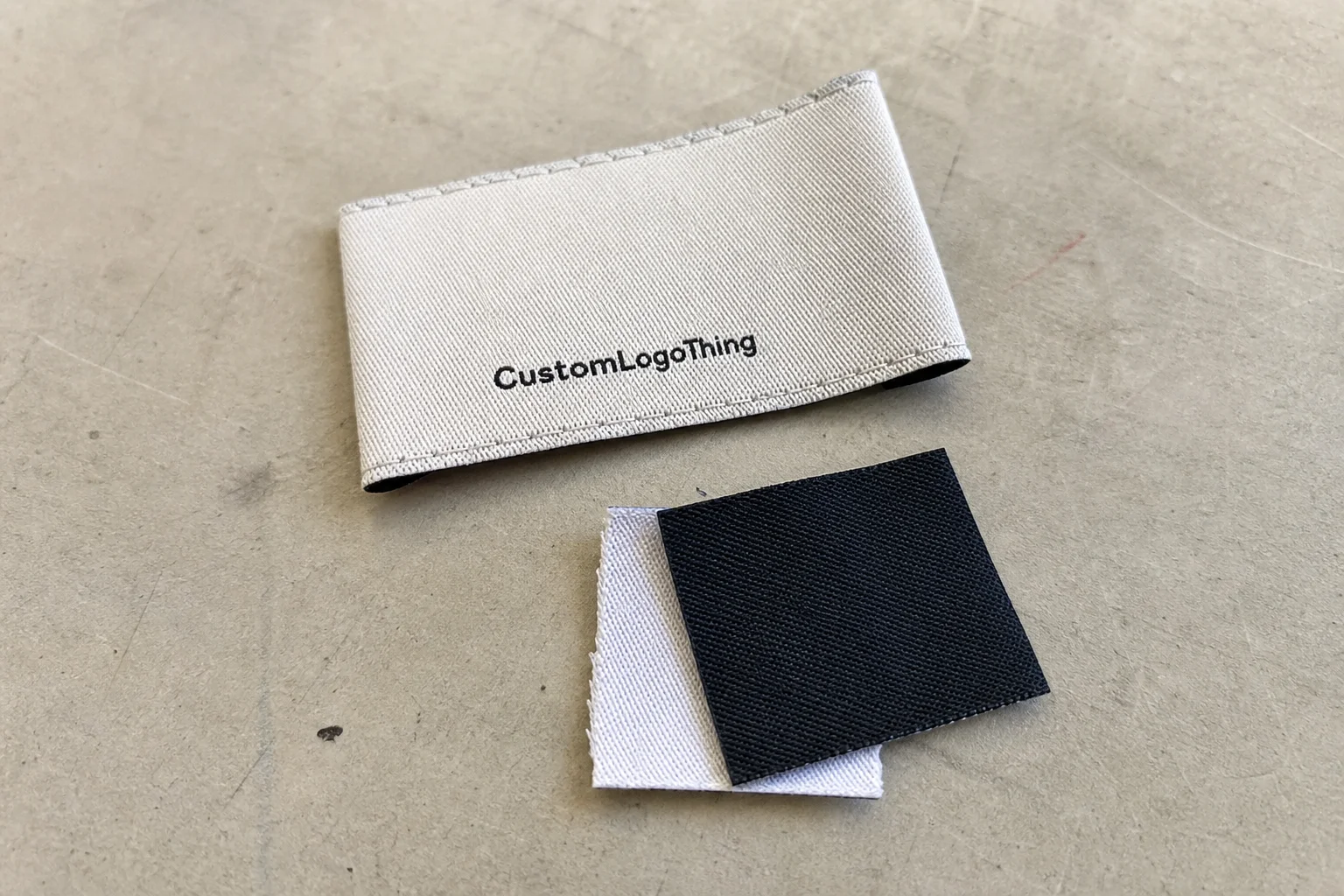
Artwork is rarely the main cost driver. Format matters more. A soft satin label with a fold, a detailed care block, and a clean sew-in finish is a different job from a flat printed size tab or a simple brand identifier with one color on one side.
The attachment method changes the economics too. Sew-in labels usually need edge control, cut accuracy, and fold consistency. Heat-applied labels can reduce sewing time on the garment side, but they need the right adhesive system and the right fabric compatibility. On paper, those two options can seem close. In production, they behave very differently.
The label's job also changes depending on the garment category. For childrenswear, loungewear, and underwear, softness matters because the label sits against skin. For workwear or outerwear, abrasion resistance and legibility tend to matter more than a soft hand feel. A buyer who focuses only on the logo often misses the part that affects wearability.
Before asking for numbers, have these details ready:
- Garment type, such as T-shirt, hoodie, undergarment, workwear, or outerwear.
- Label size, including width, height, and whether the construction needs a fold.
- Quantity, because price per unit changes sharply across quantity bands.
- Wash requirement, including whether the label must hold up to repeated laundering.
- Placement, such as neck seam, side seam, waistband, or hem.
- Required text, including fiber content, care instructions, size, and country of origin where needed.
Vague requests create hidden costs. Extra proof rounds, sample changes, and rework all consume time. A buyer may ask for a “small printed label” and get a quote that looks fine, but once the compliance copy and finishing requirements are added, the real job is no longer the same product. That is how budgets drift.
If the request does not define the construction, the quote is only a placeholder. Good pricing starts with a complete spec.
Suppliers pricing custom labels and tags are looking at material stock, print method, finishing steps, and how many pieces need to move through setup and inspection. A clear brief is usually faster and more accurate than a short email with only a logo attached. The difference shows up in both the quote and the lead time.
Choose the Right Label Format for the Garment
Different apparel categories need different constructions. Printed satin works well when softness and drape matter. Woven styles are often chosen for a more textured, premium look. Cotton twill fits brands that want a natural, slightly heritage feel. Care labels are built for compliance and legibility first. Size tabs and brand identifiers are usually narrower and simpler, but they still need clean print and reliable finishing.
Soft hand feel matters most when the label touches bare skin. That is usually true for underwear, childrenswear, loungewear, and some premium tees. A label that looks acceptable in a photo can still irritate the wearer if the edge is too stiff or the print layer feels heavy. Comfort complaints become product complaints quickly, so this is not a cosmetic detail.
Sew-in and heat-applied labels solve different problems. Sew-in construction remains the default for long-term durability and broad garment compatibility. Heat-applied labels can speed up installation, especially for smaller runs or frequent style changes, but the garment substrate has to support the process. A label that behaves well on cotton may act differently on polyester blends, coated fabrics, or stretch materials.
A useful way to narrow the choice is to ask three questions:
- Will the label touch skin for long periods?
- Does the garment need a premium visible finish or mostly compliance information?
- Does the label need to survive frequent washing, industrial laundering, or abrasion?
If the answer to the first question is yes, comfort moves up the list. If the answer to the third is yes, durability and wash resistance become the main filters. That is where a supplier can help you avoid overbuilding a label that costs more than it should, or underbuilding one that fails early.
Specifications That Affect Durability, Finish, and Brand Consistency
Once the format is chosen, the spec details decide how the label performs. Width and height affect readability. Fold style changes how the label sits in the garment. Edge finish influences comfort and fray resistance. Base color changes contrast. Print density matters because heavy coverage can affect feel, opacity, and drying behavior during production.
Color matching is one of the easiest places for a brand to lose consistency. A logo that looks correct on screen can still read wrong in hand. Small text presents another risk. If the line weight is too thin, care instructions can blur after printing or become difficult to read after washing. That becomes more likely on compact labels where a lot of information has to fit into a small space.
Compliance copy should be locked before proof approval. Buyers often need fiber content, care symbols, size marking, country of origin, and legal copy depending on market and garment type. If those details are still changing during approval, the label may need to be reworked. That can force a change in artwork, layout, or even the label structure itself.
Good proofing protects against avoidable reprints. A proper proof should confirm:
- Dimensions and fold type.
- Artwork placement and text alignment.
- Color intent, especially for brand marks and contrast text.
- Compliance wording, including any required copy.
- Attachment method, so the final label matches the garment process.
At this stage, material details matter as much as graphics. Satin, taffeta, cotton twill, and synthetic care-label substrates all behave differently under heat, tension, and wash cycles. The cleaner the copy, the better the contrast needs to be. Heavy background coverage can also change the feel of a label, especially on softer garments. That is one reason labels that seem identical in design can price differently once production is reviewed.
For brands that need a reference point for packaging and labeling standards, resources such as the Institute of Packaging Professionals and sustainability guidance from the Forest Stewardship Council can be useful. They do not replace a production spec, but they reinforce the importance of clear materials and responsible sourcing.
Printed Clothing Label Cost, MOQ, and Unit Pricing
MOQ, or minimum order quantity, is one of the main reasons a quote shifts from one buyer to the next. Setup time does not disappear just because the order is small. Artwork prep, file handling, material allocation, printing setup, and finishing all take labor. When those fixed steps are spread over fewer pieces, the unit price rises.
Quantity bands usually create the clearest price movement. A 1,000-piece order may cost meaningfully more per label than a 5,000-piece run, and a 10,000-piece run can improve unit economics again if the spec stays the same. That pattern holds across most apparel label jobs, although the exact breakpoints depend on the construction and the shop schedule.
Material choice, print complexity, and finishing all affect pricing. A simple one-color printed label with a straight cut is easier to run than a multi-color label with folded edges and fine compliance text. Special folding, extra inspection, and unusual dimensions can add cost as well. That is not a markup trick. It reflects more handling, more setup, and more waste risk.
| Option | Typical Fit | Price Behavior | Notes |
|---|---|---|---|
| Basic printed satin label | Brand ID, soft basics, inner neck labels | Lower setup cost, moderate unit price | Good for clear copy and a soft finish |
| Woven label | Premium branding, visible trim, long wear | Higher setup, better value at larger runs | Strong choice when the brand mark must stay crisp |
| Cotton twill or natural-fiber label | Heritage styling, workwear, eco-focused lines | Often mid to upper range | Supports a more tactile brand story |
| Heat-applied care label | Fast application, simple garment workflows | Can reduce sewing labor, may raise material cost | Needs compatibility testing by garment type |
A quote should spell out what is included. That means artwork setup, proofing, sampling, production, packing, and freight if the buyer wants landed pricing. If one quote includes shipping and another does not, the lower number is not really lower. Comparing those numbers side by side without the same spec is a common purchasing mistake.
For a fair comparison, evaluate the total cost per usable label, not only the unit price. Ask whether the quote includes waste allowance, inspection, and final packing format. If you are comparing label constructions before you lock the brief, the Custom Labels & Tags page is a useful reference point.
Very small runs tend to be the hardest to price well because setup can dominate the cost. Larger runs usually improve unit cost, but only if the artwork and dimensions stay stable. A simple label can still become expensive if it requires frequent revisions, special finishing, or repeated sampling. The cleaner the brief, the cleaner the quote.
Production Steps and Turnaround From Proof to Delivery
The production path is usually straightforward, but the timing depends on how complete the request is. It starts with inquiry and spec review, moves to quote, then artwork proof, approval, production, inspection, and dispatch. Each step matters because one unclear detail can hold up the next one.
Most delays happen in the same places: incomplete artwork, unclear color expectations, or last-minute quantity changes after approval. If the file is missing copy or the garment team has not confirmed where the label sits, the proof stage turns into a design conversation instead of a production check. That slows everything down and increases the chance of rework.
Typical turnaround depends on order size, material availability, print method, finishing complexity, and the production queue. Simple runs with stock materials can move quickly after proof approval. Larger runs often take longer, although they can be more efficient once the line is set. Rush orders are sometimes possible, but speed does not remove the need for a proper proof if the label has to work on the garment.
For planning, it helps to think in practical ranges rather than promises. A straightforward printed label job may move from proof approval to shipment in roughly 1 to 2 weeks when materials are on hand. More complex work, especially with special folding, strict compliance copy, or custom finishing, can stretch into 2 to 4 weeks or more depending on queue and approval timing. Those are working ranges, not guarantees.
The buyer controls three things that have the biggest effect on lead time:
- Submitting complete artwork and copy.
- Confirming quantity, size, and attachment method before quote approval.
- Approving the proof quickly and without major changes.
If a garment launch depends on the label schedule, share that date early. Lead time should reflect actual capacity and material availability, not a generic estimate. That is especially true when labels have to arrive before finishing, packing, or inbound garment allocation begins.
How We Keep Specs Consistent Across Reorders and New Styles
Repeatability is where a good label supplier proves its value. Once the spec is locked, reorders should match in size, color, finish, and feel so the brand stays consistent across seasons and product families. That sounds simple. It only works if the approved reference is stored and the production details are documented clearly.
On the production side, the checks that matter most are print registration, cut accuracy, fold alignment, and the legibility of small text. Those are the points where a label can drift away from the approved sample. A narrow size tab that is cut a fraction off can look fine on a table and still feel wrong once it is sewn into the garment. The same is true for copy that loses clarity after a material substitution.
Material supply can change, and that is where technical judgment matters. A supplier should be able to explain when a substitution is acceptable and when it is not. If the original material is unavailable, the question is not whether the replacement is similar on paper. The real question is whether it preserves function, wash resistance, comfort, and visual consistency. That higher standard protects the buyer from surprises.
Documentation helps. Keep the approved artwork, the final dimensions, the reference sample, and any special notes about color or feel. That record makes future reorders easier and reduces the risk of drift between one production run and the next. For brands with multiple styles, that consistency becomes part of the product identity.
Quality control should also include packaging and packing count checks. Labels are small, but missing pieces or mixed counts create avoidable problems on the garment line. A finished order should be checked for quantity, consistency across cartons or bundles, and the condition of the edge finish. It is a small object with a large downstream impact.
For teams following broader packaging and transport expectations, standards from groups such as ISTA can help frame handling and distribution testing. That is not the label spec itself, but it supports the discipline of controlling outcomes across transit and receiving.
What to Send for an Accurate Quote and Faster Approval
The fastest way to get a reliable Printed Clothing Labels Quote for apparel is to send a complete brief the first time. That means artwork, approximate size, quantity, garment type, attachment method, and the exact compliance text that must appear. If the label must match an existing brand piece, include a sample photo or a reference label so the supplier can understand the visual target.
Delivery details matter too. If you need landed pricing, provide the shipping destination. If your launch date is fixed, say so. If you are comparing options and want to stay within a target spend, mention the price range up front. A good supplier can often suggest a more efficient construction when they know the ceiling before quoting starts.
It also helps to say whether you need a preproduction sample or direct production after proof approval. Sampling adds time, but it can be the right choice for new styles, new materials, or tight fit-and-feel requirements. For repeat orders where the spec is already proven, direct production is often the more efficient path.
A practical request should cover these points:
- Artwork file or clean reference image.
- Label size and preferred format.
- Quantity band for pricing accuracy.
- Garment type and intended placement.
- Compliance copy, care text, and fiber content.
- Deadline and shipping destination.
The easiest way to avoid rework is to treat the quote request like a production instruction, not a design note. Review the spec, confirm the quantity band, approve the proof, and move into production without making the supplier guess what you mean. That is how you get a useful quote the first time, and it is usually the difference between a smooth order and a chain of corrections.
What do you need to prepare a printed clothing labels quote for apparel?
Provide quantity, label size, attachment method, garment type, and the exact copy that must appear on the label. Include artwork files or a clear reference photo so the quote reflects the real production spec. Add the delivery location and deadline if you need landed pricing or a specific turnaround.
How does MOQ change clothing label pricing?
Lower quantities usually cost more per label because setup, proofing, and production changeover are spread across fewer pieces. Higher quantities often reduce the unit cost, but only if the spec stays consistent across the full run. MOQ also depends on the material and finish, since some constructions are more efficient to produce than others.
Which printed label option lasts best after repeated washing?
Durability depends on the fabric, print method, and application style, not just the label appearance. For frequent washing, choose a construction designed for repeated laundering and match it to the garment's use case. Ask for wash-performance guidance before ordering if the label will be used on workwear, childrenswear, or activewear.
Can you match an existing brand label or care tag?
Yes, matching is easier when you send a physical sample, a close-up photo, or a reference from a previous order. Color, size, fold, and text layout should all be confirmed before production starts. If the original label is no longer available, a good supplier can usually recreate the spec from the best reference you have.
How fast can I get a quote and start production?
A complete request can usually be quoted faster than a partial one because fewer spec questions need to be resolved. Production timing depends on quantity, material, finishing, and proof approval, so the timeline starts after the artwork is confirmed. If speed matters, send the full spec upfront and ask whether a sample or direct production path is the better fit.


