Buyer Fit Snapshot
Use this page when a brand needs a recyclable sleeve that improves unboxing without adding too much bulk or shipping cost.
| Decision point | What to specify before quoting |
|---|---|
| Material and construction | Substrate, thickness, coating, print coverage, finish, and tolerance requirements. |
| Order economics | MOQ, unit tiers, sample run, lead time, packing method, and freight assumptions. |
| Production control | Dieline, artwork proof, barcode or warning copy, QC checks, carton marks, and reorder plan. |
Printed eco mailer sleeves can change how a brand is judged before the product is even touched. Three seconds is enough. Shipping staff see it. Customers see it. If the sleeve sits crooked, prints muddy, or arrives with weak structure, the package feels cheaper than the item inside. Done well, printed eco mailer sleeves bring order to the unboxing moment, protect the product, and cut down on unnecessary material without making the pack look stripped back or unfinished.
For Custom Logo Things, the practical question is not whether the packaging sounds sustainable in theory. The real test is harder and less glamorous: does it fit the product, survive the pack line, and still look sharp after transit? Printed eco mailer sleeves earn their place only when they pass that test. I have seen beautiful concepts fail because the fold line was off by a few millimeters, and I have also seen a plain kraft sleeve outshine a fancy carton simply because it was built properly.
Printed Eco Mailer Sleeves: Why the first impression hits hard
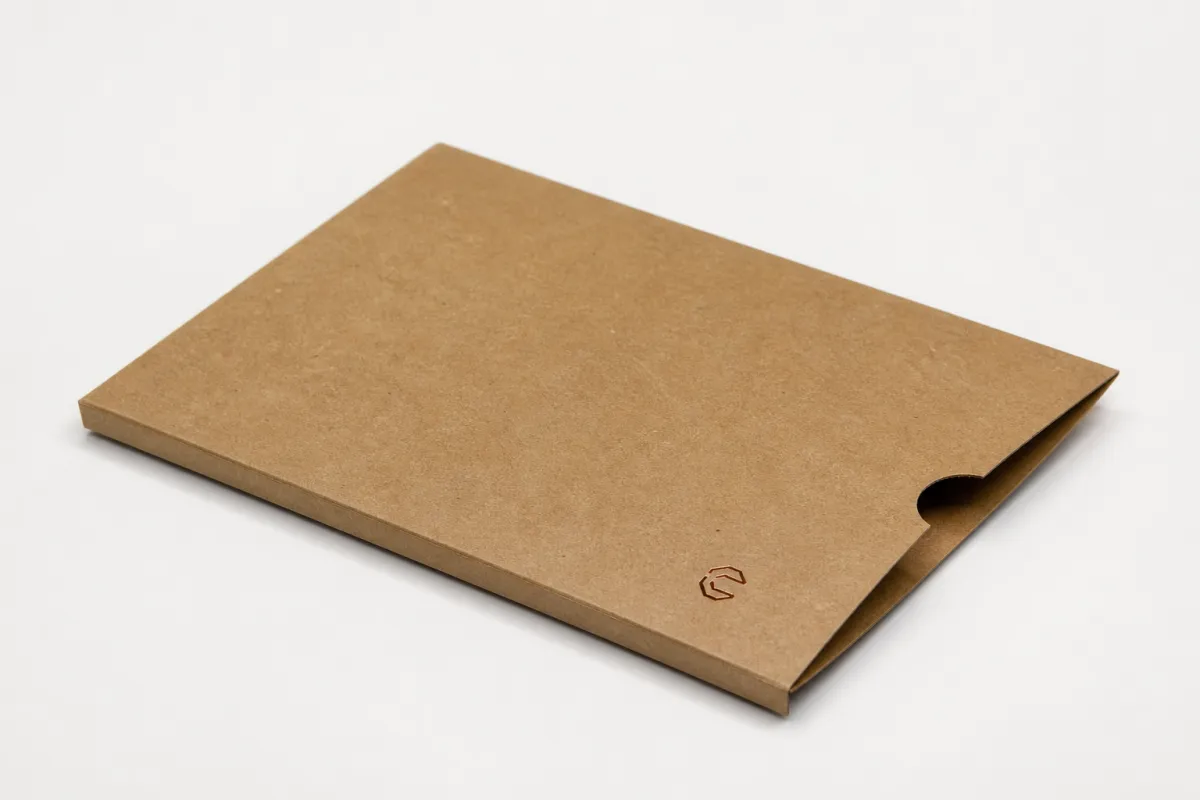
Shoppers judge the packaging before they judge the product, and they do it quickly. That speed matters because packaging is now part of the item's perceived value. Printed eco mailer sleeves sit in that first-contact zone. They are not a rigid carton pretending to be light. They are not a decorative wrap with no structural purpose. In the right format, they create shape, branding, and a cleaner presentation while using less material than a heavier box system.
A mailer sleeve is the printed outer layer that wraps, presents, or secures a product during shipping or retail handoff. Depending on the build, it may fold around an item, slide over an inner pack, or lock into a sleeve-and-tray structure with shallow depth. That makes printed eco mailer sleeves useful for apparel, subscription inserts, soft goods, flat retail items, promo kits, and lighter products that need more presence than a plain shipper can provide. They work best where the product already has some protection and the packaging mainly needs to organize, frame, and brand it.
The sustainability claim only holds up if the structure is sensible. Lower material use can mean lower shipping weight, less board consumption, and fewer layers in the pack. That sounds simple because it is simple. The catch is plain enough: a sleeve only improves the footprint if it replaces a heavier or more complicated package. Add a sleeve on top of a box on top of filler, and the result is not cleaner packaging. It is clutter with better lighting.
Printed eco mailer sleeves usually make sense when they solve three problems at once:
- Branding: they give space for logos, color, copy, and visual hierarchy immediately.
- Efficiency: they can pack quickly when the dieline is well designed.
- Material control: they reduce unnecessary board or plastic when a lighter format is enough.
That is why apparel launches and direct-to-consumer kits use them so often. A sleeve can make a simple product feel deliberate. Printed eco mailer sleeves can do that without looking low budget, which is usually the part buyers doubt until they see a proper sample. The first mockup can look almost too clean, then the live sample arrives and suddenly the whole thing makes sense.
Practical truth: printed eco mailer sleeves work best when the product already has a clear shape and the packaging is there to frame, protect, and present it. If the sleeve has to wrestle the product just to close, the design is wrong.
Printed eco mailer sleeves: How the format actually works
The structure is straightforward: panels, folds, closure points, and a finished surface that accepts print without fighting the stock. Straightforward does not mean forgiving. Printed eco mailer sleeves depend on precise panel layout and tight dimensional control. A sleeve that misses by a small amount can slide around, crush corners, or slow fulfillment in ways that show up only after production starts.
Most sleeves begin as flat stock that gets die-cut and scored. The score lines define the folds, and the cut lines define the outer shape. A good sleeve has enough stiffness to hold form, but enough flexibility to fold without cracking at the creases. Recycled kraft, FSC-certified paperboard, and other fiber-based stocks in the 250gsm to 450gsm range are common choices, depending on product weight and the look you want. Thin stock costs less, but if it wrinkles or telegraphs every bump, it stops reading as premium very quickly.
Print method changes the result more than many buyers expect. Digital printing usually works best for short runs because setup is lighter and artwork changes are easier to manage. Flexographic printing starts to make sense at scale, especially on repeat programs where one or two colors are enough and speed matters. Offset is the right route when color control and fine detail matter more, especially for larger runs of printed eco mailer sleeves that need consistent branding across multiple SKUs.
Ink coverage changes appearance and cost at the same time. Heavy solids on natural kraft can look bold, though they also reveal the texture of the stock and may increase ink usage. A restrained layout with lighter coverage often photographs better than a design that tries to use every panel. Packaging has a stubborn habit of rewarding restraint. I have watched teams chase a full-bleed concept and then end up dialing it back because the less crowded version looked more expensive in person. That kind of reversal happens a lot, kinda embarrassingly often.
Assembly follows the dieline. Depending on the design, the sleeve may arrive pre-glued, tab-locked, or folded at pack-out by a fulfillment team. That decision affects labor time, damage risk, and the unboxing feel. Pre-glued sleeves move faster but can cost more. Fold-flat sleeves reduce shipping bulk before use, which helps if warehouse space is tight. A tab-lock design can save adhesive cost, yet if it adds even a few seconds per unit, the labor bill can erase the savings quickly.
For brands comparing options, it helps to think in practical categories rather than vague eco language. If the sleeve is decorative and the product already has good protection, printed eco mailer sleeves can be very efficient. If the product is fragile or moisture-sensitive, the sleeve may need an inner structure as backup, or the brand may need to compare it with Custom Poly Mailers for a different protection profile. That is not a moral judgment; it is a shipping decision.
Key factors that decide performance and appearance
Fit comes first. A beautiful sleeve that slips around the product is useless, and a sleeve that clamps too tightly is worse. Printed eco mailer sleeves should be built around product dimensions, thickness, and tolerance, not just the nominal size on a spec sheet. The most common mistakes happen when teams measure a flat product and forget the bulk from inserts, tissue, inner cartons, or sealed edges.
I usually ask buyers to request the full size logic: finished internal dimensions, board caliper, score allowances, and the acceptable tolerance range. For many paperboard formats, a real-world tolerance may sit around +/- 1 to 2 mm on cut dimensions, though that depends on the plant, tooling, and stock. If the product has a rigid edge or a magnetic closure, that tolerance matters even more because a small misfit changes how the sleeve closes and how premium it feels in hand.
Material specs affect everything. Recycled content changes stiffness, visual texture, and the sustainability story. Higher recycled fiber can create a more honest natural look, but it can also introduce fiber speckling or a slightly rougher print surface. FSC-certified paperboard is a strong choice when traceable sourcing matters; if that certification is part of the claim, check the documentation directly through FSC. For public-facing recycling guidance, the EPA recycling guidance gives a useful baseline, though local curbside rules still decide what actually gets accepted.
Branding decisions can make a budget sleeve look intentional or make an expensive sleeve look oddly flat. High ink coverage on kraft can be striking, but if the layout has no breathing room, it can flatten the surface visually. White ink helps on darker or recycled stocks, though it adds cost and another registration variable. Soft-touch coating, aqueous coating, or matte varnish can change handfeel, but the finish needs to match the use case. A sleeve handled often during retail or shipping usually needs surface protection more than one meant for a single unboxing moment.
Sustainability proof is where many brands get careless. If you say recycled, show the percentage. If you say FSC, show the chain-of-custody claim. If you say compostable, be careful, because many paper formats are not compostable in any simple consumer sense once coatings, adhesives, or mixed components enter the picture. Plain language usually works best: what the sleeve is made from, what certifications exist, and what the customer should do with it after use. That honesty builds trust faster than a glossy claim ever will.
Shipping validation deserves a serious look for some programs. Brands with fragile or premium shipments sometimes test packaging against ISTA methods or ASTM distribution protocols such as ASTM D4169. If the sleeve is part of a larger parcel system, that kind of testing can save money later. A little test discipline prevents a lot of replacement cost. See ISTA for a reference point on shipping test standards.
| Option | Typical Unit Cost | Best For | Notes |
|---|---|---|---|
| Digital printed eco mailer sleeves | $0.55-$1.10 at 250-1,000 units | Short runs, launches, frequent artwork changes | Fast setup, good for proofing, higher unit cost at low volume |
| Offset printed eco mailer sleeves | $0.14-$0.32 at 3,000-10,000 units | Brand programs, repeat orders, tighter color control | Better scale economics, usually more setup and proofing |
| Recycled kraft sleeve with minimal print | $0.18-$0.40 at 5,000 units | Apparel, inserts, simple premium presentation | Lower ink cost, strong natural texture, clean eco story |
| Custom Poly Mailers | $0.10-$0.28 at 5,000+ units | Moisture resistance, lightweight shipping, mail-only use | Useful comparison point, but not the same sustainability profile |
The table is the part people usually need, even if they act like they don't. Printed eco mailer sleeves can be cost-effective, but only if the comparison is honest. Same dimensions. Same stock. Same print coverage. Same closure style. Same freight term. Change any of those and the quote stops being a real comparison. It becomes packaging theater, and nobody needs more of that.
Cost and pricing for printed eco mailer sleeves
Pricing for printed eco mailer sleeves comes down to a few hard variables: size, stock, print method, color count, finish, and order quantity. That list looks unromantic because it is. A small sleeve with one-color print on recycled kraft will land very differently from a large sleeve with full bleed art, white ink, and a matte coating. Treating those as interchangeable is how budgets go sideways.
For planning, low-volume digital programs often start around $0.55 to $1.10 per unit at 250 to 1,000 pieces, depending on coverage and size. Mid-volume printed eco mailer sleeves in the 3,000 to 5,000 range can land near $0.18 to $0.45 per unit if the spec stays simple. Larger offset runs often fall around $0.14 to $0.32 per unit, though coating, board selection, and special spot colors can push that higher. These are planning ranges, not promises. The final quote depends on the actual dieline and the plant's setup.
Minimum order quantity matters because setup costs do not vanish. A press setup, die, and proofing process may cost the supplier a fixed amount, and that cost gets spread across the run. Fewer pieces means a higher unit price. More pieces means a lower unit price, as long as storage, obsolescence, and artwork stability do not create new problems. That is why buyers sometimes think a larger quantity is "more expensive" when the unit cost actually dropped. They are looking at the total, not the mechanics.
Hidden costs cause the most trouble. Proofs may be free, charged, or partially credited depending on the supplier. Custom tooling may be included or separate. Freight can move the budget more than the print itself if the sleeves are bulky and shipped internationally. Storage is another quiet line item; if the order arrives all at once and sits in a warehouse for months, the real cost includes the space it occupies. Printed eco mailer sleeves are cheap only when the landed cost stays under control.
If you want a fair comparison between suppliers, use the same spec sheet. That means:
- Exact finished dimensions
- Board or paper grade
- Recycled content or certification requirement
- Print method and color count
- Coating or finish
- Packing format, carton count, and freight terms
Once those points match, the quote gets useful. Before that, it is just numbers in better clothes.
Process and timeline: From artwork to delivery
The production path for printed eco mailer sleeves usually moves through the same sequence: discovery, dieline setup, artwork prep, proofing, production, packing, and freight. The sequence looks linear on paper. In practice, it twists whenever a dimension changes or a proof comes back with a revision nobody expected.
Discovery is where the supplier should ask the questions people tend to skip. Product size. Shipping method. Fulfillment speed. Shelf use versus mail use. Recyclability target. Branded insert count. Those answers matter because they determine whether the sleeve is decorative, protective, or both. Skip that step and the sleeve may look great in a mockup while failing on the actual packing line.
Dieline setup is another point where small mistakes turn expensive. A clean dieline gives fold lines, bleed, safe zones, glue areas, and any lock features. Designers who work from a guessed template usually pay for it later. A printer should provide a production template before artwork is finalized. Once the file is built, proofing checks more than color. It also checks text placement, panel order, score alignment, and whether the design still makes sense once it wraps around the real object.
Timelines depend on complexity. A simple digitally printed run with approved artwork may move from proof approval to production in about 5 to 8 business days, with total turnaround around 10 to 15 business days if freight is local and nothing gets delayed. Custom offset work, special coatings, or new die tooling can stretch that into 15 to 25 business days or longer. International freight adds another layer. Fast production means little if the shipment sits in transit.
The usual schedule killers are easy to predict:
- Missing or outdated dielines
- Slow approval cycles
- Changing dimensions after artwork starts
- Vague sustainability claims that need legal review
- Late file swaps that force a new proof round
The clean way to keep printed eco mailer sleeves on schedule is simple: lock product dimensions early, assign one person to approve the proof, and leave room for shipping after production. That last part gets ignored constantly. Teams set a delivery date based on press time, then act shocked when cartons still need to move from the plant to the warehouse. Charming, but not useful.
Launch programs need buffer. Reorders need buffer too. The cost of an extra week is usually lower than emergency freight, repacking, or launching with placeholder packaging that makes the whole brand look half-finished.
Step-by-step guide to ordering printed eco mailer sleeves
Start with the product, not the print. That is the safest route for ordering printed eco mailer sleeves without tripping over avoidable errors. Measure the finished product, note inserts or tissue, and decide whether the sleeve is mainly decorative, protective, or meant to do both jobs. A sleeve for retail display can be looser and more visual. A sleeve for shipping needs a firmer grip and a more disciplined structure.
Step one is defining the use case. A subscription insert sleeve has different needs than an apparel carrier sleeve or a promo kit. Weight, fold state, and handling pattern all shift the spec. Step two is choosing the material. Recycled kraft gives a natural look and a strong eco story. FSC paperboard is a better fit when sourcing credibility matters or when the print surface needs to stay clean and consistent. Higher caliper board gives more stiffness, though it also raises price and storage bulk. No single material wins every job. The right one is the one that matches the task.
Step three is choosing the print method. Digital works well for short runs and variable data. Offset is better for scale and color control. Flexo can be efficient for large repeat programs with simple graphics. If you are uncertain, ask for a side-by-side quote. Printed eco mailer sleeves are not only about the running price; they are about how much setup, proofing, and make-ready the job requires.
Step four is preparing artwork correctly. A vector logo, the supplier's dieline, bleed, safe areas, and color guidance are the basics. If the sleeve uses CMYK, define the expected result on kraft stock. If it uses Pantone, make sure the printer knows which colors are critical. Tiny text, fragile linework, and dark solids that need perfect registration on textured fiber stock are common troublemakers. A surprising number of packaging problems start as design choices.
Step five is sampling. Do not skip it. Ask for a flat sample, a structural sample, or a prototype if the budget allows. Then test the sleeve in real conditions: pack it, close it, stack it, and move it through the actual fulfillment flow. A sleeve can look right on a PDF and fail the moment a real product hits the line. Physical testing catches what digital approval cannot.
Step six is planning reorder logic. If the first run performs well, you do not want to discover a six-week lead time when inventory is already thin. Set a reorder trigger based on real burn rate. Printed eco mailer sleeves are not glamorous inventory, but stockouts still create embarrassment, and embarrassment has a price tag.
Keep a spec sheet on file with dimensions, artwork version, material, finish, and supplier notes. The next reorder will go faster if that document exists. Guessing is costly. Guessing with packaging seems to cost more than guessing anywhere else.
Common mistakes that make printed eco mailer sleeves fail
The easiest mistake is ordering the wrong fit. A sleeve that is too loose looks unfinished and can shift in transit. A sleeve that is too tight slows packing and can stress the board at the score lines. Printed eco mailer sleeves need enough tolerance to be workable, but not so much slack that the product rattles around like it was packed by somebody rushing to get lunch.
Overdesign is another common problem. Too many finishes, too much ink, and too many ideas packed into one sleeve usually create confusion rather than polish. If the substrate is natural kraft, lean into the texture instead of pretending it is glossy artboard. If the board is smooth and premium, keep the layout crisp. The artwork should match the material rather than fight it. That is how a sleeve feels intentional instead of busy for its own sake.
Weak sustainability claims can create real trouble. If a sleeve includes lamination, mixed materials, or adhesive-heavy construction, do not call it recyclable without checking local acceptance rules. If the end user needs a plain-English explanation, give them one. Better still, describe the actual material mix and let the claim be precise instead of theatrical. Printed eco mailer sleeves can support serious sustainability messaging, but only if the structure supports it too.
Operational mistakes hurt just as much as design mistakes. Warehouse humidity can soften some paper stocks. Poor stack strength can crush sleeves before they ever leave the building. Shipping abuse can scuff edges or crack dense folds. Pack-out speed matters because any clever design that adds ten seconds per unit turns into real labor cost over a month. A sleeve that looks efficient on the drawing board and slow on the line is not efficient. It is a theory.
A useful rule: if you cannot explain how the sleeve behaves after it is folded, stacked, packed, and shipped, the spec is not ready yet. That sounds blunt because packaging has a blunt way of exposing vague thinking.
For products that need more moisture resistance or a simpler shipping workflow, brands sometimes compare printed eco mailer sleeves with other formats and keep Custom Poly Mailers as a benchmark. That comparison makes it easier to decide whether the sleeve is truly the right format or just the prettier one.
Expert tips and next steps for printed eco mailer sleeves
Start with one best-selling size and one controlled print spec if you want a rollout that does not become noisy. Printed eco mailer sleeves scale better after the first run teaches you what the line actually does. One clean sleeve spec with predictable reorders beats five versions and a quarter spent untangling inventory. That is not caution for its own sake. It is how waste and rework get reduced.
Test the prototype in the real fulfillment line, not only in a meeting room. Put the product in, fold the sleeve, close it, stack it, move it, and open it again. Ask the people packing the orders what slows them down. They will spot problems the design team may miss because they handle the sleeve in real time, under real pressure, with real cartons piling up. If a packer says the fold feels fiddly, believe them. They are the ones living with the design all day.
Request three things before approving any order: a spec sheet, a sample, and a side-by-side quote comparison. The spec sheet keeps everyone honest. The sample shows how the material behaves. The quote comparison reveals whether the supplier is pricing the same object or just using the same words. That matters a lot for printed eco mailer sleeves because the category can be quoted as a simple wrap, a custom structural piece, or something in between.
Build the reorder calendar around lead time, not comfort. If sell-through means stock needs to arrive every eight weeks and the sleeve takes three weeks from approval to delivery, reorder before the point where everything feels urgent. Comfort is a poor inventory strategy. It also leads to rush freight, which is usually more expensive than the packaging problem itself.
There is a solid rule of thumb for sustainable packaging buyers: make the packaging as simple as the product allows, but not simpler. Printed eco mailer sleeves are strongest when they remove unnecessary layers, keep the brand sharp, and stay easy to handle. They are weak when they try to solve problems they were never built to solve.
The next move is straightforward: define the product, request a sample, and compare printed eco mailer sleeves on fit, cost, print quality, and recyclability. If the spec is right, they make the package feel cleaner, smarter, and easier to ship. If the spec is wrong, the mistake shows up loudly. That is the whole thing, really.
Frequently Asked Questions
What are printed eco mailer sleeves usually made from?
Most printed eco mailer sleeves are made from recycled kraft, FSC-certified paper, or paperboard stocks that balance stiffness and print quality. If the sleeve needs a more premium feel, ask about coatings and finishes, then check whether those treatments affect the recycling outcome. For sustainability claims, get the documentation before placing the order, not after the cartons arrive. That extra check saves awkward conversations later.
How much do printed eco mailer sleeves cost per unit?
Unit cost usually falls as quantity rises because setup costs get spread across more sleeves. For planning, short digital runs can sit around $0.55-$1.10 per unit, while larger offset runs may land around $0.14-$0.32 depending on size, print coverage, and finish. Material choice, color count, and coating often move the price more than a small size change. If a quote looks too low, ask what was left out.
What is the typical turnaround for printed eco mailer sleeves?
Simple runs with clean artwork can move quickly, while custom jobs with special finishes or new die lines need more time. A straightforward order may take about 10 to 15 business days end to end after proof approval, while more complex printed eco mailer sleeves can need 15 to 25 business days or longer. Proofing and approvals usually cause the biggest delays. The press is rarely the real bottleneck.
Can printed eco mailer sleeves be recycled after use?
Paper-only sleeves are often recyclable, but local rules still control what actually gets accepted. Laminations, heavy coatings, and mixed materials can change that outcome quickly. If recycling matters to your brand, keep the structure simple and provide a plain-language material breakdown so customers know what to do next. Honest labeling beats a vague green claim every time.
What artwork file do I need for printed eco mailer sleeves?
A vector logo, dieline, bleed, and safe area are the basics for clean print and clean folds. Use clear color notes for CMYK or Pantone, and avoid tiny text or hairline details that can disappear on kraft stock. Ask the printer for a template before design starts so you are not guessing your way into a rejected proof. One good template can save a week of rework.
Printed eco mailer sleeves are not magic. They are a packaging format that works when fit, stock, print method, and production planning line up. Get those right, and printed eco mailer sleeves can reduce waste, protect brand value, and ship cleanly without pretending to be something they are not. Get them wrong, and the cracks show fast. The smartest move is to treat the sleeve like a working piece of packaging, not a decorative afterthought.


