Buyer Fit Snapshot
| Best fit | Printed Eco Snack Pouches Wholesale for Packaging Brands projects where brand print, material claims, artwork control, MOQ, and repeat-order consistency need to be specified before quoting. |
|---|---|
| Quote inputs | Share finished size, material target, print colors, finish, packing count, annual reorder estimate, ship-to region, and any compliance wording. |
| Proofing check | Approve dieline scale, logo placement, barcode or warning zones, color tolerance, closure strength, and carton packing before bulk production. |
| Main risk | Vague material claims, crowded artwork, missing packing details, or unclear freight terms can make a low unit price expensive after revisions. |
Fast answer: Printed Eco Snack Pouches Wholesale for Packaging Brands should be specified like a repeatable production item. The safest quote records material, print method, finish, artwork proof, packing count, and reorder notes in one written spec.
Production checks before approval
Compare the actual filled-product size with the drawing, then confirm tolerance on folds, seals, hang holes, label areas, and retail display edges. Reserve space for logos, QR codes, warning copy, and material claims before decorative graphics fill the panel.
Quote comparison points
Review material grade, print process, finish, sampling route, tooling charges, carton quantity, and freight assumptions side by side. A quote is only useful when the supplier can repeat the same color, closure quality, and packing count on the next order.
Printed eco snack pouches wholesale can be the difference between a snack brand that feels shelf-ready and one that still looks like it is figuring itself out. A plain pouch tends to fade into the noise of the aisle. A printed eco pouch starts working sooner, carrying flavor cues, freshness signals, and a clear brand voice before a shopper ever picks it up. That matters in snack retail, where attention is brief and the competition sits right next door.
Packaging does more than hold product. It tells a buyer, in a glance, whether the snack inside feels crisp, clean, premium, or forgettable. That is why printed eco snack pouches wholesale makes sense for growing brands: the pouch can handle branding, product messaging, and retail presentation in one format, without leaning on stickers, labels, or hand-applied decoration that slows production and creates uneven results across SKUs.
Brands with a core flavor lineup, a seasonal rotation, and club-size formats also benefit from the control wholesale buying brings. The right spec helps keep unit cost in check, protects shelf life, and keeps the product family visually aligned. That is the practical value of printed eco snack pouches wholesale, not just the appeal of a cleaner material story or a greener front-panel claim.
A good snack pouch has to do three jobs at once: protect the product, sell the product, and fit the filling process. If one of those slips, the package starts adding cost instead of removing it.
Why printed eco snack pouches wholesale win on shelf
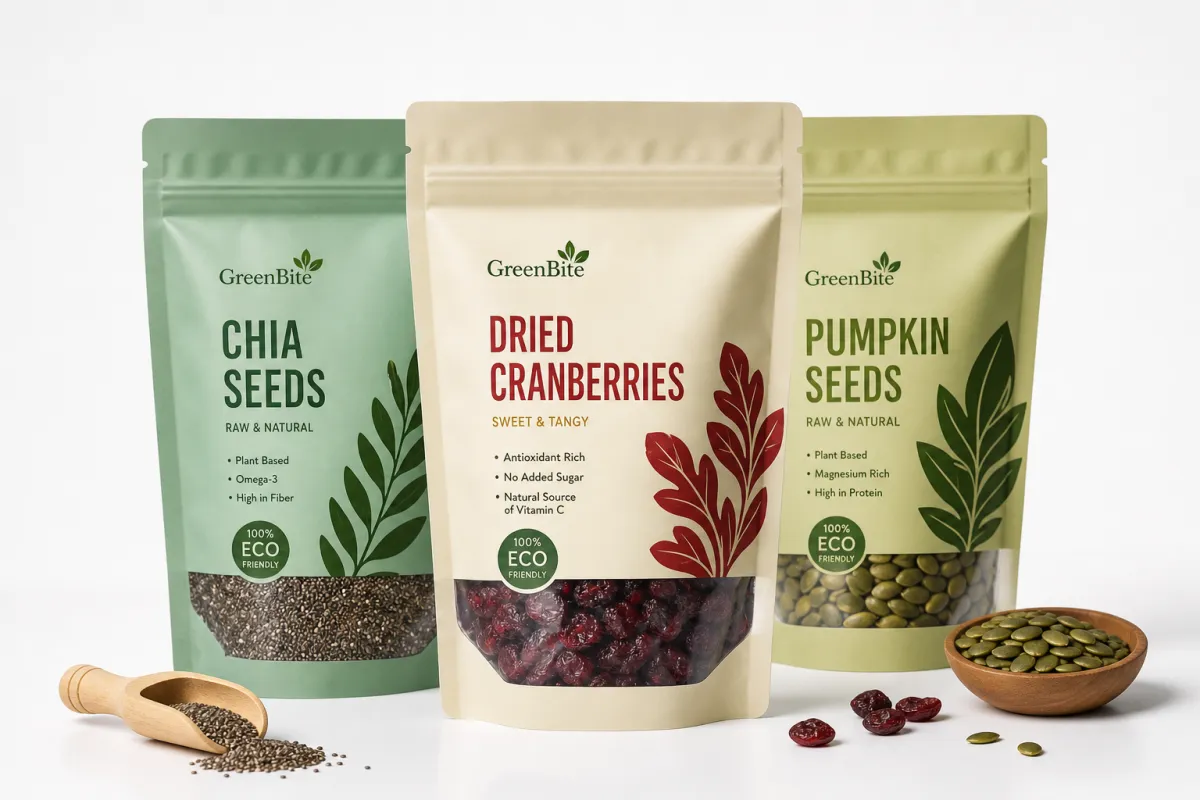
Retail shelves do not wait around for a long explanation. If a pouch looks generic, it usually reads as ordinary, even when the snack inside is excellent. Printed eco snack pouches wholesale gives the package a stronger voice at the exact moment a shopper makes a split-second decision. Flavor cues, ingredient language, color blocking, and texture hints all start working before the pouch reaches a hand.
That first impression matters because snack buying is fast, visual, and often impulse-driven. A premium nut mix or granola blend in a plain pouch can disappear beside brighter, better-structured competitors. Put the same product into a well-designed eco pouch with sharp print registration and a clear front-panel hierarchy, and it gets a second look. That is not theory on paper; it is how crowded food aisles actually behave.
Printed eco snack pouches wholesale also reduces clutter across a multi-SKU line. Rather than juggling separate labels for every flavor, the print can handle artwork, flavor names, regulatory copy, and brand story in one controlled build. For brands with six or ten varieties, that means fewer handling steps, fewer labeling mistakes, and a cleaner presentation from case pack to retail display.
Wholesale buying becomes even more useful when the business needs a consistent look across several sizes. A brand may want a 2 oz trial pouch, a 5 oz retail pouch, and a larger club pack, yet the shelf story should still feel like one family. A good printed structure supports that continuity while keeping unit cost more predictable than short-run decorative work. In day-to-day operations, that predictability helps with margin planning, promotional calendars, and reorder timing.
There is another piece that gets missed often: buyers, distributors, and store teams judge the brand by the package before they know the product. A pouch that looks considered signals that the company understands sealing quality, shelf standards, and shipping conditions. That confidence is part of why printed eco snack pouches wholesale remains a strong choice for private label snacks, specialty food brands, and store-brand launches.
Product details: films, finishes, and pouch formats
Snack packaging works best when the format follows the fill style, the shelf position, and the experience the brand wants to create. Printed eco snack pouches wholesale usually starts with four common structures: stand-up pouches, flat pouches, side-gusset bags, and flat-bottom bags. Each one brings a different footprint, fill behavior, and retail posture.
Choose the right pouch format
Stand-up pouches are the most versatile option for many snack lines because they display well, ship efficiently, and can support resealable features. They fit trail mix, dried fruit, crackers, and granola where shelf presence matters but a rigid carton is not necessary. Flat pouches work better for single-serve portions, sample packs, and lighter snack formats where compactness and cost carry more weight.
Side-gusset bags suit taller presentations and larger fill volumes. They are common for bulk snacks, coffee-style snack presentations, and products that need a stronger vertical silhouette. Flat-bottom bags give the most premium shelf posture, with wider panels that make branding and flavor communication easier to read from a distance. For many growing snack brands, that format feels more upscale without moving into rigid packaging.
Match finish to shelf behavior
Finish changes the way artwork reads under store lighting. A matte finish softens glare and often feels more natural or artisanal. A gloss finish sharpens contrast and helps saturated colors stand out. Soft-touch lamination gives a refined tactile feel, though it should be used with care because it can raise cost and may influence material choice or recyclability. The right finish for printed eco snack pouches wholesale depends on the brand story, the shelf setting, and the target price point.
Clear windows can help, but they need discipline. A window lets the shopper see the snack, which can build trust for items like granola clusters or colorful fruit blends. Too much exposed product can weaken the brand face or cut into barrier performance if the structure is not built correctly. The pouch still has to protect the contents, not just display them.
Functional details deserve the same level of attention. Resealable zippers help keep snacks fresher after opening. Tear notches make opening easier. Hang holes support peg display. Easy-open seals matter for older shoppers and high-turn retail. None of those features should be added out of habit. Each one should solve a real use case for the product and the buyer.
Artwork should be built around the pouch geometry instead of being forced onto a generic flat template. Fill level affects how much front panel remains visible, where the retail eye lands first, and how the gussets change the shape in hand. A design that looks bold on a monitor can fail on a filled bag if it ignores seal areas, fold lines, or laminate feel. That is why printed eco snack pouches wholesale works best when structure and graphics are developed together.
For a brand building a larger assortment, it helps to review the available options through the lens of production efficiency and reorder consistency. Our Wholesale Programs page is a useful starting point when you want the packaging spec to support the sales plan instead of fighting it.
Specifications that matter for snack protection
Eco branding does very little if the snack arrives stale, crushed, or oily before it reaches the customer. A crisp chip blend needs moisture control. A nut mix needs oxygen protection and grease resistance. A baked snack needs a seal that stays stable through shipping vibration and retail handling. That is the engineering side of printed eco snack pouches wholesale.
Barrier requirements need to match the product, not the mood board. Moisture ingress can soften crunchy snacks. Oxygen exposure can stale oils and shorten shelf life. Grease migration can stain artwork or weaken the internal layer if the pouch structure is too light. The pouch has to protect the failure mode most likely to affect the snack inside.
Film thickness and puncture resistance matter just as much as graphics. Thin films may reduce material use, but they can also increase the risk of pinholes, seal damage, or scuffing during pallet movement. For that reason, many buyers ask for a sample run or product simulation before locking in a final spec. That is a small step compared with a failed retail launch.
The sustainability discussion should stay grounded in facts. Some buyers want a recyclable mono-material structure. Others need recycled-content film. Some products may fit compostable options if the market and end-of-life pathway support them. The right choice depends on the snack, the distribution chain, and the region where the package will be sold. A structure that looks eco-friendly on paper is not automatically the best fit for every snack line.
For teams comparing claims and technical expectations, standards matter. Chain-of-custody and material sourcing questions often point back to organizations like FSC, while transit and package durability questions are often measured against practices discussed by ISTA. Those references do not choose the pouch for you, but they do help keep the decision anchored in testing and traceability.
Compliance also needs a direct conversation. Is the pouch for direct food packing, rebagging, or contract filling? Will it touch the food at the brand’s facility, or will a co-packer handle the final fill? Food-contact expectations, seal integrity, and storage conditions all change depending on that answer. A smart printed eco snack pouches wholesale order starts with those details, because they shape the material stack from the beginning.
The most common mistake is treating “eco” as the first spec and barrier as the second. It should go the other way. First, the snack needs the right protection. Then the packaging team chooses the most responsible material structure that still does the job. That order saves a lot of headaches later, kinda the whole point of good packaging work.
Printed eco snack pouches wholesale pricing and MOQ
Pricing for printed eco snack pouches wholesale comes down to a handful of concrete variables, and buyers save time when they ask for a quote that breaks those items out clearly. Size, film structure, number of colors, print coverage, finish, zipper type, and any added feature such as a clear window or hang hole all move the price. Barrier requirements can also shift the cost if the structure needs stronger protection than a standard laminate.
MOQ changes with both print method and package complexity. A simpler spec may open a lower entry point, especially for brands testing a new flavor or running a seasonal promotion. A more complex build, especially one with premium finish work or a special barrier structure, usually needs a larger run to make production efficient. That is normal. It is also why buyers should compare the spec, not just the headline number.
Wholesale pricing should be reviewed as landed cost, not just unit price. Freight, sampling, proofing, tooling, and reorder frequency all matter. A pouch that looks cheaper on paper may cost more once shipping and setup are added. A slightly higher unit price can be the better business choice if it reduces waste, simplifies storage, or improves retail sell-through.
Many snack brands lower cost by standardizing on one pouch size and changing only the artwork. That approach reduces the number of pouch systems the team has to manage and often keeps the filling line simpler. Instead of rebuilding the spec for every flavor, the brand keeps the same closure, the same panel layout, and the same retail footprint. That is one of the most reliable advantages of printed eco snack pouches wholesale for growing product lines.
| Option | Best Fit | Typical MOQ | Relative Unit Cost | Notes |
|---|---|---|---|---|
| Digital printed mono-material pouch | New flavors, test launches, smaller wholesale runs | 1,000-3,000 pcs | Moderate to higher | Flexible entry point; good for artwork changes and shorter planning cycles |
| Flexographic printed recyclable pouch | Core SKUs with repeat orders and higher volumes | 5,000-10,000+ pcs | Lower at scale | Best when the brand can commit to steady reorders and consistent artwork |
| Compostable paper-based pouch | Dry snacks with a shorter shelf life and a strong natural brand story | 3,000-8,000 pcs | Moderate to higher | Good visual fit, but barrier performance must be checked carefully |
| Flat-bottom premium pouch | Club packs, specialty retail, premium shelf displays | 5,000+ pcs | Higher | Excellent shelf posture and branding area; more material and more handling value |
If you are comparing options for a launch, ask for a line-item quote that separates the pouch, print, setup, and freight. That makes it easier to decide whether a zipper, matte finish, or stronger barrier is worth the added spend. It also helps internal reviewers understand why one printed eco snack pouches wholesale option is a better fit than another.
For a realistic planning example, a 5,000-piece run for a mid-size snack pouch may sit around $0.18-$0.45 per unit depending on structure and print coverage, while a more complex flat-bottom build with premium finish and a zipper can move higher. The point is not to chase the lowest number. The point is to match cost to the role the pouch needs to play in the channel.
Process and timeline from artwork to delivery
The cleanest printed eco snack pouches wholesale projects follow a straightforward workflow: brief, quote, dieline review, artwork proofing, sample approval if needed, production, quality checks, and shipment. Nothing flashy there, but the order matters. It prevents the kind of delay that shows up when artwork and structure are handled in the wrong sequence.
First-time orders usually take longer because the team has to confirm the dimensions, the seals, the ink coverage, and the fill behavior. If the pouch is being used for the first time, it pays to build in more approval time. A repeat run is usually faster because the spec is already known, the artwork is already approved, and the production team can move with fewer variables.
- Brief the product with fill weight, snack type, and shelf-life target.
- Review the dieline so artwork stays clear of seals, zippers, and fold areas.
- Approve the proof after checking panel copy, colors, and barcode placement.
- Confirm the structure if the snack needs stronger moisture or oxygen protection.
- Lock the schedule around production time, transit method, and receiving window.
Delays usually come from missing art files, late changes to flavor names, uncertainty around zipper style, or unclear dimensions. A small artwork correction is easy; a late material change can affect the whole run. That is why the fastest jobs are often the ones where the buyer arrives with final copy, the correct fill size, and a clear idea of how the pouch will be used.
Shipping time also matters more than many teams expect. Air freight moves faster but costs more. Ocean freight improves unit economics but needs more planning. If the delivery window is tight, the packaging schedule should be set before the launch calendar gets locked. Good printed eco snack pouches wholesale planning treats logistics as part of the packaging spec, not as an afterthought.
For brands selling through a co-packer, this step becomes even more important. The pouch has to run cleanly on the filling line, seal properly, and arrive in the right count. A strong packaging partner will ask about seal jaws, fill temperature, and output speed because those details can affect pouch performance in ways the artwork proof will never show.
Why choose us for printed eco snack pouches wholesale
Most snack buyers do not need a generic sales pitch. They need a packaging partner who can match pouch performance to product behavior, then keep the artwork and the production spec aligned from first proof to reorder. That is the kind of support that makes printed eco snack pouches wholesale work in the real world.
We focus on the pieces that keep a project steady: clear communication, production-ready proofing, and honest guidance on sustainability tradeoffs. If a pouch needs more barrier, we will say so. If a simpler structure can do the job, we will say that too. There is no upside to overspecifying a snack pouch if it adds cost without improving shelf life or retail appeal.
Artwork support matters just as much as material selection. Many brands have strong creative teams, but a pouch dieline introduces panel shifts, seal margins, and fill-level realities that regular label design does not. We help buyers check those details before production so the final printed pouch looks intentional and runs cleanly on the line. That support is especially useful for snack brands ordering through our wholesale packaging options because repeatability becomes part of the business model.
Repeatability matters more than most teams expect. A snack brand may forgive one rough sample, but it will not forgive a second run that shifts in color, seal quality, or pouch feel. Wholesale buyers want consistency because they need the next order to match the last order. That is where well-managed printed eco snack pouches wholesale saves time, protects the brand image, and cuts down on operational headaches.
We also keep the conversation grounded in packaging economics. What is the target margin? What is the channel? How much shelf life is required? Does the product need a zipper, or does that just sound nice? Those questions shape the final spec far more than trend language does. A snack pouch should support the business, not complicate it.
For buyers comparing suppliers, the real advantage is a packaging partner who can explain tradeoffs without dressing them up. A more premium finish may help retail appeal. A simpler structure may reduce cost. A different barrier may extend freshness by weeks or months. The best choice depends on the snack, the launch plan, and the route to market. That is the practical value of printed eco snack pouches wholesale when it is handled with care.
If you need a dependable next step, the goal stays simple: choose a pouch that protects the product, fits the filling process, and gives the brand a strong retail voice. That is exactly what we aim to deliver through printed eco snack pouches wholesale for snack teams that need scale without waste.
Next steps for printed eco snack pouches wholesale orders
The fastest way to move a quote forward is to send the details that actually affect the spec. If you are planning printed eco snack pouches wholesale, start with pouch dimensions, fill weight, product type, shelf-life target, print quantity, and your delivery window. Those five or six pieces of information do more to shape an accurate quote than a general request for “eco-friendly snack bags.”
It also helps to include artwork files, brand colors, finish preference, and any functional needs such as zippers, tear notches, or hang holes. If the material structure is still open, ask for two options so you can compare appearance, barrier, and cost side by side. That is usually the cleanest way to make a buying decision without guessing. Many teams find that a short comparison is easier to approve internally than a single speculative quote.
When the order is time-sensitive, say so early. Sampling, proofing, and freight choices all affect the calendar. A realistic schedule gives the production team room to verify the print and the seals, which is especially helpful on a first run. For repeat programs, the process is usually tighter, but the project still benefits from a clear receiving plan and a confirmed reorder spec.
Before you approve the final build, ask one last practical question: does the pouch protect the snack well enough for the way it will actually be stored, shipped, and sold? If the answer is yes, the package is doing its job. If the answer is unclear, the spec needs another pass. That is how strong snack packaging is built, and that is why many brands keep returning to printed eco snack pouches wholesale.
One useful habit I have seen work well is to review the pouch in the same order the product will meet it: fill line, case pack, transit, shelf, and opening. That quick pass catches more problems than a pretty mockup ever will, and it keeps the final decision tied to how the snack actually lives in the market.
What is the usual MOQ for printed eco snack pouches wholesale?
MOQ depends on pouch size, print method, and material structure, so there is no single number that fits every project. Digital print often supports lower entry quantities, while flexographic or gravure runs usually make more sense at higher volumes. Add-ons like zippers, special finishes, or complex barrier builds can raise the minimum order requirement for printed eco snack pouches wholesale.
Which eco materials work best for printed eco snack pouches wholesale?
The best material depends on whether the snack needs moisture control, oxygen protection, or grease resistance. Recyclable mono-material structures can be a strong fit when local collection and recycling systems support them. Compostable options can work for some dry snacks, but they still need to protect freshness and hold up in real distribution. That is why printed eco snack pouches wholesale should start with product behavior, not just material labels.
Can printed eco snack pouches wholesale include zippers and tear notches?
Yes, those are common features and are often used together for convenience and easy opening. Each feature adds cost and can affect production timing, so it is best to choose only the options buyers will actually use. A good spec balances convenience, shelf impact, and sealing performance rather than adding features by default in printed eco snack pouches wholesale.
How long does a printed eco snack pouch order usually take?
Timing typically includes artwork review, proof approval, production, and shipping, so first-time orders take longer than repeat runs. The biggest variables are pouch complexity, quantity, and whether the artwork arrives in a production-ready format. If the order is urgent, ask early about sampling and shipping options so the schedule can be planned realistically for printed eco snack pouches wholesale.
Are printed eco snack pouches wholesale suitable for oily or crunchy snacks?
Yes, if the pouch uses a barrier structure that matches the product's moisture and grease needs. Oily snacks often need stronger protection than buyers expect, so the eco claim should never replace barrier testing. Always confirm seal quality and product stability before committing to a full wholesale run, because that is what keeps printed eco snack pouches wholesale performing the way the brand needs it to.


