Printed fabric Labels for Clothing look like a small component, but they carry more pressure than most buyers expect. They sit against skin, survive repeated laundering, communicate brand identity, and often have to fit compliance copy into a space smaller than a business card. A label that fails on any one of those points can spoil an otherwise well-made garment. In practice, buyers usually spec these in common sizes like 10 x 40 mm neck labels, 15 x 50 mm brand labels, or 20 x 60 mm care labels, depending on how much text has to fit and how the seam allowance is built.
The tricky part is that there is no universal "best" label. A soft satin label that feels ideal in a baby tee may be too delicate for workwear. A dense woven label that holds up beautifully on outerwear can feel bulky inside a lightweight knit. The right choice depends on the garment, the wash environment, the amount of copy, and the level of finish the brand can support in production. If the garment is expected to survive 30-50 home wash cycles, that should be part of the label brief from the start, not an afterthought.
If you are comparing options, the spec matters more than the sales language around it. Two labels that look similar in a quote can behave very differently once they are sewn into garments and sent through real-world wear. That is why buyers usually save more by tightening the specification than by chasing the lowest initial unit price. A clear tech pack, a realistic wash requirement, and one approved pre-production sample often prevent more cost than a discount ever will.
What Printed Fabric Labels for Clothing Actually Do
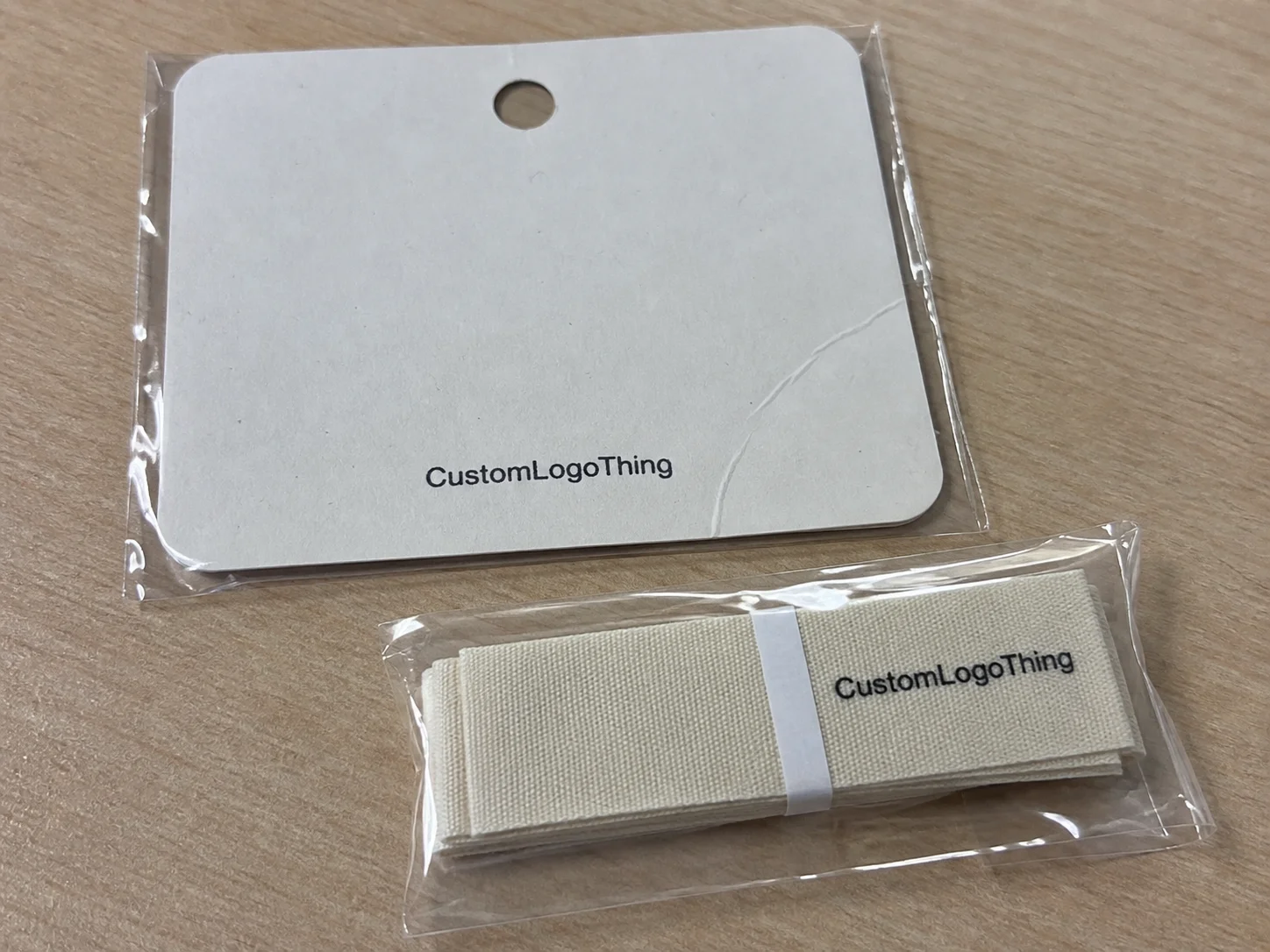
Printed fabric labels for clothing are textile labels with branding, size, care instructions, fiber content, origin details, or other garment information printed directly onto a cloth base. Common bases include satin, woven fabric, cotton, and recycled textile stocks. They are sewn into garments or, in some short-run applications, attached with a temporary adhesive backing during production. Typical production uses rotary screen printing, digital textile printing, or heat-transfer printing, then cut-and-fold finishing on hot-cut, ultrasonic, or die-cut equipment.
That sounds straightforward, but the label has to do several jobs at once. It needs to be readable after cutting and stitching. It needs to stay comfortable in contact with skin. It also needs to remain legible after washing, drying, folding, and abrasion. If the garment is a premium item, the label has to look intentional rather than technical. If the garment is babywear or activewear, comfort usually outranks everything except compliance. For labels that carry fiber content or care instructions, buyers often ask for OEKO-TEX Standard 100 for the substrate and ink system, and they may also request WRAP or BSCI documentation for the facility if social compliance is part of the sourcing requirement.
Brands often discover that the same label format does not fit every line. A fashion tee, a heavyweight hoodie, and a children's garment each create a different set of constraints. The tee usually wants softness and a low-profile finish. The hoodie can tolerate more structure. The children's garment has less room for error because scratchiness becomes a complaint quickly and safety requirements tend to be stricter. If the line uses organic cotton and wants a certified story, GOTS-certified cotton labels are often the cleanest fit, while recycled polyester labels are commonly paired with GRS documentation when the brand needs traceability.
That is why the most useful question is not "What label looks best?" but "What label survives this garment's actual use?" The answer usually comes from combining a print method, a textile base, and a finish that work together instead of treating them as separate decisions. The best suppliers will normally show a digital mockup first, then a strike-off or sample roll, then a pre-production sample with the final fold, cut, and print settings before bulk starts.
Why Material Choice Changes the Result
Material selection has a bigger effect on the final label than most first-time buyers realize. Satin is popular because it feels smooth and keeps print edges clean. Woven bases give the label more body and tend to suit brands that want a traditional, durable appearance. Cotton can fit natural-fiber positioning and works well when a softer, matte look is preferred. Recycled textile stocks are often selected for line consistency or sustainability claims, but they still need to meet the wear requirements of the garment.
There are practical tradeoffs in every choice. Satin usually feels softer, but very thin satin can wrinkle or fray if the cut and seal are poor. Woven labels can hold detail well, but if the weave is too coarse the smallest text may lose clarity. Cotton reads as natural and understated, though it may absorb ink differently and show more variation from batch to batch. Recycled stocks can work well, but the buyer should check that the material availability is stable enough for future reorders. For example, a polyester satin around 68D-75D can work well for neck labels, while a tighter damask weave or jacquard base may be better when the brand wants sharper edges and a more structured hand feel.
The base fabric also affects how much detail should be packed into the design. Thin legal copy, multilingual care instructions, and small symbols all require more room than a simple brand name and size tab. If the material texture is pronounced, the design usually needs more contrast and more generous spacing. Dense copy on a textured base is where many labels start to look good in a digital proof and disappointing on the final cloth. As a rule of thumb, text below 5 pt can become hard to read once the label is folded and stitched, especially on soft or lightly textured substrates.
For brands with sustainability requirements, the right question is less about marketing language and more about documentation. Recycled content claims, chemical safety statements, and chain-of-custody paperwork should be checked against the actual material being used. If the supplier offers recycled polyester, ask whether the claim is supported by GRS documentation, whether the yarn source is traceable, and whether the certificate covers the relevant production scope. If the label is supposed to be organic, ask for a valid GOTS scope certificate for the material chain, not just a verbal claim.
How Print Method and Finishing Affect Durability
Durability starts before the first color is laid down. Artwork setup, print method, drying or curing, cutting, and inspection all affect whether the label stays sharp or breaks down after wear. A weak file with tiny type and poor contrast usually stays weak, even if the production line is technically capable. Good suppliers usually preflight the file, check minimum line weights, confirm color separations, and flag any elements that could break below about 0.2 mm once printed.
Screen printing is often used for simple, repeatable designs because it gives strong color density and works well when the artwork does not change much from one order to the next. Digital printing is better suited to shorter runs, more detail, or designs that need more flexibility. Heat transfer systems can be useful when the customer wants a softer hand feel and the label content is not too dense. None of these methods is inherently superior. Each one fits a different production problem. On more controlled runs, suppliers may use rotary screen presses for repeated solid-color work, or digital textile printers for small-batch artwork with variable text or QR codes.
Finishing matters just as much. Heat, wash exposure, edge sealing, and post-print handling influence how long the label lasts. A label can look perfect on a flat sample and then behave differently once it is stitched into a knit collar or folded along a seam. Stretch, abrasion, and detergent exposure are what expose weak specs. Common finishing choices include hot cutting at around 180-220 C for polyester bases, ultrasonic cutting for clean edges on synthetic labels, and endfold, centerfold, or miter fold setups depending on where the label will be sewn.
As a rule, the final label should be tested in conditions that resemble the garment's real use. If the product will be tumble dried, choose a construction that can tolerate that. If the garment is delicate and rarely washed, a softer but slightly less aggressive print system may be acceptable. If the label carries regulatory text, durability should not be treated as optional. A fading care label creates trouble long after the purchase order is closed. Buyers often ask for wash and crocking checks based on ISO 105 methods, and a practical internal target is usually color retention at grade 4 or better after laundering if the label is expected to live through repeated household wash cycles.
Buyers who care about quality control should ask one practical question: what happens to the print after repeated flexing and laundering? The answer is more useful than any generic claim about "premium quality." It gets to the part that matters. Good shops will also check print registration, edge seal integrity, and whether the label frays at the corners after cutting, folding, and a short abrasion test.
Cost, MOQ, and the Real Price Drivers
Price is shaped by a short list of variables, and the cheapest route usually comes from simplifying those variables rather than squeezing the last cent out of the quote. The main drivers are size, quantity, material, print colors, fold style, finishing method, and any special packaging requirements.
Printed fabric labels for clothing usually get cheaper per piece as order volume rises because setup, proofing, cutting, and inspection are spread across more units. That is why minimum order quantity matters so much. A 500-piece order can carry a noticeably higher unit price than a 5,000-piece run even if the artwork is unchanged. In real quotes, a simple woven or printed label may land in the $0.08-$0.28 range at higher volume, while a tightly specified 500 MOQ program with multiple components, special folding, and extra packaging can reach $2.50-$4.00 per unit for a bundled set.
Complexity adds cost in quiet ways. A single-color size label is easy to produce. A brand label that includes a logo, fiber content, care symbols, multilingual instructions, and a QR code requires more prepress work and a tighter registration standard. If the buyer compares quotes without checking whether the specs are truly equivalent, the numbers can be misleading. A quote should always state the base material, print method, fold type, cut method, inspection standard, and whether sampling is included.
| Label Type | Typical MOQ | Indicative Unit Price | Common Use Case |
|---|---|---|---|
| Satin printed label | 1,000-5,000 pcs | $0.08-$0.18 | Soft hand feel, tees, babywear, light fashion apparel |
| Woven fabric label with printed detail | 1,000-10,000 pcs | $0.10-$0.24 | Brand-forward apparel, uniforms, heavier wear |
| Cotton or recycled textile label | 2,000-10,000 pcs | $0.12-$0.28 | Natural or sustainability-led branding |
| Bundled label kit with care, size, and brand pieces | 500-2,000 sets | $2.50-$4.00 | Low-MOQ launches, premium packaging, multi-part trims |
If you want a practical benchmark, ask whether the quote includes a strike-off, whether the artwork is already press-ready, and whether the factory is pricing by label or by finished set. Those three points often explain the biggest difference between two quotes that otherwise look almost identical. Bulk production is usually far cheaper than repeated sampling, but a well-managed sample cycle is still cheaper than reworking 10,000 labels after the first bulk run.
Choosing Specs That Fit the Garment
The best label specification starts with the garment, not the factory catalog. A lightweight tee usually does better with a soft satin or printed cotton label, trimmed to a modest size and sewn flat at the neckline or side seam. A hoodie or jacket can support a sturdier woven label with more body, especially if the brand wants a premium, heritage look. Activewear often needs a smooth, low-irritation surface, which is why heat-transfer labels or very fine satin prints are common there. Babywear usually needs the softest hand feel, the least abrasive edge treatment, and the clearest compliance copy.
Size matters as much as material. A 10 x 35 mm neck label may be enough for a brand name and size, but once care symbols, country of origin, or multilingual content are added, the label can quickly need 15 x 50 mm or 20 x 60 mm. If the label will be sewn into a side seam, allow enough seam margin so the stitching does not eat into the printed area. Many teams build in 3-5 mm of safe margin on all sides to keep the readable area away from the fold and needle path.
Construction details matter too. A centerfold label is often the easiest for a neck seam, while an endfold or miter fold may work better when the label needs to sit flat in a visible location. Tear-away labels can be useful for scratch-sensitive garments, but they should be tested to make sure the removal process does not damage the seam or leave sharp residue. If the label is intended to sit directly on skin, ask for a smooth cut edge, low-profile stitching, and a substrate that has already been checked for OEKO-TEX Standard 100 or an equivalent chemical safety standard.
The best spec is usually the one that helps the production line stay consistent. If your team reorders the same trim every season, keep a master spec sheet with dimensions, Pantone or CMYK targets, fold style, material code, and inspection notes. That makes reorders faster and reduces the chance that a small change in the artwork or material goes unnoticed until the labels arrive.
Timeline, Proofing, and Quality Control
Production timing is often more predictable than buyers assume, provided the artwork is complete and the approval process is disciplined. A typical run can move through digital proofing in 1-2 business days, strike-off sampling in 3-5 business days, and bulk production in 10-15 business days after sample approval. For more complex label kits or jobs that require special folding, color matching, or multiple material checks, the total timeline is often 18-22 business days from approved artwork to shipment.
The sample process should not be treated as a formality. A good workflow usually goes from digital mockup to physical strike-off, then to a pre-production sample with the actual cut, fold, and finish. Buyers should check print sharpness, text readability, color match under daylight-equivalent lighting, and edge finish before giving final approval. If the design uses brand colors, ask for a referenced color standard rather than an informal description. Pantone targets are still the most practical way to manage repeatability.
Inspection should happen at more than one point. Incoming fabric rolls should be checked for weave consistency, shade variation, and defects. During printing, the operator should verify alignment, ink density, and drying or curing performance. After cutting, the team should check length tolerance, edge seal quality, and whether the labels are sticking together or showing frayed corners. Final packing should confirm count accuracy, carton labeling, and whether the lot numbers or batch references are recorded for traceability.
For buyers who want a stricter standard, AQL 2.5 is a common starting point for visual inspection, with special attention to critical issues such as unreadable care content, wrong size marking, and loose or damaged edges. It is also smart to ask for a wash test sample on the first bulk lot if the label is going into a garment category where repeated laundering is unavoidable. A simple one-page QC checklist can prevent a lot of back-and-forth later.
Mistakes That Lead to Reorders
Most reorders come from avoidable spec problems, not from dramatic production failures. The most common issue is too much information in too little space. Buyers often want a clean brand line, a size mark, care icons, fiber content, and a legal origin statement all on one small label. If the layout is cramped, the text becomes hard to read and the label looks crowded after folding.
Another common mistake is approving a screen image without checking the physical sample. Colors can shift, edges can behave differently, and tiny type that looks fine on a monitor can disappear once printed on fabric. For that reason, the sample should always be checked in hand, under neutral light, and in the actual fold configuration. A digital proof is only a planning tool; it is not a substitute for a cut-and-sewn sample.
Buyers also get caught by mismatch between garment and label behavior. A label that is fine on a woven shirt may irritate skin inside a brushed fleece hoodie. A label that looks elegant in a mockup may not hold up through repeated tumble drying. If the garment has stretch, the label needs to tolerate movement without cracking, curling, or puckering at the seam. If the product is for infants or young children, the standard should be stricter still.
Then there is the certification problem. Some teams assume that "eco-friendly" or "factory certified" is enough, but they never ask for the actual document. If the brand needs OEKO-TEX Standard 100, GOTS, GRS, WRAP, or BSCI coverage, those documents should be requested during quoting, not after the labels are already in production. If the paperwork cannot be matched to the actual material and production scope, the claim should not be treated as verified.
The last common error is underestimating reorder risk. If a supplier cannot repeat the same shade, same weave, or same cutting standard on the next run, then the first purchase was only half a solution. Keeping the approved sample, artwork file, and spec sheet together is the best way to keep repeat orders consistent.
Practical Buying Checklist
Before placing an order, it helps to ask for a complete spec, not just a quote. The supplier should confirm the material, print method, size, fold type, cut type, quantity break, and expected lead time. If the label has a compliance role, the buyer should also confirm the wording, symbol set, and language requirements before artwork is finalized.
Ask for sample steps in writing. A clear process usually means digital proof first, then physical sample or strike-off, then bulk approval. If the supplier skips the sample stage on a complex design, that can be a warning sign. Ask who checks the labels at each stage: print operator, QC inspector, and final packer should all have defined checkpoints.
Ask for proof of certification where relevant. OEKO-TEX Standard 100 is useful for chemical safety on textile components, GOTS is relevant when organic fiber claims are being made, GRS supports recycled content claims, and WRAP or BSCI can help verify social compliance expectations. If a supplier cannot show current documentation, it is safer to treat the claim as unverified.
Ask how the supplier measures quality. Good answers include print registration tolerance, cut-length tolerance, edge-seal checks, wash resistance targets, and carton count verification. For lower-risk labels, a simple visual inspection may be enough. For labels that carry legal information, a more formal inspection record is worth the extra time.
Frequently Asked Questions
What is the most common material for printed fabric labels for clothing?
Polyester satin is one of the most common options because it is soft, low cost, and easy to print. Woven polyester and cotton are also widely used when the brand wants a different texture or a more natural look.
What MOQ should I expect?
Many suppliers quote 1,000-5,000 pieces for standard printed labels, while more customized or mixed-component label programs may start at 500 sets. The exact MOQ depends on the print method, material, and whether the labels are sold individually or as part of a trim package.
How long does production usually take?
If artwork is ready and the sample is approved quickly, a common timeline is 18-22 business days from proof to shipment. Simple repeat orders can move faster, while complex finishes, special certification checks, or multi-piece kits can take longer.
Which certifications matter most?
It depends on the claim. OEKO-TEX Standard 100 is common for chemical safety, GOTS is relevant for organic fiber supply chains, GRS is used for recycled content, and WRAP or BSCI are often requested for social compliance. The key is to match the certificate to the actual claim on the label.
What should I inspect on the sample?
Check text readability, size accuracy, color match, fold behavior, edge finish, and whether the label feels comfortable against skin. If the label will be washed often, test it through at least one wash cycle before approving bulk.


