What Factory Audits Miss About Printed Hang Tags for Candle Brands
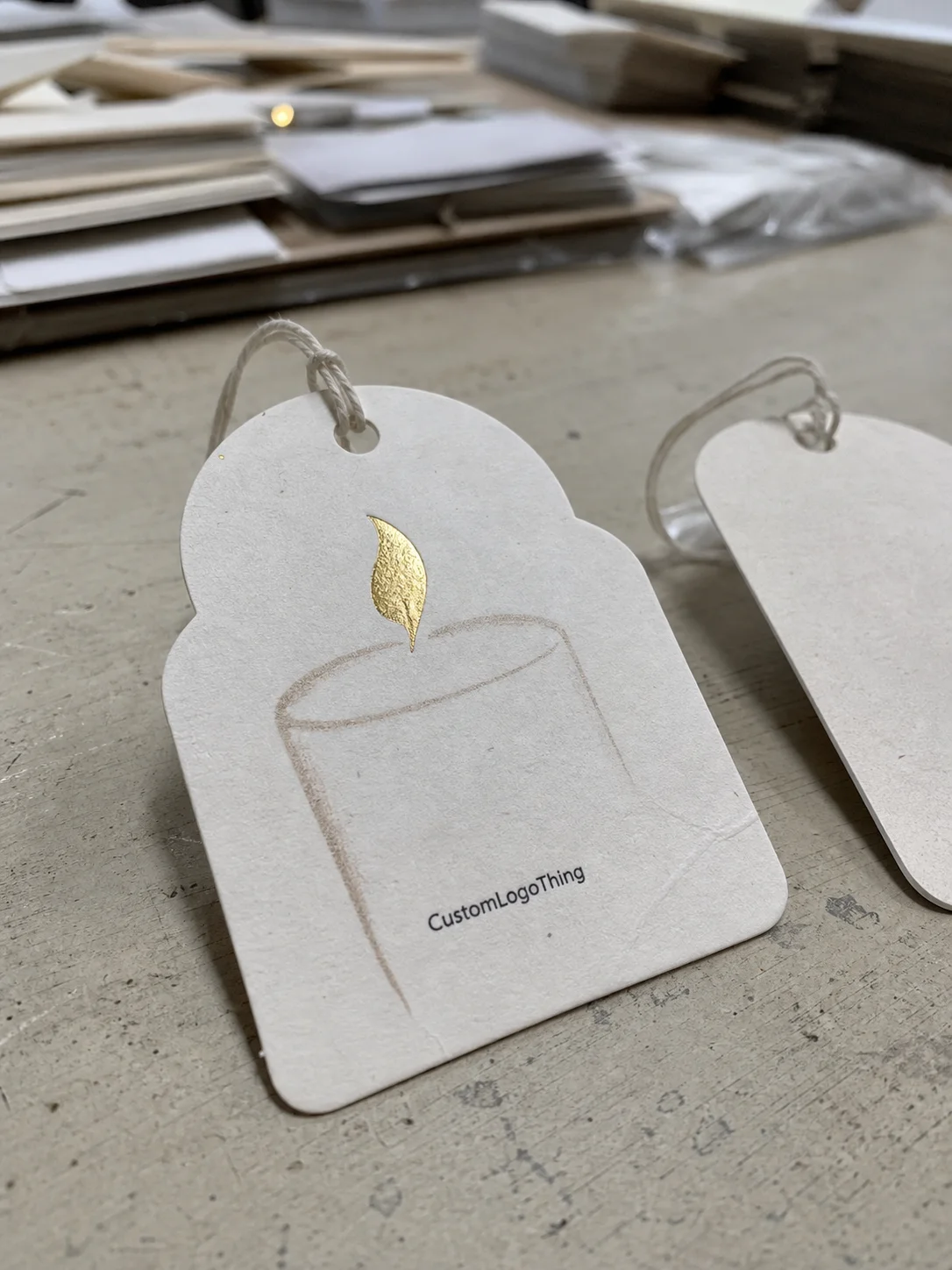
Printed Hang Tags for Candle brands factory audit questions sound narrow until you see a sample that looked perfect in PDF and came off press with dull color, punched holes too close to the edge, and a board stock that curled the minute it hit the packing table. That happens more often than buyers want to admit. A clean mockup does not mean a stable production spec.
A hang tag is not decoration glued on at the end. For candle brands, it carries SKU data, scent notes, price, burn warnings, care instructions, retailer codes, and the first physical impression of the product. If the tag is off by a few millimeters, or the finish fights the typography, the whole presentation looks cheap. People notice that before they notice the wax. A common production spec is a 2 x 3.5 inch or 2.5 x 4 inch tag on 300-400gsm C1S, C2S, or uncoated cardstock, usually with a 3 mm bleed and 1.5-2.0 mm safe margin around the trim.
The audit should test more than whether the supplier can print something attractive once. It should show whether the factory can repeat the same result across reorder cycles, different shifts, and slightly changed paper lots. That is the real job. If you are buying Custom Labels & Tags, the hang tag has to match the rest of the system, not just the mood board. Ask for lot traceability on paper, ink batch records, and whether the plant keeps retained samples for 6-12 months.
For candle brands, the buyer lens is stricter because the product lives around heat, fragrance, glass, and retail handling. Smudging, scuffing, weak hole reinforcement, or poor contrast can make a tag hard to read on shelf. The best audit questions are the boring ones: how do they control consistency, traceability, and approval gates? Not how confidently they say "quality is good." That answer is cheap. A serious factory should be able to quote defect targets such as AQL 2.5 for major defects and AQL 4.0 for minor defects, then explain what gets blocked at each stage.
"Show me the controls, not the promise." That is usually the right reaction when a supplier says they can do premium candle tags but cannot explain how they prevent spec drift after the first sample.
How the Print Workflow Actually Runs From File to Finished Tag
If a factory cannot walk you through the actual path from artwork to packing, the audit is already doing its job. The workflow should be simple to explain and hard to fake: artwork intake, prepress check, proofing, plate or digital setup, substrate selection, printing, finishing, cutting, punching, stringing if needed, final inspection, and packing. A competent supplier will also tell you what software they use for preflight, such as Adobe Acrobat Preflight or Esko-style dieline checks, and what tolerance they allow for registration and trim drift.
Each stage creates its own failure mode. Prepress is where bad bleed, low-resolution files, and misaligned dielines get caught. Print setup is where Pantone matching, ink density, and registration either stay tight or start drifting. Finishing brings in lamination, foil, embossing, or spot UV, which can look great on a sales sample and look poor when the line speed changes. Cutting and punching are where a lot of tag problems start, because the hole can wander or the corners can chip if the board is wrong for the die. Ask for die tolerance targets, such as +/-0.3 mm for hole placement and +/-0.5 mm for trim on higher-end runs.
Ask the supplier which print method they recommend and why. Offset is usually the safer bet for larger quantities and tighter color control, especially at 1,000 to 10,000 units. Digital can work well for shorter runs of 100 to 500 pieces and variable data, but you still need to know how they manage calibration and whether the output holds a Delta E color variance under 2.0. Foil stamping, embossing, and spot UV each add setup and rejection risk. A supplier that treats every method like the same process is not being efficient. They are being sloppy.
One useful buyer test is simple: ask them to describe the last three checks used to keep the mockup aligned with mass production. A competent factory will talk about file verification, first-article approval, and in-line inspection. A weak one will drift into vague talk about "experienced workers." For example, a real control chain should include prepress sign-off, a 1st-sheet approval against a printed master, and a post-die-cut carton audit before packing release.
Packaging and print quality are not isolated from shipping performance. If your candle tags are packed too tightly or exposed to abrasion, the final result can fail retail handling even when the press sheet looked fine. Standards and test thinking from groups like ISTA help frame the question properly: how does the finished pack survive transport, stacking, and handling? Ask for drop, rub, and carton compression checks if the tags are packed with string, eyelets, or folded inserts.
Cost, Pricing, MOQ, and Quote Signals That Change Unit Cost
Price is where buyers get lazy and suppliers get creative. Do not ask for "best price" and hope for discipline. Ask for a quote that breaks out size, board weight, print method, finish, hole shape, stringing, packing format, and any tooling or proof fees. That is how you see what is actually moving cost. A transparent quote should also name the carton count, the inner pack format, and whether the factory is charging for a metal punch die, foil die, or embossing die separately.
The most useful pricing question is not "How much per piece?" It is "What changed the unit cost?" The answer should point to real drivers. A 2 x 3 inch tag on 350gsm coated stock with one-color print is not the same job as a 3 x 5 inch tag with soft-touch lamination, foil, and cotton string. Pretending those are equivalent is how budgets get wrecked. In practice, a simple uncoated tag may land around $0.12-0.35 per unit at 5,000 pieces, while a premium foil-and-laminate version can rise to $2.50-4.00 per unit at 500 MOQ if the run includes specialty finishing, stringing, and individual packing.
MOQ matters because setup costs need to be spread across the run. That is why 500 pieces can cost noticeably more per unit than 5,000 or 10,000 pieces, even if the design is identical. You are paying for die setup, proofing, press make-ready, and finishing waste. The factory is not doing charity work, and frankly, neither should you. For many shops, a realistic MOQ is 200-500 pieces for digital work, 1,000 pieces for offset, and 3,000-5,000 pieces before the unit cost starts to flatten out.
| Print Option | Typical Setup Impact | Common Use | Quote Signal to Check |
|---|---|---|---|
| Digital print | Lower setup, higher flexibility | Short runs, fast revisions | Ask about color consistency across batches and whether the press is calibrated to a target profile |
| Offset print | Higher setup, better unit economics at scale | Standard candle tag runs | Ask for plate cost, proof timing, and color tolerance, including acceptable Delta E range |
| Foil or embossing | Extra setup and waste allowance | Premium brand presentation | Ask whether the quote includes test pulls, die charges, and the expected spoilage allowance |
| Spot UV or lamination | Added finishing labor | Retail-facing tags needing scuff resistance | Ask about curling, cracking, coating compatibility, and whether a 24-hour cure is included |
In real quoting, a cheap tag can become expensive fast if the supplier charges again for revisions, reproofing, or a small change to the punch shape. Quotes should list the exact paper spec, finish, and packing quantity per carton. If the sheet says "paper card" and nothing else, that is not a quote. It is an invitation to argue later. The quote should also identify whether the stock is FSC-certified, recycled, kraft, cotton paper, or coated art paper, because each choice changes ink holdout, rub resistance, and folding behavior.
For sustainability claims, request the actual paper documentation if the factory says the stock is certified. You can check certification expectations directly through FSC. If the supplier is also using textile string or fabric components, ask for GOTS for organic cotton cord, OEKO-TEX Standard 100 for textile safety, GRS for recycled content claims, and WRAP or BSCI for social compliance documentation where applicable. If the claim matters on pack, it needs a trail, not a slogan.
Step-by-Step Audit Process, Timeline, and Approval Gates
A clean audit process protects your schedule more than it protects your ego. Start with a spec sheet. Then confirm materials, review the dieline, approve the proof, approve the physical sample, release production, inspect packing, and ship. That order matters. If a factory pushes you to skip one of those steps, they are asking you to pay for risk later. A disciplined process usually begins with a 24-hour artwork preflight, then 1-2 business days for a digital proof, 3-5 business days for a hard sample if tooling is already available, and 18-22 business days for production after final approval.
The timeline usually gets stretched by the same few things: artwork revisions, special finishes, sample turnaround, factory queue time, and peak-season congestion. Simple tags can move quickly if the artwork is clean and the factory has idle capacity. Add foil, embossing, or custom stringing, and the calendar grows. It always does. Packaging people hate surprises, which is why phase-by-phase dates are better than one vague lead time number. Ask the supplier to show the critical path with dated gates instead of saying "about three weeks."
Ask for approval gates in writing. No mass production before proof sign-off. No final packing before sample approval. No spec changes after the sample without a revised timeline and documented cost impact. That is not being difficult. That is how you keep the buyer side from becoming the blame side. The best factories will also require a signed sample reference, a color target, and a line-item checklist before they release the job to production.
If the factory says they can absorb late changes "easily," press for detail. Changing a hole diameter by 1 mm can require a new punch; changing foil coverage can increase scrap; changing board thickness can alter crease quality and fold memory. Ask whether the change triggers a new first-article sample, a revised die, or a new carton count. Those are the real cost signals.
Material, Finish, and Brand-Safety Checks Candle Buyers Should Demand
Material choice affects more than appearance. For candle tags, the safest high-volume options are usually 300-400gsm coated art paper, 350gsm uncoated white card, recycled kraft board, or textured cotton paper for a premium feel. If the tag will be tied near glass, fragrance oil, or shipped in humid conditions, ask for scuff resistance, moisture behavior, and curl testing before you approve the final stock. A good supplier should explain the difference between coated, uncoated, and matte laminate in terms of ink absorption and scratch resistance.
Finish changes the customer's first touch. Soft-touch lamination looks rich, but it can show fingerprints and sometimes slows dry time. Gloss lamination improves rub resistance, but it may make dark type reflect too much light. Foil stamping can elevate a logo, yet it needs clean die pressure and can misregister if the board is too soft. Spot UV adds contrast, but only if the base coat and UV layer are compatible. Ask for at least one physical sample that shows the exact combination you plan to run, not just a generic sales sheet.
Brand-safety means the tag is readable, durable, and legally complete. That includes warning language, scent disclosure if required by your market, country-of-origin marking if applicable, and barcodes or QR codes that scan cleanly. A retail tag should survive abrasion, folding, and short exposure to oils without turning the typography muddy. If the tag uses a hole, eyelet, or reinforced reinforcement patch, inspect that area under magnification for tearing, cracking, or misaligned punching.
A practical inspection checklist should include paper grammage confirmation, board thickness, print registration, edge trim quality, hole location, hole diameter, fold accuracy, barcode scan test, ink rub test, and carton count verification. If the factory uses in-line cameras, ask what defects they reject automatically and what still depends on manual inspection. The answer tells you whether the process is controlled or just busy.
If the supplier handles any textile add-ons, cords, or sewn components, ask for the relevant compliance documents: OEKO-TEX Standard 100 for material safety, GOTS for organic fiber claims, GRS for recycled inputs, and WRAP or BSCI for workplace compliance. Those certificates do not make the tag better by themselves, but they do tell you whether the factory understands documented control or just marketing language.
Common Supplier Mistakes That Slip Through a Weak Audit
The first mistake is assuming the proof is the product. It is not. A proof can hide weak paper, over-saturated black, poor foil adhesion, or a hole that was never tested under production pressure. If the supplier cannot show how they move from proof to press sheet to packed carton, they are asking you to trust a stage that has not been validated.
The second mistake is accepting an incomplete spec. "White card" is not enough. You need board weight, surface finish, caliper, ink system, die type, hole size, string material, and carton pack count. Without those details, the factory can substitute something that looks similar but behaves differently on press. The difference between 300gsm and 400gsm can change crease quality, hanging behavior, and whether the tag curls after lamination.
The third mistake is ignoring finishing waste and rework risk. Foil stamping often needs extra test pulls, and embossing can require multiple adjustment passes before it lands cleanly. If the quote does not include spoilage allowance, the supplier may recover cost by rushing the job or by using a lower-grade alternate stock. Ask what percentage of waste is built into the quote; for complex tags, 3-8% waste is not unusual.
The fourth mistake is no checkpoint after packing. A tag that passes print inspection can still fail in carton if the stack pressure causes scuffing, the string tangles, or the bagging method leaves marks. Final inspection should verify count accuracy, outer carton labeling, inner pack orientation, and whether the finished goods stay flat after compression. If the carton is too tight, the board will remember it.
Next Steps to Shortlist, Sample, and Lock the Right Factory
Shortlisting should start with capability, not friendliness. Ask each supplier to quote the same spec: 2.5 x 4 inch tag, 350gsm matte art card, one-color print, soft-touch lamination, round hole, cotton string, and packed 500 per carton. Then compare not only price but also lead time, proof method, sample fee, and defect policy. If one supplier is dramatically cheaper, check whether they excluded finishing, tooling, or packing detail from the quote.
Request a sample in three steps: first a PDF proof with die line and color callout, then a digital or press proof on the exact stock, then a pre-production sample with the final punch, finish, and string. If the supplier cannot provide that sequence, they probably cannot control production either. Good factories will also tell you whether a sample fee is credited back after order confirmation and whether the sample cycle adds 3-7 business days before mass production.
Once you have the sample, lock the job only after confirming the exact production reference. That means the paper name, weight, finish, hole size, string type, packing spec, and approved artwork version all sit in one record. You want zero ambiguity when the reorder comes back six months later. Reorders fail when the team says "use the same as last time" and nobody can point to the actual signed sample.
If you are comparing suppliers for a candle launch, choose the one that can explain the process in plain language and back it with numbers: 18-22 business days production, 200-500 MOQ for digital, 1,000 MOQ for offset, AQL thresholds, and clear reproof charges. That combination is usually a better signal than a glossy capability deck.
FAQ
What is a realistic MOQ for printed candle hang tags?
For digital print, 200-500 pieces is common. For offset, 1,000 pieces is more typical, and 3,000-5,000 pieces usually improves unit economics. Specialty finishing may push the MOQ higher because the setup waste is larger.
How long should production take?
A standard run is often 18-22 business days after final sample approval. Add time for new dies, foil, embossing, stringing, or peak-season scheduling.
What should I ask for in the quote?
Ask for stock type and weight, print method, finish, hole size, string material, carton pack count, tooling fees, proof fees, and any spoilage allowance. If those lines are missing, the quote is incomplete.
Which certifications matter most?
For sustainability and compliance, request FSC for paper, GRS for recycled content, GOTS for organic cotton string, OEKO-TEX Standard 100 for textile safety, and WRAP or BSCI for social compliance where relevant. Use the certificate number and scope, not just the logo.
What inspection checks are worth insisting on?
Paper grammage, print registration, color consistency, hole placement, edge trim quality, barcode scan, rub resistance, carton count, and final pack orientation should all be checked before shipment.