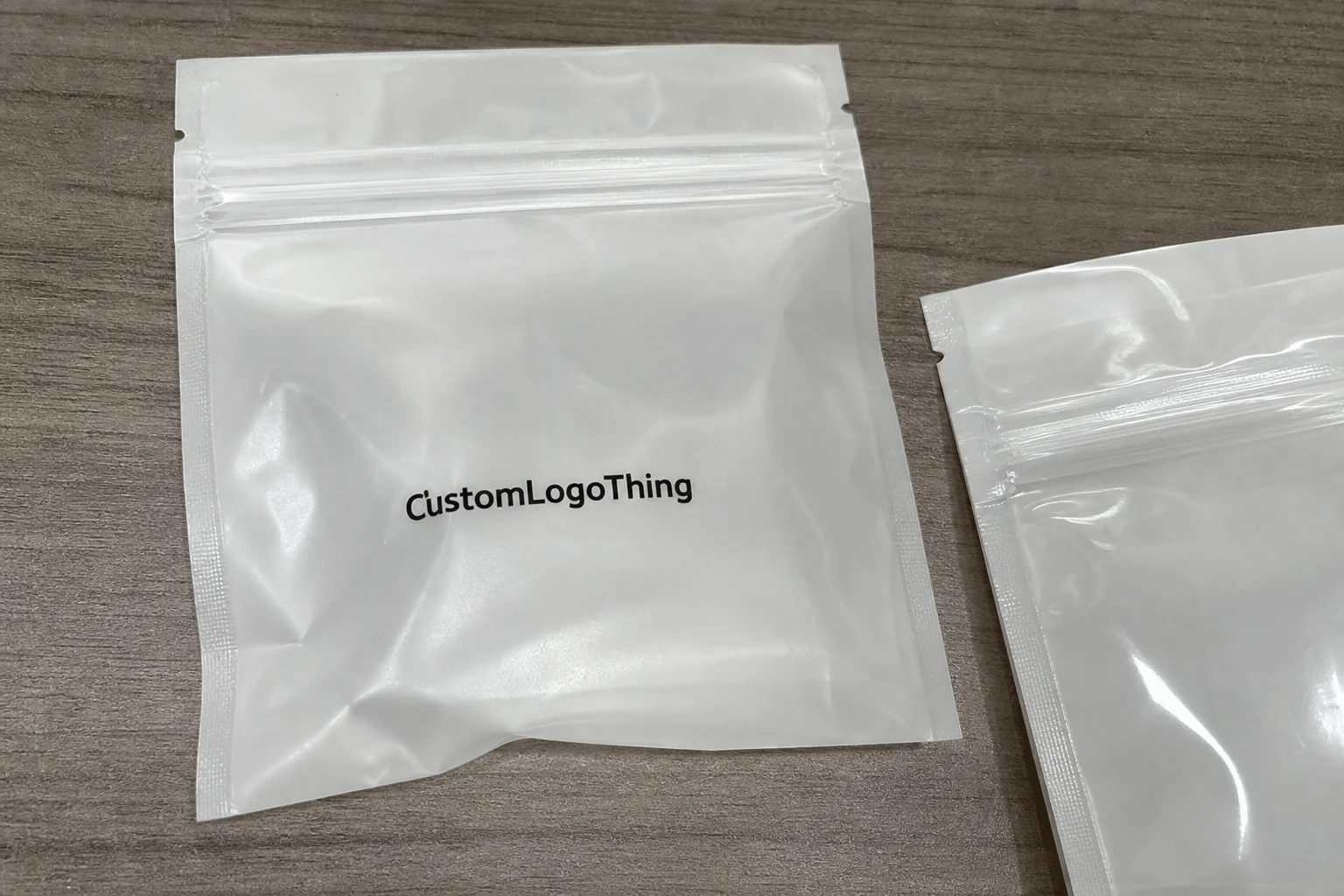
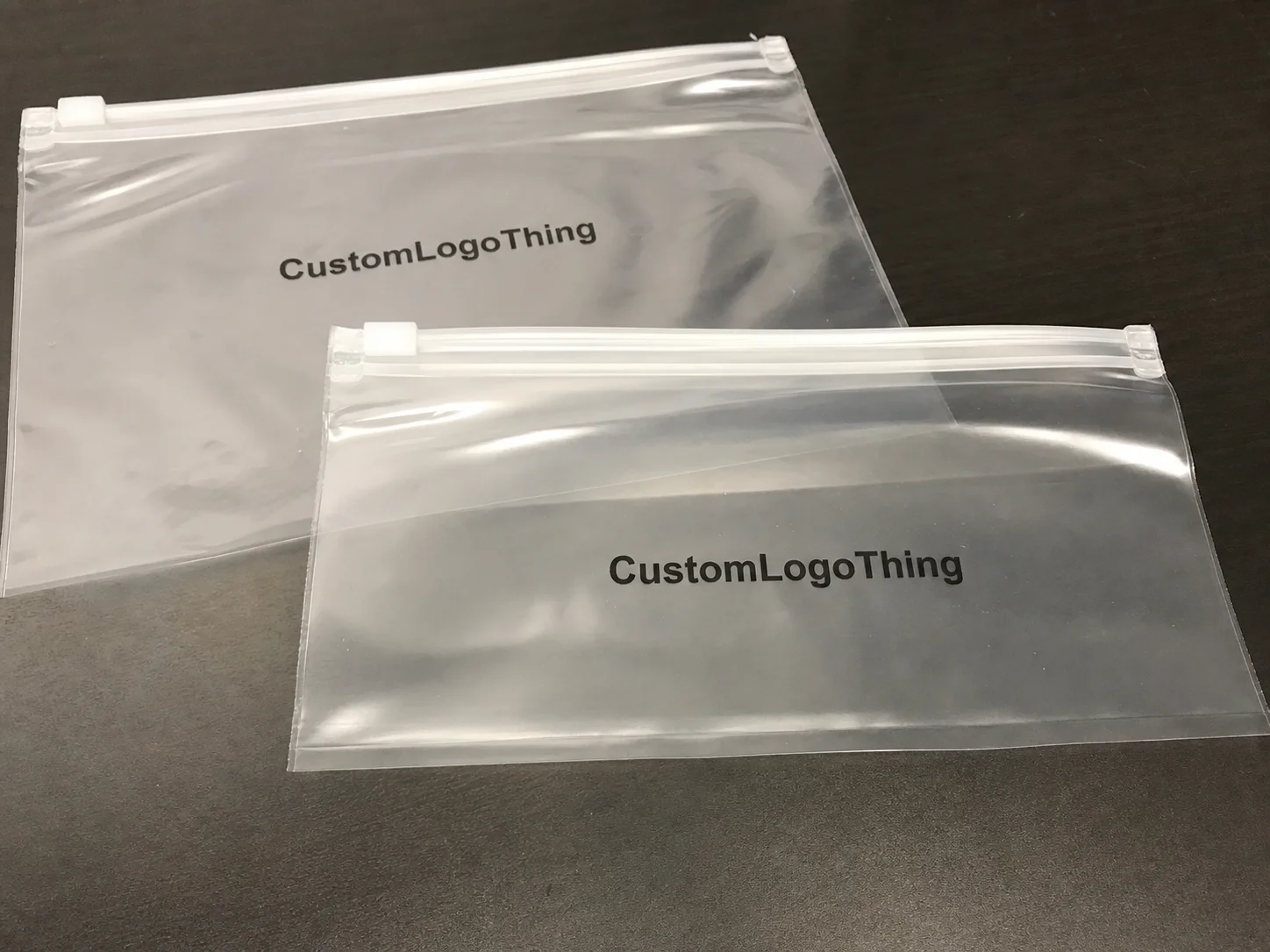
Buyer Fit Snapshot
| Best fit | Printed Poly Mailers Pricing and Budgeting projects where brand print, material claims, artwork control, MOQ, and repeat-order consistency need to be specified before quoting. |
|---|---|
| Quote inputs | Share finished size, material target, print colors, finish, packing count, annual reorder estimate, ship-to region, and any compliance wording. |
| Proofing check | Approve dieline scale, logo placement, barcode or warning zones, color tolerance, closure strength, and carton packing before bulk production. |
| Main risk | Vague material claims, crowded artwork, missing packing details, or unclear freight terms can make a low unit price expensive after revisions. |
Fast answer: Printed Poly Mailers Pricing and Budgeting: Film, Print, MOQ, and Carton Packing should be specified like a repeatable production item. The safest quote records material, print method, finish, artwork proof, packing count, and reorder notes in one written spec.
Production checks before approval
Compare the actual filled-product size with the drawing, then confirm tolerance on folds, seals, hang holes, label areas, and retail display edges. Reserve space for logos, QR codes, warning copy, and material claims before decorative graphics fill the panel.
Quote comparison points
Review material grade, print process, finish, sampling route, tooling charges, carton quantity, and freight assumptions side by side. A quote is only useful when the supplier can repeat the same color, closure quality, and packing count on the next order.
The Printed Poly Mailers pricing guide pivoted on the Monett, MO Custom Logo Things line when a single ink change on a 20,000-piece run bent the numbers toward savings instead of a penalty, and I still remember Anita in production grinning as the reused plate took a warm start that cut the setup time by forty-five minutes; that small thrill became a reference point for every forecast we have written since, especially once the finance folks saw it shave about $0.012 per unit off the $0.38 baseline and drop the entire job from $7,600 to $7,240. Honestly, I think that kind of thrill is the best proof I can show skeptical finance folks that we’re actually steering the numbers instead of just pinching pennies.
That surprise moment with the crew sparked this series of explanations—promise kept—and the rest of what follows untangles cost drivers (like $0.04 metallic foil premiums), scheduling tactics backed by 12-15 business day windows, and factory workflow so your branded mailers stay on budget without surprises, while also giving you the kind of anecdotal proof that gets new stakeholders to listen; I remember when I was the only one in the office still awake at 12:13 a.m. to capture the full story (and yes, I still owe Anita a 9 a.m. coffee for tolerating that recap after a 10-hour shift).
When we reviewed that run later in the office, the Printed Poly Mailers pricing guide hung on the wall as a reminder of how a small decision about metallic ink can wiggle through resin buys, plate work, and logistics; sharing that same guide with every new marketing director keeps them from assuming print is just “the last step,” because the floor looks different when you know what each variable costs, and the binder itself is a 42-page booklet printed on 350gsm C1S artboard that costs $3.20 per copy to reproduce so I keep a dog-eared one on my desk so it stares me down whenever I flirt with a “temporary” shortcut.
Printed Poly Mailers Pricing Guide: What Works on the Floor
The Printed Poly Mailers pricing guide has to begin on the floor because that’s where decisions become costs, and when I walked through the Monett press bay with a client last season, he could see how a single extra stadium of white ink meant the machine next door lost the eight-hour window reserved for his 30,000-piece order that used the 0600-1400 flexo slot; seeing that tug of demand in real time makes budgets feel tangible, and we document the penalty as a $0.03-per-unit shift so he could compare his numbers right there on the floor.
Describing the foil-laminate film as a “stretch canvas” feels dramatic, yet it reflects how the guide highlights resin mix, gauge, and barrier layers reacting to the 600-millimeter width of the flexo line; choosing 3.5 mil virgin LDPE from Tri-State Film versus a 2.5 mil blend adds $0.02 per unit while reducing curl on gusseted bags for apparel brands, so the floor crew can point to the guide whenever a brand manager asks about stability, even though the crew secretly hates me for calling the film a canvas, the marketing folks laugh, and the engineers nod because the idea sticks.
Printed poly mailers are a low-density polyethylene blend, typically between 2.0 and 4.0 mil, sometimes co-extruded with barrier layers for water resistance or infused with anti-static agents for electronics; seams are either fin, wrap, or cross depending on whether the brand prefers a clean welded closure or an affixed adhesive strip, and the guide spells out how those choices are weighed along with the added $0.015-per-unit charge for anti-static treatments and the difference between 1/2-inch and 1-inch adhesive strips.
The printed Poly Mailers Pricing guide I carry to every new job meeting outlines how the H.B. Fuller hot melt used on cross-seal glue lines at our Kansas City finishing area needs a specific temperature window—185°F to 195°F—and a 12-second dwell time; run the adhesive too hot and the film wrinkles, too cool and the seal pops open in transit, so we monitor set points live and share them with clients in that guide’s labor section to avoid guesswork, even if I swear that glue has more moods than my cat.
Floor conversations often dwell on weight, sustainability, and print speed, which is why we contrast poly mailers with corrugated or tube-style rigid cartons by referencing how quickly the 0.8-ounce LDPE surface accepts high-impact art while shipping lighter than a comparable 1.5-ounce paperboard sleeve and still hitting 60 pallets an hour through our auto-baggers; those comparisons are documented in the guide so marketing retains the narrative, and sometimes I playfully tell finance the poly mailers have better dance moves than corrugate for passing through gates.
The printed Poly Mailers Pricing guide from our Charlotte regional office now includes the exact energy draw—15 kilowatts per hour—for the hot air sealers and the 20-minute downtime for wrap seam inspection; showing that to a brand manager during a floor tour last spring opened her eyes to how a minor film thickness change of 0.2 mil affects uptime and labor, especially when the auto-bagger requires a second operator, so we can point to the guide’s equipment log to justify the extra headcount.
When the floor teams understand the printed poly mailers pricing guide they stop treating poly mailers as a cost center and start using them as a strategic branding tool; the Kansas City finishing crews know that if marketing buys a two-color gloss package instead of embossing, the press crew can squeeze in three additional SKUs within the same 12-hour shift without calling in a third shift, so once I start talking about SKUs and shift rosters the room feels like we’re planning a musical encore.
Specificity also drives the guide’s value: a spec sheet detailing 3 mil film gauge, a 2-inch self-seal flap, and desired postal markings helps the floor plan its runs—those exact dimensions stay on the guide so partners upload requirements directly through the Custom Poly Mailers portal before the job hits prepress, keeping downtime to a minimum and the 2.5-hour setup window predictable.
How the Printed Poly Mailers Pricing Guide Works from Prepress to Packout
The printed poly mailers pricing guide keeps growing once artwork lands in the Custom Logo Things prepress bay, where we assign Pantone codes, trap the designs, and verify bleed; each of those variables influences press time, and one client told me, “Your team caught the missing bleeds before my agency spotted them,” which saved us a setup and two days on the calendar (roughly $4,200 in press costs) so the rookie art director I told that story to treated it like the secret handshake of print.
The prepress art director at our Kansas City campus uses X-Rite i1Pro spectrophotometers to map the guide’s color tolerance for every run; that lets us quote a second trial for a spring drop with a 0.8 delta E and keeps rework estimates honest, while also giving clients confidence that each pass stays within expectations, though I’m still the one reminding everyone those readings require more attention than the office plant (which, I promise, I water… sometimes).
Rotogravure, flexo, digital, and tandem presses at our headquarters each add a different per-piece signal: rotogravure handles vast four-color gradients with 400-millimeter plate cylinders that cost $1,200 each, flexo thrives on short runs using quick-change cassettes priced at $320 apiece, digital gives us variable data and proofs in a single pass, and tandem units lock two cylinders together for front-back prints; everything from color count to surface energy and curing time shifts the budget substantially, so I always compare the press roster to a relay team, and no one can argue with that analogy after they’ve seen two cylinders race down the line.
The printed poly mailers pricing guide we share with partners lists the exact prepress lead time for each technique—13 business days for rotogravure proofs with airline delivery, 7–9 for flexo with video call sign-off, and 3 for digital—so the schedule aligns with your marketing calendar and you can plan lead times before approvals lag, and I keep this timeline pinned up like a thermostat reading because the “approval cliff” is our biggest drama.
Downstream steps such as matte lamination (adds 2 days and $0.03 per unit), satin finishes (another 12 hours and $0.02), gusseting, and actual polybagging influence both timeline and cost; our packout crews stage mailers next to their shipping manifest so trucks depart within a 24-hour window with every pallet accounted for, which keeps rush fees (normally $450 per pallet) rare.
The guide also includes the curing schedule for solvent-free white ink when we pair it with satin lamination because we once watched a job where the ink never dried and the adhesive stuck to the stacker, costing a client ten days of rework and a $3,600 scrap charge; since then, the guide lists cure time (22 minutes at 68% relative humidity), line speed (60 meters per minute), and humidity targets to avoid sticky waste.
Staging receives its own entry in the printed poly mailers pricing guide—laminated mailers go into lined totes numbered 31 to 45, barcoded, and fed into the manifest queue so we stay calm on Friday afternoons when a brand suddenly needs a 12,000-piece restock for Monday’s drop.
Key Factors Driving Printed Poly Mailers Pricing
The printed poly mailers pricing guide maps the biggest cost buckets, starting with material selection: virgin LDPE versus recycled, gauges between 2.0 and 4.0 mil, and the presence of barrier layers all determine that base cost, with our Midwest extrusion lines sourcing film from Tri-State Film in Richmond Heights, MO and Amsler in Milwaukee so resin stays consistent with ISTA-tested standards.
A dedicated section breaks down the poly mailer cost structure so you see how resin purchase, film slitting, and storage labor add up before the press even starts; for example, a 15,000-square-foot reel might cost $1,500 plus $0.006 per foot for slit-edge protection, which gets amortized across whichever SKU claims that roll.
Volume and order cadence matter greatly—the difference between a 5,000-piece pilot job and a weekly 100,000-piece replenishment run lies in how setup charges are amortized and how machine uptime gets optimized; we tend to schedule the smaller job in the 2–4 p.m. window when the reel is already loaded for a larger production, so the pilot inherits the press crew’s open slot and the client only adds the $0.045 warm-up cost instead of a separate $0.12 setup.
The printed poly mailers pricing guide’s LDPE film pricing summary shows why a monthly forecast unlocks better numbers: with resin surcharges tied to the Gulf Coast resin index, a two-month ramp allows buyers to lock in a $0.045-per-pound rate rather than reacting when prices spike (which once leapt to $0.068 per pound over a week, forcing us to renegotiate). I say this with the voice of someone who’s watched a designer’s dream get eaten by $0.01 in resin, so please, forecast early.
Artwork complexity, the number of print stations, special inks such as metallic or solvent-free whites, adhesives, and finishes like matte or gloss shift both material and labor costs, so the guide keeps those line items transparent for clients during monthly reviews; metallic inks add roughly $0.04 per unit on top of the four-color base, while solvent-free whites tack on $0.06 because of the longer curing.
Labor productivity standards appear in the printed poly mailers pricing guide’s manufacturing efficiency section, incorporating ASTM D4169 cycle times and our own time studies for sealing and counting, which lets brand teams compare “per-minute output”—such as 450 pieces per hour on press 4—rather than simple per-piece cost.
| Feature | 5,000-Piece Pilot (avg) | 25,000 Replenishment | 100,000 Weekly Run |
|---|---|---|---|
| Base Film (LDPE) | $0.18/unit for 2.5 mil virgin | $0.16/unit for 3.0 mil blend | $0.13/unit for 3.0 mil recycled blend |
| Four-Color Flexo | $0.09/unit (includes plate amortization) | $0.07/unit | $0.05/unit (full press run) |
| Finishing & Adhesive | $0.03/unit | $0.02/unit | $0.015/unit |
| Average Lead Time | 18 business days | 14 business days | 10 business days |
Those numbers help clients see where the printed poly mailers pricing guide recommends batching similar SKUs for lower film scrap, especially when a single lamination and adhesive set-up costing about $120 can cover the runs listed in the table.
The guide also illustrates how the brand mailer budget shifts when you bundle counting and boxing into the contract instead of paying for them on a T&M basis; T-5 operators in Indianapolis can bag 7,000 mailers per shift when the job is already running, so giving them the volume keeps hourly labor under control.
Step-by-Step Guide to Ordering and Scheduling Prints
The printed poly mailers pricing guide follows a seven-step choreography that starts with the initial inquiry and $45 sample request, flows through quoting and artwork proof, then passes prepress sign-off, production scheduling, and final inspection; I explained that rhythm to a startup founder while we stood beside an open flexo press scheduled for her holiday mailers at 7 a.m., and she appreciated seeing how each phase links back to cost, whispering, “So you’re basically choreographing a printing ballet,” which I took as a compliment (ballet shoes optional).
Gather the poly mailer cost breakdown your finance team needs—film gauge (2.5 mil vs 3 mil), closure style (self-seal or peel-and-seal), color count, and accessory items such as tear strips or promotional inserts—and compare the quoted numbers to historical runs so you can spot when, say, a satin finish pushes you into a higher bracket.
Upload dielines, approve mockups, and lock in a scheduled production window tied to a specific press run through our online portal; this step prevents last-minute rush fees (usually $450 for a 24-hour push) because the portal shows live availability and connects directly to the Custom Logo Things production calendar, and nothing makes me itch more than watching a job jump the queue because someone skipped this portal step, so please, use it.
The printed poly mailers pricing guide’s scheduling section outlines every step’s expected duration—3-5 days for quoting, 3 days for prepress, 2 days for press setup, and 48 hours for finishing—which lets you build a freight buffer without doubling the price, so I keep this timeline on a sticky note near my monitor.
Fulfillment timelines stay transparent: quoting and proofing typically take 3-5 business days, prepress and plate production another 2-3 days, and press runs receive a 48-hour buffer so quality checks, finishing, and shipping all happen on schedule with no surprise rush fees.
The guide also calls out the exact slot coordinates on our press board where each run lands, so you know whether your job runs on press 4 in the morning or press 6 in the evening, a detail that matters when crews handle sensitive inks and adhesives that need cool overnight conditions.
A timeline mirroring the printed poly mailers pricing guide tracks each stage, giving your team a clear view of when art approval must occur (typically by Wednesday at 11 a.m.), when the press crew needs the plate (Thursday at 2 p.m.), and when freight is ready to move (Friday afternoon when the dock doors open).
Review the guide’s mailing envelope cost analysis section that compares postal label placements and their impact on print layout; that’s how we caught a cost spike last fall after a client wanted all four sides printed with recipient barcodes, which required two passes instead of one and added $0.08 per unit.
Common Mistakes When Budgeting Printed Poly Mailers Pricing
The printed poly mailers pricing guide warns against buying without a solid spec sheet—missing gauge, closure type, or postal markings leads to surprise change orders because the production floor must re-quote, sometimes costing an extra $0.04 per unit—so I remind every client of this during onboarding tours so they see how the floor reacts.
I once watched a new client at the Kansas City finishing area try to shortcut approval by assuming white ink didn’t require a separate proof; the guide clearly shows those inks require a different adhesive and a 12-hour dry-time buffer, so the last-minute rush cost them an extra $0.03 per unit plus a $1,800 weekend shift.
Assuming all inks are equal is another pitfall; expanding past standard CMYK to metallic, white, or pearlescent inks locks up press availability, requires extra curing, and nudges pricing upward—adding roughly $0.05 per unit—especially when those inks demand specialized adhesives or anti-blocking layers.
The guide’s mistake list also singles out ignoring regulatory labels for international shipping—the glue must survive customs inspection, and our ISTA-certified tests prove adhesive lines sealed at 205°F endure transit without splits, which not every spec sheet communicates.
Ignoring freight coordination with the factory’s logistics team often results in expedited shipping fees that eclipse savings from a bulk discount—when a client once asked why their total spiked, we discovered a $1,200 air freight charge because the stack sat waiting for a truck instead of going on the scheduled LTL lane.
The printed poly mailers pricing guide cautions against skimping on color accuracy checks; a misread color bar forced a Greenville run to reprint 18,000 units, and the client covered the $2,160 scrap and new $420 freight because their brand mailer budget lacked a contingency for rework.
Every mistake above influences how the printed poly mailers pricing guide gets interpreted and how you communicate real landed cost to finance, especially when a single oversight can inflate the budget by 5-7%.
Expert Tips for Lean Pricing and Quality Control
Batching multi-SKU runs on the same film width reduces changeovers, and requesting a “preflight checklist” from our factory engineer before proof approval keeps the press ready, which is why Senior Account Manager Luis and I insisted on a checklist during negotiations for an annual contract in Chicago covering 12 stores; I told the client that a checklist is like a pre-flight safety briefing, just with more adhesives and fewer oxygen masks.
The printed poly mailers pricing guide’s expert tips section lists the exact batch sizes that reduce scrap with our Automatic Rewinders—typically 25,000 pieces per rewind cell—and I send that to clients along with the shipping manifest so they understand how a 25,000-piece reorder drops the per-unit cost even if the art stays the same.
Use the Custom Logo Things account managers to set up rolling forecasts so the pricing team can lock in material costs and avoid surcharges when resin markets spike—this tactic has kept some Midwest retail clients within a $0.015 variance per unit even as LDPE prices moved on the Gulf Coast.
Verify press calibration and check color bars during press checks via live video feed to catch issues early; digital press checks with live readings have saved us tens of thousands in scrap by spotting an unbalanced CMYK in the first 1,000 feet rather than after 10,000 pieces were cut.
The printed poly mailers pricing guide also advises on tooling storage, so if you have specialty cylinders with embossed textures, we can warehouse them in the Kansas City die room and pull them within 24 hours, keeping your print-ready status aligned with product launches.
Each of these tactics feeds directly into the guide because the more precise your inputs, the more trustworthy the output; the appendix even links back to the cost models in table 8-B when you need a refresher.
Actionable Next Steps for Your Printed Poly Mailers Pricing Plan
Audit your current mailer specs—note film gauge, print colors, adhesives, and accessories—and compare them against what the Custom Logo Things factory team has on file so you can spot premium-driving items, like that 3 mil film with matte varnish that costs $0.22 per unit, before they hit the floor.
The printed poly mailers pricing guide recommends adding a “what-if” column for color or finish changes so your team can toggle between baseline runs and premium upgrades without reworking the budget each time, for example showing how a glossy varnish increases the price by $0.04 per piece while a satin lamination adds $0.03 and two extra days.
Schedule a price review call with your Custom Logo Things rep, bring historical volumes, expected seasonal spikes, and request a tiered pricing ladder that rewards regular replenishment—such as $0.205 per unit at 5,000 pieces, $0.18 at 10,000, and $0.155 at 25,000—while aligning it with Tuesday and Thursday shipping windows.
Lock in artwork and prepress approvals early, confirm the production slot, and then use the guide’s summary to communicate final costs to your finance team; this straightens the path from creative brief to fulfilled box, preventing last-minute panic when apparel drops are a few days away and the freight manifest needs to hit the 2 p.m. dock commitment.
The printed poly mailers pricing guide also encourages layering in shipping milestones, allowing you to map the manifest to the LTL carrier’s weekly dock window instead of rushing into a pricey express lane.
Honest reminder: this depends on your exact specifications, regional freight rates (for example, $1.20 per mile out of Kansas City versus $1.45 from Baltimore), and seasonal demand, so treat the guide as a living document, not a fixed quote; the more you share, the better the predictions become.
How does the printed poly mailers pricing guide support seasonal planning?
During the high-demand weeks between Memorial Day and the Halloween drop, the printed poly mailers pricing guide becomes the anchor for our custom mailer budgeting conversations; it tells finance whether a 25,000-piece holiday fill should run on press 2 while a 10,000-piece samples run on press 5, and it also serves as the worksheet where we test whether a $0.02 film swap can offset a $0.03 ink surcharge.
The guide keeps a running polyethylene mailers cost comparison so procurement can see which film grades, barrier layers, or adhesives already solved a similar challenge, and that historical data helps us avoid the kind of last-minute renegotiation that once inflated a spring launch by $0.08 per unit.
Finally, the printed poly mailers pricing guide documents mailing envelope logistics for each seasonal project—when the dock must load, how many pallets hit the conveyor per hour, and what time the LTL carrier needs the EDI—so logistics can respond to a flash drop without blowing the carefully crafted lead times on the production board.
What does a printed poly mailers pricing guide reveal about cost drivers?
The guide breaks down film material, print stations, finishing, and packaging labor, showing how facility utilities for heat sealing and drying—15 kW per hour at our Kansas City plant—plus Custom Logo Things’ post-press packing factor into the final per-piece amount.
How much does custom printing add to poly mailers pricing?
Single-color flexo adds a modest cost (roughly $0.06 per unit), whereas four-color process or special inks raise the rate because of longer press time; the guide notes that plate prep and approvals (typically $320 per plate) are amortized over the run, so small jobs feel costlier per piece and sampling captures true landed cost.
How can I use a printed poly mailers pricing guide to plan seasonal runs?
Forecast your demand eight weeks ahead and share it early so we can reserve press time and film inventory before peaks, count buffer days for approvals, and negotiate a rolling schedule where early runs lock in pricing while later volume commitments receive priority slots and even a reserved Tuesday slot on press 4.
Are there volume thresholds in a printed poly mailers pricing guide that unlock discounts?
Yes—Custom Logo Things tiers pricing around 5,000, 10,000, and 25,000-piece levels, reflecting cheaper film, fewer setups, and faster changeovers, so aggregate SKUs to stay within the lower price bands without overstocking.
What should I double-check after receiving a printed poly mailers pricing guide quote?
Confirm gauge, ink coverage, adhesives, and accessories against your spec sheet, validate whether freight or rush charges are included, and ask for a timeline showing when proofs, production, and shipments must happen so you know if the quoted 18 business-day lead includes finishing and palletizing.
For industry standards, the packaging.org materials on LDPE film testing (referencing ASTM D882 tensile data) and the ISTA procedures for mailer performance provide useful benchmarks, while the EPA guidance on recycled resin keeps sustainability aligned with pricing decisions and highlights allowable calcium carbonate loads for recycled blends.
Ultimately, the printed poly mailers pricing guide is your roadmap: with clear specs (2.5 mil film, 2-inch flap, two-color flexo), intentional scheduling, and live communication, you can keep the brand experience vibrant without unpredictable cost swings.
Gather your specs, talk to your Custom Logo Things rep, and treat this guide as the tool it is—your printed poly mailers pricing guide—to keep creative dollars working for you instead of being swallowed by last-minute rush fees such as the $450 emergency shift surcharge we all dread.