Printed Zip Lock Bags Print Method Comparison: What Actually Changes on the Bag
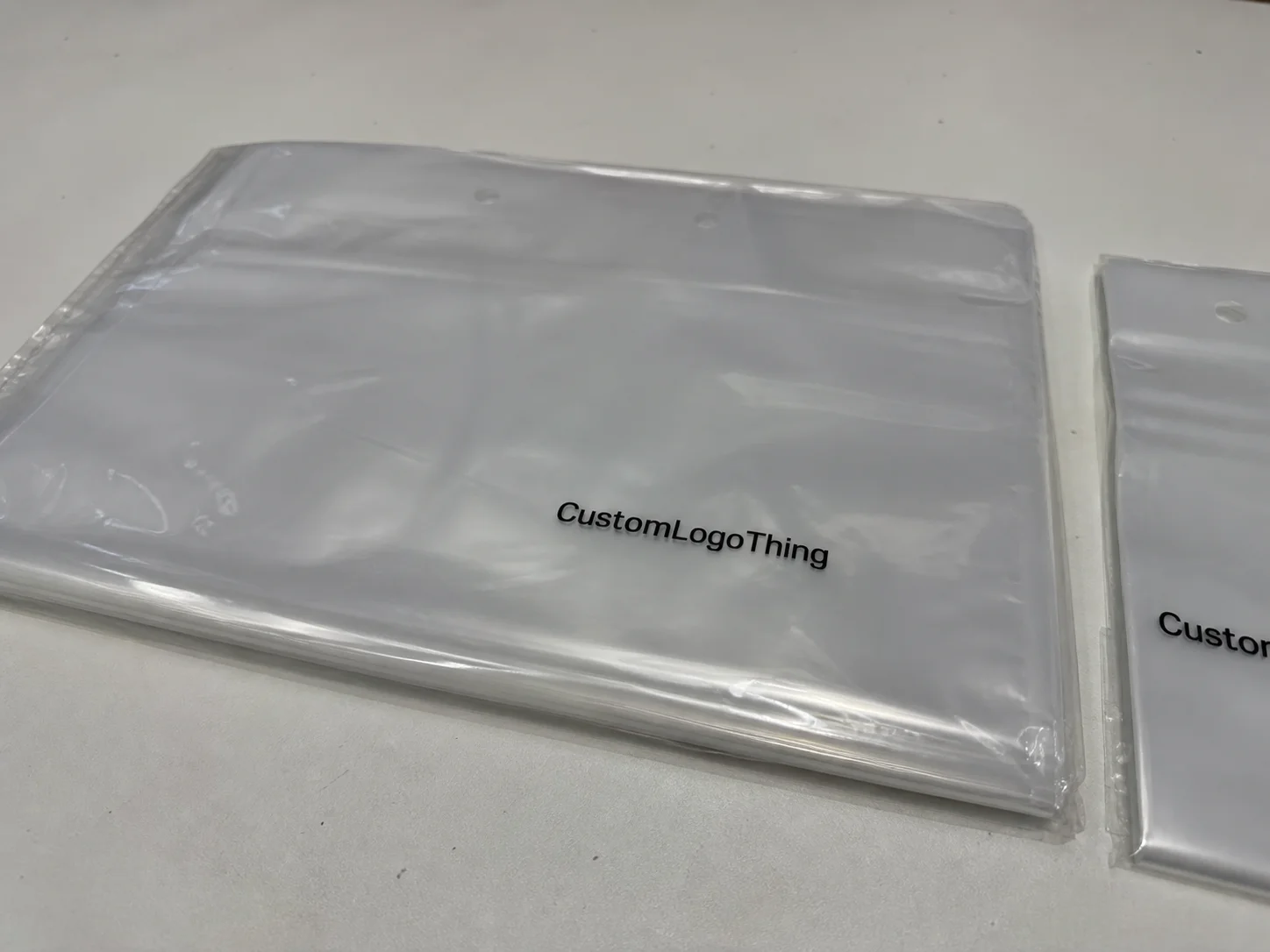
Two Zip Lock Bags can share the same size and zipper style but behave very differently once printed. The print method affects color control, scuff resistance, MOQ, setup cost, repeat-order economics, and how easily you can revise artwork later.
For buyers, the real question is practical: which method gives acceptable print quality without creating the wrong cost structure or lead-time risk? The answer depends on the bag specification, not the method name alone.
A simple one-color logo on a clear LDPE bag is a different project from a matte, multi-color retail bag with opaque white and several SKUs. Compare methods without holding bag specs steady and the conclusion will be misleading.
The main options are flexographic printing, rotogravure printing, digital printing, and pressure-sensitive labels applied to stock or custom bags. For most buyers, the real decision is flexo vs. gravure vs. digital, with labels as the low-commitment option.
Choose well and reorders stay predictable. Choose poorly and problems show up fast: muddy type, weak white ink, long setup, inflated tooling cost, or inventory that no longer matches demand.
How Each Printing Method Works on Plastic Zip Bags
Flexographic printing uses flexible plates to print on film before bag conversion. It is common because it handles spot-color branding efficiently and scales well after the initial setup. For medium and high volumes, flexo is often the default direct-print option.
Its strengths are solid logos, readable type, and lower repeat-order cost once plates are made. Its limits usually appear with photographic imagery, delicate gradients, or tiny reverse details unless the press and artwork are tightly controlled.
Rotogravure printing uses engraved cylinders instead of plates. Tooling costs more and setup usually takes longer, but gravure performs well on large recurring orders that need sharp detail and consistent color over long runs.
Digital printing removes plate and cylinder costs. That makes it useful for short runs, seasonal designs, multiple SKUs, and projects where demand is still uncertain. File changes are faster, so buyers carry less risk when artwork or volumes may change.
Digital still needs validation. On large volumes, unit cost usually stays higher than flexo or gravure. Film compatibility, ink adhesion, and rub resistance should still be checked before approval.
Pressure-sensitive labels solve a different problem. If you need a few hundred or a few thousand bags, or if artwork changes too often to justify custom-printed film, labels can be the smarter route. The tradeoffs are extra application cost, a less integrated appearance, and possible wrinkling or edge lift on soft film.
Final appearance also depends on the substrate and bag design. Clear vs. white film, gloss vs. matte finish, one-side vs. two-side print, white underlayers, and the distance from zipper to top print area all change the result. Many “print problems” actually start as specification problems.
What Is the Best Print Method for Printed Zip Lock Bags?
There is no universal best method. For simple spot-color artwork and stable repeat volume, flexographic printing is often the best balance of cost and quality. For premium graphics on large recurring orders, rotogravure usually delivers the strongest consistency. For short runs, multiple SKUs, or frequent design changes, digital printing is often easier to justify.
Labels can still be the right answer for pilots, limited launches, or internal-use packaging where inventory risk matters more than a fully integrated print finish.
The better rule is to choose based on the annual buying pattern, not only the first purchase order. A method that looks expensive on order one may become cheaper by order three. A method that looks flexible at the start may stay expensive forever.
That is the point of a useful Printed Zip Lock Bags print method comparison: match artwork, volume, and bag construction to the least risky production path.
Key Factors That Decide the Best Method for Your Artwork and Bag Specs
Artwork complexity is the first filter. A one- or two-color logo usually fits flexo well. Designs that depend on gradients, halftones, photographic effects, or very small reverse text often push the decision toward digital or gravure.
Material structure changes how ink behaves. Most Zip Lock Bags use LDPE or LLDPE, sometimes in coextruded or mono-material structures. Surface treatment, slip additives, and film feel can all affect adhesion and rub resistance.
Film thickness matters too. A 2 mil bag may be fine for lightweight retail contents, while 3 mil to 4 mil bags are more common for parts, hardware, or repeated handling. Thicker film changes feel, puncture resistance, and sometimes how the printed panel presents on clear material.
Bag construction creates hard limits that designers often miss. The zipper track, side seals, bottom seal, hang hole, tear notch, and vent holes all reduce usable print area. A barcode that looks fine on a flat proof can fail if it lands too close to a seal or curved zipper area.
White ink coverage needs special attention on clear bags. White is often used as an underprint so colors stay visible. If opacity is too low, artwork looks washed out. If registration drifts, halos appear around graphics. Buyers should confirm whether white counts as an extra color and how opacity is controlled.
Durability should not be judged from appearance alone. A bag can look sharp in a sample pack and still scuff in transit or rub off inside a carton. Ask how the supplier checks abrasion resistance, ink adhesion after curing, and seal strength. These are separate quality checks.
Use case changes the acceptable standard. Internal kitting bags, spare-parts bags, retail display bags, and food-adjacent packaging do not need the same print performance. Barcode readability, batch coding, and shipping stress can matter more than glossy graphics, which is why handling frameworks such as ISTA still matter.
Color expectations are another common failure point. Pantone targets on plastic do not behave like Pantone on coated paper. Transparent film, gloss level, and white underlayers all shift color perception. Confirm the proofing method, acceptable tolerance, and what “close match” means before production starts.
Cost, Pricing, MOQ, and Unit Cost Tradeoffs Buyers Should Expect
Packaging quotes get misread when buyers focus on the first number instead of the full cost structure. For custom Zip Lock Bags, setup charges and recurring run costs need to be separated early.
Price is usually shaped by bag size, film thickness, resin type, print method, number of colors, white ink requirement, ink coverage, bag construction, packing quantity per carton, and freight. A clear three-color bag and a matte bag with heavy white backing are different cost profiles, not small variations of the same item.
| Method | Typical strength | Common tradeoff | Best fit |
|---|---|---|---|
| Flexographic printing | Lower unit cost once volume stabilizes | Plate charges and artwork limits | Simple logos, repeat programs, medium-to-large runs |
| Rotogravure printing | Excellent detail and run-to-run consistency | Higher cylinder cost and longer setup | Premium graphics, very large recurring orders |
| Digital printing | Fast setup and easier SKU variation | Higher unit cost at scale | Short runs, market tests, changing artwork |
| Pressure-sensitive labels | Lowest startup commitment | Added application cost and less integrated finish | Very low MOQ, pilots, temporary programs |
As a rough planning range, unit pricing can run from a few cents per bag on larger, simple flexo orders to materially higher costs on short digital runs or label-applied programs. Tooling may range from modest plate fees for flexo to much higher cylinder costs for gravure. The exact spread depends more on specifications than on the product category itself.
MOQ is another area where quotes can mislead. Some suppliers quote a minimum by piece count, others by kilograms of film, press run, or design. If you have three artworks in one bag size, the practical minimum may be three times higher than the quoted “bag MOQ.”
Buyers should also ask about proofs, color separations, white ink charges, freight, duty, overrun or underrun tolerance, and storage for partial releases. These are standard costs, not unusual exceptions.
The cleanest comparison is total annual cost under realistic demand. If reorders are steady, flexo or gravure may beat digital despite the setup. If demand is uncertain, a higher per-bag cost can still be cheaper than carrying obsolete inventory.
Process and Lead Time: From Artwork Approval to Delivered Bags
The usual path is quotation, dieline confirmation, artwork review, proofing, tooling if needed, press scheduling, printing, bag converting, packing, inspection, and shipment.
Digital jobs usually move fastest because there are no plates or cylinders to prepare. Flexo adds plate-making time. Gravure generally has the longest front-end timeline because cylinder engraving and approval are heavier commitments.
Typical production windows vary by supplier and region, but many buyers should expect about 1 to 3 weeks for straightforward digital work after proof approval, roughly 3 to 5 weeks for flexo, and longer for gravure once tooling is included. Freight, customs, and final delivery can add several days or several weeks depending on origin and route.
Prepress errors cause many delays: low-resolution logos, missing fonts, incorrect bag dimensions, unreadable reverse text, or artwork without a safe zone. A file that looks fine on screen may still be unusable for film printing.
Proofs also need to be read correctly. A PDF proof checks layout and copy. A color proof gives a closer indication of appearance but may still differ from ink on the final film. A press or production sample is more useful for judging opacity, registration, and print placement.
Late approvals, barcode changes after signoff, missing compliance text, and repeated revision loops can extend lead time more than the print method itself.
How to Choose the Right Print Method Step by Step
Start with end use, not artwork. A retail bag, a sample bag, and a spare-parts bag may share dimensions but not the same print priorities.
- Lock the bag specification. Confirm dimensions, film type, thickness, zipper style, finish, and whether printing is one side or both sides.
- Sort the artwork by difficulty. Count colors, flag gradients, identify fine text, and note whether white underprint is required on clear film.
- Map actual demand. Estimate first order, annual volume, and SKU count. One 50,000-piece SKU is not the same project as ten 5,000-piece SKUs.
- Shortlist methods by economics. Flexo for steady programs, gravure for long-run graphic consistency, digital for short runs and variation, labels for low commitment.
- Request comparable quotes. Use identical bag specs, quantities, print sides, and freight assumptions.
- Review proof and quality terms. Confirm color tolerance, white opacity expectations, overrun policy, and what happens if bags arrive out of spec.
If the choice is still unclear, ask for parallel quotes. Digital vs. flexo is a common crossover point when volume is uncertain. Labels vs. printed film is another.
A practical buyer checklist includes:
- Exact bag dimensions and usable print area
- Film type, thickness, and finish
- Artwork in editable vector format
- Pantone references or acceptable color tolerance
- Print location, print sides, and white ink requirement
- Estimated annual volume, SKU count, and reorder frequency
Common Mistakes When Ordering Custom Zip Lock Bags
The most common mistake is buying on unit price alone. A cheaper first order can become a more expensive annual program once setup, freight, labor, and excess inventory are included.
Another mistake is approving artwork without checking production constraints. Safe margins, zipper interference, seal lines, barcode position, and readable type on transparent film all need review before signoff.
Buyers also overestimate what flexo should do. Flexo can look excellent, but very fine gradations, tiny knockouts, and detailed imagery still need to be matched to the right process instead of forced into the lowest quote.
White ink is another common source of disappointment. “Print on clear” does not look the same across methods. If white opacity, registration, or backing strategy is vague on the quote, expect surprises on the finished bag.
Too many SKUs too early can also hurt the economics. If demand is unproven, digital or labels may be safer than large custom quantities across a broad assortment.
Finally, buyers often skip policy questions. Replacement terms, color tolerance, seal-strength expectations, overrun range, and claim windows should be clear before payment.
Expert Tips Before You Request a Quote
A strong RFQ package removes ambiguity. Include dimensions, thickness, film preference, zipper style, finish, print sides, expected annual usage, and workable artwork files. Vague inputs usually produce vague pricing.
Ask suppliers why they recommend a method, not just what they charge. A credible answer should reference artwork type, reorder pattern, film compatibility, and long-term cost behavior.
For uncertain demand, request comparison quotes on the same specification, such as digital and flexo or labels and printed film. Side-by-side numbers expose tradeoffs quickly.
Ask about inspection as directly as you ask about price. Confirm whether the supplier checks color against the approved proof, tests seal strength, verifies dimensions, and inspects for registration drift, print voids, and contamination during converting.
If the project includes environmental claims, verify the basis carefully. Recyclable claims depend on material structure and local collection systems, not only the word “PE” on a spec sheet. For broader recycling guidance, review the EPA recycling resources. If a supplier references FSC-related language for secondary packaging or paper components, confirm the chain-of-custody basis through FSC.
Cost savings often come from standardizing sizes, reducing SKU count, limiting heavy coverage, simplifying color count, or tightening the print area. More ink does not automatically create more shelf impact.
FAQs
Is flexo or digital better for small custom zip lock bag orders?
Digital is usually better for small orders because it avoids plate charges and makes artwork changes easier. Flexo becomes more competitive when volume stabilizes and repeat orders are expected.
When does gravure make sense for Printed Zip Lock Bags?
Gravure usually makes sense when orders are large, recurring, and graphics need high consistency over long runs. The higher cylinder cost is harder to justify on short or uncertain programs.
Do clear bags always need white ink under the artwork?
Not always, but often. Without white underprint, colors on clear film can look weak or translucent. Whether you need it depends on artwork, film clarity, and the look you want.
What is the lowest-MOQ option?
Pressure-sensitive labels are often the lowest-commitment option, followed by digital printing. Exact MOQ still depends on bag size, film, artwork count, and supplier setup.
What should I inspect before approving production?
Check print placement, usable print area, color expectations, white opacity, barcode location, reverse text size, seal interference, and any requirement for abrasion resistance or seal-strength testing.
How should buyers compare quotes fairly?
Use the same bag dimensions, film type, thickness, print sides, artwork count, quantities, freight assumptions, and quality terms across all suppliers. Otherwise the price comparison is not meaningful.


