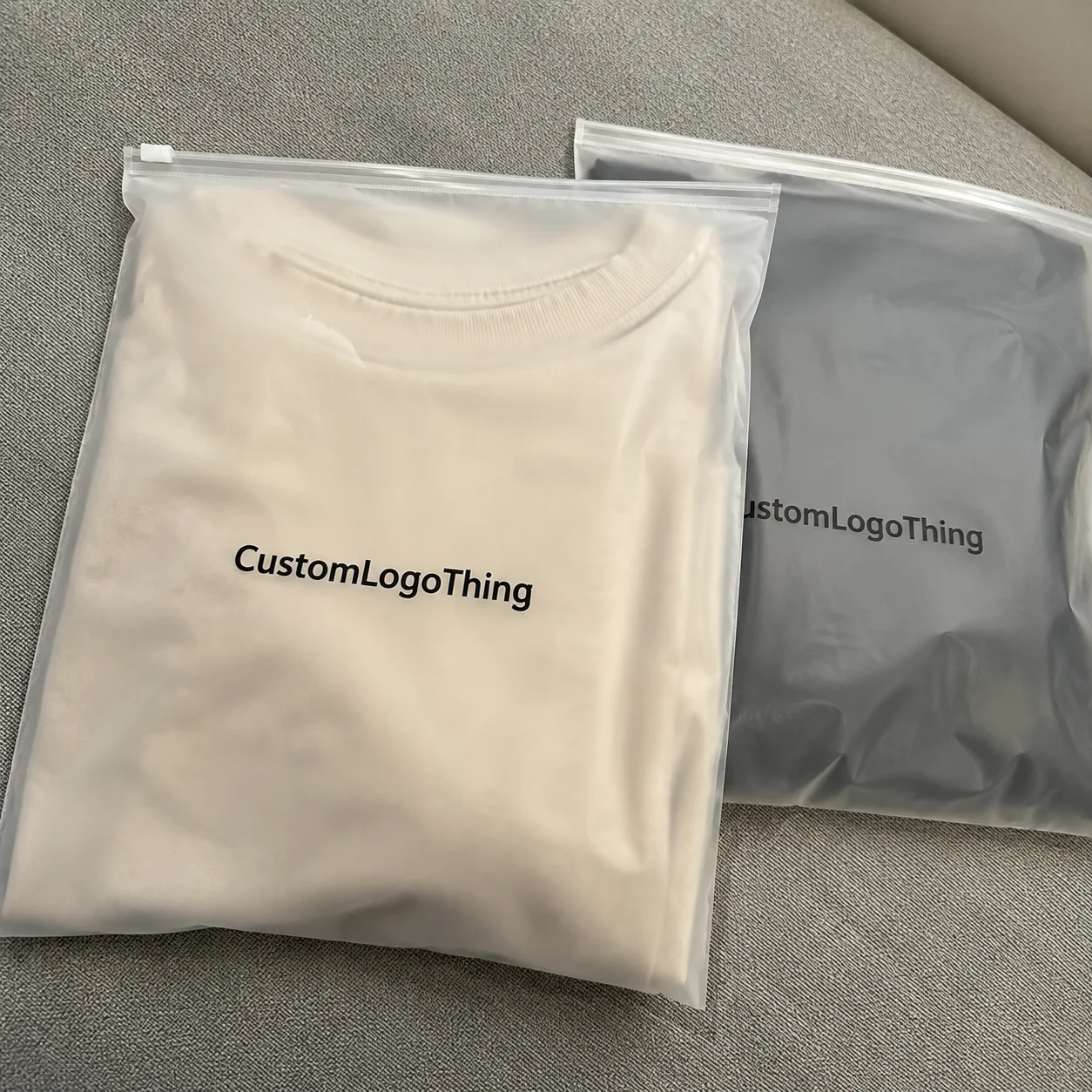
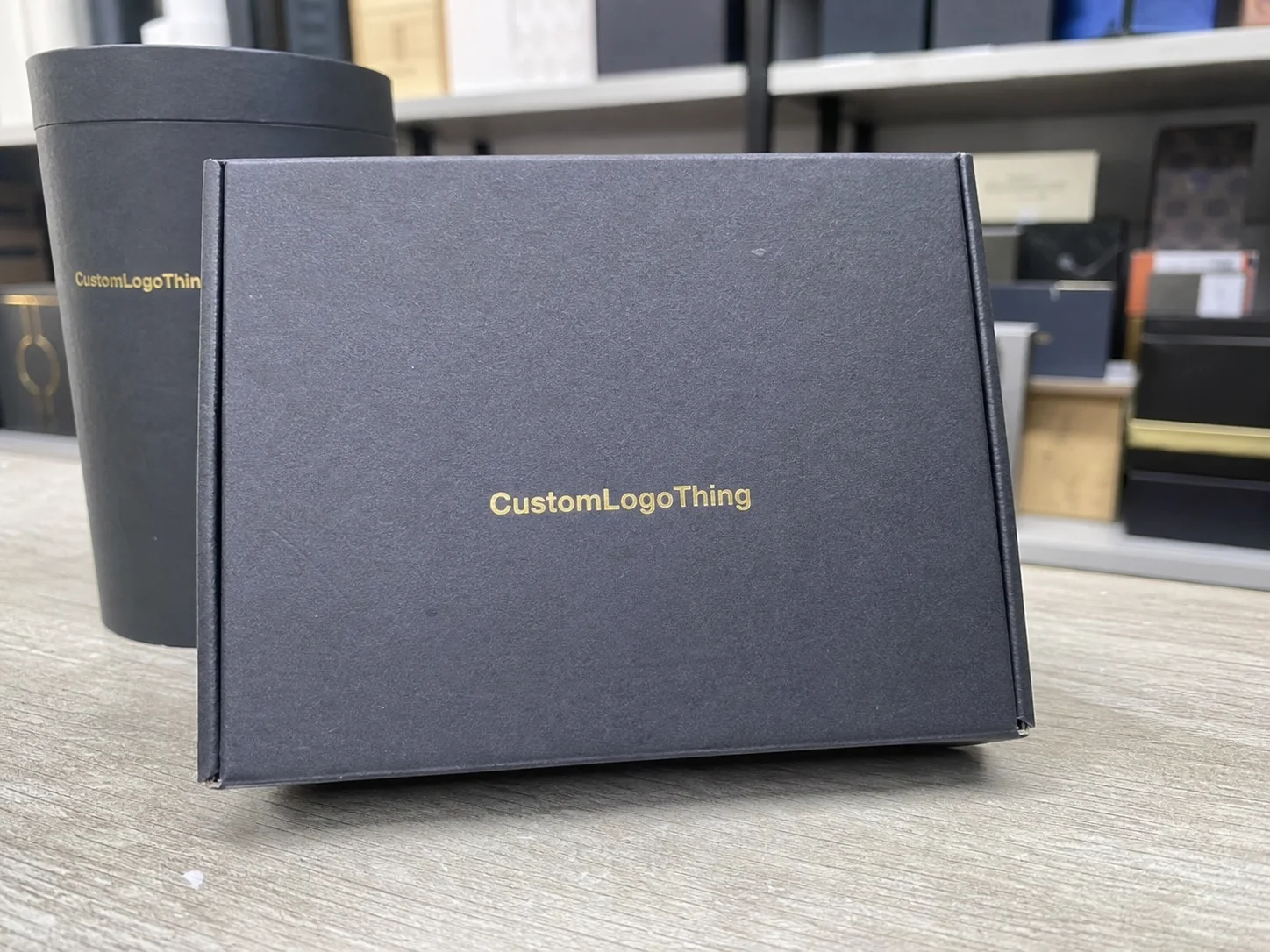
Buyer Fit Snapshot
| Best fit | ecommerce product packaging for packaging buyers comparing material specs, print proof, MOQ, unit cost, freight, and repeat-order risk where brand print, material, artwork control, and repeat-order consistency matter. |
|---|---|
| Quote inputs | Share finished size, material target, print colors, finish, packing count, annual reorder estimate, and delivery region. |
| Proofing check | Approve dieline scale, logo placement, barcode or warning zones, color tolerance, and any recyclable or compostable wording before bulk production. |
| Main risk | Vague material claims, crowded artwork, or missing packing details can create delays even when the unit price looks attractive. |
Fast answer: Ecommerce Product Packaging: Protection, Unboxing, Freight, and Conversion Risk should be specified like a repeatable production item. The safest quote includes material, print method, finish, artwork proof, carton packing, and reorder notes in one written spec.
What to confirm before approving the packaging proof
Check the product dimensions against the actual filled item, not only the sales mockup. Ask for tolerance on folds, seals, hang holes, label areas, and retail display edges. If the package carries a logo, QR code, warning copy, or legal claim, reserve that space before decorative graphics fill the panel.
How to compare quotes without losing quality
Compare board or film grade, print process, finish, sampling route, tooling charges, carton quantity, and freight assumptions side by side. A lower quote is only useful if the supplier can repeat the same color, closure quality, and packing count on the next order.
Why Product Packaging for Ecommerce Matters
I remember standing beside a corrugate press in Qingdao for the first time; that machine’s 200-ton thrum can silence even the scrappiest founder. The factory manager shared that 84% of returns arrived with a note saying “damaged packaging,” which proved the reason Product Packaging for Ecommerce must act as a salesperson and not just a wrapper. The press was cutting 350gsm C1S artboard panels scheduled to hit Amazon’s sortation conveyor at 7:30 a.m., and the team kept meticulous logs showing every 0.02-inch variance in flute height altered the permissible stack weight by 10 pounds. When packaging fails to protect a product through the USPS local hub, carrier truck, and doorstep drop, it delivers damage and customer complaints in a neat bundle.
By “product Packaging for Ecommerce” I refer to the entire system: the custom-designed box or mailer, protective fill, labels, and the brand story that travels through a carrier’s warehouse before delighting someone or ending up back in the return pile. I have overseen builds with five different insert layers, moisture-resistant coatings rated for 98% humidity in Atlanta warehouses, and numbered stickers tied directly to an instruction card—all so the recipient feels as though they are unwrapping a keepsake meant to stay on the counter. (Yes, that included burners blowing warm air at 150°F over the glue to mimic a theatrical reveal, because apparently I’m now part art director, part logistics nerd.) Each layer must handle protection, dimension, and the moment of tear; shipping leaves no room for surprises.
Bold packaging feels mandatory now. Every carton passes a narrative to the shipping company, sorters, and the eventual customer. A UPS driver covering Route 47 through Chicago’s Loop and Lincoln Park once called the office to ask how many of our 342 custom printed boxes were on his 362-stop route, and that felt like a “brand equity handshake”—why else would he remember a challenger brand among dozens of parcels he delivers daily? The story a carton tells before the product steps on stage is often the lone sensory contact between a newcomer and a buyer, so it deserves the discipline of a well-trained salesperson. Honestly, I think if a box can’t jog a courier’s memory, it might just be blending into the beige abyss of generic mailers.
Whether a UPS driver remembers the box or not, product packaging for ecommerce still has to be engineered like a credible spokesperson so every SKU can arrive with confidence. I’m gonna keep saying that until packaging teams stop treating it like a cost center; the data shows the ones who listen enjoy lower claims and higher repeat rates.
How Product Packaging for Ecommerce Works
Demand forecasting starts the process—how many units will ship, and how many SKUs rotate through the line each quarter? Contacts at WestRock’s Charlotte plant still ask for the monthly demand spreadsheet; without it they cannot lock in board orders and lead times stretch six additional weeks. When you declare you are shipping 12,000 units of a 12 x 9 x 4 mailer and 8,000 of a 9 x 6 x 3, you can direct the factory toward 3/16-inch C flute paired with 32 ECT to keep the weight under 1.9 pounds so carriers avoid inflating rates.
Design and prototyping follow. Dielines, inserts, and glue choices (hot melt versus water-based) are hashed out alongside engineers. A Ranpak prototyping specialist once insisted on testing three void fill patterns keyed to unit weight, saving $0.08 per package in overpacking while still protecting a ceramic product. The dieline also dictates whether a mailer ships flat or pre-glued, a detail that can tack on $0.04 per piece in labor if you opt for a hand-assembled hinge instead of an auto-lock bottom machine.
Quality control and fulfillment integration close the loop. Every pouch, box, or sleeve must be scanned into the ERP and matched to its SKU so the warehouse knows which bundle goes to which customer. Trials have caught shipping clerks scanning a SKU only to discover the insert stack was missing a sticker; that kind of delay is unacceptable on a Prime-like promise. Design, test, mass-produce, and collect feedback from return data and customer service to fine-tune the next batch. That feedback loop turns product packaging for ecommerce into a conversion asset rather than a line item cost. (And yes, I’ve shouted “STOP the line” mid-shift when someone tried to ship a prototype with the wrong inner tray—talk about high-stress drama and a 12-minute delay.)
Every prototype, every shouted “STOP the line,” reminds me that product packaging for ecommerce deserves a scoreboard, so quality, marketing, and logistics track the same trajectory. I’m kinda stubborn about keeping that dashboard live throughout the season.
Key Factors to Measure Before Designing Packaging
Durability cannot be compromised. Corner crush, vibration, and drop testing must be logged with specific numbers—no glossing over. A UPS drop test once ripped open a glossy mailer because the adhesive failed in humidity. A stack of nine mailers dropped from six feet heaved open and peeled the lid, so the failure was catalogued, the glue changed to a water-based resin with a six-second open time, and the test rerun successfully. Without those data points, blaming the carrier becomes easy when cartons arrive dented and customers demand refunds. I’m serious when I say seeing a test fail in front of the team is humbling—also the best catalyst for real improvements.
The tug-of-war between dimension and cost plays out during the planning phase. Carriers charge by DIM weight, so trimming three-quarters of an inch off a side can save $0.55 per box on UPS Ground—$11 per 20-pack. Fulfillment partners appreciate cartons that nest neatly on pallets, and finance teams celebrate the margin gains. I once shrank a mailer from 12 x 9 x 4 to 11.25 x 8.25 x 3.75, keeping six cubic inches per unit while still tucking a return label inside without adding another insert.
Brand story demands measurement as well—think tactile feel, printed messaging, and sequencing of product layers. A Chicago team I collaborated with layered a soft-touch sleeve over a raw kraft inner box and watched repeat purchases climb from 12% to 28% because customers remembered the opening ritual. That’s branded packaging acting like a ritual, not just a vessel. Track how each surface feels and how the unboxing narrative unfolds so creatives can replicate the effect across new SKUs. (I’m not exaggerating—someone actually framed the opening of that box in their office hallway because they were obsessed.)
I even funnel those tactile scores back into the product packaging for ecommerce dashboard so creative teams can match rituals across seasons. That kind of tactile benchmark becomes a reference point whenever a new launch threatens to mess with the story.
Process and Timeline for Custom Packaging Rollouts
Week 1–2 covers strategy and briefing. Gather SKU dimensions, lifespan expectations (returns, subscriptions), and the story you intend to share. We sketch mood boards and send them to two factories—usually one domestic, one overseas—as a form of insurance. When launching a seasonal box, Signature Packaging committed to an automated solution for 4,000 units weekly while our Shenzhen partner planned for 12,000 monthly to cover global demand; that dual approach kept ship dates on target during holiday surges.
Week 3–4 focuses on prototyping. Domestic suppliers like Packsize can deliver a prototype in 5–7 business days for a $250 tooling fee, while overseas takes 12–15 days but trims unit costs. We sample both and send them to the same lab for standardized drop tests, guaranteeing identical data. Prototyping also tests printing methods—flexographic for matte kraft and digital for soft-touch—each producing distinct tactile results that matter in the final brand experience.
Week 5–6 is approval and tooling. Once the prototype is signed off, the factory schedules die creation. A custom tray or mailer tool costs $600–$900 depending on complexity and fold count. Expect 6–8 weeks from brief to first run, accounting for holidays and shipping. If you must accelerate the timeline, plan for express die cutting at an added $150 per tool and expedited freight at $0.28 per pound air-shipped. (Feel free to mentally insert a few stress-induced swear words here; this phase always reminds me why I love spreadsheets and 48-hour status calls.)
When leadership asks for status, I tie their questions back to the product packaging for ecommerce brief so timelines and budgets look like a single story rather than a scatter of requests. That keeps everyone from getting lost in the weeds.
Cost and Pricing Reality for Ecommerce Boxes
Base box costs swing widely by geography. In the U.S., a 12 x 9 x 4 mailer at 5,000 pieces runs around $0.95 per unit from domestic facilities, while the same dimensions drop to $0.65 plus $0.12 freight from a Shenzhen partner, assuming $120 in freight and customs fees cleared through Guangzhou. Always layer in the landed cost so your CFO doesn’t discover a $0.30 discrepancy per unit when budgets are compared. Include palletizing, inspection, and rework expenses—those tack on $0.02–$0.04 per piece when factories inspect 100% of cartons.
Printing and finishing move the needle, but the math needs to stay in check. One-color flexographic on the exterior is roughly $0.20 extra per piece, whereas a full-wrap CMYK with aqueous coating adds $0.45. A tidy exterior lets you reserve the detailed story for an interior card or embossing. A layered adhesive label costs $0.04 per unit, while a single foil stamp at $0.09 delivers tactile branding without the expense of a full-wrap treatment.
Inserts and cushioning costs hinge on fragility. Custom foam trays can add $0.75, while Ranpak WrapPak at $0.14 per foot delivered sufficient protection for delicate items. Add adhesives or stickers—some factories charge $0.03 per sticker peel, which multiplies if your filler needs six different labels. The table below highlights the differences:
| Component | Domestic Cost (5,000 units) | Overseas Cost (5,000 units) | Notes |
|---|---|---|---|
| Base 12 x 9 x 4 mailer | $0.95 | $0.65 + $0.12 freight | Shenzhen runs include a $120 freight and customs handling fee. |
| One-color flexo print | $0.20 | $0.17 | Domestic uses UV ink, overseas uses a veteran supplier in Dongguan. |
| Interior foam insert | $0.75 | $0.60 | Domestic foam molded locally, overseas uses shared tooling. |
| Ranpak cushioning (WrapPak) | $0.14/ft | $0.12/ft | Same cut-sheet supplier for both regions. |
| Sticker/label application | $0.02 per sticker | $0.03 per sticker | Domestic lines prefer pre-applied stickers, overseas often apply by hand. |
Presenting these numbers to founders always includes the landed cost per unit—mine often sits at $1.18 after adding inserts, freight, and finishing—and its margin impact. That preparation signals to carriers that you’re not guessing, and their response is better handling, fewer claims, and clearer support when peak-day surcharges hit. (Also, it spares me from repeating the same upward spiral of “yes, I know it costs more, but here’s why” at every quarterly meeting.)
This kind of financial transparency treats product packaging for ecommerce like a strategic asset, not a surprise line on a spreadsheet. I’m gonna keep insisting on that level of detail because once you skip it the costs creep back in.
What makes product packaging for ecommerce a better conversion lever?
What makes product packaging for ecommerce a better conversion lever? The answer hides in the data—brands that track ecommerce shipping boxes see bounce rates soften as soon as they fix one variable: the tactile first impression during the docking sequence. Product packaging for ecommerce, when engineered to survive handling yet invite curiosity, becomes the only salesperson the buyer meets before the product actually arrives.
Is there a single trait we chase? Not really, but custom ecommerce packaging that prioritizes the unboxing experience with layered sleeves, intentional peel tabs, and protective foam gives shoppers reasons to stay, share, and reorder. Those design choices make product packaging for ecommerce measurable: NPS lifts, reduced damage claims, and quicker time to customer delight. Tracking those KPIs keeps marketing and operations aligned, so no one can call packaging a “nice-to-have” anymore.
Common Mistakes Ecommerce Brands Make with Packaging
Over-designing the outside is a rookie mistake. Flashy graphics tempt brands, but structural integrity must come first; otherwise the box collapses under pressure. Focus on protection before layering gradients, foil, or texture, adding them only where they don’t compromise stacking strength. A luxury candle brand once stacked their books-style box eight units high, and the top two collapsed because the edge crush value was 9 ECT, not the required 32 ECT—that lesson came with a costly price tag of $1,200 in damaged goods and emergency retooling. Keep aesthetics secondary until your tests prove the structure can survive the distribution chain.
Ignoring fulfillment teams creates chaos during peaks. Brands sometimes design trays requiring warehouse associates to twist a latch while packing—acceptable when the line is quiet, disastrous during Black Friday when throughput needs to stay above 450 units per hour. Run mock packing sessions before finalizing any design. When working with clients, we print the dieline, task multiple operators with packing 50 units, record the timing, and tweak until even the fastest packer reaches the slowest error-free pace.
Skipping testing is unforgivable. Some founders release packaging without drop, compression, or humidity testing and then blame carriers when packages collapse. Spend $250–$350 per test with labs like SGS or Intertek to dodge weekend return storms. Testing also provides documentation for carrier claims and proves that the packaging survives a 52-hour cross-country haul. I’m not trying to scare anyone, but the number of times I’ve seen a single failed test save an entire launch—too many to count.
Every avoided failure reminds me that product packaging for ecommerce actually wins when it outperforms the worst-case scenario you list in the RFP. That’s the kind of guardrail that makes scale feel manageable.
Expert Tips from the Factory Floor
Negotiate raw material costs by committing to quarterly volume. Visiting a Philippine factory, I told the supplier “lock in five runs and I’ll guarantee placement,” and they reduced kraft board pricing by $0.03 per sheet from $0.62 to $0.59. The tactic wasn’t a secret handshake—just clear volume promises backed by numbers. Pair that with monthly forecast updates so the supplier can buy ahead and absorb some of the price volatility for you.
Bundle shipping with another brand to fill containers. I once shared a 40-foot container with a skincare partner heading to the same region; freight remained below $0.08 per pound, and we split customs brokerage fees. When you pool lanes, both parties win because trucks and containers stay fuller. That kind of collaboration also gives you leverage when negotiating rush fees because you have goodwill built right into the contract.
Build seasonal flexibility. Ask suppliers about rush lanes—if you need a run in three weeks, surcharges usually fall in the 15–20% range. Keep those negotiations in reserve so unexpected demand spikes don’t force panic moves. During a Foshan visit, I watched a supplier reschedule production and tack on a 17% rush fee; the client paid it gladly because the boxes were critical for a beauty launch with immovable ship dates.
Those yardsticks keep product packaging for ecommerce grounded instead of aspirational when we renegotiate rush fees or board prices. They also remind me to keep a few trusted contacts on speed dial so I can double-check material availability before a launch date locks in.
Actionable Next Steps for Product Packaging for Ecommerce
Audit every SKU’s packaging needs this week: measure dimensions, weight, fragility, and return rate. Load the data into a spreadsheet with columns for shipping cost, damage rate, and customer complaints, highlighting the SKUs that burn the most in shipping or damages. Seeing that Box A costs $1.40 to ship with a 6% return rate versus Box B at $0.95 and a 1% return rate makes decisions clearer.
Order digital and physical mockups from at least two factories—one domestic, one overseas—and test them with your warehouse team. Track the time it takes to pack, seal, and label each sample down to the nearest 15 seconds. That kind of data helps operations approve a new design without drama.
Document costs down to the penny, including freight, inserts, and finishing. Build a landed cost per unit from those numbers and compare it against margin goals to spot optimization opportunities. Approaching suppliers with quantifiable information instead of feelings earns respect and usually unlocks the volume discounts you deserve.
Once the numbers are settled, revisit your carrier contracts. Present the packaging improvements—carriers often help with volume discounts because better packaging means fewer claims. I negotiated a quarterly review with UPS after proving the damage rate dropped below 0.5% for three consecutive months, and they reduced regional rates by $0.11 per box.
Repeat the cycle every quarter so product packaging for ecommerce keeps pace with your brand rather than the latest fad. Packaging is dynamic; what worked six months ago might now be slowing conversions. Keep measuring, testing, and iterating, reviewing the 12-week dashboards I keep open on both monitors even while dreaming in bar charts—don’t judge.
Audit, test, document, revisit carriers, and repeat—make that cadence your operating rhythm, because nothing replaces a quarterly check that forces you to see what’s actually happening inside the carton. That’s how you keep packaging fresh, protective, and profitable across four reporting cycles.
Need a refresher on the types of custom packaging products that pair with these strategies? I keep a curated list of 18 protective solutions, from 350gsm rigid boxes to FSC-certified corrugate mailers, that balance toughness with standout branding. If you’re mapping this to a catalog of 42 SKUs, lean on those reference builds from WestRock, Ranpak, and the Qingdao crew so you don’t reinvent the wheel.
FAQs
How can product packaging for ecommerce improve customer retention?
Treat the unboxing as a repeatable story: use tactile elements like soft-touch coatings or staged reveal messaging so every shipment feels premium, much like the layered sleeve that raised one client’s repeat rate from 12% to 28%. Include thoughtful inserts—thank-you cards, instructions, QR codes linking to tutorials—that reinforce care and keep customers engaged beyond the initial opening. Track NPS or returns tied to packaging changes and keep customer support informed so they can mention the improved experience during outreach.
What should I include in a packaging brief for ecommerce suppliers?
Dimensions, weight, and whether the product ships solo or in a bundle, plus the desired lifespan (single use versus recyclable). Preferred materials, artwork files, and eco requirements such as FSC certification or recycled kraft from providers listed on fsc.org. Order volume projections, lead time targets, and who handles fulfillment so the supplier can suggest automation-friendly designs.
What is a reasonable timeline for custom ecommerce packaging?
Expect 6–8 weeks from brief to shipment: 1–2 weeks for strategy, 2 weeks for prototyping, and 2–4 weeks for tooling and production. Add buffers for shipping, customs, or holiday delays—domestic runs move faster, while overseas requires at least a week of sea freight unless you air-freight. Schedule pilot runs ahead of big launches so you can tweak without risking fulfillment dates.
How much does custom packaging for ecommerce typically cost?
Base boxes range from $0.65–$0.95 per unit for standard sizes at a 5,000-piece run; complexity adds to that. Printing and finishing treatments tack on $0.20–$0.45 depending on ink coverage and coatings. Add inserts, cushioning, and freight—expect an extra $0.15–$0.75 per unit depending on materials and volume.
Can I reuse packaging designs across multiple ecommerce products?
Yes, create modular inserts so only the interior changes while the outer box stays consistent—this keeps costs low and speeds production. Design sleeves or stickers that can swap out for seasonal versions without altering the structural die line. Coordinate with your supplier to keep extra tooling ready so last-minute campaigns can reuse the same shell, and mention these plans during negotiations with partners like Signature Packaging and Packsize.
The next time you plan a launch, remember every element of product packaging for ecommerce is a conversion opportunity. Review the data, visit the floor if possible, and refuse to settle for a carton that merely “holds” your product. Always verify with carriers because their handling agreements shift with surcharges, and stay honest about your damage rates—brands that report transparently earn quicker service and trust.
If you want to dive deeper, our partners at the Institute of Packaging Professionals offer credible testing standards such as ISTA 3A and ASTM D4169 that I cite during board meetings when discussing compliance. Stay sharp—smart retail packaging and product presentation remain the new battleground for ecommerce success.
One last reminder: audit, test, document, revisit carriers, and repeat every quarter. That cadence keeps your brand’s product packaging for ecommerce fresh, protective, and profitable while the calendar tracks the improvements across four reporting cycles. Keep the checklist handy, and when the next SKU rolls out, run it before approving any run so you stay ahead of damage, cost creep, and lost conversions.