Buyer Fit Snapshot
| Best fit | Recyclable Merchandise Bags Bulk projects where brand print, material claims, artwork control, MOQ, and repeat-order consistency need to be specified before quoting. |
|---|---|
| Quote inputs | Share finished size, material target, print colors, finish, packing count, annual reorder estimate, ship-to region, and any compliance wording. |
| Proofing check | Approve dieline scale, logo placement, barcode or warning zones, color tolerance, closure strength, and carton packing before bulk production. |
| Main risk | Vague material claims, crowded artwork, missing packing details, or unclear freight terms can make a low unit price expensive after revisions. |
Fast answer: Recyclable Merchandise Bags Bulk: Film, Print, MOQ, and Carton Packing should be specified like a repeatable production item. The safest quote records material, print method, finish, artwork proof, packing count, and reorder notes in one written spec.
Production checks before approval
Compare the actual filled-product size with the drawing, then confirm tolerance on folds, seals, hang holes, label areas, and retail display edges. Reserve space for logos, QR codes, warning copy, and material claims before decorative graphics fill the panel.
Quote comparison points
Review material grade, print process, finish, sampling route, tooling charges, carton quantity, and freight assumptions side by side. A quote is only useful when the supplier can repeat the same color, closure quality, and packing count on the next order.
Recyclable merchandise bags bulk sounds simple on paper, but the real decision usually gets made in the details: how the bag carries weight, how cleanly the logo prints, how the freight lands, and whether the material claim still makes sense once the bags are actually in customers' hands. A low unit cost can disappear fast if the bag has to be reordered, if the handle fails on a heavier item, or if shipping and carton charges were left out of the original quote. For retail counters, event handoffs, and branded customer orders, the bag is part of the product experience, so it needs to do more than just exist. It has to protect the item, keep the presentation tidy, and feel right the second it gets picked up.
Why Recyclable Merchandise Bags Bulk Make Sense for Real-World Orders
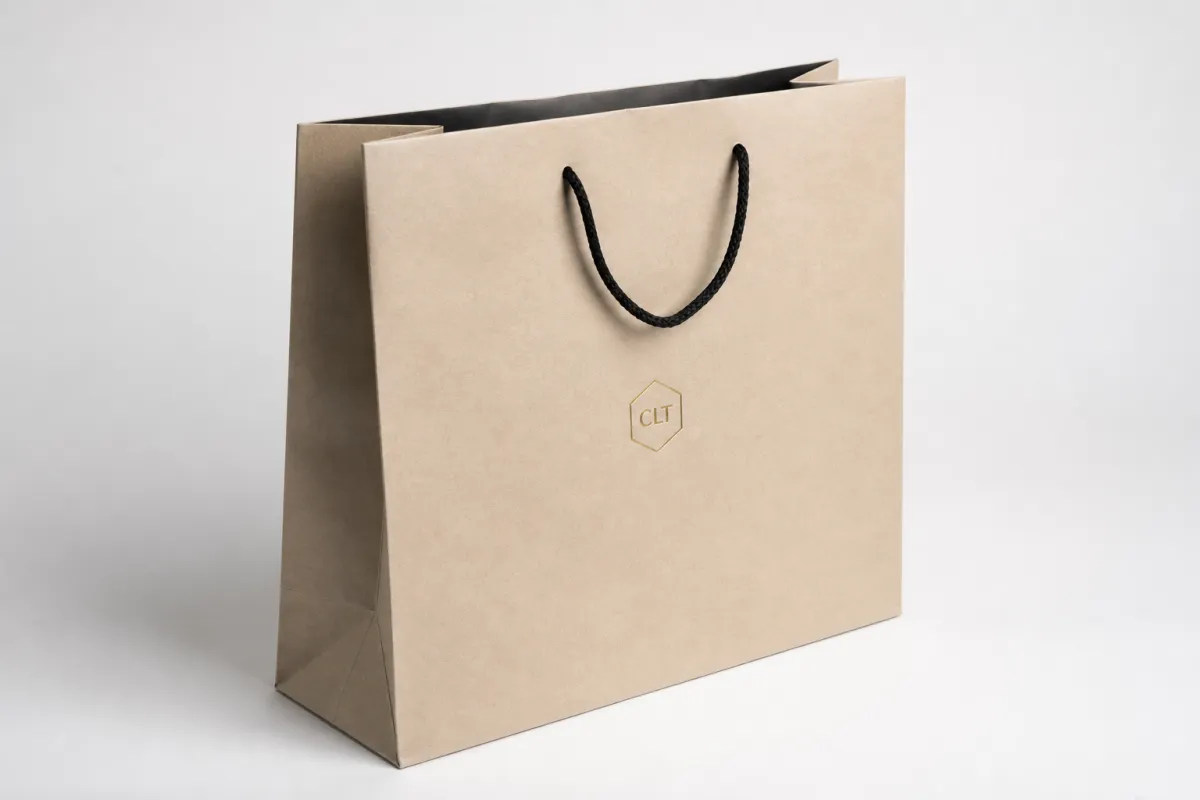
Recyclable merchandise bags bulk usually wins on value once a buyer looks past the sticker price. Three small orders almost always cost more than one larger run once setup, proofing, freight, and the time spent rechecking artwork are counted. I have seen retailers order a few hundred bags to "test" a format, only to reorder the same item twice more within a season and end up paying more overall than if they had just locked the spec the first time. That extra churn is not dramatic, but it adds up in a hurry.
Consistency matters just as much. A packaging program that shifts from one paper shade to another, or from a sturdy handle to one that feels flimsy, sends mixed signals to the customer. The checkout moment should feel controlled and intentional, not a little shaky. A bag that tears at the fold, bows at the bottom, or feels off-balance in the hand creates friction right where the brand wants the experience to feel easiest. In recyclable merchandise bags bulk programs, that kind of inconsistency usually starts when the order was rushed or treated as a one-off fix instead of a repeatable standard.
There is also a practical protection side that buyers sometimes underestimate. Merchandise bags keep sets together, guard box corners, and stop small items from sliding around before the customer gets home. That matters for apparel kits, boxed candles, cosmetics, books, and gift sets. A scuffed package or a dented corner turns into a packaging problem even if the bag itself was inexpensive. So the right way to judge recyclable merchandise bags bulk is by looking at durability, recyclability, and brand fit together instead of chasing the cheapest number on a quote.
The strongest bulk bag is the one that disappears into the experience: it fits the product, prints clearly, and holds up without calling attention to itself.
For retail, trade shows, pop-ups, and kit assembly, a recyclable bag can do more than hold a product. It keeps the handoff neat, supports a repeatable unboxing moment across locations, and gives a busy staff member one less thing to worry about. That is the real value of recyclable merchandise bags bulk: a packaging standard that keeps working even when traffic gets heavy and the line is moving fast.
Recyclable Merchandise Bags Bulk: Product Options and Material Details
Most buyers narrow recyclable merchandise bags bulk down to three common routes: kraft paper merchandise bags, recyclable poly styles where local recovery exists, and mono-material structures built to avoid mixed layers that complicate end-of-life handling. Kraft is still the most familiar retail choice because it prints cleanly, feels natural in hand, and often fits curbside paper systems more easily than multi-layer constructions. Poly can make sense when moisture resistance, weight savings, or reuse are more important, but the material and finish need to stay simple if recyclability is part of the promise.
The hidden details matter more than first-time buyers usually expect. A 10 x 13 x 5 bag behaves very differently from a 16 x 6 x 12 bag even if both sound "medium" in a spreadsheet. Gusset depth changes how the bag sits on a counter. Handle style changes how the weight is distributed in the hand. Bottom reinforcement changes whether the bag stays square under a boxed item or starts to bow once it is filled. When I review recyclable merchandise bags bulk specs, I look at those dimensions first because they shape the user experience more than the logo ever will.
Printing choices affect both appearance and the recovery path. A one-color logo on natural kraft is usually the cleanest and most economical route. Heavy coverage, flood coats, and multiple spot colors can raise cost and change the production path in ways that are not obvious at first glance. If the brand wants a stronger visual statement, ask whether all that ink is actually necessary. In many cases, a crisp logo on a stronger paper grade looks more premium than a full-bleed design that adds complexity without improving shelf impact. The same idea applies to recyclable merchandise bags bulk on poly substrates, where ink adhesion, surface treatment, and print coverage need to be balanced carefully.
Finish matters too. Natural kraft has a dry, honest texture that suits apparel, wellness, and eco-minded retail lines. Smooth coated paper feels more polished and may fit cosmetics or gift sets, but coatings and laminations should still be checked against the recycling path the bag is supposed to follow. If a sustainability claim is part of the brand story, confirm that the structure and finish match the collection system customers actually use, not just the one printed in the marketing deck. The EPA's consumer recycling resources at EPA recycling guidance are a useful starting point, but local collection rules decide the real answer.
Recycled content and fiber sourcing matter too, especially for brands with formal procurement requirements. FSC-certified paper can support responsible fiber sourcing where paper bags are the right fit. The important thing is to keep the language accurate: recyclable, recycled content, and FSC are not interchangeable claims. A buyer sourcing recyclable merchandise bags bulk should ask what the bag is made of, what the finish includes, and how the end user is expected to dispose of it. That last part is where a lot of marketing copy gets fuzzy, and fuzzy claims are not worth the risk.
Here is a practical way to compare the common options:
| Bag Type | Typical Use | Approx. Unit Range at 5,000 pcs | Notes |
|---|---|---|---|
| Kraft paper merchandise bag | Retail, apparel, gift, events | $0.20-$0.42 | Good print surface, often strong curbside paper compatibility, price shifts with paper weight and handle style |
| Recycled-content poly bag | Lightweight retail and promo kits | $0.18-$0.34 | Lower weight, good moisture resistance, recyclability depends on local collection and mono-material structure |
| Mono-material PP or PE bag | Branded merchandise, repeat use | $0.22-$0.40 | Can be cleaner for recovery than mixed laminates, but needs the right print and finish approach |
| Reinforced premium paper bag | Higher perceived value items | $0.32-$0.58 | Heavier paper, stronger handles, better for boxed goods and sharper presentation |
The table is a starting point, not a promise. Quantity, print coverage, freight terms, and whether the size is stock or custom can move the final number quite a bit. Even so, it gives buyers a realistic frame for recyclable merchandise bags bulk conversations and helps separate the actual cost drivers from the noise.
Specifications That Matter Before You Request a Quote
If you want clean pricing on recyclable merchandise bags bulk, bring exact specs to the conversation. Start with bag width, gusset, and height, then identify the material type, thickness or paper weight, handle style, print colors, and shipping destination. A quote built on vague language like "medium-sized retail bag" is usually slower and less reliable than one built on a written spec sheet. The more specific the request, the fewer surprises later.
Product weight matters more than many buyers expect. A lightweight apparel bag may only need a moderate paper grade and simple handle reinforcement, while a bag holding boxed candles, ceramic goods, or multi-item promo kits needs stronger seams and a more stable bottom. If the bag will carry awkward shapes, ask for a little extra width or gusset depth instead of forcing a tight fit. The right size protects the item, reduces wrinkling or corner damage, and makes the handoff feel intentional. That is especially true for recyclable merchandise bags bulk, where a small sizing mistake gets multiplied across thousands of pieces.
Requesting a dieline or print mockup early saves time and frustration. It shows exactly where the logo lands relative to folds, handles, and seams, and it lets the art team confirm bleed, safe zones, and print limits before production starts. I have seen orders delayed because the logo sat too close to a gusset fold or because the artwork was built for the wrong orientation. A simple proof review can prevent that, and it is a lot cheaper than discovering the issue after cartons are already staged for shipment.
Compliance and claim details deserve the same attention as size and print. If the bag will touch food packaging, ask whether any food-contact considerations apply. If the buyer wants a recycling claim, confirm whether it refers to the material itself, the local recycling system, or both. If a retailer has packaging standards, ask for them up front so the supplier can match panel dimensions and print placement. A clean technical brief usually shortens the quote cycle for recyclable merchandise bags bulk and reduces revisions later.
A useful pre-quote checklist looks like this:
- Bag dimensions in width x gusset x height
- Material type, paper weight, or resin type
- Handle style, seam reinforcement, and bottom construction
- Number of print colors and whether artwork is single-side or double-side
- Target quantity, delivery location, and needed in-hands date
- Any recycling, FSC, or retailer compliance requirements
- Whether you need a sample, a digital proof, or a pre-production test piece
That checklist may look basic, but it keeps everyone talking about the same thing. It is the fastest path to accurate quotes on recyclable merchandise bags bulk and the easiest way to compare suppliers fairly. If you are purchasing for several stores, you can also coordinate the order through Wholesale Programs so the spec stays consistent across the rollout.
Cost, Pricing, and MOQ for Bulk Orders
Pricing for recyclable merchandise bags bulk usually comes down to five drivers: material, size, print complexity, finishing, and quantity. Material choice is the biggest single lever. A simple kraft bag with one-color print is often far less expensive than a reinforced paper bag with a full-coverage design or a specialty mono-material structure with custom finishing. Size matters because larger bags use more raw stock and often need stronger construction to stay stable when loaded.
MOQ, or minimum order quantity, reflects the economics of setup. Printing plates, digital prep, material sourcing, die cutting, and production line changeovers all take time whether the order is 500 bags or 5,000. That is why lower quantities can carry a higher unit price. For recyclable merchandise bags bulk, the goal is not simply to hit the lowest possible MOQ; it is to find the lowest useful MOQ that still keeps the finished unit price in a sensible range for the intended use.
Standard sizes often save money because they reduce tooling and fit established production paths. A stock dimension can sometimes deliver a better price than a custom size that is only slightly different. If a bag is being used for apparel, folded shirts, small boxed gifts, or event giveaways, it may be worth adjusting the product assortment to fit a standard bag rather than paying extra for a custom footprint. That is a common savings move in recyclable merchandise bags bulk programs, and it usually does not hurt presentation if the proportions are chosen well.
There are also hidden costs to think about. Freight can swing a quote more than buyers expect, especially on larger palletized runs. Split shipments add handling charges. Warehouse labeling, master cartons, and special pack patterns may be necessary for multi-store distribution. If the order has to be rushed, expedited material sourcing can add cost. Ask for tiered pricing so you can see how unit cost changes at 1,000, 3,000, 5,000, or 10,000 pieces. That is often the clearest way to decide whether to consolidate demand for recyclable merchandise bags bulk or place a smaller test run first.
Here is the kind of pricing conversation that helps buyers move quickly:
- Ask for the exact spec and a comparable alternate spec.
- Request pricing at two or three quantity breaks.
- Confirm freight terms to the final destination ZIP or postal code.
- Check whether the quote includes proofing, tooling, and cartons.
- Compare the final landed cost, not just the bag price alone.
That landed-cost view is where many sourcing teams uncover real savings. A bag that looks slightly more expensive on paper may still win once freight, fewer reorders, and better durability are included. For buyers building a repeatable program, recyclable merchandise bags bulk is usually cheaper over the full run life than buying narrow batches again and again.
Process, Timeline, and Production Steps from Proof to Delivery
The production path for recyclable merchandise bags bulk is straightforward, but each step has its own timing window. It usually starts with the inquiry, followed by a spec review and quote, then artwork submission, digital proofing, sample approval if needed, production, inspection, and shipment. The shortest timelines happen when the buyer sends clean artwork, exact bag specs, and a clear delivery target from the beginning.
Artwork readiness is often the biggest schedule variable. Vector files are easier to place, easier to size, and easier to proof accurately than low-resolution images. If the logo needs cleanup, color correction, or resizing, add time for that. If the art file is a mess, the schedule is gonna feel it. In practical terms, a simple run of recyclable merchandise bags bulk can move through proofing in a day or two, while a more complex branded design may require several rounds of revisions before sign-off.
Material availability also matters. A standard kraft sheet or commonly used mono-material stock may be easy to source, while a special paper weight, unusual resin, or custom handle component can stretch the schedule. Print method has an impact as well. Simple one-color printing usually moves faster than multi-color work with tighter registration. For buyers planning launches or seasonal campaigns, I recommend building in a buffer for proofing and transit so recyclable merchandise bags bulk arrives before the event calendar gets tight instead of chasing it from behind.
Quality control should happen more than once. A good supplier checks the first production pieces against the approved proof, then verifies cartons, counts, and finish before shipment leaves the facility. That protects both schedule and budget because it is far cheaper to catch a print shift or bag-length issue early than after the product is already in the warehouse. For shipments that will travel with other goods, packaging ideas drawn from ISTA testing standards can be useful, especially if the bags are being kitted, boxed, or shipped alongside display materials.
Typical timeline ranges depend on the spec, but a simple custom order often lands around 12-15 business days after proof approval, while more involved runs can stretch to 18-25 business days or longer if sourcing is special. Transit then adds whatever shipping requires for the destination. The smart move is to set the need date first and work backward from there. That is how buyers keep recyclable merchandise bags bulk aligned with store openings, event windows, and replenishment cycles.
Why Choose Custom Logo Things for Bulk Bag Programs
Custom Logo Things fits buyers who need more than a price sheet. The real value in recyclable merchandise bags bulk is getting a spec that works on the floor, in transit, and in the customer's hand without overbuilding the order. That balance matters because over-specifying a bag can add cost and weight without improving the outcome, while under-specifying it can lead to tears, crushed corners, and a weak brand presentation.
Experienced support helps buyers avoid those traps. A good partner asks about product weight, how the bag will be used, whether the order is for one store or many, and whether the bag needs to feel premium or simply dependable. Those questions sound basic, but they lead to better recommendations. With recyclable merchandise bags bulk, a one-size-fits-all answer rarely works. The right choice depends on the merchandise, the customer flow, and the recovery path the buyer wants to support.
Clear proofs and responsive communication matter just as much as the physical bag. If you are coordinating multiple locations, a chain rollout, or a promotional calendar, you need predictable updates, not guesses. That is where repeatable ordering becomes valuable. Once a spec is approved, it can be reordered with fewer surprises, which is one reason bulk packaging programs are often easier to manage than a series of one-off buys. Buyers who use Wholesale Programs often appreciate that structure because it gives them a steadier path for future restocks of recyclable merchandise bags bulk.
Consistency also helps with brand control. A bag that looks the same from order to order keeps the customer experience stable, and that stability matters more than people think. At the register, the bag is often the last physical touchpoint a customer sees. If the print is off-center, the handle length changes, or the paper tone shifts too far, the packaging feels less intentional. For a branded program, those details are not cosmetic noise; they shape how the brand is perceived.
The strongest bulk bag programs are not the flashiest. They are the ones that stay consistent, stay within budget, and keep the recycling story honest from the first order to the reorder.
That is the standard we try to keep in mind for recyclable merchandise bags bulk: useful construction, clear art handling, and a purchasing process that respects the buyer's schedule. For retail, events, and promotional programs, that combination usually beats a low sticker price that causes trouble later.
Next Steps for Ordering Recyclable Merchandise Bags Bulk
The fastest way to move forward is to gather the core information before you ask for a quote. For recyclable merchandise bags bulk, that means bag type, dimensions, quantity, print colors, desired finish, delivery ZIP or postal code, and the date the bags need to be in hand. If you have an existing bag, a sample or photo is extremely helpful because it gives the supplier a real-world reference instead of a vague description.
It is usually smart to ask for two price options. One should match the exact spec you want, and the other should show a cost-saving alternative that still protects the function of the bag. That makes it easier to compare value instead of only comparing unit price. For example, a slightly different paper weight, handle style, or print count may lower cost without hurting the final presentation. That kind of comparison is especially useful for recyclable merchandise bags bulk because small spec changes can have a large effect on total spend.
Once the quote arrives, review the proof carefully. Look at logo size, panel placement, handle clearance, and any finish details that affect recyclability or appearance. If a sample is available, use it. A sample reveals things a screen proof cannot, such as how the bag opens, how the gusset stands, and how the handle feels under load. A clean approval at this stage saves time later and helps keep recyclable merchandise bags bulk on schedule.
A simple ordering sequence works best:
- Confirm the bag style and exact dimensions.
- Send artwork in the cleanest available format.
- Request the quote and review any alternate spec options.
- Approve the proof only after checking layout and claims.
- Lock the production schedule and track shipment timing.
If you are preparing a rollout for multiple locations, it is also a good time to plan future replenishment. That reduces the chance of inconsistent reorders and helps keep the packaging program stable. Once the first run is approved, the same approved spec can often be used again with very little friction, which is one of the main advantages of buying recyclable merchandise bags bulk instead of treating each order like a fresh start.
Frequently Asked Questions
What makes recyclable merchandise bags bulk actually recyclable?
Recyclability depends on the material and on the collection system where the bag will be used. A mono-material bag or a plain kraft paper bag may fit recovery more easily than a mixed laminate, but the buyer still needs to confirm local acceptance. For recyclable merchandise bags bulk, the safest approach is to match the construction to the real recycling stream rather than relying on a broad marketing claim.
What MOQ should I expect for recyclable merchandise bags bulk orders?
MOQ varies by size, print method, and material. Standard items may start lower, while custom sizes or complex print jobs often need a larger run to cover setup costs. Lower quantities usually carry a higher unit price because those fixed costs are spread across fewer bags. If you are comparing recyclable merchandise bags bulk quotes, ask for tiered pricing so the math is clear.
How do I choose the right size for recyclable merchandise bags bulk?
Measure the widest and tallest item first, then add room for the gusset and handle clearance. If the bag will hold multiple pieces, size it for the bundled load, not the smallest product in the set. A dieline or sample is the best way to check fit before production. That step is especially valuable for recyclable merchandise bags bulk because a few millimeters can change how the bag performs.
How long does production usually take for bulk recyclable bags?
Turnaround depends on artwork readiness, material availability, quantity, and the printing method chosen. Simple runs can move quickly after proof approval, while more complex orders need extra time for revisions and sourcing. For launches or event deadlines, build in shipping time as well. That buffer helps keep recyclable merchandise bags bulk from becoming a last-minute problem.
Can I print a custom logo on recyclable merchandise bags bulk?
Yes, custom logos are common, and the number of print colors will affect both cost and production method. Vector artwork usually gives the cleanest result, and it makes proofing much easier. If recyclability is part of the buying decision, confirm that the ink, coating, or finish will not interfere with the intended recovery path. For most buyers, recyclable merchandise bags bulk is the simplest way to combine branding, consistency, and a practical disposal story without paying for more bag than the job needs.
Actionable takeaway: before you request pricing, lock the bag dimensions, material family, print count, and disposal path first. That keeps recyclable merchandise bags bulk quotes honest, comparable, and much easier to approve without having to backtrack later.

