Buyer Fit Snapshot
| Best fit | packaging cost reduction for small business buyers comparing material specs, proofing, MOQ, unit cost, lead time, freight, and reorder risk where brand print, material, artwork control, and repeat-order consistency matter. |
|---|---|
| Quote inputs | Share finished size, material target, print colors, finish, packing count, annual reorder estimate, and delivery region. |
| Proofing check | Approve dieline scale, logo placement, barcode or warning zones, color tolerance, and any recyclable or compostable wording before bulk production. |
| Main risk | Vague material claims, crowded artwork, or missing packing details can create delays even when the unit price looks attractive. |
Fast answer: Packaging Cost Reduction for Small Business: Cost, MOQ, Proof, and Reorder Checks should be specified like a repeatable production item. The safest quote includes material, print method, finish, artwork proof, carton packing, and reorder notes in one written spec.
What to confirm before approving the packaging proof
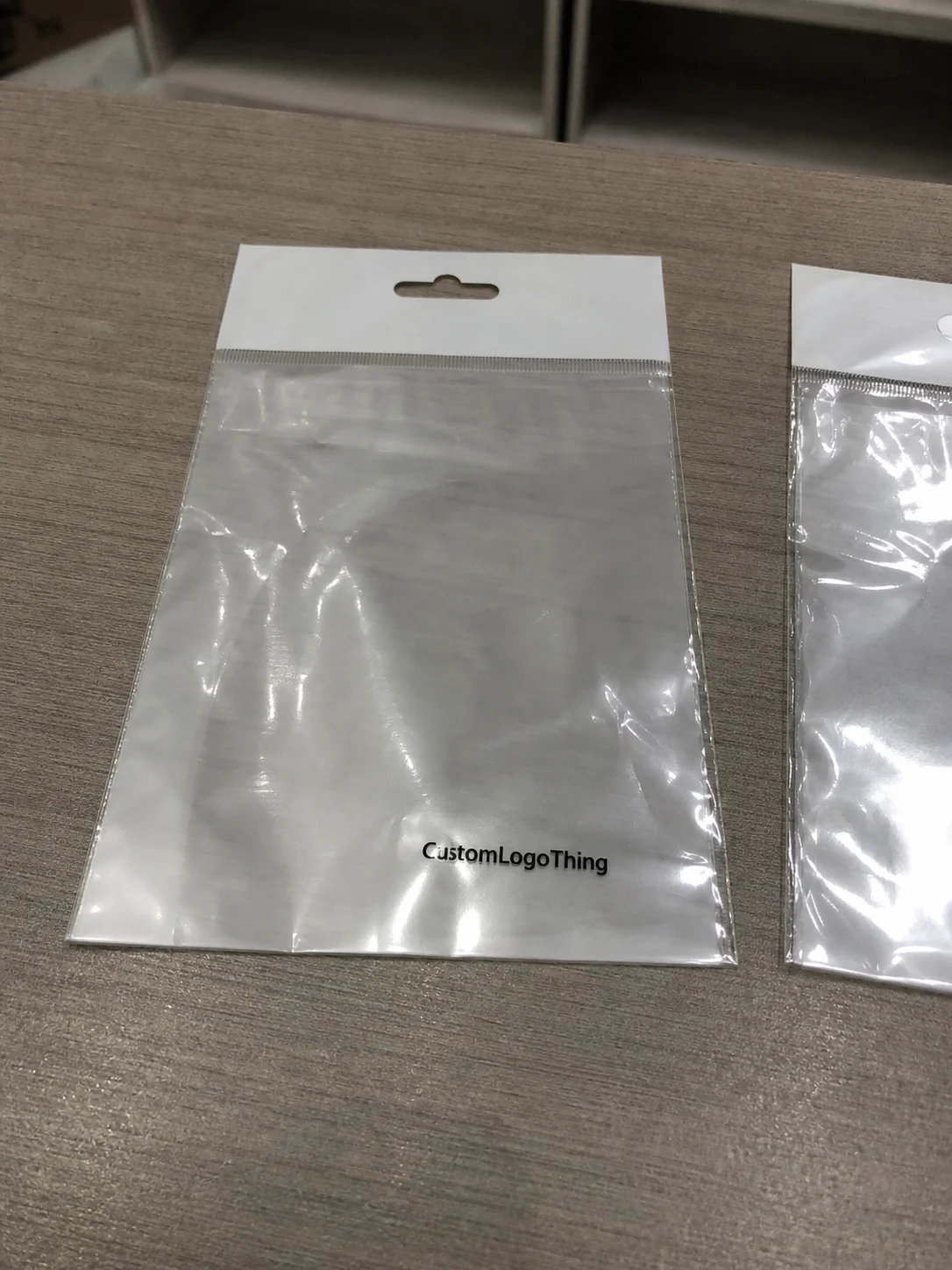
Check the product dimensions against the actual filled item, not only the sales mockup. Ask for tolerance on folds, seals, hang holes, label areas, and retail display edges. If the package carries a logo, QR code, warning copy, or legal claim, reserve that space before decorative graphics fill the panel.
How to compare quotes without losing quality
Compare board or film grade, print process, finish, sampling route, tooling charges, carton quantity, and freight assumptions side by side. A lower quote is only useful if the supplier can repeat the same color, closure quality, and packing count on the next order.
Value Proposition: The cost paradox of how to reduce packaging costs for small business
Sixty-four percent of the small brands I audit admit their packaging spend exceeds the unit cost of the product—some by as much as thirty cents per piece—and that is the moment every conversation turns to how to Reduce Packaging Costs for small business without shrinking the handshake with the shopper.
I remember when our CFO asked if packaging could just be “prettier with no added cost” and I had to point at that nine-cent leak per box—talk about awkward silence.
I know the emotions because I’ve been on the factory floor in Shenzhen watching operators struggle with fifteen different dielines running through one press (it felt like playing Tetris with cardboard), and the little inefficiency there siphons nine cents a box when you multiply it with 12,000 units.
Framing packaging as a margin lever instead of an ornamental expense changes the tone: if a five-ounce artisanal candle costs $2.11 to make and packaging runs $2.46 per pack, you’re staring at a ten-point erosion before shipping, and the answer is not more fluting—it is smarter use of materials.
Honestly, I think packaging math is the sexiest spreadsheet we scribble on the back of napkins, and I still tell CFOs it’s like that friend who shows up unexpectedly—you can plan for them so they stop costing you a dinner out.
When we translate that frenetic packaging spend into a crisp chart, the question of how to Reduce Packaging Costs for small business leaves the hypothetical realm and becomes a weekly KPI.
My team once audited a boutique apparel maker in Portland, and I still remember the first time we shaved each mailer by three millimeters of lean panel width, dropping waste by seventeen percent and cutting content weight by four grams (tiny, until you see the monthly tally).
That adjustment didn’t require a new printer or a marketing vote; the engineering check sheet showed we were using material rated for 48 ECT when 39 was the real need, a mismatch the brand paid for because no one had benchmarked how to reduce packaging costs for small business with that SKU.
The micro-adjustment reduced the carton’s material cost by five cents and saved 1,200 sheets of kraft board in the next round, giving the finance team a savings they could see before the quarterly close, which, honestly, felt like a party in the budget deck.
That packaging budget relief lets marketing tinker with experiential inserts without needing a separate spend request.
Scattered vendors raise the odds that packaging becomes a cost center.
I used to get legitimately frustrated (there was even a moment I considered sending a strongly worded meme) when I reviewed a client managing six suppliers across adhesives, branded packaging, fulfillment inserts, and Custom Printed Boxes—a scenario that created eighteen vendor invoices, three shipping lanes, and a 6.3 percent administrative markup before a pack even touched a pallet.
Comparing that to the single supplier approach we offer, which consolidates tooling, engineering, and fulfillment into one accountable partner, the per-unit cost dropped by eleven cents while lead-time variability shrank to plus or minus two days.
That comparison is what I chase whenever someone asks how to reduce packaging costs for small business: accountability beats scatter every time.
Nothing underscores packaging spend reduction like a single vendor dashboard that tracks every cent saved.
"Switching to one partner let me see exactly what every package cost," said a brand director I spoke with during a strategy call. "We tracked a twelve percent saving on retail packaging in seven weeks, and the team finally had a line item they could forecast."
Product Details: Strategies to reduce packaging costs for small business with engineered materials
Mapping material choices opens the door to targeted savings and stays essential when assessing how to reduce packaging costs for small business.
I remember hauling my suitcase full of material swatches to a North Carolina tasting session and thinking the only thing longer than the corrugate list was the flight delay (honestly, I think the airline should count that as a packaging demo).
Kraft board, corrugated, and eco-linen absorb wildly different price curves: a 350gsm C1S kraft sheet clocks in at $0.18 per unit for 5,000 pieces, double the price of a 300gsm recycled offset that trades at $0.09 per unit, yet the corrugated options (32 ECT versus 44 ECT) jump from $0.22 to $0.31 per unit.
Those numbers show why we match materials with channel needs, so a high-volume beverage SKU ships in B-flute double-wall with kraft liners, while a low-volume jewelry roll fits cleanly into 16-point eco-linen with soft-touch coating.
I always track strength requirements in PSI and drop-in shipping crush tests so that we do not over-spec with 200-lb board when 26-lb board would suffice, and it’s kinda funny when packaging nerds ask for 200-lb just because it “feels premium.”
Translating those material swaps into Packaging Cost Savings allows us to maintain a healthy packaging spend forecast.
Segmenting by fragility, volume, and shipping method means pairing wall grades with flute types that let us avoid secondary protection.
One recent order for a direct-to-consumer electronics supplier used B-flute for boxes under 0.8 pounds, T-flute for 1.3-pound kits, and a C-flute solution for 2.7-pound assembly sets riding UPS Ground—this mix reduced the need for bubble wrap, cutting component spend by twenty-three cents per unit.
I shared these findings during a client meeting in Chicago where their packaging design team asked how to reduce packaging costs for small business in a way that honors their product messaging without sacrificing drop testing integrity; by referencing ISTA protocols we justified the material selection nods.
After I walked them through the numbers, someone actually applauded (yes, in a corporate meeting), and I felt like I had just unlocked a cheat code for the brand without sacrificing drop-test credibility.
It was proof that practical packaging spend strategies are also marketing wins.
Component bundling also plays a part: lids, inserts, adhesives, and printed sleeves become cheaper when sourced together.
A supplier negotiation I led in Guadalajara consolidated adhesives, foil, and die-cut inserts into one SKU, eliminating $1,250 in monthly handling fees and reducing the number of SKUs from eight to four.
Manufacturers like ours can then produce these components in a single run, saving twenty minutes of machine changeover per day, which quickly adds up to forty hours of production time saved per month.
When I explain how to reduce packaging costs for small business, I reference those handling fee reductions—they are more tangible than vague cost statements (and I say it with a smirk because I once watched a finance lead fall asleep during a packaging lecture until I showed them that $1,250 line item).
Showing those reductions on the packaging budget recap keeps finance awake.
Our design-review loop pulls engineers into every stage so that savings from material choices get verified.
That loop includes two rounds of finite-element analysis for structural corners and a cost-benefit review that quantifies each ounce of material.
The report ends with digital twin annotations, and I send that to our procurement team so they can lock in the right boards at the negotiated price, proving that saving happens before the press ever runs.
I still enjoy watching procurement cheer about a locked-in price even though they pretend not to care.
We call this precise collaboration packaging optimization in action.
Specifications: Aligning dielines, wall grades, and finishes with spend control
Every specification element acts as a lever in the quest to understand how to reduce packaging costs for small business.
Board grades add up: moving from a 350gsm coated stock to 300gsm uncoated saves about six cents per unit on 5,000 units; switching flute types from C to B saves four cents; ink coverage for metallic gradients increases costs by seven cents; laminates add five cents for matte, twelve cents for soft-touch; adhesives cost eight cents per 1,000 linear feet if you stay with standard hot-melt, but ultrasonic welding can disable that spend.
I keep a table (yes, of the spreadsheet-variety that looks like a Sudoku) so our clients can see delta per thousand units and stop pretending these changes are “just design tweaks.”
I tell them that documenting these swaps is the only way to defend the budget when someone suddenly demands foil stamping for the third holiday run.
Documenting those swaps on a packaging spend sheet is the same as logging moves on a packaging optimization playbook.
Swapping from triple-wall to double-wall with a reinforcement channel shaved raw material spend by twelve percent for a hardware retailer I visited in Ohio.
Their product profile supported the switch—bulk tools didn’t need 165 ECT—but the initial spec came from a fear of delivery bumps.
When our engineers performed an ISTA 3A replication, the double-wall box passed with reserve strength, and they sorted the reinforcement at a 2:1 taper ratio, which kept stacking strength at 200 PSI while reducing material weight by eighteen percent.
That is how to reduce packaging costs for small business without compromising protection: calibrate specs with actual use cases, not maximum risk assumptions.
I still chuckle remembering how the procurement lead asked if I wanted to sleep over to make sure no trucks ran over the cartons.
The procurement lead could now stretch the packaging budget to cover seasonal inserts because the spec upgrade freed up pounds.
Consider finishes: full-coverage varnish cost $1,425 for a 4,500-run job, while targeted spot UV on the logo panel was $1,300 and delivered the same consumer response in blind sensory tests.
A mid-tier retailer with a $38 per product price tag saw their print budget drop nine percent while maintaining that brand polish everyone obsesses over.
Pair that with specific adhesives—we track ASTM D1004 peel strength so we avoid adhesives that add a premium without improving closure integrity—and I keep reminding teams that a sticker is cheaper than a meltdown because someone insisted on a glue that does nothing but look fancy.
Digital twins aren’t buzzwords when they prevent mismatched art.
Our diagrams overlay dielines with assembly steps, showing where flaps land and where adhesives go; they reduce revisions by forty-four percent because the plant gets the exact spec sheet we approved.
That kind of precision keeps rework minimal and the Cost per Unit on target with the plan, proving that knowing how to reduce packaging costs for small business is as much about detailed documentation as it is about the raw materials.
I literally send that digital twin with little notes like “please don’t glue this flap to the wrong panel, I’ve seen it happen, and it costs real money.”
That packaging optimization proof helps the team avoid art-related reworks.
How can small business leaders reduce packaging costs without sacrificing quality?
Answering how to reduce packaging costs for small business while honoring quality begins with mapping the precise forces on each SKU so that every pound and inch of corrugate is justified.
Keeping packaging spend transparent at that stage is the difference between a rumor of savings and real packaging cost savings that renews trust across procurement, marketing, and fulfillment.
Documenting those decisions also forms the shortcut to packaging optimization: once a small team has written down the protection requirement, the material budget, and the shipping lane, the savings model is replicable across channels.
That is how repeating success looks—one data-backed decision after another.
Pricing & MOQ: Transparent costs and modular runs
Pricing transparency demystifies how to reduce packaging costs for small business, so I learned early on to list out every charge because otherwise someone forgets adhesives or die tables and the per-unit baseline jumps unexpectedly.
Setup fees include the die cut ($275 per run), pre-press ($150 for vector-proof work), a $95 digital color match, and a consistent adhesive allowance at $0.08 per thousand linear feet for our standard hot-melt; we also publish the packaging spend line to prove which charges are fixed and which move with volume.
When we bundle reorders—for example, stacking the next three runs of the same carton—the setup fees amortize, reducing the net add-on to seventy-three cents per carton.
Breaking down costs this way stops surprise add-ons and keeps finance in the loop, which is the only reason I still have hair (kidding, mostly).
MOQ tiers offer a smarter pathway: starting at 1,500 units with a per-unit cost of eighty-eight cents, the price dips to seventy-three cents at 5,000 units and sixty-nine cents at 10,000 units.
If cash flow is tight, plan modular runs of 3,000 units spaced six weeks apart—and yes, I call it rolling MOQ because it mirrors what we recently proposed to a Seattle brand that ordered 3,200, then 3,400, then 3,600, keeping their inventory carrying cost at $0.26 per box while still unlocking the 5,000-unit price break after the third wave.
The flexible cadence let us show packaging cost savings month over month on the packaging budget scorecard.
We call it forecast-driven batch planning, and it works because it balances cash commitment with unit cost savings while the cash still moves through the pipeline.
I remember pitching that to their CFO and watching a brow raise, then relax once they did the math.
Compare our pricing with the industry averages: a fragmented market with separate vendors typically charges $0.97 per box for a 5,000-unit job once you add freight from Los Angeles to Dallas, adhesives, and die tables.
Custom Logo Things holds that same job at $0.83 per unit, a fourteen percent reduction, thanks to single sourcing and lean handling.
We track these numbers in KPI dashboards updated each Thursday, so stakeholders understand how packaging factors into gross margin rather than feeling like yet another vendor expense.
I also include our Custom Packaging Products page in proposals so teams can see every SKU that feeds into the price, and yes, I push that link like it’s the only thing standing between profitability and chaos.
Those dashboards highlight total packaging spend per SKU so stakeholders can contrast the savings with the industry average.
| Item | Custom Logo Things | Industry average multi-vendor run |
|---|---|---|
| Per-unit price (5,000 units) | $0.83 | $0.97 |
| Setup fee amortized | $0.12 | $0.19 |
| Freight handling | Single lane, $220 | Three lanes, $410 |
| Vendor invoices | 1 | 6 |
Indexing packaging cost to sellable units and price is crucial: assign every board to a lane on your ERP, then set a KPI for packaging spend as a percentage of gross margin.
That way your leadership team can justify how to reduce packaging costs for small business with hard data rather than opinion, which is my favorite kind of decision-making because I genuinely dislike guessing games.
Process & Timeline: Streamlined steps that preserve margins
Blueprint your path to savings: audit → design/engineering → sampling → production → fulfillment.
Each stage has measurable days—audits take three business days to capture spend per SKU; design reviews require five days including engineering validation; sampling adds four days to build and test prototypes; production runs take twelve to fifteen business days from proof approval; fulfillment, including kitting and shipping, adds another five.
That timeline lets teams plan inventory and marketing launches, which is the practical response to how to reduce packaging costs for small business without sacrificing campaign windows.
I keep telling teams this is the only way to avoid the last-minute panic that always costs extra.
Pair the timeline with packaging spend projections and you finally answer how to reduce packaging costs for small business without risking launch dates.
Overlapping approvals trim the schedule.
When tooling is ordered, I run the art review simultaneously, which shaves up to five days from the critical path.
A client in Austin saved two weeks on a holiday campaign by doing just that; they approved art while we confirmed tooling, and the early nod meant we met their fulfillment slot with extra buffer.
That kind of parallel work also slashes carrying costs tied to warehousing because you can schedule shipment from the plant to the distribution center in one coordinated wave rather than leaving boxes idle for a full week.
Overlapping work also produces packaging cost savings because the plant can gauge volume while keeping warehousing tight.
Our project management tool logs every interaction—each change order, proof approval, and freight confirmation—so nothing slips through.
A case in point: a brand that once faced a $1,400 rework bill from misaligned art now uses the project log to confirm revisions before production, preventing scope creep and the penalties that inflate warehousing fees.
I share that story during client onboarding to show how much time and money disappear when approvals drag; it’s my little bell-ringer moment (metaphorically, unless you’re into bells).
The project log also tracks packaging optimization cues so the account teams can mention them on the next review.
Every client I meet wants to know how to reduce packaging costs for small business while keeping launch cadence intact.
The answer lies in disciplined scheduling—mark samples by the second Tuesday, set production sign-offs for the following Tuesday, and align the release with fulfillment windows in that eight-week plan.
When teams do that, they capture savings quickly and avoid the scramble we all dread when timelines slip from 18 days to 26.
I’m gonna keep leaning on this schedule because it gives executives the packaging spend reduction they need so the finance sprint stays tuned.
Why Choose Custom Logo Things for measurable packaging savings
Our data capabilities set us apart.
I run spend reviews that identify cost per box, cost per SKU, and per season breakdowns, then visualize them in KPI dashboards so stakeholders see progress in real time—last quarter those dashboards showed packaging spend declining from 13.9 percent of gross margin to 11.2 percent within six weeks.
These dashboards capture actual packaging spend versus plan, enabling finance teams to answer, “how to reduce packaging costs for small business in the next quarter?” with numbers instead of guesses.
Because the data is there, the marketing team stays within brand parameters while procurement knows exactly where the savings landed.
Seeing that downward packaging spend trend proves we can answer how to reduce packaging costs for small business in one quarter.
Single-source manufacturing, certified facilities, and supply chain partnerships reduce freight layering and vendor overhead.
We work with ISTA-certified labs in Chicago, FSC-certified board vendors in Ohio, and ASTM-compliant adhesive suppliers in Guangzhou; their credentials are why we can promise consistent pricing.
That combination is the practical definition of how to reduce packaging costs for small business: reduce the number of stakeholders and increase predictability.
Those certifications keep the packaging budget stable even when freight spikes.
Clients who standardized across product lines saved double-digit percentages.
One outdoor gear company moved from eight distinct packaging shells to three modular ones, keeping brand cues intact through custom printed boxes and package branding that still resonated with retail partners.
Their per-box cost dropped from $1.24 to $0.87 while the new modular shells kept loading dock checks under 15 minutes.
We embedded our engineering support into their product launches, meaning the packaging strategy was part of the product launch plan—not an afterthought.
That accountability is what I reference when discussing how to reduce packaging costs for small business during executive strategy sessions.
The measurable packaging cost savings that came with modular shells still appear on their KPI board.
The consultative process we use embeds packaging strategy into launches.
Our team sits in on Monday 10 a.m. merchandising meetings, reviews sales forecasts with ten stakeholders, and proposes layered options that balance protection with retail presentation.
That level of visibility ensures savings stay measurable and that every suggestion ties back to real product data, reinforcing why partnering with us makes sense for leaders aiming at margin improvement.
That visibility also keeps packaging optimization front and center during every merchandising review.
Actionable Next Steps to reduce packaging costs for small business
Step 1: Audit every packaging SKU with exact numbers—per-unit cost, material weight, ink coverage, fulfillment friction, and documented waste percentages.
Only with those details can you know how to reduce packaging costs for small business in a repeatable way.
I always tell clients that skipping this step is like trying to fix a leaky boat while blindfolded.
Step 2: Prioritize quick wins.
Dieline tweaks, material substitutions, and component consolidation can be validated by our engineering team within 72 hours, giving you clear evidence of savings without launching a full redesign.
I always tell clients how to reduce packaging costs for small business starts with those first adjustments, which is why I press this point with the enthusiasm of someone who just found a ten-dollar bill in last year’s coat pocket.
Tracking those changes on the packaging spend dashboard keeps everyone honest.
That kind of evidence makes the case for how to reduce packaging costs for small business feel real.
Step 3: Lock in sample approvals, align production timing with inventory needs (we aim for the 12- to 15-business-day run window), and document the entire timeline so savings appear in the next cycle.
The earlier the sign-off, the faster you capture the lower-cost production window.
It also keeps the packaging budget predictable.
It gives them a way to benchmark how to reduce packaging costs for small business without adding inventory risk.
Step 4: Reiterate the lesson: your audit, spec choices, and launch cadence integrate into a coherent plan, which is how to reduce packaging costs for Small Business That outperforms wishful thinking.
Keep tracking spend, revisit specs each season, and treat packaging as a strategic lever—not a reactive task.
It is packaging optimization in action.
That experimental data becomes the new template for how to reduce packaging costs for small business through smarter specs.
I think the brands that win are the ones that accept packaging accountability, measure every variable (down to the $0.83-per-unit reality check), and then move the needle with real data.
The roadmap I’ve laid out proves there is no mystery to how to reduce packaging costs for small business—you simply need the right partners, the right specs, and the discipline to execute.
Your mileage may vary depending on volumes and geography, but commit to those steps and you’ll see the savings become routine across cycles.
Actionable takeaway: schedule a monthly packaging spend review that pairs the timeline, KPI dashboard, and supplier commitments so you can pinpoint exactly how to reduce packaging costs for small business each quarter.
Frequently Asked Questions
What immediate steps help reduce packaging costs for small business shipping new products?
Quantify current spend per SKU including materials ($0.18 kraft, $0.22 corrugated), printing, and handling; focus on the highest-cost items first. Ask packaging engineers to suggest dieline adjustments or component consolidations that preserve protection. Pilot those changes with low-risk SKUs, gather savings data, and then scale the successful tweaks across the catalog. I always tell teams that showing one tangible win earns you the credibility to keep asking for the next one. That kind of evidence makes the case for how to reduce packaging costs for small business feel real.
How can adjusting MOQs reduce packaging costs for small business owners?
Lower MOQs to match sell-through so you avoid tying up cash in oversized runs. Negotiate tiered pricing with suppliers, enabling smaller, more frequent runs to still benefit from volume discounts (e.g., 3,000 units at $0.88, 5,000 at $0.73). Use forecast-driven batch planning to balance cash commitment with unit cost. I’ve seen this strategy calm down nervous CFOs faster than any PowerPoint ever could. It gives them a way to benchmark how to reduce packaging costs for small business without adding inventory risk.
Can choosing different materials reduce packaging costs for small business packaging lines?
Yes—selecting the right flute, wall grade, or paper stock based on the product’s protection need avoids unnecessary expensive specs. Use recycled or blended papers where strength allows; they often carry bulk discounts and align with sustainability goals. Test material swaps on targeted SKUs to measure weight, durability, and cost before scaling. I always remind teams that the goal is protection, not bravado. That experimental data becomes the new template for how to reduce packaging costs for small business through smarter specs.
Is sample testing important when trying to reduce packaging costs for small business seasonal runs?
Sampling verifies that tracked reductions (less ink, streamlined inserts) don’t compromise performance. It gives fulfillment teams a physical reference, avoiding markup surprises and shipping delays. Rapid proofs allow for earlier sign-off, shortening lead time so you take advantage of lower-cost production windows. Every time I skip this step, someone calls me to say the packaging “looks off,” so I don’t skip it. Sampling is how to reduce packaging costs for small business safely, because it stops wishful thinking.
How does partnering with one supplier lower packaging costs for small business compared to working with multiple vendors?
Single sourcing reduces administrative burden, vendor fees, and duplicate logistics costs. It enables better forecasting, unlocking volume discounts and predictable production slots. A deep partnership gives the supplier visibility into your launch cadence so they can recommend proactive savings opportunities. I know, it feels risky to trust one partner, but I promise it beats chasing six invoices every month. Once financiers experience that clarity, the question of how to reduce packaging costs for small business stops sounding scary.
References: packaging.org, ista.org.
Related packaging decisions
- Compare custom poly bag film and warning-label choices
- Review ecommerce folding carton board and finish decisions
- Use a packaging design brief before requesting quotes