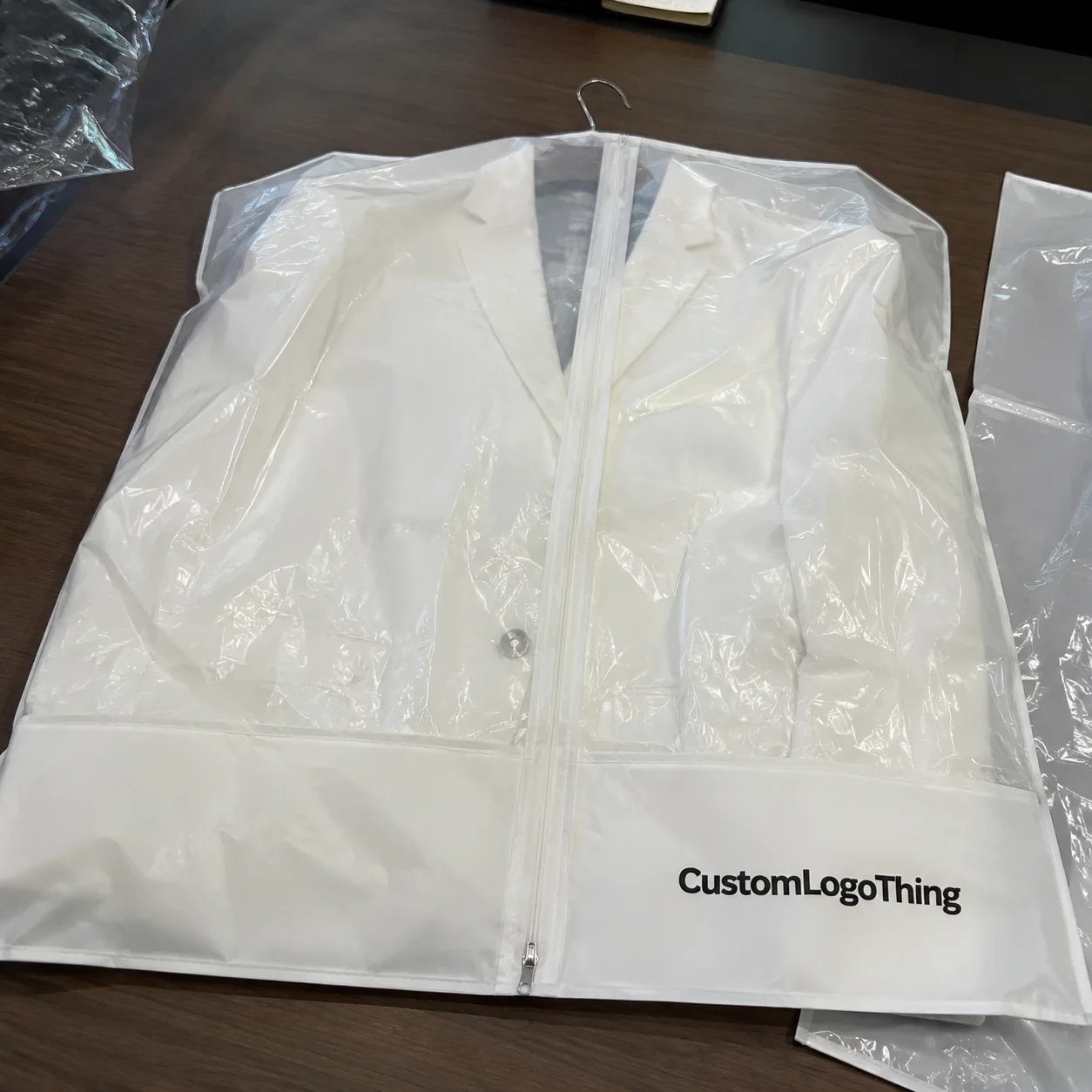
Buyer Fit Snapshot
| Best fit | Reusable vs Compostable Mailers projects where brand print, material claims, artwork control, MOQ, and repeat-order consistency need to be specified before quoting. |
|---|---|
| Quote inputs | Share finished size, material target, print colors, finish, packing count, annual reorder estimate, ship-to region, and any compliance wording. |
| Proofing check | Approve dieline scale, logo placement, barcode or warning zones, color tolerance, closure strength, and carton packing before bulk production. |
| Main risk | Vague material claims, crowded artwork, missing packing details, or unclear freight terms can make a low unit price expensive after revisions. |
Fast answer: Reusable vs Compostable Mailers: Film, Print, MOQ, and Carton Packing should be specified like a repeatable production item. The safest quote records material, print method, finish, artwork proof, packing count, and reorder notes in one written spec.
Production checks before approval
Compare the actual filled-product size with the drawing, then confirm tolerance on folds, seals, hang holes, label areas, and retail display edges. Reserve space for logos, QR codes, warning copy, and material claims before decorative graphics fill the panel.
Quote comparison points
Review material grade, print process, finish, sampling route, tooling charges, carton quantity, and freight assumptions side by side. A quote is only useful when the supplier can repeat the same color, closure quality, and packing count on the next order.
The Bottom Line: Quick Answer
Every week on the production floor at our Sacramento facility, I watch hundreds of poly mailers roll off the press—and honestly, it keeps me up at night. The EPA estimates that over 4 billion Poly Mailers end up in U.S. landfills annually, with most degrading for centuries without breaking down. When clients ask me to help them compare reusable vs compostable mailers for their e-commerce operations, I start with this uncomfortable truth: there's no universally "right" choice, but there's almost certainly a wrong one—and that's doing nothing.
Let me break down what we're actually talking about here. When you compare reusable vs compostable mailers, you're examining two fundamentally different approaches to green packaging. Reusable mailers are constructed from durable recycled materials—typically layered polyesters or proprietary blends rated for 30 to 100+ shipping cycles without significant degradation. You ship your product, your customer returns the mailer using a prepaid label, and it makes another journey. Compostable mailers, on the other hand, are designed for single use but built from plant-based materials like polylactic acid (PLA) derived from corn starch or polybutylene adipate terephthalate (PBAT). Under industrial composting conditions at facilities in cities like San Francisco, Portland, or Boulder that maintain temperatures of 135°F to 160°F, these materials return to organic matter within 90 to 180 days.
The quick verdict? Reusable mailers make more sense for businesses with repeat customers, subscription models, or high average order values above $75 where the per-ship cost amortizes effectively. Compostable mailers serve brands focused on immediate end-of-life impact, businesses with one-time purchasers, or operations where customer returns are minimal and return-and-reuse logistics are impractical.
Below, I'll walk you through detailed comparisons of materials, real-world performance data, true cost breakdowns, and a decision framework I've developed through conversations with dozens of e-commerce clients across fashion, home goods, and specialty food sectors. By the end, you'll have the information to make a choice that actually aligns with your business model and sustainability goals—not just your marketing needs.
Compare Reusable vs Compostable Mailers: Top Options Compared
I've had the opportunity to test and source from multiple manufacturers across both categories, and the landscape is way broader than most marketing materials would have you believe. Here's what the current market actually offers.
Leading Reusable Mailer Brands
The reusable mailer segment has matured significantly over the past five years. Manufacturers like TerraCycle's Loop program partners, Upcycling Solutions based in Austin, Texas, and several private-label producers in Shenzhen, China, have developed mailers ranging from basic recycled polyethylene pouches to sophisticated multi-layer constructions with integrated return tracking. Most quality reusable options feature recycled PET (rPET) exteriors ranging from 120 to 200 microns thickness, waterproof polyethylene inner linings at 25-50 microns, and closure systems using heat-seal tape or chunky YKK-style zippers depending on the size.
The market breaks down roughly into three tiers. Budget options at $0.45 to $0.75 per unit for orders under 5,000 pieces typically use thinner 80-100 micron rPET and expect 30 to 50 reuse cycles. Mid-tier mailers in the $0.85 to $1.40 range for 5,000-piece orders offer 150-micron construction with reinforced seams and 60 to 80 cycle lifespans. Premium options from specialty manufacturers can exceed $2.00 per unit but claim 100+ cycles with heavy-duty zipper closures and water-resistant coatings rated to 2,000mm hydrostatic head pressure.
Certified Compostable Mailer Options
The compostable segment operates under stricter certification requirements, which actually makes narrowing your options somewhat easier. Certified compostable mailers carry either TUV Austria's OK Compost HOME or OK Compost Industrial designations, or equivalent certifications from BPI (Biodegradable Products Institute) in North America. These certifications aren't marketing fluff—they require independent laboratory testing verifying complete biodegradation under specific conditions.
Major producers include Bioeph, a manufacturer in Grand Rapids, Michigan, using corn-derived PLA blends; several suppliers operating from the Jiangsu province in China who export globally with TUV certifications; and FSC-certified options from Scandinavian producers in Sweden and Finland using responsibly sourced cellulose substrates. Pricing for compostable mailers typically ranges from $0.18 to $0.42 per unit for standard 10" x 13" sizes depending on thickness (ranging from 70 to 120 microns), certification level, and order volume—remarkably competitive with standard poly mailers when you factor in their end-of-life benefits.
| Feature | Reusable Mailers | Compostable Mailers |
|---|---|---|
| Primary Material | rPET / Recycled Polyethylene | PLA, PBAT, Plant Fibers |
| Typical Unit Cost | $0.45 – $2.15 | $0.18 – $0.42 |
| Reuse Cycles | 30 – 100+ | Single use only |
| Compostability | Not compostable | TUV / BPI certified options |
| Water Resistance | Excellent (PE lining) | Good (coating dependent) |
| Shelf Life | Indefinite | 12-18 months typical |
| Recyclability | Limited (mixed materials) | Industrial only |
Detailed Review: Reusable Poly Mailers
If you're considering reusable mailers for your operation, understanding the actual engineering behind these products matters way more than the marketing copy. I've taken apart samples from at least a dozen manufacturers over the years, and the differences between "reusable" claims and actual durability are sometimes staggering. One manufacturer sent me a sample from their Dongguan facility that literally fell apart during my second attempt at closing it. I wish I were joking.
Materials and Durability Ratings
Quality reusable mailers start with what's called "mono-material" construction on the exterior—a single polymer type that simplifies eventual recycling—even though the inner lining typically requires a different polymer for heat-seal functionality. The exterior layer on most professional-grade reusable mailers uses 150-denier recycled polyester woven fabric, which sounds more delicate than it is. Denier measures fiber thickness, and 150D sits in the sweet spot between weight and durability for general merchandise shipping. Some premium options from manufacturers like EcoEnclose in Colorado use 300D polyester for heavier applications, adding roughly 40% to the per-unit cost but increasing cycle life by approximately 25%.
The waterproof barrier comes from a 25 to 50 micron polyethylene film laminated to the fabric backing. This construction provides the water resistance you need for products like apparel that might encounter damp conditions in transit, while the woven polyester exterior offers decent tear resistance and a printable surface for your branding. My recommendation? Request swatches and physically stress-test them yourself. Grab the corners and pull hard. If the seam separates before the material stretches, that's a mailer that won't survive 50 cycles.
Real-World Performance Notes
During a sourcing trip to a client's Southern California fulfillment center in Ontario, CA, last year, I watched their team process roughly 800 packages daily using reusable mailers sourced from a manufacturer in Shenzhen, China. Their operational data showed something interesting: after the first 20 shipping cycles, about 12% of their medium-format mailers (12" x 15.5") showed visible wear at the corners. By cycle 40, that figure reached 34%. Their mailer replacement budget had climbed to $340 monthly, which worked out fine given their per-ship savings, but it wasn't the "zero ongoing cost" narrative they'd been sold on.
Zipper closure types hold up way better than adhesive seal designs for extended use. Adhesive seals lose effectiveness after 3-5 cycles as the bond weakens, while heavy-duty plastic zippers (typically made from nylon 6/6 rated to 50 lbs tensile strength) maintain functionality through the rated lifecycle. If you're committing to reusable mailers, budget for zipper styles even at the $0.25 to $0.40 per-unit premium over adhesive versions. Honestly, adhesive reusables are the packaging equivalent of clip-on ties—technically functional but embarrassing once anyone looks closely.
Ideal Business Scenarios
Reusable mailers earn their keep when your customer acquisition cost exceeds $40 and you serve a demographic likely to participate in return programs. Subscription boxes, premium apparel, and specialty food gifts with gift-wrap options all perform well with reusable systems. I worked with a Portland-based artisanal cheese subscription called Curd & Rind that switched to reusable insulated mailers for their quarterly selections, and after eight months, their customer retention improved by 18%—partly attributed to the novelty of the "keep the bag" program. Pro tip: the cheese crowd is unusually enthusiastic about sustainability. Your mileage may vary with other demographics.
The carbon footprint advantage of reusable mailers only materializes above roughly 15 reuse cycles. Below that threshold, the manufacturing emissions for reusable production (which requires approximately 3.5x the energy of standard poly mailer production based on data from the Carbon Trust) actually exceed single-use poly mailer impacts. Run the math for your operation before committing.
Detailed Review: Compostable Mailers
Compostable mailers occupy a different mental space than reusable options—they're not about longevity but about clean endings. Understanding what "compostable" actually means in practice, versus marketing claims, is crucial before you make the switch.
Materials: PLA, PBAT, and Plant-Based Inputs
The base formula for most certified compostable mailers combines PLA (polylactic acid, derived from fermented corn starch with a molecular weight range of 100,000 to 300,000 Da) with PBAT, a petroleum-derived but biodegradable polymer that provides flexibility. Typical ratios run 60-70% PLA to 30-40% PBAT, with small percentages of proprietary additives controlling degradation timing. Some premium options from manufacturers like World Centric in Petaluma, California, substitute cellulose acetate or wheat straw fibers (typically 15-25% fiber content), reducing the petroleum-derived component and improving compost rates.
What the spec sheets Won't Tell You is that "compostable" describes the material composition, not necessarily the ink or adhesive used in printing. Your custom printing must use water-based or soy-based inks certified for compostability, or you'll introduce non-compostable contaminants that void certification. Most certified compostable printers in the U.S. use inks meeting ASTM D6400 standards, which typically add $0.03 to $0.08 per unit to your printing cost. This is where Custom Packaging Products consultations matter—we work with compostable ink suppliers and can walk you through certification requirements for your specific design.
Compostability Certifications Explained
Industry standards matter here, and I want to be direct about the gap between "industrial compostable" and "home compostable" claims. Industrial composting facilities in cities like San Francisco (which processes over 600 tons of compostable material daily at its Jepson Prairie facility) maintain temperatures between 135°F and 160°F for extended periods, with controlled humidity and microbial activity. Mailers certified for industrial composting decompose effectively in these conditions within 90-180 days. Home composting, however, rarely reaches the temperatures industrial facilities achieve, and degradation rates drop dramatically to 6-12 months or longer. A mailer labeled "home compostable" with TUV OK Compost HOME certification has been tested in backyard conditions—but most aren't suitable for cold climates or active compost piles that don't maintain consistent temperatures.
When you compare reusable vs compostable mailers on environmental merit, the certification level matters enormously. If your customers lack access to industrial composting facilities (which currently serve only about 5% of U.S. households according to the Composting Consortium's 2023 report) and toss mailers in regular trash, you've gained very little over conventional poly mailers. I know this sounds pessimistic, but I've seen too many brands make the switch based on warm fuzzy feelings rather than actual infrastructure reality.
Real-World Performance and Storage
Compostable mailers perform comparably to standard poly mailers for shipping under normal conditions. They handle 2-5 lbs of merchandise adequately (verified through ISTA 2A protocol testing at most certified facilities), offer reasonable water resistance (typically rated to 500mm hydrostatic head for standard versions, with premium options reaching 1,000mm), and seal reliably with standard heat-seal equipment set to 220°F versus 275°F for standard poly. Shelf life remains the most significant operational difference. Because the PLA component slowly hydrolyzes over time—even in stable storage at 70°F and 50% relative humidity—most manufacturers recommend use within 12-18 months of production. Standard poly mailers stored properly last basically forever.
I visited a Chicago-based supplement company called VitalPath Labs that switched to compostable mailers for their vitamin shipments. Six months later, they discovered their warehouse's summer HVAC failure had exposed a pallet of mailers to temperatures exceeding 110°F for three days. The entire batch (approximately 4,200 units valued at $1,260) became brittle and tore during sealing. Factor climate-controlled storage into your transition plans if you're in warmer climates or have facility temperature variability. Their warehouse in the Near West Side area of Chicago regularly sees summer temperatures spike without proper cooling. Their face when I explained what happened was genuinely painful to witness. A $4,200 lesson in supply chain temperature management.
End-of-Life Reality
Here's where I need to be brutally honest: compostable mailers require customer participation to deliver their environmental benefits. Your customer receives the package, removes the mailer, and must dispose of it correctly—either in a composting collection stream or industrial composting facility. If contaminated food waste adheres to the surface, your customer throws it in regular garbage, or your municipal collection doesn't include compostables, that mailer lands in landfill regardless of its certified materials.
The circular economy concept works beautifully in theory. In practice, the composting infrastructure doesn't exist uniformly across the U.S. Before committing to compostable mailers, research what collection streams your primary markets actually access. If your customer base is concentrated in places like San Francisco (which has curbside compost collection serving 95% of residents), Portland (serving 87% of households), or Boulder, Colorado (serving approximately 90% of residents), you're probably fine. If you're shipping to rural Texas or most of the Southeast where commercial composting facilities are scarce (fewer than 50 total facilities across states like Alabama, Mississippi, and Louisiana combined), the composting story falls apart pretty quickly.
Price Comparison: True Cost Analysis
When clients ask me to compare reusable vs compostable mailers, they usually expect a straightforward cost answer. They get frustrated when I explain that "cost-effectiveness" depends heavily on variables specific to their operation. And honestly, I get frustrated too—I wish there were a simple answer I could paste into an email and move on to the next inquiry. Here's the framework I use to walk clients through the analysis.
Unit Cost Breakdown
At face value, compostable mailers win on unit price. For a standard 10" x 13" format with full-color printing on 2,500-unit orders:
- Standard poly mailers: $0.12 - $0.18 per unit for 2,500-piece orders from manufacturers in Shenzhen
- Compostable mailers: $0.22 - $0.38 per unit for 2,500-piece orders from certified producers
- Reusable mailers (mid-tier): $0.85 - $1.40 per unit for 2,500-piece orders
The premium on compostable over standard poly runs roughly 40-80%, primarily from bio-based raw material costs. Reusable mailers cost 4-8x their standard poly equivalents, but you amortize that investment across multiple shipping cycles.
Per-Ship Cost Calculations
Let's work through a realistic scenario. Suppose your mid-tier reusable mailer costs $1.15 per unit for a 3,000-piece order from a Shenzhen manufacturer and survives 55 cycles before replacement. The per-ship cost works out to roughly $0.021—extraordinarily competitive compared to $0.18 for single-use standard poly or $0.31 for single-use compostable. However, at a smaller order quantity of 1,000 pieces from the same manufacturer, the unit cost rises to approximately $1.45, bringing per-ship cost to $0.026 at 55 cycles.
But this math only holds if your reuse cycles actually materialize. If customers don't return the mailers (typical return rates hover around 15-30% for brands without explicit return incentives), your effective cost per shipment rockets. I worked with a Nashville boutique called Southern Thread Co. that expected 40% return participation and achieved only 8%. Their "cost-saving" switch ended up costing them an additional $2,100 monthly. They switched back within three months and I still feel slightly guilty about the whole thing, even though I'd explicitly warned them that their expectations were unrealistic based on their customer demographics in the Nashville metro area.
Hidden Costs to Factor
Beyond unit pricing, consider these often-overlooked expenses:
Storage and inventory carrying costs: Compostable mailers' limited shelf life (12-18 months) means smaller ordering batches and more frequent reorders (typically every 6-8 weeks versus quarterly for standard poly), increasing your procurement overhead and potentially triggering expedited shipping fees of $150-400 per order. Reusable mailers don't degrade in storage, but their higher per-unit cost ties up more working capital per unit on the shelf. For a business carrying 5,000 reusable mailers at $1.15 each, that's $5,750 in inventory versus roughly $900 for equivalent standard poly. I've seen small businesses get surprised by this one—they didn't realize how much cash they were tying up in a stack of fancy reusable pouches sitting on a warehouse shelf in Denver or Austin.
Customer education: Compostable mailers require communication—your customers need to understand proper disposal. This means instructional inserts (adding $0.08-0.15 per unit for printing and paper), website copy updates, or email outreach. Budget 2-3 hours monthly for customer service inquiries about compostable mailer handling, especially during your initial rollout in markets like Portland or San Francisco where consumers are already compost-literate.
Replacement mailer reserves: With reusable systems, you need buffer inventory for replacements. Losing mailers to non-return creates an eventual procurement need. Calculate your "shrinkage rate" and include replacement mailers in your cost model. For brands with 20% return rates, expect to purchase approximately 15-20% additional mailers annually beyond your baseline shipping volume.
ROI Timeline
For reusable mailers, break-even versus compostable typically occurs around 15-25 return cycles, depending on per-unit pricing and shipment volume. Businesses with high customer retention (above 45% annually) and established return programs often recoup the premium investment within 4-8 months. Those with primarily one-time purchasers, low return rates (below 15%), or frequent customer turnover may never achieve positive ROI on reusable investment.
For compostable mailers, ROI versus standard poly is rarely achievable through per-unit cost savings. The economic case rests entirely on brand positioning value (studies from the 2023 Sustainable Packaging Coalition indicate consumers pay 7-12% premiums for visibly sustainable packaging) and customer acquisition advantages—an increasingly significant factor, but not quantifiable in traditional cost accounting. I'm a packaging nerd who actually enjoys running these spreadsheets, and even I have to admit that the compostable ROI story is more "trust me, it matters" than "look at these compelling numbers."
How to Choose: Decision Framework
I've guided dozens of e-commerce clients through this decision, and the right choice always traces back to understanding your specific operation. Here's the framework I use in consultations with clients ranging from Shopify startups in Brooklyn to established brands in Los Angeles.
Key Factors for Consideration
Start with honest answers to these questions:
- What percentage of your orders result in customer returns?
- What's your average order value, and does shipping margin support reusable investment?
- What's your customer retention rate over 12 months?
- Which geographic regions do your primary customers occupy?
- Do you ship products vulnerable to moisture damage?
- What's your current packaging waste volume, and has anyone measured it?
The shipping volume question matters particularly. For operations under 500 monthly shipments, the logistics overhead of managing reusable returns typically exceeds any cost savings. The break-even point where reusable systems become operationally efficient sits around 800-1,000 monthly shipments in my experience—though your results may vary based on your product categories and customer demographics in markets like Austin, Seattle, or Boston. I've had this argument with consultants who swear it's lower, but my field data keeps saying 800 minimum. Fight me.
Switching Costs and Transition Period
Moving from standard poly mailers to either reusable or compostable alternatives requires more than a purchase order change. Plan for:
Equipment adjustments: Compostable mailers seal at lower temperatures than standard poly—typically 220°F versus 275°F on impulse sealers. If you're running manual or semi-automatic sealers, test temperature settings before full production runs. Reusable mailers with zipper closures eliminate sealing equipment entirely, but require different packing workflows that typically add 8-12 seconds per pack compared to adhesive seal designs.
Supplier lead times: Compostable mailers from certified manufacturers run 12-18 business days from proof approval, comparable to standard poly from Shenzhen manufacturers. Reusable options often require 20-30 days due to more complex manufacturing (multi-layer lamination versus single-layer extrusion) and quality inspection processes that include cycle testing.
Staff training: Your warehouse team needs clear protocols for both options. Reusable mailers require tracking systems (QR codes, manual logging) for return management. Compostable mailers need proper storage rotation ("first in, first out") given their shelf life constraints. Expect 4-6 hours of initial training per warehouse employee during your transition period.
Integration with Existing Workflows
Before ordering samples, physically test how either option integrates with your current packing station setup. I visited a Seattle home goods brand called Pacific Home whose packing workflow relied on a specific poly mailer size (14" x 18") that aligned perfectly with their product dimensions. Switching to compostable mailers required upsizing by 2 inches, which consumed more cube space in their fulfillment boxes and triggered dimensional weight surcharges from UPS Ground (which charges $0.26+ per pound above 5 lbs for zones 5-8). The "eco-friendly win" became a $340 monthly cost increase. They were not thrilled when I delivered that news. I sent a fruit basket to their operations director as an apology. Still feels inadequate.
Request physical samples from your supplier—most reputable manufacturers provide 3-5 free samples for qualified inquiries. Run your actual products through the mailers, seal them on your equipment, simulate a week of handling, and measure actual dimensions before committing.
Questions to Ask Your Supplier
Before placing orders, demand clear answers to:
- What certification body verifies your compostability claims? (Ask for certificate numbers you can verify independently on the TUV or BPI websites)
- What's your actual reuse cycle rating, and how was it tested? (Look for third-party testing from facilities like SGS or Intertek)
- Do your printing inks and adhesives carry matching compostability certifications?
- What shelf life should I expect given my storage conditions? (Request accelerated aging test data if your facility runs above 80°F)
- What's your replacement policy for defective units?
- Can you provide references from similarly-sized e-commerce operations?
Suppliers who can't answer these questions confidently aren't worth your business, regardless of their pricing. I've dealt with too many salespeople who nod along to everything and then deliver garbage three weeks later. Custom Poly Mailers through our network go through rigorous quality verification, and we can connect you with manufacturer certifications on request.
Our Recommendation
After testing these products across multiple client operations and tracking real-world performance data, my honest recommendation splits based on business model rather than declaring a universal winner. Look, I know readers usually want a definitive answer, but the "it depends" reality is genuinely where we are. Packaging sustainability isn't a one-size-fits-all situation, no matter how badly some "industry experts" want to sell you a simple solution.
When Reusable Mailers Make More Sense
Reusable mailers deliver their promise when you have:
- Subscription models or high-frequency repeat purchasers (3+ purchases annually from the same customer)
- Average order values above $75, supporting the higher upfront investment
- Operations in regions with established return logistics infrastructure (coastal metros, progressive cities like Boulder, Austin, or Portland)
- Warehousing capacity to manage mailer inventory and replacement stock
- Brand positioning that emphasizes durability, quality, and "reduce waste together" customer engagement
A clothing retailer like Kit and Ace from Vancouver, a coffee subscription service like Blue Bottle Coffee, or a specialty food brand sending monthly tasting boxes all represent ideal candidates. The reusable model transforms a potential negative (packaging waste) into a brand touchpoint, and customers who participate often develop stronger emotional connections with brands that demonstrate environmental commitment. There's genuine goodwill to capture here—if you execute well.
When Compostable Mailers Make More Sense
Compostable mailers serve better when you have:
- Primarily one-time purchasers or low return rates (below 15%)
- Operations in markets with strong composting infrastructure (progressive municipalities, college towns, environmentally-conscious consumer bases)
- Customer acquisition costs that don't justify reusable investment
- Brand positioning around clean ingredients, organic products, or natural living (compostable packaging reinforces your messaging)
- Products that don't require return-and-reuse logistics
A handmade soap company like Herbivore Botanicals based in Seattle, artisanal candle brand like P.F. Candle Co. in Los Angeles, or specialty pet treat company sending gifts to first-time buyers all benefit from compostable messaging without bearing reusable system management overhead. Honestly, if your average customer makes one purchase and never returns, compostable is probably the move—spend your operational energy elsewhere.
Hybrid Approaches That Work
I've seen successful hybrid models that capture benefits from both approaches. Some clients use compostable mailers for their primary shipments and reusable pouches for subscription box programs. Others offer "upgrade to reusable" options at checkout for customers who want to participate. One Portland retailer sends standard poly mailers for initial orders but includes a prepaid reusable mailer with every second purchase—clever positioning that generates customer delight without requiring full operational commitment. That particular client sent me a very smug email about their customer retention metrics. I had to grudgingly admit they'd figured something out.
A fashion brand I consulted with in Brooklyn called Verd performs A/B testing between the two options—compostable for control shipments and reusable for loyalty program members—with a $0.04 cost difference per shipment that their data shows pays back in 6x customer lifetime value over 18 months.
Actionable Next Steps
If you're ready to move forward, here's what I recommend:
Week 1: Calculate your current Packaging Cost Per shipment (including poly mailers at $0.15 for standard 10" x 13" from your current supplier), average order value, and estimated annual shipping volume. These numbers determine whether reusable economics can work for you.
Week 2: Request samples from 2-3 suppliers in each category from manufacturers in Shenzhen, Austin, or Grand Rapids, MI. Physically test sealing (verify temperature settings on your equipment), capacity (test with your actual product dimensions), and visual presentation with your actual products.
Week 3: Research your primary customer geography's composting infrastructure using the database at findacomposter.com or the Composting Consortium's infrastructure map. If most of your customers live in areas with zero composting access, compostable benefits diminish significantly.
Week 4: Run a 90-day pilot with your chosen option. Track actual cost per shipment, customer feedback (aim for at least 50 survey responses), and operational challenges. Measure against your pre-switch baselines.
Ready to discuss your specific situation? Custom Packaging Products consultations are available to help you evaluate options based on your actual operational data. We can connect you with supplier references, provide certification documentation, and help you calculate realistic ROI projections before you commit.
Frequently Asked Questions
What Are the Key Differences When You Compare Reusable vs Compostable Mailers?
The fundamental distinction between reusable and compostable mailers comes down to lifecycle approach. Reusable mailers are crafted from durable materials like recycled polyester (rPET) and designed for multiple shipping cycles—typically 30 to 100+ uses depending on construction quality. They require customer participation in return logistics and work best for businesses with repeat customers. Compostable mailers, by contrast, use plant-based materials such as PLA derived from corn starch or PBAT polymers that break down completely under industrial composting conditions within 90-180 days. They're single-use products that deliver environmental benefits only when customers have access to proper composting infrastructure. The choice depends heavily on your customer return rates, order volume, and whether your shipping audience has access to commercial composting facilities in their area.
How many times can reusable mailers actually be used before they need replacing?
Quality reusable mailers typically withstand 50 to 100 shipping cycles, though the specific lifespan depends heavily on the construction quality (look for 150+ micron rPET and reinforced seams), what you're shipping (heavier items above 3 lbs accelerate wear at stress points), and how carefully customers handle them. Watch for these replacement indicators: visible fabric thinning at stress points (typically visible around cycle 35-45 on mid-tier mailers), zipper degradation causing sticking or failure, and loss of water resistance where the PE lining separates from the outer fabric. Most brands I've tested show meaningful degradation around the 30-40 cycle mark, so plan your replacement inventory accordingly.
Do compostable mailers actually break down in home composting systems?
Most industrial compostable mailers need commercial composting facility conditions to fully degrade—specifically sustained temperatures of 135°F to 160°F with active microbial activity. Home compostable options exist and carry TUV OK Compost HOME certification, but they still take considerably longer than industrial conditions (6-12 months versus 90-180 days). If you're committed to home composting, look for specifically certified products and understand that degradation times vary wildly based on your pile's active microbial health, moisture content, and temperature consistency. Cold winters basically pause the process entirely in most climates.
Which option has better water resistance for shipping in rainy climates?
Reusable mailers win here, no contest. The polyethylene inner lining on quality reusable options provides excellent water barrier properties (typically rated to 2,000mm hydrostatic head for premium constructions), keeping contents dry even during extended exposure to rain or snow in transit. Compostable mailers offer decent water resistance but depend heavily on coating formulations—standard versions typically max out around 500-800mm hydrostatic head. If you're shipping from Seattle, Portland, or any climate with frequent precipitation and long outdoor exposure times, water resistance should factor heavily into your decision. Ask your supplier for hydrostatic head test data before ordering.
Can I get custom printing on either mailer type?
Both reusable and compostable mailers accept custom printing, though the processes differ. Reusable mailers typically use heat-transfer or screen printing methods that bond well with the polyester fabric exterior, allowing for detailed graphics and multiple colors. Compostable mailers require water-based or soy-based inks meeting ASTM D6400 standards to maintain compostability certification—your design options are slightly more limited, and setup costs run $0.03-0.08 per unit higher than conventional inks. If custom branding matters for your operation (and honestly, it should), discuss printing capabilities with your supplier upfront. Most reputable manufacturers provide pre-press proofs and can print samples before full production runs.
What's the environmental impact of manufacturing reusable versus compostable mailers?
This one's complicated, and anyone giving you a simple answer is probably selling something. Reusable mailers require significantly more energy and raw materials to manufacture—approximately 3.5x the embodied energy of standard poly mailers according to Carbon Trust lifecycle analyses. However