Buyer Fit Snapshot
| Best fit | Rigid Boxes for Small Business projects where brand print, material claims, artwork control, MOQ, and repeat-order consistency need to be specified before quoting. |
|---|---|
| Quote inputs | Share finished size, material target, print colors, finish, packing count, annual reorder estimate, ship-to region, and any compliance wording. |
| Proofing check | Approve dieline scale, logo placement, barcode or warning zones, color tolerance, closure strength, and carton packing before bulk production. |
| Main risk | Vague material claims, crowded artwork, missing packing details, or unclear freight terms can make a low unit price expensive after revisions. |
Fast answer: Rigid Boxes for Small Business: Production Spec, Color Control, and Delivery Risk should be specified like a repeatable production item. The safest quote records material, print method, finish, artwork proof, packing count, and reorder notes in one written spec.
Production checks before approval
Compare the actual filled-product size with the drawing, then confirm tolerance on folds, seals, hang holes, label areas, and retail display edges. Reserve space for logos, QR codes, warning copy, and material claims before decorative graphics fill the panel.
Quote comparison points
Review material grade, print process, finish, sampling route, tooling charges, carton quantity, and freight assumptions side by side. A quote is only useful when the supplier can repeat the same color, closure quality, and packing count on the next order.
I’ve watched a $14 candle sell faster in rigid Boxes for Small Business than a nearly identical candle in a plain folding carton. That sounds irrational until you stand on a packing line, hold both packages in your hands, and see how one feels like a gift while the other feels like inventory. In my experience, rigid boxes for small business are less about luxury theater and more about changing how a customer values what’s inside, especially when the box uses a 1200gsm greyboard core wrapped in 157gsm art paper.
Custom Logo Things sees this all the time with brands that are still under 20 employees, still shipping from a spare room in Austin, Texas, or a small 3PL in Columbus, Ohio, and still trying to keep packaging costs within a margin that actually makes sense. The surprising part? Rigid Boxes for Small business can do a lot of heavy lifting without requiring the kind of packaging budget people assume is reserved for prestige beauty brands or electronics giants. Packaging snobs love pretending otherwise. The spreadsheet usually disagrees, especially when a launch starts at 500 pieces instead of 50,000.
Rigid Boxes for Small Business: What They Are and Why They Matter
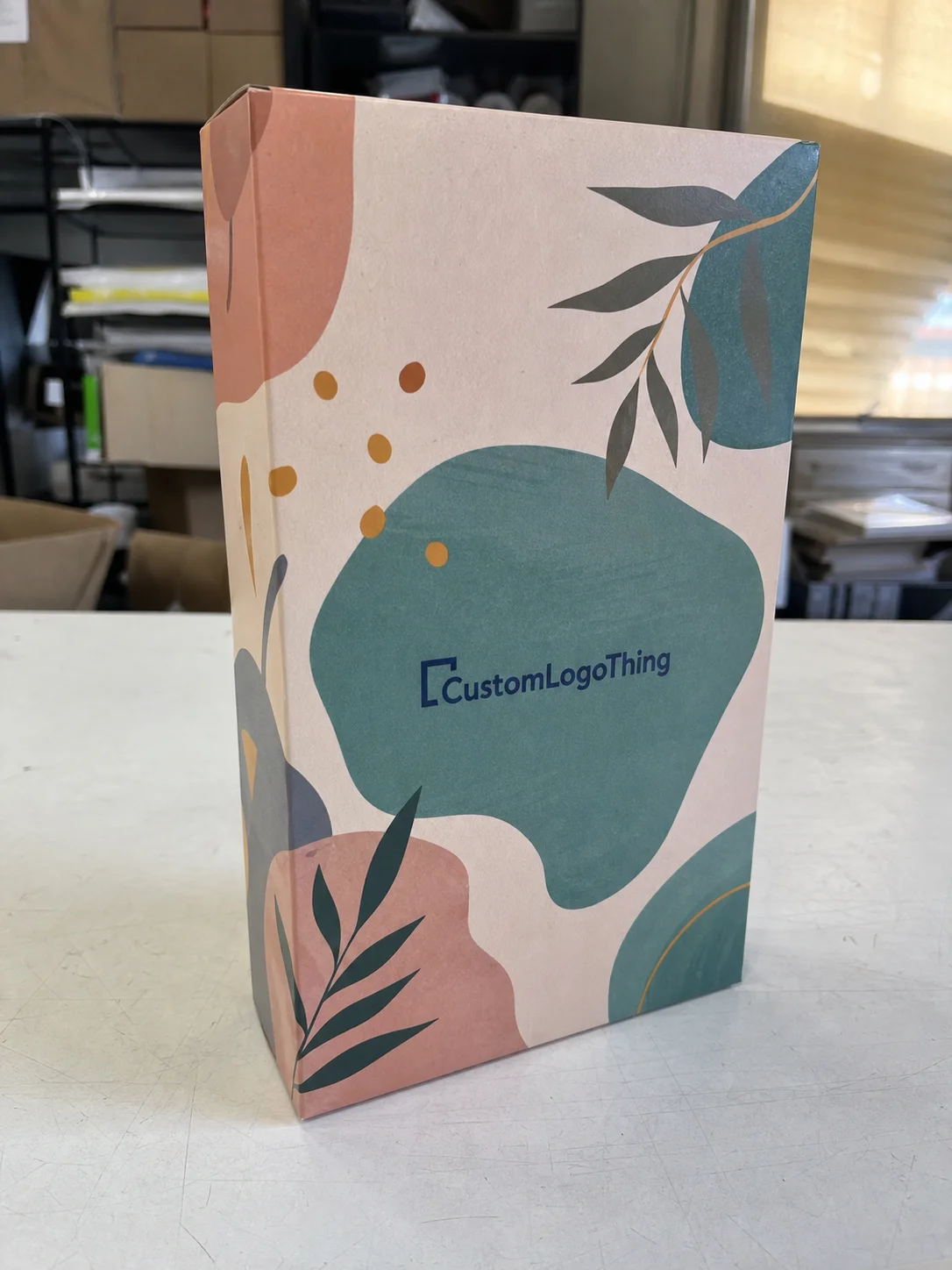
Rigid Boxes for Small business are set-up boxes made from thick chipboard, then wrapped with printed or specialty paper. They don’t fold flat the way a standard carton does. They hold their shape, resist crushing better, and usually feel more substantial in the hand. A typical rigid box might use 1000gsm to 1500gsm greyboard, wrapped in 157gsm art paper or specialty paper, though exact construction depends on the product and budget. For a cleaner retail look, many suppliers in Shenzhen, Dongguan, and Ningbo build them with 350gsm C1S artboard outer wraps laminated to the shell.
I still remember a client meeting with a skincare founder who thought rigid packaging was “too much” for a four-item facial set. We opened one sample on the conference table, and the reaction changed instantly. Same serum, same cream, same cleanser. Different perceived value. That’s the part many brands miss: rigid boxes for small business don’t just contain a product. They frame the product. They make the thing feel chosen. And yes, customers absolutely notice that, even if they pretend they don’t, especially when the box closes with a 1.5 mm magnetic catch instead of a flimsy tuck flap.
Compared with folding cartons, rigid boxes for small business have a stronger retail presence and a more premium unboxing effect. Compared with corrugated mailers, they offer better display appeal and a cleaner presentation, though corrugated still wins for direct shipping abuse. Honestly, I think the right question is not “Can I afford rigid boxes?” but “Where in my customer journey does packaging do the most work?” If the answer is a holiday gift set or a $48 perfume sample kit, rigid usually earns its keep.
Here’s where rigid boxes for small business tend to pull their weight:
- Cosmetics and fragrance sets
- Candles and home fragrance kits
- Jewelry and watches
- Apparel accessories like belts, scarves, and sunglasses
- Subscription boxes for premium tiers
- Tech accessories such as earbuds, cables, and phone accessories
- Premium food items, especially gift sets
- Influencer kits and PR mailers
There’s also a psychological reason rigid boxes for small business matter. A customer who pays attention to texture, closure, and presentation is often buying with emotion as much as utility. That’s especially true for gifting. A rigid box with a magnetic lid or drawer pull can reduce the need for additional gift wrap, tissue, or an outer bag. In other words, the box itself becomes part of the product, which is why so many boutique brands in Los Angeles and Miami use them for launch events and holiday drops.
One more thing: brands often assume rigid boxes for small business are only for the top end of the catalog. Not always. I’ve seen them used strategically for a hero SKU, a holiday edition, or a first-order welcome kit. That approach keeps costs under control while still giving the brand a premium anchor. A 1,000-piece run on a single signature set is often easier to justify than trying to box every SKU in the catalog.
How Rigid Boxes for Small Business Work
The anatomy of rigid boxes for small business is straightforward once you’ve seen one cut apart. The core is a chipboard shell, usually laminated or wrapped with printed paper. Add a lid, a base, or a drawer structure, and you’ve got the basic framework. From there, brands can add inserts made from EVA foam, molded pulp, paperboard, or fluted board depending on the product’s weight and movement. A common spec for a small cosmetics set is 1200gsm greyboard with a 157gsm art paper wrap and a 2 mm EVA insert cut to hold three bottles.
During a factory visit I made in Shenzhen’s Longhua district, a line supervisor showed me why a tiny 2 mm difference in board thickness can change everything. The closure fit got tighter. The corners looked crisper. The assembly time increased by seconds per unit, which doesn’t sound like much until you’re talking about 10,000 units. That’s the kind of detail that separates decent rigid boxes for small business from Packaging That Feels truly intentional. I swear, packaging makes you humble fast, especially when the sample room has six versions of “almost right.”
The production sequence usually follows a predictable path:
- Design brief and measurements
- Dieline creation and structural planning
- Sampling or prototype
- Artwork preparation and print approval
- Printing on wrap paper
- Lamination or coating, if needed
- Board wrapping and box assembly
- Insert production and fit checks
- Final quality control
- Packing and freight
Rigid boxes for small business often include premium finishing touches. Soft-touch lamination adds a velvety feel. Foil stamping can highlight a logo. Embossing or debossing gives a tactile cue customers notice before they even open the box. Ribbon pulls and magnetic closures create drama, but they also increase unit cost and, in some cases, production complexity. In Guangzhou, a foil-stamped lid with one color of print and a matte finish can add about $0.18 to $0.45 per unit at 3,000 pieces, depending on the paper and tooling.
Compared with corrugated mailers, rigid boxes for small business usually win on presentation but lose on shipping efficiency. Compared with folding cartons, they win on structure and perceived value but require more storage space. If your order is retail-facing, gift-oriented, or heavily photographed for social media, that tradeoff can make sense. If your item is a low-margin consumable, the math gets tighter. A 250-unit reorder might look manageable until you realize the finished boxes take 6 to 8 cubic feet per 100 units in storage.
There’s a useful standard-setting lens here too. For shipping durability, some brands reference ISTA testing protocols through the International Safe Transit Association. For fiber sourcing, FSC certification from fsc.org can help support sustainability claims. I’m not saying every rigid box needs both. I am saying they matter when your customers or retailers ask for proof, not promises, especially if you print recycled-content claims on the inside lid.
One client in the home fragrance category told me their customer service team saw fewer “it arrived dented” emails after switching to rigid boxes for small business with a paperboard cradle inside. That was not because rigid boxes are indestructible. It was because the product stopped moving around inside the package. Protection often comes from fit, not just thickness. Funny how the simplest fix is usually the one everyone tries last, even when the insert only costs $0.11 per unit at 5,000 pieces.
Key Factors That Affect Cost and Pricing
Pricing for rigid boxes for small business depends on five variables that keep showing up in quotes: size, construction, print coverage, finishes, and quantity. If one of those changes, the unit cost moves. If two change, the price can move a lot. That’s why a “simple” rigid box quote can look simple until the details land on the table. A 2.5 x 2.5 x 2-inch jewelry box is a very different job from a 9 x 6 x 3-inch gift set box, even if both are “small.”
Let’s talk numbers. For a small run of rigid boxes for small business, a plain set-up box with basic printing might land around $1.20 to $2.50 per unit at modest volumes, while a more customized version with magnetic closure, insert, foil, and soft-touch lamination can move into the $3.50 to $7.00 range or higher depending on order size and freight. These are directional figures, not promises. Supplier region, paper grade, and tooling all matter. In Guangdong province, I’ve seen a 5,000-piece quote for a standard magnetic rigid box come in at $1.68 per unit with a 12 to 15 business day timeline from proof approval.
At one client negotiation, the founder focused only on unit price and ignored setup costs. The quote looked clean at first glance. Then the sampling fee, insert tooling, and freight landed, and the actual landed cost was almost 22% higher than expected. That’s a common trap with rigid boxes for small business. The per-unit number is only part of the story. The rest is where suppliers politely smile and your budget quietly catches fire. I’ve seen a “cheap” box become $0.42 more expensive per unit once the custom insert and air freight were added.
| Option | Typical Features | Relative Cost | Best Fit |
|---|---|---|---|
| Stock-style rigid box | Standard sizes, basic print, minimal finishing | Lower | Fast-moving SKUs, limited budgets |
| Mid-custom rigid box | Custom size, printed wrap, simple insert, matte or gloss lamination | Medium | Most rigid boxes for small business |
| Fully custom premium rigid box | Magnetic closure, foil, embossing, specialty paper, custom insert | Higher | Gifting, PR kits, high-margin products |
What raises cost fastest? Large size, thick board, heavy ink coverage, multiple colors on every panel, and inserts that must be die-cut precisely. Magnetic closures also add cost, as do specialty papers like linen, pearl, or textured finishes. A drawer-style box often costs more labor than a basic lift-off lid because assembly is more involved. In Dongguan, shifting from a straight lift-off lid to a drawer box can add roughly $0.25 to $0.60 per unit at 2,000 pieces.
What offers the best value? Usually, it’s a box that uses one strong premium cue well. For example, a clean matte wrap with a foil logo can look much more expensive than a crowded design with five finish effects. I’ve seen rigid boxes for small business lose impact because the brand tried to spend its way into luxury with too many details. Premium is often edited, not overloaded. Design ego is expensive, and frankly, it doesn’t ship well.
Hidden costs deserve their own attention. Freight from overseas can add a meaningful amount per carton, especially if the box is bulky. Storage eats space. Assembly labor matters if your fulfillment team has to build inserts or pre-open lids. Rush fees happen when a launch gets delayed and everyone wants the boxes yesterday. And revisions after sampling? Those are rarely free once the dieline changes. A 2,000-piece order from Shenzhen to Los Angeles can pick up $180 to $450 in ocean freight surcharges depending on carton volume and season.
For brands worried about material sourcing, the U.S. Environmental Protection Agency has useful packaging and waste-reduction information at epa.gov/recycle. That matters because rigid boxes for small business may look premium, but material efficiency and recyclability still influence how customers and retailers judge them. If your box uses paper wrap over a chipboard core, that is easier to explain than an all-plastic presentation package.
Here’s my honest view: rigid boxes for small business are easiest to justify when they either raise perceived value enough to support price, or reduce damage enough to save money elsewhere. If they do neither, they’re just pretty cardboard. Pretty cardboard is nice. Profitable packaging is better. If the box lets you charge $2 more on a $30 item, the math starts to make sense fast.
Step-by-Step Guide to Choosing Rigid Boxes for Small Business
Start with the product, not the box. That sounds obvious, yet I’ve watched plenty of teams pick rigid boxes for small business based on a Pinterest board, then discover the product doesn’t fit without a redesign. Measure the item in all three dimensions, then add room for inserts, tissue, and any fragile protrusions. A candle in a jar is not the same as a candle in a tin, and a serum set in glass bottles needs different protection from a knit scarf or a watch. Even a 3 mm difference in bottle height can change the insert layout.
Next, decide how the customer will experience the package. Is it opening from the top? Sliding a drawer? Lifting a magnetic flap? That choice affects everything from perceived value to practical handling. In my experience, a drawer box works beautifully for jewelry and small accessories, while a lift-off lid feels more natural for gift sets and subscription kits. Rigid boxes for small business should fit the product’s story, not just its dimensions. If your product is a $26 candle duo, a rigid lid with a pull ribbon may be enough; if it’s a $95 limited-edition set, a magnetic closure may earn its place.
Then choose the structure. There are several common formats:
- Lift-off lid box for simple, elegant presentation
- Magnetic closure box for a high-end reveal
- Drawer box for premium small items and repeat use
- Book-style box for curated kits and PR mailers
- Set-up box for stable retail presentation
For rigid boxes for small business, the most practical style is not always the most dramatic. A magnetic flap looks impressive, sure, but it can add assembly time and increase the chance of closure misalignment if the tolerance is loose. A lift-off lid is less theatrical, but it’s often more forgiving in production and more reliable in fulfillment. In a 3PL near Savannah, Georgia, I watched a lift-off lid reduce pack-out time by 18 seconds per order compared with a tighter magnetic style.
Branding comes next. Decide whether you want the logo centered on the lid, offset in the corner, or repeated as a pattern. Decide if you want a rich color field or a restrained, minimalist look. Decide whether the interior should carry a message, a product guide, or a simple thank-you line. These decisions matter because the inside of the box is often what people photograph once they’ve opened it. A 1-color logo on a black wrap can look cleaner than a six-color pattern if your audience is buying for gifting.
For many rigid boxes for small business, the interior is where the emotional payoff lives. A short line on the inside lid can feel more personal than a long card tucked under tissue. A custom printed insert can do more for organization than a fancy exterior finish. I’ve seen simple black-and-white interiors outperform expensive exterior graphics because the unboxing sequence felt cleaner and more memorable. A note printed in matte white on a black liner costs very little, but it feels deliberate.
Check structural needs before you approve artwork
Artwork approval should never come before structure approval. I’ve seen brands commit to a design only to learn the inserts needed 4 mm more depth or the lid needed a stronger side wall. Once you’ve printed 3,000 wrap sheets, that mistake gets expensive fast. For rigid boxes for small business, structure is the skeleton. Design is the clothing. If the base is off by even 1 mm, the entire closure can feel cheap.
Your sample checklist should include fit, color accuracy, closure strength, corner sharpness, surface feel, and whether the product shifts during a gentle shake test. If the box ships assembled, test the assembly process on your own team. If it ships flat or semi-folded, time the setup. A 30-second build time sounds harmless until you multiply it by 2,000 units. In one warehouse test I saw, a box that looked perfect on screen added 11 minutes per 100 units in labor because the insert needed hand-positioning.
I like to ask clients three blunt questions before final approval: Will this box survive the journey? Will it photograph well? Will your team hate handling it every day? That third question matters more than people think. Rigid boxes for small business live in the real world, not a presentation deck. If your team packs in Phoenix in August, the adhesive and paper finish need to hold up under warehouse conditions, not just a studio table.
Rigid Box Production Timeline and Ordering Process
The typical order process for rigid boxes for small business starts with a brief. You send product dimensions, target quantity, preferred structure, branding files, and any insert requirements. Then the supplier quotes the job. If the quote is acceptable, you move into artwork and dieline work, followed by a prototype or sample. After sample approval, production begins, then packing, then freight. For a basic project in Dongguan, that can mean one round of sampling and one round of proof corrections before the factory starts cutting board.
How long does it take? It depends, but a straightforward project can move in about 12 to 15 business days from proof approval to production completion, with shipping added on top. Highly customized rigid boxes for small business with specialty finishes, custom inserts, or multiple revision rounds can take longer. Sea freight adds weeks. Air freight adds cost. There’s no magic shortcut that changes physics. I wish there were. My inbox would be a much happier place, and the freight invoice would stop looking like a ransom note.
One apparel accessories client I worked with learned this the hard way. They approved the sample late, then asked for a holiday launch date that was already close enough to make everyone nervous. The boxes arrived on time only because the product launch moved. That kind of schedule pressure is why planning matters. Rigid boxes for small business are not something you slot in after everything else is done. If your launch is in October, start quotes in July, not September.
Here’s a practical ordering rhythm:
- Lock product dimensions and final count.
- Choose box style and finish level.
- Request quotes from two or three suppliers.
- Approve one sample only after fit testing.
- Confirm packing method and freight terms.
- Build buffer time for revisions and transit.
Sampling is the most underrated step in rigid boxes for small business. A sample tells you whether the closure feels right, whether the print color matches your brand system, whether the insert holds the item securely, and whether the box opens with the kind of friction you intended. If your product is fragile or giftable, I would never skip sample approval. A prototype sample may cost $35 to $120 depending on tooling and finish, and that is cheap compared with a bad 3,000-piece run.
For brands trying to align packaging with sustainability goals, think about how the box is sourced and how it is disposed of. A smaller structure, simpler insert, and FSC-certified paper can often reduce waste without making the experience feel cheaper. That balance is part practical, part brand strategy. A paper-based insert from a supplier in Suzhou can sometimes replace molded foam and still keep the product stable during transit.
How do you choose the right rigid boxes for small business?
Choose rigid boxes for small business by starting with product dimensions, customer experience, and margin. Then narrow the options by structure, finish, and insert style. A box that looks great but slows down fulfillment is a problem. A box that protects the product but feels underwhelming may also miss the mark. The best choice usually balances presentation, cost, and operational reality.
Think about where the box shows up in the buyer journey. If it’s a retail shelf, display quality matters. If it’s a gift set, unboxing matters. If it ships direct to consumer, protection matters. That sounds basic because it is. Fancy packaging jargon doesn’t change the fact that rigid boxes for small business have to earn their place in the flow of the order. A $40 candle can probably justify a more premium finish than a $12 accessory.
Common Mistakes Small Businesses Make With Rigid Boxes
The first mistake is choosing a box that flatters the imagination but punishes the margin. I’ve seen rigid boxes for small business that cost so much to make that the founder had to raise product prices just to keep the launch viable. The box looked lovely. The spreadsheet looked terrible. That’s not a sustainable trade, especially if the order is only 800 units and the unit cost is already above $4.00.
The second mistake is ignoring the unboxing sequence. A box can protect the product and still disappoint. Maybe the item sits too deep. Maybe the tray is hard to pull. Maybe the lid pops open too easily. Maybe the first view inside is just a wall of empty space. Rigid boxes for small business should create a controlled reveal, not just a container. I’ve seen customers love a $32 bracelet box simply because the ribbon pull lifted the tray in one clean motion.
The third mistake is trying to decorate every surface. Too much foil, too many colors, too many messages. I’ve walked through enough print rooms in Shenzhen and Dongguan to know that overdesigned packaging often reads as less premium, not more. A restrained logo, a strong material choice, and one tactile detail usually outperform a crowded visual system. A single copper foil mark can do the work of three gradients and a bad idea.
Another common problem: skipping fit testing with the actual product. A sample on paper can look perfect. Then the real bottle is 1.5 mm wider than the mockup, the insert compresses, and the lid won’t sit flush. With rigid boxes for small business, tiny dimensional misses become big operational problems. One mismatch can turn a $1.90 unit into a rejected batch if the closure or insert is too tight.
And then there’s fulfillment. Storage space, assembly time, finished box volume, pallet count, and shipping weight all matter. A rigid box occupies more room than a flat carton, so your warehouse or prep team needs to handle it differently. If your team packs 500 orders a day, adding a difficult box style can slow the line enough to become a labor cost issue. I’ve watched a team in Atlanta lose almost 45 minutes a day because the boxes were assembled in the wrong sequence.
“The biggest packaging mistake I see is buying for the Instagram photo and forgetting the warehouse, the freight bill, and the reorder.” That line came from a supplier meeting I had with a very blunt packaging engineer in Dongguan, and he was right.
One more thing: rigid boxes for small business should not be treated as a one-time vanity project unless that’s truly the goal. If you need consistent reorders, build a spec sheet that records board thickness, wrap material, insert dimensions, print finish, and approved Pantone references. Otherwise, the second batch may not match the first, and consistency is where brand trust gets built. A clear spec sheet can save you from the classic “why does the second run look warmer?” conversation.
Expert Tips for Getting Better Results With Rigid Boxes for Small Business
My first tip is simple: use fewer premium cues, but choose them well. If you want foil, keep the layout clean. If you want embossing, let the typography breathe. If you want a soft-touch finish, don’t bury it under a busy pattern. Rigid boxes for small business often look richer when the design is disciplined. A clean 1-color print on a 350gsm C1S artboard wrap can outclass a noisy five-color layout every time.
Second, design for touch as much as sight. What does the lid resistance feel like? Does the drawer pull out smoothly? Does the insert release the product in one motion or require two hands and a prayer? Customers notice these things even if they don’t name them. I’ve stood in packing lines where a 2 mm tighter tray made the product feel twice as expensive. That tactile moment can be worth more than adding another print color.
Third, ask the supplier for structural recommendations before you ask for artwork revisions. A good packaging partner should be able to tell you whether your item needs an EVA insert, a paperboard divider, or no insert at all. For rigid boxes for small business, that technical advice is often more valuable than a fancy mockup. The supplier who knows the board mills in Zhejiang or the wrap printers in Guangzhou is usually the one who saves you money later.
Fourth, think beyond the box. Tissue paper, a branded sticker, a care card, or a small insert can lift the experience without adding much cost. In some cases, a $0.08 sticker and a $0.12 card do more for brand memory than an additional finish effect. That’s especially true when rigid boxes for small business are used for subscription kits or PR mailers. A simple thank-you card with a SKU list can reduce customer confusion and make the package feel complete.
Fifth, compare suppliers on more than unit price. Ask about sampling speed, color consistency, communication, board availability, and whether they can advise on shipping efficiency. One supplier may quote $0.20 less per box, then lose you a week of time because they answer questions slowly. Time has a cost. So does confusion. And so does waiting around for a reply that says “pls confirm” with no actual answer. I’ve seen that message enough times to hear it in my sleep.
For deeper packaging product options, Custom Logo Things keeps a range of Custom Packaging Products that can pair with rigid boxes, including inserts, branded sleeves, and presentation packaging that supports launch kits and retail programs. A 2-piece setup with a sleeve in addition to the rigid shell can be a smart move for limited-edition drops.
If your brand is scaling, treat rigid boxes for small business as a system, not a one-off purchase. Save the dieline. Save the artwork. Save the approved sample photos. Save the freight terms. That small archive can shave days off future reorders and prevent painful repeat mistakes. A folder labeled by year, SKU, and factory name in Shenzhen or Ningbo will save you more grief than another meeting ever will.
What to Do Next: A Practical Plan for Your First Order
Start with three numbers: product dimensions, target box budget, and expected order quantity. Without those, quotes for rigid boxes for small business will be more guesswork than planning. If your margin is thin, you need to know whether the box is supporting a $28 retail price or a $68 retail price, because the acceptable packaging ratio changes fast. A $1.35 box may be fine on a $68 set and painful on a $22 item.
Then request two or three structures side by side. A lift-off lid, a magnetic closure, and a drawer box may all work, but they will not cost the same or behave the same in fulfillment. Comparing them visually and financially is the fastest way to stop making abstract decisions. Rigid boxes for small business are easier to approve when people can hold the options in their hands, especially if one sample has a 1.2 mm board and another uses 1.5 mm board.
Prepare your files before you request samples. Have logo artwork in vector format, clear Pantone references if color matters, and copy for the inside lid if you want it. If you’re printing a detailed pattern, ask for the supplier’s preferred file setup. A clean file package reduces revisions, and revisions are where timing slips begin. I like to tell clients to send a PDF, AI, and a reference photo so the factory in Guangzhou has no excuse for guessing.
Test one sample with the actual product, the actual insert, and the actual shipping material. If you ship with tissue, use tissue. If you use a mailer outer, test the combined system. If you fulfill through a 3PL, send them the sample and ask how they would handle it. Rigid boxes for small business work best when the packaging is tested in the real workflow, not only on a desk. A box that looks great under studio lights can still fail when packed at 6:00 p.m. on a Tuesday.
Finally, build a reorder plan. The first order should not be the last thing you think about. Ask your supplier what minimum reorder quantity makes sense, how long stock must be held, and what lead time you should reserve for the next run. That way rigid boxes for small business support your next launch, your holiday season, and your restock cycle instead of becoming a one-time headache. If the supplier can hold your dieline and artwork for 12 months, even better.
If I had to reduce the whole decision to one sentence, it would be this: rigid boxes for small business are worth it when they improve the customer experience enough to justify their added cost, storage, and lead time. That’s the real test. Not whether they look expensive. Whether they perform like a business asset. A box that helps you sell 300 more units at full margin is doing its job.
FAQs
How much do rigid boxes for small business usually cost per box?
Cost depends on size, quantity, print coverage, inserts, and finishes, so there is no single standard price. Small runs cost more per unit because setup and sampling are spread across fewer boxes. Simple styles are more affordable, while magnetic closures, foil, embossing, and custom inserts increase the price. For many rigid boxes for small business, a practical quote can range widely from around $1.20 to $7.00 per unit depending on the exact spec. A 5,000-piece order in Guangdong or Fujian can often price lower than a 500-piece run by $0.40 to $1.10 per unit.
Are rigid boxes for small business worth it for low-priced products?
They can be worth it if packaging helps justify a higher perceived value, improves gifting appeal, or supports brand positioning. For lower-margin products, a simpler rigid style or limited-use premium box may be smarter than full customization. The key is matching packaging cost to product margin and customer expectations. Rigid boxes for small business are most defensible when they help the product sell at a stronger price or reduce damage and returns. If a $19 product can’t absorb a $1.50 box, use a simpler structure or reserve the rigid style for seasonal sets.
What products work best with rigid boxes for small business?
Rigid boxes work especially well for premium, fragile, or giftable products such as cosmetics, candles, jewelry, apparel accessories, and tech items. They also perform well for subscription kits and limited-edition launches where presentation matters. Products that benefit from inserts or compartmentalized layouts are strong candidates too. In practice, rigid boxes for small business shine when the product benefits from both protection and presentation. A six-piece fragrance set in a 9 x 6 x 2.5-inch box is a stronger fit than a loose consumable that ships alone.
How long does it take to make custom rigid boxes?
Timeline varies by design complexity, sample rounds, quantity, and supplier workflow. A straightforward order moves faster than a highly customized box with specialty finishes and inserts. Planning ahead is essential because sampling, revisions, and shipping can add time before production begins. For rigid boxes for small business, a realistic plan usually includes time for proofing, sample approval, production, and freight separately. In many factories in Shenzhen or Dongguan, production is typically 12 to 15 business days from proof approval, with ocean freight adding 2 to 5 weeks.
What should I check before ordering rigid boxes for small business?
Confirm exact product dimensions, box style, insert needs, and whether the box must survive transit. Review the sample for color, fit, closure strength, and finish quality before approving production. Also confirm freight costs, storage space, and reorder timing so packaging does not disrupt operations. I’d add one more check: test the box with your real fulfillment process, because rigid boxes for small business can behave very differently on a packing line than they do in a sample room. Ask for a sample using your actual product, not a dummy block, and you’ll catch the mistakes before they cost you 3,000 boxes.