Scratch and Sniff Stickers Custom: Plan Your Order
Learn how custom scratch and sniff sticker projects work, from scent choices and artwork setup to pricing, lead time, material specs, and quality checks.
What Scratch and Sniff Stickers Custom Can Do for a Product
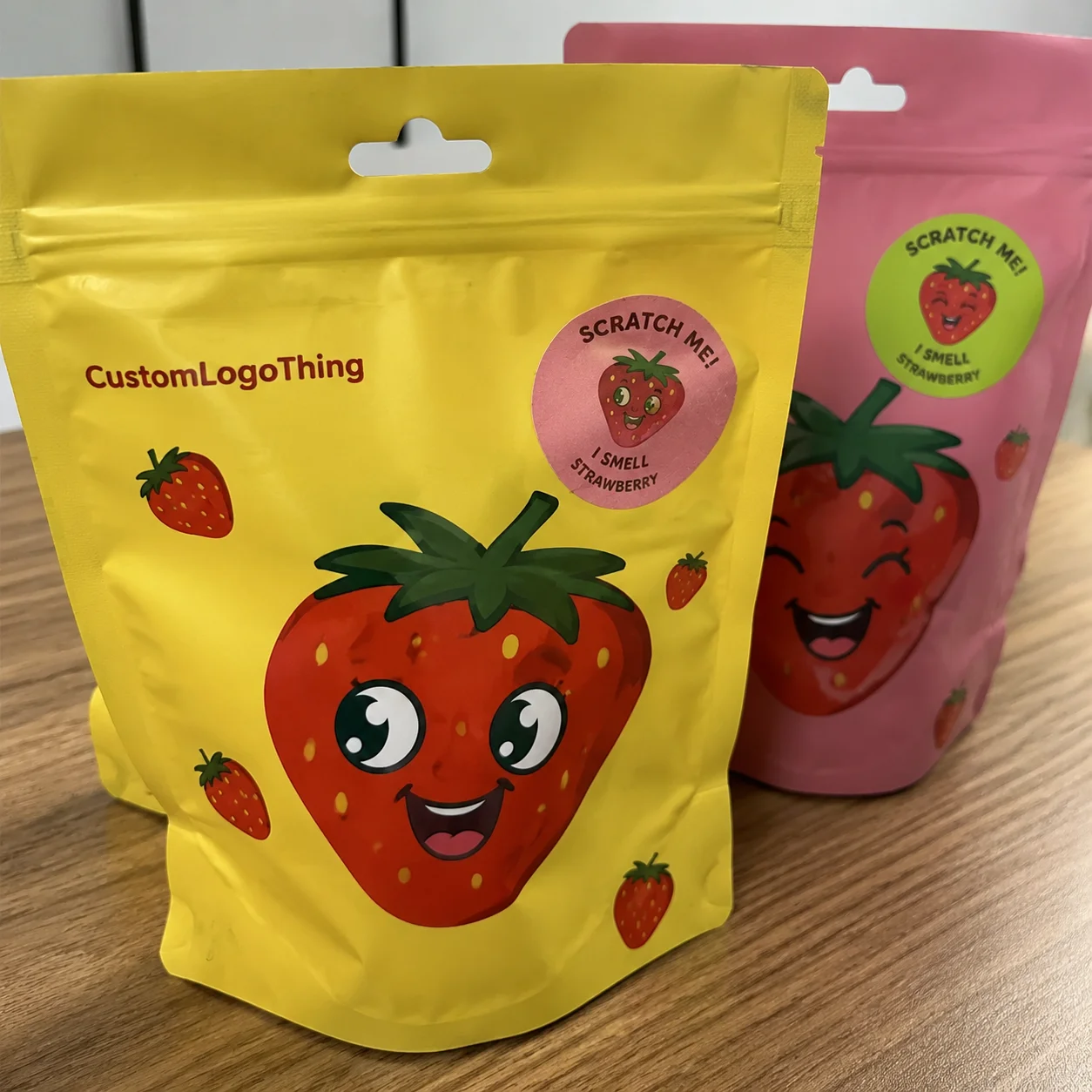
Scent can make a flat sticker behave like a sample, a memory cue, and a miniature product demo at the same time. That is the practical surprise behind scratch and sniff stickers custom projects: a small printed piece can ask a customer to touch, rub, smell, and remember the brand in a way ordinary print rarely achieves.
The idea looks simple from the buyer’s side. Fragrance is held inside tiny microcapsules that are printed or coated onto the sticker surface. When someone rubs the scented area, some of those capsules break and release aroma. A good sticker does not unload all of its fragrance in one dramatic burst; it releases enough to create a clear sensory moment while leaving more capsules for later interaction.
Common uses include food launches, beverage promotions, cosmetics, candles, cleaning products, children’s reward stickers, event handouts, direct mail inserts, and retail packaging seals. A lemon-scented sticker on a cleaner sample card, a strawberry note on a candy mailer, or a roasted coffee cue on a café promotion can do useful work before the product is opened.
These are not standard labels with perfume sprayed over the top. The scent system, coating, face stock, adhesive, print surface, and storage conditions all affect performance. A glossy film label for a chilled bottle has a different job than a paper sticker handed out at a school event. Both need to be specified around the real application, not around a catalog photo.
For packaging buyers, the main question is not simply “what scent do we like?” The better question is: what should the customer understand after smelling it? That answer shapes the scent, sticker size, artwork, adhesive, packing method, and proofing plan. The novelty matters. So do clean print, reliable adhesion, easy handling, predictable scent release, and a layout that tells people exactly what to do.
How the Scent Release Technology Works
Microencapsulation is the heart of most scratch and sniff sticker production. Think of it as thousands of very small fragrance-filled capsules held in a coating layer. The capsules sit on or near the surface of the printed sticker. Rubbing creates friction, and that friction breaks a portion of the capsules, releasing fragrance little by little.
That gradual breakage is why the scratch motion matters. If all the fragrance were exposed at once, the sticker might smell strong for a short period and fade quickly. With microcapsules, pressure opens some capsules at a time, so the sticker can usually support repeated smelling during normal promotional use. Results vary with capsule load, scented coverage area, fragrance volatility, coating thickness, and how aggressively the customer rubs the zone.
Stock scent libraries often include fruit, floral, bakery, spice, coffee, chocolate, fresh linen, pine, mint, tropical, vanilla, coconut, and candy-style aromas. For many campaigns, those library scents are the practical choice because they are already tested in coating systems and can shorten approval time. Custom-inspired blends may be possible, but exact scent matching should be treated as an approximation, especially for perfumes, cooked foods, herbal blends, and branded aromas with many notes.
The scented area can be applied in several ways. Some orders use full sticker coverage, while others use a spot coating over a fruit illustration, cartoon character, product image, or marked scratch zone. A defined zone is usually better. If customers have to guess where the scent lives, some will miss the feature entirely.
There are limits. Heavy ink coverage, strong varnishes, certain laminates, high heat, direct sunlight, rough storage, and long open-carton holds can all reduce scent strength. A fragrance coating also changes the surface feel. It may be slightly textured, matte, or visually different from the surrounding print, which can help if the design treats that texture as a tactile cue rather than a flaw.
Key Specs That Affect Sticker Performance
The face stock is the sticker’s printable base, and it sets the tone for durability, finish, and handling. Paper is usually cost-effective for short-term promotions, inserts, reward stickers, and event giveaways. A common paper label stock may sit around the 60 to 80 lb range, depending on the supplier’s construction. It accepts print well and can feel natural for bakery, candy, and children’s activity designs.
White BOPP film is a stronger choice for many retail packaging applications. It resists moisture better than paper, looks clean on jars and bottles, and holds up better during shipping or refrigeration. Clear film can work when the brand wants a “no-label” look, although scent coatings are not always invisible. Plan the scratch area as part of the design instead of trying to hide it.
Specialty stocks can support premium package branding, but they need testing. Texture, coating absorption, and surface energy can change how the fragrance layer sits and how easily it releases. A rough kraft-look material may be visually right for a natural product line, for example, yet less predictable for a precise scented spot than a smoother stock.
Adhesive selection deserves more attention than it usually gets. Paperboard cartons, glass jars, plastic bottles, flexible mailers, coated retail bags, and textured Custom Printed Boxes all present different bonding conditions. A general removable adhesive might be fine for a short event handout, but it may lift on a curved bottle or struggle on a low-energy plastic surface. Cold-fill packaging, refrigerated goods, oily surfaces, and powder-coated finishes raise the risk.
Artwork files should include bleed, safe zone, die line, scent zone, color callouts, and barcode clearance. Typical bleed is often 1/16 inch to 1/8 inch, depending on print method and die-cutting tolerance. Keep critical text and QR codes away from trim edges and away from the scent coating. Tiny scented details are a recurring problem. If the strawberry icon is only 5 mm wide, many customers will not rub the correct spot long enough to notice the aroma.
Shape and size influence both cost and usability. Larger scratch areas feel more interactive, but they use more coating and require better layout discipline. A 2-inch round sticker gives a child or shopper an obvious target. A narrow 0.5-inch scented strip can work on a mailer only if the instruction and graphic cue are unmistakable.
Production callout: ask for material guidance before final artwork is locked. Scent coating, adhesive, print method, and finishing need to work together. Changing one of those late in the process can affect price, timing, or performance.
Cost, Pricing, and MOQ Factors to Expect
Pricing for scratch and sniff stickers custom orders is usually driven by quantity, finished size, material, print colors, die shape, scent selection, scented coverage area, proofing needs, and packing format. A simple 2-inch paper sticker with a stock strawberry scent will price very differently from a clear film retail seal with a custom fragrance, spot coating, and roll packing for application equipment.
Scented stickers cost more than standard custom stickers for concrete production reasons. Fragrance material, encapsulation, specialty coating, controlled drying or curing, setup checks, and extra sampling all add steps. If the project needs a custom scent match, development time and approval rounds add cost before the main print run begins.
Minimum order quantity depends on the production method and supplier setup. Low quantities may be possible, but the unit price rises because setup work is spread across fewer pieces. As a broad planning range, buyers may see small promotional runs priced well above ordinary labels, while larger runs become more efficient once coating, die, and press setup are absorbed. Exact pricing still depends on specs, and scented coverage is one of the easiest details to underestimate.
| Project Type | Typical Use | Common Spec Direction | Cost Pressure |
|---|---|---|---|
| Event handout | Kids’ rewards, trade show cards, sampling tables | Paper stock, stock scent, sheeted or single pieces | Lower, if size and scent stay simple |
| Retail packaging seal | Cosmetics, candles, snacks, seasonal product packaging | White BOPP or paper, stronger adhesive, clear scratch cue | Moderate, due to adhesive and handling requirements |
| Direct mail insert | Food, beverage, fragrance, cleaning campaigns | Paper or film, controlled scent strength, protected packing | Moderate to high, especially with postal handling needs |
| Custom scent launch | Brand-specific aroma, perfume-style cue, new product demo | Physical scent sampling, custom blend, proofing rounds | Higher, because development and approval take extra work |
Stock scents are usually faster and more economical than custom scent development. If a campaign can use “fresh lemon cleaner” instead of an exact proprietary lemon formula, the schedule is easier to manage. Freight and packing matter too. Rolls may suit labeling lines, while sheets, singles, or kit-packed stickers add labor. Warm-weather transit may require extra care because heat can weaken fragrance quality before the promotion starts.
For related packaging components, buyers often coordinate scented stickers with Custom Labels & Tags or broader Custom Packaging Products so colors, finishes, and campaign timing stay aligned. Request quotes with complete specs rather than asking for a generic price. A small change in scented area, adhesive, or packing format can move the unit cost noticeably.
Process, Timeline, and Production Steps
A well-run order follows a practical sequence: define the use case, choose material and adhesive, select or develop the scent, prepare artwork, approve proof, produce, dry or cure, inspect, pack, and ship. The order matters. If the scent zone changes after proof approval, the artwork, coating screen, and quote may all need review.
Scent selection should happen early because artwork often depends on where the fragrance will be released. A peach scent tied to a peach illustration is easy for a customer to understand. A scent hidden under a busy background pattern is not. Good packaging design gives the customer a simple instruction and a visual expectation before the aroma appears.
Digital proofs and physical samples serve different jobs. A digital proof confirms layout, die line, color placement, copy, barcode position, and scented zone location. It cannot prove how the fragrance smells, how the coating feels, or how the adhesive behaves on a real jar, pouch, or carton. For launch-critical work, a physical sample, coated drawdown, or pre-production sample is often worth the added time.
Custom fragrance development can add schedule because approval may require several rounds of sampling and adjustment. One person’s “fresh bakery vanilla” may read as frosting, cookie dough, or candle vanilla to someone else. Clear references help: a sample product, a commercial fragrance card, or a plain-language target such as “sweet orange candy, not bitter orange peel.”
Production timing varies with quantity, die shape, coating complexity, material availability, proof approval speed, and packing needs. Simple projects using stock materials and library scents may move much faster than custom scent programs. More complex orders can require extra days for coating setup, drying, quality checks, and packing. Build in schedule buffer for product launches, trade shows, holiday campaigns, and mail drops because scented components are less flexible than standard labels once production begins.
Quality control should cover more than print color. Buyers should expect checks for scent placement, rub response, coating consistency, die-cut accuracy, adhesive behavior, surface scuffing, packing count, and odor contamination between scents. Coffee and lavender should not smell like they shared the same open carton. That sounds obvious; in mixed-scent programs, it is one of the details worth controlling.
Industry testing frameworks can help buyers think about risk. For shipping and distribution stress, ISTA procedures are often used around packaged-product performance. For paper sourcing claims, FSC certification may be relevant if the project requires responsibly sourced paper. Not every sticker order needs formal testing or certification, but these references give useful structure for larger retail or compliance-driven programs.
Common Mistakes That Weaken the Final Sticker
The first mistake is choosing a scent only because it sounds fun. A bubblegum aroma may be perfect for a children’s reward sticker, but it can feel confusing on a premium spa product. The scent should connect clearly to the product, campaign message, or sensory expectation. If the customer smells coconut, the artwork and offer should make coconut feel intentional.
Overcrowded artwork is just as damaging. Customers need to understand where to scratch within a second or two. A small icon, a dotted zone, or a short line of copy such as “rub here” can do more work than a dense layout full of tiny decorative elements. If the scented area is hard to find, the feature loses value.
Adhesive mismatches cause expensive headaches. A promotional adhesive may work on a flat postcard but fail on a curved plastic bottle, cold-fill package, textured paperboard, or oily surface. For branded packaging that will be handled in stores or shipped through parcel networks, the adhesive should be chosen for the actual surface, not just the sticker price.
Over-lamination is another trap. Protective film can improve scuff resistance, but if it covers the scented coating, it may block or reduce scent release. The finishing plan needs to define which areas are laminated, varnished, coated, or left open for fragrance release. Keep ingredients, warnings, barcodes, QR codes, and regulatory information away from the scented scratch zone.
Storage mistakes can weaken an otherwise well-produced sticker. Heat exposure, open cartons, direct sunlight, and long warehouse holds before launch may reduce fragrance strength. If the campaign depends on a clear aroma, keep cartons sealed, cool, dry, and away from harsh light. For seasonal promotions, ask for storage guidance before ordering too early.
Finally, avoid approving only on screen if scent strength, coating feel, and rub performance are central to the customer experience. A monitor can show color and layout. It cannot tell you whether the coffee smells roasted or burnt, whether the lavender is too sharp, or whether the coating feels natural under the finger.
Expert Tips for Better Scent, Print, and Handling
Design the scratch cue as part of the main artwork, not as a small afterthought. Use a finger icon, dotted texture, label callout, or short instruction. “Rub to smell lemon” is plain, but plain often works. The customer should not need to solve a puzzle.
Pair visual flavor or fragrance cues with the actual scent. A mint leaf, coffee bean, vanilla flower, pine branch, or berry illustration prepares the brain to identify the aroma faster. This is one of the most overlooked parts of scented packaging design. The nose and eyes work together; print should help the scent land correctly.
Moderate scent strength is often better than overpowering fragrance. Strong can seem impressive during review, but it may become too much in a mailer, retail aisle, classroom, or product handled by children. A controlled fragrance level feels more polished and reduces the chance of complaints from people sensitive to strong smells.
Test on the real application surface whenever possible. Curved bottles, coated cartons, flexible pouches, kraft mailers, retail bags, and Custom Printed Boxes all behave differently under hand pressure and shipping movement. Even a short trial can reveal edge lift, scuffing, poor scratch access, or a scent zone that lands awkwardly on a package curve.
Separate critical text, barcodes, QR codes, and regulatory information from the scented area. Scent coating can change gloss, texture, and contrast. If a scanner needs to read it, or a customer legally needs to read it, keep it clean. ASTM labeling and material standards may apply in certain industries, and regulated products should be reviewed carefully before final print approval.
Ask about packing format early. Rolls are often better for application equipment, while sheets or singles are practical for events, inserts, hand application, and kits. If the stickers need to be counted into bundles of 25, packed with product samples, or protected from heat in transit, that should be quoted before production begins.
Next Steps Before You Request a Quote
Before requesting a quote, gather the details that drive both cost and performance. A supplier can give better guidance when the request includes quantity, finished size, shape, scent, material preference, adhesive surface, scented area, artwork status, packing method, and deadline. If some details are unknown, say so. Estimating can still begin with assumptions, as long as everyone understands what may change.
- Quantity: include total pieces and whether you need extras for testing, sales samples, or production waste.
- Size and shape: provide finished dimensions, die shape, and whether the sticker has tight registration needs.
- Scent goal: describe the aroma in plain language, such as fresh lemon cleaner, sweet strawberry candy, roasted coffee, vanilla bakery, pine forest, or spa lavender.
- Application surface: identify paperboard, glass, plastic, pouch film, coated bag, mailer, or another surface.
- Packing method: specify rolls, sheets, singles, bundles, or kit packing.
- Deadline: include the in-hands date, not only the campaign launch date.
Photos or samples of the application surface are extremely useful. A picture of the jar, carton, bag, or mailer helps the material recommendation stay grounded in real use. Better yet, send an unfilled package sample if adhesion, curvature, or finish is a concern.
Also define the sticker’s job. Is it a handout, retail packaging accent, direct mail piece, children’s activity, product sampling tool, or machine-applied label? Each use case points to different material, adhesive, packing, and proofing decisions. A one-day event sticker can be simpler than a seal that must survive shipping, retail handling, and weeks on a store shelf.
Match proofing to risk. A digital proof may be enough for a simple paper handout using a familiar stock scent. A physical sample makes more sense for launch-critical scent, adhesion, or surface-feel decisions. If the sticker is part of broader package branding, align it with the main label, carton, insert, and any other campaign pieces before approvals are finalized.
Scratch and sniff stickers custom orders go smoother when scent, surface, artwork, and schedule are confirmed before production starts. The best projects feel playful to the customer, but behind that playful moment is a practical set of decisions about material, coating, adhesive, print, packing, storage, and timing.
FAQ
How long does the scent last on custom scratch and sniff stickers?
Scent life depends on fragrance type, coating coverage, storage conditions, and how often the sticker is rubbed. Keeping stickers sealed, cool, dry, and away from direct sunlight helps preserve fragrance strength before use. For a campaign with a fixed launch date, order timing and storage instructions should be discussed before production.
Can scratch and sniff sticker printing match a specific product scent?
Many scents can be closely approximated, especially common aromas like fruit, coffee, vanilla, mint, pine, and floral notes. Exact matching is harder for complex perfumes, cooked foods, or proprietary fragrance blends. A physical scent sample or reference product helps the manufacturer recommend a stock scent or custom development path.
What is the best material for scented promotional stickers?
Paper is often cost-effective for event handouts, inserts, and short-term promotions. Film materials such as BOPP can offer better moisture resistance and a cleaner look for retail packaging. The best choice depends on the application surface, handling, desired finish, and whether the sticker needs to survive shipping or refrigeration.
Are scratch and sniff labels safe for food or cosmetic packaging?
They are commonly used on the outside of packaging, but they should not replace required labeling or come into direct contact with edible product unless specifically approved. For cosmetics, food, or children’s items, buyers should share compliance needs early so materials, inks, coatings, and placement can be reviewed. Critical safety, ingredient, barcode, and regulatory information should stay outside the scented scratch area.
What details are needed to quote scratch and sniff stickers custom orders?
Useful quote details include quantity, finished size, shape, material preference, adhesive surface, scent type, scent coverage area, artwork status, deadline, and packing format. Rolls, sheets, singles, or kit-packed stickers can change labor and unit cost. Photos of the application surface and a clear description of the campaign help prevent material or adhesive mismatches in scratch and sniff stickers custom projects.

