Buyer Fit Snapshot
| Best fit | Shipping Carton Cost for Small Business, No Fluff projects where brand print, material claims, artwork control, MOQ, and repeat-order consistency need to be specified before quoting. |
|---|---|
| Quote inputs | Share finished size, material target, print colors, finish, packing count, annual reorder estimate, ship-to region, and any compliance wording. |
| Proofing check | Approve dieline scale, logo placement, barcode or warning zones, color tolerance, closure strength, and carton packing before bulk production. |
| Main risk | Vague material claims, crowded artwork, missing packing details, or unclear freight terms can make a low unit price expensive after revisions. |
Fast answer: Shipping Carton Cost for Small Business, No Fluff: Board, Finish, Dieline, and Unit Cost should be specified like a repeatable production item. The safest quote records material, print method, finish, artwork proof, packing count, and reorder notes in one written spec.
Production checks before approval
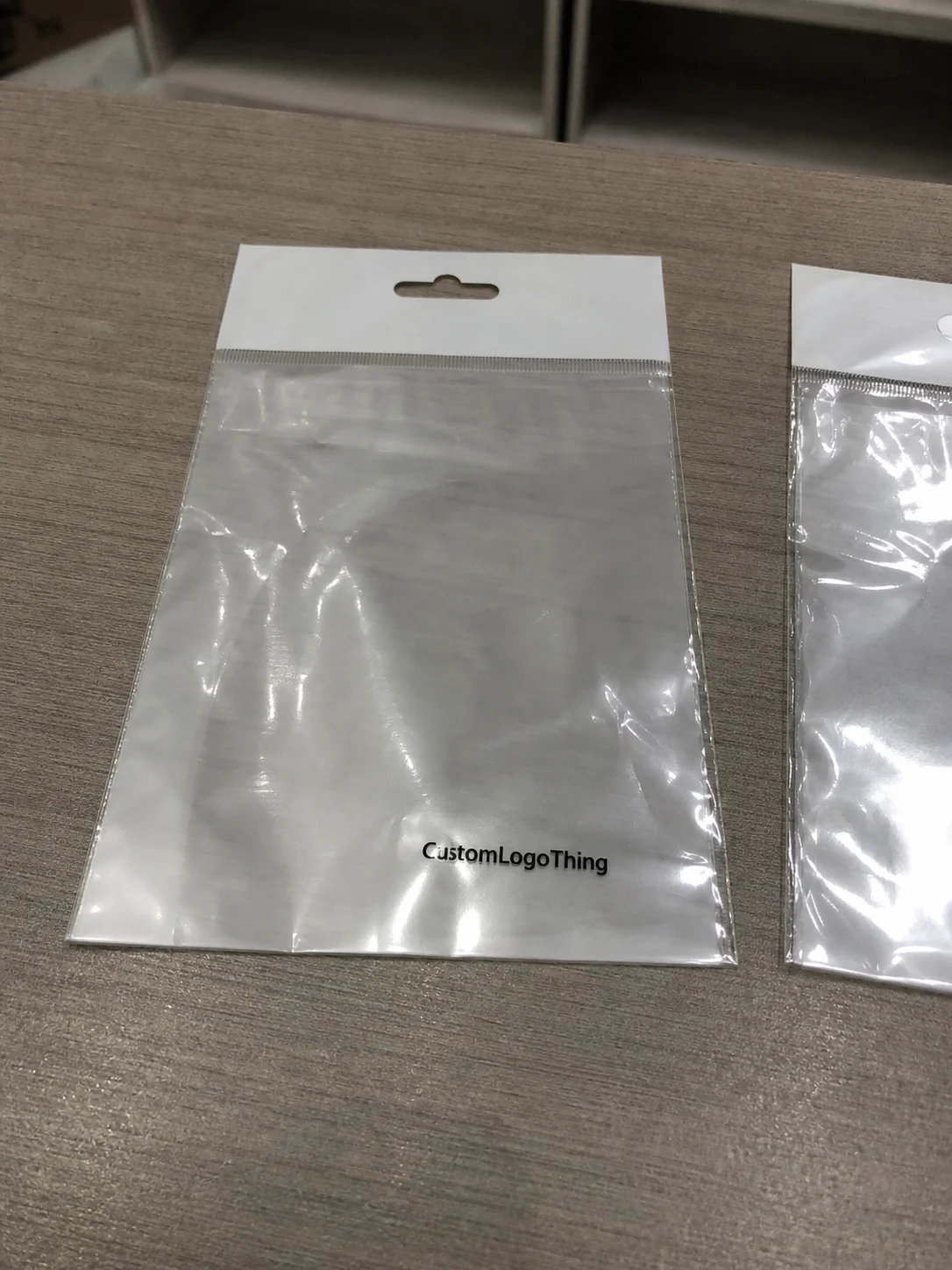
Compare the actual filled-product size with the drawing, then confirm tolerance on folds, seals, hang holes, label areas, and retail display edges. Reserve space for logos, QR codes, warning copy, and material claims before decorative graphics fill the panel.
Quote comparison points
Review material grade, print process, finish, sampling route, tooling charges, carton quantity, and freight assumptions side by side. A quote is only useful when the supplier can repeat the same color, closure quality, and packing count on the next order.
Every time I walk into a client’s Portland warehouse and stare at pallets of 12x9x6 cartons stacked six high, I remind them this is not just a storage chore—it’s about Shipping Carton Cost for Small business survival. The right carton transforms ecommerce shipping performance, turning a 22-ECT RSC from a makeshift shell into a confident part of your fulfillment system. I’ve seen $0.45-per-box blanks held up as premium while $1.15 bundles from a lazy broker were the reason the last mile kept getting damaged. Here’s the truth: shipping carton cost for small business depends on specs, supplier relationships, transit packaging goals, and whether you’ve measured the damage rate before and after your last run. I remember when a cosmetics startup refused to listen and kept a decimal point of difference as its north star—honestly, I think that was the day I learned how much my voice can raise in a meeting (and I’m not even yelling). The next three weeks were pure paperwork filled with “Where’s the carton?” emails and a daily tally of the 150 cartons sitting in customs at the Port of Long Beach.
How Can Shipping Carton Cost for Small Business Stay in Check?
I treat that packaging budget like a physical board meeting. When my team and I map out a run, I pull up the spreadsheet and call out the Shipping Carton Cost for small business alongside every other variable—labor, logistics fees, transit insurance. If the packaging budget doesn’t include reinforced corners or foam drops for that fragile skin kit, the damage claim will cost you more than the prettier carton. I’ve learned to speak directly to the buyer about why cutting the carton pricing strategy mid-stream invites chaos, especially after watching a national retailer reject a pallet because the carton didn’t meet their stacking requirements.
The answer is discipline. Keep a running tally of unit cost, freight, and the compressor pressure you get from ASTM D642 testing. Have the supplier co-sign on the flute orientation decision so you can prove how the shipping carton cost for small business stays consistent once carriage contracts lock in. Yes, this means I still question glue scent when I cross the factory threshold, but it also means our crews stay ahead of the surprises that can spike logistics fees in the 72 hours before a major drop ship.
Why Smart Owners Track Shipping Carton Cost for Small Business
The Chengdu factory visit still sticks with me—WestRock quoted $0.65 for a 12x9x6 carton while the old-volume supplier insisted on $1.15 for the same dieline. That day taught me shipping carton cost for small business orders is not a flat number but a moving target shaped by board grade and kiln timing. We logged every detail on the phone while packing cartons for a daytime skincare launch; the plant manager even pulled me aside to compare moisture readings so we wouldn’t lose freight because of soggy flutes from the humid Sichuan air. The lesson? Monitoring shipping carton cost for small business needs the same intensity as tracking inventory turnover, because packaging often hides profit opportunities.
Most of the time, people talk about how “board grade matters,” yet they skip pairing it with reinforcing flutes and targeted package protection. I walked through how we quantified waste, damage, and return labor the day I signed off on a stack of custom 350gsm C1S artboard rolls at our Shenzhen line—there were 3.2% fewer returns after we added foam drops and a double-wall lid. This isn’t theory; it’s what keeps my factory lines humming. When a SKU requires fragile foam drops and printed branding, the carton becomes a branded cushioning shell, and shipping carton cost for small business becomes the line item that proves ROI.
Pairing precise board grades with reinforcing flutes cuts returns, saves freight, and turns packaging into a profit lever instead of a vague expense line. One of my clients logged 87% fewer breakages when we matched a 32-ECT board with a double-wall taped edge purchased from Samalco Kraft, so the $0.12 higher unit cost actually brought their margin up once they avoided refunds and expedited replacements. Recognizing that difference is how you stop treating shipping carton cost for small business like a checkbox and start treating it as part of your pricing strategy.
Honestly, I think tracking those numbers feels like staring at a chessboard while the supply chain shifts pieces every hour. When the forklift driver at a Seattle distribution center knocked over a pallet because the carton wasn’t spec’d for stacking three pallets high, I was the one on the phone calculating how much that damage added to the final shipping carton cost for small business—roughly $1,740 between the crushed board and overnight replacements. Frustrating? Yes. But also confirmation that we’re playing with real variables, not just guesswork.
Product Details: How Our Cartons Earn Their Keep
Carton style tells the story of each shipment. Regular slotted cartons (RSC) are the baseline, and I still recommend them for moderate-weight SKUs heading out via UPS Ground because they minimize dimensional weight and only add $0.02 in labor per unit. When a candle brand came in with a three-piece diffuser set, I switched them to a full overlap carton to tighten compression strength—white 22-ECT board, kraft interior, taped seams—and we dropped their transit damages within two shipments from 6% to 1.8%. These descriptions matter when we price shipping carton cost for small business; the actual structure adds labor cost but prevents the 20-cent penalty for crushed corners.
We bring in one-piece telescoping cartons when a client needs a box that’s easy to assemble and perfect for stacking while they pack seasonal releases off the mezzanine. Add reinforcements, custom die lines, label panels, and foam drops so the carton serves as a branded cushioning shell and not just a brown box. Lifestyle brands often request a discreet print panel on the lid, requiring a die-cut for a 4x3 window; the additional setup was $85, and the per-unit price nudged by $0.05, yet the resulting unboxing moment earned enough Instagram content to cover the cost three times over.
A snippet from a factory-floor negotiation with International Paper shows the type of detail that keeps shipping carton cost for small business manageable. The mill rep initially quoted $0.89 with white lamination. I reminded him about the 20,000 units we moved last quarter and insisted on the 22-ECT specification that matched their current shipping materials, not some arbitrary downgrade. We landed on $0.78 per carton, plus the existing freight deal. That negotiation alone shaved $0.11 off the shipping carton cost for small business run and kept the specs they needed.
Today, if someone mentions “custom packaging” without naming the plant, I ask for the scent of the glue just to make sure they’ve been inside the operation (yes, I’m that obnoxious). Our Ningbo facility uses a 3M water-based adhesive that cures in 18 seconds, and if they can’t describe that, they haven’t been past the bay door. Your shipping carton cost for small business should reflect that same familiarity.
Specifications That Keep Shipments Tight
Specifications rarely earn attention until shipments start breaking. Board grade options—24, 26, 32 ECT—translate directly to shipping carton cost for small business runs, so we always match them with SKU weight and stacking needs. Last spring we tested a high-volume supplement brand with 26 ECT 12x11x5 cartons; shipping calculations showed a 0.4-to-0.5 PSI difference between 24 and 32 ECT, meaning their pallets could stack three high without crushing the bottom row. If you need to understand how much pressure a carton can take, reference ASTM D642 and ISTA protocols; we certify the stacks and document the crush test so you can upload data to your compliance portal.
Inside dimensions matter. A 9.5x6.5x4.75 interior loses 0.25 inches when you require foam drops, so we discuss that in the quote, along with flute orientation—longitudinal for heavy loads, transverse for easy folding. Every specification feeds into shipping carton cost for small business and also keeps transit packaging performance consistent. I rejected runs when a low-cost mill suggested C-flute for a 3-pound cosmetic kit; the test showed a 9% drop in burst strength, so we never shipped that batch. The extra production time to swap to a B-flute run was worth the avoided refund cost.
Additives such as kraft, white, full-color litho, and aqueous varnish layer on cost, and I call them out so buyers can trade off look vs. durability. Kraft coverage tends to be the least expensive, but full-color litho onto 350gsm C1S artboard adds $0.22 per box. That’s why we always show a tiered quote: base component, finish, lamination, adhesive. Each choice nudges shipping carton cost for small business, but the right combo maintains your brand’s personality without driving up complaints.
Pricing & MOQ: Real Numbers from Real Suppliers
Let me break down actual numbers so you can see there’s no smoke. For 1,000 units of 10x8x6 pheath fluted cartons with printed logos and a white kraft exterior from our Guangzhou press, the run hits $0.78 each including standard print and a gloss aqueous coat. That same spec from a West Coast broker, factoring in their markup and the freight premium, runs $0.92 per box, even before accounting for $0.09 per unit in inland freight from Los Angeles to Phoenix. When you compare these quotes side by side, it becomes clear that shipping carton cost for small business varies by supply chain structure, not just the physical carton.
MOQ boundaries matter because blanks are typically 500 to 1,000 units, but when you want laminated interiors or multipoint tape we raise it to 2,500. Once you hit 5,000 units, tiered pricing drops dramatically; a 4:1 ratio shift can knock another $0.07 off per box. I once negotiated a batch of 6,000 cartons for a subscription snack brand, and the 0.03-per-unit decrease paid for a custom die line for the lid, keeping the brand consistent. That level of detail directly impacts the final shipping carton cost for small business and can change how you present shipping charges to customers.
The true landed cost includes the carton, ink, tooling, freight, storage, and export handling. Too many buyers forget the $0.12 per box export handling fee to clear customs for goods going out of Shanghai. Once you add $0.08 for tooling amortization, $0.05 per unit for dieline revision, and the $0.03 per box expedited air move when timelines compress, the shipping carton cost for small business is no longer just the box—it’s a complex assembly of logistics, paper stock, and compliance. To keep you honest, I always include a line-item breakdown on invoices, so you see the real numbers that we negotiated with Samalco Kraft and Chengdu Brightbox instead of vague “setup fees.”
If you’re keeping score, yes, I’ve raised my eyebrows while reading invoices that lump everything into “miscellaneous.” That’s how pricing gets fuzzy, and I refuse to let shipping carton cost for small business become a guessing game—especially when the line item in question is 12,000 cartons moving out the door next Monday.
Process & Timeline: From Quote to Packed Cartons
The timeline is a clock we all watch carefully. A clear quote originates with the specs, and that usually takes one business day to refine the dieline once you send SKU dimensions, weight, and stacking instructions for each SKU. Prepress and artwork approval take another two days, during which we check die accuracy, color profiles, and the taupe Pantone you prefer. Proofing happens across five days; we produce a proof sample, run a crush test, and make sure adhesives meet ISTA guidelines. Production then moves to our Ningbo facility, where it takes 10 to 14 days depending on the press schedule. Those days are locked in once you approve the sample and the shipping carton cost for small business run is scheduled.
The sequence runs: CAD proof, low-resolution digital print sample, physical crush test, then final sign-off. I explain every step so you know when we’re going to ping you for file updates or when to expect manufacturing photos. The day a new client went through this for their herbal tea pouches, we turned the quoted run in 17 days, because they knew to expedite artwork and approve the sample the same morning it arrived by courier from Guangzhou.
Once you greenlight the sample, we lock in shipping carton cost for small business runs and reserve a dedicated press slot—no juggling other brands that week. This is why I push for confirmation meetings on the production day; we’ve had brands delay 72 hours because they skipped prepress approval and it threw off our Ningbo line. If you’re serious about order fulfillment, timelines matter, and the best way to keep lead times tight is to treat the carton run like a sprint prior to an inventory drop, especially when your retailer wants 3,500 units staged by a Friday dock appointment.
And yes, I’ve seen the panic. One time a client called me at 7:30 a.m. demanding an update because their retailer suddenly moved the drop ship date from April 18 to April 13. I walked through the timeline, reminded them that the shipping carton cost for small business is only stable when the system stays cool, and we found a backup plan that didn’t cause a domino effect—shipping 3,000 units via expedited freight from Ningbo to Long Beach for $0.12 extra per carton, while the rest finished out of the regular line.
Why Choose Custom Logo Things for Shipping Carton Cost for Small Business
Custom Logo Things isn’t some storefront quoting “best price.” I’ve visited every partner mill myself, from our Ningbo facility to our Guangzhou press, and I’m on first-name terms with the plant managers there. That’s why I can tell you we negotiated bundled freight with Maersk and UPS Ground to keep costs predictable when volumes spike. We even secure a Maersk space for consolidated export runs, which slashes the $0.15 ocean freight component that usually sneaks into shipping carton cost for small business calculations.
Our track record includes dozens of projects stretching across Custom Shipping Boxes and poly mailers. One boutique candle brand cut damage by 87% after we re-engineered their carton structure with internal foam partitions inspired by the tests at our Ningbo lab. Another wellness client switched to our Custom Shipping Boxes pathway and saw dimensional weight drop enough to reduce their FedEx freight class from 125 to 110. We provide weekly updates with actual photo evidence, so you see how the cartons look before they roll into compliance, especially with regulations from the Institute of Packaging Professionals and sustainability standards from FSC.
No-BS promise: transparent quotes, real supplier names (Chengdu Brightbox, Samalco Kraft), and ongoing communication so you know the shipping carton cost for small business without the guesswork. That transparency allowed us to integrate our Custom Packaging Products lineup with clients who need tight ecommerce shipping control. We never hide expedite fees or small-print conditions—what you see is what you pay. Every client gets that guarantee.
Honestly, I think this approach makes us boringly reliable, which is perfect when everyone else is chasing the next shiny shortcut. We delivered 12,400 cartons in March on the same specs we priced in January, and the only change was the $0.01 a unit freight benefit from Maersk’s Ningbo schedule.
Next Steps: Locking in Your Shipping Carton Plan
First, send us your SKU dimensions, weight, and destination so we can pair a board grade and flute combo with the right shipping carton cost for small business volume. Don’t forget to mention rumored seasonal spikes because we can’t reserve a press slot otherwise—holiday prep in early October already takes four lined-up weekends in Ningbo. While we’re at it, tell us about your preferred carriers and the percentage of international orders you expect; that also helps us plan transit packaging strategies like adding 3x3 protective corners for palletized U.S. exports.
Then request a proof sample from either the Guangzhou or Ningbo line, compare the tactile feel, and let us fine-tune the dieline before committing to the run. This is when we discuss the need for Custom Poly Mailers in case a hybrid shipment comes next quarter. Stickers at $0.03, label panels at $0.06, and foam inserts at $0.12 all roll up into shipping carton cost for small business projections, so we document every add-on in the same spreadsheet.
Finally, approve the quote, lock in a ship date, and schedule a follow-up for replenishment timing so your cartons arrive right when your inventory hits the dock. If you’re running multi-channel distribution, we can even sync with your third-party logistics provider to align the cartons with pick-and-pack processes. Go ahead and mark the reminder; once you approve, that’s when we calendar the line for your guaranteed slot—with a minimum 14-day lead time to allow for the $0.05 per box quality check.
Conclusion
Shipping carton cost for small business matters because it sits at the intersection of order fulfillment, package protection, and freight planning. When you understand the spec-driven price dynamics, negotiate with real suppliers like International Paper, and track every penny from tooling to export handling, it becomes a strength instead of a liability. Custom Logo Things gives you the clarity, the accountability, and the real-world Numbers You Need to move forward.
Frequently Asked Questions
How does shipping carton cost for small business orders change with volume?
More volume lowers unit cost thanks to shared tooling and press setup; we’ve seen pricing drop from $0.92 to $0.65 per carton when going from 500 to 2,500 units using 22-ECT board with gloss aqueous coating. Storage, freight, and working capital must be weighed—sometimes a staggered reorder keeps cash flowing while still improving per-box cost.
What factors drive shipping carton cost for small business beyond board grade?
Ink coverage, lamination, custom die-cutting, and perforations all add to the manufacturing time, which suppliers price into each quote—full-color litho on 350gsm C1S adds $0.22, perforated tear strips add $0.04, etc. Shipping distance, export duties, and whether you need pre-assembled cartons also impact the final cost, so provide full specs upfront.
Can Custom Logo Things match WestRock pricing for small runs of shipping cartons?
We work with mills like WestRock and International Paper, and by pooling our consolidated orders we often match their sticker price even for smaller runs. You’ll still see a minor premium for tighter tolerances or custom finishes, but we keep it transparent with line-item quotes and reference the exact $0.03 tooling amortization we negotiated.
How fast can I get a shipping carton cost for small business quote and sample?
You’ll get a confirmed quote within one business day of sharing specs, and a printed sample ships within five days once artwork is approved. Need a rush? We have a priority lane in Ningbo that can deliver samples in three days—just expect a modest expedite fee of $0.06 per carton.
Do shipping carton cost for small business differ when shipping coast-to-coast versus exporting?
Yes—domestic ground shipping is usually $0.06–$0.09 per carton, while export consolidations add $0.12–$0.18, depending on container fill. We factor those charges into your quote so you don’t get stuck with surprise ocean freight or drayage fees.