Size Labels MOQ for cosmetics brands is one of those sourcing details that looks minor until it starts shaping cash flow, inventory risk, and launch timing. If a cosmetics brand is ordering apparel for staff, event teams, retail promotions, or bundled kits, the minimum order quantity has to fit the real size mix, not a supplier’s preferred production batch.
The practical issue is balance. Cosmetics brands usually want a clean brand presentation, a small first run, and enough flexibility to change course after samples come back. A lower MOQ helps keep the first order lean, shortens approval cycles, and avoids overbuying sizes before the fit and demand picture is clear. The same logic applies to cartons, inserts, and hang tags: unit cost matters, but so do setup charges, tooling fees, and the risk of excess stock after launch.
Why size labels MOQ for cosmetics brands matters at launch
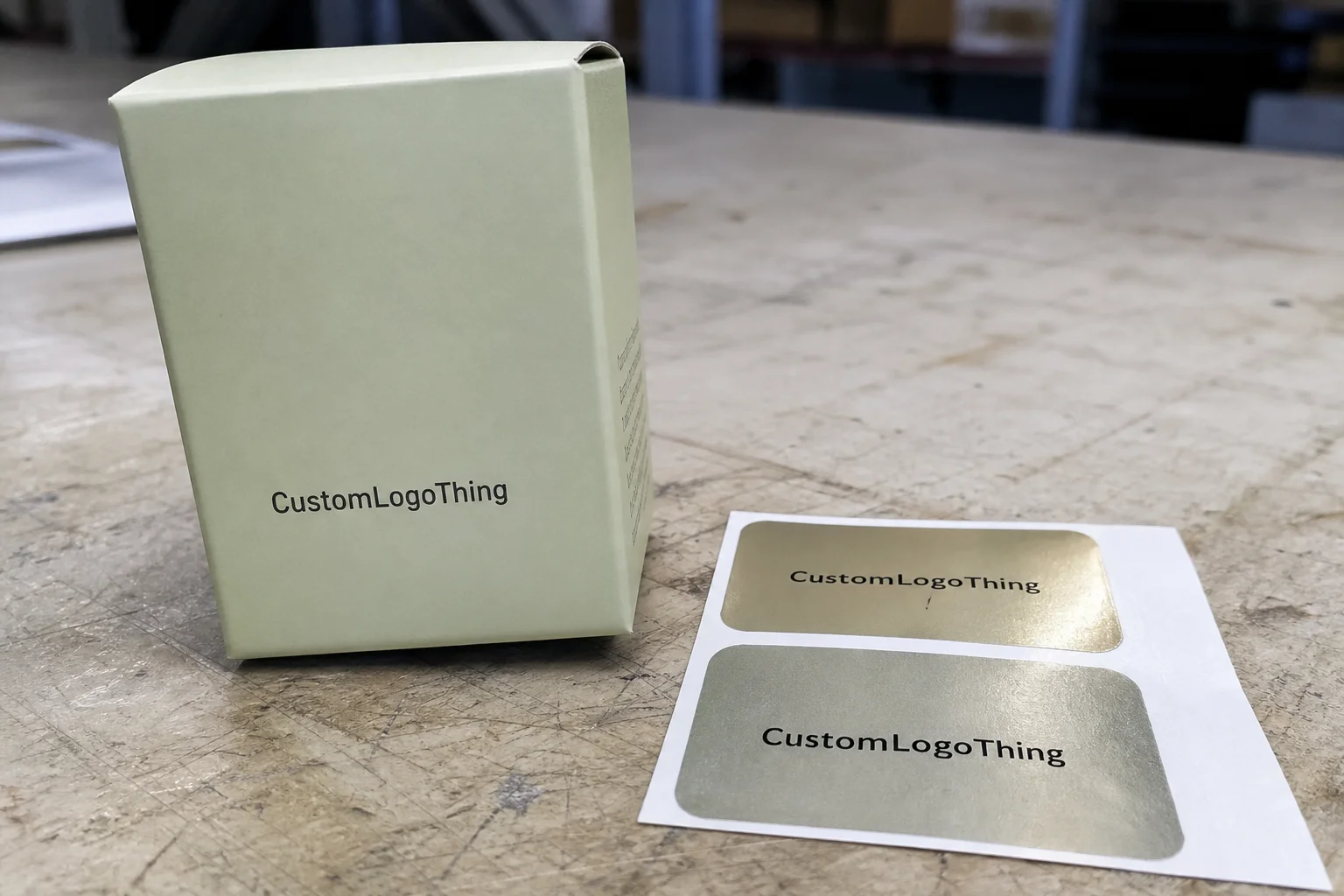
New launches begin with incomplete information. A team may expect most of the run to land in medium and large, but until there has been a real merch drop or staff issue, the actual size curve is still a forecast. That is where Size Labels MOQ for cosmetics brands becomes a commercial decision rather than a clerical one.
When a supplier pushes a higher blanket minimum, the buyer is usually being asked to pay for production convenience up front. The buyer, meanwhile, is focused on sell-through, storage, and whether the size breakdown can be changed after the first sample. A tighter MOQ helps in three ways: less cash tied up in inventory, faster proof approval, and fewer leftovers if the size mix shifts after merchandising or fit feedback.
"The wrong minimum order is rarely just a price issue. More often, it means the buyer had to commit before the fit, artwork, or size mix was proven."
Smaller first runs are also easier to approve because the brand can test placement, legibility, and hand feel before committing to a deeper order. If the label is going into spa uniforms, a launch tee, or a small promotional apparel program, the first order should answer a simple question: does this read cleanly and survive normal wear?
Many buyers solve that by starting with a controlled test run and moving to a larger reorder once the first order has been worn, washed, and evaluated. That usually gives a better path to a sensible cost per piece over time. The first run may be pricier per label, but it reduces the risk of holding the wrong size mix across multiple sizes.
For buyers who need a wider view of how minimums and repeat orders are handled, the ordering notes in the FAQ and the examples on the Case Studies page are useful references for structuring a first and second run.
What the right label format looks like for cosmetic brand apparel
Not every size label should be built the same way. The right format depends on where the label sits, how the garment feels against the skin, and how polished the brand wants the final piece to look. For cosmetic brand apparel, the common choices are printed satin, woven damask, taffeta, heat-transfer, and fold-over size labels.
Printed satin works well when the goal is a soft hand and a tidy logo presentation. Woven damask gives a more textured, refined appearance and tends to fit repeat ordering well. Taffeta is often the most economical route for simple internal size marking, especially when the label is hidden in a seam. Heat-transfer labels remove the physical tag entirely, which many buyers prefer for comfort, though the artwork and application step need tighter control.
The format should support the broader brand system. That means readable size marks, clean typography, and a finish that belongs with the garment rather than fighting it. A luxury skincare brand may prefer a softer woven or satin label. A staff shirt for a product launch can usually use a straightforward printed or heat-applied size mark. The best option is not always the most decorative one; it is the one that performs well and still looks intentional.
There are also structural choices that affect the order. A single-size label run is simple to manage, while mixed size sets need more count control and more careful sorting. Sewn-in placement is common for woven and satin labels. Heat-applied placement may suit lighter garments or tagless programs. If the label is only there to identify size internally, one-color builds usually keep quoting cleaner and improve the chance of a lower MOQ.
For buyers comparing product categories, the Custom Labels & Tags page is a practical place to review available constructions. If the apparel line sits inside a larger retail package, the label style should still align with the box, insert, or hang tag so the whole program feels planned rather than assembled from separate parts.
Material, fold, and readability specs that keep sizes legible
The quote only becomes useful once the spec is clear. Before asking for pricing, lock the width, length, fold type, material, color count, edge finish, and any wash or wear requirements. A supplier cannot give a meaningful MOQ or unit cost if half the construction is still open.
Readability matters more than decoration at small size. A blurred size mark, weak contrast, or a label that curls at the seam can create avoidable complaints from customers and internal teams. If the label has to survive repeated laundering, ask how the print or weave behaves after heat, flexing, and abrasion. A sample that looks fine on a table can fail once the label is cut, sewn, and put through use.
Artwork files speed approval when they are clean. Vector files are best, especially if the design includes fine type, small size marks, or a narrow fold area. If more than one size variant is needed, the hierarchy should be obvious at a glance. The supplier should not have to guess whether the label says S, M, L, or a numeric run. Clear sizing files reduce proof revisions, which can save a day or two in a tight schedule.
Ask for a sample photo or digital proof that shows the label at actual size, not just a flat mockup. That catches problems early, especially with narrow letters, seam allowance, or fold placement. A label that looks balanced on screen can become cramped once it is cut and sewn.
How pricing and MOQ change with run size, material, and finish
MOQ is usually shaped by material minimums, setup time, loom or print prep, and finishing labor rather than by the label alone. A woven damask label may have a higher setup threshold because the loom has to be programmed. A simple printed satin or taffeta run is usually easier to start in a smaller lot. That is why the lowest quoted MOQ is not always the lowest real cost.
The tradeoff is straightforward. A lower MOQ often means a higher cost per piece. A slightly larger first run can reduce the unit cost enough to justify some extra inventory. For a brand that expects to reorder within a few months, the bigger run may be the better buy. If the design is still changing, the smaller run protects the launch.
| Label format | Typical MOQ tendency | Indicative unit cost | Best fit |
|---|---|---|---|
| Printed satin | Lower to moderate | $0.06-$0.14 | Soft finish, readable size marks, quick launch runs |
| Taffeta | Lowest in many programs | $0.04-$0.10 | Simple internal sizing, budget-sensitive apparel kits |
| Woven damask | Moderate | $0.10-$0.24 | Premium feel, repeatable reorders, stronger visual depth |
| Heat-transfer | Varies by application system | $0.08-$0.20 | Tagless comfort, cleaner garment interior |
| Fold-over label | Moderate to higher | $0.09-$0.22 | Visible branding plus size info in one construction |
The biggest cost drivers are usually the number of sizes, color changes, fold complexity, packaging format, rush service, and any special finishing steps. If the supplier has to separate multiple size variants, count them individually, or package them in a custom way, the price will reflect that extra handling. In many cases, bulk pricing only becomes attractive once the run clears the supplier’s setup threshold.
Ask for tiered pricing every time. A useful quote should show at least three points: a test run, a launch run, and a reorder quantity. That makes the unit economics easier to compare and exposes whether the real issue is price, material, or preparation.
If the order includes special packaging, serialized counts, or mixed assortments, ask whether those items trigger separate setup charges or tooling fees. Buyers often assume those costs only show up on print packaging, but apparel label programs can carry similar fees when the construction is custom enough.
Production steps and turnaround from proof to shipment
The production path should be predictable: quote review, artwork check, digital proof, sample if needed, production, finishing, quality check, and shipment. If a supplier cannot explain those steps clearly, the order is likely to drift when deadlines tighten.
Turnaround is driven more by proof approval and material availability than by the calendar alone. Clean files and fast decisions shorten the schedule. Missing measurements, vague Pantone references, or size changes after the proof usually add more time than the actual manufacturing cycle.
Typical first orders often take 12-15 business days from proof approval for straightforward printed or woven labels, but that timeline can stretch if the program includes special finishing, mixed size counts, or rush changes. For a cosmetic brand, it is safer to build a buffer around launch dates so freight, rework, or a last-minute size adjustment does not disrupt packing or release timing.
Basic quality discipline matters here. A supplier should verify counts, inspect edge finish, and confirm sizing consistency across the full run. If the job includes multiple label variants, the count sheet should be clear enough that the receiving team can match quantity to size without extra sorting.
What a reliable supplier should prove before you place the order
Reliability is not a slogan. It shows up in three places: transparent minimums, repeatable color control, and stable production quality on reorder. If a supplier can only price one quantity, or if the second run comes back visibly different from the first, the low quote is not really low.
Before placing the order, check the small details. Edge clean-up should be consistent. Registration should hold across the full run. Counts should match the approved breakdown. Sizes should not drift because of loose cutting tolerance. For cosmetic brands that will reorder seasonal merch, employee apparel, or promotional kits, repeatability matters more than a flashy sample image.
Order history is useful because it makes the next run cleaner. A supplier with a solid reorder process can reproduce the same label without redesigning it, re-quoting from scratch, or renegotiating the construction every time. That saves time and protects brand consistency.
"Accuracy, responsiveness, and reorder consistency are the real marks of a dependable label supplier. Anything else is just sales language."
Ask for evidence that the supplier has a repeatable internal process. That can mean a consistent proof format, color notes on file, order history tied to artwork versions, and clear communication about what changes trigger a new setup. The strongest suppliers treat label production as a repeatable process, not a one-off art job.
What to send for a fast quote and a clean first reorder
The quote moves faster when the buyer sends the full picture upfront. That means the size list, dimensions, label format, artwork, quantity range, finishing notes, packaging requirements, and target ship date. If any of those pieces are missing, the supplier has to guess, and guessing usually raises both time and price.
A good quote request should also say whether the order needs fold options, heat application, or special packaging. Mixed sizes are fine, but the breakdown must be readable. If the run includes XS through XXL, list each quantity separately. If the team only knows the total volume, ask for tiered pricing first and then decide whether to split the order by size.
For the first reorder, keep the data from the first run. Save the approved proof, the exact size breakdown, the chosen material, and the final shipped quantity. That makes the second order faster and usually cuts down on avoidable back-and-forth.
For cosmetics brands trying to price size labels MOQ for cosmetics brands without surprises, the smartest move is to send a clear size list and ask for tiered pricing before signing off on the first order. That gives a real comparison between a test run, a launch run, and a reorder quantity, which is usually the fastest way to reach a sensible buy.
What is the usual MOQ for size labels for cosmetics brands?
MOQ depends on material, print method, and finishing, but lower setup work usually allows a smaller first run. Ask for quantity tiers so you can compare a test order against a launch order before committing.
Can I mix multiple sizes in one size-label order?
Yes, but mixed-size orders may be priced differently because each size variant can add setup and counting work. A clean size breakdown helps the supplier quote the true minimum without padding the price.
Do woven or printed size labels cost less at lower MOQs?
Printed labels are often easier to run in smaller quantities, while woven labels may have higher setup costs but stronger long-run consistency. The better choice depends on the finish, readability, and how often you expect to reorder.
How long does a first size-label order usually take?
Turnaround depends on proof approval, material availability, and finishing complexity more than on order date alone. Fast approvals and complete artwork usually shorten the schedule the most.
What do you need to quote size labels accurately?
Provide the size list, dimensions, material preference, quantity range, artwork, and target ship date. If you want a precise quote, include whether you need fold options, heat application, or special packaging. For size labels MOQ for cosmetics brands, that is the cleanest way to get an accurate number the first time.


