Size Labels MOQ for skincare brands is usually not the real bottleneck. The bigger problem is how quickly a label program multiplies once a line grows from one hero SKU into multiple sizes, scents, or packaging formats. A clean launch can become a stack of separate print jobs, each with its own setup, Proof, and Reorder rhythm, and that is where budgets start to slip.
For a packaging buyer, a size label has a simple job: make the product readable, support the shelf presence, and keep the line organized across jars, bottles, and cartons. It should tell the shopper what size they are holding without crowding ingredients, claims, or compliance text. The label does not need to be flashy to be useful. It needs to survive the container, the fill line, and the bathroom shelf.
That is why the right MOQ is less about chasing the lowest number and more about matching the order to launch volume, reorder pace, and the number of variants in play. A modest run can make sense for a test launch. A slightly larger run can be smarter if the line is already moving and the brand wants to avoid repeated setup charges. The most expensive label is often the one that has to be reprinted because the original spec was too fragmented.
Size Labels MOQ for Skincare Brands: What Small Runs Actually Buy
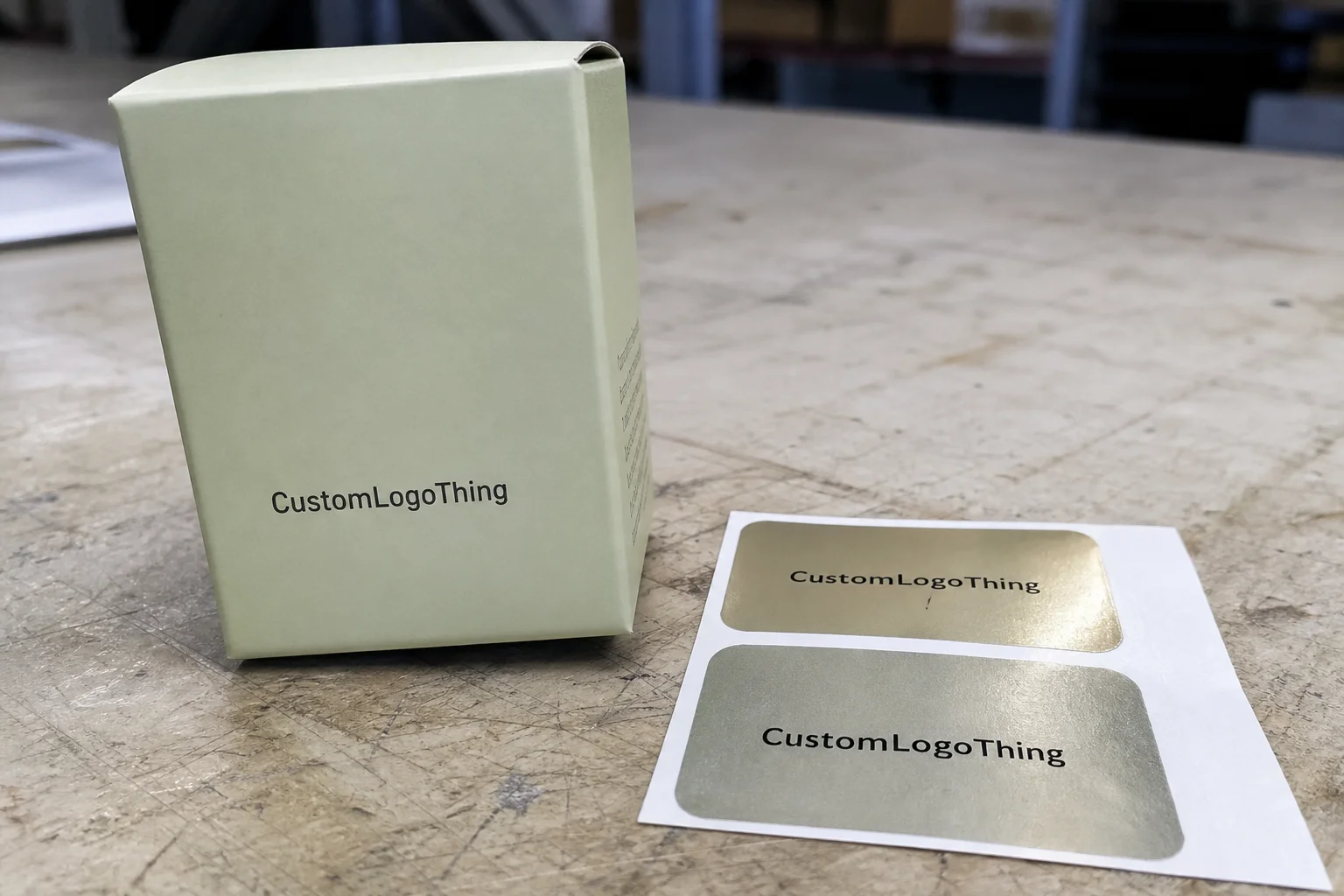
The MOQ exists because press setup, material waste, cutting, and finishing all need to be absorbed somewhere. With labels, those fixed costs do not disappear just because the quantity is small. They simply get spread across fewer pieces. That is why a 1,000-piece order can be reasonable for one SKU and awkward for six SKUs split across several sizes.
Skincare brands tend to need size labels for good reasons. A 30 ml serum, a 100 ml toner, and a 250 ml cleanser can share a coherent visual system while still being easy to distinguish at a glance. Retail staff need that clarity, too. Nobody wants to recheck a bottle because the size callout is buried in tiny type or wrapped around a curve where it disappears under glare.
The usual buying pattern is straightforward. A brand is preparing a cleanser, toner, and serum line. Each product needs clear size identification on the primary container, and sometimes on an outer carton as well. The first order has to support launch stock, samples, and a small buffer for press or retail needs. In that scenario, size labels MOQ for Skincare brands becomes a cash-flow decision as much as a production one.
Keep the label system tight. Once sizes, finishes, and materials start varying without a clear reason, every reorder gets more expensive and harder to forecast.
There is no universal best MOQ. The right number is the one that lines up with the product plan. If the brand expects steady sell-through, a larger run can reduce repeat setup charges. If the formula, carton size, or artwork is still being tested, smaller quantities are safer. The point is to avoid dead inventory without creating a costly scramble every time stock gets low.
For broader packaging standards and performance references, the Institute of Packaging Professionals is a useful resource. For transit testing and distribution durability, ISTA remains relevant when labels need to hold up through warehousing, freight, and handling.
Label Formats That Fit Jars, Bottles, and Cartons
Format matters. A label that works on a cylindrical bottle may fail on a squat jar or a folding carton with sharp edges and limited panel space. The container should drive the format, not the other way around. A lot of unnecessary reprints start with a design that looks good on screen but ignores how the package is actually built.
For bottles, wrap labels are usually the most practical choice. They provide enough room for the size callout, usage information, and any required copy without forcing the front panel to carry everything. Jars usually call for a front-facing label or a short wrap that stays readable despite the lid, shoulder, and curvature. Cartons and sleeves often need a compact size mark or a small front panel that is visible on shelf and still legible during packing.
There are two common approaches. A standalone size label is better when a brand expects frequent updates or multiple package sizes that may change over time. It lets the main artwork stay stable while the size callout shifts as needed. An integrated size callout works better when the line is fixed and the packaging system is not likely to change soon. It can look cleaner, but it is less forgiving if the range expands.
Curvature creates real production limits. On narrow bottles, text can distort or land too close to a seam. On jars with short vertical space, the label may not have enough safe margin to stay readable after application. If the label is cut too close to the edge, it can lift, wrinkle, or fail to sit cleanly once applied. Those problems are not cosmetic. They are signs that the dieline and container were not matched carefully enough.
For buyers, the decision is simple: match the format to the container and the reorder pattern. If the size changes often, isolate the size information into a separate label system. If the line is stable, build it into the main art. That reduces inventory confusion and makes the next reorder much less painful.
Material, Adhesive, and Finish Specs That Survive Bathroom Use
Skincare packaging lives in a difficult environment. Bathrooms are humid. Hands are oily. Bottles get wiped, dropped, packed into travel bags, and stored on surfaces that are rarely dry for long. If the label stock cannot tolerate those conditions, the product starts to look tired before the first bottle is finished.
Paper labels can be a good fit for dry cartons, display boxes, and packaging that will not see much moisture. They are often the lower-cost option and can still look polished on the right substrate. The tradeoff is durability. Paper is less forgiving around steam, condensation, and repeated handling.
BOPP is a common choice for skincare bottles and jars because it holds up better against moisture and everyday handling. It also gives a cleaner surface for print and finish control. For a buyer comparing options, the difference is not just tactile. It affects how the package holds up after shipping, on shelf, and in a real bathroom rather than a studio setting.
Finish changes the feel of the package more than some teams expect. Matte gives a softer, more restrained look. Gloss strengthens color and contrast. Soft-touch can feel premium, but it adds cost and is not always justified if the label’s main job is identification rather than presentation. A size label usually does not need a heavy finish stack. A clean matte or satin surface is often enough.
Adhesive selection deserves the same care as stock choice. A label that curls at the corner or slips on a curved bottle sends the wrong signal immediately. Glass, PET, HDPE, and coated cartons all respond differently to pressure-sensitive adhesives. A formula that behaves well on glass can fail on a slightly textured plastic container or a surface with low surface energy.
| Material | Best For | Durability | Cost Impact | MOQ Fit |
|---|---|---|---|---|
| Paper | Dry cartons, inner boxes, budget-sensitive lines | Low to medium | Lowest setup and print cost | Good for smaller test runs |
| BOPP | Bottles, jars, moisture-prone products | High | Moderate | Strong for repeat orders |
| Clear synthetic film | Minimalist branding, transparent containers | High | Moderate to higher | Best when artwork is stable |
| Specialty coated stock | Premium presentation, limited launches | Medium to high | Higher due to finish and handling | Works when the margin supports it |
Labels intended for distribution should be tested as packaging, not just approved as artwork. If the line is likely to face carton compression, freight vibration, or temperature swings, that needs to be part of material selection. Moisture resistance, abrasion resistance, and adhesion performance all matter more than a mockup would suggest. If the packaging uses paper stock from a certified source, FSC documentation is the right kind of support to ask for.
Pricing, MOQ, and Unit Cost: What Changes the Quote
Quotes for size labels move on predictable variables. Size, substrate, print method, finish, and the number of SKU variants all affect the final number. So does whether the order is built around one consistent system or around several small exceptions. That is the point where Size Labels MOQ for skincare brands starts to shape the price structure directly.
Smaller quantities usually mean a higher unit cost. That is not a penalty; it is just how fixed setup work gets recovered. If a run is short, the preparation cost sits on fewer labels. A 500-piece order will usually cost more per label than a 2,000-piece order, even though the total spend is lower.
The tradeoff is straightforward. A lower MOQ helps cash flow and lowers the risk of dead stock, but it also creates more reorder events and more setup charges over time. A larger run can reduce the price per piece and simplify the calendar, but it ties up more working capital. Neither choice is automatically right. The right choice depends on whether the packaging is settled and how quickly the line is expected to move.
Several factors quietly raise cost. Extra dielines increase prep time. Variable data can slow production. Different adhesives or finishes across SKUs split the job into separate production paths. Even shipping can affect the real total if the order is divided into multiple boxes or sent to more than one destination.
Tooling fees can also confuse buyers. Some label jobs have no tooling in the strict sense, but custom cut shapes, specialty finishing, and unusual constructions can create setup charges that behave much like tooling. It helps to ask for a line-item explanation before approval, not after the invoice lands.
Typical quote logic looks like this:
- One design, one stock, one finish usually keeps setup friction low.
- Multiple sizes with the same material are manageable if the artwork system is disciplined.
- Multiple materials or finishes increase handling and inventory complexity.
- Frequent reorder needs often justify a higher MOQ if the line is already moving.
The useful way to price a size label program is as a system. A brand rarely buys one label in isolation. It buys an operating structure for a product line, and the cost only makes sense when the whole line is considered together.
Process and Lead Time: From File Check to Production
The production path is usually simple on paper: inquiry, artwork review, material confirmation, proofing, approval, production, and shipment. The delay tends to show up in the handoff between those steps rather than in the print run itself.
Missing dielines cause delays. So do low-resolution files, unclear size specs, and last-minute changes after proof approval. If the final bottle dimension is not settled, the label cannot be finalized properly. Production cannot guess where a seam will land or how much clearance a curved container will need.
Repeat orders are usually faster than new launches. If the material, finish, and artwork stay the same, production can move with less friction after approval. Multi-SKU projects take longer because each variation adds one more point where misalignment can occur. A line with three bottle sizes, two carton sizes, and a separate sample label is not the same job as a single SKU reorder, even if the artwork looks similar at a glance.
Lead time is shaped by file quality and revision discipline. Clean files shorten the schedule. Loose specs extend it. That sounds basic because it is basic, but it is still the difference between a product shipping on time and a launch slipping into an expensive rush order.
Before requesting a quote, send the essentials:
- Container dimensions for each SKU
- Quantity by size and by design
- Preferred material and finish
- Application method, such as hand-applied or machine-applied
- Shipment destination and deadline
One clean layout file and a clear list of product sizes will usually produce a better estimate than a vague request for labels. It saves back-and-forth, keeps the pricing honest, and shows whether the label system is actually ready for production.
Why a Single Label Program Reduces Reorder Waste
Consolidating label specifications across a skincare line reduces waste in a very practical way: fewer materials, fewer setup variations, and fewer opportunities for mismatch. A brand that uses one paper stock for cartons, one synthetic stock for bottles, and one finish across the line has a cleaner system than a brand with five label constructions and no stable reorder pattern.
This matters for launches, PR kits, and seasonal packaging refreshes. A single program makes reorders faster because the spec does not need to be rebuilt every time. The artwork can move from approved file to production without repeating the same material conversations. That keeps the packaging consistent and helps the brand avoid small visual differences that add up on shelf.
Fragmented purchasing does the opposite. Multiple vendors, multiple finishes, and multiple shapes tend to create avoidable delays. One team expects matte, another assumes satin, and the final order looks assembled instead of planned. Even when each individual label is acceptable, the line can feel uneven.
There is also an inventory advantage. If the label family is stable, the brand can hold a reasonable buffer of core materials without overcommitting to a dozen unrelated SKUs. That lowers the risk of dead stock while still allowing the company to benefit from better pricing on repeat items.
For a buyer trying to keep the line under control, that is the real value of a single label program. It simplifies forecasting, speeds up reorder cycles, and keeps the packaging system visually aligned as the brand expands. The work is less glamorous than a redesign, but it usually has a stronger effect on budget control.
Next Steps for a Faster Quote and Cleaner Reorder
Start with the facts. Gather container dimensions, quantities by SKU, material preference, finish preference, and any resistance requirements before requesting a quote. If the label must handle water, oil, freezer storage, or heavy transit, say that plainly. Those conditions affect both stock choice and adhesive selection.
A single clear layout file is better than a vague request for a “modern look.” Print teams need dimensions, quantities, and artwork intent. If the product is a hero SKU or a launch item with retail visibility, request a proof before production. That extra step is usually cheaper than reprinting a whole run because the size callout or panel position was off.
Reorder timing matters too. If the product line is likely to grow, lock the label spec while the packaging is still fresh in everyone’s head. Waiting until stock is nearly gone often leads to rush charges, split shipments, and compromises that were avoidable a month earlier.
The practical rule is simple: decide the line structure first, then order labels around it. The right size labels MOQ for skincare brands should fit launch volume, forecasted sell-through, and reorder pace. Not guessed. Not inflated for comfort. Chosen with enough discipline to keep the product line organized and the budget under control.
What is the usual size labels MOQ for skincare brands?
MOQ depends on material, print method, and whether the order is one design or several variants. Smaller runs are possible, but unit cost usually rises when setup work is spread across fewer labels.
Can I order size labels in different sizes for one skincare line?
Yes. The main question is whether each size change requires a separate setup, dieline, or print adjustment. Keeping dimensions and materials consistent across the line usually lowers cost and simplifies reorders.
Which label material works best for skincare packaging?
Synthetic materials like BOPP are usually the safest choice for moisture, oils, and handling in bathrooms. Paper can work for dry cartons or budget-sensitive packaging, but it is less durable on wet surfaces.
How long does production usually take after approval?
Lead time depends on order complexity, proofing speed, and production load. Clean files and fast approval shorten the schedule. Missing dimensions or late changes slow everything down.
What should I send to get an accurate quote for size labels?
Send container dimensions, target quantity, material preference, finish preference, and shipment deadline. Include artwork files and note whether the labels need water resistance, oil resistance, or a premium finish.


