Skincare Corrugated Boxes Cost: Request a Fast Quote
Skincare corrugated boxes cost more than the carton price on a spreadsheet suggests, and the gap gets wider the moment a leaking serum, a cracked jar, or a bent corner turns one shipment into three headaches. A box that protects glass, keeps the product sanitary, and arrives looking deliberate is usually the cheaper choice over time, even if the unit price lands a little higher.
Brands miss that math all the time. They see the line item, compare it against a plain mailer, and stop there. Operations sees the rest of the bill: refunds, replacements, freight loss, repacking labor, customer service time, and the damage to repeat orders when the first delivery lands badly. Measured properly, skincare corrugated boxes cost should be read as total packaging cost, not as a single number detached from reality.
A serum in glass, a cream jar with a heavy cap, or a curated routine set needs more than cardboard. It needs a structure that keeps movement low, branding intact, and the unboxing clean enough for retail counters or direct-to-consumer shipments. That is why skincare corrugated boxes cost belongs in the same conversation as flute choice, insert design, print method, and the route the package will travel. The lowest quote is not the right target. The right target is the best use of material where the product is most vulnerable.
At Custom Logo Things, the most useful quote starts with the product, the shipping environment, and the presentation goal. Once those are visible, skincare corrugated boxes cost becomes a real comparison instead of a guess built on generic box dimensions.
Why Skincare Corrugated Boxes Cost Less Than Replacing Damage
For skincare brands, one bad shipment can erase the savings from a cheaper carton. A cracked bottle, a dented pump, or a cap that loosens in transit can set off a familiar chain: replacement inventory, reshipment, refund, and sometimes a lost customer who does not come back. That is why skincare corrugated boxes cost needs to be measured against the cost of failure, not against a bare carton alone.
The better question is not, “What does the box cost?” It is, “What does this package do for the product from packing bench to doorstep?” A carton that shields a fragile formula and still looks clean can lower the total bill, even if the initial skincare corrugated boxes cost sits above the cheapest possible spec.
Packaging teams usually understand that equation before brand teams do. Marketing wants a premium feel. Operations wants fast assembly and predictable strength. Good packaging sits between those forces. Cheap is not the same as economical, especially once freight cube, breakage, and return rates enter the picture.
Here is the business logic in plain terms:
- Damage prevention cuts replacement shipments and claims.
- Right-sized construction reduces void fill, freight volume, and wasted board.
- Clean presentation supports shelf appeal and the unboxing moment.
- Repeatability keeps production stable as the line scales.
That is the practical reason skincare corrugated boxes cost should be treated as a protection and presentation investment. If the carton does its job, the product arrives intact, the outside stays presentable, and the customer never sees the hidden price of weak packaging. A well-built box can pay for itself in avoided complaints alone.
“The lowest carton quote often looks great until breakage, kitting time, and freight cube show up on the invoice. Then the math changes.”
Skincare Corrugated Boxes Cost Drivers: Materials and Print
The main drivers behind skincare corrugated boxes cost are board construction, box size, print method, and finishing. Each choice changes what the box does and what it takes to produce it. A compact E-flute mailer with one-color flexo print behaves very differently from a retail kit with litho-lamination, matte coating, and a die-cut insert.
Board choice sets the floor. For many skincare applications, single-wall corrugated in E-flute or B-flute is common because it balances print quality and protection. E-flute is thinner and often gives a crisper printed surface, while B-flute brings a bit more crush resistance. Heavy products, uneven shapes, and bulk stacking can push the spec upward. That is usually the first place skincare corrugated boxes cost moves.
Size matters just as much. A tight 6 x 4 x 2 mailer uses far less material than a wide kit box holding a serum, cleanser, toner, and treatment set. Bigger boxes also create more waste on press and can increase freight charges because pallet efficiency drops. If the proportions are awkward, skincare corrugated boxes cost can rise even when the design looks simple on paper.
Print method is another major lever. One-color flexographic print is usually the most economical route for shipping-heavy programs. Litho-lam becomes the stronger choice when the box needs a retail finish, sharper image detail, and richer branding. Digital print works well for shorter runs, seasonal launches, and test markets. Each method pulls skincare corrugated boxes cost in a different direction.
Finishes move the number again. Gloss coating, aqueous coating, varnish, soft-touch lamination, and foil all add expense and often add setup time. Those effects are not theoretical; they show up in both production and lead time. A carton meant to vanish in transit should not be priced like a luxury display box, and a luxury display box should not be built like a plain shipper. Matching finish to function is one of the cleanest ways to control skincare corrugated boxes cost.
To make the comparison more concrete, the table below shows typical ranges. The final quote depends on quantity, dimensions, artwork coverage, and whether tooling already exists.
| Box Type | Typical Use | Relative Skincare Corrugated Boxes Cost | Typical Notes |
|---|---|---|---|
| Plain mailer, one-color flexo | Shipping-focused DTC orders | Low | Good for basic branding and controlled unit cost |
| Printed mailer, digital | Short runs, launches, test markets | Moderate | Useful when MOQ needs to stay low and setup charges matter |
| Litho-lam retail shipper | Premium presentation and shelf appeal | Moderate to high | Better image quality, more tooling fees, tighter artwork control |
| Mailer with custom insert | Fragile jars, droppers, and routines | Moderate to high | Protects product well, but insert complexity adds cost per piece |
| High-end kit with specialty finish | Gift sets and premium launch programs | High | Best for shelf impact, but not the lowest skincare corrugated boxes cost |
If sustainability is part of the brief, board sourcing matters too. FSC-certified paperboard can support brand claims and retailer expectations without changing the structure much. For chain-of-custody details, the FSC site is a useful reference. Certified sourcing does not automatically reduce skincare corrugated boxes cost, but right-sized construction can cut material use and freight weight, which helps the total budget.
The key point is simple: board, size, print, and finish are connected decisions. A smart spec trims waste, protects the product, and keeps skincare corrugated boxes cost in a range that fits the margin structure of the line.
Box Styles, Inserts, and Product Protection Details
Skincare packaging rarely succeeds by accident. Bottle shape, closure type, weight, and finish all influence the box style that will actually hold up. A lightweight cleanser in a plastic bottle does not need the same structure as a glass dropper set or a three-piece regimen. That is why skincare corrugated boxes cost depends as much on the internal layout as on the outer shell.
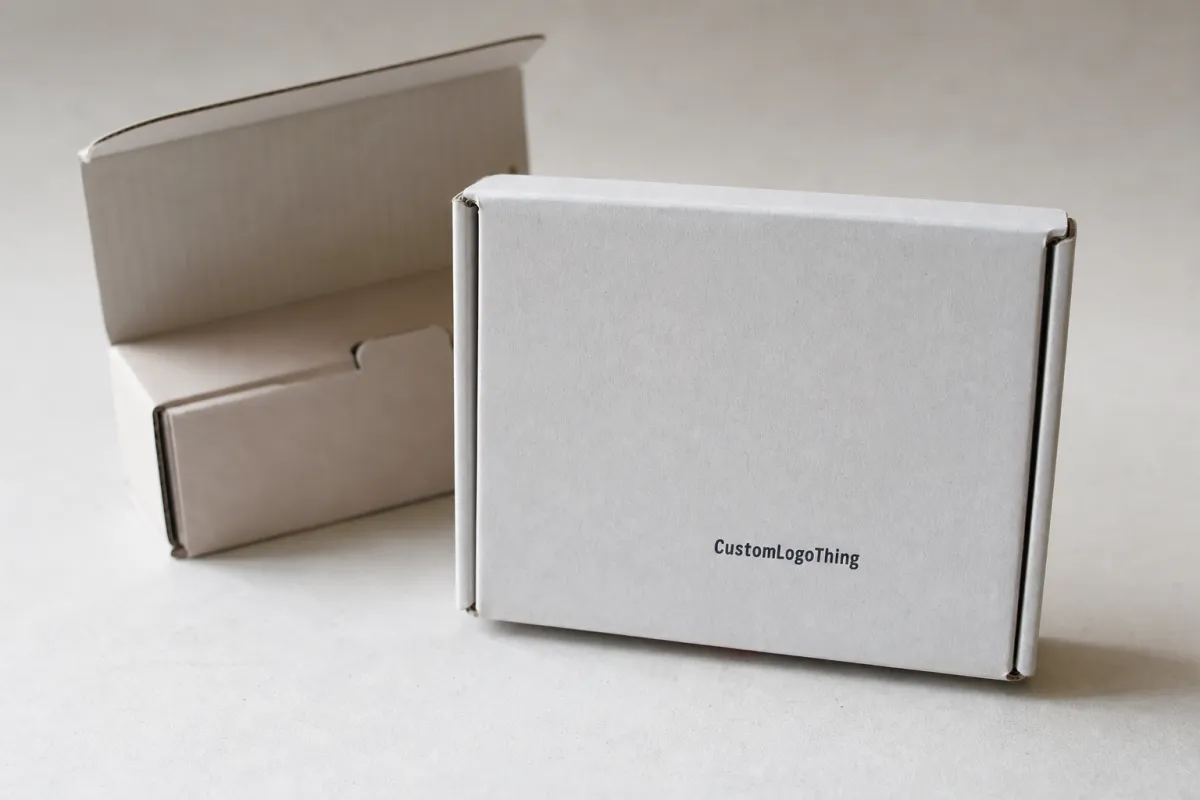
The common formats are mailer-style corrugated boxes, tuck-top shippers, roll-end front-lock boxes, and protective cartons built for bundled kits. Each one solves a different problem. Mailers work well for e-commerce because they open neatly and ship efficiently. Roll-end front-lock styles bring stronger closure performance and a cleaner front face for branding. Tuck-top formats can fit lightweight kits, sample boxes, and retail inserts. The better the match between product and box, the more stable skincare corrugated boxes cost becomes.
Inserts often make the biggest difference. A die-cut corrugated insert can hold jars and bottles firmly, while paperboard dividers keep multiple products separated inside one routine set. Pulp trays absorb movement and create a molded, natural feel. Custom cavities may be needed for droppers, pump bottles, or unusual skincare shapes. Inserts add tooling, labor, and sometimes a higher MOQ, so they raise skincare corrugated boxes cost, but they often prevent far larger losses from breakage.
Geometry matters more than many buyers expect. Glass is heavier and more brittle than PET. Droppers can loosen if the cavity is too generous. Airless bottles may need tighter tolerances because their shape does not sit well in a wide open box. Multi-piece routines can rattle if the compartments are oversized. A design that ignores geometry tends to create hidden damage costs later, even if the first quote looks attractive.
Testing belongs in the conversation too. For transit packaging, stack strength and compression resistance are critical. For e-commerce, drop performance matters just as much. Skincare cartons often fail first at corners, closure points, and the places where the insert lets the product move. That is why many buyers ask for trial packs or sample assemblies before approving the final design. If the shipper is going through a parcel network, it helps to check transit test methods such as the ISTA standards, especially for drop and vibration concerns.
Sometimes the smarter move is restraint. A strong shipper with a branded insert or sleeve can outperform a heavier all-around upgrade. That keeps skincare corrugated boxes cost under control while still protecting the product and preserving the brand look. Overbuilding every component usually creates waste; targeted protection usually creates better value.
Here is a simple comparison of common structures:
| Structure | Protection Level | Presentation Level | Cost Impact |
|---|---|---|---|
| Standard mailer | Good for light to medium products | Clean and practical | Usually the lowest skincare corrugated boxes cost |
| Mailer with insert | Very good for glass and bundled sets | Neat, organized unboxing | Moderate increase in cost per piece |
| Roll-end front-lock | Strong closure and stacking performance | Strong front panel branding | Moderate to high depending on print and board |
| Litho-lam kit box | Good when paired with the right insert | Premium shelf appeal | Higher skincare corrugated boxes cost, higher visual value |
If you are still deciding between packaging types, compare the whole lineup. Buyers reviewing launch kits often look at Custom Shipping Boxes for transit-heavy programs and broader Custom Packaging Products for secondary packaging, sleeves, and display formats. That side-by-side view usually reveals where skincare corrugated boxes cost can be reduced without weakening the product story.
Skincare Corrugated Boxes Cost, MOQ, and Quote Inputs
MOQ is where many skincare buyers get surprised. A box with custom tooling, a unique insert, or a print process that needs setup time will usually carry a higher minimum order quantity than a simple stock-style run. The reason is mechanical, not mysterious: presses, dies, plates, and finishing stations all need preparation, and that setup gets spread across the order. Once that is clear, skincare corrugated boxes cost makes a lot more sense.
Short runs are possible, but they usually push unit price upward. A prototype order of 100 to 250 pieces is useful for fit checks and early sales samples. A pilot run of 500 to 1,000 pieces gives a brand a more honest read on packing labor and customer feedback. First launch runs often sit in the 2,500 to 5,000 range, and repeat production can go well beyond that. As volume rises, skincare corrugated boxes cost often drops quickly because tooling and setup charges are diluted across more units.
For an accurate quote, the buyer needs more than a product name. The most useful information includes exact product dimensions, fill weight, artwork coverage, closure style, finish requirements, and the destination for shipping. Photos and physical samples help even more, especially when the container shape is unusual. If the carton holds multiple items, each item’s weight and height should be listed separately. Good input reduces revisions, and fewer revisions usually mean a tighter skincare corrugated boxes cost estimate.
There are several hidden pieces inside the quote, and each one can change the final number:
- Tooling fees for dies, plates, or insert cutting tools.
- Setup charges for press preparation, color matching, and finishing.
- Structural sampling for dieline review and fit testing.
- Freight from the plant to the delivery point.
- Kitting or packing labor if inserts or multiple components are assembled together.
Those items are not extras in the abstract; they are part of the manufacturing plan. Some suppliers bury them. Others show them openly. Transparent quoting matters because a low headline price can conceal a much higher total. The best skincare corrugated boxes cost discussion compares true apples to apples, including structure, print, inserts, freight, and the prep work needed to get the box ready.
One practical way to compare pricing is to ask for two versions of the same project: a value-engineered option and a premium option. The first might use a simpler board, lighter coverage, and a standard insert. The second might include richer print and a more refined finish. That side-by-side view makes tradeoffs visible and helps a buyer decide whether the added spend is worth it. It also keeps the quoting process from drifting into vague territory, which is where skincare corrugated boxes cost becomes confusing.
Typical pricing behavior often looks like this, though every project varies with size and artwork:
- Prototype or short-run digital jobs can carry a higher unit cost, sometimes $1.50-$4.00 per piece depending on box size and insert complexity.
- Mid-volume printed mailers may fall into a lower range, often around $0.45-$1.25 per piece for simpler constructions.
- Premium retail kits with inserts and specialty finishing can move higher, especially if the run is small or the artwork coverage is heavy.
These are planning ranges, not promises. Even so, they help a buyer speak more clearly with the packaging team. Once dimensions, quantity, and presentation expectations are known, skincare corrugated boxes cost becomes a manageable spec conversation instead of a guessing game.
For buyers who want a quick path to pricing, the fastest quotes usually come from a finalized dieline and a sample product set. That combination gives the structural team enough data to judge fit, weight, and protection before the artwork stage starts slowing the schedule. If the box is being built around a launch date, that early clarity matters a great deal.
Process, Timeline, and Lead Time for Production
Most packaging delays start with a loose brief. A better process begins with discovery and measurement, then moves into dieline creation, structural sampling, proof approval, manufacturing, quality checks, and shipping. When each step is clear, skincare corrugated boxes cost can be quoted more accurately and the schedule stays under control.
Lead time depends on several moving parts. Artwork approval speed is one of the biggest. Tooling complexity is another. A simple printed shipper can move faster than a custom multi-piece skincare kit with inserts, coatings, and specialty finishes. Material availability matters too, especially if the chosen board grade is in high demand. Shipping distance also affects planning, particularly when the order moves across regions or into multiple destinations.
For a straightforward project, once the proof is approved and materials are on hand, production often falls into the 12-15 business day range. More complex jobs, especially those with multiple components or refined finishing, can move into the 20-30 business day range or longer. That does not mean the project is drifting; it means the box is doing more work. As complexity rises, skincare corrugated boxes cost may increase slightly, but the bigger change usually shows up on the calendar.
There are a few simple ways to keep the schedule moving:
- Send physical samples so the structural team can measure the real product.
- Confirm Pantone targets early, before press work begins.
- Approve the cutline and dieline without unnecessary back-and-forth.
- Decide on finish and insert requirements before sampling starts.
- Share the ship-to address early so freight can be planned correctly.
That last point gets overlooked more often than it should. Freight to one distribution center is different from freight to several destinations. Packaging that looks inexpensive on the quote can feel expensive once shipping is split across locations. Good logistics planning keeps skincare corrugated boxes cost grounded in reality.
Rush jobs are possible, but only when the structure is stable and the production schedule can absorb them. A rushed box should still pass fit checks and print cleanly. If the timeline is too tight, simplifying the structure is usually smarter than forcing a complicated design through too quickly. Cutting a little print detail is easier than dealing with a field failure.
There is also a sustainability side to the timeline conversation. If the board spec is tied to a certified source, the buyer may need extra time for documentation. That is not a drawback; it is part of a responsible packaging workflow. For buyers tracking material credentials, FSC documentation is one of the clearer ways to show board origin and chain-of-custody discipline.
From a packaging buyer’s point of view, a well-run timeline does three things: it protects the launch date, it protects the carton spec, and it keeps skincare corrugated boxes cost from rising because of rework that should have been avoided. Early samples, clear measurements, and quick approvals usually matter more than last-minute urgency.
Why Choose Us for Skincare Corrugated Packaging
Custom Logo Things is built for buyers who want packaging that looks clean, ships well, and does not require a maze of vendors to get finished. The strength of the process is coordination: structural design, prepress, production, and quality control all working from the same brief. That matters because a skincare project can drift if the box, the print, and the product fit are handled in separate silos.
We keep the quoting process straightforward and transparent. That means the buyer can compare skincare corrugated boxes cost across options without digging through vague inclusions or hidden add-ons. If tooling fees, setup charges, or insert work apply, they should show up clearly in the quote. That is how a real packaging decision gets made.
The other advantage is practical fit. A good skincare carton should not rely on guesswork, and it should not be overbuilt just to look sturdy. Right-sized construction can reduce board usage, trim freight weight, and still keep the product safe. For many brands, that combination does more for margin than chasing the absolute lowest skincare corrugated boxes cost on a weak design.
Our work also fits the range of real skincare buying needs. Some projects are retail-facing and need polished print. Others are built for e-commerce and need stronger transit protection. Some lines grow quickly and need repeatable production across several release cycles. If you are building out a program that includes mailers, shippers, sleeves, and secondary cartons, our broader Custom Packaging Products catalog can help you compare formats without starting from zero.
For heavier or more transit-sensitive programs, our Custom Shipping Boxes options are a useful starting point because they show how structure changes protection and cost. That comparison often makes it obvious where skincare corrugated boxes cost can be reduced and where it should be left alone for the sake of the product.
Here is what many buyers value most:
- Clean structural execution so the carton folds, closes, and ships the way it should.
- Dependable print registration so branding looks intentional, not patched together.
- Transparent pricing so the cost per piece is easy to compare across suppliers.
- Scalable production so a launch box can become a repeat program without redesigning everything.
That approach is simple on purpose. Packaging should solve problems, not create them. If the box protects the formula, holds the presentation together, and keeps skincare corrugated boxes cost inside a sensible range, it is doing its job.
For a buyer who wants facts instead of fluff, that is the standard worth holding to.
Next Steps to Get an Accurate Skincare Corrugated Boxes Cost
If you want a quote that is actually useful, gather the basics first. Product dimensions, fill weight, artwork files, photos or samples, quantity range, and ship-to address are the core details. If the project has more than one item, list each item separately. That information gives the quoting team enough context to shape skincare corrugated boxes cost around the real package instead of around assumptions.
Then decide what matters most. Some brands want the lowest unit cost. Others care most about protection. Others need premium shelf presence. Those priorities do not always point to the same structure, and that is normal. The stronger your priority list, the more useful the quote will be, because skincare corrugated boxes cost can be tuned toward the right outcome instead of spread thin across every possible feature.
A good next step is to request two versions of the same concept, one value-focused and one premium. The value version might simplify print and use standard board. The premium version may include a stronger visual finish or a more refined insert. That side-by-side comparison often makes the decision easier because it shows what each upgrade really buys. It also keeps skincare corrugated boxes cost tied to concrete tradeoffs.
Use this simple action plan:
- Send the product sample or clear product photos.
- Confirm the box style you want, or ask for a recommendation.
- Share the quantity target and the likely repeat volume.
- Approve the dieline and structure before artwork is finalized.
- Ask for a production schedule based on the chosen quantity.
That sequence shortens the quote cycle and cuts down on back-and-forth. It also helps avoid the common trap where a brand shops on a number that is too early to mean much. A good packaging quote should explain the board, print, insert, and freight assumptions clearly so there are no surprises later.
At that point, the conversation becomes direct: what protects the formula best, what presents the brand best, and what fits the budget best. That is the right way to handle skincare corrugated boxes cost. Not as a guess, but as a controlled decision with a visible payoff.
If you are ready to move, send the specs and ask for a sample-based review. A fast, accurate answer on skincare corrugated boxes cost starts with the actual product in hand, not with a generic price sheet.
Frequently Asked Questions
What affects skincare corrugated boxes cost the most?
The biggest drivers are board grade, box size, print coverage, insert complexity, and order quantity. Higher-quality graphics, specialty finishes, and custom tooling usually increase skincare corrugated boxes cost, while smarter structure and right-sizing can keep the total packaging spend in check.
Can I lower skincare corrugated boxes cost without sacrificing protection?
Yes, and that is often the best path. Right-sizing the box, simplifying the print, and choosing the lightest board that still passes performance needs can lower skincare corrugated boxes cost without weakening the package. A well-designed insert often protects better than adding extra board everywhere.
What is the minimum order quantity for skincare corrugated boxes?
MOQ depends on the print method, box style, and whether custom inserts or tooling are required. Digital or simpler production can support lower quantities, while more complex builds usually need larger runs. A clear spec sheet makes skincare corrugated boxes cost easier to align with the right MOQ.
How long is the lead time for skincare corrugated box production?
Lead time depends on artwork approval, structural sampling, print complexity, and material availability. Simple designs move faster than custom multi-piece packaging with inserts or specialty finishes. Fast approval from the buyer is often the biggest factor in keeping skincare corrugated boxes cost and the schedule under control.
What should I send for an accurate skincare corrugated boxes cost quote?
Send product dimensions, fill weight, quantity, artwork files, and photos or samples of the product. Include the desired box style, insert needs, finish preferences, and shipping destination. If possible, share your target budget or priority so skincare corrugated boxes cost can be aligned to the right construction from the start.