Plenty of window graphics that look like adhesive decals are not glued to the glass at all. Store-door promos, temporary hours signs, mirror graphics, loyalty reminders, and display case callouts are often made as Static Cling Stickers Custom printed for clean removal, repositioning, and short-to-medium-term glass branding.
That matters because glass is valuable retail space, but nobody wants to scrape it for half an afternoon after a campaign ends. If a promotion changes every few weeks, static cling can save staff from razor blades, solvent cleanup, torn adhesive film, and cloudy glue marks. Used correctly, it fits neatly beside Custom Packaging Products, retail signage, counter displays, and other package branding support materials.
Static Cling Stickers Custom: What They Are and When They Make Sense
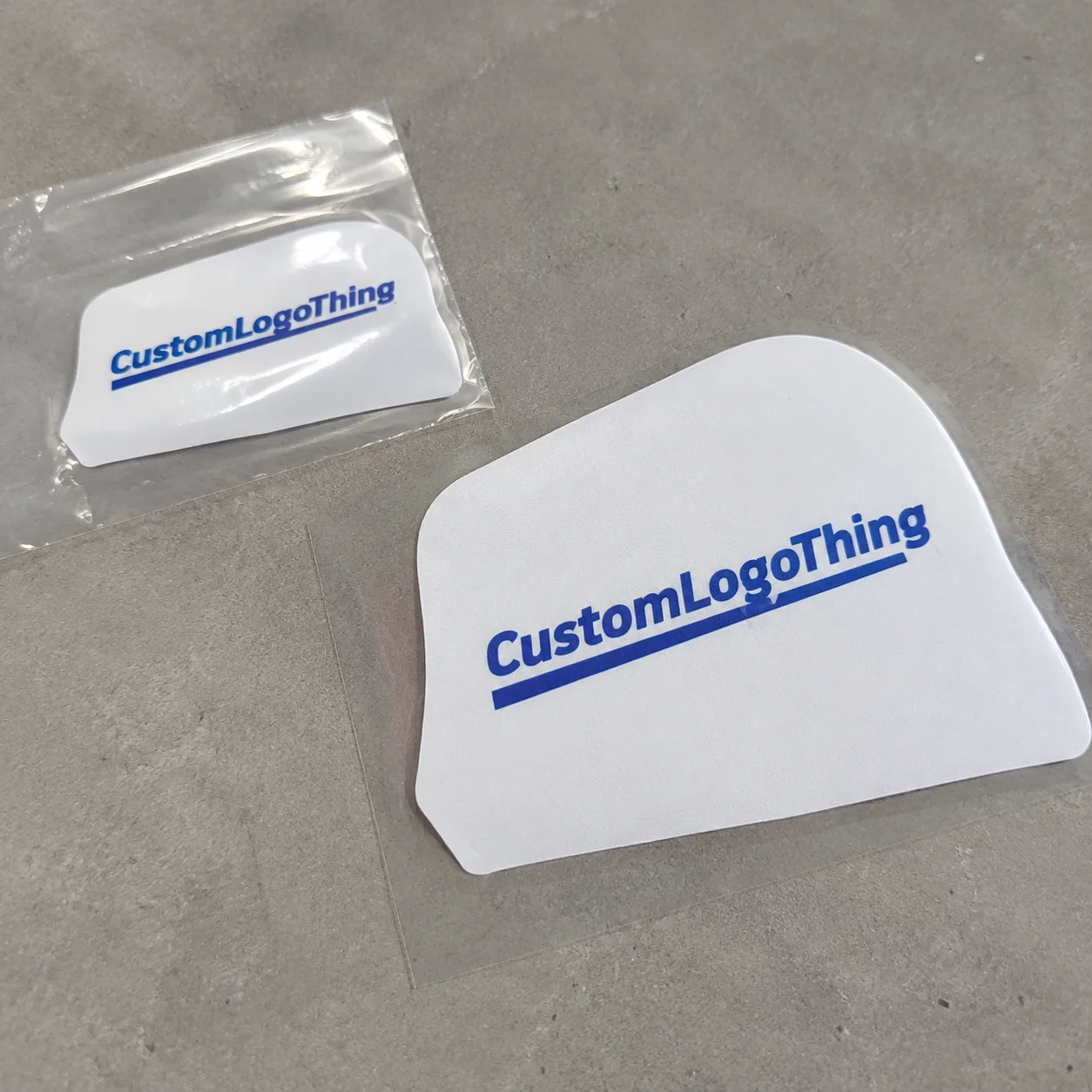
Static cling stickers custom are flexible cling films printed with custom artwork and made to grip smooth surfaces through static attraction and close surface contact rather than pressure-sensitive adhesive. Most are made from soft vinyl cling film, though some suppliers may offer polypropylene-style cling materials depending on equipment, sourcing, and intended use. The main point: there is no glue layer.
They perform best on clean glass, polished acrylic, salon mirrors, display cases, smooth cooler doors, and vehicle windows where the surface is flat enough for broad contact. Retailers use them for seasonal promotions, store hours, safety notices, menu updates, loyalty program reminders, product feature callouts, and temporary campaign graphics. A dealership might place them on inside vehicle windows. A café might use them for rotating menu notes. A cosmetics display might use a small clear cling to highlight a limited shade range.
They are not magic. Static cling will not behave well on rough walls, cardboard, textured plastic, dusty freezer doors, unfinished wood, matte painted surfaces, or low-energy plastics that naturally resist close contact. Outdoor use can work for short campaigns if the material and print are specified properly, but wind pressure, grime, temperature swings, rain, and repeated cleaning shorten the reliable display life.
The tradeoff against adhesive stickers is simple enough. Adhesive labels bond more aggressively, tolerate more surface variation, and usually last longer outdoors. Static clings win when the buyer needs clean removal, repositioning, and low-risk temporary display. If a store manager needs to move a promotion from one pane to another, a cling is forgiving. If a warehouse label needs to stay put on a rough bin for a year, use adhesive. Pretending otherwise is how reprints happen.
Buyers should also understand two core formats before ordering: front-facing clings and reverse-printed clings. A front-facing cling reads correctly from the printed side and is usually applied to the customer-facing side of the glass. A reverse-printed cling is mirrored during production so staff can apply it inside the glass while customers outside read it correctly. That inside-glass format helps protect the print from weather, fingerprints, scraping, and exterior window washing.
Packaging-floor rule of thumb: if the graphic needs to be viewed through glass from the opposite side, say that clearly on the quote request. “Inside glass, outward-facing” prevents a lot of expensive print-direction mistakes.
How Static Cling Grips Glass Without Adhesive
The cling effect is less mysterious than it looks. The film makes broad, close contact with a smooth surface, and static attraction plus a bit of surface tension helps it hold without glue. Think of it as a thin, flexible sheet trying to stay tight against clean glass. The more uninterrupted contact area it has, the better it behaves.
Surface prep matters more than many buyers expect. Dust, skin oil, fingerprints, cleaner residue, condensation, lint, and tiny debris all interrupt contact between the cling and the glass. A pane can look clean from six feet away and still have enough invisible oil to make corners lift after an hour. Door glass near handles is especially risky because it collects hand oils and cleaning overspray all day.
Smooth-surface compatibility is the whole game. Glass is the safe standard. Polished acrylic, glossy tile, polished metal, and some high-gloss plastics may work, but matte, curved, porous, or pebbled surfaces reduce cling performance. A small curve on a vehicle window may be fine for a modest size. A large graphic across a compound curve can wrinkle, tunnel, or slowly peel back at the edges.
Indoor glass is the most predictable use. Outdoor glass can work, especially for short promotions, but it will not offer the same reliability in wind, road dust, rain, and heat. If the cling faces direct afternoon sun, the film can soften slightly, curl at edges, or pick up dirt along the perimeter. Many early failures blamed on “bad material” are really surface or environment problems.
Inside-glass application is a smart workaround for storefronts. With reverse printing, the cling goes on the interior side of the window and faces outward. That protects the ink from customers brushing against it, rain hitting it, and exterior cleaning tools scuffing it. The artwork must be mirrored correctly, and the proof should show the visible side clearly. Do not rely on someone in prepress to guess your installation plan.
Thickness affects handling too. Many static clings fall around 6 to 8 mil for common window applications, though exact specs vary by supplier. Thicker films are easier for store staff to hold, align, peel, and reposition. Thinner films may conform a little more easily but can be trickier to apply without wrinkles, especially above 12 inches wide.
From a production standpoint, clean cutting, proper drying after print, and flat packing matter. A cling that leaves the press too soon can block, scuff, or pick up handling marks. A poorly stacked contour cut can collect dust at the edges. Flat-packed sheets or gently rolled pieces with protective interleaving usually arrive easier to separate and smoother to apply.
Key Specs That Change Clarity, Color, and Durability
Clear versus white film is the first specification to settle. Clear cling film creates a see-through look and lets the glass remain visible around the design. It feels lighter and more integrated, which is useful for subtle display branding, glass cases, and Premium Retail Packaging environments. White cling film gives stronger contrast and better readability from a distance because the artwork is not fighting whatever sits behind the glass.
Clear film can look sharp, but it punishes weak contrast. Pale yellow type on clear stock may disappear on a bright storefront. Light gray copy can vanish against a parking lot. For legibility, buyers often need white ink backing, bolder typography, heavier color density, or a switch to white cling. If the message must be read from 10 to 20 feet away, high contrast beats a delicate design idea every time.
Printing method affects cost and appearance. Digital printing is common for low and medium quantities, especially full-color artwork, gradients, photos, multiple versions, or short campaigns. Screen printing may suit larger simple-color runs because it can lay down strong spot colors and dense ink efficiently once screens are made. The better option depends on quantity, color count, art complexity, opacity needs, and expected durability.
One-sided, double-sided, and reverse-print formats each solve a different problem. One-sided printing is simplest and usually lowest cost. Double-sided printing lets customers read one message outside while staff see another message inside, but registration, opacity, drying, and ink layers need tighter control. Reverse print is the standard choice for inside-window graphics that need to face outward.
Shape and finishing affect handling. Square corners are simple, but rounded corners resist edge lift better because there is no sharp point to catch during cleaning. Contour-cut pieces create a custom silhouette around a logo or product shape. Kiss-cut sheets are useful for sets of small clings, while individually die-cut pieces are easier for store-level distribution. Split-back liners can help with larger pieces because staff can expose only half the cling at a time.
| Option | Best Use | Typical Buyer Consideration |
|---|---|---|
| Clear static cling | Subtle glass branding, display cases, light promotional graphics | May need white ink backing or bold contrast for readability |
| White static cling | Store hours, sale notices, safety messages, bold window promotions | Stronger color and type visibility from a distance |
| Reverse print | Inside-glass application facing outward | Artwork must be mirrored and proofed for viewing direction |
| Double-sided print | Two-way messaging on doors or windows | Higher cost due to opacity, registration, and extra production control |
Size has practical limits. Very small clings can lose the surface area needed for reliable grip, especially if staff handle them often. Very large clings are harder to install without bubbles, stretching, trapped dust, or uneven pressure. For store teams without installation experience, several medium pieces can be easier than one oversized panel.
Storage deserves a line on the spec sheet. Clings should be kept flat or gently rolled, away from heat, dust, moisture, and heavy stacking pressure. A static cling stored in a hot back room or bent under cartons of Custom Labels & Tags may curl before it ever reaches the window.
Cost, Pricing, and MOQ Factors for Custom Window Clings
The unit cost for Custom Static Cling work depends on material, print setup, ink coverage, finished size, quantity, cut complexity, proofing needs, packing method, and special features such as white ink, double-sided printing, or multiple artwork versions. A 3-inch clear logo cling and an 18-inch double-sided door promotion are not the same job, even if both use cling film.
Quantity matters because fixed production steps have to be spread across the order. File setup, prepress checks, proofing, press calibration, test output, cutting setup, and quality inspection take time whether the order is 50 pieces or 5,000 pieces. That is why per-piece pricing often drops sharply as volume rises, then levels out once material and press time become the dominant costs.
As a rough planning range, small custom cling orders may land around $0.75 to $2.50 per piece for compact sizes, depending on artwork and quantity. Mid-volume runs of simple 4-by-6-inch clings might fall closer to $0.25 to $0.70 per piece. Larger window graphics, white ink, double-sided construction, contour cutting, and careful packing can push costs higher. These are planning numbers, not a universal quote, because material grade, freight, labor, and finishing change the math.
Size is a major cost driver. A large cling uses more film, more ink, more print time, more drying space, and more packing protection than a small retail-hours decal. Full-bleed graphics also consume more ink and require tighter trimming control. Fine type, color matching, variable store names, and multiple language versions can add proofing labor before production begins.
MOQ is not just a sales tactic. Some custom jobs have practical minimums because setup time, material handling, and press scheduling do not make sense for a handful of pieces. A buyer asking for eight double-sided, contour-cut, white-ink clings may find the setup cost is similar to a much larger run. If the project is a test, ask whether a small pilot is available and expect the unit price to be higher.
For a quote, send the finished size, quantity, shape, indoor or outdoor use, clear or white film preference, front-side or inside-glass application, number of artwork versions, packing preference, and shipping destination. If the order supports retail packaging, branded packaging displays, or a product launch, include the in-hands date rather than only the event date. Freight delays and store-level distribution eat real calendar time.
Compare total installed value, not only piece price. A sturdier film, rounded corners, cleaner white ink backup, or clearer packing instructions may reduce waste, reprints, and store frustration. Saving three cents per piece does not help if 15% of the rollout curls, prints too faintly, or arrives hard for staff to separate.
Production Steps and Timeline From Artwork to Delivery
A typical custom window cling workflow is straightforward: request specs, review artwork, confirm material, create proof, approve proof, print, dry or cure, cut, inspect, pack, and ship. Problems usually come from missing details early, not from the printing itself.
Artwork review should check resolution, bleed, safe margins, trim paths, color mode, mirrored orientation for reverse prints, and small-text legibility. Vector files such as AI, EPS, and print-ready PDF are best for logos, brand marks, type, and cut lines. High-resolution raster files can work for photos, but production needs to check them at final size, not on a bright monitor at 30% zoom.
Proofing confirms size, layout, cut line, print direction, and visible side. Digital proofs are normal for most orders. Physical samples are worth considering for large rollouts, color-sensitive brands, unusual glass, or artwork that depends on subtle transparency. A proof should label whether the cling is front-facing, reverse printed, or double-sided so nobody has to decode the file name and hope.
Printing and drying require patience. Heavy ink coverage, white ink, and double-sided graphics need enough time to stabilize before cutting and packing. Rush that step too aggressively and ink can scuff, block against another sheet, or pick up marks. Different inks and print systems cure differently, so the timeline depends on the actual production method.
Cutting and finishing come next. Pieces may be kiss-cut on sheets, individually cut, rounded, contour cut, or stacked with interleaving to prevent dust and edge damage. Quality checks should look for color consistency, clean edges, registration, scratches, contamination, and correct orientation. Static cling is unforgiving about dirt because lint on the cling face can create visible bumps during installation.
Typical lead times may run about 7 to 12 business days from proof approval for simple digital jobs. Larger or more complex orders often need 12 to 18 business days or more. Material availability, proof approval speed, finishing requirements, quality checks, freight distance, and packing complexity all affect the schedule. If clings must arrive before a seasonal promotion, build in extra time for receiving, sorting, and store distribution.
Good buyer-side habits make production smoother. Approve proofs quickly. Consolidate artwork versions before the order reaches prepress. Ask for samples before a large multi-location launch. If the cling ties into custom printed boxes, product packaging inserts, shelf signage, or package branding, share the broader design context so colors and message hierarchy stay consistent.
Common Mistakes That Make Window Clings Fail Early
The most common failure is applying a cling to glass that looks clean but still carries invisible oils, cleaner residue, dust, or moisture. Glass cleaner with polish, fragrance oil, anti-fog treatment, or waxy residue can leave a film that weakens contact. Door glass near handles, cooler doors, and mirrors in high-traffic spaces need extra cleaning attention.
Artwork mistakes are just as common. Thin light type on clear film can look crisp on screen but weak on a bright storefront. Low-resolution logos may look jagged once printed at 8 or 12 inches wide. Missing white ink backup can make colors appear washed out. Designs without enough contrast force customers to walk too close before they can read the message.
Wrong-side printing causes avoidable headaches. If the graphic needs to go inside the glass and face outward, the order must specify reverse print. Otherwise, the cling may read backward from outside or require outside application, leaving the print exposed to weather and handling. Every proof for static cling stickers custom should confirm viewing direction in plain language.
Poor sizing can hurt performance too. Oversized pieces are hard for untrained staff to apply cleanly because they trap bubbles and dust. Tiny clings may not have enough surface area to hold well, especially in busy environments where people touch or clean around them. For many store applications, a manageable size with rounded corners performs better than a dramatic panel nobody can install well.
Surface mismatch is another culprit. Static cling ordered for painted walls, cardboard displays, textured plastic bins, or dusty cooler doors will not behave like adhesive labels. If the surface is rough, dirty, curved, or low-energy, adhesive decals may be a better fit. The same thinking applies across packaging design: the material has to match the real application, not the ideal photo mockup.
Storage and shipping mistakes can also create trouble. Bending, creasing, heat exposure, edge contamination, or unpacking in a dusty stockroom can cause curl, lifting, or visible debris. Staff should keep clings in protective packaging until installation and avoid laying them face-down on counters, carpet, or corrugated boxes.
The correction path is practical: test one piece on the real surface, clean with a residue-free method, install with slow even pressure, and document any surface problems before blaming the material. For formal distribution programs, basic transit testing concepts from groups such as ISTA can be useful when packaging printed pieces for shipment to multiple locations, especially if the clings are large, delicate, or time-sensitive.
Actionable Next Steps Before You Request a Quote
Before asking for pricing, measure the glass and decide exactly where the graphic will sit. Width, height, viewing distance, and eye level all affect the design. A 3-inch logo on a display case is a different communication job than a 16-inch sale message on a street-facing window.
Decide whether the graphic goes inside or outside the glass. If customers view it from outside while staff apply it inside, specify reverse printed, inside-glass, outward-facing. Then choose clear or white material. Clear cling supports a subtle glass-integrated look, while white cling gives stronger readability for store hours, promotion dates, safety notices, and sale messaging.
Photograph the installation surface. A quick phone photo of the window, door, cooler, mirror, or display case helps the supplier understand lighting, viewing distance, frame edges, handles, tint, and possible surface challenges. If the glass has condensation, heavy sun exposure, or frequent cleaning, say so early.
Gather artwork properly. Send vector logos where possible, high-resolution images, brand color references, desired finished size, and notes about text that must remain readable from a distance. For clear film, state whether white ink is needed behind the print. For contour shapes, include a clean cut line. If sustainability requirements affect the larger branded packaging program, buyers can review general material and sourcing guidance from organizations such as FSC, though cling films themselves are usually plastic rather than paperboard.
Order a sample or short pilot if the rollout is large, the surface is unusual, or color accuracy is critical. One real-world test can prevent a full-order correction. Put the sample on the actual glass, view it at the intended distance, leave it up through normal cleaning, and ask store staff whether they can apply it without frustration.
- Choose clear cling for subtle glass integration and layered display looks.
- Choose white cling for bold readability, stronger color, and high-contrast messaging.
- Choose reverse print for protected inside-window graphics that face outward.
- Choose adhesive decals when the surface is rough, dusty, curved, or needs long-term hold.
- Choose a pilot run for many stores, events, or product launch locations.
To brief a supplier clearly, include indoor or outdoor use, expected display length, whether staff will reposition the pieces, cleaning conditions, packing preference, quantity by location, and the true in-hands deadline. If the graphics need to coordinate with retail packaging, custom printed boxes, counter displays, or other package branding materials, share those references with the artwork file.
Before ordering static cling stickers custom, confirm surface, size, print direction, material color, quantity, artwork quality, packing method, and timeline. Those few decisions determine whether the finished pieces apply cleanly, read clearly through glass, and come down without leaving a mess for the next promotion.
FAQ
Are custom static cling stickers reusable?
They can often be removed and reapplied several times if the cling surface stays clean, flat, and free from dust, lint, fingerprints, and creases. Reuse works best for indoor glass applications where staff handle the pieces carefully and store them on a clean liner or smooth backing between uses. Repeated handling, dirty windows, edge curling, and exposure to heat or moisture can reduce cling strength over time.
Do static cling window stickers work on the inside of glass?
Yes, inside-glass application is one of the most common uses for storefronts, offices, salons, restaurants, and vehicle windows. If the artwork needs to face people outside, the order should be specified as reverse printed or inside-glass outward-facing. Inside placement helps protect the print from weather, touching, scraping, and routine exterior window cleaning.
What is the difference between static cling stickers custom and adhesive decals?
Static cling stickers custom grip smooth surfaces without glue, making them cleaner to remove and easier to reposition than adhesive decals. Adhesive decals bond to more surface types and usually offer stronger long-term hold, especially on outdoor, curved, or less-than-perfect surfaces. Static clings are better for temporary glass promotions, while adhesive decals are better for durable labeling or rougher installation conditions.
How should I clean glass before applying custom window clings?
Use a residue-free glass cleaning method, remove dust and oils completely, and let the surface dry before applying the cling. Avoid cleaners that leave polish, wax, fragrance oils, or anti-fog residue because those films can interfere with contact. Apply from one edge across with steady pressure, smoothing out air pockets as you go instead of slapping the full piece on at once.
What artwork files are best for custom static cling printing?
Vector files such as AI, EPS, or print-ready PDF are best for logos, text, cut lines, and clean brand graphics. High-resolution raster files can work for photos, but they should be sized correctly for the finished cling and checked for sharpness at viewing distance. Artwork should include bleed, safe margins, clear instructions for white ink if needed, and mirrored orientation notes for reverse prints.


