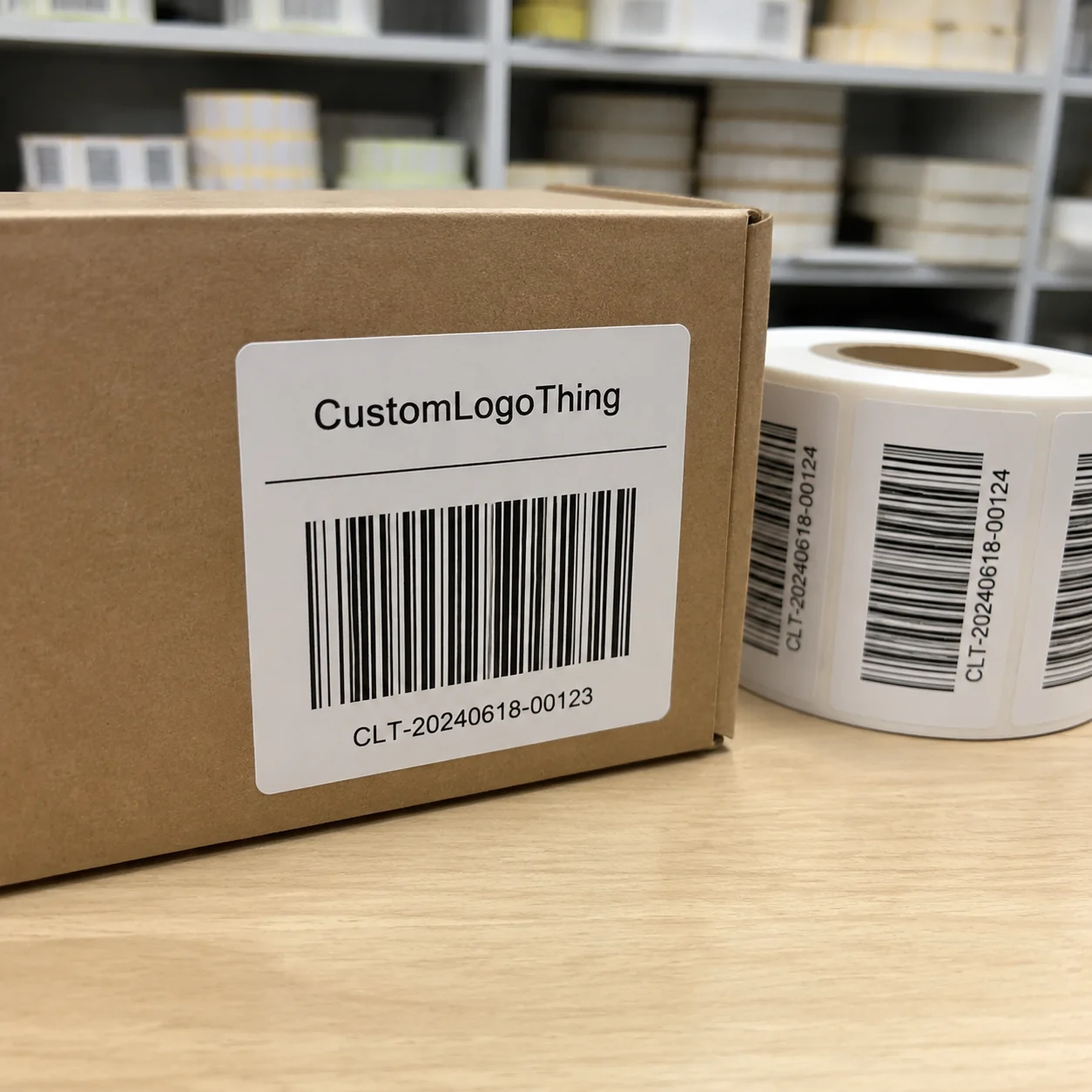
People usually search for sticky Clothing Labels Personalized because the real problem is not labeling a garment. The problem is keeping the right name attached to the right item after washing, drying, sorting, borrowing, and the occasional careless tumble through a laundry pile. A label that survives that cycle earns its place. One that peels, fades, or curls up after a few washes becomes another small source of friction.
The best version is plain in the right way. It sticks cleanly to a care tag, reads clearly, and does not add bulk or scratchy edges. That makes it useful for school uniforms, summer camps, care homes, rehab wardrobes, travel kits, and any setting where garments move through several hands before they get back to the owner. The practical question is not whether the label looks clever in a proof. It is whether it still identifies an item after repeated laundering.
There is no single material that suits every use case. Adhesive strength, surface texture, print method, wash temperature, dryer heat, and even the chemistry of the detergent change the result. A label that works on a polyester care tag may fail on textured cotton or fleece. The details matter because laundry is unforgiving and because buyers often discover the limits only after the order has been packed.
If you are comparing formats, our Custom Labels & Tags range is a practical reference point. It helps separate quick-turn adhesive options from labels meant for heavier wear, and it makes the tradeoffs visible before the order is placed.
What sticky clothing labels are and why they stand out
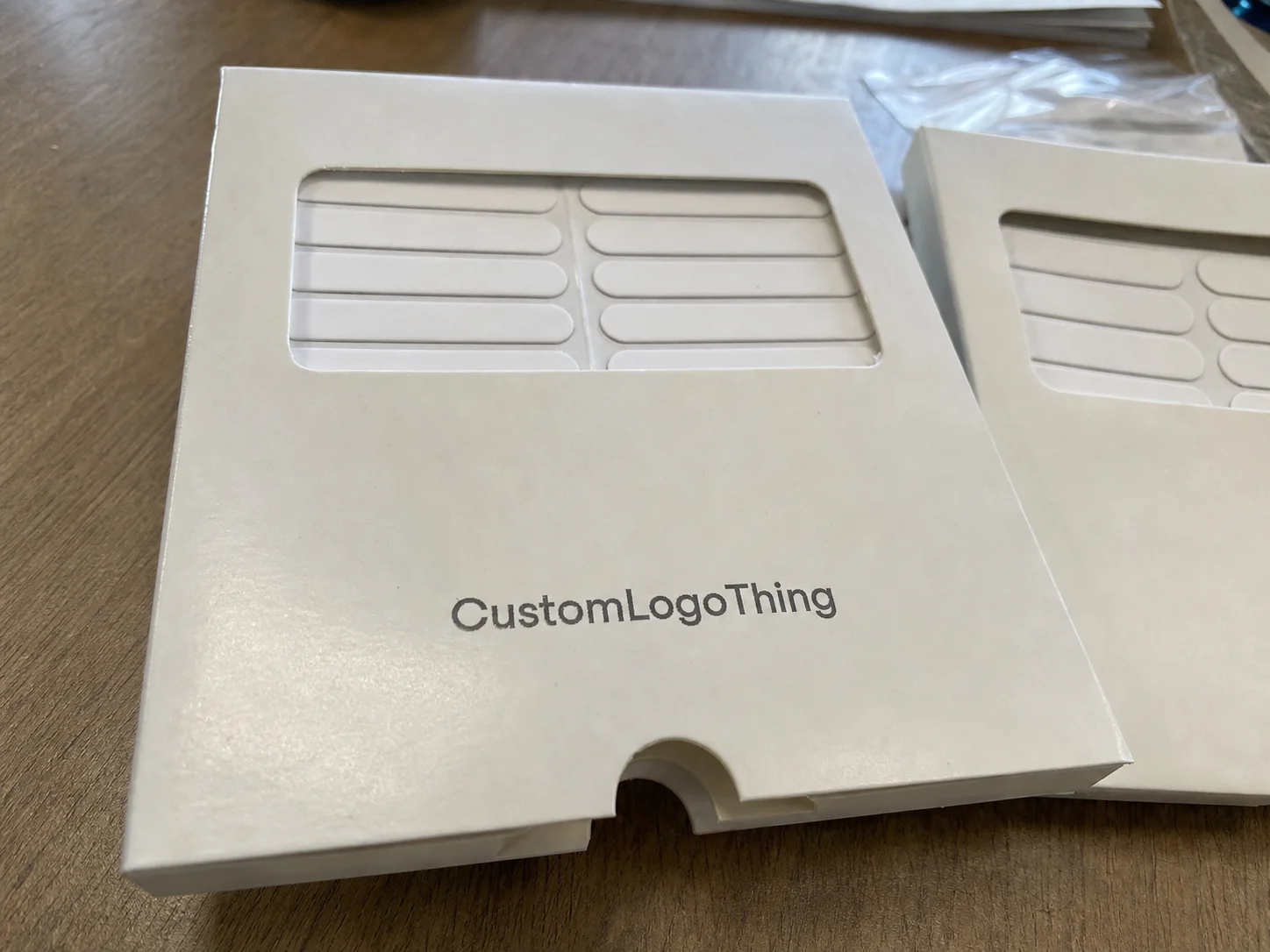
Sticky clothing labels are peel-and-stick name labels designed to attach directly to a garment care tag or another smooth textile surface. They are made for speed. No iron. No sewing. No waiting for a needle, thread, or heat press. In high-volume settings, that speed matters more than people expect. A staff member can label a stack of uniforms in minutes, which is one reason these labels are common in schools, camps, hospitals, and residential care facilities.
The strongest argument for them is not convenience alone. It is consistency. Every item gets the same format, the same placement, and the same legibility. That reduces sorting errors and saves time later. If siblings share a drawer or residents share a laundry service, a name label and a clear color cue can prevent a lot of low-grade confusion.
There are three broad ways to mark clothing. Adhesive labels are fastest and easiest for tags. Iron-on labels are more permanent, but they need heat and more careful application. Sewn-in labels last a long time, yet they cost more in labor and are not realistic for bulk labeling jobs that need to move quickly. The right choice depends on the garment, the wash cycle, and how much effort the user can spend during setup.
Personalization is not decorative here. A name, room number, phone number, department code, or icon changes how the item moves through a system. For families, it keeps items from blending together. For care facilities, it reduces lost time during sorting. For teams and schools, it keeps uniform sets identifiable without relying on memory or handwritten tags that smear after the first wash.
How personalized adhesive labels work on clothing
These labels rely on pressure-sensitive adhesive. That means the bond forms when the label is pressed onto the surface, then strengthened over time. The best surface is smooth, dry, and stable. Garment care tags, wash tabs, and some coated textile labels are ideal because they give the adhesive a clean base to grip. Direct fabric application is less dependable. Fibers move, stretch, and hold air, which makes the bond weaker and the edge more likely to lift.
Application is simple, but it rewards care. The target area should be dry and free of detergent residue, fabric softener, lotion, or lint. A firm press across the full surface helps the adhesive make contact evenly. Many suppliers recommend waiting before the first wash, usually around 24 hours, because the bond continues to settle during that period. Skip the wait and the label may hold less firmly than it should.
Personalized adhesive labels can carry more than just a name. A phone number, room number, school group, or small icon can be added to support sorting and returns. That flexibility is one reason they are useful in mixed households and institutional laundry systems. A simple color strip can be more effective than a decorative graphic if the goal is quick identification from across a laundry room or bin.
Compared with heat-transfer or sewn formats, the main advantage is speed. Compared with handwritten tags, the advantage is durability and legibility. The tradeoff is that these labels are not meant to solve every labeling problem. They work best on smooth surfaces, and they are strongest when the user respects the application rules rather than treating them like a sticker on paper.
Adhesive labels are not trying to replace every other garment-marking method. They are trying to solve the routine case: fast, repeatable, washable naming on smooth tags.
If you need a broader mix of identification products, personalized garment labels can be paired with tags for bags, lunch kits, and outerwear. That kind of mixed system is common because one format rarely handles every item equally well.
Key factors that affect durability, comfort, and cost
Three variables do most of the work here: adhesive strength, print durability, and face material. A repositionable adhesive helps if the first placement may be off by a few millimeters, but it usually gives up some long-term hold. A permanent adhesive grips better, though it is less forgiving if the label needs to be removed later. For family use that may not matter much. For care homes and schools, it can matter a lot because garments often outlast the person who labeled them.
Material choice shows up quickly in performance. Vinyl and laminated film are common because they resist abrasion and hold print through repeated laundering. Matte finishes usually read better under bright indoor lighting because they reduce glare. Gloss can look sharper in a proof, yet it scratches more easily and can make small text harder to read once the label is handled. For items that are washed and folded constantly, abrasion resistance is not a premium feature. It is the baseline.
Size is another practical constraint. Small labels work for care tags, where the goal may be a name plus a phone number. Larger labels help when the item needs to be visible from a distance or when several names, room identifiers, or department codes must fit on one face. A cramped design often looks acceptable on screen and then collapses in the real world, especially after a few cycles through the laundry.
Comfort matters too. Children’s items and sensitive-skin situations call for thin constructions with clean edges. A thick, stiff label can feel annoying against the skin, particularly if it sits near a seam. In care settings, removal is part of the equation as well. A good label should come off without tearing the tag or leaving a heavy adhesive residue when the item is reissued or retired.
Environmental claims deserve a careful look. If a supplier mentions sustainability, ask for a material description, not just a green slogan. A backing liner made from FSC-certified paper is a clearer signal than vague language about being eco-friendly. The standard is easy to verify at FSC. If a supplier cannot explain the liner, face stock, or packaging composition, that is usually a sign the claim is more marketing than specification.
There is a narrow but real comfort-versus-durability tradeoff. Softer, thinner labels often feel better on garments, yet they may not survive abusive laundry conditions as well as a reinforced laminated stock. If the laundry process is light and domestic, comfort can take priority. If the items go through hot commercial cycles, durability usually wins.
Pricing, MOQ, and what drives your quote
Price is shaped by more than quantity. Setup, print method, adhesive grade, die-cut shape, packing format, and the amount of personalization all move the number. A label with one name and one color is cheaper to produce than a batch with many names, mixed fonts, several icons, or multiple size formats. If the supplier needs to build a custom cutting tool, the quote rises again because the one-time setup cost has to be recovered somehow.
MOQ, or minimum order quantity, changes the math in a predictable way. Low-volume orders carry a higher unit price because the fixed cost of preparation is spread across fewer labels. Higher quantities usually bring the price down per unit. That does not make small runs a mistake. It just means they are priced for flexibility rather than scale. Families, event teams, and one-off programs often prefer smaller batches. Schools, camps, and care facilities usually save more by ordering in volume.
| Order Type | Typical Use | Common Price Range | What Drives the Cost |
|---|---|---|---|
| Standard template labels | One name, one icon, limited colors | $0.12-$0.22 per unit at 5,000+ | Lower setup, simple die-cut, bulk packing |
| Custom shape labels | Branding, school programs, kid-friendly sets | $0.18-$0.32 per unit at 3,000+ | Special cutting, more artwork prep, higher waste |
| Variable-data batches | Siblings, residents, departments, room-based labeling | $0.20-$0.40 per unit depending on names | File handling, proofing, multiple personalized fields |
Those ranges are directional. A simple black print run with standard sizing tends to sit near the lower end. A laminated full-color label with mixed sizes and individual pack sorting pushes higher. The fastest way to save money is not to chase the cheapest quote in isolation. It is to match the spec to the actual wash and wear cycle. A cheap label that fails under hot laundry is not cheaper once it has to be replaced.
Shipping and proofing add more variables. Rush fees appear when the timeline is tight. Artwork changes after proof approval can add cost and delay. Ask whether the quote includes a digital proof, how many revision rounds are covered, and whether the labels will be packed by name, by sheet, or in mixed cartons. That packing detail can matter more than the headline price because it affects how much work remains on arrival.
For shipped kits and bulk distribution, packaging quality still matters. If the labels are part of a broader fulfillment program, ISTA testing is a useful reference for transport stress, crush, and handling. It is not a label durability test, but it helps verify whether the finished pack reaches the buyer in usable condition.
Production steps and lead time: from proof to delivery
The production flow is usually straightforward. Artwork comes in. The supplier checks spelling, font size, layout, and cut line. A proof goes back to the buyer. Small corrections are made if needed. Then the order moves into print, finishing, quality control, packing, and shipment. On a clean standard run, that process is efficient. On a batch with many names, the proof stage becomes the real bottleneck because one wrong character can affect a lot of pre-sorted packs.
Lead time depends on complexity. Standard template labels are faster because the print file is simple and repeatable. Custom shapes take longer because the cutting tool has to be prepared and checked. Variable-data orders take longer again because every line of data needs review. In practical terms, straightforward runs may move in about 5-10 business days after approval, while more complex or seasonal jobs often need 12-15 business days or more. That is a planning range, not a promise.
Quantity affects the timeline too. A 500-piece order is not large from a production point of view if the design is simple. A 10,000-piece order sorted into individual names or rooms can take longer even if the print itself is basic. Seasonal spikes create another delay. Back-to-school periods, camp season, and holiday shipping windows all compress scheduling because every supplier is trying to use the same equipment at the same time.
Quality control should be visible in the process. A decent supplier checks print registration, adhesive consistency, and readability before packing. For labels meant for repeated laundry, it is fair to ask whether the material has been tested under conditions similar to yours. A generic “washproof” label is less useful than a label spec that matches the actual detergent, temperature, spin cycle, and dryer heat used in the facility or home.
Build in buffer time. School terms do not move. Camps open on schedule. Care facilities cannot pause intake because an order arrives late. The safer habit is to order before stock runs low, especially if each batch includes individual names, room numbers, or department codes that cannot be substituted once the proof is approved.
A smaller but often overlooked production issue is sorting accuracy. The print may be perfect and still cause problems if names are packed in the wrong order. If a supplier offers name-by-name packing, ask how that final check is handled. Human sorting errors are rare in a clean system, but when they happen, they are annoying to fix and slow to correct.
Step-by-step: how to choose and apply labels correctly
- Identify the garment surface. Choose labels made for care tags first, then move to direct-fabric options only if the use case genuinely requires it.
- Confirm every personalized field. Check spelling, abbreviations, icons, phone numbers, room numbers, and color codes before the proof is approved.
- Clean and dry the application area. Lint, moisture, fabric softener, and residue reduce adhesion right away.
- Apply with firm pressure. Hold the label down long enough for the adhesive to make full contact across the surface.
- Wait before laundering. A first wash too soon can shorten the life of even a good label.
- Test one label on a frequently washed item before labeling the entire wardrobe or kit.
That final step saves money. Laundry behavior varies more than people expect. One household uses cool water and line drying. Another uses high heat and a long dryer cycle. A care home may run commercial detergents and heavier loads. A label that performs well in one environment can behave differently in another. A short test gives you real data instead of a guess.
For mixed item sets, use the right format for each category. Care tags are ideal for adhesive labels. Heavy outerwear may need a different structure. Bags, lunch kits, and equipment cases can often take a stronger adhesive or a different stock entirely. The best systems keep the visual language consistent even when the substrate changes. That means the same typography, the same color logic, and the same naming pattern across the whole inventory.
Placement also affects readability. If a label is hidden under a seam or folded edge, the identification value drops fast. The goal is not just sticking something somewhere. The goal is placing it where it can still be read after the item has been worn, washed, and stored.
Common mistakes that shorten label life
The most common failure is the simplest one: applying the label to the wrong surface. Textured, damp, stretchy, or pilled fabric is a poor target. A smooth care tag gives the adhesive a stable base. Fleece does not. Ribbed cotton does not behave the same way either. Another frequent mistake is skipping the cure window and laundering the item almost immediately. The label may look secure on day one, then start lifting at the corner after the first wash.
Heat and detergent chemistry are the next variables. High tumble drying, bleach, and commercial laundering can shorten label life even if the application was perfect. That does not automatically mean the label is defective. It usually means the material spec was lighter than the real laundry process. If a supplier does not ask about wash settings, they may be selling for the average case rather than helping you choose for your actual conditions.
Text design causes more problems than most buyers expect. Tiny fonts, low contrast, and decorative scripts can look neat in a proof and disappoint on an actual tag. If the point is identification, the label must be legible at a glance. Strong contrast and a simple sans-serif typeface usually outperform decorative styling. A small icon can help, but only if the name remains easy to read.
Another avoidable mistake is buying for the best-case laundry cycle instead of the real one. If items will be washed hot, dried aggressively, and sorted in a busy facility, choose a stronger adhesive and a more abrasion-resistant face stock from the start. Changing labels later is more expensive than buying the right spec once.
Removal deserves attention too. A label that leaves residue can create a second cleaning job on the garment tag. In environments where items are reassigned, that cleanup becomes repetitive. If reusability matters, ask how the adhesive behaves after aging and washing rather than assuming removal will always be clean.
Expert tips for better performance and smarter ordering
High-contrast typography is still the safest design choice. Black on white remains the most legible option, but other combinations work if the contrast is disciplined. Keep icons simple. A star, heart, animal, school mark, or room symbol is easier to identify than a complex graphic that loses clarity at small size.
Buy a short run first if you are comparing adhesives. That applies to pediatric settings, hospitality, and any institution where laundry conditions vary by site. A sample tells you more than a sales sheet. Does the edge hold after three washes? Does the print stay sharp after tumble drying? Does the adhesive leave residue when removed? Those are the questions that matter more than a polished mockup.
Color coding can help mixed households and facilities move faster. One color per child, one per resident floor, one per department. That is not decoration. It is workflow control. The laundry room gets faster when the eye can separate categories without reading every line.
Order around usage rate, not hope. If a camp uses 800 garment tags in a season, ordering 500 and planning to stretch them is the kind of false economy that leads to rush fees later. The cleanest reorders are the ones planned before the box is empty. That gives time for proofing, packing, and delivery without stress.
If sourcing matters as much as performance, ask whether paper liners or packaging components can be supplied with FSC certification and whether carton sizing reduces transit damage. The label is one part of the system. The liner, the pack, the box, and the route all affect what the buyer receives. That is especially true in bulk orders where one damaged carton can affect a full set of individually packed labels.
One more practical point: do not overdesign the label just because customization is available. More colors, more fields, and more shapes look attractive on a screen, but each extra decision adds cost and can reduce readability. The strongest orders are often the simplest ones, built around a clear name, a clear font, and a finish that fits the laundry process.
FAQ
Are sticky clothing labels personalized enough for frequent washing?
Yes, if they are made for laundry use and applied to the correct surface. The best results usually come from placing them on garment care tags rather than directly on fabric. High heat, harsh detergents, and immediate washing can reduce longevity, so the label spec and the laundry process need to match.
Can personalized sticky labels be removed without damaging clothes?
Most removable versions are designed to peel off cleanly from care tags. Removal is easier when the label has not been heat-set or exposed to many wash cycles. If the garment is delicate or valuable, test on a less visible item first.
What should I look for when comparing sticky clothing labels personalized options?
Check adhesive strength, wash resistance, material quality, and print readability. Compare label size, personalization flexibility, and whether the supplier offers proofing. Make sure the product matches the use case: kids, uniforms, care facilities, or travel.
Why does MOQ affect the price of personalized clothing labels?
Lower quantities spread setup and production costs across fewer labels. Higher MOQs usually lower the unit cost. If you only need a small batch, ask whether standard templates or shared runs are available.
How long does the process usually take from order to delivery?
Simple orders can move quickly once artwork is approved. Custom shapes, variable names, and seasonal demand can extend turnaround. Build in extra time if you need labels for a school term, camp check-in, or facility rollout.
The right label is usually the one that matches the laundry reality instead of the prettiest proof. That is the practical value of sticky clothing labels personalized: fast identification, fewer mix-ups, and a system that keeps working after the garment has been washed more times than anyone wants to count.