Buyer Fit Snapshot
| Best fit | Sustainable Mailers MOQ projects where brand print, material claims, artwork control, MOQ, and repeat-order consistency need to be specified before quoting. |
|---|---|
| Quote inputs | Share finished size, material target, print colors, finish, packing count, annual reorder estimate, ship-to region, and any compliance wording. |
| Proofing check | Approve dieline scale, logo placement, barcode or warning zones, color tolerance, closure strength, and carton packing before bulk production. |
| Main risk | Vague material claims, crowded artwork, missing packing details, or unclear freight terms can make a low unit price expensive after revisions. |
Fast answer: Sustainable Mailers MOQ: Pricing, Specs, and Ordering should be specified like a repeatable production item. The safest quote records material, print method, finish, artwork proof, packing count, and reorder notes in one written spec.
Production checks before approval
Compare the actual filled-product size with the drawing, then confirm tolerance on folds, seals, hang holes, label areas, and retail display edges. Reserve space for logos, QR codes, warning copy, and material claims before decorative graphics fill the panel.
Quote comparison points
Review material grade, print process, finish, sampling route, tooling charges, carton quantity, and freight assumptions side by side. A quote is only useful when the supplier can repeat the same color, closure quality, and packing count on the next order.
Sustainable Mailers MOQ: Pricing, Specs, and Ordering
Sustainable mailers MOQ is one of those buying terms that looks simple until the first pallet lands in the warehouse. The number tells you the minimum the supplier will make or sell, but it does not tell you whether the package fits the product, survives the parcel network, or leaves your team staring at a stack of inventory nobody asked for. A cheap quote can turn expensive fast once you include freight, rework, storage, and the labor needed to keep the line moving.
That is why packaging buyers need a wider frame than minimum order quantity alone. Sustainable mailers MOQ sits at the intersection of material choice, print method, lead time, carton density, and the cash you are willing to park in finished goods. Get those inputs aligned and the mailer becomes part of the operating system instead of a nuisance order that keeps getting in the way.
The right target is rarely the smallest number on the page. It is the quantity that matches actual consumption, spoilage allowance, storage limits, and a forecast you trust enough to defend internally. Once you define those pieces, sustainable mailers MOQ stops being a bargaining chip and starts acting like a planning tool.
Sustainable Mailers MOQ: What Buyers Miss First
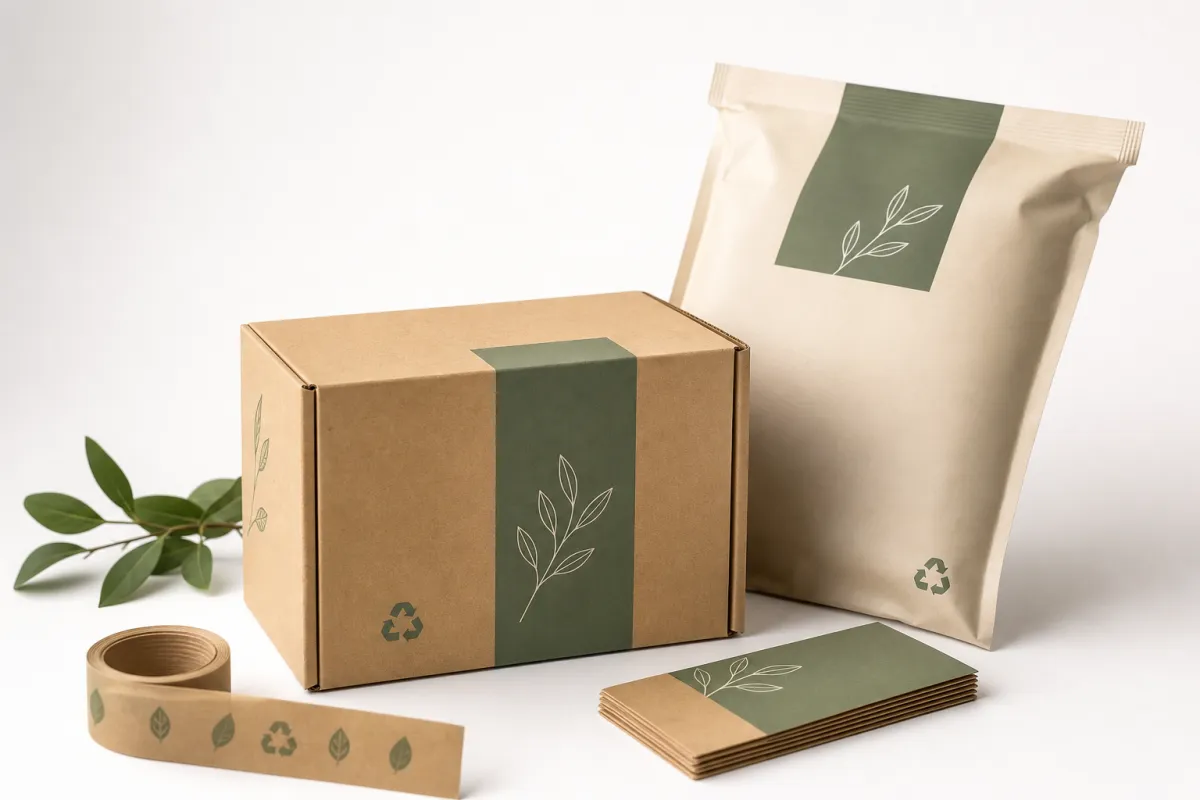
Thin packaging can look efficient on a spreadsheet and still behave like a slow leak in the warehouse. A mailer that saves two cents can hand those savings right back through crushed corners, failed closures, or extra repacking. I have seen that pattern enough times to treat sustainable mailers MOQ as a full-lane decision, not a line item to skim past.
MOQ means minimum order quantity. In plain English, it is the smallest production run a supplier will make under a given spec. With sustainable mailers MOQ, the threshold changes depending on whether the item is stock or custom, whether the art is simple or dense, and whether the structure uses tooling the supplier already has or needs something new. A lower threshold can help a pilot launch, but it usually narrows the print choices and raises the unit price.
Smaller programs usually do best with standard sizes, limited graphics, and tooling that is already in place. A brand testing a new apparel line may do perfectly well with a recycled-content mailer and a single-color logo. A custom build with special tear features, full-coverage print, or an odd closure will usually push sustainable mailers MOQ higher because setup cost has to be spread over more units. That part is mechanical, not mysterious.
Buyers who get the strongest results treat sustainable mailers MOQ as a balance between commitment and optionality. Stable demand can justify a larger run if bulk pricing pulls the piece cost down enough. Uncertain demand often calls for a smaller run that protects cash and reduces dead stock. The right answer changes with seasonality, artwork turnover, and how fast the product leaves the shelf.
I once watched a launch team chase a lower MOQ on paper mailers, then reorder three weeks later because the first batch had the wrong closure feel for their packing line. The savings looked real until the operator time and the second freight bill showed up. It was kinda a harsh lesson, but a useful one.
A lower MOQ only helps if the mailer still fits the item, survives the lane, and keeps the packing table moving without extra handling.
Storage deserves the same attention. A well-priced order can become awkward if cartons crowd receiving or force a team to reshuffle pallets every time one SKU needs replenishment. Sustainable mailers MOQ should fit the rhythm of packing, not just the ambition of procurement. Too little order volume raises unit cost. Too much turns the warehouse into a holding pen for packaging you may outgrow before it runs out.
A simple three-part check helps before any commitment: monthly usage, available storage, and launch risk you can tolerate. Put those side by side and sustainable mailers MOQ becomes easier to judge. The vendor requirement is only one piece of the picture; the larger question is whether the order supports operations without creating a second problem.
Value Proposition: Why Sustainable Mailers Earn Their Place
Sustainable mailers earn shelf space when they solve more than one problem. They can reduce excess packaging, give a cleaner presentation, and still hold up in parcel handling if the construction is appropriate. A mailer that hugs the product often removes more waste than a larger box packed with void fill and crossed fingers.
The sustainability claim needs specifics. Good buyers ask what the material actually is, how much recycled content it contains, whether the fiber is responsibly sourced, and what happens after disposal. A vague green label tells you almost nothing. Recycled paper fiber is meaningful data. A mixed-layer build that changes disposal behavior is meaningful too. Municipal recycling rules differ by region, so a claim that sounds tidy in sales copy can be messy in practice.
For basic paper guidance, the U.S. EPA keeps a clear reference here: EPA paper recycling guidance.
Sustainable mailers tend to fit apparel, lightweight accessories, subscription kits, documents, folded prints, and small ecommerce goods with little drama. They can replace a box when rigid sidewalls are unnecessary. They can also replace oversized poly packaging when the job is simply to keep the contents flat, clean, and easy to open. Fragile parts, sharp edges, and moisture-sensitive products still need testing before any switch happens.
The commercial upside reaches beyond environmental messaging. A snug package usually reduces internal movement, which often means fewer scuffs and fewer complaints. Packing speed matters as well. A mailer that opens cleanly, closes predictably, and does not fight the operator can shave friction off the line. In a labor-tight operation, that matters more than most teams want to admit.
Brand presentation matters too. Sustainable mailers can look intentional without shouting. A restrained logo, a neat pattern, or a one-color message can feel considered rather than crowded. The packaging does not need to be loud to be memorable. It needs to feel like it belongs to the product, which is one reason cleaner designs often photograph better for ecommerce and social content.
Claims carry more weight when they sit on top of real specifications and traceable documentation. If recycled content, FSC-certified fiber, or paper-based disposal pathways are part of the pitch, the construction should actually support those claims. If the package will travel through a typical ecommerce route, ask for transit data. ISTA testing families are a practical benchmark for that work, and the ISTA site is a useful starting point.
The point is straightforward. Sustainable mailers MOQ is not just a question of how many units to buy. It is a question of whether the package does the job with less waste, less dead space, and fewer downstream surprises.
Product Details: Materials, Closures, and Print Choices
Material family sets the tone for the whole project. Recycled-content paper, kraft paper structures, and responsibly sourced fiber options usually lead the conversation because they combine a clean look with broad supply availability. Some programs stay with a single-paper construction. Others use layered paper builds to add stiffness or moisture resistance. The right answer depends on weight, surface texture, and how hard the package will be handled.
Closures shape line speed and user experience just as much. A well-designed adhesive strip saves time for the operator and gives the customer a clear opening path. Tear strips help with opening control, while tamper-evident seals can matter for high-value shipments or retail returns. Interior liners deserve scrutiny because every additional layer changes recyclability, cost per piece, and the overall feel of the mailer. If the liner earns its keep, keep it. If it only looks nice, challenge it.
Print decisions affect both the visual result and production complexity. One-color branding on kraft often produces a sharp, practical finish while keeping setup charges in check. Spot graphics can add structure without pushing the job into expensive territory. Full coverage, especially on larger formats, raises ink use, press time, and sometimes drying requirements. That can move sustainable mailers MOQ upward because the production burden increases.
Fit and function should lead the discussion; finish should follow. A mailer that looks polished but lacks the right stiffness or seal strength creates avoidable damage claims. A beautiful surface with poor flap alignment slows packing and irritates the line. Good production planning starts with the product itself: its length, width, thickness, surface sensitivity, and whether inserts or paperwork need room inside the pack.
- Recycled-content paper works well for lighter goods and programs that want a paper-forward look.
- Kraft structures fit use cases where abrasion resistance and a natural finish matter.
- Tear-strip closures improve opening control and reduce customer frustration.
- Tamper-evident seals help when security or resale presentation matters.
- Simple branding often keeps sustainable mailers MOQ and unit cost more manageable.
For brands comparing formats, adjacent categories can clarify the decision. Our Custom Packaging Products page is a practical place to compare broader packaging families, while Custom Poly Mailers can help when a team is choosing between paper-based and film-based shipping formats.
The cleanest sustainable mailers MOQ programs usually share one trait: the structure, closure, and artwork all point in the same direction. If the product is light and flat, keep the build simple. If the item needs stronger abuse resistance, specify that upfront rather than discovering the weakness after launch.
Sustainable Mailers MOQ and Specifications: Sizes, Strength, and Fit
Before asking for a quote, I would put five specs on the table: internal dimensions, usable depth, seam width, closure width, and product weight range. Those details give the supplier enough information to recommend a structure that can perform in transit and on the packing line. Without them, sustainable mailers MOQ quotes usually come back too generic to be useful.
Strength should be discussed in mechanical terms, not marketing language. Ask about puncture resistance, seam integrity, compression performance, and how the mailer behaves under repeated movement. If the order will run through automation, say so. If it will be hand-packed, say that too. A mailer that behaves nicely on a manual line may buckle once speed increases.
Fit matters more than decoration. Does the product slide in without buckling? Do the corners catch? Is there enough room for a card insert, instruction sheet, or return label? Does the seal close without stressing the contents? These questions sound basic, and they are exactly where sustainable mailers MOQ programs succeed or fail. A perfect print file will not rescue a package that is too tight.
Shipping method changes the spec. Parcel networks often punish weak seams and oversized formats. Retail carryout tends to care more about appearance and hand feel. Warehouse fulfillment is usually watching pack speed, pallet density, and carton counts. Those pressures are not the same, so a single “one size fits all” mailer rarely earns its place.
For teams that want a formal testing frame, ISTA-style parcel testing is a sensible reference point, followed by an internal drop and compression review that mirrors the real route. There is no need to over-engineer the project. There is a need to know whether the mailer will survive ordinary handling without collapsing. That matters even more for sharp corners, mixed materials, and surfaces that mark easily.
Here is the kind of spec summary that helps a quote land closer to reality:
- Product dimensions with the item packed exactly as it will ship.
- Target mailer size and whether the fit should be snug or allow movement.
- Approximate packed weight, including inserts, labels, and literature.
- Print method and number of colors.
- Estimated monthly demand and launch quantity.
Those numbers also show whether the project belongs in a lower sustainable mailers MOQ tier or whether a larger run makes better financial sense. The smallest minimum is not always the smartest choice. A run that avoids rework, crushed goods, and a second order before the first batch is gone can be the cleaner option.
Fit is often the hidden cost driver. A mailer that is 5 mm too shallow can slow an entire packing team. A mailer that is too loose may invite filler or extra taping. Both raise labor cost and nibble away at the savings you thought you were buying.
Sustainable Mailers MOQ and Pricing: What Changes the Quote
Pricing begins with material choice, size, print coverage, closure complexity, and total volume. Those are the main levers. Sustainable mailers MOQ can rise quickly if the build uses custom dimensions, multiple colors, or a special closure design. The more distinctive the spec, the more setup cost has to be spread across the run.
MOQ and unit price are not interchangeable. A lower minimum helps with testing, yet the cost per piece is often higher. Larger runs usually lower the piece cost and open better bulk pricing, but they also demand more space and greater confidence in the forecast. That tension is the core of the buying decision.
Below is a practical comparison for common sustainable mailers MOQ scenarios. The numbers are illustrative, not promises, and they move with size, paper grade, freight lane, and print coverage. Even so, they are useful for early budget planning.
| Option | Typical MOQ | Typical Unit Cost | Best Use Case | Commercial Notes |
|---|---|---|---|---|
| Stock recycled paper mailer, unprinted | 1,000-2,500 units | $0.18-$0.28 | Pilot launches, low-risk testing, document or apparel shipments | Lowest setup burden; limited branding control |
| Standard-size kraft mailer, one-color print | 3,000-5,000 units | $0.24-$0.38 | Brand-led ecommerce programs with steady monthly demand | Balanced mix of presentation and cost per piece |
| Custom paper mailer, multi-color print | 5,000-10,000 units | $0.32-$0.60 | Launches that need a specific fit and stronger shelf presence | More tooling fees, more setup charges, longer approval time |
Freight can change the equation faster than buyers expect. Pallet shipments add cost, especially on smaller orders. Sampling, proofing, and import coordination belong in landed cost, not in a separate mental bucket. A quote that ignores those items can look cheaper than it really is.
Spend control usually comes from a few reliable moves. Standard dimensions tend to cost less than fully custom ones. Fewer print colors usually reduce press complexity. Consistent carton counts make receiving and forecasting easier. A two-stage launch can protect cash while preserving room to scale if demand proves out.
Overbuilding the first order is a common mistake. A buyer may assume a heavier paper grade or a more elaborate print is safer, but if the product is light and flat, those upgrades may deliver no real performance gain. They only increase sustainable mailers MOQ pressure and lift the total budget. A better approach is to define the actual handling risk and pay for the features that address it.
Mixing too many specs into one request creates its own problems. If every size, color, and closure is different, the quote comes back fragmented and hard to compare. Keep the first request narrow. Compare one standard option against one custom option. That gives a clean view of price, MOQ, and lead time without burying the decision in noise.
For most buyers, the real question is not whether a sustainable mailer can be produced. It is whether the current sustainable mailers MOQ offers a sensible trade between cash flow, fit, and long-term operating cost. That is the number worth watching.
Why Choose Us for Sustainable Mailers MOQ
Good suppliers do more than quote a number. The better process starts with the product and works backward to the package, which is the only reliable way to avoid forcing every project into one template. With sustainable mailers MOQ, that matters because one brand’s correct spec can be another brand’s expensive mistake.
We focus on practical support: spec review, dieline guidance, artwork checks, and recommendations on the most efficient material and print path for the order size. That kind of input can save time before production begins. It can also keep the order from drifting into avoidable tooling fees or oversized quantities that do not match the forecast.
Documentation is part of the value. Clear specifications, repeatable quality checks, and straightforward explanations of recycled content or end-of-life claims reduce confusion later. A buyer should know exactly what was ordered, how it was built, and what assumptions were included in the quote. That clarity matters for teams that need to defend packaging choices internally.
Some projects should start with a simpler structure and move up later. Others should lock the final build from the start and buy enough volume to earn better unit economics. Both paths can work. The useful part is making the choice on purpose.
That is where a supplier who understands sustainable mailers MOQ can make a real difference. If the order is too small to print efficiently, too large for the current forecast, or too complicated for the timeline, the honest answer saves money before it is spent.
For brands that need a package to hold up in actual transit conditions, sustainable mailers MOQ should be treated as a production fit problem first and a purchasing question second. That mindset usually leads to fewer surprises and better results at the packing table.
Process, Timeline, and Next Steps
The cleanest order flow starts with the basics: send dimensions, target quantity, product weight, and the way the item will be packed inside the mailer. From there, a supplier can recommend a structure, outline the sustainable mailers MOQ, and explain whether the job belongs in stock, semi-custom, or fully custom production.
After that first review, artwork and spec confirmation come next. If the project needs a structural sample, that should happen before final approval. If the print is simple, a digital proof may be enough. If the build uses custom tooling, allow time for sample approval and any corrections. Rushing this stage is how a modest order turns into avoidable rework.
Timing depends on the build. Standard or lightly customized programs can often move faster because the supplier may already have the core structure in place. Custom tooling, extra proof rounds, and freight coordination all add time. A straightforward order can often move through production in roughly 12-20 business days after approval, while a more complex custom run can take longer. Final timing depends on spec complexity, material availability, and how long artwork approval takes.
Before requesting a quote, gather a simple checklist:
- Product dimensions and packed weight
- Target quantity and expected reorder rhythm
- Preferred mailer style and closure type
- Print requirements, color count, and logo files
- Any sustainability claims you plan to make
- Storage limits, ship dates, and launch timing
That checklist gives the quoting team enough detail to narrow the right sustainable mailers MOQ and remove guesswork. It also makes side-by-side comparisons much easier. A quote with clear specs is easier to defend internally than a vague price attached to a generic format.
If you are comparing options for a new launch, ask for one standard-size version and one custom version. The side-by-side view usually makes the tradeoffs obvious. The standard option shows the lower-risk route. The custom option shows what it would cost to dial in the fit. Once both are visible, the decision usually gets simpler.
One practical point tends to get overlooked: reprint risk. If artwork changes often, a large run can turn stale quickly. If demand is still being validated, a smaller sustainable mailers MOQ may protect the project better than a cheaper but oversized order. The right balance is the one that keeps the package performing, keeps cash moving, and keeps the operation from sitting on unused stock.
Start with the product, not the carton count. Compare one standard option against one custom option, then choose the version that gives you the best fit, the best landed cost, and the most realistic lead time. That is the cleanest way to place a sustainable mailers MOQ order without discovering the expensive parts after the fact.
What is the typical sustainable mailers MOQ for a new order?
It depends on whether the mailer is stock, lightly customized, or fully custom printed. Unprinted or standard-size programs often start lower than custom sizes or complex print builds. Ask for volume breaks so you can see how sustainable mailers MOQ affects both unit price and inventory risk.
Can I mix sizes to reach a sustainable mailers MOQ?
Sometimes, although separate sizes are often treated as separate items for production and inventory. A supplier may allow shared artwork or a family run if the construction is close enough. For phased launches, it can be smarter to order the highest-volume size first and add others later.
What affects sustainable mailers pricing the most?
Material type, size, print coverage, and closure style are usually the biggest drivers. Low-volume custom work tends to cost more per piece because setup is spread across fewer units. Freight, sampling, and packaging configuration should also be included in the landed cost.
How do I know if a mailer is actually sustainable?
Look for specific material claims, such as recycled content or responsibly sourced fiber, rather than vague green language. Ask how the mailer should be disposed of and whether any layers, coatings, or adhesives change that path. Request supporting documentation so the claim matches the material and the intended use.
What information do you need to quote sustainable mailers MOQ?
Provide product dimensions, approximate weight, and the way the item will be packed inside the mailer. Include target quantity, print requirements, and any performance concerns such as tear resistance or moisture exposure. If possible, share your launch timeline so the quote reflects both production reality and delivery needs.