Buyer Fit Snapshot
| Best fit | Sustainable Poly Mailers for Artisan Soaps projects where brand print, material claims, artwork control, MOQ, and repeat-order consistency need to be specified before quoting. |
|---|---|
| Quote inputs | Share finished size, material target, print colors, finish, packing count, annual reorder estimate, ship-to region, and any compliance wording. |
| Proofing check | Approve dieline scale, logo placement, barcode or warning zones, color tolerance, closure strength, and carton packing before bulk production. |
| Main risk | Vague material claims, crowded artwork, missing packing details, or unclear freight terms can make a low unit price expensive after revisions. |
Fast answer: Sustainable Poly Mailers for Artisan Soaps: Material Claims, Seal Quality, and Freight Cost should be specified like a repeatable production item. The safest quote records material, print method, finish, artwork proof, packing count, and reorder notes in one written spec.
Production checks before approval
Compare the actual filled-product size with the drawing, then confirm tolerance on folds, seals, hang holes, label areas, and retail display edges. Reserve space for logos, QR codes, warning copy, and material claims before decorative graphics fill the panel.
Quote comparison points
Review material grade, print process, finish, sampling route, tooling charges, carton quantity, and freight assumptions side by side. A quote is only useful when the supplier can repeat the same color, closure quality, and packing count on the next order.
I remember the first time I watched a soap maker pack orders by hand in Asheville, North Carolina. She had spent 28 days curing a rosemary-mint bar, checking each batch for texture, scent, and color like a jeweler inspecting stones. Then she dropped the finished soaps into a mailer that felt like it had been made from paper-thin frustration. One torn seam later, all that care was sitting in a damp parcel after a 300-mile regional shipment. That’s the moment I stopped treating packaging as an afterthought. Sustainable Poly Mailers for artisan soaps are not just shipping envelopes; they’re the first physical proof that a brand actually means what it says.
In my experience, the smartest packaging choices often look almost boring. A lightweight envelope with a 2.5 mil film, the right seal, and the right print coverage can do more for a handmade soap brand than a thick, flashy mailer that wastes material and raises postage by 10% to 18%. A 500-gram soap gift set packed in a 6x9 mailer can cost $0.15 less per shipment than an oversized option once dimensional weight is calculated. Honestly, that’s one of the biggest packaging myths out there: people assume “more packaging” equals “better protection.” Usually it just equals more waste, more cost, and more swearing in the packing room. I’ve said the last part out loud more than once.
Why Sustainable Poly Mailers for Artisan Soaps Matter
Artisan soap is a strange little product from a packaging standpoint. It looks simple, but it behaves differently from apparel, stationery, or books. A bar can be dense, slightly oily, wrapped in paper, shrink film, or a tuck box, and it may carry a fragrance load of 3% to 8% that can transfer if the outer package is weak. That means Sustainable Poly Mailers for artisan soaps have to solve several problems at once: protection, presentation, and environmental credibility.
Here’s the comparison that sticks with me. I once visited a small bath-and-body workshop in Portland, Oregon, where the maker had spent 42 days curing a honey-oat bar. The soap itself was excellent. The outbound package, however, was a flimsy envelope that split at the seam after a 600-mile ship test to Denver, Colorado. The customer never got to the scent story. They got a damaged parcel and a refund request. Ten seconds of packaging undid weeks of formulation work. I was honestly irritated on her behalf.
That is the tension. The best mailer is not the thickest one. It is the one that protects the product with the least material use and the least shipping penalty. Sustainable Poly Mailers for artisan soaps should be light, strong, and honest about what they are made from. Depending on the supplier, that may mean 30% post-consumer recycled content, 50% PCR film, mono-material polyethylene construction that improves recovery odds, or a compostable alternative with strict industrial conditions. A well-made 2.5 mil recycled mailer can often outperform a heavier, poorly sealed option that looks more substantial on a showroom table.
Buyer psychology matters too. People who buy handmade soap usually care about ingredient transparency, packaging ethics, and the brand’s values. A mailer is not invisible. It lands on a porch in Madison, Wisconsin, gets photographed, unboxed, and often mentioned in reviews. If it looks wasteful, the customer notices. If it feels considered, that becomes part of the brand story. I’ve sat in client meetings where the packaging conversation shifted from “How cheap can we make this?” to “How do we make the unboxing feel aligned with our palm-free soap line?” That shift usually lifts the whole brand.
One more thing most people miss: sustainability and performance are not opposites. A lower-weight film can reduce resin use, shipping weight, and storage space at the same time. A roll pallet of 5,000 mailers in 2.0 mil film can save roughly 35 to 50 pounds of plastic versus a thicker alternative, depending on size. The catch is testing. sustainable poly mailers for artisan soaps work when the mailer is matched to the soap’s actual dimensions, surface finish, fragrance load, and shipping route.
For brands building a full packaging system, it often helps to review broader options across Custom Packaging Products and then narrow the selection to Custom Poly Mailers that fit soap SKUs cleanly.
For reference on packaging material design and recovery, the Packaging Association and the EPA recycling guidance are both useful starting points, though local recycling acceptance still varies by municipality.
How Sustainable Poly Mailers for Artisan Soaps Work
At a basic level, a poly mailer is simple: an outer film, a seam, a closure strip, and sometimes a gusset or bubble lining. The outer film handles abrasion. The seam holds the envelope together under stress. The adhesive strip keeps the flap closed after the packer has moved through a box of 200 orders on a Thursday afternoon in Atlanta, Georgia. Simple does not mean weak. It means engineered.
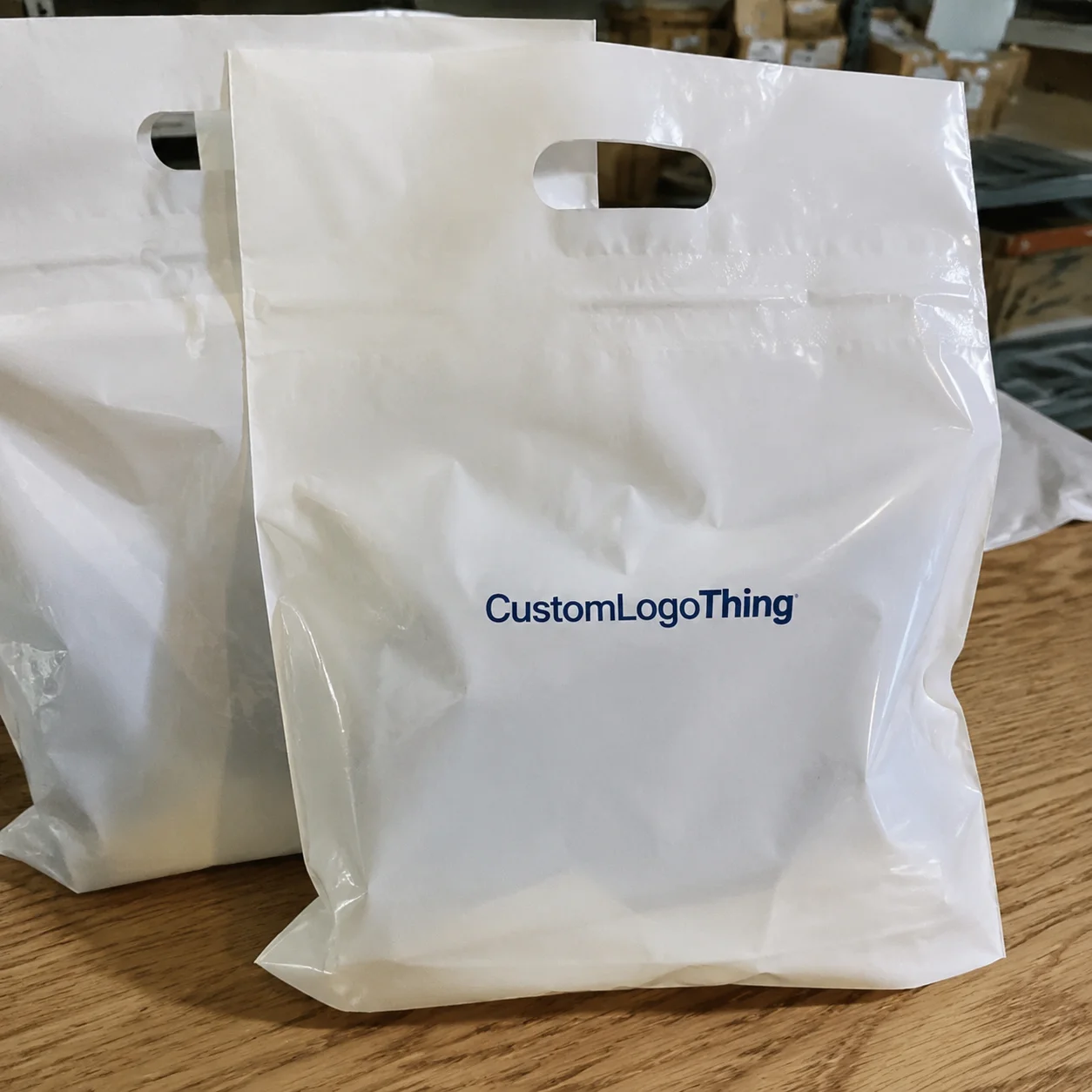
sustainable poly mailers for artisan soaps tend to use one of four approaches. First, recycled post-consumer content, often expressed as 30%, 50%, or 100% recycled resin. Second, thinner gauges that use less plastic per unit while maintaining seal strength. Third, mono-material construction designed to improve recyclability. Fourth, plant-based or compostable blends, which sound straightforward but require more scrutiny than most brands expect. A 3.0 mil recycled film may sound modest, yet it can be enough for a soap bar in a 4x6 tuck box shipped across a 2,000-mile route.
Let me be blunt. “Compostable” does not automatically mean “better.” A compostable mailer might need industrial composting conditions in places like San Francisco or Seattle, and many residential systems cannot process it. “Recyclable” also needs caution. If the film is recyclable only in theory but not accepted by local curbside programs in Phoenix, Arizona, or Charlotte, North Carolina, the claim can become misleading very fast. I’ve had suppliers hand me glossy spec sheets that looked excellent until I asked for the ASTM basis, the resin composition, and the end-of-life assumptions in writing. That conversation usually separates marketing from engineering.
The protection side is easier to measure. A good mailer needs enough abrasion resistance to avoid scuffing printed soap cartons, enough moisture barrier performance to protect against damp weather and warehouse humidity, enough puncture resistance to handle box corners or reusable inserts, and enough tamper evidence to reassure the customer that the parcel has not been opened in transit. A supplier data sheet that lists puncture force at 1.8 pounds and seal strength at 2.2 pounds per inch tells you far more than a phrase like “heavy-duty.”
Soap adds one extra wrinkle: scent containment. If the bars are heavily fragranced, the packaging has to hold that aroma in instead of letting it migrate through weak film or a sloppy seal. I once reviewed a batch of eucalyptus soaps that came through a regional courier network in winter from Minneapolis, Minnesota. The mailers were intact, but the closure adhesive was marginal in cold conditions, and the scent bled just enough to cause complaints from a neighboring SKU in the same warehouse cage. That is not a common problem, but it is real.
Temperature also matters. In humid shipping lanes, film can feel tackier. In cold lanes, adhesive can lose grab. In dry climates like El Paso, Texas, static can make lightweight mailers cling to fulfillment tables and slow down pack-out by 5 to 10 seconds per order. None of this sounds glamorous, but it’s what turns a pretty sample into a reliable production item.
Industry standards help keep the conversation grounded. For distribution testing, many brands reference ISTA protocols to simulate drops, compression, and vibration. For material specifications, ASTM language often appears in supplier data sheets. FSC certification is useful for paper components, but it does not automatically validate plastic claims. The point is not to chase acronyms. The point is to ask for the right evidence, including thickness in microns, seal width in millimeters, and whether the adhesive remains functional at 40°F and below.
Key Factors to Evaluate Before You Buy
If you are comparing sustainable poly mailers for artisan soaps, start with material composition. Ask for the recycled content percentage, whether the film is mono-material or multilayer, and whether the package can actually enter a recycling stream in your main markets. A “30% PCR” claim sounds good, but the real question is whether that composition still performs after a 14-day transit path and whether your customers’ local systems can handle it. A maker shipping from Chicago to New York may face a very different recovery reality than a brand shipping from a small workshop in Boise, Idaho.
Size and fit matter more than most soap brands think. An oversized mailer lets the product slide around, which increases scuffing and can make the parcel look sloppy. Too tight, and the seams take the stress. I’ve seen a 4-inch soap box jammed into a 6x9 mailer, then bulge hard enough to pop a side seal after one bounce on a sortation belt in Louisville, Kentucky. The difference between right-sized and oversized can be pennies per unit, but those pennies compound across 10,000 parcels.
Durability is next. Look at seal strength, tear resistance, and performance under humidity and cold. A mailer that looks fine on a showroom table can fail in the back of a delivery van in August or on a loading dock in January. Ask for spec sheets that show thickness in microns or mils, puncture data, adhesive details, and whether the closure strip is single peel or dual peel. If a supplier only talks about “premium feel,” keep asking.
Branding is not just cosmetic. Many soap makers prefer a minimalist, kraft-style look or a white surface with one-color print because it feels artisanal and uses less ink. Others need a stronger retail identity with logo repetition, handling instructions, or a sustainability message printed directly on the envelope. A one-color flood on a mailer can cost less than a full-bleed design by 12% to 25%, and that difference matters if you are producing 5,000 units for a holiday launch.
Cost deserves a proper breakdown. A cheap mailer can become expensive if it increases replacements, damages, or labor time. Compare unit price, minimum order quantity, shipping, print setup, and failure rates. A mailer priced at $0.18/unit for 5,000 pieces may beat a $0.14 option if the cheaper version adds 2% more damage claims. A $0.15 per unit quote for 5,000 pieces can look excellent on paper, but if the seal fails on 1 in 50 orders, the real cost goes up fast. That is basic math, but plenty of brands skip it until the first bad review lands.
Here is a practical comparison framework I use with clients:
| Option | Typical Unit Price | Best For | Main Risk |
|---|---|---|---|
| Recycled-content poly mailer | $0.12 to $0.22 | Balanced cost and protection | Recyclability claims vary by region |
| Mono-material recyclable mailer | $0.14 to $0.26 | Brands focused on recovery claims | Must be accepted by local systems |
| Compostable mailer | $0.18 to $0.35 | Specific eco-positioned brands | Disposal conditions are often misunderstood |
| Bubble-lined mailer with recycled content | $0.20 to $0.40 | Fragile boxed soaps or gift sets | Higher material use and postage weight |
That table is not a verdict. It is a starting point. The right choice still depends on your soap format, your carton weight, and whether you ship 300 parcels a month or 30,000. A small brand in Tucson, Arizona, sending 400 orders monthly will think differently from a wholesaler in Newark, New Jersey, shipping 12,000 units across three warehouses.
Step-by-Step Process for Choosing the Right Mailer
I always tell artisan brands to start with the package, not the bar. Measure the final packed item exactly, including the paper wrap, sleeve, insert, or outer box. A soap that measures 3.5 inches by 2.5 inches by 1.25 inches unwrapped may become 4.25 by 3 by 1.75 once it is protected properly. That difference changes the mailer size and sometimes the shipping zone cost by 8% to 14%.
Step 1: Measure the real shipped unit, not the naked product. I know that sounds obvious, but I’ve seen sample requests built around bare soap dimensions and then rejected because the sealed package no longer fits. Use a ruler, a caliper, and if possible, a packed sample from at least two current orders.
Step 2: Rank your shipping risks by route and season. A humid Southeast lane, a long-zone cross-country shipment, and a subscription box sent in winter are not the same. sustainable poly mailers for artisan soaps that work well in a local farm-shop radius may not be enough for national e-commerce. A shipment from Nashville, Tennessee, to Miami, Florida, faces heat and humidity; one from Salt Lake City, Utah, to Fargo, North Dakota, faces cold and brittle adhesives.
Step 3: Request samples from at least three suppliers and test with actual soap units. Empty mailers tell you almost nothing. Real bars tell you everything. Weight, shape, scent, and surface texture all influence performance. A 6-ounce rosemary bar with a slick botanical wrap behaves differently from a rough-cut oatmeal bar in a paper sleeve.
Step 4: Run a simple drop, squeeze, and abrasion test. Use a 30-inch drop onto a hard surface, a manual compression check, and a rub test against a carton edge. Then inspect for burst corners, lifted seals, printed smear, and any scent leakage. It does not replace formal ISTA testing, but it catches obvious failures cheaply. If you want something more structured, test three samples per SKU and record each outcome in a spreadsheet with date, route, and packer initials.
Step 5: Calculate true cost per shipment. Include material, labor, tape or adhesive, print setup, and damage or replacement rates. A packer who spends 8 extra seconds fighting a difficult flap may cost more over a month than a slightly higher-priced mailer ever would. If labor costs $18 per hour, those 8 seconds equal about $0.04 per order before you even count customer service time.
Step 6: Lock in your timeline. I’ve sat through too many supplier meetings where everyone agreed on a design but forgot the lead time for artwork, sample approval, and inbound freight. For a custom order, 12 to 15 business days from proof approval is a common production window in facilities around Shenzhen, Guangdong, and Dongguan, China, but that can stretch during peak periods. Stock items can move faster, though availability changes. If a supplier is based in Los Angeles, California, or Toronto, Ontario, freight may be shorter, but artwork corrections still add 2 to 3 business days.
One client meeting still stands out. A soap brand wanted a vivid botanical print on a recycled mailer, but their first proof looked muddy because the substrate absorbed ink differently than standard poly. We adjusted the palette, reduced coverage, and switched to a cleaner one-color logo lockup. The result looked more intentional and cost them less per unit. Less ink, better finish, fewer complaints. That is the kind of tradeoff that makes sense once you test, not before.
Another practical detail: keep one or two standard mailer sizes instead of five. Standardization helps with purchasing, storage, and fulfillment training. If your team packs lavender bars and gift sets into the same two formats, error rates usually drop. I’ve seen small teams cut packing mistakes by 20% after simplifying their size chart, and the warehouse in Columbus, Ohio, suddenly had less overhang, fewer torn seams, and faster pick stations.
For brands that want to build out the rest of the system, the mailer should coordinate with inserts, labels, and outer cartons. A stronger family resemblance between components often improves the customer’s perception of quality more than a loud print campaign does. A coordinated system also makes reordering easier when your first 5,000 mailers run out in the middle of a spring promotion.
Common Mistakes Brands Make with Sustainable Poly Mailers for Artisan Soaps
The first mistake is chasing the greenest-sounding claim without asking how the package performs. I have seen brands buy compostable packaging because it sounded responsible, then learn that their customers had no realistic way to compost it in Minneapolis, Minnesota, or Raleigh, North Carolina. That creates confusion, not credibility. sustainable poly mailers for artisan soaps should be chosen for actual use, not just for language on a spec sheet.
The second mistake is overpacking. If a soap and box fit neatly in a smaller mailer, using a larger one increases movement, material use, and postage. It also weakens the sustainability message. Customers are surprisingly good at spotting excess. A roomy mailer for a small bar can make a carefully crafted brand feel careless, especially if the package arrives with a 2-inch gap and no internal brace.
The third mistake is ignoring soap oils and fragrance transfer. Certain formulations, especially salt bars and heavily scented blends, can challenge lower-grade films. If the seal is weak or the film is too porous for the application, the package may arrive intact but still disappoint the customer. That is a subtle failure, and subtle failures are expensive because they are harder to trace. A lavender soap with a high essential oil load can test very differently from an unscented goat milk bar.
The fourth mistake is skipping print tests. Recycled surfaces can behave differently under ink, and some coatings make graphics crack or rub off in transit. I once saw a batch of custom mailers where the logo looked elegant on press proofs but marred badly after rubbing against another parcel in a carton. The printer had not tested for abrasion, and the brand had to discount the first run. That kind of thing makes you want to bang your head gently on the nearest packing table in a warehouse with 12 fluorescent lights overhead.
The fifth mistake is over-ordering before demand is proven. It feels efficient to buy 20,000 mailers at once, but if your soap line is still finding its market, that inventory can sit for months. Warehousing is not free. Cash tied up in packaging cannot be used for formulation, sampling, or ads. I tell newer brands to order enough for a real sales cycle, usually 1,000 to 3,000 units, then review the data before scaling.
There’s also a design mistake that sounds minor but matters a lot: using too many messages on the mailer itself. A few clear signals work better than six competing claims. If the envelope is crowded with icons, recycled-content callouts, handling instructions, and a brand manifesto, the customer may not absorb any of it. Clean packaging usually reads as more premium, especially when printed in one or two spot colors rather than a full rainbow of claims.
In factory terms, the wrong choice often shows up in boring places: slower pack-out, a couple of extra seconds per order, a few more damaged corners, or one worker getting annoyed because the adhesive strip fights back on cold mornings in Buffalo, New York. Those small frictions add up fast across 1,000 or 10,000 parcels.
Expert Tips for Better Sustainability and Lower Risk
Use right-sized mailers and standardize around a few package formats. That one change can reduce material waste, simplify fulfillment, and improve consistency across shifts. If your artisan soap line has six SKUs, you probably do not need six mailer sizes. In many cases, two or three well-chosen sizes are enough, and a 6x9 plus a 9x12 format will cover most daily orders from a studio in Savannah, Georgia.
Pair the mailer with minimal internal protection only when needed. A recycled tissue wrap, a paper sleeve, or a light insert can stabilize the bar without adding much waste. The trick is not to add a filler just because it feels safe. Add it when the product actually needs it. Honest material discipline usually beats decorative overpacking, especially when each insert adds $0.03 to $0.06 to the unit cost.
Ask suppliers for specifications, not slogans. Request recycled content percentages, seal strength, puncture resistance, thickness, and any applicable certification documentation. If you ship to retailers that care about forest claims on paper inserts, FSC documentation may matter. If you want to make recyclability claims, ask for the exact structure and the assumptions behind the claim. A strong sales rep should welcome those questions. If they cannot provide a spec sheet with a 350gsm C1S artboard reference for carton components, or they dodge questions about film thickness and adhesive type, that tells you something useful.
Consider letting the mailer be understated while the product label or insert carries the sustainability narrative. That approach often looks more credible. I’ve seen brands print too much virtue onto the outer bag and then underinvest in the actual product story. Customers usually trust the quieter brand if the details are specific: ingredient origins, scent notes, curing time, batch number, and packaging rationale. A product page that says “cured 35 days in Bend, Oregon” feels more real than six generic eco icons.
Audit returns and damage reports monthly. Small packaging tweaks can save more than switching to a higher-priced material. If one route has more punctures, maybe the mailer needs a stronger seal. If one SKU suffers scuffing, maybe the box edges need better fit. If a winter shipment lane causes adhesive failures, maybe the adhesive spec needs updating. Data beats guesswork, every time. A monthly review of 100 returns can reveal patterns that a quarterly review would miss.
One supplier negotiation I remember ended with the buyer asking for a 0.5 mil thickness increase. The supplier pushed back because the customer believed “thicker equals greener.” It doesn’t always. We re-ran the numbers, reduced the print area, improved the fit, and kept the lower gauge. The final package used less resin, shipped cheaper, and passed transit tests after 15 business days of evaluation. That is the sort of result people do not expect until they test the full system.
For brands building a broader packaging plan, the best next move is often to align outbound mailers with secondary packaging and shelf-ready cartons. The less random the system feels, the more professional the brand appears. A carton with a precise die-line, a mailer with a consistent closure strip, and a label system that repeats the same typeface can make a $9 soap feel like a $14 one.
What to Do Next: Build a Test Plan and Ordering Schedule
Start by creating a shortlist of mailer specs based on soap size, shipping zone, and brand style. You do not need twenty options. You need three or four candidates that reflect your real conditions. For many artisan soap brands, that means one recycled-content mailer for everyday shipments, one stronger option for boxed gift sets, and one fallback stock size for seasonal spikes. A brand in Philadelphia, Pennsylvania, shipping 800 orders a month will usually get farther with that narrow list than with a sprawling catalog of possibilities.
Order samples and document everything. Compare performance against your current packaging on cost, damage, seal quality, print clarity, and customer feedback. I like a simple scorecard with five columns and a 1-to-5 rating. It is basic, but it keeps a brand from falling in love with a sample that looks beautiful and performs badly. If you can, test each sample on at least 20 actual orders before making a final call.
Set a decision matrix. Weight the factors that matter most to your business: price, recycled content, protection, print quality, and fulfillment speed. If a mailer is 12% more expensive but cuts damage in half, that may be the correct answer. If a compostable option looks good but has weak seam integrity in humid climates, that may be a no. A clean decision matrix makes the discussion easier when three people in the room have three different priorities.
Map a reorder point based on lead times and seasonal demand. Many artisan brands underestimate how fast holiday orders consume packaging. If your monthly demand is 2,000 units and your supplier needs three weeks to replenish, you should not wait until you have 500 left. Buffer stock keeps production stable, and stable fulfillment protects your ratings. In practice, that often means reordering at 30% to 40% of on-hand inventory so a December spike does not leave you scrambling in late November.
Finally, update your product pages and packing inserts so the customer understands the packaging choice. A simple sentence explaining that your sustainable poly mailers for artisan soaps were selected for reduced material use and shipping protection can reinforce trust. Specificity helps. Customers notice when a brand explains the why, not just the what. If the mailer was sourced from a supplier in Ontario, California, or manufactured in a facility near Ho Chi Minh City, Vietnam, that context can also make the supply chain feel less abstract.
I’ve seen artisan soap brands transform their presentation with a packaging change that cost only a few cents more per order. Not because the mailer was fancy. Because it was right-sized, tested, and honest. That is the real value of sustainable poly mailers for artisan soaps: they let the product arrive intact, the brand stay credible, and the shipping line stay efficient. The most practical next step is simple: choose three candidate mailers, test them with real packed soap, and keep the one that protects the bar without pretending to be greener than it is.
FAQ
Are sustainable poly mailers for artisan soaps actually recyclable?
Some are, but only if they are mono-material and accepted by local recycling programs. Mixed-material or heavily printed mailers may not be recyclable everywhere. Check supplier specs and local rules before making the claim on your packaging. A mailer accepted in Portland, Oregon, may not be accepted in a smaller municipality with different sorting rules.
What thickness should sustainable poly mailers for artisan soaps be?
Choose the lightest gauge that still protects the soap and outer wrap during transit. Heavier soaps or long shipping routes usually need stronger seams and puncture resistance. Testing with real products matters more than relying on a generic thickness number. In practice, many brands start around 2.0 to 2.5 mil and then adjust after drop testing.
How do I compare pricing for sustainable poly mailers for artisan soaps?
Compare unit cost, minimum order quantity, shipping charges, and any custom printing fees. Include labor and damage rates, because a cheaper mailer can cost more overall if it fails in transit. Ask for pricing at multiple order volumes to see where savings actually begin. A quote of $0.15 per unit for 5,000 pieces may beat a $0.13 option if the cheaper version raises breakage or labor time.
Can sustainable poly mailers protect scented artisan soaps from odor transfer?
Yes, if the film and seal are strong enough to contain fragrance during shipping. A sealed inner wrap can help with stronger scents or oil-rich soaps. Poorly sealed mailers may allow scent leakage even when the product itself is intact. Heavy essential-oil blends may need a tighter closure strip and a higher-barrier film.
How long does it take to switch to sustainable poly mailers for artisan soaps?
Simple stock mailer changes can happen quickly, while custom printed packaging takes longer. Build time for samples, testing, artwork approval, and production into your timeline. Keep enough current packaging on hand so the switch does not interrupt fulfillment. For custom orders, production is typically 12-15 business days from proof approval, plus shipping time from the factory in Asia or North America.