When comparing Tamper Proof Stickers Custom for packaging, start with the practical question: what should a buyer see if someone tries to open the product early? If removal leaves no visible evidence, the seal is decorative. A real security label shows interference clearly and consistently.
The bigger issue is fit. A label that looks strong on paper can fail on a curved bottle, a coated carton, or a chilled surface. That is usually a specification problem, not a label problem. The right construction has to match the package and the environment.
What Tamper Proof Stickers Actually Do in Real Packaging
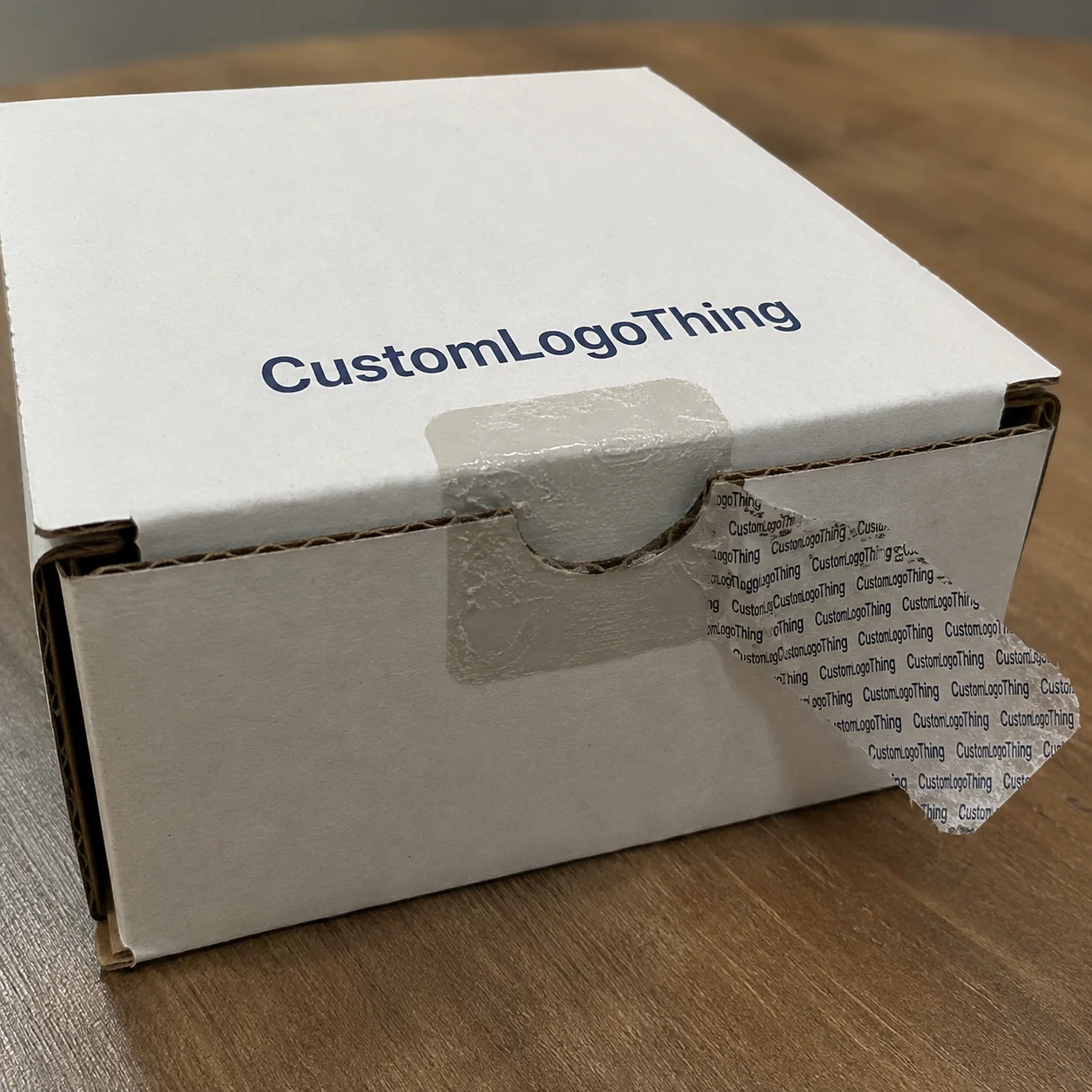
In packaging, a tamper seal is there to make interference obvious. It may tear, split, leave residue, or reveal a hidden message if someone tries to remove it. That matters on supplement jars, cosmetics, electronics boxes, pharmacy packaging, and shipping cartons where closed packaging is part of the product promise.
The terms tamper-proof and tamper-evident are often used interchangeably, but tamper-evident is more accurate. No sticker can stop a determined person from trying. Its job is to make the attempt visible. That is what protects trust, helps warehouse checks, and supports retail inspection.
These seals are used anywhere a buyer expects the package to stay closed until purchase:
- Food packaging such as jars, cartons, and pouches
- Supplements and nutraceutical bottles
- Cosmetics and personal care kits
- Electronics and accessory packaging
- Pharmacy and over-the-counter products
- Subscription boxes and branded mailers
The value is not just security. A good seal can reduce complaints, support incoming inspection, and give warehouse staff a clearer checkpoint. It also strengthens the package visually when the closure, label, and carton all look intentional.
For brands shipping Custom Packaging Products, the seal is part of the pack design, not an afterthought. It must work with the bottle, carton, pouch, or sleeve already selected. If the closure system is weak, the label is only pretending to provide security.
Practical rule: if a label can be removed and reapplied without a visible trace, it is not doing much security work.
How the Security Feature Works Under Pressure
Security labels fail in different ways, and that is the key comparison buyers should make before price. A label that reveals a bold VOID message behaves differently from one that shatters, tears, or leaves adhesive residue behind. The right choice depends on the surface, the opening method, and how obvious the evidence needs to be.
Common constructions include:
- Void film that reveals a hidden message on lift-off
- Destructible vinyl that fractures during removal
- Fragile paper that tears before it peels cleanly
- Residue-transfer labels that leave a visible adhesive pattern
- Pattern-release adhesives that show disruption after opening
The mechanics are straightforward. Some labels separate by layer. Others break apart. Others leave enough evidence that reclosure looks obvious and unprofessional. That is the point: make tampering hard to hide.
Adhesive performance depends on more than peel strength. Surface energy, coating type, temperature, and application pressure all affect the bond. A seal on smooth PET behaves differently from one on textured paperboard. A cold-filled container may need a different adhesive than a dry retail box. Low-energy plastics are especially difficult, so universal adhesive claims deserve caution.
Clean application matters too. Dust, release powder, lotion residue, oil, and condensation can weaken adhesion. A clean, dry surface usually matters more than a premium construction applied poorly.
For carton seals, cap seals, pouch closures, and shrink-sleeve overlaps, the label needs to bridge the stress point. A cap seal should cross the closure so movement is visible. A carton seal should catch the opening flap. A pouch seal should sit where handling forces are likely to show interference. Test the actual package, not just a flat sample sheet.
Some buyers add serialization or batch coding for traceability. If you are working with Custom Labels & Tags, that can connect a specific seal to a production run or shipment lot. It is not necessary for every order, but it helps when a complaint needs fast verification.
Key Material and Design Factors to Compare
Material choice affects security performance, print quality, and how clearly the tamper message reads after application. Some constructions are better for branding. Others are better for visible evidence. The cheapest option rarely gives both.
| Material Type | Best For | Typical Strength | Tradeoff |
|---|---|---|---|
| Void film | Retail packaging, cartons, electronics | Clear removal message | Can cost more than basic paper |
| Destructible vinyl | Bottle seals, closure bridges | Breaks apart on removal | Less forgiving on rough surfaces |
| Fragile paper | Low-cost branded packaging | Tears easily | Not ideal for moisture or abrasion |
| Residue-transfer film | Higher-security applications | Leaves visible evidence | Can be messy on premium finishes |
Size and shape affect both security and appearance. A small round seal may look neat, but if it covers too little of the opening point, it can be bypassed too easily. A larger custom shape gives more visibility and more room for instructions, logos, or variable data.
Finish also changes how the seal reads in use. Matte stock reduces glare and keeps warning text easy to scan. Gloss can suit Premium Retail Packaging, though it can make small text harder to read. Clear labels stay visually quiet, but they need strong contrast or they disappear into the surface. Foil accents can improve shelf appeal, but they are not always the best choice if the message must stay legible from across a counter.
Print content should be useful, not crowded. A seal often works best with a few clear elements:
- Logo for recognition
- Warning text for immediate visibility
- Serial numbers for traceability
- Batch codes for quality checks
- Instructions such as “Do not accept if seal is broken”
Environmental conditions can change the outcome quickly. Heat softens some adhesives. Cold slows bond development. Moisture challenges paper-based constructions. Oils and lotions interfere with grip on cosmetic packaging. Friction in transit can scuff print or lift an edge. If the product will sit in a warehouse, refrigerator, or bathroom cabinet, the label should be spec’d for that environment.
For teams with sustainability goals, buyers often ask about FSC-certified paper or recyclable constructions. That can be a sound direction, but the material route should be confirmed early because not every security construction is compatible with every recycling stream. FSC certification resources are available here: fsc.org.
Process, Timeline, and Lead Time for Ordering
Most custom security label orders follow the same path: request the spec, confirm artwork, review a proof, run production, inspect, and ship. Delays usually come from missing information, not from the process itself. The biggest time sink is often a buyer who has not yet defined the package dimensions or the surface the seal must hold to.
A quote is faster and more accurate when these inputs are ready:
- Exact label size or required coverage area
- Package surface type and finish
- Desired removal behavior
- Artwork files in usable resolution
- Quantity and target ship date
Lead time depends on complexity. A straightforward custom printed security sticker order can often move in about 10 to 15 business days after proof approval. More specialized jobs with custom material, serialized data, or multiple proof revisions may take 15 to 25 business days. Rush work is possible, but it usually limits material options and reduces time for testing.
Proofing saves money when it is treated seriously. A digital mockup catches spelling, placement, and sizing issues. A sample or short test run catches bond problems, especially on curved bottles or coated cartons. If your launch depends on a ship date, build in time for at least one proof cycle.
Packaging schedules should drive ordering. If cartons arrive first and seals show up later, the result is a storage problem and a delayed launch. The seal should be part of the early packaging timeline, not the last item chased after the system is already locked.
Cost, Pricing, and MOQ Factors That Move the Quote
Pricing for tamper proof stickers custom comes down to material, size, print complexity, quantity, and finishing. That is the core math.
For a basic custom security label in moderate quantities, buyers often see pricing around $0.06 to $0.15 per piece at larger volumes, depending on coverage and stock. More specialized constructions, such as void film with multicolor print, serialized data, or Custom Die Cuts, can move into the $0.15 to $0.35 per piece range or higher. Small runs cost more per unit because setup does not shrink just because the order is smaller.
MOQ matters because setup cost is spread across fewer labels on low-volume jobs. If a project requires specialty film, extra proofing, or custom tooling, the unit cost rises quickly at lower quantities. That is the reality of short-run production.
Here is a practical comparison:
| Order Type | Common MOQ | Unit Cost Range | Best Fit |
|---|---|---|---|
| Basic paper security label | 500 to 1,000 | $0.10 to $0.20 | Simple retail packaging |
| Void film custom label | 1,000 to 3,000 | $0.12 to $0.28 | Branded packaging with visible evidence |
| Destructible or residue-transfer label | 1,000 to 5,000 | $0.15 to $0.35 | Higher-security product packaging |
Hidden costs usually live in the details. White ink on clear stock, multiple print locations, variable numbering, specialty adhesive, and unusual die shapes can all increase the quote. If the seal has to wrap around a curved bottle neck, that may also affect the die line and application method. A low quote that ignores those details is not a bargain.
The best budget choice is the one that matches the risk. A subscription box with low tamper risk does not need the same spec as a pharmacy item or high-value electronics. Use enough security to protect the product and reassure the buyer.
Step-by-Step Guide to Specifying the Right Seal
If you want the right label on the first attempt, keep the spec direct. Vague requests produce vague results, and packaging teams usually discover that only after the wrong job is already in motion.
- Identify the package surface. Note whether it is paperboard, coated carton, glass, PET, HDPE, foil pouch, or shrink sleeve.
- Define the failure behavior. Decide whether you need void messaging, residue transfer, tearing, or breakage.
- Choose adhesive and substrate. Match the construction to heat, cold, moisture, curvature, and handling friction.
- Set the message and artwork. Add logo, warnings, serials, or batch codes without crowding the face.
- Request a proof and test it. Apply it to actual packaging samples before production.
- Check application conditions. Confirm pressure, temperature, storage, and shelf-life expectations.
Testing is not optional if the package is curved, cold, textured, or coated. A label that performs well on a flat board can fail on a bottle shoulder or a glossy pouch. That is why sample-based testing matters more than the best-looking mockup in an inbox.
If your packaging system includes other branded materials, coordinate the seal with the rest of the pack instead of ordering it in isolation. A security label that matches the box graphics and carton style usually looks more deliberate.
For teams also buying Custom Labels & Tags, ask whether the supplier can keep color, finish, and messaging aligned across formats. That matters when a seal sits next to a primary product label or a shipping sticker.
If you want a broader frame for handling and transit expectations, packaging standards from the International Safe Transit Association are a useful reference point. Security seals are not transit test packs, but they still need to survive the same environment without lifting early or scuffing out in the lane.
Common Ordering Mistakes and Expert Fixes
The most common mistake is choosing the lowest-cost material for a surface that needs real grip. Curved bottles, coated cartons, chilled packs, and soft-touch finishes often need more testing than buyers expect. Skip that step and the adhesive may lift at the edge, turning a security seal into a loose decoration.
Another frequent error is under-sizing the label. A small seal can disappear visually on large packaging, and it may not cover enough of the opening point to be useful. If the label does not clearly bridge the closure or create a visible removal area, it is too small.
Artwork problems show up constantly as well. Tiny warning text, low-contrast colors, and overloaded messaging make the seal harder to read. These labels should communicate fast.
The biggest operational mistake is not testing on the actual package. Lab stock and production packaging are not the same thing, and the difference is often adhesive performance. A carton coating, bottle curve, or chilled surface can change the result completely.
The fixes that save the most trouble are straightforward:
- Simplify the design so the tamper message stays readable
- Confirm removal behavior on actual containers and closures
- Leave production tolerance for slight package variation
- Match adhesive to environment instead of chasing the cheapest quote
- Plan inventory early so launch timing stays intact
If the product ships through an environmentally sensitive supply chain, it also helps to ask whether the materials fit your recycling targets or sustainability goals. The U.S. EPA’s packaging and materials resources provide useful background: epa.gov.
Are tamper proof stickers custom or tamper-evident labels the same thing?
They are closely related, but tamper-evident is the more precise industry term. The label should visibly show if someone tried to remove or open it. Custom versions add your size, shape, artwork, and security features.
What surfaces work best for tamper proof stickers custom?
Clean, dry, smooth surfaces usually give the most reliable adhesion. Curved bottles, textured cartons, and chilled packaging may need special adhesive testing. Always test on the actual package, not a random sample sheet.
How much do custom tamper proof stickers cost?
Price depends on material, size, print complexity, quantity, and finishing. Higher MOQs usually lower the per-label cost. Security-specific constructions and variable data raise the quote.
What is the usual turnaround for tamper proof sticker orders?
Standard jobs move faster when artwork is final and specs are clear. Custom security materials, special finishes, or proof revisions can extend lead time. Rush orders are possible, but options may be limited.
Can tamper proof stickers be used on food and supplement packaging?
Yes, they are common for jars, cartons, bags, and bottle closures. The adhesive and material must match the package surface and storage conditions. You should confirm compliance needs for your specific product category.
If you’re buying tamper proof stickers custom, the smart move is to spec for the actual package, the actual environment, and the actual risk level. Get the material, adhesive, and format aligned, and the label earns its place in the packaging system.


