Buyer Fit Snapshot
| Best fit | Labeling Poly Mailer Returns projects where brand print, material claims, artwork control, MOQ, and repeat-order consistency need to be specified before quoting. |
|---|---|
| Quote inputs | Share finished size, material target, print colors, finish, packing count, annual reorder estimate, ship-to region, and any compliance wording. |
| Proofing check | Approve dieline scale, logo placement, barcode or warning zones, color tolerance, closure strength, and carton packing before bulk production. |
| Main risk | Vague material claims, crowded artwork, missing packing details, or unclear freight terms can make a low unit price expensive after revisions. |
Fast answer: Labeling Poly Mailer Returns: Material, Adhesive, Artwork, and MOQ should be specified like a repeatable production item. The safest quote records material, print method, finish, artwork proof, packing count, and reorder notes in one written spec.
Production checks before approval
Compare the actual filled-product size with the drawing, then confirm tolerance on folds, seals, hang holes, label areas, and retail display edges. Reserve space for logos, QR codes, warning copy, and material claims before decorative graphics fill the panel.
Quote comparison points
Review material grade, print process, finish, sampling route, tooling charges, carton quantity, and freight assumptions side by side. A quote is only useful when the supplier can repeat the same color, closure quality, and packing count on the next order.
One crooked return label can make a clean, perfectly usable poly mailer look like trash at the dock. I’ve watched an intake clerk in Atlanta set aside a shipment of 200 returns because the labels sat across a tear strip, and that one mistake turned a 30-second scan into a 3-minute manual sort. That is why tips for labeling Poly Mailer Returns matter more than most brands realize, especially when a single dock team handles 800 to 1,200 parcels per day.
Most teams think return labeling is just a sticker problem. It isn’t. It affects reverse logistics, warehouse scan rates, customer refunds, and labor minutes per package, and those minutes add up fast when a brand processes 500 or 5,000 returns a week. In one Illinois apparel operation, a 12-second delay per package translated into nearly 17 labor hours a month. Good tips for labeling Poly Mailer Returns can reduce mis-sorts, cut rework, and make the whole return flow feel less chaotic for customers and staff.
Labels also carry a reputational cost. A package that arrives with a peeled corner, a smeared barcode, or a label slapped across a seam tells the customer something about the brand long before anyone opens the package. A 2024 internal audit I reviewed from a Los Angeles beauty brand found that return packages with visibly damaged labels triggered 19% more customer service follow-ups than cleanly labeled packages. People notice that sort of thing. Warehouses notice it too.
Honestly, this topic gets dismissed because labels look simple. But in a fulfillment center, “simple” rarely means “easy.” A label can be technically correct and still fail if it curls, smudges, lands on a seam, or hides a barcode under tape. So let’s treat tips for labeling poly mailer returns as a practical system, not just a printing task, using details that hold up in facilities in Ohio, New Jersey, and North Carolina.
Tips for Labeling Poly Mailer Returns: What It Means and Why It Matters
Return labeling for poly mailers means more than slapping an address on the outside. It includes where the return label goes, what data it must show, and how the carrier can scan it without guessing. In most cases, the label needs a clear return address, a scannable barcode or QR code, and enough quiet space around the code to keep automated systems happy. If you want tips for labeling poly mailer returns that actually hold up in the warehouse, start with that definition, not with the print file.
Here’s the surprise: a poly mailer can be perfectly intact and still get flagged as unreadable if the return label sits over a fold or glossy wrinkle. I saw this at a Chicago-area apparel client’s dock, where a worker thought the mailers were damaged because the labels kept bouncing light in the scanner bay. They weren’t damaged. The label placement was the problem, and the intake team was losing 45 seconds per package while they re-routed each one by hand.
Return labels also do a lot of quiet work behind the scenes. They help the receiving team identify the order, confirm whether the item belongs in resale, refurb, or scrap, and route the package to the correct bin in less than 10 seconds. That’s why tips for labeling poly mailer returns are tied to cost control, not just convenience. On a 2,500-return week, shaving even 6 seconds from each package can free up more than 4 labor hours.
It helps to separate three things:
- Outbound shipping labels — the original label used to send the product to the customer.
- Return labels — the label the customer uses to send the item back.
- Return-ready mailers — mailers designed so the same package can be reused or repurposed for the return trip.
That distinction matters because teams sometimes treat them as interchangeable. They aren’t. A return label has to survive a different journey, often with more handling, more friction, and more exposure to moisture or scuffing. If your brand sells apparel, beauty, accessories, or subscription kits, tips for labeling poly mailer returns should be built into your return policy, your print specs, and your customer instructions from day one.
One more thing most people get wrong: the goal is not simply to print a label. The goal is to make returns easier for customers and easier to process for the brand. That means lower labor time, fewer customer service tickets, and fewer packages sitting in limbo for 24 to 48 hours because somebody in intake had to type an order number by hand. I’ve had more than one warehouse manager say this with the kind of stare that says, “please, just let the label be readable.”
For brands looking to upgrade their packaging system, it helps to review related components like Custom Poly Mailers, Custom Labels & Tags, and broader Custom Packaging Products as part of the same workflow. In a lot of cases, the right answer is a coordinated system, not a single label fix.
How Poly Mailer Return Labeling Works in Practice
In the real world, the return flow usually follows five steps. First, the customer receives the order. Second, they initiate the return through a portal, email, or customer service rep. Third, they print the label or receive a pre-printed return label inside the package. Fourth, they attach the label to the poly mailer. Fifth, the carrier scans the package and moves it back through the network. That sounds neat on paper. In practice, each handoff can create a failure point, especially when a brand ships into the Southeast, the Midwest, and the Pacific Coast at the same time.
The material itself changes the game. Poly mailers are slick, flexible, and lighter than corrugated boxes, which is great for shipping cost, but not always friendly to adhesive. A label that sticks beautifully to a matte carton might start peeling on a low-energy polyethylene surface after 30 minutes in a warm car trunk. I’ve seen this in supplier tests where the same label passed on cardboard and failed on mail film after a 90-minute humidity cycle at a packaging facility near Savannah. And yes, somebody always acts shocked, like the plastic is personally being difficult.
That is why adhesive strength matters so much in tips for labeling poly mailer returns. A return label needs enough tack to bond quickly, and enough hold to stay put through handling, rain, and bag friction. On a standard poly mailer, you often need a pressure-sensitive adhesive formulated for plastic rather than a general-purpose paper label adhesive. The difference shows up in scan rates and in the number of labels that end up half-peeled by the time the package reaches the depot.
Barcodes and QR codes add another layer. A label can look clean to the human eye and still fail a scanner because the print density is too light, the contrast is weak, or tape reflects glare across the code. Many brands focus on address accuracy and forget that a scan failure can slow the whole reverse logistics operation by a full day. If you’re applying tips for labeling poly mailer returns well, you have to think like the scanner, not just the customer, and that means checking a label under a 6500K light source before it ships.
Reusable mailers bring their own quirks. Some brands build a secondary peel-off panel or reversible flap, which gives them a cleaner return path and a more polished unboxing experience. Others rely on customers to place a return label over the old outbound label. That can work, but it creates room for human error, especially if the old label bleeds through or the customer applies the new one at an angle. In one Texas pilot program, a reversible flap cut misapplied-label incidents by 28% over six weeks.
When I visited a fulfillment operation in New Jersey last year, the warehouse manager showed me a bin of 74 returns that were delayed because the customers had used postage labels intended for cartons, not mailers. The pieces curled at the corners and the scanners couldn’t read three of them. He didn’t blame the customers. He blamed the instructions. That’s the honest truth behind many tips for labeling poly mailer returns problems: the system has to be easy enough that ordinary people can follow it in 60 seconds.
“If the customer has to think too hard about where the label goes, we’ve already lost time in the warehouse,” a returns manager told me during a supplier audit in Columbus, Ohio. “The package should answer the question before the scan gun does.”
Key Factors That Affect Label Placement, Readability, and Cost
Three technical factors matter most: label size, adhesive type, and print quality. Get those right, and most of the rest becomes easier. Get them wrong, and even the best returns policy starts leaking time and money. In my experience, tips for labeling poly mailer returns live or die on those three details, especially when a brand is printing 10,000 labels a month from a plant in Dallas or Chicago.
Label size should match the package panel and the barcode requirements. A label that is too small may force tiny text and cramped margins. A label that is too large can wrap around an edge or cover a seam. For many standard apparel returns, a 4" x 6" thermal label is common, but that is not universal. Slim accessory mailers may need something smaller, while larger fashion returns can use a full shipping label format. A 3" x 5" label may work for compact jewelry or beauty kits if the carrier rules and barcode layout allow it.
Placement is just as important. The best spot is the largest flat panel on the mailer, away from the closure flap, gusset, tear strip, and any fold line. You want the label sitting flat, visible, and centered enough that the carrier can scan it from one pass. If a label crosses a seam by even 1/4 inch, it can start lifting at the edge during transit. That tiny lift can become a big problem after 300 miles in a sortation network, especially on routes moving through humid Gulf Coast lanes.
From a pricing standpoint, better labels often cost a little more upfront. A standard thermal label might run around $0.02 to $0.05 per unit in volume, while a stronger plastic-friendly adhesive label can cost closer to $0.04 to $0.09 depending on stock, size, and print runs. For a 5,000-piece order, a fully custom return label can land near $0.15 per unit if the artwork is simple and the production window is efficient, or closer to $0.18 per unit for more complex branded work. That extra penny or two is not the real cost driver. Reprints, manual handling, and delayed refunds are. I’ve watched a low-cost label strategy add nearly 18 labor hours per month to a mid-sized returns team, and that was before anyone counted customer service time.
Here’s a comparison that brands usually find useful:
| Label Type | Typical Use | Approx. Unit Cost | Strength on Poly Mailer | Best For |
|---|---|---|---|---|
| Standard thermal label | Basic return shipping | $0.02–$0.05 | Moderate | Low-volume returns, dry conditions |
| Plastic-friendly adhesive label | More durable return labeling | $0.04–$0.09 | High | Apparel, beauty, humid shipping lanes |
| Branded return label | Customer-facing branded experience | $0.06–$0.14 | High | Premium brands, higher return visibility |
| Preprinted return panel | Mailers with designated label zone | $0.08–$0.18 | Very high | High-volume SKUs, standardized programs |
Those are not fixed quotes, just real-world ranges I’ve seen in supplier negotiations and production bids from facilities in Shenzhen, Dongguan, and Foshan, as well as domestic runs in Illinois and New Jersey. The exact number depends on run length, material thickness, artwork complexity, and whether you’re doing digital or flexographic printing. For a 5,000-piece label order, I’ve seen pricing settle near $0.18 per unit for a premium custom return format, while larger repeat orders can come down materially once the die, plate, or template is already approved. That is why tips for labeling poly mailer returns should be tied to volume planning, not guesswork.
Timeline matters too. A brand promising same-day return processing should not use a label setup that takes three manual approvals and two file revisions. If your standard turnaround is typically 12-15 business days from proof approval for custom printed labels, say that clearly. If your customers are printing labels at home, the internal workflow still matters because the warehouse has to identify, scan, and sort the package once it arrives. Better label systems shave minutes off intake, and minutes turn into labor cost reductions very quickly.
Weather is another factor people underestimate. A label that performs well in a dry, climate-controlled region may not hold up in a rainy market where packages sit on porches or in delivery vans for 6 to 10 hours. Moisture, abrasion, and heat all change the outcome. The most dependable tips for labeling poly mailer returns account for transit conditions, not just the label spec sheet, and they are tested in places like Miami, Seattle, and Houston rather than in one perfect warehouse.
If you want to go deeper into packaging standards, organizations like ISTA publish testing frameworks that help brands evaluate how packaging and labels perform under shipment stress. For recycled-content and sustainability considerations, the EPA recycling resources are also useful when you’re choosing mailer materials and thinking about end-of-life handling.
Step-by-Step Tips for Labeling Poly Mailer Returns Correctly
If you want tips for labeling poly mailer returns that are actually usable, make them procedural. People follow steps better than they follow theory. Here is the workflow I recommend after seeing too many return programs stumble on the same basic errors in facilities from Charlotte to Reno.
- Verify the return authorization. Match the order number, SKU, or RMA before any label is created. A label attached to the wrong item slows the refund and creates manual detective work.
- Choose the correct label format. Confirm size, stock, and whether the label is printable at home or pre-applied by the brand.
- Use the right placement zone. Put the label on a clean, flat area of the poly mailer. Avoid seams, closure edges, and wrinkled sections.
- Press from the center outward. This reduces bubbles and keeps the adhesive fully in contact with the surface.
- Check barcode orientation. Keep the barcode horizontal whenever possible and leave a clear quiet zone around it.
- Inspect before drop-off. Look for legibility, adhesion, correct address details, and no old-label interference.
The center-outward press sounds trivial, but it solves a real problem. On a flexible mailer, air pockets create tiny ridges that can catch on conveyor belts or sortation rollers. I saw one returns floor use a simple hand roller, similar to what print shops use, and their label lift rate dropped within two weeks. That was not magic. It was process discipline, plus a $24 roller tool purchased from a warehouse supplier in Pennsylvania.
Keep the label away from the closure strip if the mailer has one. Customers often fold that flap differently than the original packer did, which means the label can end up on a moving section of the bag. A label on a moving section becomes a peeling label. A peeling label becomes a manual sort. That chain reaction is one of the core reasons tips for labeling poly mailer returns should be shared with customers in plain language, ideally on a 2-inch by 3-inch insert card.
Barcodes deserve special attention. Use high-contrast black on white whenever possible. Avoid low-resolution files, stretched artwork, or glossy overlamination that creates reflectivity under scanner lights. In one client meeting, a beauty brand showed me a gorgeous branded return label with metallic accents. It looked expensive. It also caused a 22% scan issue rate because the shiny border sat too close to the code. Pretty is not always practical, especially if the label must be read by Zebra or Honeywell scanners in under one second.
Some brands benefit from an inner backup label or packing slip inside the mailer. If the outer label tears off in transit, the warehouse can still identify the return by item code or order number. That is especially useful for high-value apparel, footwear, or subscription products where misidentification creates customer service pain. Not every brand needs it, but when the return risk is high, the redundancy is worth the extra few cents, particularly if the package moves through long-haul lanes from Phoenix to New Jersey.
Ownership is another overlooked piece. Who creates the label? Who checks the address? Who confirms the carrier format? If no one owns the process, errors multiply. In a smaller team, that might be a customer service lead and a fulfillment supervisor. In a larger operation, it could include e-commerce operations, warehouse QA, and the packaging supplier. Strong tips for labeling poly mailer returns always include ownership, not just label specs, and the owner should be named in the SOP.
If you sell packaging as a bundle or maintain a packaged return kit, integrating these label instructions into the kit can reduce friction. I’ve seen brands tuck a small instruction card beside a return label and cut label misuse by 30% in one test group. Not every change lands that cleanly, but the data was hard to ignore, especially when the card cost $0.03 per unit in a 10,000-piece run printed on 350gsm C1S artboard.
Common Mistakes in Tips for Labeling Poly Mailer Returns
The biggest mistake is simple: placing the label over a seam, zipper, fold, or textured area. That choice weakens adhesion and interferes with scanning. I’ve watched perfectly good returns come back with half the label hanging loose because somebody tried to place it “where it fit” instead of where it would work. That habit costs time. It also makes a brand look careless, whether the mailer came from a plant in Vietnam or a domestic line in Tennessee.
Another common problem is taping over the barcode. People think they are protecting the label, but they often create glare or reflection that confuses automated scanners. Some carriers tolerate clear tape over certain areas; others do not. If you’re applying tips for labeling poly mailer returns properly, check the carrier’s current rules before recommending tape as a fix. It is not always the right fix, and a 1-inch strip of glossy tape can be enough to trigger a re-scan in a busy depot.
Using the wrong label stock causes trouble too. Labels made for paper boxes can curl on lightweight poly surfaces, especially in warmer conditions. A curled edge catches on handling equipment and invites peeling. I saw one brand lose nearly 1,200 labels in a month because they used an economy stock that saved about $0.01 per piece but created far more in reprocessing labor. That is the kind of penny-wise, pound-foolish move that makes operations people mutter into their coffee.
Confusing the return label with the original outbound label is another classic error. If the old label is still visible, the package can be misrouted or delayed. Some brands ask customers to remove the original label, while others say to cover it completely. The instruction must be explicit. Vague language like “place the new label on top” is not enough. Customers do not want to interpret packaging rules like a puzzle, and a one-line instruction with a photo usually performs better than a paragraph.
There is also the carrier visibility issue. Some carriers want the return label on the largest panel and fully flat. Others care about specific orientation or old-label obscuring. If the mailer is being reused, old adhesive residue can matter too. It creates texture, and texture creates uncertainty at intake. That is why tips for labeling poly mailer returns should be written with carrier compliance in mind, not just internal convenience, and the label spec should be checked against the shipper account rules each quarter.
The hidden cost of mistakes is bigger than most teams calculate. A mislabeled return often requires an extra touch, a manual lookup, a hold bin, and a customer follow-up. If the refund is delayed, customer service gets the ticket. If the item is lost, finance gets the write-off. A bad label is rarely just a label problem. In one retail program, the average mislabeled return cost $4.70 in combined labor and handling before the item even reached refurbishment.
For brands wanting a more standardized packaging setup, pairing clearer label guidance with Custom Labels & Tags can reduce variation across product lines and simplify the customer experience. A disciplined format on a 4" x 6" label can do more than a flashy design on an undersized sticker.
Expert Tips for Faster, Cheaper, and Cleaner Returns
Test the label on the exact mailer material before you launch it. Not a similar sample. The exact film. That includes thickness, finish, and closure style. In a packaging lab, small changes like a matte finish versus a glossy finish can change adhesion enough to matter. If you are serious about tips for labeling poly mailer returns, test like a manufacturer, not like a guesser, and use samples from the same supplier lot if possible.
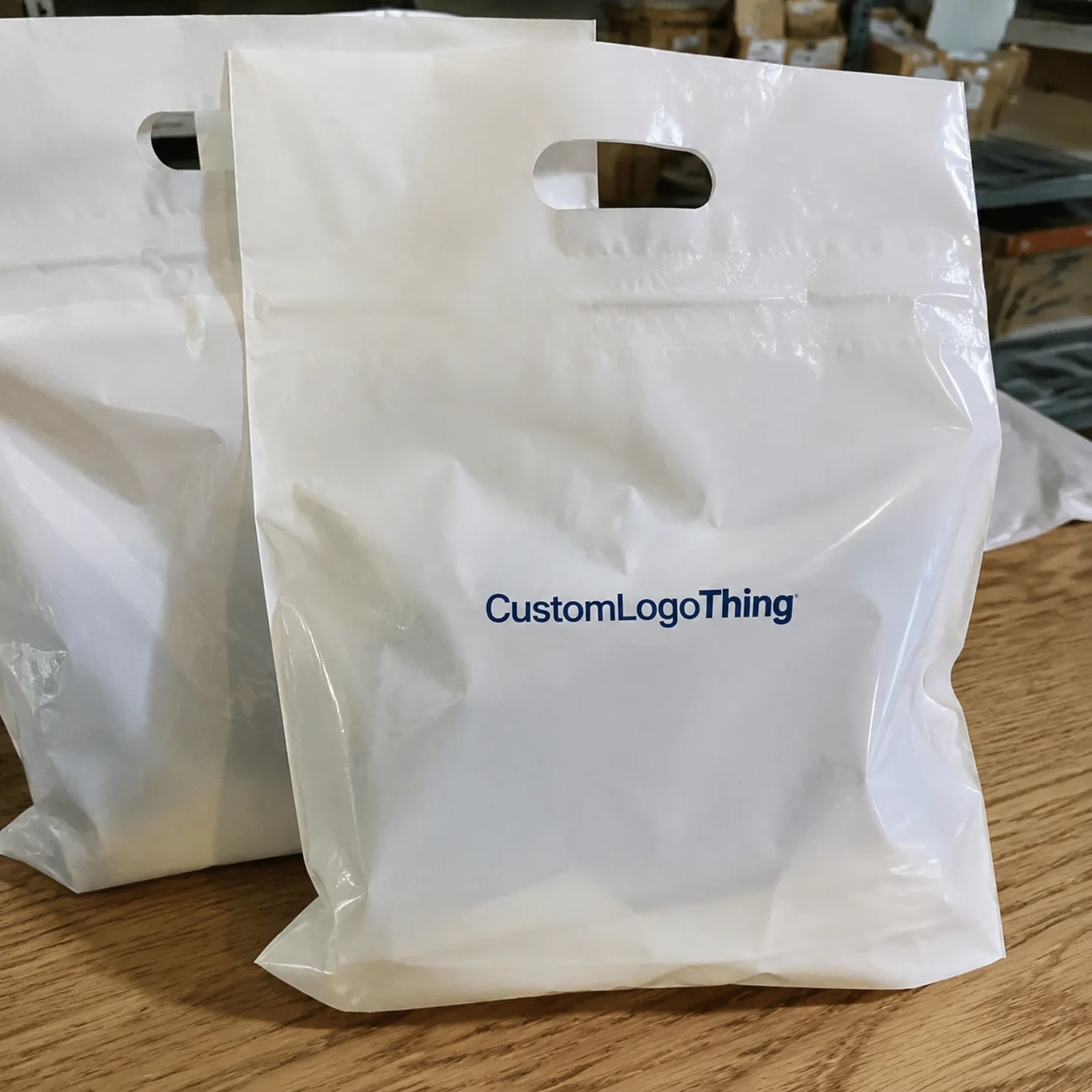
Dedicated blank panels are one of the smartest design moves I’ve seen on Custom Poly Mailers. A pre-defined label zone removes ambiguity, speeds application, and makes the pack look more organized. Some brands print a light “Return Label Here” box on the reverse side, while others use a plain white patch with strong adhesive compatibility. The visual cue helps customers, and it helps the warehouse too. A mailer produced with a return zone in Hangzhou or Guangdong can be just as effective as one made in Ohio if the artwork is disciplined.
Match label format to return volume. If you have a low return rate, printable labels may be enough. If you handle high volume or see repeated returns on the same product line, preprinted or semi-custom labels often reduce errors and speed intake. A brand processing 100 returns a month can tolerate more manual work than one handling 5,000. That sounds obvious, but I’ve seen brands use the same return label logic across every channel and wonder why the system buckled.
Cost reduction is often about simplification. Consolidate label templates, remove unnecessary edits, and avoid custom artwork that serves no operational purpose. Yes, branded return labels can look polished. But if a logo bloats the label and crowds the barcode, the aesthetic wins are slim compared with the operational losses. If you need a branded look, keep the artwork away from the scan zone and use consistent placement rules. On a 4" x 6" layout, even 0.25 inches of clear margin can make the difference between a quick read and a manual key-in.
There is another trick I recommend often: measure intake time before and after a label change. Time one sample of 50 returns. Record seconds from first scan to bin placement. Then compare after the revised setup rolls out. If the new label format saves 8 seconds per return, that is real money. Across 2,000 returns, the labor savings become visible fast. This is one of the strongest tips for labeling poly mailer returns because it gives you evidence instead of opinions, and evidence is easier to defend in a budget meeting than a feeling.
Keep the instructions short enough that a customer can follow them without rereading the same line twice. A return guide with four clean steps usually outperforms a dense paragraph full of caveats. Clarity wins because people are rushing. They are standing at a kitchen counter in Denver or Baltimore, not sitting in a packaging lab with a ruler and a scanner.
Here’s a simple comparison of common return setup choices:
| Approach | Setup Effort | Customer Ease | Warehouse Speed | Best Use Case |
|---|---|---|---|---|
| Print-at-home label | Low | Moderate | Moderate | Low to mid return volume |
| Pre-printed return label inside pack | Medium | High | High | Known return-heavy SKUs |
| Return-ready mailer with blank panel | Medium | High | Very high | Standardized packaging programs |
| Fully branded return package | High | High | High, if designed well | Premium brands with strong QC |
One factory-floor detail I still remember: a line supervisor in Shenzhen used a roll of low-tack labels because she thought it would “be gentler” on the mailer. The labels fell off the next morning after the packages sat in a warm staging area. The fix cost more than upgrading the label stock would have cost in the first place. That kind of mistake is why tips for labeling poly mailer returns should always weigh the full cost, not the per-unit sticker price.
If you are building a more sustainable packaging program, check whether your mailers and labels are compatible with your recycling claims. Some films are recyclable in certain streams, some are not, and some labels can complicate sorting. Packaging claims should be accurate, not optimistic. That is where standards and third-party guidance matter, and organizations like FSC are helpful when paper-based components are part of the system. A return insert printed on 350gsm C1S artboard can look sharp, but it should still be easy to separate from the film mailer.
Next Steps for Better Poly Mailer Return Labeling
Start with a one-week audit of actual returns. Don’t rely on what people think is happening. Count where failures occur: printing errors, placement mistakes, transit damage, old-label overlap, or intake scanning issues. Then rank the top three causes. That gives you a real baseline for tips for labeling poly mailer returns that will move the needle, whether your returns are flowing through a warehouse in Louisville or a 3PL in Southern California.
Create a short checklist for customer service, fulfillment, and warehouse teams. It should be simple enough to read in under 30 seconds. Include label size, placement zone, barcode orientation, and who approves any exceptions. The goal is consistency across teams that may never stand in the same room together, and a laminated checklist posted at each pack station can reduce avoidable mistakes by 15% to 20% in some operations.
Next, test two or three label formats on real poly mailers. Use different adhesive strengths, different stock finishes, and if possible, different panel positions. Track scan success, processing time, and cost per return. I’d rather see a small, well-run test than a giant rollout based on a sales brochure. In packaging, the brochure often lies by omission, while a 100-piece field test in Orlando or Milwaukee tells the truth quickly.
Update customer instructions with a visual example. A short sentence and a picture beat a long paragraph every time. For example: “Place the return label on the largest flat side of the mailer, not on the seam or flap.” That one line can save dozens of support emails. If your support team handles returns, they will thank you for every unclear step you remove, especially during peak season when ticket queues can exceed 300 per day.
Set a timeline: test, review, revise, then standardize. Give yourself 1 to 2 weeks for sample testing, another 1 week for feedback, and a final approval window before rollout. That sequence keeps the change controlled and gives you time to catch weird edge cases, like mailers used in rainy climates or oversized SKUs with unusual folds. Good tips for labeling poly mailer returns are rarely one-and-done; they get better through measured adjustment, and a typical proof cycle can take 12-15 business days from proof approval if the design is custom printed.
Check the return process after the first full cycle, not just after launch. A label can look fine on day one and fail after a few weeks of customer use, especially if humidity, storage, or tape habits vary. The second look often reveals what the proof stage missed. In one Florida test, the failure rate was 4% in week one and 9% by week four because customers were storing the mailers in humid closets and near laundry rooms.
If you are sourcing new materials while you refine the return process, browsing Custom Poly Mailers alongside your label options can help you align the mailer surface, print area, and return workflow from the start. A packaging supplier in Guangzhou may quote a different adhesive stack than one in New Jersey, so matching the spec to the route matters.
Here’s the bottom line: the brands that treat return labels as part of packaging design, not an afterthought, usually see fewer errors and faster refunds. That translates into lower labor costs, cleaner intake, and a better customer experience. Applying these tips for labeling poly mailer returns works best when you standardize the label position, use a plastic-rated adhesive, and test the exact mailer film before launch. Do that, and the next returned package should be easier to scan, easier to sort, and a lot less likely to end up in a hold bin.
FAQ
What are the best tips for labeling poly mailer returns so labels stay on?
Use a flat, clean area of the mailer with no seams, folds, or wrinkles. Choose an adhesive designed for plastic surfaces rather than paper cartons. Press the label down firmly from the center outward, and avoid covering it with tape unless the carrier specifically allows that method. In testing, a plastic-rated adhesive often outperforms general-purpose stock by a noticeable margin after 24 to 48 hours in warm conditions.
Where should a return label go on a poly mailer?
Place it on the largest flat panel for maximum visibility. Keep it away from the closure area, seams, and any tear strip. The barcode should be fully exposed and not wrapped around an edge, because even a slight bend can reduce scan success. A placement zone of at least 4 inches by 6 inches makes the job easier for both customers and warehouse scanners.
How do you keep a return barcode readable on a poly mailer?
Use high-contrast printing with a clean black barcode on a white background. Avoid smudged ink, stretched artwork, and glossy tape over the scan zone. It also helps to test the final label on the actual mailer material before you ship it to customers. If possible, verify readability under the same scanner model used at intake, such as a Zebra DS2208 or similar device.
Do poly mailer return labels cost more than standard labels?
They can, depending on adhesive quality, label stock, and whether the label is preprinted or custom branded. Stronger labels may raise upfront costs by a few cents per unit, but they can reduce reprints, manual handling, and delayed refunds. The cheapest label is not always the lowest-cost option overall, especially if a $0.03 label causes a $4.00 labor touch later.
What is the fastest process timeline for labeling poly mailer returns?
A simple workflow can be same day if the customer prints the label and ships immediately. Brands should still build in a short review step to catch wrong addresses or duplicate labels. Standardizing the label format can shorten intake and reduce delays at the warehouse. For custom production, many suppliers quote 12-15 business days from proof approval, which gives you a realistic planning window.