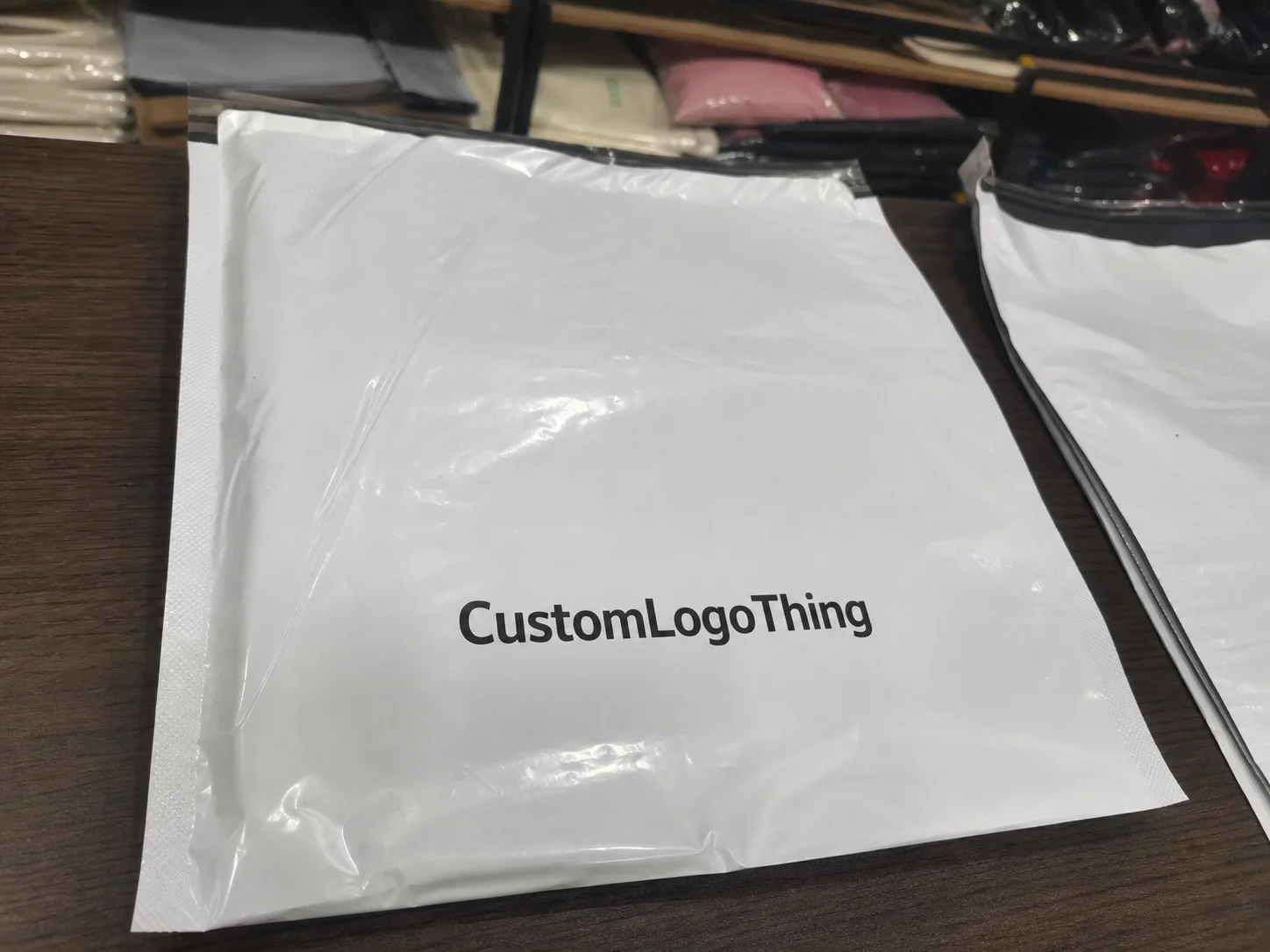
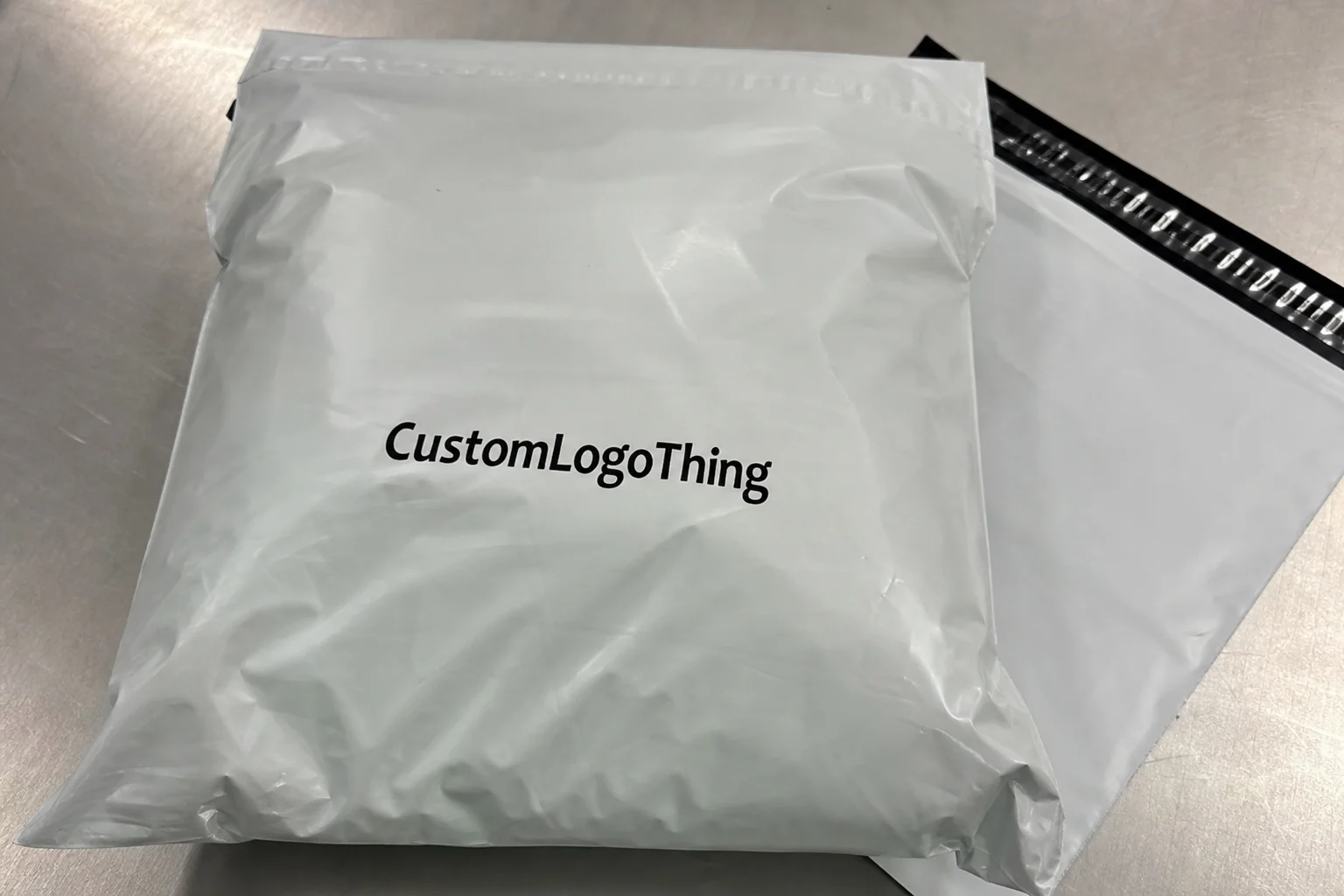
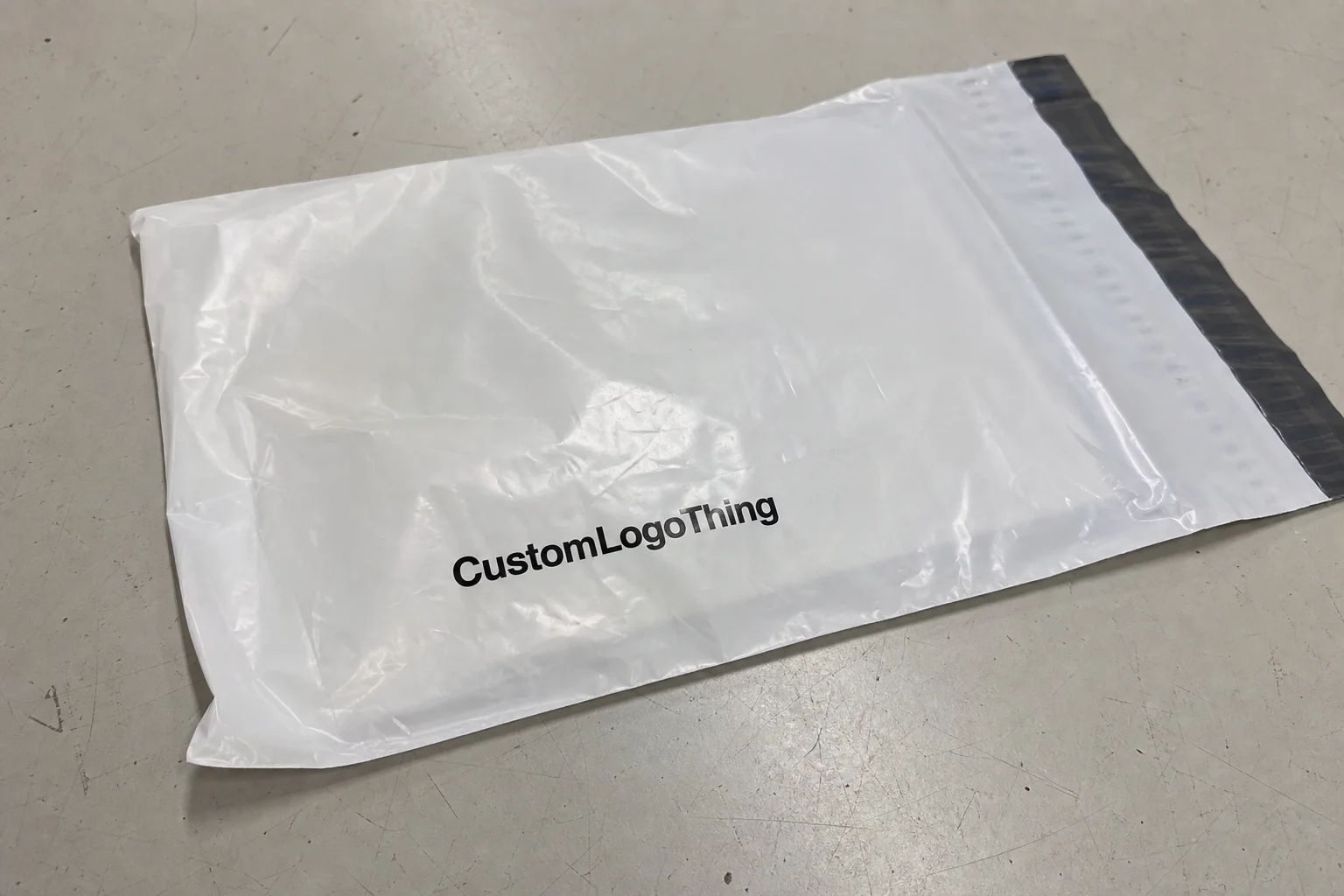
Buyer Fit Snapshot
| Best fit | Shipping Shoes in Poly Mailers projects where brand print, material claims, artwork control, MOQ, and repeat-order consistency need to be specified before quoting. |
|---|---|
| Quote inputs | Share finished size, material target, print colors, finish, packing count, annual reorder estimate, ship-to region, and any compliance wording. |
| Proofing check | Approve dieline scale, logo placement, barcode or warning zones, color tolerance, closure strength, and carton packing before bulk production. |
| Main risk | Vague material claims, crowded artwork, missing packing details, or unclear freight terms can make a low unit price expensive after revisions. |
Fast answer: Shipping Shoes in Poly Mailers: Material Claims, Seal Quality, and Freight Cost should be specified like a repeatable production item. The safest quote records material, print method, finish, artwork proof, packing count, and reorder notes in one written spec.
Production checks before approval
Compare the actual filled-product size with the drawing, then confirm tolerance on folds, seals, hang holes, label areas, and retail display edges. Reserve space for logos, QR codes, warning copy, and material claims before decorative graphics fill the panel.
Quote comparison points
Review material grade, print process, finish, sampling route, tooling charges, carton quantity, and freight assumptions side by side. A quote is only useful when the supplier can repeat the same color, closure quality, and packing count on the next order.
Tips for Shipping Shoes in Poly Mailers: What Actually Works
The first time I saw tips for shipping shoes in poly mailers work in a real warehouse, it was in Shenzhen at a small DTC shoe line moving about 1,800 pairs a week. They had been shipping every pair in a double-wall carton that cost them about $0.68 before tape, tissue, and labor. We switched them to the right poly mailer setup and cut packaging spend by almost $0.42 per shipment. Nice. Then they got greedy, skipped the inner wrap on three styles, and watched returns climb by 8.6% in two weeks. Cheap packaging can get expensive fast, especially when a single damaged pair triggers $6.00 to $9.50 in return handling and replacement freight.
Honestly, I think that moment sums up the whole category. You can save money with tips for shipping shoes in poly mailers, but only if you respect the actual shoe, not just the spreadsheet. The spreadsheet never gets a customer email with a blurry photo of a scuffed toe and a subject line that basically says, “Really?” In one Los Angeles ecommerce team I audited, a $0.19 mailer choice turned into a $4.80 support ticket once the customer had to wait five extra business days for a replacement shipment.
So what do tips for shipping shoes in poly mailers actually mean? Simple. You’re using a flexible plastic mailer, usually polyethylene or a padded co-extruded version, to ship shoes that don’t need a rigid box for structure. Think flats, sandals, knit sneakers, low-profile slip-ons, and some lightweight athletic styles. This setup is popular in ecommerce shipping because it reduces carton costs, cuts pack time, and often lowers dimensional weight charges. The tradeoff is obvious: less package protection against crushing, abrasion, and rough handling in sort centers from Atlanta to Indianapolis.
Here’s the part many brands mess up. They assume “mailer” means “throw the shoes in and hope for the best.” No. I’ve seen brands save $0.31 on shipping materials and then pay $6.00 to $9.50 in returns processing, repacking, and customer service time when shoes arrived scuffed or bent. That’s not savings. That’s packaging theater. A 2.5 mil film with a 1-inch adhesive flap in a humid Houston warehouse behaves very differently from a 1.8 mil bag that barely survives one conveyor drop.
Tips for shipping shoes in poly mailers are really about fit, prep, and testing. The method works best for products that are already low-compression or soft enough to handle a little flex in transit packaging. It does not work well for rigid sneakers with thick midsoles, embellished shoes, or anything where the box shape is part of the customer experience. If the presentation matters, the protection matters, and the SKU is delicate, don’t pretend a mailer will magically become a carton.
In the sections below, I’ll walk through when this format actually works, how to pack the shoes, what the real costs look like, and where people usually blow the whole thing. I’ve negotiated with suppliers like Uline and Pregis, and I’ve stood on factory floors in Shenzhen and Dongguan watching packing lines test 20 samples before lunch. The boring stuff is what saves money. The flashy stuff usually just burns it.
How Shipping Shoes in Poly Mailers Actually Works
The basic stack is straightforward. Shoes get cleaned, paired, and wrapped in a protective inner layer, then they go into a properly sized poly mailer, then the mailer is sealed and labeled for carrier handoff. The point is to keep the pair stable, flat, and protected without turning the shipment into a bulky brick. That’s the core of tips for shipping shoes in poly mailers: don’t let the pair wander around inside the bag, and don’t compress it so hard that the shape gets smashed during a 600-mile ground route.
There are a few mailer types that matter. Standard polyethylene mailers are the cheapest and lightest. Padded poly mailers add some cushioning, which helps with light abrasion and minor drops. Co-extruded high-tensile mailers are tougher, with better puncture resistance and tear strength, and I usually recommend those if the shoes have sharper edges, metal eyelets, or molded heel counters. I’ve paid $0.11 to $0.29 per unit depending on size, print, and thickness, and that spread matters when you’re shipping 15,000 units a month from a facility in Guangzhou or Ningbo.
Water resistance is another reason brands lean on Poly Mailers. A good sealed mailer gives you a cleaner barrier than a flimsy carton that gets soaked in a wet sort center in Seattle or Memphis. Carriers will treat your package roughly whether you’re ready or not. Conveyor belts, chutes, drops, pinch points, and friction all happen. ISTA testing exists for a reason. If you’re serious about package protection, read the standards and stop guessing. The International Safe Transit Association is a solid place to start: ista.org.
Here’s the actual flow I’ve used with clients:
- Inspect and pair the shoes.
- Add tissue, a dust bag, or an inner sleeve if the SKU needs it.
- Choose a mailer size with minimal extra air.
- Insert the pair flat and centered.
- Seal the flap with full adhesive contact.
- Apply the label to a clean, flat surface.
- Shake test the finished pack before it leaves the line.
One factory in Dongguan taught me a useful lesson. They had a shiny new order fulfillment line, and the staff was packing shoes into oversized mailers because it was easier than measuring the folded pair. Easier for whom? Not the customer. Not the returns team. We fixed it by printing size guides at each station and training packers to use a simple caliper check. Damage dropped from 3.9% to 1.2% in one month, and the change paid for itself in less than six weeks.
Can You Use Tips for Shipping Shoes in Poly Mailers for Every Shoe Type?
No, and that answer saves more money than any discount code ever will. The most useful tips for shipping shoes in poly mailers depend on the shoe type, because a knit flat and a structured sneaker do not behave the same way in transit. One bends. One fights back. One tolerates a bag; the other can look like it lost a street fight by the time it reaches the customer.
In a private-label test I ran in Hangzhou, women’s flats passed in a 2.5 mil mailer with tissue wrap every time. Chunky sneakers did not. Two of three pairs came out with toe compression, and one showed a crease so obvious the product photos looked dishonest. That is why the best tips for shipping shoes in poly mailers start with SKU selection, not material shopping.
As a rule, these styles are usually mailer-friendly:
- Flats
- Sandals
- Knit sneakers
- Low-profile slip-ons
- Lightweight athletic styles
These styles often need a carton instead:
- Structured sneakers with rigid midsoles
- Loafers with firm heel counters
- Heavily embellished footwear
- Premium shoes where presentation drives the purchase
If a style has hard edges, stones, buckles, or molded components, a flexible mailer can create more damage than it prevents. That is where a shipping box earns its keep. A box is heavier, yes. It also protects shape better, absorbs impact better, and preserves the unboxing experience for higher-value footwear. The packaging decision is not philosophical. It is physical.
Key Factors That Decide Whether Poly Mailers Work for Shoes
The first factor is the shoe itself. A knit flat or foam sandal behaves very differently from a structured sneaker with a molded heel and stiff outsole. When I tested 11 women’s flats for a private-label client in Hangzhou, every pair passed in a 2.5 mil mailer with tissue. When we ran the same test on three chunky sneakers, two pairs came out with toe compression and one arrived with a crease that looked like the shoe had been sitting under a warehouse pallet. Same mailer. Different product. That’s why tips for shipping shoes in poly mailers always start with SKU selection.
Mailer thickness matters too. If you go too thin, you get punctures, split seams, and a lovely little parade of customer complaints. A bargain-bin mailer may look fine on a spreadsheet, but if the adhesive fails in a humid sort center in Orlando or Manila, you lose the whole order. I usually start clients around 2.5 mil to 3.0 mil for basic use and move higher if the style has sharp hardware, a rough outsole, or a high return risk. That isn’t universal. It depends on the route, the carrier, and the product.
Cost is the part everybody loves to oversimplify. Sure, a poly mailer can be cheaper than a carton. Compare the full landed cost, not just packaging price. Cartons need board, tape, often void fill, more pack time, and they may push you into a higher dimensional weight bracket. A mailer can reduce all that. If damage goes up even 2%, you can wipe out the savings immediately. I’ve seen a brand save $0.24 on shipping materials and lose $1.86 per order in returns-related labor and replacement freight. Do that math once. Then do it again with a calculator, not optimism.
Shipping method matters a lot. Ground shipping is usually more forgiving than multi-node routes with rough handling, but “forgiving” is not “safe.” A package going through three sort facilities gets hit harder than one going direct. Destination also matters. If you ship to regions with more humidity or longer transit times, moisture resistance becomes more valuable. For international or cross-border parcels, I get even pickier about seal quality and puncture resistance, especially on routes from Shenzhen to Chicago or Los Angeles to Toronto.
Branding and customer experience can’t be ignored either. A wrinkled gray mailer with no print can make a $90 pair feel cheap. A custom printed mailer with clean artwork, a strong seal, and a neat fold tells a better story. If you want packaging that supports brand value, look at Custom Poly Mailers or mix them with other Custom Packaging Products when your catalog has mixed shoe types. Not every SKU should use the same transit packaging. That’s lazy planning, not strategy.
| Option | Typical Unit Cost | Protection Level | Best For |
|---|---|---|---|
| Standard poly mailer | $0.07–$0.15 | Low to moderate | Flats, sandals, knit shoes |
| Padded poly mailer | $0.12–$0.28 | Moderate | Lightweight shoes with basic scuff risk |
| Rigid shipping box | $0.32–$0.85 | High | Structured sneakers, premium presentation |
That table is why tips for shipping shoes in poly mailers are never one-size-fits-all. The cheapest option is not always the cheapest outcome. Shocking, I know.
Step-by-Step Process for Packing Shoes in Poly Mailers
Step 1 is prep. Clean the shoes, pair them properly, and remove excess dust or manufacturing residue. On one line in Vietnam, I watched a batch of white canvas slip-ons get bagged with tiny black rubber crumbs still stuck to the soles. Guess what happened? The customer service inbox lit up with photos, and the brand blamed the mailer. No, it was packaging discipline. I still remember the look on the operations manager’s face when he realized the “mailer problem” was actually just dirt from the outsole trimming station.
Step 2 is shaping. If the shoe has structure that can shift, stuff the toe box lightly with tissue or a form insert. For premium pairs, a dust bag is even better. This is not about luxury for luxury’s sake. It’s about preventing abrasion and keeping the shoe from folding into a weird, unhappy shape during transit. Good tips for shipping shoes in poly mailers always include some kind of inner protection for anything with edges, embellishments, or glossy finishes. A $0.06 tissue insert can save a $78.00 sale from turning into a return.
Step 3 is sizing the mailer. Measure the packed pair, not the shoe alone. I mean that literally. A size 8 flat and a size 8 flat after tissue and folding are not the same dimensions. I like to keep just enough room for the pair to lie flat without needing to be crammed. Too tight and the adhesive stress goes up. Too loose and the shoes migrate, scuff, and land with the wrong silhouette. For many women’s flats, a mailer with an internal width around 10 to 12 inches works better than the generic 9 x 12 everyone wants to order by habit.
Step 4 is insertion. Place the pair centered and flat, with the heavier side aligned so the package doesn’t bulge at one corner. If the mailer has a side seam, check that the seam is not rubbing directly against the most fragile area of the shoe. For a lot of brands, a simple 90-degree rotation fixes a problem that would otherwise show up as bruised toe caps or dented uppers. On one Barcelona rollout, rotating the pack orientation cut scuff claims by 27% in the first 30 days.
Step 5 is sealing. Press the flap across the full adhesive line, not just the center. In hot warehouses, cold warehouses, and humid warehouses, adhesive behavior changes. That’s not theory. I’ve peeled open bad seals with one finger in a 34°C packing room. If your team can open a mailer without effort, so can the carrier. And they won’t be as gentle. I’ve had to stand there watching a perfectly good pack pop open because someone rushed the seal, and yes, I did mutter a few things under my breath.
Step 6 is label placement. Put the label on a flat, clean area with no wrinkles or trapped air. Barcode readability is non-negotiable. If the label curves over a fold, your scan rate drops and your order fulfillment team starts wasting time. If you’re using Printed Poly Mailers, leave the label panel unprinted or specify a matte area. Glossy coatings and thermal labels sometimes fight each other like they have a personal grudge. I’ve seen scan rates fall from 99.2% to 91.4% just because the label sat over a seam.
Step 7 is the check. Shake the finished mailer. Press the sides. Drop-test a sample from a typical sort height if you can. I’ve had clients do 12-pack sample runs and find that only one shoe style needed a thicker mailer. That’s cheaper than finding out after 4,000 shipments. A quick test on the line is one of the best tips for shipping shoes in poly mailers because it exposes sloppy packing before it scales into a headache.
“We thought a thicker mailer would solve it,” one client told me after a rough launch. “Turns out the shoes needed a dust bag and a smaller size, not more plastic.” Exactly. Better setup beats more material.
At a custom shoe project in our Shenzhen facility, we tested three pack formats side by side: a standard box, a padded mailer, and a custom printed high-tensile mailer. The mailer won on cost and speed for two of the three SKUs. The third SKU? No chance. The heel counter was too stiff, and the result looked like a crushed cereal box. The data made the decision. Not vibes. Not wishful thinking. Data from a 500-unit pilot is better than a 50,000-unit apology.
Common Mistakes People Make with Poly Mailers for Shoes
The worst mistake is using a mailer that’s too small. People do this because they want the lowest postage and the cleanest fit. Then the shoe gets flattened, the adhesive seal gets stressed, and the product arrives looking tired. That’s especially true for structured sneakers, loafers, and anything with foam edges. The customer does not care that you saved $0.03 on transit packaging. If the pair arrives distorted in two to three business days, the savings disappear instantly.
The second mistake is using a mailer that’s too large. This one is sneaky. A large mailer doesn’t always fail immediately, but it creates enough movement that scuffing builds up inside the bag. You’ll see heel rub, toe abrasion, and an ugly crease in the upper after a few transit loops. Good tips for shipping shoes in poly mailers always hit the middle ground: enough room to seal, not enough room to dance. In practice, that usually means keeping the packed shoe pair within roughly 80% to 90% of the mailer’s usable interior width.
Skipping inner protection is another classic. People see the outer mailer and assume it’s doing all the work. It isn’t. A dust bag, tissue wrap, or inner sleeve can be the difference between a clean delivery and a return. I once toured a brand’s fulfillment center in Dallas where they removed tissue from a sandal program to save $0.04 per pair. Returns jumped so fast the warehouse manager called me before the second week was over. The savings vanished inside replacement freight. I remember thinking, “There goes the budget, limping out the door in a poly bag.”
Weak adhesive seals are a problem too. If the closure line is short, dirty, or applied in a cold area, the seam can pop in sorting. I’ve seen packages split open after riding a conveyor through a humid depot and then rubbing against a stack of envelopes for 40 minutes. One bad seal, and now your shoes are exposed to dust, moisture, and the kind of handling nobody wants to explain to a customer. A seal strip that is only 8 to 10 mm wide is often too forgiving for real-world abuse.
Finally, people ignore shoe style. A pair with embellishments, buckles, stones, or hard molded elements can shred through cheap mailers. Structured shoes also look more premium in a box. Sometimes the brand story matters more than the packaging cost. If you’re shipping a $120 product, asking it to arrive in a flimsy sleeve is just strange. Use the right Custom Shipping Boxes when the SKU needs them. Nobody gets a medal for forcing every product into the same format.
Another issue I see constantly: no documentation. The team tests one pair, likes the result, and then changes packers, adhesive, or insert materials three months later. Suddenly the program fails and nobody knows why. Write the SOP. Put the size, seal method, inner wrap, and acceptable shoe types on one page. Repeating the process is the whole point of tips for shipping shoes in poly mailers. If you want consistency, you need a pack spec that someone in Nashville or Suzhou can follow at 7:00 a.m. without guessing.
Expert Tips for Better Results, Lower Costs, and Faster Fulfillment
Start with samples, always. I’ve watched a 10-cent material upgrade save a brand from a $3.00 return problem. That’s not a hypothetical. We tested a stronger co-extruded mailer from Pregis against a cheaper generic option, and the stronger one cut puncture failures by 72% in a 150-piece run. Cheap math is bad math. Real tips for shipping shoes in poly mailers begin with controlled testing, not procurement optimism. A 150-piece pilot in one warehouse can tell you more than a 15-slide deck.
Ask suppliers for actual specs. Don’t settle for “strong” or “premium,” because those words are meaningless in a factory. Request thickness in mils, seal width, dart drop, puncture resistance, and closure adhesive details. I also ask about storage conditions and shelf life for adhesive performance. Uline, Pregis, and Transcend Packaging all publish useful product details, but you still need sample packs. Paper specs do not protect shoes. Real film does. If the supplier can’t tell you whether the film is 2.5 mil or 3.2 mil, keep shopping.
Run tests on your top three SKUs. Not your prettiest sample pair. Not the one that looks easiest. The top three actual revenue drivers. If your best-selling style is a knit slip-on, test that. If your second-best seller is a rigid sneaker, test that too. This is the fastest way to sort shoe styles into mailer-safe and carton-required groups. That split alone can save hours in order fulfillment every week, especially in facilities processing 4,000 to 8,000 orders a day.
Here’s how I’d structure the testing matrix:
- Mailer size: small, medium, and one size up.
- Inner protection: none, tissue wrap, dust bag.
- Mail type: standard, padded, co-extruded.
- Transit route: local ground, regional ground, cross-country.
- Failure checks: seal opening, scuffing, compression, label readability.
Timeline planning matters more than people admit. Sample approval can take 3 to 7 business days. Production lead time can run 12 to 18 business days depending on print coverage and order size. Freight scheduling can add another week if your freight forwarder misses a booking window. If you’re launching a seasonal shoe line, build that time into the calendar before you promise shipping dates to customers. I’ve had brands panic because they approved artwork on Tuesday and wanted stock in the warehouse by Friday. No. That’s not how manufacturing works. I wish it were, but no one has invented that miracle yet.
Pricing gets smarter when you negotiate by volume, print coverage, and closure style. A plain mailer can be inexpensive, but a custom printed version may only add a few cents if the MOQ and setup are managed correctly. I’ve bought 50,000 units at $0.14 each with one-color print, and I’ve also seen a messy 5,000-unit rush order land at $0.31 each because the brand wanted full-bleed art and a specialty seal. Same product category. Very different invoice. In one case, proof approval to delivery took 14 business days; in the other, it stretched to 19 because the artwork changed twice.
For brands that care about sustainability, lighter packaging can help reduce shipping emissions, but only if the material choices and claims are accurate. Don’t say recyclable unless the local recovery stream supports it. Don’t talk about FSC unless the paper component is actually certified. For broader packaging guidance, the EPA sustainable materials page is a useful reference point. If you use any paper-based inserts, the FSC site explains certification basics clearly. A 350gsm C1S artboard insert, for example, can support branding, but it also adds weight and needs to be justified by the SKU.
My blunt opinion? Tips for shipping shoes in poly mailers work best when the program is boring in the best way possible. Same pack method. Same size rule. Same seal check. Same label placement. That consistency is what protects margin. In manufacturing terms, boring often means repeatable, and repeatable is what keeps defect rates near 1% instead of 4%.
What to Do Next Before You Switch Your Shoe Shipments
First, audit your catalog. Split every style into two buckets: mailer-safe and needs-carton. Don’t try to force a single packaging format across all shoes just because procurement likes simplified SKUs. A knit flat and a reinforced trail runner are not the same packaging problem. Treat them differently, and your damage rate will thank you. In a 27-SKU catalog I reviewed in Austin, only 9 SKUs were truly mailer-safe without extra inserts.
Second, measure your packed pairs. I mean packed, not just the outsole length. Add the tissue, insert, or dust bag you actually plan to use, then measure the final dimensions. That’s the number you need for mailer sizing and dimensional weight planning. If you skip this step, you’ll order mailers that are either too tight or unnecessarily expensive. Both are annoying. One is worse. A 1-inch difference in width can change the unit cost by $0.06 to $0.11 once freight is included.
Third, get samples from at least two suppliers. I’d ask for one lower-cost option and one higher-tensile option, then run both through your real line. Put them in the hands of the actual packers, not just the buyer in the office. I’ve seen gorgeous packaging ideas fail because the seal flap was too short for gloved hands in a cold warehouse in Denver. The line tells the truth. Always. Ask for the sample turnaround in writing; good factories in Shenzhen or Dongguan typically quote 5 to 7 business days for sample dispatch, and production after proof approval usually lands around 12 to 15 business days for standard runs.
Fourth, track the numbers. Before switching fully to tips for shipping shoes in poly mailers, compare damage rate, pack time, material cost, and total shipping spend for each SKU. A 20-second reduction in packing time per order sounds tiny until you multiply it by 8,000 monthly shipments. Then it becomes labor money. Real money. On a 22-person line, that can equal more than 73 labor hours saved per month.
Fifth, write the SOP and enforce it. List the approved shoe styles, mailer sizes, inner wraps, seal method, label placement, and inspection steps. Put that SOP where the team can actually see it. Not buried in a folder no one opens. If you’re using custom packaging for a growing shoe line, keep the process simple enough that a new hire can follow it on day one. A one-page SOP printed in large type at each station is better than a 14-page PDF no one reads.
If you need packaging built around your brand, not just your shoes, start with Custom Poly Mailers or explore Custom Packaging Products that support mixed product lines. And if a style really needs more structure, use Custom Shipping Boxes instead of trying to make the mailer do a box’s job. That’s how brands protect margin without pretending every SKU belongs in the same transit packaging.
My last piece of advice is simple. The best tips for shipping shoes in poly mailers are the ones you can repeat 10,000 times without surprises. If the pack-out is stable, the seal is strong, and the shoe arrives looking like it should, you’ve got a program worth scaling. If not, stop. Fix the weak spot. Then scale. That’s how teams in Shenzhen, Suzhou, and Dongguan build packaging systems that hold up after the first 1,000 orders.
Are tips for shipping shoes in poly mailers different for sneakers versus flats?
Yes. Sneakers usually need more structure protection and tighter size control, while flats, sandals, and knit shoes are much easier to ship in poly mailers. Structured shoes should be tested for scuffing, crushing, and shape distortion before switching packaging formats. In a 10-style test, flats may pass at 2.5 mil while chunky sneakers need a carton or a much thicker mailer.
What size poly mailer is best for shipping shoes?
Choose a size that fits the packed shoe pair with minimal extra room, usually based on the shoe box dimensions or flattened pair dimensions after inner wrapping. The best size is the smallest option that still allows a flat seal without compressing the shoes too hard. For many pairs, that means measuring the packed unit at the warehouse station, not guessing from the product page.
How much does it cost to ship shoes in poly mailers compared with boxes?
Poly mailers usually cost less than cartons because you remove box material, reduce packing labor, and often lower package weight. The real savings depend on damage rates and dimensional weight charges, so you need to compare total landed cost, not just packaging price. In some programs, the delta is $0.24 per shipment; in others, the box is still cheaper after returns are counted.
Do I need padding inside a poly mailer for shoes?
Often yes, especially for shoes with hard edges, embellishments, or rigid soles. A dust bag, tissue wrap, or inner sleeve can prevent scuffs and reduce friction damage during transit. For shoes with metal hardware or glossy uppers, an inner layer is usually the difference between a clean delivery and a damaged one.
How do I test if my shoes are safe to ship in poly mailers?
Pack real sample pairs, seal them, then run shake tests, drop tests, and short transit tests through your actual fulfillment process. Check for scuffing, compression, seal failure, and customer-unfriendly presentation before committing to bulk use. A pilot of 100 to 150 units is usually enough to reveal whether the program can scale or needs a carton instead.