Buyer Fit Snapshot
| Best fit | printed poly mailers design work for packaging buyers comparing material specs, print proof, MOQ, unit cost, freight, and repeat-order risk where brand print, material, artwork control, and repeat-order consistency matter. |
|---|---|
| Quote inputs | Share finished size, material target, print colors, finish, packing count, annual reorder estimate, and delivery region. |
| Proofing check | Approve dieline scale, logo placement, barcode or warning zones, color tolerance, and any recyclable or compostable wording before bulk production. |
| Main risk | Vague material claims, crowded artwork, or missing packing details can create delays even when the unit price looks attractive. |
Fast answer: Printed Poly Mailers Design Work: Film, Closure, Print, and Fulfillment should be specified like a repeatable production item. The safest quote includes material, print method, finish, artwork proof, carton packing, and reorder notes in one written spec.
What to confirm before approving the packaging proof
Check the product dimensions against the actual filled item, not only the sales mockup. Ask for tolerance on folds, seals, hang holes, label areas, and retail display edges. If the package carries a logo, QR code, warning copy, or legal claim, reserve that space before decorative graphics fill the panel.
How to compare quotes without losing quality
Compare board or film grade, print process, finish, sampling route, tooling charges, carton quantity, and freight assumptions side by side. A lower quote is only useful if the supplier can repeat the same color, closure quality, and packing count on the next order.
Printed poly Mailers Design Tips matter more than most brands admit. I’ve watched a beautiful logo lose half its punch on a matte black mailer because the gray ink had no contrast. It looked sharp in the PDF. On the bag? It vanished unless you held it under bright warehouse lights in Newark, New Jersey, or a loading bay in Dallas, Texas. That’s the kind of expensive mistake I’ve seen turn a $0.28 unit into a $0.28 disappointment, which is the sort of sentence that makes procurement people stare into the middle distance.
If you’re ordering printed poly Mailers Design Tips for a brand, you’re not just picking a color and slapping on a logo. You’re making a mini billboard that has to survive sorting belts, porch drops, and the occasional forklift kiss in distribution centers from Los Angeles to Atlanta. The design has to protect the product, promote the brand, and still look clean when the customer pulls it out of a shipping box or off a wet doorstep. Easy? Not really. Worth doing right? Absolutely, especially when a 3 mil polyethylene mailer can cost just $0.15 per unit for 5,000 pieces if the artwork is restrained and the print setup stays simple. These Printed Poly Mailers design tips help keep the process practical from the first proof to the final shipment.
I’m Sarah Chen. I spent 12 years living in custom print hell and heaven, depending on the week. I’ve sat in Shenzhen factories at 10:30 p.m. arguing over white ink opacity on a 4 mil film. I’ve had clients insist their logo was “obviously” readable on a translucent bag, then call me after the sample arrived and ask why the letters looked faint. Spoiler: because plastic is not a magic canvas. Also, yes, I once had to explain that “clearer” does not mean “more visible” on a cloudy-gray film. Printing can be oddly philosophical until the invoices show up, especially when a factory in Dongguan quotes a 12-15 business day turnaround from proof approval and suddenly everyone learns how calendars work.
Good Printed Poly Mailers design tips are not about making the bag busy. They’re about making it work. A smart design saves money by reducing reprints, avoids setup changes, and cuts the back-and-forth with suppliers who would otherwise spend your time guessing what you meant. The brands that get this right usually spend a little more on planning and a lot less on fixing mistakes. In packaging, a 350gsm C1S artboard insert may get all the glory, but the mailer is what the customer sees first, and that first impression starts before the box even opens. Use printed poly mailers design tips as a process tool, not just a style choice.
Printed Poly Mailers Design Tips: Why the First Impression Matters
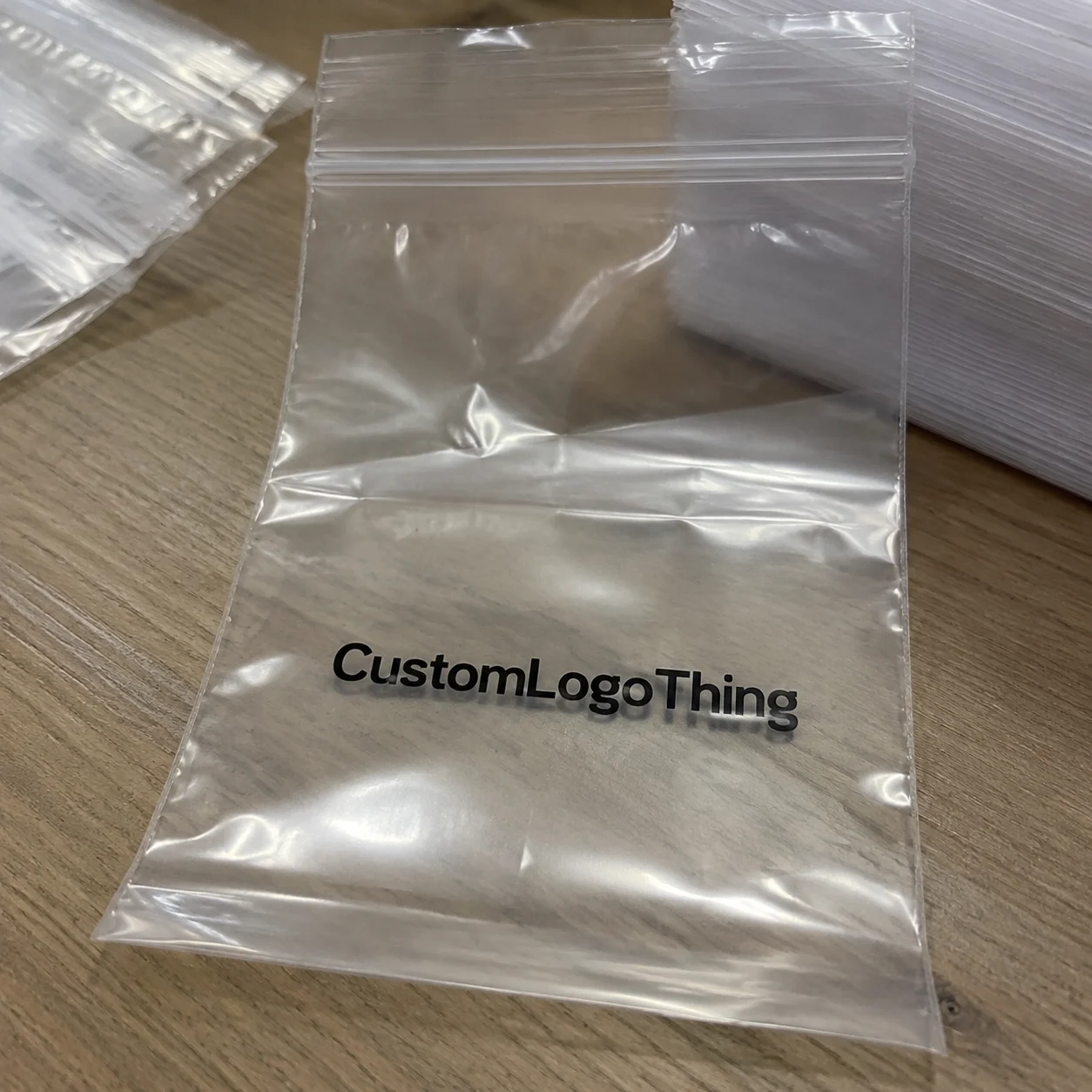
Printed poly mailers are lightweight shipping bags made from polyethylene film, usually in thicknesses like 2.5 mil, 3 mil, or 4 mil depending on product weight and abuse risk. They’re used for apparel, accessories, books, cosmetics, and all the things customers don’t want crushed. The design matters because the mailer is often the first physical thing someone sees after checkout, and that first touchpoint does a lot of heavy lifting. A 10 x 13 inch bag with a single-color logo can cost about $0.17 to $0.21 per unit at 5,000 pieces, while a 14 x 19 inch full-bleed version can jump to $0.32 or more when coverage increases.
In my experience, a mailer is doing three jobs at once. It protects the product. It promotes the brand. And it tells the customer, in about two seconds, whether you paid attention to detail or just uploaded a logo and hoped for the best. That’s why printed poly mailers design tips should be treated like packaging strategy, not decoration. I remember a brand founder in Austin telling me, “It’s just the shipping bag.” Then the bag arrived from a supplier in Yiwu, and suddenly it was “the shipping bag” again in a very different tone of voice.
Here’s the part people get wrong: they think design is only about looking pretty. No. Design also affects cost. If your artwork uses four colors, full bleed coverage, metallic ink, and a custom finish, your supplier is not going to smile and charge you the same as a one-color front print. I’ve seen quotes jump from $0.19/unit to $0.41/unit just because a brand went from a simple black logo on white film to a full-coverage navy design with white underprint. Same bag size. Very different invoice. A supplier in Shenzhen might also ask for a minimum of 5,000 pieces, while a smaller digital run in Southern California could price higher at 500 pieces because setup gets spread over fewer bags.
One client of mine sold activewear and wanted their poly mailers to feel “premium but minimal.” Good brief. Bad first draft. Their designer placed a thin silver logo on charcoal gray film. Nice on a laptop. Terrible on a bag. We swapped to high-contrast white on matte black, reduced the text, and made the logo 18% larger. The unit cost barely changed, but the brand looked much more confident. That’s what solid printed poly mailers design tips do: they make the packaging work harder without making your budget cry.
Factory-floor truth: If the logo can’t be seen from six feet away in a warehouse, it probably won’t look strong on a porch either.
Customer confusion matters too. If the mailer looks generic, people miss the brand moment. If the artwork is cluttered, people miss the brand name. If the print is too faint, they assume the package is cheap. None of that helps repeat purchase rates. And yes, I’ve watched customers post unboxing videos where the mailer got more attention than the product inside, which is either delightful or a little humiliating, depending on your perspective. A crisp mailer can do more for perceived value than a $1.80 thank-you card inserted into a 350gsm C1S envelope.
How Printed Poly Mailers Design Tips Work in Production
Most printed poly mailers design tips begin long before ink touches film. The usual flow is simple enough: you submit artwork, the supplier reviews it for prepress issues, they build the print setup, you approve a digital proof or sample, then production runs. Sounds neat. In real life, somebody always forgets the bleed or sends a flattened JPG at 150 dpi and then wonders why the edge looks fuzzy. A cleaner file in AI or EPS format can shave one proof round off the process, and that alone may save 2 to 4 business days.
There are three common print methods you’ll hear about. Gravure printing is usually used for larger runs and gives very consistent, crisp output, especially when the factory has proper cylinder setup. Flexographic printing is common for many custom mailer orders because it can be efficient and handles repeating designs well. Digital printing is often more flexible for smaller quantities or faster revisions, but unit pricing can be higher. None of these are automatically “best.” It depends on quantity, colors, artwork, and the supplier’s actual equipment. A factory in Guangzhou may quote flexo at 10,000 pieces for $0.16 per unit, while digital in Vietnam might sit closer to $0.29 per unit at 1,000 pieces.
Seam placement matters more than beginners think. If your logo lands too close to the side seal or bottom fold, the print can distort or disappear in those areas. Bag orientation also matters. A design that looks perfect laid flat may look awkward once the bag is filled and the customer sees the front panel under tension. I learned this after a 5,000-piece run for a skincare brand where the lower icon was positioned right where the bag tucked under itself. On paper, gorgeous. In the final packed form, half the icon got hidden. We fixed it on the next run by shifting the artwork 22 mm upward. Not glamorous, but neither is explaining to a client why their “signature detail” got swallowed by a fold.
White ink, metallic ink, and full-bleed coverage can shift both appearance and price. White ink on clear or colored film often needs proper opacity, or you get that washed-out, ghosted look nobody asked for. Metallic ink can pop beautifully, but it can also add setup complexity. Full-coverage printing looks premium, but it usually means more ink, more control, and more cost. Ask your supplier for a printable safe zone, a dieline, and a mockup. If they won’t send those, I’d be suspicious. Not dramatic. Just honest. For a 3 mil bag produced in Dongguan, I’ve seen a white-underprint layer add roughly $0.04 to $0.07 per unit at 5,000 pieces.
For authority on test methods and transit durability, I often point clients toward ISTA standards and packaging guidance from professional bodies. If your mailer is part of a broader shipping system, testing matters. You can read more at ISTA and review packaging guidance from The Packaging School and industry resources. I’ve seen brands skip testing, then blame the material when the flaw was really a bad fold line or weak adhesive strip. A 30-minute drop test in Chicago can save a 3,000-mile customer service headache later.
After the second proof round, things usually get more expensive to fix. That’s why printed poly mailers design tips should always include a communication checklist: ask for dielines, confirm print direction, verify seam areas, and review how the closure strip will affect the final look. No one wants a logo bisected by a peel-and-seal flap. It happens more often than you’d think, especially when the artwork was built without the 8 mm adhesive zone marked in red.
Key Factors in Printed Poly Mailers Design Tips
The best printed poly mailers design tips start with brand consistency. Your mailer should feel like it belongs with your website, inserts, thank-you cards, and any outer box packaging. If your brand uses warm beige and charcoal on the site, then neon green packaging is going to feel like it wandered in from another company. That mismatch is not “creative.” It’s confusing. A consistent palette across a mailer, a fold-over card printed on 350gsm C1S artboard, and a sticker seal can make a small brand look like it has its act together.
Logo size matters too. A tiny logo often looks polished on screen but disappears on a 12-inch shipping bag. I usually tell clients to test logo visibility at arm’s length and again from across a room. If you can’t read it quickly under mediocre light, it’s too subtle. I once worked with a subscription brand that had a 42 mm logo on a 14 x 19 inch mailer. We bumped it to 68 mm and suddenly the whole package felt more intentional. Funny how that works: bigger can look calmer when the layout is doing its job.
Typography is another trap. Sans-serif fonts with decent weight usually hold up better than thin script fonts when printed on plastic film. Small legal copy, QR codes, and social handles should be used sparingly. Nobody wants to turn their shipping bag into a flyer. The design should help the eye land on one thing first, then maybe a second thing. That’s it. A 7 pt font may look tidy in Illustrator, but on a glossy 3 mil mailer it can read like printer dust.
Color is where the money starts talking. More colors usually mean higher setup effort and sometimes higher unit cost. One- or two-color prints are often the easiest way to keep printed poly mailers design tips aligned with budget. But color count isn’t the only factor. Coverage matters. A small black logo on white film is cheap to run. A full-coverage dark background with white type is a different story. On a 5,000-piece order, I’ve seen unit pricing move from $0.17 to $0.34 just because the bag shifted from spot printing to near-full coverage. These printed poly mailers design tips are especially useful when comparing a minimalist logo to full coverage artwork.
Here’s a rough pricing comparison I’ve seen often enough to trust, though supplier equipment and volume change everything:
| Design Style | Typical Look | Approx. Unit Cost at 5,000 pcs | Notes |
|---|---|---|---|
| One-color logo print | Clean, minimal | $0.15-$0.22 | Best for tight budgets and fast approvals |
| Two-color branded layout | More distinctive | $0.21-$0.30 | Good balance of price and brand presence |
| Full-coverage custom art | Premium, bold | $0.29-$0.46 | Higher ink use and tighter prepress control |
| Special ink or metallic detail | High-end accent | $0.34-$0.58 | Can add setup complexity and longer lead time |
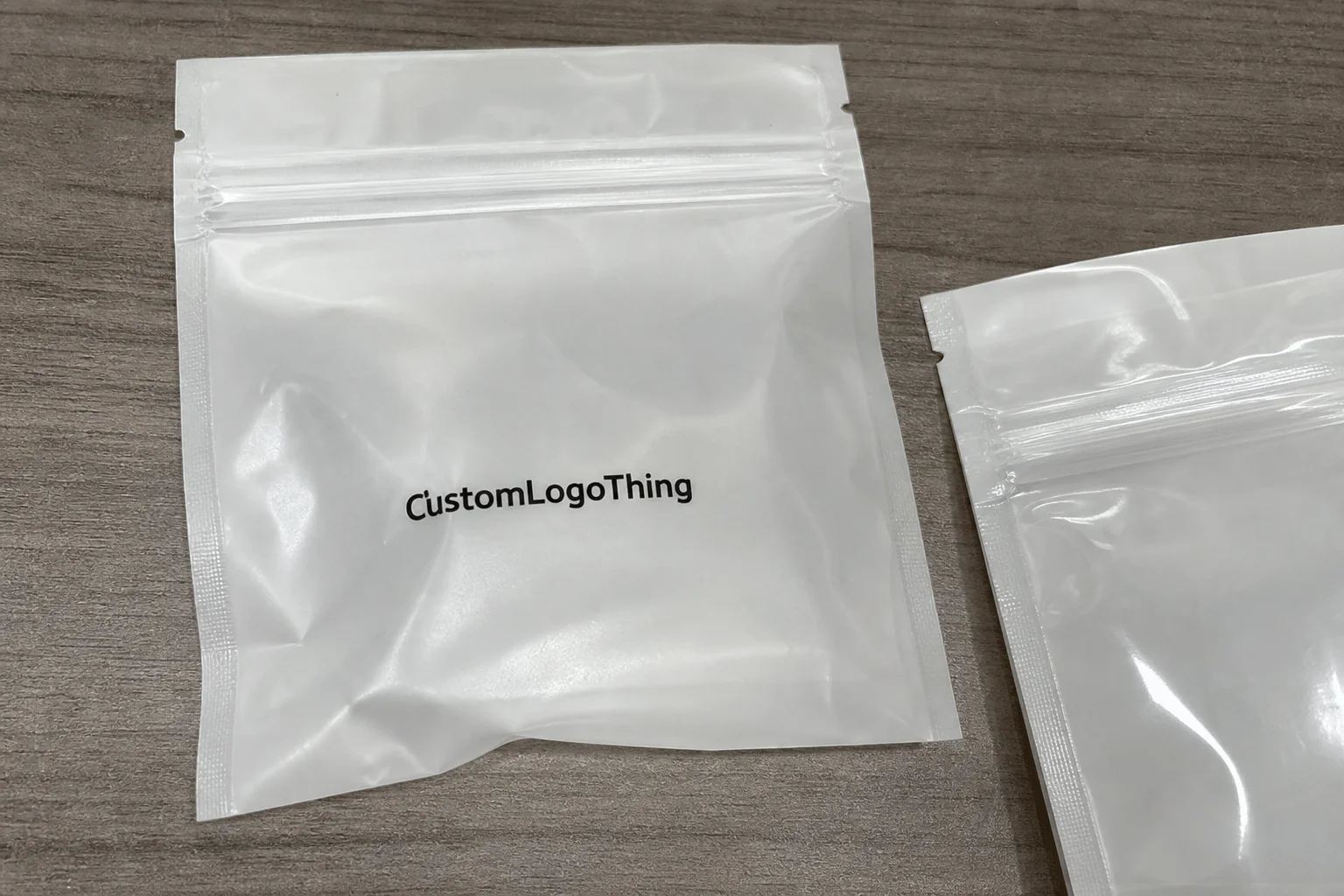
Material finish changes perception fast. Glossy mailers reflect light and can look bright and energetic, but they also show scuffs more easily. Matte finishes feel softer and more premium, though some colors can appear muted. Opaque bags hide the contents better. Translucent film can work for budget and weight reasons, but it usually looks more utilitarian. That’s not a flaw. It just means your design should match the material instead of fighting it. A white ink logo on a matte black 4 mil film in Portland can look elegant; the same artwork on a cloudy translucent bag in Houston can look underpowered.
If sustainability messaging is part of the brand, keep it clean. One recycled-content claim, one certified logo, or a short message is enough. Too many eco badges make the bag look like a government pamphlet with adhesive. If you’re using FSC paper inserts or recyclable packaging claims, make sure the statements are accurate and supported. I’ve seen brands get too enthusiastic and accidentally imply certifications they didn’t have. That kind of mess is avoidable. For reference, check FSC if you’re using certified materials.
And because people ask: yes, quantity matters. Smaller runs almost always cost more per unit because setup gets spread across fewer bags. A 1,000-piece custom order can land around $0.32/unit while a 10,000-piece run with the same art might fall closer to $0.17/unit. That’s not the factory being greedy. That’s production math. A supplier in Ho Chi Minh City may also quote a 7 to 10 business day difference depending on whether the film is in stock or needs to be sourced.
Step-by-Step Printed Poly Mailers Design Tips Process
If you want printed poly mailers design tips that actually help, start with a goal. Is this mailer meant to feel luxury, playful, eco-conscious, or just clean and practical? A jewelry brand and a vitamin brand should not use the same layout unless they’re trying very hard to look interchangeable. The design brief should answer that first. A luxury brand in Miami may want matte black with white ink; a pet supply brand in Phoenix may need bright contrast and heavier gauge film for a 2 lb parcel.
Step 1: Build a simple brief
Include logo files, brand colors, fonts, taglines, required legal text, and any no-go rules. I like to ask for vector art in AI, EPS, or PDF format because that keeps edges sharp at print size. If a client sends me a tiny PNG and says “can you make it bigger,” I know I’m about to have a teaching moment. Again. I swear, every packaging project has at least one file named “final_final2_use_thisone,” and someone in Brooklyn or Seattle always swears that one is the real final.
Step 2: Get the dieline before placing artwork
The supplier should send a proper dieline with measurements for the safe area, seal areas, and flap placement. Put your art on that dieline before approving anything. A design can look excellent in Photoshop and still fail on a real mailer if the logo sits too close to the edge or the closure strip. For most 14 x 19 inch mailers, I like to keep critical text at least 8 to 10 mm from seals and fold lines.
Step 3: Decide print coverage
Choose front-only, back-only, or full-coverage printing based on budget and visibility. For many brands, front-only with a strong logo is enough. For a premium unboxing moment, full wrap can be worth it. I once had a DTC clothing client move from a small centered mark to a wraparound design. The order price went up by about 22%, but their social posts doubled because the package photographed better. There’s always a tradeoff, and sometimes the tradeoff is paid back by the internet doing free marketing for you.
Step 4: Review the proof like your money depends on it
Because it does. Check spelling, logo proportion, color codes, and alignment. Ask whether the proof is showing CMYK approximation or Pantone reference. If you care about exact brand color matching, say so early. Don’t wait until the bags are halfway across the ocean and then discover the blue looks like a different department of blue. A proof approved on Tuesday in Shanghai can look very different under warehouse LEDs in New Jersey.
Step 5: Request a physical sample when the order is sensitive
If the order is large or the colors are picky, pay for a sample. A sample might cost $35 to $120 depending on method and freight, and yes, that money is cheaper than reprinting 8,000 units. I negotiated a sample run for a cosmetics client in Guangzhou once after their first proof looked fine but the matte film muted the blush pink. The sample caught the issue. The full run did not become expensive heartbreak. That’s the point, and it is one of the most practical printed poly mailers design tips you can actually buy for less than lunch in San Francisco.
Step 6: Confirm timelines in writing
A realistic custom order might look like 3-5 days for artwork revisions, 2-4 days for proof approval, 12-18 business days for production, plus shipping. That changes with print method and quantity. Do not promise a retail launch date based on a supplier’s “probably okay” estimate. I’ve heard that word before. Usually from someone trying to avoid saying “maybe.” If the factory is in Ningbo and the freight lane is busy, give yourself another 4 to 7 business days for transit.
Step 7: Finalize with a checklist
Before production starts, confirm material thickness, bag size, seal style, print sides, quantity, and shipping address. Also verify whether the adhesive closure strip affects artwork placement. One forgotten detail can turn into a very expensive rerun. That’s why the best printed poly mailers design tips include process discipline, not just visual advice. A 3 mil bag in one size may look perfect, but the 2.5 mil version can shift slightly during sealing if the supplier changes tooling.
Here’s a practical checklist I use with clients before approval:
- Artwork placed on the correct dieline
- Logo size confirmed at real bag scale
- Color references agreed, ideally Pantone if needed
- Seam, flap, and bleed zones cleared
- Typography checked for print legibility at small size
- Sample approved for finish and ink opacity
- Shipping and production dates confirmed
If you also need other packaging pieces to match, browse Custom Packaging Products and compare them with your mailer plan. It is always cheaper to coordinate packaging early than to fix mismatched branding after the fact, especially if your inserts are printed on 350gsm C1S artboard in Chicago while your mailers are coming from a factory in Wenzhou.
Common Mistakes in Printed Poly Mailers Design Tips
The biggest mistake is stuffing too much into one bag. Small text, extra slogans, three QR codes, social icons, environmental claims, and a decorative border? That’s not branding. That’s a cry for help. Good printed poly mailers design tips usually begin by removing things, not adding them. A cleaner layout on a 10 x 13 inch mailer often outperforms a crowded one that tries to fit an entire homepage into 82 square inches.
Low contrast is another classic failure. Gray on black. Pale mint on clear film. Soft beige on a glossy cream bag. These choices may feel refined in a mood board, but they tend to get swallowed by shipping conditions. I once watched a brand lose about 18% of the clean, premium feel they wanted because the logo color sat too close to the bag background. On screen, elegant. In the real world, nearly invisible. The fix cost them an extra proof round and another week. Everyone pretends it’s fine until the sample arrives, and then the room gets very quiet.
Another mistake: ignoring the back seam, flap, or fold lines. The factory doesn’t “randomly” cut through your design. The art was placed in a bad location. I’ve had clients argue that the machine must have drifted. Sure. The machine and the universe both conspired against your logo. Or maybe the logo was 8 mm too close to the edge. I know which one I’d bet on, especially after seeing the same error happen in both Suzhou and Monterrey.
File quality matters more than people think. If your designer sends a low-resolution raster image, the print can look soft or jagged. Vector is better for logos and text. High-resolution artwork is needed for detailed graphics. And if the file is flattened in a weird way, the supplier may have to rebuild it, which slows everything down. That extra time is annoying, but it’s still better than approving blurry packaging. If your supplier asks for a PDF with embedded fonts and 300 dpi imagery, that is not bureaucracy; it is the price of a clean run.
Skipping sample approval because the team is rushed is one of the most expensive habits in packaging. A brand can save two days and lose three weeks when 5,000 bags arrive with the wrong shade of red. I’ve seen that happen with a beverage accessory brand. The founder hated the result, the customer service team hated the result, and the warehouse manager hated the result because no one wanted to store the bad run. Rush orders are not a strategy. They’re just pressure with a shipping label, and a rush from Shenzhen to Long Beach usually costs more than the sample that would have prevented the mistake.
Handling matters too. Mailers get scuffed, bent, stacked, slid, and sometimes dragged across rough conveyor equipment. A glossy black bag may look perfect leaving the factory and slightly scratched after transit. That’s why printed poly mailers design tips should account for real shipping conditions, not just pristine studio photos. If your order travels through Memphis or Columbus during peak season, expect abrasion, dust, and compression marks that no mockup can predict.
If your project includes transit testing or durability questions, I always recommend referencing packaging test standards and not guessing. You can start with the resources at ISTA. A little testing beats a lot of excuses. It also beats rebooking production in a factory outside Ho Chi Minh City because a closure strip failed on the first run.
Expert Printed Poly Mailers Design Tips for Better Results
Here’s my honest opinion: simple wins more often than clever. The best printed poly mailers design tips I’ve used in the real world usually come down to one strong logo, one clear message, and enough breathing room for the design to feel intentional. A bag does not need to shout to be noticed. On a 14 x 19 inch mailer, a centered 70 mm mark with generous margins can feel more premium than a dense wrap filled with slogans and icons.
Negative space is your friend. I know some teams panic when they see empty areas, like they’re paying for every square inch and not using enough of it. But empty space can make a mailer look more expensive. It helps the logo stand out. It makes the design easier to read. It also reduces the risk of weird visual clutter when the package gets handled fast. A minimal bag printed in Qingdao on 4 mil film can photograph better than a crowded one that cost 20% more to produce.
Choose one focal point. Maybe it’s the logo. Maybe it’s a pattern. Maybe it’s a bold brand statement. But pick one. I once worked with a startup that wanted a logo, a slogan, a pattern, a mascot, and a QR code all on the front panel of a 10 x 13 inch mailer. It looked like five people edited it without speaking. We cut it down to the logo and a small pattern strip. Sales stayed the same. The packaging looked three times better. The founder later told me, half-joking, that the mailer was less “confused” than the original version, which was generous because the original version looked like a design meeting had exploded.
Ask suppliers for previous production examples. Not mockups. Real samples. I’d rather judge a bag with a fingerprint on it than a perfect render that lies. Physical samples tell you how the ink sits on film, how reflective the surface is, and whether the color feels right in daylight. You can also compare options from a supplier like Custom Poly Mailers to see what construction and print styles make sense for your order. If the sample was printed in Dongguan last month and the final run is scheduled for Ningbo next week, ask whether the same film lot will be used.
If brand color accuracy matters, budget for Pantone matching or at least an extra proof round. Color on plastic is not the same as color on paper. A warm beige can skew yellow. A strong blue can look darker once printed on gloss film. I’ve had buyers insist the first proof was “basically right” and then call their brand manager, who said it was “basically wrong.” Pay for the correction while it’s still on a screen. A $40 proof change is cheaper than 10,000 miscolored bags arriving in Columbus, Ohio.
Think about the unboxing photo. If a customer posts the package on Instagram, will the bag still look clean and recognizable from a few feet away? That’s not vanity. That’s free brand exposure. A mailer that photographs well can earn attention the design team didn’t pay for. A mailer that looks muddy or crowded? Not so much. A strong contrast ratio can matter more than a glossy finish, even though glossy finishes are the ones that sound impressive in meetings.
Build flexibility into the design so it works across multiple sizes. A layout that looks perfect on a 10 x 13 bag may need adjustment on a 14 x 19 bag. Keep key elements in consistent positions, but leave room for scaling. That saves you from redesigning every time you change packaging size. Which, by the way, happens more often than founders expect once order volumes grow from 1,000 to 10,000 units and the warehouse starts asking for a different carton count.
One more practical note: eco claims should be clean, accurate, and minimal. If the bag is recyclable under specific conditions, say that clearly. If it uses recycled content, give the correct percentage. Don’t stack five sustainability icons just because your competitor did. Customers can smell marketing fog from a mile away. If you need compliance language, check it against the actual material spec, not a mood board.
So yes, printed poly mailers design tips are really about discipline. Clear hierarchy. Correct file prep. Tight communication with the supplier. And enough humility to accept that what looks lovely on a laptop might look terrible on a plastic bag. These printed poly mailers design tips work best when the design stays readable, cost-aware, and grounded in production reality.
Next Steps for Printed Poly Mailers Design Tips
Start with an audit. Pull out your current mailer and ask three questions: What looks strong? What gets damaged? What do customers actually notice? That one exercise can save you from designing based on assumptions instead of reality. I’ve done this with clients on factory visits in Taipei and Minneapolis, and the answers are usually humbling in a useful way. A design that looked sharp in the studio may read as muddy once it passes through a FedEx hub.
Next, gather your files. Logo in vector format. Brand colors. Any must-have text. Any legal notes. Then send that to the supplier with a clear request for dieline, proof process, and timeline. If the supplier can’t explain how they’ll review artwork, I’d keep shopping. You want a partner who can tell you whether a 3 mm shift will matter, not someone who just says “looks okay.” A reliable supplier in Yiwu or Shenzhen should also tell you whether the adhesive zone is 10 mm or 12 mm without making you guess.
Then compare pricing using the same specs. Same size. Same thickness. Same quantity. Same number of colors. If you compare random quotes, the numbers are nearly useless. One supplier might quote $0.21/unit because they’re using a different film gauge, while another quotes $0.29/unit with stronger adhesive and better print control. Apples to apples. Not apples to “whatever the salesperson had on their desk.” Ask for the film spec, too: 2.5 mil, 3 mil, or 4 mil should be written into the quote.
Set a timeline that includes design, proofing, production, and shipping. A realistic schedule might be two days for internal design cleanup, three days for proofing, 12 business days for production, and five to seven days for freight depending on route. If you’re running a launch, build in buffer time. Printers do not care that your influencer campaign is scheduled for Friday. They care about the press schedule, the raw materials, and whether someone approved the artwork before lunch. For overseas freight, add another 3 to 10 business days if the route runs through Long Beach or Savannah during a busy week.
Finally, create a final approval checklist. Size. Color. Print area. Closure style. Quantity. Shipping address. I know that sounds basic, but basic is where packaging projects either stay profitable or become a cleanup operation. The best printed poly mailers design tips are the ones that connect design, cost, and production in one plan. A bag that costs $0.18 at 5,000 pieces but needs a reprint is no bargain at all.
If you’re ready to move from concept to order, start with the mailer specs first, then the art, then the quote. That order matters. And if you want more packaging options that match your brand system, explore Custom Packaging Products alongside your mailer project so you’re not building a one-off solution that fights the rest of your packaging. It is far easier to coordinate a mailer, insert card, and seal sticker in one production plan than to patch the system later.
Bottom line: printed poly mailers design tips work when the design looks good, prints cleanly, and fits the budget. Ignore any one of those, and you’ll feel it in reprints, delays, or customer complaints. Get all three right, and the bag does what it should do: ship the product and make the brand look worth remembering. The most useful move now is simple: review your current mailer against the checklist above, strip out anything that hurts readability, and approve only a proof that keeps seams, color, and scale in line with the real bag.
FAQ
What are the best printed poly mailers design tips for small brands?
Start with a simple logo-first layout so the brand reads fast, especially at arm’s length. Use one or two colors to keep pricing under control, because every extra color can add setup complexity and cost. Choose high-contrast colors so the design stays visible in shipping conditions, porch lighting, and warehouse handling. If you’re ordering 1,000 to 3,000 pieces, simplicity usually beats trying to do too much. A 3 mil white mailer with a one-color print can often stay near $0.18 to $0.22 per unit at that volume.
How do printed poly mailers design tips affect pricing?
More colors, more coverage, and special inks usually raise unit cost. Smaller quantities typically cost more per mailer because setup is spread across fewer pieces. Cleaner designs can reduce the need for extra proof rounds and reprints, which is where people quietly lose money. A one-color print at 5,000 pieces might land near $0.15 to $0.22/unit, while a full-coverage custom layout can move well above that depending on the supplier and whether the factory is in Shenzhen, Dongguan, or Ho Chi Minh City.
How long does the printed poly mailers design tips process usually take?
Artwork prep and proofing can take a few days if your files are ready and your team responds quickly. Production time depends on print method, quantity, and whether a physical sample is needed, but 12-18 business days is a reasonable planning window for many custom runs. Shipping time comes on top of that, especially if the bags are coming from overseas. Build in extra time if your colors are brand-sensitive. From proof approval to finished bags, many factories quote 12-15 business days for standard flexo orders, plus 5 to 10 days for transit.
What file format should I use for printed poly mailers design tips and artwork?
Vector files like AI, EPS, or PDF usually work best for logos and text because they keep edges sharp at print size. High-resolution artwork prevents blurry edges and weak print quality, especially on detailed graphics. Always place art on the supplier’s dieline before submitting so seams, flaps, and bleed zones are accounted for. If your designer sends a low-resolution PNG, expect prepress to ask for a better file. A print-ready PDF with embedded fonts and 300 dpi images is a safer bet than a flattened JPG.
How many colors should I use for printed poly mailers design tips on a budget?
One to two colors is usually the most budget-friendly approach. Use contrast instead of extra colors to make the design stand out, because contrast does more work than decoration. Ask the supplier how color count affects setup and unit pricing before approving the layout, since print method and coverage can change the real cost more than people expect. Simple often wins. Fancy can wait until the budget agrees. On 5,000 pieces, the difference between one-color and two-color printing can be about $0.03 to $0.08 per unit.