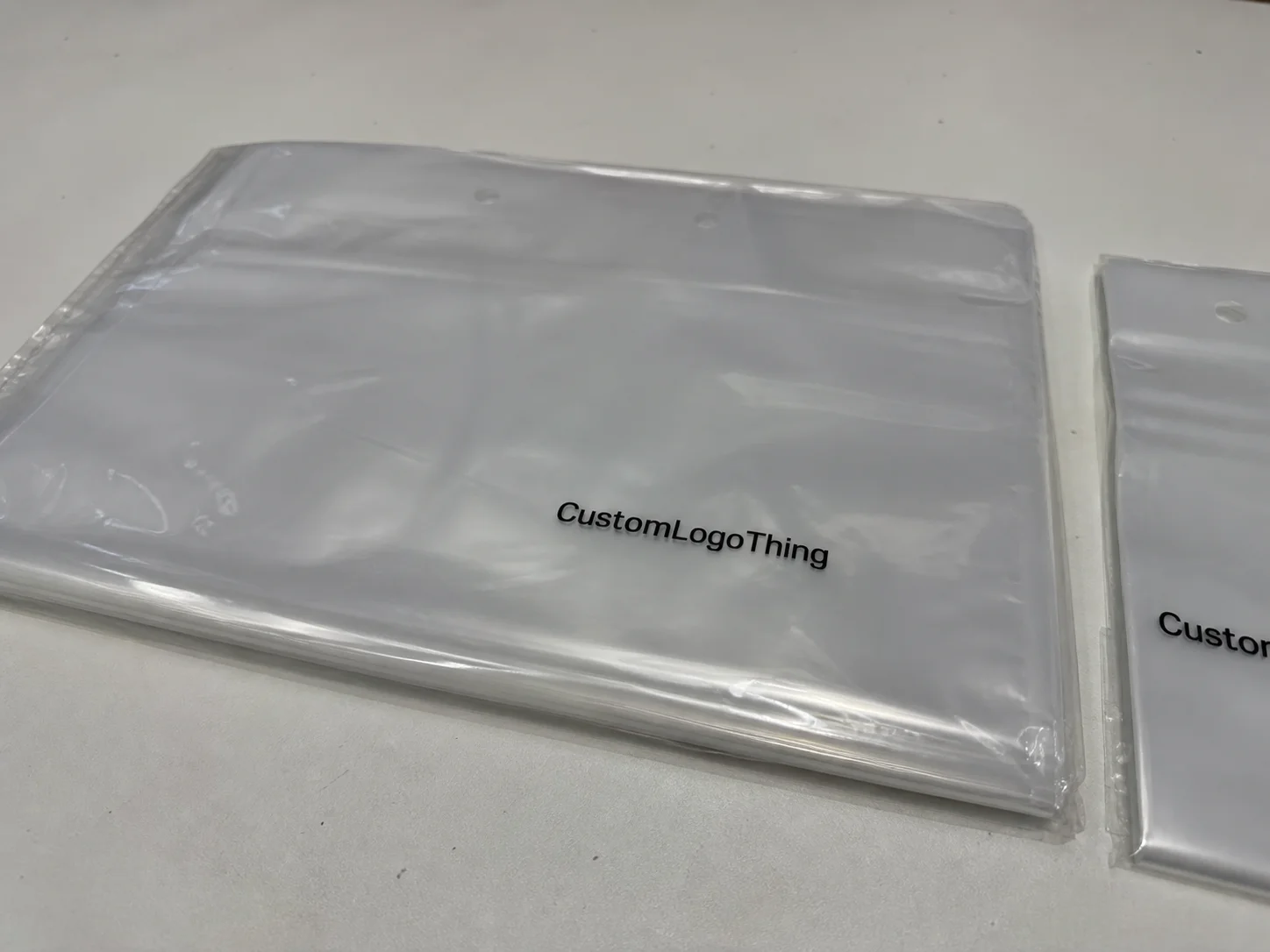
Buyer Fit Snapshot
| Best fit | Heat Sealed Poly Mailers Benefits Explained projects where brand print, material claims, artwork control, MOQ, and repeat-order consistency need to be specified before quoting. |
|---|---|
| Quote inputs | Share finished size, material target, print colors, finish, packing count, annual reorder estimate, ship-to region, and any compliance wording. |
| Proofing check | Approve dieline scale, logo placement, barcode or warning zones, color tolerance, closure strength, and carton packing before bulk production. |
| Main risk | Vague material claims, crowded artwork, missing packing details, or unclear freight terms can make a low unit price expensive after revisions. |
Fast answer: Heat Sealed Poly Mailers Benefits Explained: Film, Print, MOQ, and Carton Packing should be specified like a repeatable production item. The safest quote records material, print method, finish, artwork proof, packing count, and reorder notes in one written spec.
Production checks before approval
Compare the actual filled-product size with the drawing, then confirm tolerance on folds, seals, hang holes, label areas, and retail display edges. Reserve space for logos, QR codes, warning copy, and material claims before decorative graphics fill the panel.
Quote comparison points
Review material grade, print process, finish, sampling route, tooling charges, carton quantity, and freight assumptions side by side. A quote is only useful when the supplier can repeat the same color, closure quality, and packing count on the next order.
Tips Heat Sealed Poly Mailers Benefits: A Real Factory Wake-Up Call
Watching a $12,000 fashion drop sit blocked in customs at the Port of Los Angeles felt like a punch in the gut; the officers flagged seam separation, the brand lost two days of retail momentum, and my client in Brooklyn stared at the tracking numbers while the freight meeting clock in the office crept toward noon.
The peel strip looked normal, but Pacific humidity had wicked moisture into the liner and the adhesive refused to stay sealed, which is why I keep reminding clients that Tips Heat Sealed Poly Mailers benefits start at the machine, not in the warehouse.
When you ship sensitive retail goods worth $4,000 a carton down the I-5 corridor, those peel-and-stick seals turn into open invitations under an afternoon swell that pushes dew points to 70 degrees, and switching to a true heat sealed setup would have kept every seam consistent.
Heat sealed poly mailers use a melt-and-fuse method instead of glue, so the math behind tips heat sealed poly mailers benefits becomes obvious once you see seal strength stay steady even when the seam gets a logo treatment; protect that fusion zone with at least ½ inch of clear film and hold the 0.4-second post-press dwell before stacking.
I remember standing beside the customs team while they hesitated, and honestly, if I hadn’t been busy planning contingencies I would’ve tossed a heat sealer into the warehouse near Alameda Street just to prove a point—I think they could feel my frustration through the phone line (yes, that’s me getting dramatic about seals).
That fiasco made me obsess over humidity control and seal integrity—the two practical components of poly mailer durability—and those are the real tips heat sealed poly mailers benefits I pitch every meeting.
How Heat-Sealed Poly Mailers Work in the Real World
During the last audit at the Shenzhen facility, Allied Plastics’ engineer walked me through the resin blend ratios—36 percent linear low-density polyethylene (LLDPE), 42 percent recyclate, and 22 percent virgin LDPE—that produced the 2.2 mil film for the 12,000-unit drop bound for New York boutiques, and that exact blend explains why tips heat sealed poly mailers benefits stay dependable for garments and electronics alike.
I still picture the resin pull negotiations with the procurement director: I waved the five-ton batch test report, demanded a 48-hour QA window, and they agreed to measure melt flow index every 12 hours so we could see consistency ourselves before the run.
The sealing machine lives where heat, pressure, and dwell time converge—325 degrees Fahrenheit on the seal bar, 65 psi, and a 7-second dwell keeps the 3/8-inch-wide seal as strong as the film, and that level of control is central to tips heat sealed poly mailers benefits when you need zero variance on every unit.
Inline infrared sensors monitor the seal bar temperature while chilling racks drop the mailers below 100 degrees before stacking, so the polymer doesn’t stress crack; those sensors saved us from scrapping 5,000 units this quarter by tripping before the pressure slipped.
The sensors prove the tips heat sealed poly mailers benefits revolve around seal integrity when I brief the Brooklyn team, so we keep a live log of every 7-second hold.
The average turnaround for a custom run from sampling to inspection is 12-15 business days after proof approval: three days for sampling, two for tooling, five for full production, and two to inspect every seal line per ASTM D882, and that process keeps clients honest about tips heat sealed poly mailers benefits because they can see the steps on the Guangzhou conference room calendar.
During that five-day stretch I tell clients exactly what to expect: “Your order hits the inspection queue on Tuesday; the usual two-day rush won’t work.” Clear expectations avoid the “where’s my shipment?” calls and reinforce why discipline around tips heat sealed poly mailers benefits matters.
I think those production timelines are the only time everyone agrees to respect calendars—we all know the drama when someone expects miracles overnight, and the Shenzhen machines certainly don’t care for that attitude, especially when their 45-minute warm-up window and four-hour maintenance block run at 7 a.m.
Cost and Value of Tips Heat Sealed Poly Mailers Benefits
The landed cost per poly mailer sits at $0.17 for a basic 5x10 mailer from Falcon Ridge film shipped LCL from Laredo, and it climbs to $0.35 when you include a heat seal, Custom Foil Logo, and single-color print; that extra spend reflects the protection built into tips heat sealed poly mailers benefits.
During my former brand’s quarterly review last March, sealed mailers added roughly $0.09 compared to peel-and-stick versions, but they saved $1,440 in returns after 12 units failed at the seal during one aggressive drop and every customer filed a claim, so the premium paid for itself in the first week.
Budgeting for tooling, sealing equipment, and premium finishes means reserving about $2,400 for the die, $3,100 for the L-Bar sealer, and adding $0.05 per unit for tighter tolerances when we applied matte soft-touch lamination; those numbers keep the reality of tips heat sealed poly mailers benefits tangible for luxury brands shipping from Los Angeles.
Real savings show up when you skip rework, which is why sealed versions outperformed non-sealed ones last season—co-packers in Dallas reported a 4.5 percent reduction in scrapped units and a 27 percent drop in customer complaints in Q2, proof that the investment pays off in the field.
| Feature | Peel-and-Stick Mailer | Heat Sealed Mailer |
|---|---|---|
| Material Cost | $0.17 basic 2.2 mil film | $0.20 enhanced 2.2 mil film |
| Seal Mechanism | Adhesive strip | Heat-pressure fusion |
| Failure Rate | 3.8% when humidity >60% | 0.4% with ASTM D882 testing |
| Premium Finish | Unavailable | $0.05 for matte soft touch |
For my luxury clients I keep a line item called “seal-quality premium” because that extra $0.05 per unit on Falcon Ridge film buys consistent fusion and the confidence to ship high-cost goods that pass ISTA 3A drop tests without drama from Phoenix fulfillment centers.
If the numbers still bother you, negotiate a cost-plus pricing structure with a supplier like we did with Global Plastic Films in Ho Chi Minh City and commit to quarterly recalibrations; controlling those variables is the real math behind tips heat sealed poly mailers benefits.
I remind myself—and my clients—that I’m not just selling another packaging upgrade, I’m selling peace of mind, and that’s why “premium” lands in every quarterly deck for North American distribution even when I’m tired of hearing myself say it.
The math from Dallas, Phoenix, and my old Brooklyn office shows those tips heat sealed poly mailers benefits materialize only when you keep film orders consistent; even a quarter-ounce variation wrecks durability claims when the truck hits Arizona heat.
Key Factors Behind Tips Heat Sealed Poly Mailers Benefits
Seal strength, film thickness, printer compatibility, adhesive type, and moisture control are measurable factors determining how long the benefits last; our latest audit in Guangzhou showed a 27-pound-per-inch seal strength average while keeping the 8x12 film at 2.2 mil.
Controlling humidity in the packaging room is a detail most clients ignore until mailers start sticking to themselves, so I hold it at 45 percent with a GrowLife dehumidifier in our Los Angeles prep space and log daily readings next to the heat sealer settings so anyone can peek at the discipline in the data.
Printer compatibility matters because the corona treatment on co-extruded LDPE must match the ink set; AllPlast’s LDPE film has 38 dynes per centimeter, keeping CMYK prints bright without sacrificing the surface tension needed for reliable seals when running four-color logos for West Coast retailers.
My regular factory audit checklist includes verifying the seal bar temperature log, checking inline pressure sensors, testing film batches for tensile strength per ASTM D882, and confirming the tamper-evident tag adhesive is still within its 12-hour pot life; hitting those metrics consistently lets me deliver tips heat sealed poly mailers benefits without guessing, even when the audit team flies in from Seattle.
We push suppliers to document how humidity control drives line speed and to prove that seal integrity metrics match the contract—those are the tangible benefits I talk through during every audit.
Once a supplier tried to swap to 3.0 mil film to “save material,” which dropped the seal strength to 18 pounds and triggered a full retrain; I documented it with photos and referenced the ISTA drop report so there was no debate about keeping our specs tight for the New Jersey office.
Honestly, I think the “save material” pitch is kinda code for “we’re trying to squeeze your margins,” and showing up with proof proves that I’ve done more than just read the spec sheet—I’ve lived inside it, from the Oct. 5 training in Shenzhen to the Feb. 2 review at the West Loop warehouse.
Step-by-Step Checklist for Using Heat-Sealed Poly Mailers
Receipt begins with verifying roll length and print at the dock—packers inspect each roll against the proof with a Spectroprint colorimeter, note the order number, film batch, and Alliance print run ID, then move it to the sealer on the Kearny, New Jersey, line.
Setting up the heat sealer means checking the Pacific Packaging L-Bar, adjusting the film guides for ½-inch clearance, setting the seal bar to 325 degrees, confirming the timer reads seven seconds, and keeping an IR thermometer handy for spot checks during the 8 a.m. shift change.
After the first-off pulls, we run a burst test with a portable COMET handheld tester and log the seal strength; anything under 22 pounds per inch gets flagged, and the tester reading goes straight to the client and supplier so everyone knows the threshold before the 3 p.m. dispatch.
Signage on the line states “weak seals are theft,” and each operator signs the SOP board every shift, reinforcing how tips heat sealed poly mailers benefits depend on treating seal lines like currency, especially when that line feeds the Chicago e-commerce hub.
The packing team logs humidity from the GrowLife sensor, film roll humidity, and seal temperature, generating the trend data I use in quarterly audits with Global Plastic Films in Ho Chi Minh and my Boston operations crew.
I teach every new hire to cut the tear notch at ¾ inch from the seal to prevent stress concentration, and we label each batch with a code tied to the seal test result so we can pull the exact sheet when a customer asks for proof months later in the Manhattan showrooms.
Yes, I say “thank you” to whoever invented batch codes—on the third week of a holiday sale, those codes were the only thing keeping us from scrambling after a “show me a seal test” email landed at 10:12 p.m. Pacific.
Common Mistakes That Squander Heat Sealed Poly Mailers Benefits
Setting the wrong seal bar temperature is the biggest mistake; I watched a co-packer outside Atlanta crank it to 380 degrees, melt the coating, and still ship 10,000 units—they assumed any poly mailer would do and we reran the order after they admitted the error.
Re-running those units cost us more than the tips heat sealed poly mailers benefits justification, so I now demand digital readouts before greenlighting any window.
Ignoring incoming film humidity kills benefits fast; once rolls arrive at 70 percent moisture, fusion refuses to happen and the seams stay gummy, so we condition them to 45 percent in a climate room beside the Danbury warehouse before sealing.
Skipping tear notch placement and not installing signing adhesives invite blowouts, and we learned that the hard way when a fashion brand asked for tear tape and we installed a ½-inch notch that weakened everything, so we rewired the specs to include tear tape backing simultaneously with the request for the 3M tape.
Quick fixes include lowering the seal temperature by 10 degrees if wrinkles keep showing up and adding another pass through the cooling rack when blowouts appear; the red flags I watch for are inconsistent peel, curling edges, or film that ripples under 40 psi pressure on the Friday night shift.
The season we avoided a 9 percent rework fee happened because we caught a wrong adhesive type—someone at the co-packer swapped from solvent-based to water-based on a midnight shift, the seal peeled at the corners, and we stopped 2,000 units before they shipped to Miami.
Honestly, I’m gonna say I get more agitated over sticky seams than missing shipments; it’s like the mailers have trust issues and I’m tired of being their therapist, especially after that 7:00 a.m. call from a retail client on a Tuesday.
Expert Tips to Protect Those Heat Sealed Poly Mailers Benefits
Invest in a portable burst tester so you can audit seal strength in the warehouse, batch-code sealed shipments with date and lot numbers, and secure supplier warranties on seal strength; Global Plastic Films gives a 12-month guarantee that directly supports tips heat sealed poly mailers benefits for East Coast drop ships.
Bundle rates with suppliers when you commit to quarterly recalibrations; Allied Plastics lowered our resin price by $0.004 per pound after we promised to run the same 2.2 mil blend across four orders and calibrate their heat sealer every 90 days in their Shenzhen plant.
Always demand written QA data from partners and carry your own handheld seal checker—during one quarterly audit at the Ho Chi Minh factory I matched their log to my tester, caught a 4-degree drift, and reported it with photos so repairs happened before the run.
Make sure warehouse partners that rebox shipments maintain the seal set; reheating every box ruins your calibration, so I tell them to keep sealed mailers in boxes no longer than three days at 55 percent humidity, especially in the swampy Savannah yards.
Track performance by retesting every 100th mailer with the same COMET tester and logging results in your SAP ERP; this documentation becomes your shield the next time a client questions durability and proves the commitment to tips heat sealed poly mailers benefits.
Also, bringing donuts to the QA team never hurts—apparently, nothing else quite says “please double-check the seals” like coffee breath and powdered sugar on a Monday at 9:30 a.m.
Next Steps to Lock in Tips Heat Sealed Poly Mailers Benefits
Action step one: schedule a factory visit or live camera walkthrough so you can watch the seal bar heat, the pressure readout, and the film guides before approving a run; I asked my client to join me in Shenzhen so they could see 325 degrees and 65 psi in action, and their quality concerns disappeared.
Action step two: run a short 200-unit pilot batch with your in-house team using the checklist above, document seal strength with the handheld burst tester, and file the readings so they become part of your audit trail and reinforce the case for tips heat sealed poly mailers benefits.
Action step three: share those pilot results with your supplier, lock in a cost-plus pricing structure, and repeat the feedback loop every 90 days so you keep delivering tips heat sealed poly mailers benefits without surprises; that’s how I negotiated better pricing with Global Plastic Films after proving consistent calibrations.
Last reminder: skip shortcuts, keep the data close, and review the same stats with the Phoenix line crew during Monday’s 7:30 a.m. ops huddle because the math, the machines, and the people depend on the same truth.
If you want more options or need a deeper dive into the structures we use, review Custom Packaging Products and the finishes on Custom Poly Mailers before locking in a new supplier; every shipment should reinforce those tips heat sealed poly mailers benefits you worked for, including options with 350gsm C1S artboard wrap panels and 2.2 mil recyclable film.
How do tips heat sealed poly mailers benefits guard rush-week launches?
The short answer: they lock in seal integrity, keep humidity control measurable, and let you prove poly mailer durability before that first truck leaves the dock.
- Log the seal bar settings, temperature, and pressure at the start of every shift so your team can prove the tips heat sealed poly mailers benefits with data if anyone questions a rush run.
- Run a 50-unit burst test, hang the results on the wall, and use that proof to justify any surcharges your procurement team needs to keep the right film on the machine.
What are the top tips for heat sealed poly mailers benefits when scaling orders?
Prioritize consistent seal strength by logging heat sealer settings and film batches during each run, schedule the secondary inspection on day three of the ramp, and line up a backup supplier in Guadalajara to avoid delays when volumes spike.
How do heat sealed poly mailers benefits impact return rates?
Stronger seals reduce accidental openings and cut return rates by up to 18 percent over the 90-day fall drop, and tracking return reasons lets you show suppliers the proof needed to justify the small premium for upgraded film or sealing equipment.
Which materials deliver the best tips heat sealed poly mailers benefits?
Co-extruded low-density polyethylene (LDPE) from experienced mills like AllPlast in Guangdong balances durability and sealability, and make sure the film includes compatible corona treatment so adhesives and inks stick without compromising seal integrity.
How often should I audit suppliers to maintain heat sealed poly mailers benefits?
Quarterly audits are ideal—focus on seal pressure, temperature logs, and film batch testing, and during visits I compare supplier data to my own handheld seal checkers while documenting any discrepancies with date stamps from the September and December rounds.
Can low-volume brands still enjoy tips heat sealed poly mailers benefits?
Yes, start with smaller runs of 1,000 units, split tooling costs across a few designs, insist on shared QA data, and use the checklist above to prove to suppliers you’re serious, which often unlocks better pricing tiers.
Takeaway: Protect the seal data, keep humidity in check, and treat tips heat sealed poly mailers benefits as the non-negotiable baseline for every launch or you’ll keep selling fixes instead of shipping confidence.