A sewn neck tag can slow down a simple shirt. One operator positions the tag. Another catches it into the seam. Quality control checks the stitch line, loose threads, alignment, and puckering. A custom Heat Transfer Label bulk order changes that sequence because the label can be applied with heat, pressure, and a short dwell time, often using equipment already present in apparel decoration or finishing rooms.
That matters once a program moves beyond samples. Less handling. Fewer trim components. Lower irritation risk at the neck seam. A cleaner mark where the wearer actually feels the garment. Comfort complaints often begin with details buyers treat as minor: scratchy tags, curled corners, bulky seams on lightweight knits, ink that cracks after a few washes.
When a Custom Heat Transfer Label Bulk Order Beats Sewn Tags
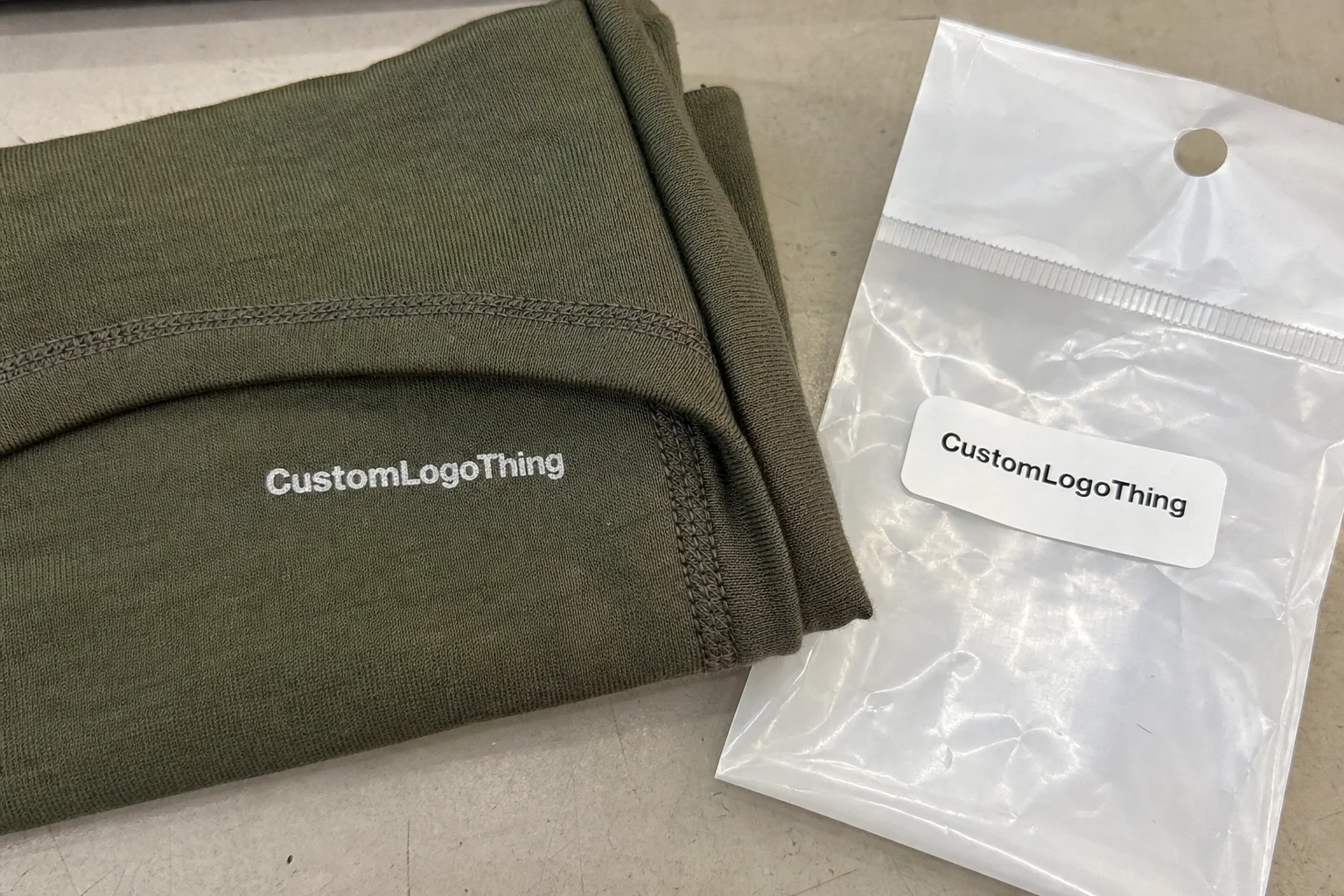
From a production buyer's view, sewn tags carry two costs: the tag and the labor required to attach it. A woven label may look premium, but it still has to be purchased, inventoried, staged, aligned, stitched, trimmed, and inspected. Heat Transfer Labels remove much of that handling. On high-volume basics, activewear, underwear, kidswear, compression garments, uniforms, and promotional apparel, the difference can be large enough to change the total applied cost.
Tagless labeling also helps standardize size marks, care instructions, country-of-origin text, and brand marks across multiple SKUs. Picture a brand running black, white, heather gray, and navy T-shirts across six sizes. A consistent transfer label system reduces trim confusion and keeps factories from pulling the wrong tag bundle during a rushed production week. Operationally, it sounds dull. Commercially, it is useful.
Bulk ordering should not be reduced to a unit-price exercise. One approved 30,000-piece label run is usually easier to control than five urgent 6,000-piece orders placed after garment production has started. Color consistency, artwork repeatability, production scheduling, and reorder documentation all improve when labels are treated as part of the apparel bill of materials, not as last-minute trim.
Buyer rule: compare total applied cost, not only label price. A cheaper tag can still cost more after sewing labor, defects, relabeling, and wearer complaints are counted.
For brands already investing in retail packaging, branded packaging, or custom printed boxes, the neck label should not feel like leftover trim. It belongs to the same branding system, only it sits inside the garment instead of outside the mailer or carton. Custom Logo Things can quote the label, but the quote becomes sharper when the request includes usable artwork, dimensions, fabric type, order quantity, application method, delivery deadline, and sampling requirements.
What Is a Custom Heat Transfer Label Bulk Order?
A custom heat transfer label bulk order is a high-quantity run of printed or layered garment labels designed to bond to fabric through controlled heat, pressure, and dwell time. These tagless labels replace sewn-in tags for neck labels, size tabs, care instruction panels, brand marks, country-of-origin labels, and multi-line compliance labels.
The finished mark bonds to the textile surface instead of being stitched into a seam. That shift changes comfort and production flow. Heat press labels can be applied after cutting, during finishing, or before packing, depending on the factory's process. For apparel neck labels, the advantage is immediate: the label sits flat, adds little bulk, and does not scratch the wearer.
The finish is not just a styling preference. Matte transfers create a quieter retail look, especially on premium basics. Stretch formulas suit leggings, compression tops, sports bras, and spandex-rich knits because the label needs to recover after elongation. High-opacity white helps on dark garments where a standard white may turn gray or weak. Soft-hand transfers work well for comfort-first apparel, including children's wear and underwear.
Fabric compatibility deserves attention before volume production. Cotton, polyester, cotton-poly blends, fleece, rib knits, brushed fabrics, coated textiles, and technical moisture-wicking materials do not behave the same under heat. A cotton jersey may tolerate one temperature range, while a dark polyester performance fabric may create dye migration or adhesion problems. Spandex blends can be unforgiving if the label is too rigid.
Durability expectations need a test plan. Buyers should evaluate wash resistance, stretch recovery, cracking, peeling, dye migration, and hand feel after laundering. For basic fashion apparel, a home-laundry test may be enough. Uniforms, hospitality apparel, healthcare garments, and rental programs face harsher conditions because industrial laundry uses stronger chemistry, higher heat, and more mechanical action. Testing should mirror the way the garment will actually be used.
Artwork adds another layer of risk. Fine type, micro icons, reversed text, barcodes, multi-color logos, and thin strokes can look clean on a monitor and fail at production scale. A 4 pt care symbol or hairline rule may not transfer cleanly after heat and pressure. Vector artwork is preferred because it keeps edges sharp and lets the production team check minimum line thickness before plates, screens, or digital output are prepared.
Brands that manage broader product packaging programs can review related trim and label options through Custom Labels & Tags. The same discipline used for packaging design applies inside the garment: clear hierarchy, legible text, controlled color, and material testing. A bulk heat transfer label order should be treated as part of that system, not as an afterthought ordered after garments are already packed.
Specifications to Confirm: Size, Color, Fabric, and Wash Testing
A quote-ready custom heat transfer label bulk order needs more than a logo file. Prepare the label dimensions, artwork format, number of print colors, garment fabric, garment color, application placement, expected application temperature, order quantity, and preferred supply format, such as sheets or rolls. If a factory will apply the labels, ask for its press type, platen size, and preferred handling format before the quote is finalized.
Size is a technical variable, not only a design choice. A 1.5-inch neck logo on a flat cotton tee behaves differently from a 3-inch care panel placed near a curved side seam or stretchy waistband. Larger labels use more material, hold more heat, and may be visible through lightweight fabric if the formula is too heavy. Smaller labels create the opposite problem: fine text can become illegible if the artwork is compressed.
Color matching has limits. Pantone references improve consistency, but fabric shade, label opacity, transfer finish, and heat application all affect perceived color. White on black fleece, white on navy polyester, and white on charcoal cotton may not look identical even with the same ink target. For brand-critical colors, request a physical proof or test application instead of relying only on a screen rendering.
Compliance content should be handled early. Apparel labels may need fiber content, care symbols, country of origin, size, RN number where applicable, and brand identification. In the United States, care labeling requirements are covered by the Federal Trade Commission. Environmental and sourcing claims need separate review. For broader sustainability language around packaging and materials, the EPA is a useful reference point for claims discipline, even though garment labeling follows its own regulatory path.
Pre-production testing is strongly recommended for high-stretch, moisture-wicking, flame-resistant, coated, heavily dyed, or dark polyester fabrics. Adhesive performance can vary because textile chemistry varies. The same transfer that works on a cotton-rich T-shirt may peel on a silicone-finished performance fabric or show dye migration on a saturated red polyester knit.
- Rub test: checks whether the label surface scuffs, flakes, or releases under abrasion.
- Stretch test: checks cracking and recovery on elastic fabrics.
- Home-laundry test: useful for retail basics, promotional apparel, and fashion programs.
- Industrial-laundry test: relevant for uniforms, rental garments, hospitality apparel, and healthcare programs.
- Post-press inspection: catches scorching, poor adhesion, ghosting, skewed placement, or incomplete transfer.
These checks are not paperwork for its own sake. They are insurance. Once 20,000 finished garments are packed, a failed neck label becomes a much more expensive problem than a delayed sample approval.
Pricing, MOQ, and Unit Cost Drivers for Bulk Label Orders
Unit cost usually falls as quantity rises because setup, artwork proofing, material preparation, and press calibration are spread across more labels. That does not mean the cheapest tier is automatically the smartest buy. Over-ordering before size ratios, regional labeling requirements, or final garment colors are confirmed can leave a brand holding inventory it cannot use.
The main price drivers are order quantity, label size, color count, specialty finish, adhesive type, wash durability requirement, sheet or roll format, and packaging method. A single-color size mark is naturally simpler than a multi-color brand logo plus care panel with icons, fiber content, and country-of-origin text. Complexity costs money because it increases proofing time, production control, and inspection needs.
MOQ should be discussed in plain terms. Ask whether the minimum applies per artwork, per size, per colorway, or across the total combined order. One 20,000-piece design is usually more efficient than ten 2,000-piece versions, even when the total quantity is the same. Separate artwork versions mean separate proofing, tracking, and sometimes separate setup.
| Order Scenario | Typical Use | Cost Behavior | Buyer Watchpoint |
|---|---|---|---|
| 2,000-5,000 labels | Pilot run, capsule drop, event apparel | Higher unit cost because setup is spread over fewer pieces | Confirm proof carefully; reorders may need color matching |
| 10,000-25,000 labels | First production run for core apparel | More efficient unit pricing, especially for one design | Test on actual fabric before approving full production |
| 50,000+ labels | Replenishment, private-label basics, uniforms | Best setup efficiency and stronger scheduling control | Lock compliance text and size ratios before ordering |
As a rough commercial pattern, small custom transfer label runs often carry a visible setup burden, while larger runs can reduce the effective unit cost materially. Exact pricing depends on specifications, but a basic one-color neck label will price very differently from a high-opacity, stretch-rated, multi-color care label. Buyers should request quantity breaks for realistic tiers instead of asking for one number without production context.
For a quote, send artwork, dimensions, quantity targets, fabric composition, garment color, application method, shipping destination, deadline, and sample requirements. If the apparel program also needs retail packaging, mailers, inserts, or custom printed boxes, Custom Logo Things can help align the label order with broader Custom Packaging Products so the brand experience feels consistent from unboxing to first wear.
Process and Timeline From Artwork Review to Bulk Production
A reliable production path has clear checkpoints: inquiry, artwork review, specification confirmation, quote, digital proof, sample or test run if needed, buyer approval, bulk production, quality control, packing, and shipping. Skipping steps can appear faster on a schedule. In practice, it often shifts risk from the supplier to the apparel brand.
Timing depends on artwork readiness, proof revisions, material availability, order quantity, color complexity, testing needs, and shipping distance. A clean reorder moves faster than a new multi-SKU program requiring fabric tests. Sampling adds time, but it can prevent a failure that would affect thousands of garments. Label sourcing should start before final sewing and packing deadlines, not after finished goods are waiting for trims.
Artwork review is more technical than many buyers expect. The production team checks file resolution, vector paths, small text, color references, spacing, minimum line weight, and whether the design can survive heat application at garment scale. A care label with dense text may need slight spacing adjustments. A logo with thin reversed strokes may need modification to stay clean after transfer.
Proof approval is the buyer's control point. Verify spelling, care instructions, size labels, country-of-origin details, RN number if used, color callouts, label dimensions, and placement. Do not approve a proof just because the deadline is tight. An error in one size line can force a reprint or, worse, create mislabeled finished goods.
Rush production may be possible on some orders, especially simple one-color designs with available materials. The harder truth is practical: skipped testing can become expensive when labels are applied to finished apparel. If a label peels after the first wash, the cost is not the label. It is the garment, the return, the repacking labor, the retailer conversation, and the reputational damage.
Brands managing recurring programs should consider a replenishment plan through Wholesale Programs. A custom heat transfer label bulk order reorders best when the approved artwork, dimensions, Pantone targets, fabric notes, and application settings are documented from the first run.
Common Bulk Ordering Mistakes That Raise Cost or Delay Delivery
The most expensive heat transfer label is not the premium one. It is the one that fails after garments are sewn, packed, allocated to retailers, and scheduled for launch.
Mistake one: sending poor artwork. Low-resolution PNGs, flattened PDFs, and screenshots are risky for labels with small type, clean icons, or accurate logo geometry. Vector files such as AI, EPS, or editable PDF are better because they preserve linework and scaling. If the only available logo is raster, it should be high resolution and reviewed before production expectations are set.
Mistake two: using one transfer formula across every fabric. Cotton jersey, polyester fleece, spandex blends, dyed performance textiles, and coated fabrics can require different adhesive systems or application settings. Dark polyester is particularly sensitive because dye migration can discolor light graphics. Stretch garments need labels that move without cracking.
Mistake three: treating care labels as decoration. Care content is not layout filler. Fiber content, wash instructions, country of origin, and size details need review before production. Late compliance edits can trigger new proofs, new plates or files, and lost time. For brands selling across regions, confirm language and regulatory requirements before approving the label order.
Mistake four: ordering too many versions too early. Ten label versions may look organized in a spreadsheet, but if final size ratios, garment colors, or regional requirements change, inventory becomes waste. A smarter approach is to separate stable designs from variable content and quote quantity tiers before locking the entire program.
Custom Logo Things reduces these risks with file checks, specification review, proofing, quantity-tier quoting, and clear production communication. That does not remove every variable. Heat, pressure, fabric chemistry, and laundering all matter. A disciplined review process catches common failures before production money is committed.
Practical test: if the label will be applied to a fabric with more than 5% spandex, a heavily dyed polyester, or a coated performance textile, test before bulk approval.
Next Steps to Prepare a Quote-Ready Label Order
A quote-ready request saves time and produces a more useful price. Before asking for a custom heat transfer label bulk order quote, gather the final artwork, desired label size, quantity range, garment fabric, garment color, application location, compliance text, delivery address, and target in-hand date.
Request quantity breaks. A procurement team should be able to compare a pilot run, first production run, and replenishment volume. For example, quote 5,000, 15,000, and 50,000 pieces if those tiers match the actual garment program. Do not ask only for the highest quantity unless that volume is realistic; inventory that cannot be used is not a saving.
Separate must-have specifications from nice-to-have finishes. A basic neck label may need legibility, comfort, and wash durability more than metallic effects or specialty texture. A premium retail line may justify a more refined matte finish, high-opacity print, or stretch-rated formula. The right specification depends on the garment, not a vague idea of "premium."
- Artwork: AI, EPS, or editable PDF preferred; include Pantone references if color matters.
- Dimensions: width and height in inches or millimeters, plus placement notes.
- Quantity: total pieces and version breakdown by size, colorway, or region.
- Fabric: fiber content, stretch percentage, finish, and garment color.
- Compliance text: care symbols, fiber content, country of origin, RN number if applicable, and size details.
- Application details: factory press type if known, temperature range, pressure, and dwell time preferences.
- Deadline: target in-hand date, not only launch date.
If the garment is stretch, coated, performance, flame-resistant, fleece, or dark dyed, send fabric details or sample swatches if available. For very high-volume programs, buyers may also want to document incoming inspection criteria, storage conditions, and application instructions so garment factories apply labels consistently.
Approval should be treated like a contract checkpoint. Check spelling, sizing, care symbols, color references, and placement against the actual garment program. If package branding, retail packaging, and product packaging are already tightly controlled, give the same attention to the inside label. Customers feel the label before they read the hangtag.
For a bulk heat transfer label quote, send the artwork, fabric details, quantity targets, and deadline so Custom Logo Things can price the job and flag production risks before labels are made.
FAQ
What is the MOQ for custom heat transfer labels in bulk?
MOQ depends on label size, color count, material, finish, and whether the order is one design or split across multiple versions. Ask whether the minimum applies per artwork, per colorway, or across the total order. Larger runs usually reduce unit cost because setup and proofing are spread across more labels.
How long does a custom heat transfer label bulk order take?
Timeline depends on artwork readiness, proof approvals, quantity, material availability, testing requirements, and shipping method. Sampling or fabric testing adds time, but it can prevent failure on finished garments. For apparel production, start label sourcing before final sewing or packing deadlines.
Can custom tagless heat transfer labels survive repeated washing?
Yes, when the adhesive system, fabric type, and application settings are correctly matched. Wash durability should be tested on the actual garment fabric, especially for stretch, polyester, fleece, and performance materials. Application temperature, pressure, and dwell time are as important as the label material itself.
What artwork files are best for ordering heat transfer labels?
Vector files such as AI, EPS, or editable PDF are preferred for sharp logos, small type, and care symbols. High-resolution raster files may work for some designs, but fine text and icons should be reviewed before production. Include Pantone references, label dimensions, and required compliance text with the file.
Are heat transfer labels cheaper than woven labels for bulk apparel orders?
They can be more cost-efficient when faster application, fewer trim components, and tagless comfort are part of the buying decision. Final cost depends on quantity, label size, colors, finish, testing requirements, and garment application method. Compare total applied cost, not just label unit cost, because sewn labels add handling and stitching time.
For more production questions, review the FAQ or send complete specifications so the quote can reflect the real garment, not a generic label estimate.