Buyer Fit Snapshot
| Best fit | Mycelium Packaging Alternatives projects where brand print, material claims, artwork control, MOQ, and repeat-order consistency need to be specified before quoting. |
|---|---|
| Quote inputs | Share finished size, material target, print colors, finish, packing count, annual reorder estimate, ship-to region, and any compliance wording. |
| Proofing check | Approve dieline scale, logo placement, barcode or warning zones, color tolerance, closure strength, and carton packing before bulk production. |
| Main risk | Vague material claims, crowded artwork, missing packing details, or unclear freight terms can make a low unit price expensive after revisions. |
Fast answer: Mycelium Packaging Alternatives: Quote Scope, Sample Proof, MOQ, and Lead Time should be specified like a repeatable production item. The safest quote records material, print method, finish, artwork proof, packing count, and reorder notes in one written spec.
Production checks before approval
Compare the actual filled-product size with the drawing, then confirm tolerance on folds, seals, hang holes, label areas, and retail display edges. Reserve space for logos, QR codes, warning copy, and material claims before decorative graphics fill the panel.
Quote comparison points
Review material grade, print process, finish, sampling route, tooling charges, carton quantity, and freight assumptions side by side. A quote is only useful when the supplier can repeat the same color, closure quality, and packing count on the next order.
If you are asking what are mycelium packaging alternatives, the short answer is simple: materials that give you the same protection and operational reliability without the same risks. In practice, it is about how the package performs after it leaves your desk. I learned this the hard way when a design team I worked with loved a beautiful prototype, then got hit by late returns because humidity ruined the edge stiffness mid-route. A package only earns its place in production if it behaves like a team player, not a sample-room star.
For commercial buyers, the alternatives are judged on a hard list: shock absorption, tear and crush tolerance, moisture behavior, print quality, minimum order quantity, lead time, and what happens after real distribution stress. Molded pulp and molded paper usually win on cost and scalability. Corrugated inserts and paper honeycomb often win when structure is non-negotiable. Recycled paperboard and hybrid structures win where aesthetics and shop-floor reliability both matter. That is the practical ranking.
This article is aimed at people who sign POs and own timelines. I am filtering things like a packaging lead, because that is where the pressure is real: landed cost, defect tolerance, print workflow, and whether the supplier can actually deliver. If the material looks like a photo shoot but fails in a damp truck lane, it is expensive theater.
Claims are the next trap. A lot of brand teams get this wrong and then spend weeks in back-and-forth. Sustainability language is only credible if it is auditable. Fiber claims, compostability claims, and recycled content claims must be tied to a documented method and a region where the claim holds. I prefer standards and verifiable labels over glossy decks, especially ISTA and FSC.
Quick disclaimer: I am not a lawyer, and I do not claim local disposal rules work the same everywhere. I can tell you what has worked in sourcing and QA, but you should verify compliance language against your target markets.
What Are Mycelium Packaging Alternatives?
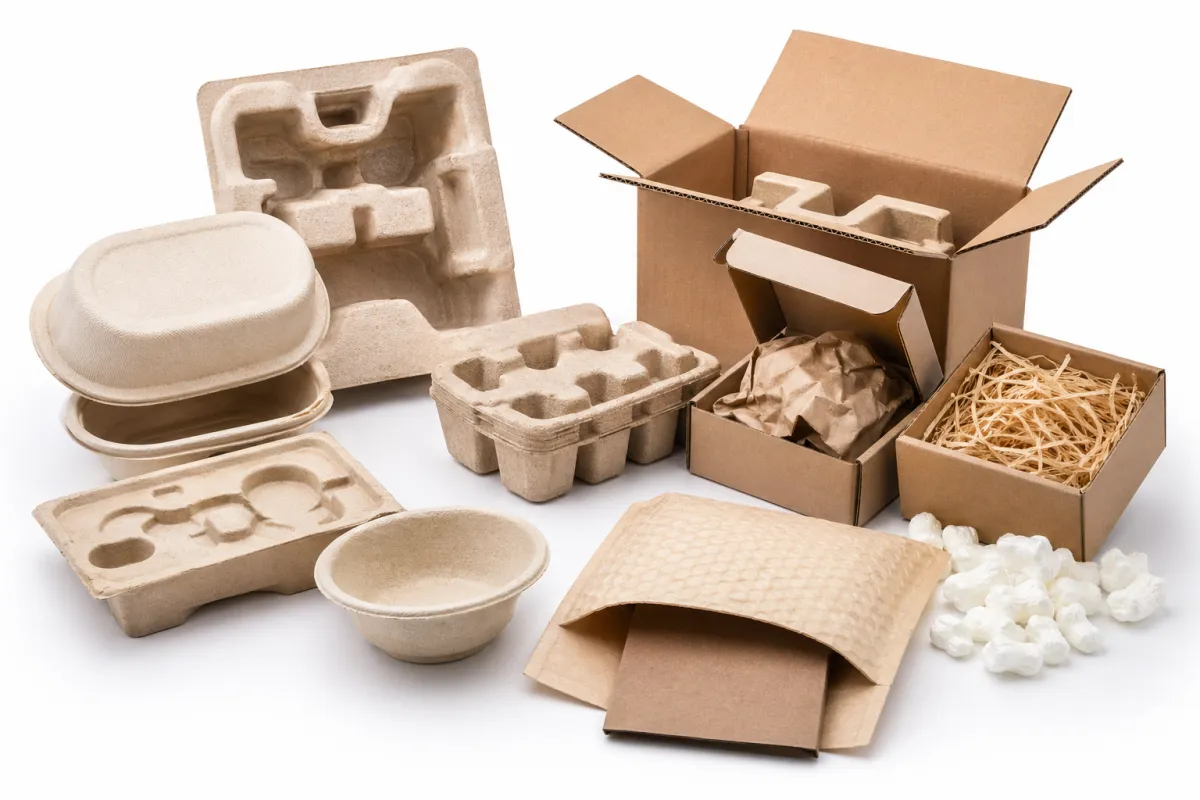
The blunt answer to what are mycelium packaging alternatives is usually one of six families: molded pulp, molded paper, corrugated and paper honeycomb, recycled paperboard with inserts, bagasse or starch trays, and some bio-blend plastics where exact tolerances matter. Recycled plastic blends are also valid in this line-up when durability and repeatability beat compostability in the priority list. There is no universal champion; there is only a match to your SKU and route profile.
If you are replacing foam, the first decision is not “which is greener.” The first decision is whether the structure keeps the product intact, arrives in time, and avoids creating a new operations headache. That changes what are mycelium packaging alternatives from a sustainability conversation into a packaging-risk decision, and frankly, that is healthier.
Here is the short list I usually give buyers:
- Molded pulp for low-cost protection in large volumes.
- Corrugated and honeycomb paper for structural stability and high-speed packaging lines.
- Paper composite hybrids for stronger shelf impact without total fragility.
- Bagasse and starch trays for natural look and food-adjacent narratives.
- Recycled plastic or bio-blend parts for tighter geometry control and predictable dimensions.
The order changes quickly if shape, mass, or climate throws a wrench in the plan. A dense, irregular product can push alternatives toward structural paper or reinforced fiber, while a premium gift launch can afford the trade-off for cleaner visuals. Cosmetic packaging usually tolerates a higher unit cost if it means better opening feel and fewer damage incidents in transit.
My favorite reframe is this: what are mycelium packaging alternatives is not “what sounds best on paper,” it is “what matches your route, your margin, and your tolerance for delay.” That sounds plain, but in packaging, plain is often where the margins survive.
Another way to think about it is by risk profile. Mycelium can be compelling on a display, but it often brings longer qualification cycles and humidity sensitivity. Molded pulp is straightforward and broadly understood by converters, though the finish can feel plain. Corrugated and honeycomb are not sexy. They are the boring kind that ships on schedule and earns trust.
My buyer framework starts with seven filters: drop response, crush and tear behavior, moisture profile, print readiness, customization depth, MOQ impact, and supply reliability. If a supplier cannot answer these cleanly, the project is still in concept mode. Pause there and ask harder questions.
Top Mycelium Packaging Alternatives to Compare Side by Side
Once the alternatives are narrowed to materials that can actually protect products, comparison gets clearer. I sort by function first: rigid corner support, void fill, retail display stability, and drop behavior on parcel lines. Each structure solves a different part of the physical problem, so matching the wrong one can double your damage reserve.
Cushioning strength
For cushioning reliability, molded pulp and reinforced honeycomb are usually more stable than first-pass mycelium in repetitive runs. Their compression profiles are easier to specify at scale, which matters when line speed and tolerance windows are tight. For glass, ceramics, or fragile hardware, I keep asking for repeated compression data before I get emotionally attached to samples. If your shipment map is complex, repeatability beats novelty every single time.
Moisture resistance
Humidity is the silent killer for many alternatives. Fiber and mycelium systems can hold shape in controlled environments, then drift quickly once humidity and transit time increase. Paper composites, coated boards, and selected bio-blend films usually hold form better when exposure stretches over days, not minutes. That does not make them perfect; it just means they are less likely to look good only under ideal warehouse weather.
That matters for what are mycelium packaging alternatives because real supply chains are not climate-controlled photo studios. If you do not test for humidity early, the first batch of returns will teach you.
Recyclability claims
Any eco claim should come with context and documentation. If the supplier says recycled, compostable, or bio-based, ask for test method, disposal pathway, and territorial validity. A box can be recyclable in one market and treated as contamination in another. That is why what are mycelium packaging alternatives cannot be decided by adjectives alone.
Branding and print options
Branding is not decoration, it is communication. Plain molded pulp can feel utilitarian until the print and fit are dialed in. Recycled paperboard and hybrid constructions give better control over ink holdout, spot color, and clean edges for branded packaging. When e-commerce conversion depends on the first photo, finish can matter as much as compression behavior.
Damage claims after parcel handling
Samples on a white table can be deceiving. In real parcel handling, stacking force, repeated drops, and lateral compression expose weak edges fast. Corrugated systems, reinforced pulp, and balanced hybrid layers usually recover better from that abuse than soft-edge alternatives. That hidden mile after the parcel is loaded is where your margin either survives or leaks.
For a clean comparison, I still start with four buckets: moldable fiber, structural paper, hybrid composite, and bio-polymer. If product mass is low and humidity low, you have room to optimize. If mass is high, shape is odd, or climate is hostile, your range narrows fast. What are mycelium packaging alternatives are not equal once freight starts moving.
Detailed Reviews: Performance of Key Mycelium Packaging Alternatives
Here is the practical review, without the motivational fluff. I care about what happens in converters, warehouses, and returns windows. A beautiful insert that creates defects is a cost increase disguised as design originality.
Molded paper pulp
Molded pulp is usually the dependable baseline for what are mycelium packaging alternatives when budgets are watched closely and protection still needs to be solid. Conversion teams know this format, which keeps chaos down once tooling is locked. For inserts, trays, and protective cavities, it behaves consistently enough to scale with less surprise.
The downside is visible finish. If you need premium texture, you often depend on outer cartons or tighter geometry. For low complexity SKUs, however, that is not always a problem. In my experience, this is a good default because clean execution beats perfect aesthetics with a fragile schedule.
Cost-wise, it often sits in the lower range beyond 5,000 units, especially when designs avoid complicated internal geometry. Lead times are usually manageable, and replenishment is often easier than with niche systems. Launch windows punish indecision, so this reliability matters in a way spreadsheets never capture.
Recycled paperboard with molded inserts
This is one of my most practical options across mid-to-high volume brands. You get structural support from the board and shape from the molded insert, with better brand-facing potential. For cosmetics, consumer accessories, candles, and gift-ready SKUs, it is often a sweet spot.
The tradeoff is edge durability and fatigue after repeated loops. Underbuilt edges can crush and delamination can appear if adhesive, humidity, or board grade is off-spec. That said, the design window is wide and teams that test early can tune this stack very effectively. It is less dramatic than the alternatives but rarely underperforms on schedule.
Bagasse and starch-based trays
Bagasse and starch trays are common in food-adjacent and wellness branding because they align with ingredient-level positioning. They can be visually appealing and easy to stack in controlled retail environments. I usually point them to shorter routes and lower moisture exposure profiles.
Unprotected starch can soften in humidity, and that is a real issue for exports and coastal lanes. If your distribution is short and dry, they can be cost-effective and brand-friendly. If product value is high, run harder pre-launch testing than the marketing images suggest. What are mycelium packaging alternatives with a natural look are excellent tools, but they need evidence, not assumptions.
PLA and bio-blend films
Bio-blend films and PLA parts are useful when tolerance is strict and the finish has to stay sharp. They handle shape retention and moisture barriers better than many uncoated fiber options. You get cleaner edges, cleaner lines, and generally easier dimensional consistency.
The environmental story is only valid if infrastructure and certification are clear. I keep seeing ambiguous compostability language in supplier sheets; if disposal routes are fuzzy, it becomes marketing theater. Costs are often higher at low volumes, and that is fair. Choose these when performance needs justify it.
Molded pulp with kraft liners
This hybrid gives you a practical middle road: fiber cushioning plus a retail-ready finish. It is common where teams want packaging that looks like it belongs on a shelf and still performs on a box truck. I have seen this format work well for refill kits, home goods, and frequent subscription replenishment programs.
It is scalable without drama if the spec is locked before pilot. You can tune print density, insert depth, and assembly flow without turning the whole thing into a tooling project. It rarely gets called “exciting,” and that is exactly why operations teams keep approving it. If I could pin one phrase on a production wall, this would be it: boring design, dependable output.
The prettiest insert is worthless if it arrives swollen, crushed, or impossible to reproduce at scale. In packaging, premium and painful are one failed test apart.
My honest read on what are mycelium packaging alternatives is that the strongest selection is almost always a hybrid stack driven by data. Most teams need a combination of cost control, transit safety, and brand expression. Mycelium can fit that map, but only if it has already survived the same checks as every other option.
Price Comparison Across Options
Price is where many teams still make the wrong first comparison. I see teams compare unit price alone and then act surprised when returns and rework blow the budget. You need landed total cost: raw material, conversion, mold prep, freight, packing efficiency, and expected damage reserve.
At low quantities, setup dominates. I cannot overstate this enough. A design that looks cheap at unit level becomes expensive fast when sample cycles and low-efficiency tooling are added. Think in true build-up costs, not only quote sheet line items.
Below is a practical benchmark range, not a promise:
| Material Option | Prototype / Sample | 500-2,000 Units | 5,000+ Units | Typical Lead Time | Best Use Case |
|---|---|---|---|---|---|
| Molded paper pulp | $1.50-$4.00 each | $0.45-$0.95 each | $0.18-$0.40 each | 10-20 business days after approval | Low-cost cushioning, high-volume runs |
| Recycled paperboard + molded insert | $2.50-$6.00 each | $0.85-$1.60 each | $0.30-$0.75 each | 12-25 business days after approval | Premium retail packaging, better presentation |
| Bagasse / starch tray | $2.00-$5.50 each | $0.70-$1.45 each | $0.25-$0.65 each | 14-28 business days after approval | Natural look, food-adjacent branding |
| PLA / bio-blend part | $2.50-$7.50 each | $1.00-$2.00 each | $0.40-$0.95 each | 15-30 business days after approval | Barrier, clean finish, dimensional stability |
| Molded pulp + kraft liner hybrid | $2.20-$5.80 each | $0.80-$1.55 each | $0.28-$0.70 each | 12-24 business days after approval | Balanced cost, durability, and branding |
These ranges move fast with geometry complexity. Deep cavities and fancy wall profiles can erase the material advantage in a single revision. Sometimes a simpler one-piece shape outruns a complex nested concept, even at a lower aesthetic score. If your design team enjoys complexity, I gently remind them this happens in every shipping lane.
My break-even rule is plain: if a higher-cost option cuts returns on a high-value line, it is often cheaper in total cost of ownership. Even a small reduction in damage rate offsets added material premium quickly once labor and reshipment are counted. I use this math on every serious RFP. It keeps us from buying problems disguised as savings.
For low-quantity programs, ask suppliers for three numbers before committing: unit cost variance at each milestone, MOQ pressure points, and sample-to-production changeover fees. Also ask how many tool revisions happened last quarter and how often. If the number is fuzzy, your budget forecast will be fuzzy too.
Process and Timeline: From Sample to Full Production
The timeline for what are mycelium packaging alternatives is usually manageable, but only if your requirements are explicit. Most delays come from incomplete specs, not from material choice itself. I have seen teams lose weeks over one missing condition like storage humidity or max stacking weight.
Step 1: RFQ and load case definition
Start with product weight, dimensions, fragile points, route temperature, and destination handling assumptions. Include your worst-case SKU, not the easiest one. If the package survives the heaviest odd shape, it usually handles the rest. This step turns what are mycelium packaging alternatives into an actual engineering brief instead of a trend search.
Step 2: Prototype and handling tests
Expect initial samples in one to three weeks depending on complexity and supplier load. Then run fitment checks, drop testing, and compression holds in a condition that resembles your real workflow. I always include at least one destructive event and one parcel simulation. If your vendor cannot support data behind the test result, do not gamble.
For many clients, I also ask for test alignment with ISTA-style handling logic and, when useful, ASTM references for transport simulation. The point is simple: if a material can pass a controlled lab drop, ask if it still passes after stacked transport and thermal shifts.
Step 3: Pilot run and moisture review
After the shape is approved, run a pilot and test for humidity, pallet stacking, and packout speed. A sample that works in a dry office can fail in a warehouse with real airflow patterns. Include a wet exposure check if there is any chance of port delay or monsoon travel. What are mycelium packaging alternatives without a humidity branch in the test plan are half-tested.
Step 4: Bulk release
When pilot numbers are clean, lock graphics, material spec, wall thickness, tolerance range, pack count, and pallet pattern. Vague sign-off language creates drift in future lots, and drift is how hidden damage starts. If you want consistency at scale, the release criteria should be specific and difficult to argue with.
Commercial timing is generally straightforward if everything is prepared: quote turn a few days, sample 1-3 weeks, pilot 2-6 weeks, then scale. Add 2-6 extra weeks for custom molds, unusual cavities, or added certifications. Build slack where quality gates are uncertain; pretending they are not is a scheduling strategy that always fails.
The fastest way to compress schedule is clear CAD sharing, preapproved coatings, and disciplined design freeze checkpoints. If everything still looks fine, you are actually ready to order. If you are going to redesign after first sample, expect an extension. Dual sourcing is often underrated; if one partner stumbles, your launch survives.
How to Choose Mycelium Packaging Alternatives for a Real Brand
There is no one-size answer to what are mycelium packaging alternatives; each brand has its own compromise. A subscription fulfillment line and a premium retail launch do not face the same constraint set. I use a scorecard because it keeps decisions repeatable, and repeatability is what keeps teams sane.
My starting weights are: protection 30%, cost per sellable unit 25%, lead-time reliability 20%, brand presentation 15%, and sustainability proof 10%. You can shift those numbers by sector, but if protection breaks, every other benefit is weaker in practice. That is why we keep returning to the same conclusion: function first, storytelling second.
Route to market matters
E-commerce puts pressure on drop performance and cubic efficiency. Wholesale usually prioritizes stackability and replenishment speed. Premium gifting rewards clean visuals and unboxing consistency. Repeat replacement parts shipping prioritizes repeatable fit and robust corners. If your goal is retail pull, appearance can outrank absolute crush strength; for logistics-heavy channels, reliability wins that argument.
Ask harder supplier questions
Ignore brochure language and ask for hard data: failure-rate history, batch-to-batch traceability, replacement policy, and fiber or compost claims documentation. Ask how they handle spec changes at lot two, not just at lot one. If they become evasive, your risk profile just got louder.
A practical habit: test the most difficult SKU before you scale. I always push the weirdest, heaviest, and most awkward shape into the first round. That one test exposes tolerance issues, edge instability, and glue behavior that clean SKUs hide. That is where packaging design turns into packaging engineering.
Here is another hard rule: if two options are close on damage performance, pick the one with lower supply risk and a clear return policy. Sustainability can still be part of the decision, but it should not rescue a weak logistics design. What are mycelium packaging alternatives should get the same treatment as any production input: verify, compare, and then approve.
For teams balancing brand ambition with procurement stability, I usually recommend starting with hybrid paper systems or premium-coated fiber before trying exotic materials. They usually reduce friction in graphics, assembly, and reorders. Not as flashy, maybe. Not as stress-free as claims. And frankly, they perform better under real conditions.
Our Custom Packaging Products page is a good place to compare practical formats, and the product packaging samples route still helps me most in real life. Handling the material before committing volume catches mismatches much faster than a dozen slides.
Our Recommendation on What Are Mycelium Packaging Alternatives and What to Do Next
My recommendation is pretty straightforward. Start with molded pulp or coated hybrid paper if margin and reliability are under pressure. If brand prestige is your first gate, start with coated hybrids and recycled board systems, then confirm performance before adding custom complexity. This gives you a path that is commercially sane and still brand-aware.
In most commercial programs, the best pick is the one that keeps damage low, lead time stable, and hidden costs under control. I would rather see a straightforward insert that performs every time than a polished concept that creates late shipments and preventable returns. A package is built to carry a product, not to win a social media comparison.
If you want an immediate practical move, do this:
- Shortlist two to three supplier options and set the same test criteria for all.
- Sample the top three SKUs, including your toughest route case.
- Run one drop simulation and one humidity loop before pilot sign-off.
- Compare defect rates, return risk, and rework cost, not just visual appeal.
- Choose the winner after data, then negotiate pricing and fallback terms.
That sequence feels basic because it is. Basic is how serious teams avoid expensive surprises. If your distribution includes retail, subscription, and direct-to-consumer paths, test the entire system: outer carton, insert, labeling, pallet pattern, and storage conditions. One weak layer can undo the whole build.
If sustainability reporting is part of your internal framework, keep disclosures narrow and documented. Carbon targets, compostability, and fiber sourcing claims need to match procurement reality. What this means for what are mycelium packaging alternatives is boring, but effective: validate claims, build backup supply, and keep QA tied to real shipment behavior.
Final takeaway: for teams needing scale, start by choosing the most repeatable handling performance, then add branding polish once stability is confirmed. Lock acceptance criteria, assign one decision owner, score every sample in one matrix, and set a pilot cutoff date with a pre-approved fallback supplier. Do that, and you will get material that performs in real life instead of in marketing copy.
What are mycelium packaging alternatives for protecting glass or ceramics in e-commerce?
For rigid fragile goods, Recycled Molded Pulp and reinforced paper honeycomb usually outperform many first-pass alternatives in repeated compression and handling consistency. Ask for at least 1-cycle and 3-cycle drop data plus humidity exposure results before lock-in. If the supplier will not provide that data, treat it as a warning. For what are mycelium packaging alternatives in fragile shipping, proof must come before packaging romance.
Do mycelium packaging alternatives actually reduce shipping damage costs?
Only when material behavior matches the exact SKU and route. A low-cost option with high breakage can still increase total cost significantly after returns and service overhead. Measure damage for the first 200-500 units before full launch and only then scale. That is the only honest way to compare what are mycelium packaging alternatives on economics.
Are mycelium packaging alternatives suitable for humid climates and overseas transit?
Avoid uncoated paper-fiber structures on lanes with long humid exposure unless testing supports them. Humidity controls should include edge behavior after dwell and shipping vibration, not just visual checks. For exported goods, consider coated composites or bio-polymer solutions where the claim language and disposal pathway are both explicit. If you are comparing what are mycelium packaging alternatives for export, climate testing is mandatory, not optional.
What is a realistic price comparison for mycelium packaging alternatives at low quantities?
At low MOQs, setup and tooling dominate because fixed costs are spread across fewer units. Molded pulp often starts lower than complex alternatives, but this can reverse if geometry and revisions are ignored. You need to include sample rounds, rework, and damage reserves in your total cost model. For what are mycelium packaging alternatives at small runs, landed cost is what really matters.
How long does it take to qualify mycelium packaging alternatives before mass production?
Typical qualification is usually a few weeks when specs are stable and supplier communication is clean; it can stretch if there are repeated design changes. Build staged gates: fitment, durability, supplier QA, and compliance checks before bulk. If you lock these gates early, delays show up before line commitments and you can still recover launch timing.