Buyer Fit Snapshot
| Best fit | Start A Packaging Design Business That Lasts projects where brand print, material claims, artwork control, MOQ, and repeat-order consistency need to be specified before quoting. |
|---|---|
| Quote inputs | Share finished size, material target, print colors, finish, packing count, annual reorder estimate, ship-to region, and any compliance wording. |
| Proofing check | Approve dieline scale, logo placement, barcode or warning zones, color tolerance, closure strength, and carton packing before bulk production. |
| Main risk | Vague material claims, crowded artwork, missing packing details, or unclear freight terms can make a low unit price expensive after revisions. |
Fast answer: Start A Packaging Design Business That Lasts: Material, Print, Proofing, and Reorder Risk should be specified like a repeatable production item. The safest quote records material, print method, finish, artwork proof, packing count, and reorder notes in one written spec.
Production checks before approval
Compare the actual filled-product size with the drawing, then confirm tolerance on folds, seals, hang holes, label areas, and retail display edges. Reserve space for logos, QR codes, warning copy, and material claims before decorative graphics fill the panel.
Quote comparison points
Review material grade, print process, finish, sampling route, tooling charges, carton quantity, and freight assumptions side by side. A quote is only useful when the supplier can repeat the same color, closure quality, and packing count on the next order.
Knowing how to Start Packaging Design business means more than making a label look good and hoping someone buys it. Packaging is one shot, and it must stop a thumb on a shelf, protect the product’s reputation, and survive production chaos without crying uncle at the last minute. It is visual, yes, but it is also logistics, timing, and risk reduction all wrapped in one brief.
That shift trips up a lot of new studios. They pitch style, then run headlong into die lines, print limits, legal text, and deadlines that move faster than caffeine on a Friday night. I learned this the hard way when a client’s “simple” redesign got delayed because no one had checked barcode space against their carton template. No one remembers that mistake in the final campaign deck. Procurement does.
That is why this guide is built around one truth: packaging design service is not a portfolio genre, it is a production-adjacent business. If you want to answer how to start packaging design business properly, you design for shelf performance, printer reality, and buyer confidence at the same time.
“A package that wins on a mood board but fails at press check is not finished. It’s a pretty prototype wearing lipstick before a marathon.”
The point is to build a small, clear, repeatable offer that connects branding and manufacturing. Start narrow, document your workflow, and price for the parts people often ignore: specs, communication, and file integrity. Then scale from there without turning your service into a moving target.
How to Start a Packaging Design Business: What It Really Means
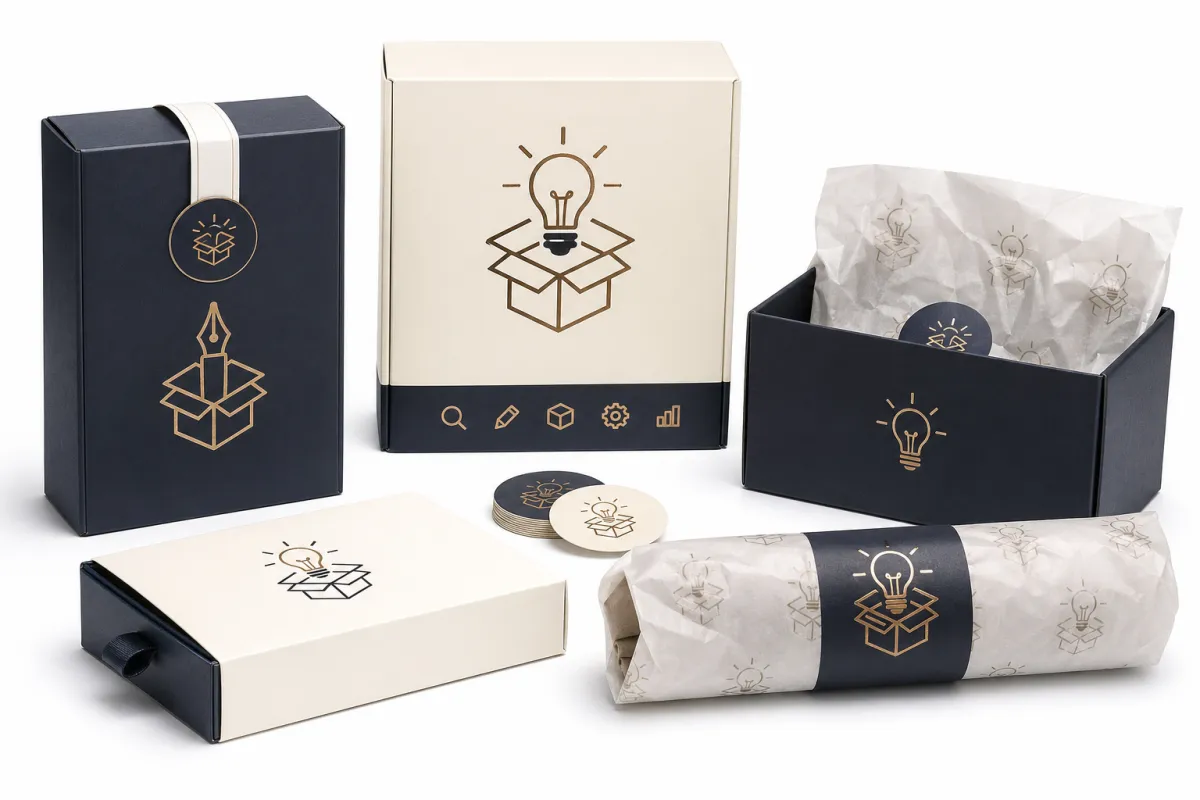
Let’s be direct: shoppers decide fast, often in under ten seconds. A package must say what the product is, why it is better, and where to find the trust marks, all while handling physical stress from cutting, filling, shelving, and shipping. If that sounds obvious, it is because it is. Most people overestimate how little the final object has to do with only aesthetics.
Packaging design is often confused with graphic design because both start with the same software tools. The difference is that packaging has a manufacturing endpoint. A poster can exist as a single artwork. A package must align with a structure: bottle neck diameter, pouch zipper tension, carton crease logic, tray depth, and stock strength. Miss one of those and your brand looks amateur before it ever reaches retail.
That is where many designers think, “I’ll figure out production later.” Later never arrives in time. You need to treat how to start packaging design business like a small engineering operation with a creative front end. If the finish, substrate, or legal block will break your concept, better to discover it in discovery than at the printing press at 11 p.m.
There are also three practical service models you need to understand from day one. A one-off label is simple and transactional. A launch package bundles name, visual system, and rollout support across initial SKUs. A retained model supports a brand continuously as new flavors, bundles, or regions roll out. Each has cash-flow implications and expectation differences.
Lean does not mean weak. It means specific. A studio with a laptop, real project examples, and a clearly defined niche can be genuinely competitive. If a buyer has to decode your website to understand what you actually do, you are not selling design—you are selling confusion.
Clarity is the first asset in how to start packaging design business. Not personality. Not a prettier mood board. Clarity.
How do you start a packaging design business?
If you want the short answer: pick one niche, offer one clear service, document the process, and prove the process in at least one real-world-type sample. That is your business foundation. Everything else can be added later.
Your first offer should sound practical to a founder under pressure. “I design luxury skincare boxes” is broad. “I design launch-ready label systems for beverage startups (single SKU to multi-SKU)” is specific. Same work, clearer sale. In my early projects, the second approach closed faster because it answered the buyer’s anxiety instead of their aesthetic mood.
Set your infrastructure before your first social post. Build a simple intake form, a lightweight contract template, and a pricing sheet with clear scope boundaries. Then create one or two portfolio pieces that reveal process, not just polish. The client who buys from you is paying for delivery, and delivery means fewer surprises.
Then go where packaging pain already exists: startup founders with launch dates, ecommerce operators with unit-sensitive packaging problems, local manufacturers adding new SKUs, and agencies that need a dependable design partner. You do not need to be visible everywhere. You need to be visible where deadlines are real.
The path into how to start packaging design business is less glamorous than people sell it as, but it is faster than guessing and building a giant service menu no one asked for.
How a Packaging Design Business Works From Brief to Shelf
Every packaging assignment has a rhythm. The successful studios are not those with the flashiest presentations; they are those that define a repeatable rhythm: discovery, concepting, review loops, artwork prep, and production communication.
Discovery is where most quality is won or lost. The first question is not “Do you like this style?” The right first question is “What is this package trying to do, by when, and under what physical constraints?” If the product is food, regulatory copy and ingredient legibility may drive decisions. If the product is cosmetics, finish hierarchy and premium cues may matter more. If it is supplements, warnings and structure readability often dominate.
Typical deliverables include dieline-compliant layouts, label files, carton art, finishing recommendations, and print-ready exports in the right color mode and format. For more complex jobs, adding die line overlays, shrink-wrap compatibility notes, or alternative mockups can prevent costly misunderstandings later.
Money flow usually follows three lanes: fixed project fees, retainers, or production-support blocks. A fixed fee is clean for scope-defined label or carton refreshes. Retainers fit brands with recurring updates and new variants. Production-support blocks make sense when print checks and factory communication become part of the value, not a hidden headache.
Manufacturing constraints sit under every decision, even the pretty ones. Paperboard, rigid BOPP, flexible films, aluminum-free laminates, and compostable substrates each handle color and handling differently. A 4-color design on screen can shift hard on a flexo process if a printer uses a narrow color set. If you are not reading proofs with that in mind, you are outsourcing your credibility.
For products still in structural design, the studio can help with practical sourcing guidance, including options like Custom Packaging Products that match budget and volume. This is not mission drift; it is service hygiene. Clients remember teams that reduce uncertainty.
Ecommerce and retail have different winning criteria. Thumbnail readability matters in the online world; shelf visibility matters in-store. If your package needs to work in both channels, build that into your design logic early. Shelf competitors are louder than your concept board.
If your business message stays process-first, clients understand they are buying a lower-risk path, not a decorative service. That one distinction keeps projects from turning into “just make it look nice” conversations for six months.
Key Factors That Decide Whether the Business Is Viable
Viability comes down to positioning, technical fluency, reliable proof, and delivery discipline. One broad studio can survive, but one focused studio scales faster because clients can map expectation quickly. If you specialize in beauty, food, supplements, or ecommerce packaging, build your credibility around category specifics, not generic taste.
Portfolio strength is the hiring trigger. Three strong projects with clear structure, compliance awareness, and production-aware decisions beat ten generic mockups every time. Show what you solved, not just what you rendered: corrected hierarchy, corrected label legibility, solved fold behavior, or reduced revision time through better pre-checks.
Tools matter, but they are not badges of prestige. Illustrator and InDesign remain central for many packaging workflows because they manage dielines and production-ready outputs predictably. Photoshop still has value for composites, Photoshop mockups, and communication decks. I also see designers rely on 3D validation tools and calibrated proofing workflows as soon as budgets allow.
Legal structure protects everyone. Use contracts. Require deposits. Define number of revisions, ownership transfer, and printer communication scope. I have seen too many studios give away production coordination for free until the file handoff chaos starts. A good contract is not paranoia; it is business memory.
Compliance literacy is non-negotiable, especially in sectors with regulated claims. Verify nutrition claims, ingredient statements, and required warnings for each market you serve. If your packaging crosses international borders, check country-level standards and local language obligations. I am not a compliance attorney, so I always tell founders to involve legal review for final claims. That honesty saves expensive recalls.
Industry resources help you stay grounded. For physical handling and logistics, ISTA test standards are practical references when shipment stress is questioned. For industry context and baseline terminology, the Packaging industry association resources are useful for staying current. Use them to ask better questions, not to collect badges.
Positioning follows naturally. Designers who lead with color, style, and trend language usually sound interchangeable. Designers who talk in terms of conversion, retailer readiness, time to market, and risk reduction sound like operators. Buyers remember operators when launch windows are tight.
In practical terms, the strongest packaging studios speak both design and operations. That is not just credibility theater. It is what gets repeat work.
How to Start Packaging Design Business Step by Step and On a Timeline
Most businesses stall because they chase perfection before they prove demand. You do not need perfect clarity at the start. You need enough clarity to get a real conversation and paid discovery. That is how to start packaging design business without overbuilding.
Use this structure before anything else:
- Week 1: Choose a specific niche, define one service, and write a one-page offer.
- Week 2: Replace vague portfolio pieces with one high-signal sample and one category variation.
- Week 3: Build contract language, payment cadence, revision policy, and file handoff terms.
- Week 4: Set pricing by scope and complexity, then pitch to a shortlist of prospects.
- Week 5: Run first paid or pilot projects and capture production lessons.
- Week 6: Publish refined case notes and refine your offer around what people actually asked for.
Three offers beat three dozen. Keep your menu to one flagship, one add-on, and one premium support tier. A practical example: flagship = primary label package, add-on = additional SKU variant, premium = production liaison and retailer mockup package. Predictable offers reduce negotiation drag and increase close confidence.
Proofing materials should show technical depth. Include notes on bleed, print assumptions, finish calls, and compliance touchpoints. Show options with matte vs gloss trade-offs, or matte lamination versus UV choices, because those decisions affect both cost and shelf behavior.
Waiting for the “perfect” first client is a trap. Build one realistic spec-based project and use it like a lab test. Show barcode spacing, ingredient hierarchy, and legal text handling. That proves process thinking without pretending you have no need for paid learning.
Project timelines vary, and pretending they do not is how budgets blow up. Simple single-label jobs can move in 1–3 weeks if the client is responsive. Multi-SKU systems, especially with structural review cycles, often take 5–8 weeks. Build a buffer for legal sign-off and printer feedback, then share that buffer before the client asks.
Create a pre-call intake form with product type, launch milestone, quantity, region, substrate, and whether a dieline already exists. It takes ten minutes to build and saves days of ambiguity. If you are wondering, this is one of the cheapest ways to make your studio look professional from the first meeting.
Remember this sequence: niche, offer, proof, timeline, then delivery. That sequence is your signal to the market that you are reliable. Reliable is underrated in design, and in packaging, reliability is often the only reason people renew.
Packaging Design Pricing and Startup Costs
Many new studios set prices around what they want to feel like and not what the work actually contains. That is where margin disappears. Packaging projects are usually made of small blocks that look invisible: preflight checks, structure edits, revisions, production notes, and coordination loops with printer teams.
Startup costs can be lean. If you already own a capable workstation and current software, you can launch with a few hundred to a few thousand dollars for initial setup. Your bigger investment is usually in output quality: sample runs, legal templates, a small website, and communication systems you can trust. I have seen freelancers burn money on software subscriptions while neglecting one decent contract template. Not smart.
Most studios price from three models:
- Fixed project pricing: best for well-defined outputs with explicit revision limits.
- Hourly pricing: useful for undefined exploratory work but can make clients anxious if not scoped tightly.
- Value-based pricing: strong when the packaging directly supports launch performance and market expansion.
These are entry examples, not laws. Use what matches your capacity and buyer behavior.
Typical starting benchmarks:
| Offer Type | Typical Scope | Typical Price Range | Typical Timeline | Best Fit |
|---|---|---|---|---|
| Starter Label Design | 1 primary label, 1-2 concepts, print-ready files, basic mockup set | $750-$1,800 | 5-10 business days | First-time founders with one SKU |
| Retail Carton System | Carton structure, hierarchy, finish notes, production files, 2 revision rounds | $2,500-$6,500 | 2-4 weeks | Food, beauty, and wellness brands with shelf goals |
| Launch Support Package | Multi-SKU system, production checks, mockups, vendor coordination, launch support | $5,000-$14,000+ | 4-8 weeks | Brands managing multiple products or broad packaging refreshes |
These numbers shift by region, complexity, and quality requirements. Foil, embossing, strict claims language, or Custom Die Cuts can push cost quickly. Meanwhile a simple re-skin on a non-complex pouch may be much cheaper than expected. Complexity and risk drive pricing far more than size does.
Milestone billing keeps your runway intact. A non-negotiable deposit, a progress payment after concept approval, and final payment before source files leave the studio is standard for most serious packaging contracts. It prevents “I thought you were still working on this” misunderstandings.
Draw a clean boundary between creative design and production management in your quote. If you are checking proofs, translating printer feedback, or coordinating test runs, charge it as production service. It is work, and it is a service your clients will eventually appreciate.
Be specific with material assumptions from the first conversation. If a client chooses FSC-certified board, spot UV accents, or special inks, those assumptions must be written into scope. Hidden upgrades are the fastest path to margin surprises.
Common Mistakes New Packaging Design Businesses Make
Most mistakes share one pattern: they confuse beautiful outputs with usable outputs. Packaging is not just beautiful, and your job includes avoiding costly production dead-ends. A one-centimeter shift in a fold line is a real problem, not a style preference.
Underpricing is the second pattern. Packaging often includes more review rounds and technical constraints than logo or social campaigns. I have seen talented designers charge as if they were producing one poster and wonder why they are exhausted by week two. You are not being dramatic; this is operational math.
Skipping printer dialogue is another costly move. A design with gorgeous gradients may look flat or muddy in a low-cost flexo process. Matte paper can reduce contrast. Spot colors may not reproduce as expected without specification checks. Ask early, then design with that answer in mind.
Vague timelines cause most project stress. Ingredients change. Legal teams delay approvals. Mockup files come back late. If you promise speed without contingencies, you invite conflict. I’d rather hear, “we can hit this in 10 business days if legal signs off by Wednesday,” than “we’ll be done in 10 business days, somehow.”
Show proof that solves problems, not just screenshots. Case studies should include objective signals: reduced SKU confusion, improved text hierarchy, better compliance flow, easier print execution. Buyers buy reliability before flair, especially when their product budgets are already pinned.
“Most packaging studios do not fail because the design is ugly. They fail because process is messy, pricing is blurry, and the scope was invented after invoicing started.”
Trying to attract every category usually sounds ambitious and reads like fear. If you pitch food, beauty, supplements, fragrance, gifts, and ecommerce in one same package, prospects will never know your strongest edge. Pick a lane and own it. You can always widen later.
A subtle trap, and a human one: founder ego. Some creatives keep adding services to seem “capable.” It backfires. Better to be known for one category and one delivery method than for pretending everything is possible.
Expert Tips and Next Steps for a Strong Launch
If you want momentum, start with one niche-specific offer and one proof piece before touching social marketing. That is the cleanest runway into how to start packaging design business. A clean offer gets referrals faster than a glossy sales deck with six tabs.
Build a short prospect list, not a giant one. Target people with imminent launch needs: one new SKU, packaging redesign urgency, or expansion into new channels. These people already understand urgency, and urgency shortens indecision.
Create a short pre-call intake form and keep it consistent across all opportunities. Product category, quantities, deadline, current dieline readiness, legal requirements, and printer preference can reveal fit in under five minutes. If it is too chaotic before the call, you are not just saving time—you are filtering quality opportunities.
Here is a practical one-week sprint:
- Day 1: Pick one category and define the buyer you want.
- Day 2: Write your flagship service and the exact deliverables.
- Day 3: Post one process-heavy portfolio sample with production notes.
- Day 4: Finalize your intake form and contract terms.
- Day 5: Publish starting prices and a realistic payment schedule.
- Day 6: Contact 8-12 high-fit prospects.
- Day 7: Review inbound responses and tighten your offer language.
This is not flashy, but that’s why it works. Design studios get hired not because they are loud, but because buyers get clear answers quickly and can picture the project from day one to press check.
If your niche includes Custom Printed Boxes or full package systems, avoid “future-state” perfection. Deliver a usable first package, then improve iteration by iteration. That gives you feedback, proof, and cash flow at the same time.
Final takeaway: If you want to know how to start packaging design business and keep it alive, pick a niche, set a concrete process, and quote the work you actually do from discovery through production handoff. If this feels a little overwhelming, good—that means you are thinking like a business owner instead of just a designer, and that is exactly where this kind of business gets built.
Now, if you are serious about execution, do one practical thing today: write one-line offer + one-line scope + one-line timeline on a sticky note, then use those three lines on every sales conversation this week.
How much money do I need to start a packaging design business?
Most founders can launch with modest capital if they already have core tools. Typical early costs are software, portfolio refresh, basic legal templates, portfolio mockups, and a few focused sample prints. In many cases, your biggest investment is not money—it is disciplined outreach and offer clarity. The earlier you get paid projects, the faster the business pays for itself.
What services should a new packaging design business offer first?
Start with one concrete offer: label design, one carton system, or a one-SKU packaging refresh. Include production-ready files and a small, explicit handoff process. Keep extras limited until repeat demand appears, because a broad menu often delays sales and creates scope confusion.
How do I price packaging design projects for first-time clients?
Price by project scope, file complexity, revision load, and production involvement. Use deposits and milestone payments to avoid carrying all costs yourself. Split creative work from production coordination if your job expands into printer checks or structural troubleshooting; both deserve separate budget lines.
How long does a packaging design project usually take?
Simple, narrow jobs can close in 1-3 weeks. Multi-SKU launches commonly take 4-8 weeks because they include legal reviews, dieline approvals, proof revisions, and supplier comments. Always include contingency for delayed feedback and supplier response time.
Do I need print production experience before starting a packaging design business?
You do not need to be a print engineer, but you do need enough production fluency to prevent avoidable errors. Learn the basics: substrates, bleed and trim, color limitations, finishes, barcode placement, and compliance text logic. I am not a legal advisor, so verify final claims and regulatory wording with qualified professionals in your region. That is the professional way to start packaging design business without building expensive lessons into your first launches.

