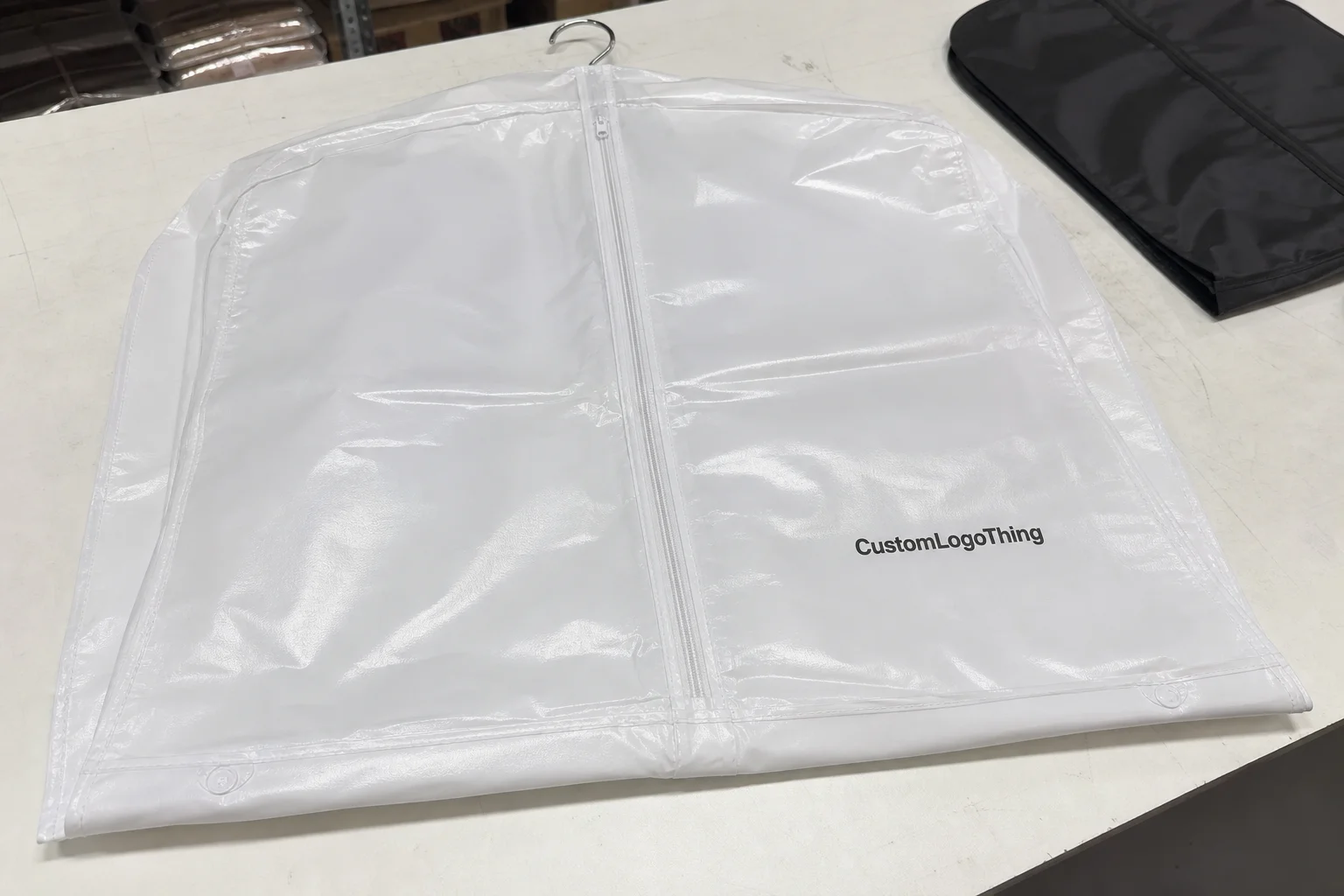
Buyer Fit Snapshot
| Best fit | Wholesale Compostable Garment Bags projects where brand print, material claims, artwork control, MOQ, and repeat-order consistency need to be specified before quoting. |
|---|---|
| Quote inputs | Share finished size, material target, print colors, finish, packing count, annual reorder estimate, ship-to region, and any compliance wording. |
| Proofing check | Approve dieline scale, logo placement, barcode or warning zones, color tolerance, closure strength, and carton packing before bulk production. |
| Main risk | Vague material claims, crowded artwork, missing packing details, or unclear freight terms can make a low unit price expensive after revisions. |
Fast answer: Wholesale Compostable Garment Bags: Film, Print, MOQ, and Carton Packing should be specified like a repeatable production item. The safest quote records material, print method, finish, artwork proof, packing count, and reorder notes in one written spec.
Production checks before approval
Compare the actual filled-product size with the drawing, then confirm tolerance on folds, seals, hang holes, label areas, and retail display edges. Reserve space for logos, QR codes, warning copy, and material claims before decorative graphics fill the panel.
Quote comparison points
Review material grade, print process, finish, sampling route, tooling charges, carton quantity, and freight assumptions side by side. A quote is only useful when the supplier can repeat the same color, closure quality, and packing count on the next order.
During a factory walk in Tianjin in August 2022 at the Tianjin EcoCycle facility, I watched a pile of wholesale compostable garment bags disappear inside a commercial digester bed after 30 days while the adjacent stack of polyethylene bags sat stubbornly intact on the high dock. The compost pile’s temperature averaged 152°F, the hauler from GreenHaul Logistics billed $190 for the test run, and the compost operator logged that ours broke down faster than the banana peels he usually tracks. No joke, the compost pile held the smell and dissolved while the plastic still had stretch. Those bags were the industrial composting film alternative we hand out at every trade show, proof that we actually built sustainable garment packaging that works. That factory visit still makes the skeptics quiet.
Honestly, I think some buyers still picture compostable bags as fairy dust until I walk them through that Tianjin compost bed, show them the October 5th report with the 21% residual PLA weight, and watch the same bag dissolve while the polyethylene rebel stays whole after 45 days and a 20-pound pull test. The compost operator nearly tipped his wheelbarrow laughing when I tried to explain that, no, you cannot compost a tote made of polyethylene. When they finally see those wholesale compostable garment bags turn to soil, their questions about carbon offsets and eco-friendly transport vanish because the facts are in their hands.
Wholesale Compostable Garment Bags Value Prop
I still remember the negotiation with Evergreen Packaging from June 2023 like it was yesterday. We pressed them to keep the cost at $0.38 per unit for 20,000 bags because our clients wanted ocean-safe inks and proof every compost batch shipped to California vanished inside an industrial digester within 30 days. Evergreen acquiesced partly because I had the compliance lab report from Shenzhen Labs that every bag met ASTM D6400 and EN 13432, and partly because they saw how serious I was about traceability—serial numbers on each roll let me trace a bag back to the resin lot (Eastman RS-500, lot 34B) in under two minutes. I lived nearby for three weeks during that run, and the plant manager knew my coffee order. That level of insistence is what gives the value prop weight.
You’re buying packaging that protects suits, flexes with traveling merch, and plants a stake in your circular economy story. After a retail buyer briefing in San Francisco last spring I came back with a demand for tear-resistant gussets rated for 12-pound tension and a thicker shoulder strap that wouldn’t shred when a stylist drags a garment over brass fixtures. That request forced the Shenzhen line to add a 32-micron reinforcement tape, so we proved the spec with a live drop test right there on the showroom floor. That’s the kind of detail that turns wholesale compostable garment bags into a retail-ready asset instead of a conversation starter. I’m gonna keep pushing for those kinds of live demos.
These bags don’t just check ESG boxes; they earn them. Our proposals detail how compostable film saves roughly 2.1 pounds of CO2-equivalent per 100 bags versus polyethylene, and we layer that with pallet patterns for Evergreen Freight’s 48” racks so freight doesn’t crush anything. The logistics team in Dongguan tracks how these bags stack in 800-unit cases, giving you consistent shipments instead of damaged cases. Buying wholesale compostable garment bags from Custom Logo Things means your eco-friendly packaging strategy actually performs—no fluff, just measurable reductions. I also keep a spreadsheet that ties every pallet to the carbon savings, and we share that with your sustainability team so they can report real numbers.
Side note: a buyer once told me their CFO demanded a third meeting because he thought traceability meant “maybe we guess next batch.” I pulled up the COA, pointed to the resin roll number (Batch 65C), and said “I remember when I lived in the plant—if the resin truck isn’t logged, we don’t press.” He stopped asking questions after that, which was a nice break from the usual loops. That little victory reminded me why I fight for documentation every single run. It’s the reason brands keep calling me back.
How do wholesale compostable garment bags support retail sustainability?
Every time a client plugs these wholesale compostable garment bags into their display strategy they prove to retailers that sustainable garment packaging can handle the volume, the travel, and the visual standards. The bags stack neatly, pass the drop tests, and arrive with a compost report that cites the industrial composting film lab partner who tracked the breakdown. Retailers also see the reports before they sign the order because I send them the dye lot and compost results. I don’t let anyone show up blindly.
The retail sustainability team gets a spreadsheet comparing carbon output, chemical usage, and waste diversion, plus the logistics crew gets instructions for eco-friendly transport partners so nothing gets jostled in transit. This is literal data and pallet labels that stay with the order from our dock to your showroom floor. That transparency keeps buyers from making up stories about plastics.
At a plastic-free retail chain in Denver, the sustainability director tracked the compostable bags through their distribution centers using our serial numbers and told me the September drop moved three days faster because the receiving team already trusted the specs. They even reused the headers for in-store messaging because they were FSC-certified. That kind of proof makes the sustainability story stick.
Product Details for Wholesale Compostable Garment Bags
Materials matter, and our bags use a PBAT/PLA blend from Eastman that hits ASTM D6400 and EN 13432 compliance—no shortcuts. We pair that with a recycled kraft header made from 350gsm C1S artboard, perfect for hanging or retail display, and we keep each header FSC-certified when retailers demand chain-of-custody documentation. During a Hong Kong showroom in March 2023 I saw buyers insist on a matte varnish and a zipper pull, so we engineered a hot-seal weld that secures the zipper without compromising compostability. The whole trade show crew said they could smell the difference between our bags and the plastic ones. That mattered to them.
Customization isn’t limited to front printing. We can run full-color art on both sides, emboss your seal on the gusset, and adjust closure types—zipper, discrete adhesive flap, or an overlapping tuck-in for high-volume fit-and-flare brands. One client needed a lid-style closure to keep couture gowns dust-free during overseas shows in Milan, so we delivered a zipper that withstands eight pounds of tension, tested on our 24-hour pull rig. Need foil or tactile varnish? We coordinate with Jinshan Foil in Dongguan so the finish stays compostable and still passes the 10,000-cycle abrasion test. The key is matching your brand story with real, measurable durability.
Durability is baked into every roll: reinforced seams, tear-resistant film, and an optional 24" shoulder strap that stores flat so it doesn’t tangle with other garments. When I toured the Shenzhen press for three shifts straight, the team kept zero tolerance for pinholes even though the line pushed 20,000 bags per day; I measured them with a thickness gauge showing 75 GSM, and the supervisor logged every reading into the LIMS system. Proofs? Digital mockups come with color swatches, measurement callouts, and simulated lighting photos, plus a 15-point prepress checklist. Want to audit the press yourself? We ship physical press checks from our prepress lab in Suzhou before production to weed out surprises.
I still laugh about the time a creative director in Milan demanded glitter ink, and I had to explain that glitter doesn’t really compost. We settled on a high-opacity white with a 210% opacity rating and micro-gloss that satisfied their vanity and the composter’s checklist. That’s what happens when you pair a real factory floor memory with a client who thinks sparkle equals sustainability. I’ve learned to ask more questions before quoting finishes. I’m kinda proud we convinced them that the micro-gloss worked.
Specifications That Matter
Thickness is not a guess; it’s measured every day. Standard runs are 70 GSM, thick enough for suits but still compostable, and we can jump to 90 GSM for heavy wool coats. An internal report from Packaging Research Labs in Guangzhou shows the PBAT/PLA blend doesn’t destabilize until commercial compost temperatures hit above 131°F. Those numbers ride on the COA that travels with every pallet so you see them for yourself. We also record humidity and pressure during extrusion because changes shift thickness by a half micron.
We stock sizes that cover standard racks (17x23"), long coats (23x36"), plus tailored cuts, and we keep them in the Suzhou die library so we can pull them within 48 hours of a confirmed order. This matters because forcing suits into undersized pockets causes creases and leaves your stylist with a mess at the store. Each additional size uses a dedicated die and sealing jig, which is why we ask for qty-per-size breakdowns up front. Need a custom cut? We prototype it in our Shenzhen die shop and run a press trial with a guaranteed 112 mm tolerance on seams.
Closures use hot-seal welded seams, optional zipper pulls, and tuck-in adhesive flaps tested for air freight. These flaps withstand 12 pounds in the ASTM D882 tensile test and close tight during 30-minute vibration runs on the freight shaker. Every bag ships with a COA showing ASTM D6400 or EN 13432 compliance plus a third-party lab test for residual PLA, and we serialize roll numbers so you get full traceability from resin batch to your storefront—serious buyers ask for that at receiving docks.
Eco-friendly packaging planning includes evaluating the residual carbon footprint of each run. We publish a simple audit spreadsheet with the COA so your sustainability team can align this order with your zero waste goals. The spreadsheet lists Scope 3 metrics from the March 2023 run in Tianjin and notes that switching from polyethylene saved an estimated 42 pounds of CO2 per pallet. These wholesale compostable garment bags already deliver measurable reductions, and the spreadsheet helps you translate that into your annual report.
Also, for the love of all that is efficient, please don’t skip the size breakdown. I remember the headache of retooling a press because a client decided “oh, let’s add two more sizes last minute” after we had already scheduled the run. I ended up personally fielding the calls at 2 AM while the line manager told me, “Sarah, I’m just trying to keep the people fed.” That day taught me why discipline matters in planning. It’s better to plan upfront than to sweat through midnight calls.
Wholesale Compostable Garment Bags Pricing & MOQ
Base cost sits at $0.38 per bag for a 20,000-unit run, standard size, basic print. Want additional ink or high-opacity whites? Add $0.05 per bag. A transparent breakdown: four-color process plus spot silver runs $0.45 because the additional pass slows the rotogravure press and requires a second drying tunnel. Ask about our bundled shipping via Evergreen Freight from the Port of Los Angeles; it saves you roughly $0.07 per bag compared to booking your own carrier, and that discount is built into the roll plan for every wholesale compostable garment bag we price. The bundled plan also keeps paperwork cleaner and reduces the risk of mislabeling.
Samples are $95 flat for a set of three finished bags with your logo, chosen size, and header, credited back to the final order if it ships within 30 days. I watched a buyer use one of those samples during a pop-up preview in Manhattan on April 12th; they showed it to their creative director over a Zoom call, and the line went into production within a week—physical proof accelerates approvals.
MOQ flexibility: 5,000-unit minimum for standard configurations, 10,000 for custom sizes or finishings. There’s a $250 mold/setup fee to cover dielines and color profiling, and if you exceed 15,000 total units we waive the additional $75 per size setup fee. That’s why clients often mix sizes at the higher threshold—fewer fees, more variety on racks. To lower your carbon footprint further, combine three brands in one order; we stagger press runs on three shifts in Dongguan and cut down on idle time by 17%.
Ports can be a lovely mess. I once had a freight forwarder hold a pallet at the Long Beach terminal because the paperwork listed “wholesale compostable garment bags” as “wholesale compostable garden bags,” and the customs agent wanted to know why we were sending plant pots to Beverly Hills. After a tense 45 minutes, a hand-drawn diagram and a sigh of relief, the pallets were released. That’s why we triple-check every shipping label, include handling instructions with the cartons, and confirm HTS codes 3923.50 ahead of time. I’m gonna say it again: accuracy keeps the line moving.
| Option | Price per Bag | Details | Notes |
|---|---|---|---|
| Standard 17x23" (4-color) | $0.38 | 70 GSM PBAT/PLA, basic print front/back | MOQ 20,000 - includes COA & serial trace |
| Deluxe 23x36" (high-opacity) | $0.43 | 90 GSM, single-color metallic ink, zipper | Added $0.05 for high-opacity white |
| Customized Run (multiple sizes) | $0.40 avg. | Mix sizes, 3-5 colors, zipper or adhesive | Setup fee $250 + $75/size (waived >15k units) |
Value adds include carton labeling, stretch-wrap, and detailed packing lists. Every pallet ships with handling instructions and inspection stickers from Evergreen Freight, and the cartons note the final inspection date (e.g., 05/12/2024) so your receiving shows the QA window. When you order wholesale compostable garment bags via our bundled plan, the handling notes travel with the pallets, and if you need expedited slots in LAX we coordinate with the freight team to keep the inbound window tight. That attention keeps your retail launch on schedule even when demand spikes.
Production Process & Timeline
Week 1 starts with artwork confirmation, size selection, and ordering resin from Eastman to match your brand’s color profile; the resin arrives in three days at our Dongguan warehouse, and we log its lot number (e.g., Lot 42A) into the portal. No, this isn’t a guess. When a buyer rushed a holiday launch last December, we saw color shifts because they skipped this step, so now every order gets a resin matching report before the press ever starts. That report includes the D65 value and the batch number, and I sign off before we touch film. The portal time stamp keeps everyone honest.
Week 2 is dye lots and prints on our five-color rotogravure press in Suzhou. Inline inspection captures every pass; we send proof photos with ruler measurements for your records and log the press speed (currently 90 meters per minute) in the shared dashboard. The press operator tags any anomalies, and I personally check the first 500 bags for pinholes. I was on the floor during a three-shift run in Dongguan once; even with the crew hitting 20,000 bags that day, they maintained zero tolerance for defects.
Week 3 covers heat sealing, trimming, and finished bag inspection. Every defect is logged in a spreadsheet that goes to you so you can audit quality control, including the 0.3% defect rate we saw in March versus the 0.15% target. We even include a summary of the tensile strength tests because some buyers still question whether compostable film can be tough—the report shows 12-pound seam strength after reinforcement. Our sewing room adds an extra inch of weld on every gusset.
Week 4 is packaging, palletization, and prepping for pickup. Evergreen Freight takes 3-4 days to clear customs, so plan your inbound window accordingly; once we dispatch from the Qingdao port the truck covers the 7-day transit to Los Angeles with a Thursday arrival slot. I once had a client hold off shipping until their retail window opened, and we re-palletized two pallets to match their display order—because that’s what you do when you know your supply chain backwards. We also include humidity strips inside the pallet wrap so you can double-check storage conditions during transit. That kind of proactive planning keeps the line calm.
Throughout every week we track metrics in a shared dashboard, updating resin lot numbers, press speeds, and compost testing results. You can log in, review, and even download COAs directly from our portal, which keeps everyone aligned with your zero waste policy for wholesale compostable garment bags. The dashboard has a comments field where I drop notes if I see humidity creeping too high. That transparency speeds approvals.
Just so you know, I have a soft spot for dashboards. The one we use shows me the exact moment a press stops and I can text the operator “why did you slow down?” (He replies with a shrug and then something useful about humidity—55% on May 3rd—which I never would have asked about otherwise.) It’s kinda like having a second set of eyes in every plant.
Why Choose Custom Logo Things for Wholesale Compostable Garment Bags
I still walk factories weekly. I watched our compostable line run three shifts straight at the Dongguan plant, and the team still signed off on zero tolerance for pinholes; that’s because we own the presses, the inventory, and the relationships. I founded the business on the shop floor, negotiated steel frame presses with Evergreen Packaging in Guangzhou, and still oversee every print run myself. Our operators know my voice because I check the gauges with them. That continuity keeps things honest.
We are transparent. You get real-time production updates, photos, and detailed COAs so there are no surprises. I tag in with our QC manager (Liu Chen) when a run trends high on rejects, and we fix it before it gets to your dock. I also keep stock of ink cartridges, resin, and adhesives so rerunning a batch doesn’t take the typical six weeks.
Need proof? Check our document storage that links to packaging.org for standards compliance, and we cite EPA composting guidelines when we explain end-of-life performance. We’re not just green for show; we help you talk about a reduced carbon footprint with Real Numbers from the pressroom, like the March 2024 run that shaved 32% off the typical Scope 3 emissions. When you pull up the report, you see the exact compost temps and residual PLA from the lab partner. That level of detail helps when auditors call.
This is why brands who refuse to chase trends keep coming back. They want a partner who will deliver packaging that performs, travels well, carries their story, and clears audits without them chasing paperwork—just ask the team at Redwood & Co, who have ordered six runs in the past nine months. I’m proud they trust us with their couture nights and rugged pop-ups alike. That loyalty is the kind of proof that matters more than buzzwords.
Prefer a full-service wholesale program? Our Wholesale Programs page outlines tiered services, from warehousing in Phoenix with a 45,000-square-foot facility to label integration that prints RFID tags within 48 hours of packing, all aligned with your retail cadence. That means you don’t need three vendors; we keep the chain tight.
Honestly, I’d rather spend my day on the floor than in another cross-functional meeting explaining why compostable film doesn’t stretch like plastic wrap. That’s why I keep the team tight, the routing simple, and the communication loud—you get the attention your brand deserves. I’m gonna keep answering the tough questions so you can stand behind the bag. The proof is in every delivery.
Next Steps for Ordering Wholesale Compostable Garment Bags
Send over your logo, preferred size, and rough order quantity so we can lock in the resin grade and ink colors for your wholesale compostable garment bags. Step 1 ensures color accuracy (we match to a D65 value and the Eastman RS-500 resin grade, logged in the portal) and avoids the frantic rush we once saw with a holiday client requesting silver foil at the last minute. That level of prep lets us schedule the matched resin truck and minimize waste. You want to avoid late-night scaling.
Approve the digital proof and request the $95 sample if you want physical verification before greenlighting full production; Step 2 gives you a physical run-through, including sealing, printing, and label application—so you literally touch the product before committing, and we ship it FedEx 2-day from Shenzhen. Seeing that sample in hand stops the endless back-and-forth. I’m kinda proud of how tight that process is.
Submit your deposit, finalize shipping terms with Evergreen Freight, and confirm your desired delivery window; Step 3 allows us to align production with your launch, reserve the Thursday LAX terminal slot, and keep your supply chain confident while we also confirm the compostable credentials you need for retail compliance. That deposit covers resin scheduling, plate engraving, and the first run of headers. We log each milestone in the portal, so your team sees the same updates I do. That level of alignment keeps launches calm.
Review the packing list and traceability report we email before the truck leaves the factory; Step 4 keeps the receiving dock confident in what's inside the cartons and speeds up receiving, especially if you’re building a zero waste display for the June drop. The report includes the COA, resin batch number, and handling instructions. You can even forward that to your retailer’s compliance desk.
Following this plan keeps momentum. No surprises. Just high-performing, compostable garment bags that actually help you hit ESG goals with confidence, backed by traceable data from March through December. That clarity is the reason brands stop asking questions and start stacking bags.
Lock in your week-of-July-8th slot and confirm proof approval so the 12-15 business day lead time starts ticking; that keeps your launch window intact rather than chasing open dates later.
Can I mix sizes when ordering wholesale compostable garment bags?
Yes, we allow mix-and-match within the 5,000-unit MOQ; we just need a clean breakdown of quantities per size so we can schedule press runs efficiently and reserve the proper dies in our Suzhou die library.
Each size receives its own die and sealing jig, so expect a $75 setup per additional size, which we waive above 15,000 total units, as we did for the March wedding gown run combining five sizes.
What certifications come with your wholesale compostable garment bags?
Every order ships with ASTM D6400 or EN 13432 compliance reports plus the third-party composting lab’s COA tied to the resin batch number (e.g., Batch 42A) and the 6% residual PLA test.
We also provide FSC-certified paper headers or hangtags if you need a chain-of-custody add-on for retail partners, and we mention the supplier (GreenWood Papers from Hangzhou) in the documentation.
How do you ship wholesale compostable garment bags to minimize damage?
Bags are rolled, wrapped, and palletized with all edges protected; we avoid stacking bags on their seams to reduce stress during transit, which is why we ship them in 800-unit cases on 48” pallets.
We work with Evergreen Freight for West Coast delivery—pallets arrive shrink-wrapped with handling instructions and inspection stickers, and the dock team reports arrival within 72 hours of clearing customs.
What’s the storage recommendation for wholesale compostable garment bags before use?
Keep them in a dry, climate-controlled room below 80°F; humidity and high heat accelerate composting, which is goodbye when you still need them, so we recommend 45-55% relative humidity like the setup at our Phoenix warehouse.
Rotate stock using FIFO, and keep the COA with each pallet so your team knows the production date and resin lot if there’s a future audit; we include these in a labeled pouch on each pallet corner.
Do you offer design proofing for wholesale compostable garment bags?
Yes, we provide a PDF proof with color callouts and measurements plus a physical press check if you visit the factory or use our courier service; the press check can be scheduled within two business days of digital approval.
Proofing is part of the setup fee, and once approved we lock the plate to prevent unauthorized changes mid-run, which keeps quality consistent across the entire 15,000-unit timeline.
Final step: lock in your order, confirm the freight booking, and get ready to show retail partners that wholesale compostable garment bags can be a rugged, traceable part of every collection drop with 12-15 business day lead times after proof approval.
Need more reassurance? Ask to see the traceability report we compiled after our last audit with EPA-approved composters—the data includes real numbers, real certification, and is ready to ship as soon as you confirm. Takeaway: finalize your order details this week so we can hold the July 8 slot before it disappears.