Buyer Fit Snapshot
| Best fit | Wholesale Custom Sleeve Packaging Boxes for Brands projects where brand print, material claims, artwork control, MOQ, and repeat-order consistency need to be specified before quoting. |
|---|---|
| Quote inputs | Share finished size, material target, print colors, finish, packing count, annual reorder estimate, ship-to region, and any compliance wording. |
| Proofing check | Approve dieline scale, logo placement, barcode or warning zones, color tolerance, closure strength, and carton packing before bulk production. |
| Main risk | Vague material claims, crowded artwork, missing packing details, or unclear freight terms can make a low unit price expensive after revisions. |
Fast answer: Wholesale Custom Sleeve Packaging Boxes for Brands should be specified like a repeatable production item. The safest quote records material, print method, finish, artwork proof, packing count, and reorder notes in one written spec.
Production checks before approval
Compare the actual filled-product size with the drawing, then confirm tolerance on folds, seals, hang holes, label areas, and retail display edges. Reserve space for logos, QR codes, warning copy, and material claims before decorative graphics fill the panel.
Quote comparison points
Review material grade, print process, finish, sampling route, tooling charges, carton quantity, and freight assumptions side by side. A quote is only useful when the supplier can repeat the same color, closure quality, and packing count on the next order.
Wholesale Custom Sleeve Packaging boxes for brands earn their keep quickly, and I have seen that firsthand in Shenzhen, where a candle client swapped a plain tuck carton for a 350gsm C1S sleeve and changed the shelf read without rebuilding the whole structure. The project started with a rigid-box quote near $1.20 per unit at 3,000 pieces, then settled into a much more practical sleeve program that kept the launch budget in line and the carton line moving. That is the part many buyers underestimate: Wholesale Custom Sleeve Packaging boxes can change how a product is perceived, how it ships, and how the finance team feels about the rollout, all with one printed layer and a measured die-line.
Most buyers want the same three outcomes: a package that looks premium, a fit that respects the product dimensions, and a program that does not create warehouse stress at receiving docks in Shanghai, Dongguan, or Chicago. Wholesale Custom Sleeve Packaging boxes handle that well because the sleeve carries the logo, barcode, seasonal art, and compliance copy while the inner carton remains stable and reusable across reorders. A beauty brand can refresh holiday graphics on 8,000 sleeves without scrapping the base carton, and a supplement company can keep one carton structure while changing dosage panels or language versions on the outer wrap. That is practical packaging built for real production runs, not decoration for a mood board.
At Custom Logo Things, I have watched wholesale Custom Sleeve Packaging boxes perform especially well for cosmetics, candles, supplements, apparel sets, tea assortments, and gift kits that need a retail-ready outer layer instead of a fully engineered rigid box. The format also travels well through distribution because it adds brand presence without adding much bulk, which matters when freight is billed by dimensional weight and a 2 mm increase can show up on a bill of lading like a small tax on optimism. For launches in Guangzhou, Ningbo, or Foshan, that balance of presentation and cost control is exactly why sleeve packaging keeps getting approved by buying teams and operations managers alike.
"The sleeve is often the quietest upgrade in the room," a buyer told me after a 6,000-piece launch from our Dongguan facility, and she was right: the carton stayed the same, but the shelf reaction changed the minute the print, finish, and fit looked deliberate.
If you are still comparing structure choices, it helps to look at the packaging program as a whole rather than as one isolated box order. Our Custom Packaging Products page shows the cartons, sleeves, mailers, and retail packaging we build, while our Wholesale Programs page explains how larger runs are quoted, proofed, and scheduled for factories in Shenzhen and Dongguan. I mention those because wholesale custom sleeve packaging boxes rarely stand alone; they usually sit inside a broader packaging plan that includes unit cost, launch date, and inventory control, and the teams that do best are the ones that treat those three items as connected from day one.
Wholesale Custom Sleeve Packaging Boxes: Why They Sell
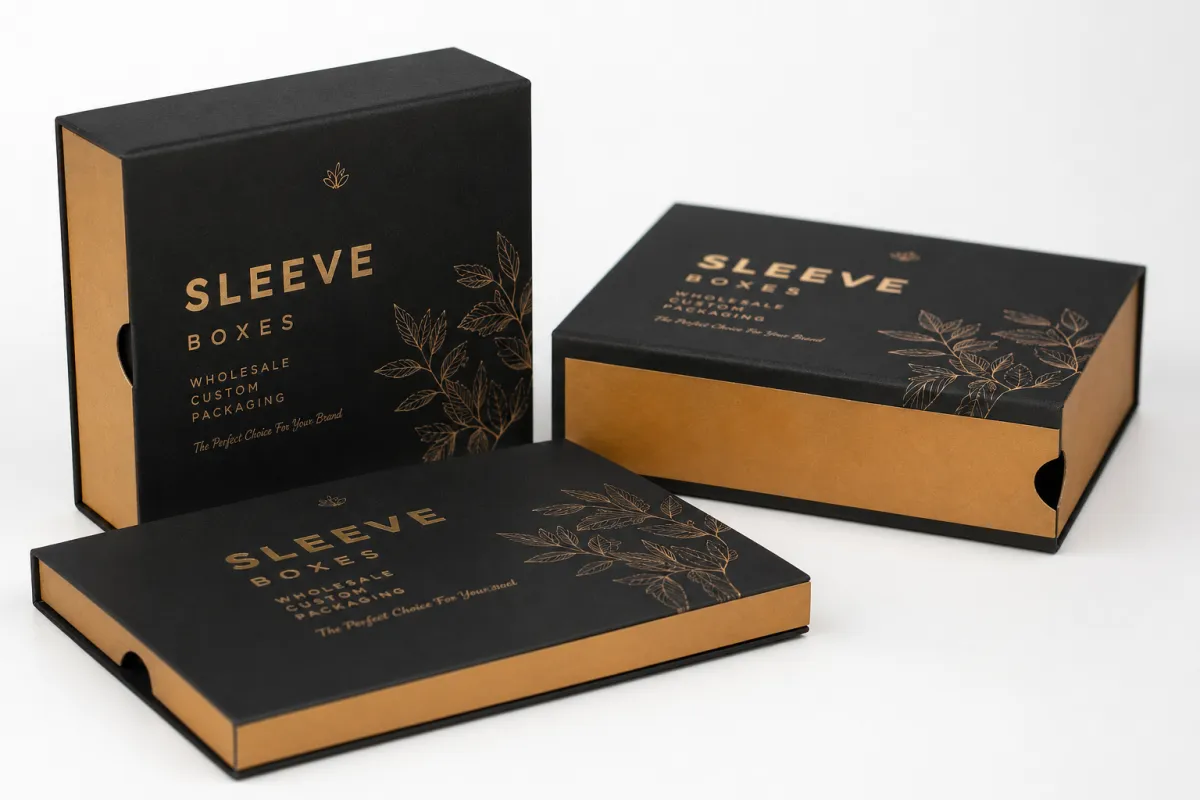
Wholesale custom sleeve packaging boxes sell because they solve three problems at once: they raise brand recognition, they adapt to cartons or trays that already exist, and they keep the final presentation polished without forcing a full redesign. On a factory floor in Shenzhen, that matters more than marketing language, because the sleeve is one of the few formats that can turn a plain carton into a premium retail piece with a single die-line and a clean fold. I have watched buyers in skincare and food hold a sample under bright LED light and realize that wholesale custom sleeve packaging boxes can deliver a premium shelf presence without the cost of a fully printed rigid box, which is usually where the conversation shifts from "just make it simple" to "can we add foil on the logo?"
They also help when a brand needs to move quickly. A supplement line launching three bottle sizes can keep one carton structure and vary the outer sleeve by formula, dosage, or language market, which cuts SKU clutter and keeps the packaging program disciplined. Wholesale custom sleeve packaging boxes are especially useful when the inner pack already does its job and the outer layer only needs to communicate, organize, and sell. That is why they show up on lipstick sets, candle duos, apparel bundles, tea kits, and seasonal gift boxes where the first three seconds on shelf matter more than structural complexity, and where a 14-day production window is often easier to manage than a full structural redesign in a plant outside Dongguan.
I have seen buyers overcomplicate packaging more times than I can count. They assume the only path to a premium look is a rigid box with foam inserts and foil everywhere, but in a real production meeting the better question is whether the structure supports the product, the budget, and the channel. Wholesale custom sleeve packaging boxes are often the cleaner answer because they let you spend money where customers actually notice it: print clarity, score accuracy, and surface finish. A 300gsm or 350gsm sleeve with tight registration can feel more refined than a heavy box with sloppy corners, and I would choose that every time if the goal is to look polished without making the factory invent new problems.
From a merchandising angle, wholesale custom sleeve packaging boxes are strong because they fit a wide range of shapes. Square cartons for candles, narrow cartons for cosmetic tubes, rectangular kits for apparel, and stacked bundles for promotional gifts all benefit from a sleeve that frames the pack and controls the visual hierarchy. If the product has to sit next to competing items in a store in Los Angeles or a distributor showroom in Singapore, the sleeve is the part that creates fast recognition: logo on the front panel, key message on the side, barcode and legal copy on the back. It is a small structure with a large job, and the best sleeves do that job without acting dramatic about it.
One lesson that stuck with me from a supplier negotiation in Dongguan was simple: buyers often watch the wrong line item. They fixate on sleeve unit price and overlook the savings in warehouse handling, launch flexibility, and lower scrap risk when a seasonal campaign changes midstream. When a client can re-sleeve an existing carton instead of reprinting 10,000 fully decorated boxes, wholesale custom sleeve packaging boxes stop being a nice extra and become a planning tool. The smartest brands treat the sleeve as part of inventory strategy, not just the visual finish, and that is usually where the real money is saved.
Wholesale Custom Sleeve Packaging Boxes: Product Details
Wholesale custom sleeve packaging boxes are usually a printed paperboard sleeve that slides over a tuck box, mailer, tray, or bundled product set. The sleeve can be open-ended, sized for friction fit, built with a window patch, or given a locking panel if the pack needs more grip during transit. In most jobs, I spec the sleeve around the inner pack with 1 to 2 mm of tolerance on width and height after board thickness is counted, because that small margin prevents buckling, rubbing, and the loose fit that makes a retail box feel unfinished. I know that sounds tiny, but packaging lives and dies in tiny details, and a 2 mm error can become a visible annoyance very quickly.
They work especially well on square cartons and rectangular kits because those shapes give the sleeve a stable edge to sit against. A long, narrow box for a cosmetic pencil set needs a different sleeve length than a square candle carton, and a multi-item bundle may need a deeper sleeve so it does not shift when the carton is lifted from the shelf. Wholesale custom sleeve packaging boxes are valuable precisely because they can be tuned to the inner structure without changing the internal cavity, which is why they fit so neatly into product packaging systems that already have established dielines in Shenzhen, Foshan, or Suzhou. I have had clients breathe an audible sigh of relief when they realized they did not need to rework the whole carton just to refresh the brand story.
I have seen seasonal graphics become much easier when the sleeve is the only part that changes. A coffee brand I worked with had one base box for six roast profiles, and they shifted the palette and aroma notes on the sleeve each quarter instead of printing new cartons every time the lineup moved. That saved a stack of obsolete inventory and kept the warehouse from sitting on outdated retail packaging in a 12,000-square-foot fulfillment center. For brands that launch limited editions, wholesale custom sleeve packaging boxes give you a clean way to change the message without reengineering the whole pack, which is much more pleasant than staring at a pallet of boxes you no longer want to explain to finance.
There is also a useful comparison to make. Full-carton printing covers every visible surface, but it uses more paper, more ink, and more inventory discipline because every change affects the whole box. Wholesale custom sleeve packaging boxes are usually the better wholesale choice when the inner carton already works, when the product line changes often, or when the budget should stay focused on the outside-facing brand message. Rigid boxes still win for luxury presentation and premium unboxing, but for many mid-market launches, sleeves deliver the right look with less overhead and a lot less room for regret.
| Structure | Typical Use | Approx. Unit Cost at 5,000 | Typical Lead Time | Best Advantage |
|---|---|---|---|---|
| Wholesale custom sleeve packaging boxes over tuck cartons | Cosmetics, candles, supplements | $0.15-$0.32 | 12-15 business days from proof approval | Strong shelf presence with low structural cost |
| Printed paperboard mailer with sleeve | Subscription kits, ecommerce bundles | $0.26-$0.48 | 14-18 business days from proof approval | Better shipping protection and presentation |
| Fully printed folding carton | Retail product packaging | $0.20-$0.38 | 10-14 business days from proof approval | Full-surface branding without a second component |
| Rigid gift box with printed sleeve | Premium gifting and sets | $0.82-$1.55 | 18-25 business days from proof approval | Highest perceived value and structure |
The table above is directional, not a promise, because size, coverage, foil, inserts, and the shipping destination can move the price quickly. Even so, it gives buyers a practical way to judge wholesale custom sleeve packaging boxes against other formats and makes the trade-offs visible before artwork starts. That kind of comparison helps teams choose a structure that supports branded packaging goals and warehouse reality at the same time, which is really the whole point when a launch is scheduled for a specific month rather than some vague future quarter.
For more engineered or sustainability-driven builds, I also look at board sourcing and end-use testing. FSC-certified paper is a common request when buyers want a documented chain of custody, and transit testing matters when the pack rides through parcel networks or pallet lanes from Ningbo to Dallas. If the box is going to face compression, vibration, or repeated handling, I like to reference FSC for certified fiber options and ISTA for distribution testing methods that line up with real shipping conditions. Those standards save arguments later, which is one of my favorite kinds of savings.
Materials, Printing, and Finishes That Hold Up
Material choice is where wholesale custom sleeve packaging boxes either feel sharp or start drifting into good enough. For premium retail presentation, I usually look first at SBS or C1S board in the 300gsm to 400gsm range, because it prints cleanly, holds fine type, and supports a crisp fold. A very common spec in our Shenzhen and Dongguan production runs is 350gsm C1S artboard, which gives enough stiffness for a sleeve without making it bulky in the carton. C2S can work when you need stronger image coverage on both faces, while kraft board suits natural or eco-forward branding when the design language calls for warmth, texture, and a less polished surface. If the product is heavier or the sleeve has to survive more handling, a thicker artboard or reinforced construction can help keep the edges from bruising after a 600-kilometer truck route.
Print method matters just as much. CMYK is the default for most wholesale custom sleeve packaging boxes, but I push for PMS matching when a brand has a strict logo color or when multiple SKUs need identical package branding across a long product line. A dark navy, a saturated red, or a precise green can look different from batch to batch if the color spec is loose, and that is where spot color control earns its place. For buyers who care about compliance, I also like to check black text and barcode clarity under production lighting, because a fuzzy code is no longer a design issue; it becomes a retail operations problem. I have had a barcode reject a whole morning of receiving checks in a warehouse near Guangzhou, and the frustration was, frankly, deserved.
Finishes are where the sleeve either earns attention or quietly does its job. Matte aqueous coating feels restrained and works well for skincare, supplements, and high-end candles. Gloss can punch up color on food sets and promotional kits. Soft-touch gives a velvety feel that shoppers notice immediately, but it is not always the right answer if the pack will be scuffed in transit or handled by warehouse staff. Spot UV, foil stamping, embossing, and debossing all add lift, but I recommend using them with discipline, because too many effects can make wholesale custom sleeve packaging boxes look busy rather than premium. I have seen one too many designs trying to do the work of three packaging styles at once, and the result was more showroom headache than elegance.
- Matte aqueous coating: good for a clean finish at 5,000+ units, with less glare under store lights.
- Foil stamping: best for logos, seals, and short text, especially on cosmetic and gift sleeves.
- Embossing or debossing: adds tactile depth on 350gsm board without needing heavy ink coverage.
- Spot UV: useful when you want one graphic element to catch light on a darker retail packaging system.
- Soft-touch lamination: strong for premium product packaging, but it needs careful scuff handling in packing.
There are a few production details I always check before approving wholesale custom sleeve packaging boxes. Glue areas need enough quiet space so adhesive does not show through the print. Score lines need to be placed so they fold cleanly without cracking the ink. Die-cut tolerances should be tight enough that the sleeve slides over the inner carton without forcing workers to stretch every piece by hand. I have watched a run of 20,000 sleeves get slowed down because the fit was 1.5 mm too snug on the first batch in a factory outside Dongguan, and that kind of mistake is expensive in a finishing room. It is also the kind of mistake that makes everyone in the room go very quiet for a moment, which is never a good sign.
The honest answer is that the best material depends on the channel. A cosmetic brand selling through boutiques in New York or Seoul may want soft-touch C1S with foil and embossing, while an ecommerce supplement company may care more about scuff resistance and barcode legibility than about a tactile finish. Wholesale custom sleeve packaging boxes should be chosen for the way the box will be seen, touched, stacked, and shipped. If the sleeve is going to sit on a shelf for 45 days and then move through a carton line, the material spec has to respect both moments, not just the prettier one.
For buyers who need a clearer rule of thumb, I explain it this way: the board, print, and finish should work together like a machine with three gears. If one gear is too aggressive, the sleeve costs too much; if one gear is too weak, the shelf impact falls apart. A balanced spec for many wholesale custom sleeve packaging boxes is a 350gsm C1S artboard, CMYK with one PMS hit, matte AQ, and one restrained embellishment such as foil or spot UV. That combination usually gives the brand enough lift without inflating the quote, and it keeps the production team from muttering under their breath at the finishing table.
Wholesale Custom Sleeve Packaging Boxes: Pricing and MOQ
Pricing for wholesale custom sleeve packaging boxes comes down to five variables: board grade, print coverage, finishing complexity, size, and order quantity. Add window patching, inserts, or special coatings, and the unit cost moves again because the job now has another step in the production sequence. A 4 x 6 x 1 inch sleeve with single-side printing will price very differently from a 10 x 8 x 3 inch sleeve with foil, spot UV, and a custom insert, so the fastest path to a useful quote is to share exact dimensions and the finished pack orientation. I cannot tell you how many times a small tweak turned into a brand-new production cost just because the artwork team forgot to mention the insert.
At volume, the math gets friendlier. Once a die, press setup, and prepress review are spread across 5,000, 10,000, or 20,000 units, wholesale custom sleeve packaging boxes usually land in a better unit range than low-MOQ orders. Small runs still make sense for launches or seasonal tests, but the per-piece price rises because the proofing and setup steps are nearly the same whether you order 500 sleeves or 5,000. In practice, that means a 1,000-piece run can cost 20% to 40% more per unit than a 5,000-piece run with the same artwork. Buyers usually understand this once they see the setup list, but I still have to explain it more often than I would like.
I say this often in client meetings: low MOQ does not mean low effort. When a buyer asks for wholesale custom sleeve packaging boxes in a small quantity, the factory still has to build a dieline, check color, approve a proof, and schedule finishing. That is why MOQ exists at all. It protects the economics of the run and keeps the job from turning into a one-off that eats too much setup time. If a brand is unsure about demand, I usually suggest a pilot quantity first, then a larger reorder once sell-through is clear. That approach is a lot less painful than guessing wrong and then trying to rationalize a pallet of extra packaging to the finance team.
| Quantity | Typical Unit Price | Setup Pressure | Best Use Case |
|---|---|---|---|
| 500-1,000 | $0.39-$0.82 | High | Sampling, launch tests, retailer approvals |
| 3,000-5,000 | $0.15-$0.31 | Moderate | Most wholesale custom sleeve packaging boxes orders |
| 10,000+ | $0.10-$0.22 | Low per unit | Established SKUs and multi-store rollouts |
The checklist I ask for before quoting is simple, and it saves a lot of back-and-forth. I need finished dimensions, the number of printed sides, finish choice, quantity, shipping destination, and the target in-hand date. If the sleeve has to fit an existing carton, I also want the internal and external measurements of the inner box, because a difference of 2 mm can matter once board thickness and glue allowance are included. With those details, I can usually tell a buyer whether wholesale custom sleeve packaging boxes should be built around a standard board or whether the job needs a custom spec. That answer is a lot easier to hear early than after the artwork is already wrapped around a flawed die-line.
As a working reference, I prefer to give buyers a cost frame instead of a vague promise. A 5,000-piece run on 350gsm C1S with matte aqueous coating and one-color print might sit around $0.15 to $0.24 per sleeve in a factory near Shenzhen, while the same job with foil and an embossed logo can move into the $0.23 to $0.32 range. That difference is exactly why wholesale custom sleeve packaging boxes should be quoted from actual specs, not from a rough guess over email. Packaging price guesses are where optimism goes to get humbled.
Wholesale Custom Sleeve Packaging Boxes: Process and Timeline
The process usually starts with a quote, then a dieline, then artwork setup, proofing, production, finishing, packing, and freight coordination. For wholesale custom sleeve packaging boxes, I like to lock dimensions early because every later step depends on the fit. If the sleeve is wrapping over an existing carton, the dieline has to account for board thickness, score depth, and how much friction is acceptable when the team assembles it at speed. A clean workflow saves days, and those days matter when a launch date is tied to retail booking or distributor delivery windows in Los Angeles, Sydney, or Singapore. I have seen a whole schedule slip because the sleeve size changed after proofing, and nobody was amused, least of all the people trying to book freight on short notice.
Timeline depends on the complexity of the job. A straightforward sleeve with CMYK print and matte coating can move in 12 to 15 business days after proof approval, while foil, embossing, window patching, or a multi-SKU program can push the schedule into the 18 to 25 business day range. Digital samples can speed early confidence, but full production still needs press scheduling and finishing time in a factory in Dongguan or Foshan. That is the reality of wholesale Custom Sleeve Packaging Boxes: the more decorative the spec, the more important it is to plan early and approve promptly. Pretty packaging is wonderful, but it still has to obey the calendar.
I once watched a supplement launch lose a week because the buyer kept revising the barcode placement after the proof had already been corrected twice. The sleeve itself was fine; the delay came from avoidable changes in the copy deck and a last-minute switch from one PMS green to another. That is why I tell clients to send print-ready files, final copy, and brand color targets up front. Wholesale custom sleeve packaging boxes move smoothly when the paperwork is just as disciplined as the production. If the files are a mess, the press will not magically forgive everyone out of kindness.
Shipping and transit planning deserve attention too. If the sleeves are going overseas, I want to know whether the cartons will sit in a humid port, travel by sea freight, or move through a parcel network with rough handling. For more demanding lanes, I look at distribution testing methods such as ASTM D4169 or ISTA protocols so the pack is judged by real transport conditions rather than wishful thinking. In that same spirit, wholesale custom sleeve packaging boxes should be packed flat, counted accurately, and boxed in batches that make receiving fast at the destination warehouse. Nobody wants a receiving team playing detective with loose sleeves at 7 a.m.
There is also a planning detail that buyers sometimes skip: freight transit time. A production run that finishes in 14 business days can still miss a launch if ocean freight or air booking is left until the last moment. I tell brands to build enough cushion for prepress review, factory scheduling, packing, and shipping so the sleeves arrive before the launch window, not after it. That matters even more when multiple suppliers are involved and the sleeve has to coordinate with bottles, jars, or apparel inserts from a separate line. Packaging does not care how urgent your campaign is; the calendar still has to be respected.
Why Choose Us for Wholesale Custom Sleeve Packaging Boxes
What sets a strong manufacturing partner apart is not only price; it is the discipline behind the run. In our shop, wholesale custom sleeve packaging boxes are handled with the same attention we give to score placement, paper caliper, print registration, and finish consistency, because that is what keeps the final piece looking sharp across 5,000 or 50,000 units. A buyer may only see the finished sleeve, but on the production side I am watching board humidity, adhesive placement, trimming variance, and how the stack behaves once it leaves the press in Shenzhen. The invisible stuff is usually what decides whether the final box feels premium or merely adequate.
Consistency matters more than people think. If a brand reorders three months later, the sleeve should match the first run in color, cut, and fit, not drift because the press was set up differently or a new operator changed a fold allowance. Wholesale custom sleeve packaging boxes are especially sensitive to that kind of variation because the sleeve sits on top of another structure, and any mismatch becomes visible immediately. That is why we check shade consistency, score depth, and glue line clean-up before packing the cartons for shipment. A tiny color shift on its own might seem harmless in the abstract, but on shelf it can make a whole line look uncertain.
Buyers also appreciate direct guidance when a concept is not production-ready. I would rather tell someone that a 0.5 mm window flange will be too tight than let them discover it after 3,000 units are already in motion. That kind of prepress honesty saves time and protects the final pack, and it is one reason wholesale custom sleeve packaging boxes often work better with a supplier who speaks plainly about board choice, ink coverage, and turnaround. The best manufacturing relationships are the ones where the factory can say, in clear terms, what will work and what will not. Friendly, yes - but also precise enough to keep the job from wandering off a cliff.
When I visited a client's filling line in Suzhou last spring, I noticed the workers were assembling cartons at a pace of about 40 units a minute. The sleeve spec they had chosen needed one extra fold to lock properly, which sounded harmless in the office but slowed the line enough to matter in the plant. We simplified the structure, kept the branding intact, and the line recovered. That is the practical value of wholesale custom sleeve packaging boxes done correctly: they should support the operation, not fight it. If a design looks elegant but behaves like a stubborn machine part, I am not going to pretend that is a win.
We also keep a close eye on branded packaging strategy because the sleeve is often the first physical touchpoint a buyer has with the product. If the package branding is clear, the shelf message lands faster, the unboxing feels more deliberate, and the retailer has an easier time merchandising the item. Whether the job calls for custom printed boxes, a sleeve over a mailer, or a seasonal refresh on an existing carton, the point is the same: the final result should sell the product and hold up in the chain, not just photograph well for one afternoon. I like packaging that works in photos, of course, but I like packaging that survives the receiving dock even more.
For teams comparing options, our process is built to reduce friction. We can talk through board grades, suggest finish combinations, check dielines, and flag fit issues before the press run starts. That is especially helpful for wholesale custom sleeve packaging boxes because these jobs usually sit between design and operations, where a small misread can become a large correction. A clear quote, a clean proof, and a realistic schedule are worth more than a shiny promise that ignores the details. I have always trusted calm production over flashy optimism; the latter tends to vanish right when the cartons show up.
What Are Wholesale Custom Sleeve Packaging Boxes Used For?
Wholesale custom sleeve packaging boxes are used to add brand presence, refresh existing cartons, organize SKU differences, and make retail packaging feel more deliberate without rebuilding the whole structure. They are especially useful when the inner box already fits the product and the outer sleeve only needs to carry messaging, compliance details, or seasonal artwork. In practice, that means cosmetic kits, candle sets, supplement bottles, tea assortments, apparel bundles, and gift packs can all share one stable carton while the sleeve changes for a new launch or campaign.
The format also helps operations teams because it keeps the base packaging consistent while giving marketing room to update graphics, colors, and copy. That is one of the main reasons wholesale custom sleeve packaging boxes show up so often in wholesale packaging programs: the sleeve does the selling, and the carton does the heavy lifting. For brands trying to keep inventory tight and shelf impact strong at the same time, that split is hard to beat.
If the product needs to travel through distribution, the sleeve can still do its job while adding little bulk, which helps control freight and storage costs. A well-made paperboard sleeve with accurate die-cut tolerances, clean folds, and the right finish can lift the whole package without forcing a new structural build. That is practical branding, and it usually wins support from both the creative team and the warehouse manager.
Next Steps for Wholesale Custom Sleeve Packaging Boxes
If you are mapping a launch, start with the inner box dimensions, the visible coverage area, and the shelf look you want to achieve. Then choose the board, finish, and any extras such as a window, insert, foil stamp, or special coating. Wholesale custom sleeve packaging boxes become much easier to quote once those pieces are settled, because the factory can map the size, the print coverage, and the finishing sequence without guessing. A good brief should also include whether the sleeve is wrapping a tuck box, mailer, tray, or bundled set. That one detail alone has saved more than a few awkward revisions in my experience.
Prepare your artwork files, Pantone targets, logo files, and a few reference images that show the style you want. If the design is still in progress, a simple layout brief with dimensions and a rough sketch is enough to start the conversation. I also recommend noting your target quantity and in-hand date, because those two numbers change the scheduling more than almost anything else. Wholesale custom sleeve packaging boxes are a lot faster to quote when the buyer gives the same kind of detail a production manager would ask for on the floor. The more complete the brief, the fewer strange follow-up emails everyone has to endure.
I strongly suggest requesting a sample or digital proof before production, especially when the sleeve has to fit an existing carton or when color accuracy is critical. A proof can catch a 1 mm fit issue, a barcode placement error, or a tone shift that might not show up on a screen. When a client is comparing wholesale custom sleeve packaging boxes against other retail packaging options, a physical sample often makes the decision obvious within minutes because the feel, fit, and print impact become real instead of theoretical. Screens are fine, but cardboard has a way of telling the truth.
If you want a fast quote, send the measurements, quantity, finish preference, and artwork status together in one message. That keeps the conversation focused and helps us tell you whether the job belongs in a standard production lane or needs a custom production plan. The goal is simple: get the specs right, quote accurately, approve the proof cleanly, and schedule the run without wasting a week on avoidable revisions.
What is the usual MOQ for wholesale custom sleeve packaging boxes?
MOQ depends on size, print method, and finishing, but wholesale custom sleeve packaging boxes are often priced best once the run reaches a production-friendly level such as 3,000 or 5,000 pieces. Smaller orders are possible, yet the unit cost rises because setup, proofing, and die-cut preparation stay close to the same whether the order is 500 pieces or 5,000. I wish that were different sometimes, but the machines in Shenzhen and Dongguan have their opinions.
How much do wholesale custom sleeve packaging boxes cost per unit?
Unit cost is driven by board type, print coverage, finishing, and order volume, and higher quantities usually lower the price per sleeve. As a rough working range, wholesale custom sleeve packaging boxes may sit around $0.15 to $0.31 per unit at 5,000 pieces depending on size and finish, while specialty work such as foil or embossing will move the price higher. A cleaner spec usually saves money faster than trying to squeeze every possible effect onto the artwork.
How long does production take for custom sleeve packaging boxes wholesale?
Timing depends on proof approval, tooling, finish selection, and factory schedule, but wholesale custom sleeve packaging boxes are often ready in 12 to 15 business days after approval for simpler runs. Jobs with foil, embossing, inserts, or multiple revision rounds usually need more time, so the safest plan is to lock artwork early and leave room for packing and freight. That extra cushion is not glamorous, but it is the difference between calm delivery and a very annoying phone call.
Can wholesale custom sleeve packaging boxes fit an existing box?
Yes, sleeves are commonly made to wrap over an existing carton, tray, or bundle, which is one of the main reasons buyers choose wholesale custom sleeve packaging boxes in the first place. Provide the inner box dimensions, visible face area, and board preference so the sleeve slides on cleanly without buckling, rubbing, or a loose fit. A sleeve that rattles or scrapes is basically packaging with stage fright.
What files do I need to order custom sleeve packaging boxes wholesale?
Send print-ready artwork if available, along with dieline approval, brand colors, and any finish or foil notes. If the artwork is not finished yet, a simple layout brief with dimensions, logo files, and reference images is enough to start quoting wholesale custom sleeve packaging boxes and prepare a proof path. The cleaner the file package, the faster the factory can tell you what is possible and what needs a little restraint.
For brands that want packaging to do real work on shelf, wholesale custom sleeve packaging boxes remain one of the most practical choices I have seen across cosmetics, candles, supplements, and kit-based retail programs. They give you speed, control, and a cleaner unit cost than many full custom builds, and when the measurements, materials, and print specs are handled well, the results look deliberate rather than improvised. For a clean decision, lock the inner carton size, the shelf message, and the production window first; once those three inputs are fixed, wholesale custom sleeve packaging boxes are usually the most efficient way to get a retail-ready look without rebuilding the entire pack.