Buyer Fit Snapshot
| Best fit | Wholesale Recycled Paper Void Fill for Bulk Shipping projects where brand print, material claims, artwork control, MOQ, and repeat-order consistency need to be specified before quoting. |
|---|---|
| Quote inputs | Share finished size, material target, print colors, finish, packing count, annual reorder estimate, ship-to region, and any compliance wording. |
| Proofing check | Approve dieline scale, logo placement, barcode or warning zones, color tolerance, closure strength, and carton packing before bulk production. |
| Main risk | Vague material claims, crowded artwork, missing packing details, or unclear freight terms can make a low unit price expensive after revisions. |
Fast answer: Wholesale Recycled Paper Void Fill for Bulk Shipping should be specified like a repeatable production item. The safest quote records material, print method, finish, artwork proof, packing count, and reorder notes in one written spec.
Production checks before approval
Compare the actual filled-product size with the drawing, then confirm tolerance on folds, seals, hang holes, label areas, and retail display edges. Reserve space for logos, QR codes, warning copy, and material claims before decorative graphics fill the panel.
Quote comparison points
Review material grade, print process, finish, sampling route, tooling charges, carton quantity, and freight assumptions side by side. A quote is only useful when the supplier can repeat the same color, closure quality, and packing count on the next order.
Wholesale recycled Paper Void Fill earns its keep the first time a carton leaves the packing bench and does not rattle. That small detail sounds almost too simple, but anyone who has watched a week of outbound orders knows how much trouble starts with movement inside the box. A loose product will rub, slide, tilt, and settle until the damage shows up later as scuffed corners, split cartons, or a receiver opening a box and wondering why the contents look tired before they ever hit the shelf.
For packaging buyers, wholesale recycled Paper Void Fill is not just a cleaner alternative to plastic dunnage. It is a working material that fills air space, supports mixed-SKU shipments, and helps parcels survive the normal knocks of parcel networks and LTL freight without turning the packing area into a mess of odds and ends. If you have ever had to keep three different void fill formats on hand because one of them only sort of worked, you already know why a dependable paper option matters.
The sustainability side is real, but it only means something if it holds up in the warehouse. Recycled fiber content can reduce plastic in the shipping stream, make disposal conversations easier for customer service teams, and give procurement a material story that is easier to explain with a straight face. For general recycling guidance around packaging materials, the EPA has a useful baseline at epa.gov/recycle.
The buying case is really about control at the dock and on the line. When volume is steady, the right wholesale recycled paper void fill can improve pack speed, cut damage claims, and take some of the urgency out of replenishment. That is why this article focuses on formats, Specs, Pricing, Timelines, and the details that matter once cartons are moving every day.
Why Wholesale Recycled Paper Void Fill Works in Real Shipping
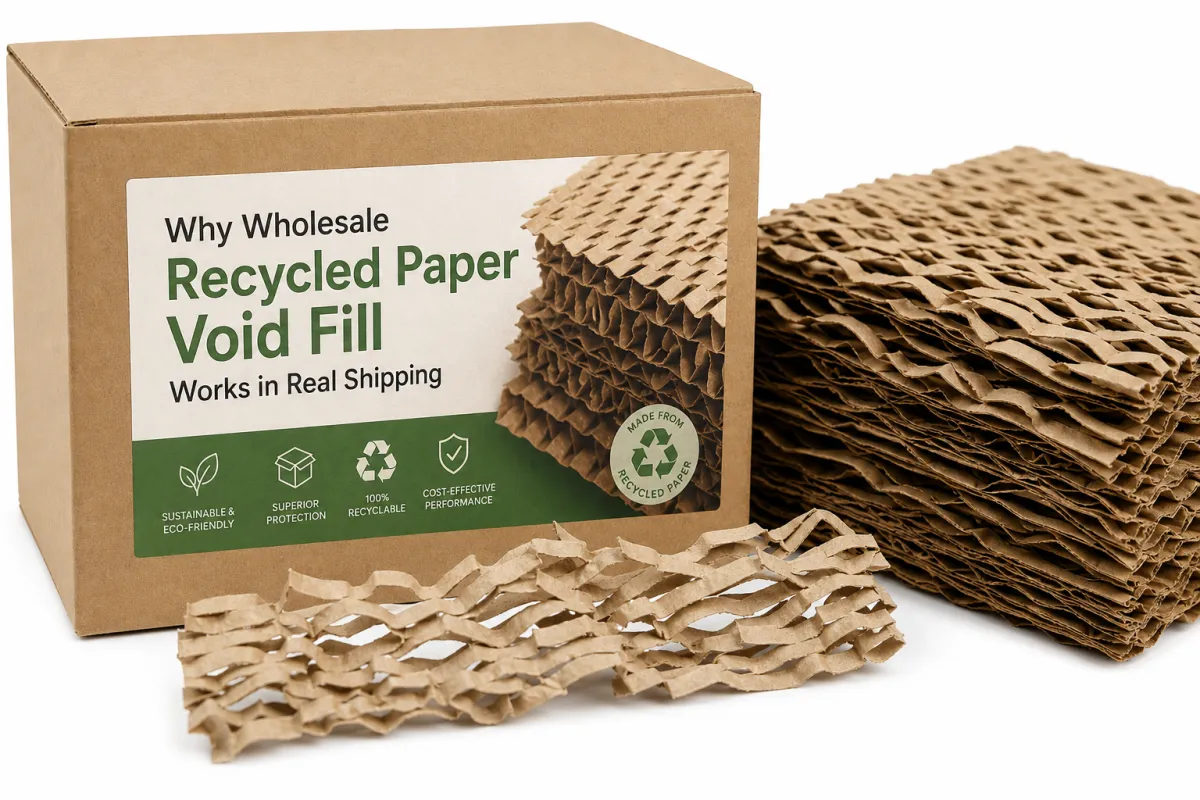
The best packaging materials tend to disappear into the workflow. Wholesale recycled paper void fill does that when it is matched to the right carton size and product mix. A packer can pull a sheet, crumple it, or feed it through a dispenser, then lock the product in place without fighting bulky inserts or waiting on air pillows that never seem to stay where they are put.
The value shows up fast on the floor. Empty space in a carton becomes a problem as soon as the box gets stacked, tossed, or dropped. Wholesale recycled paper void fill closes that gap quickly, which helps prevent products from sliding into each other, shifting to one corner, or riding through transit with too much room to move. That matters for retail kits, electronics accessories, health and beauty items, print collateral, and all the mixed orders that do not fit neatly into one rigid shipper.
It also keeps the packing line more orderly. Loose paper fiber does not fix every issue, but it often creates a tidier station than air pillows that pop, drift, or demand their own storage bin. On a busy line, that means fewer interruptions and less time spent chasing packaging materials across the bench. Nobody needs more clutter in a shipping room that is already trying to move too fast.
Many buyers underestimate the damage-reduction value. They look at the unit price and miss the costs that build quietly in the background: one return label, one reshipment, one customer complaint, and the savings are gone. Wholesale recycled paper void fill is often chosen because it supports a repeatable process, and repeatable processes are what keep fulfillment from slipping into reaction mode.
"A box that rattles on the packing table usually rattles harder in transit. The goal is not to overpack every order; the goal is to remove movement before the carrier does it for you."
Recurring programs benefit from that consistency. Once the carton sizes, product weights, and fill needs are known, wholesale recycled paper void fill becomes a straightforward standard. The team knows how much to pull, how fast it dispenses, and what level of cushioning fits the shipment class. That kind of repeatability is boring in the best possible way.
I have watched packing teams spend more time fixing bad material choices than actually packing orders, and the same pattern shows up again and again. If the fill is awkward to handle, slow to stage, or unpredictable from batch to batch, the line absorbs the cost somewhere else. Wholesale recycled paper void fill works best when it reduces decisions, not when it adds another thing for the operator to think through every forty seconds.
For buyers comparing packaging families, it helps to view the material inside a broader distribution plan. Organizations such as ISTA provide packaging test frameworks that help teams think about vibration, drop, compression, and transit risk in a more disciplined way. That matters because wholesale recycled paper void fill performs best when it is selected as part of a tested shipment design, not as a guess made at the counter.
Wholesale Recycled Paper Void Fill Product Details and Formats
Buyers usually see wholesale recycled paper void fill in a handful of common formats, and each one changes the daily workflow in a different way. There are crumpled paper styles that are ready to grab and stuff, dispenser-friendly systems that feed from a roll or box, and loose-fill paper formats that work well for lighter cartons and higher-speed stations. The right choice depends on how much protection the shipment needs and how the packing area is laid out.
Recycled fiber blend plays a big part in performance. A paper with enough loft springs back after compression, which helps it stay put inside the carton. If the paper is too soft, it packs down fast and leaves open pockets. If it is too stiff, operators may have trouble shaping it into useful forms. Wholesale recycled paper void fill should feel consistent from batch to batch, because inconsistency slows the line and leads to uneven protection.
For lightweight retail cartons, a softer fill often works well because it is easy to shape around products without adding unnecessary weight. For boxed accessories or mixed-SKU kits, a denser format can be a better fit because it holds merchandise from drifting side to side. For moderate-protection shipments, buyers often want a balance: enough loft to cushion, enough density to lock items in place, and enough dispense speed to keep the packer moving.
Dispenser compatibility changes the station more than people expect. If a roll feeds cleanly from a floor stand or tabletop dispenser, the operator can stay in rhythm and use one hand to pack while the other pulls material. That saves space, cuts clutter, and makes training easier. Wholesale recycled paper void fill that arrives in a format the team can use immediately usually delivers more value than a lower quoted price on a format that slows everyone down.
The table below shows how buyers often compare formats before placing a bulk order:
| Format | Typical Use | Operational Benefit | Typical Wholesale Positioning |
|---|---|---|---|
| Crumpled paper bundles | Mixed-SKU cartons, general dunnage, quick hand packing | Fast to use, easy to train on, simple to stage near the bench | Usually the most flexible choice for recurring warehouse use |
| Roll-fed dispenser paper | Busy stations with repeat carton sizes | Keeps pack rhythm moving and reduces material storage clutter | Often preferred for steady volumes and predictable demand |
| Soft-fill recycled paper | Light to moderate protection needs | Good loft and a cleaner hand-feel for consumer-facing shipments | Common for e-commerce brands that want a cleaner presentation |
| Case-packed sheet formats | Lower-volume stations or multi-use packing rooms | Easier to stage in small spaces and simpler to count by case | Useful when usage is steady but not large enough for pallet lots |
One detail that matters more than people expect is how the package looks when the customer opens the box. Wholesale recycled paper void fill is often selected for its plain, honest presentation. It does not carry the visual baggage of plastic pillows, and it tells the customer that the shipper paid attention to both transit protection and disposal practicality. That is a small brand signal, but it carries weight.
When requesting a quote, ask for the basics right away: roll dimensions, core size, pack count, sheet length, and any recyclability language the supplier supports. If you are comparing multiple options, ask for samples of each. Wholesale recycled paper void fill is one of those categories where the sample tells you more than a spec sheet can, especially if your team uses different carton sizes across the week.
Some buyers also ask for recycled content documentation or broader sourcing information. If that matters to your program, it is worth checking whether the supplier can support recycled content statements or, where applicable, FSC chain-of-custody documentation through fsc.org. Not every shipment needs that level of paperwork, but having the option can make internal approvals easier.
Specifications for Wholesale Recycled Paper Void Fill That Matter
The spec sheet should read like a production tool list, not a brochure. For wholesale recycled paper void fill, the important items are width, length, caliper, basis weight, core type, pack count, and shipping configuration. If those details are not clear, comparisons get slippery and buyers end up judging paper by feel alone, which is not a reliable way to manage a recurring program.
Width affects how fast the operator can build a cushion. Length affects how long each unit lasts at the station. Caliper and basis weight influence how much the paper expands after compression, and that expansion determines how well the material fills empty space in the carton. A thinner sheet may work for light products, while a higher-basis-weight format usually gives better resistance when the box is packed tight or exposed to longer transit cycles.
Wholesale recycled paper void fill should also be evaluated for compression recovery. If the paper collapses too much under product weight, the box can settle during shipping and leave room for movement. If it holds shape well, it keeps the contents centered. That matters especially for LTL freight, where cartons may ride through multiple touches, stack heights, and longer dwell times before final delivery.
Dust level is another practical detail that gets ignored until the packing room complains. Clean-running wholesale recycled paper void fill helps keep labels legible, scanners usable, and tables easier to wipe down. On a busy line, even modest reductions in paper dust can improve housekeeping and make the station feel more controlled. It is not glamorous, but it matters.
Storage and handling matter just as much as the paper itself. A product that ships in compact cases may be easier for smaller teams, while palletized wholesale recycled paper void fill works better for larger programs that want fewer replenishment events. The right format depends on floor space, reorder cadence, and whether the operation runs one shift or multiple shifts. If a material looks good on paper but takes over half a pallet in a crowded room, that becomes a real cost fast.
Documentation should not be an afterthought. Many buyers need recycled content statements, general disposal guidance, and clarity around whether the material can be curbside recycled in their local market. That last point deserves caution. Recyclability depends on local rules, contamination levels, and the condition of the paper after use. Clean, dry paper is usually easier to explain, but buyers should never promise a disposal outcome without checking the rules at the receiving location.
Here is the short version of how to match specs to the shipment:
- Heavier cartons usually need stronger loft and denser fill.
- Light retail goods often benefit from faster dispense speed and lower unit weight.
- Fragile or awkward shapes need better recovery and more consistent carton stabilization.
- High-volume stations should prioritize dispenser fit and case or pallet efficiency.
- Multi-item orders usually need a format that can build both side support and top fill quickly.
For teams validating a new material, a repeatable check helps. Pack a representative order, shake the carton, drop it from the normal handling height in a controlled test, and see whether the contents move. That kind of test is not glamorous, but it tells you whether wholesale recycled paper void fill is actually doing the job in your environment. If the box still shifts around, the material is not right yet, and there is no shame in saying so.
If your shipping standards already reference transit testing, keep those standards in the conversation. Wholesale recycled paper void fill should fit the shipment requirement, not the other way around. A supplier that can talk clearly about carton geometry, product fragility, and the language around distribution performance is usually a better long-term fit than one that only quotes on paper weight.
Wholesale Recycled Paper Void Fill Pricing and MOQ
Price is always part of the conversation, but it should not be the only part. Wholesale recycled paper void fill pricing usually depends on recycled content, format, custom dimensions, pack count, freight zone, and whether the order is stock or made to spec. A stock format can be priced very differently from a custom dispenser roll, even if both are made from recycled fiber.
For recurring wholesale orders, buyers often see better unit economics when they commit to a larger lot size. That does not mean everyone should overbuy. It means the order should be sized to production reality. If usage is steady, buying at pallet or case scale can lower the per-unit cost and reduce handling friction. If usage is still being tested, smaller initial orders make more sense until the team understands actual consumption. A little discipline here saves a lot of warehouse grief later.
MOQ is where a lot of first-time buyers get caught off guard. Some stock wholesale recycled paper void fill formats can start at a relatively modest minimum, while custom widths, special core sizes, or branded packaging usually push the MOQ higher because the production line must be set up specifically for that run. The setup time and waste factor have to be paid for somewhere, and that cost usually shows up in the minimum.
Here is a practical way to think about typical wholesale positioning:
| Buying Option | Typical MOQ Behavior | Pricing Effect | Best Fit |
|---|---|---|---|
| Stock case packs | Lower minimums are more common | Often higher unit cost than pallet lots, but easier to start with | Pilot programs and smaller warehouses |
| Palletized wholesale | Usually more efficient for recurring demand | Better unit pricing and freight efficiency | Steady fulfillment operations |
| Custom dimensions | Higher MOQ is normal | Setup cost is built into the quote | Exact dispenser or carton-fit requirements |
| Branded or printed supply | Usually the highest minimums | Added print and verification cost | Customer-facing programs with strict presentation goals |
The smarter cost conversation looks at total landed value. A slightly higher-priced wholesale recycled paper void fill can still win if it improves pack speed, reduces carton damage, and lowers the number of reworks at the station. Labor is expensive, especially when the team has to stop and repack orders because the fill material did not hold the product in place. Cheap material that causes extra labor is not cheap for long.
Freight also matters. Paper is bulky, so dimensional shipping costs can become meaningful if the order is poorly planned. Buyers should ask for landed pricing where possible, because the difference between material cost and delivered cost can be large enough to change the decision. If the material comes in compact packaging or palletized efficiently, the total cost picture often improves.
Before asking for pricing, gather a few facts: monthly usage, carton dimensions, product weight, preferred format, and delivery location. If the need is recurring, say so. Wholesale recycled paper void fill programs are easier to price accurately when the supplier understands whether the order is a one-time test or a standing replenishment program. If you already buy through our Wholesale Programs, those details can usually be matched to the right supply rhythm quickly.
For buyers comparing options across more than one packing line, it can also help to estimate cost per packed order rather than cost per roll or case. That shift keeps attention on the real business outcome. Wholesale recycled paper void fill matters when it lowers the cost of getting a safe, clean shipment out the door, not just when the invoice looks tidy in isolation.
Order Process and Timeline for Wholesale Recycled Paper Void Fill
The normal order path is straightforward when the information is complete. First comes spec review, then sample approval, then price confirmation, then production scheduling, and finally freight booking. Wholesale recycled paper void fill does not need a complicated buying cycle, but it does need clear inputs. The better the inputs, the faster the quote and the cleaner the result.
Lead time depends on three main factors: whether the item is stock or custom, how much material is needed, and how far it has to travel. A stock wholesale recycled paper void fill option can often move quickly if inventory is available. Custom orders need more time because the paper dimensions, packaging format, or pack count may require a dedicated run.
Samples are worth the step. They reveal how the paper feels in the hand, how easy it is to dispense, and whether the fill density matches the box you actually use. A sample also shows whether the operator can work at a normal pace without fighting the material. That matters more than many buyers realize, because paper that looks fine on a spec sheet can still feel awkward at the station.
For recurring programs, the most helpful thing is a clean monthly usage estimate. Once the supplier knows how much wholesale recycled paper void fill the site uses, it becomes easier to set up replenishment, avoid stockouts, and reduce emergency freight. Emergency orders almost always cost more, and they usually show up at the exact moment the line can least afford a delay.
Common timing expectations look something like this:
- Stock samples: often a few business days, depending on inventory and ship-from location.
- Custom sample approval: usually longer, because setup and confirmation are part of the process.
- Production after approval: often measured in business days, with custom runs taking more time than stock replenishment.
- Freight transit: depends on destination, service level, and whether the order ships parcel or pallet.
One thing that speeds approval is a clear carton profile. If the supplier knows the box dimensions, product weight, and any special handling risks, they can recommend a better format from the start. Wholesale recycled paper void fill quotes are much more useful when the conversation is tied to the actual shipping problem instead of only to paper size. The goal is not to buy paper; the goal is to protect product and keep the line moving.
Reorders are where a good packaging partner shows value. The first order may take a little extra time because everyone is dialing in the spec. The second and third orders should be easier. A useful supplier keeps repeat details on file, tracks usage patterns, and helps the buyer avoid unnecessary back-and-forth. That kind of support saves time in procurement and keeps the warehouse from running thin at the wrong moment.
If your team needs a standing supply plan, tie the order cycle to actual consumption. For example, if one pallet typically covers a month and a half, reorder before the pallet reaches a low level rather than after it is gone. Wholesale recycled paper void fill should be treated like a critical packing supply, not a “we will get to it later” item that gets forgotten until the dock is already full.
That approach is especially useful for businesses with seasonal spikes. A little forecasting can prevent rush freight and emergency substitutions. It also makes internal approvals easier, because procurement can see that the order is part of a controlled replenishment system rather than a one-off purchase.
If you are comparing buying routes, it can help to request a quote through a dedicated wholesale path rather than a general inquiry form. For recurring shipments, our bulk supply options are built around repeat orders, clearer minimums, and practical shipment planning. That structure keeps wholesale recycled paper void fill easier to manage month after month.
Why Choose Us for Wholesale Recycled Paper Void Fill
The best reason to work with a supplier is not a slogan. It is consistency. Wholesale recycled paper void fill should arrive with predictable fiber quality, predictable pack performance, and predictable communication about availability. If the paper changes from lot to lot, the packing floor notices immediately, and so do the people receiving the cartons.
Clear quoting matters just as much. Buyers need straightforward MOQ guidance, transparent lead-time expectations, and a realistic answer when a custom spec is likely to raise cost. That kind of honesty saves time. It also prevents the common problem where a purchase order is approved on a vague estimate and then reworked later because the actual production requirements were different.
A good supplier should support repeat orders, not just first orders. That includes sample coordination, format recommendations, and basic follow-up on previous specs so the next shipment matches the last one. Wholesale recycled paper void fill is not a one-time purchase for most businesses; it is part of a replenishment rhythm that needs to stay calm and simple.
There is also value in operational judgment. A supplier who understands packing stations can often recommend a better paper format before the buyer spends money testing the wrong one. That may mean a different core size, a denser roll, or a case-packed option that fits the team better. Those are small choices on a spreadsheet, but they can have a real effect on throughput at the bench.
If you buy through our Wholesale Programs, the goal is to make wholesale recycled paper void fill a steady, manageable part of the shipping operation. That means less friction at reorder time, less guesswork on the floor, and fewer surprises once the cartons start moving. For a packaging buyer, that is what a dependable supply relationship should deliver.
It also helps when expectations are realistic. No paper void fill is perfect for every product, every carton geometry, or every transit pattern. A strong supplier will say that plainly and help you test the fit instead of pretending one format solves everything. Wholesale recycled paper void fill works best when it is chosen for the actual shipment, not for the most optimistic version of the shipment.
The final difference is practical service. When the buyer needs a sample, a quick re-quote, or a better understanding of freight, the reply should be clear and specific. That is how a packaging program becomes easier to manage over time. Wholesale recycled paper void fill should reduce headaches, not create them.
Next Steps for Ordering Wholesale Recycled Paper Void Fill
If you are ready to price a program, start with the facts that matter most. Gather carton dimensions, product weight, monthly volume, the current void fill type, and the ship-to ZIP or freight lane. With those details, a quote for wholesale recycled paper void fill can be tied to real operating conditions instead of a guess.
A short in-house test is worth doing before you commit. Pack one representative order, shake the carton, check for movement, and time the pack. If the new material slows the station or leaves too much open space, that tells you something useful before the purchase scales up. Wholesale recycled paper void fill should fit the pace of the line, not force the line to slow down to accommodate it.
It also helps to compare two or three format options rather than one. A crumpled format may pack faster. A roll-fed dispenser option may save floor space. A case-packed version may fit a smaller site better. The point is not to choose the cheapest-looking item on the quote sheet; the point is to choose the version that gives the best mix of cost, speed, and storage efficiency.
If usage is steady, ask for sample packs and a recurring supply plan. That lets the supplier build a replenishment rhythm around your real demand. Wholesale recycled paper void fill works best as a repeatable material standard, not as an emergency fix that gets ordered only when the shelves are already empty.
Before you send the request, make sure the team has agreed on what success looks like. Is the goal lower damage? Cleaner packing tables? Better disposal language for customers? Faster station throughput? Those are different goals, and they may point to different formats. A good buyer ties the material to a measurable result, which makes the whole decision easier to defend later.
For teams that want a practical path forward, wholesale recycled paper void fill is usually the next step when cartons need cleaner stabilization, better cube control, and a packaging material that does not complicate the shipment story. It is not flashy, and that is part of the appeal. It solves a real job in a way that is easy to teach, easy to reorder, and easy to defend.
If your operation is ready to move, request a sample, confirm the carton fit, and put wholesale recycled paper void fill into a controlled test run. That is the quickest way to see whether the format fits your shipping mix, your packing speed, and your cost targets. In many bulk programs, wholesale recycled paper void fill is the practical choice that keeps the process moving without adding unnecessary complexity.
How is wholesale recycled paper void fill different from kraft paper rolls?
Wholesale recycled paper void fill is selected mainly to fill empty carton space quickly and stabilize products during shipment. Kraft rolls can overlap with wrapping or interleaving, so the best format depends on the station layout and how the packer works. A sample run helps compare fill speed, handling, and how well the material holds product in place.
Is wholesale recycled paper void fill recyclable everywhere?
It is often recyclable when it is clean, dry, and free of excess tape, labels, or food residue, but local rules vary. The receiving location and municipal program should always be checked before making disposal claims. If recyclability matters to your customers, ask for standard guidance that matches the exact format you plan to buy.
What minimum order should I expect for wholesale recycled paper void fill?
Stock formats can sometimes start lower, while custom sizes and branded runs usually require a higher MOQ. The minimum depends on roll dimensions, pack count, production setup, and freight efficiency. Sharing monthly usage volume helps set a realistic order size and reorder cadence for wholesale recycled paper void fill.
Can wholesale recycled paper void fill replace air pillows or foam?
It can replace them for many carton-filling jobs, especially mixed-SKU orders and moderate-cushion shipments. It is not a perfect substitute for every fragile product or every box geometry, so testing is important. A pilot should confirm damage performance, pack speed, and whether the format suits the current workflow before switching fully.
What details do you need to quote wholesale recycled paper void fill?
Carton size, product weight, packing station setup, desired format, and expected monthly volume are the basics. Shipping destination and whether the order is one-time or recurring help determine freight and lead time. With those details, the quote can cover material, shipping, MOQ, and the best replenishment plan for wholesale recycled paper void fill.