Buyer Fit Snapshot
| Best fit | A Kraft Paper Void Fill Supplier for Shipping projects where brand print, material claims, artwork control, MOQ, and repeat-order consistency need to be specified before quoting. |
|---|---|
| Quote inputs | Share finished size, material target, print colors, finish, packing count, annual reorder estimate, ship-to region, and any compliance wording. |
| Proofing check | Approve dieline scale, logo placement, barcode or warning zones, color tolerance, closure strength, and carton packing before bulk production. |
| Main risk | Vague material claims, crowded artwork, missing packing details, or unclear freight terms can make a low unit price expensive after revisions. |
Fast answer: A Kraft Paper Void Fill Supplier for Shipping: Material, Print, Proofing, and Reorder Risk should be specified like a repeatable production item. The safest quote records material, print method, finish, artwork proof, packing count, and reorder notes in one written spec.
Production checks before approval
Compare the actual filled-product size with the drawing, then confirm tolerance on folds, seals, hang holes, label areas, and retail display edges. Reserve space for logos, QR codes, warning copy, and material claims before decorative graphics fill the panel.
Quote comparison points
Review material grade, print process, finish, sampling route, tooling charges, carton quantity, and freight assumptions side by side. A quote is only useful when the supplier can repeat the same color, closure quality, and packing count on the next order.
Choosing a kraft paper void fill supplier sounds straightforward until a carton lands on the dock with the product shoved into one corner and a dent that nobody can explain. The box looked full. The packout looked fine. The contents still moved. That is the part most teams miss.
A good kraft paper void fill supplier is not just selling paper rolls. They are helping you control the empty space inside the carton, match the paper to the product, and set up a process that actual packers will use every hour of the day. If the paper, dispenser, and workflow do not fit together, the box will remind you pretty quickly.
For custom packaging teams, the useful questions are the boring ones. How fragile is the product? How many carton sizes are on the floor? Is the station manual or semi-automated? How much speed does the team need to keep? A serious kraft paper void fill supplier should answer those questions with samples, specs, and a little operational context, not just a roll price and a promise.
What a kraft paper void fill supplier actually does
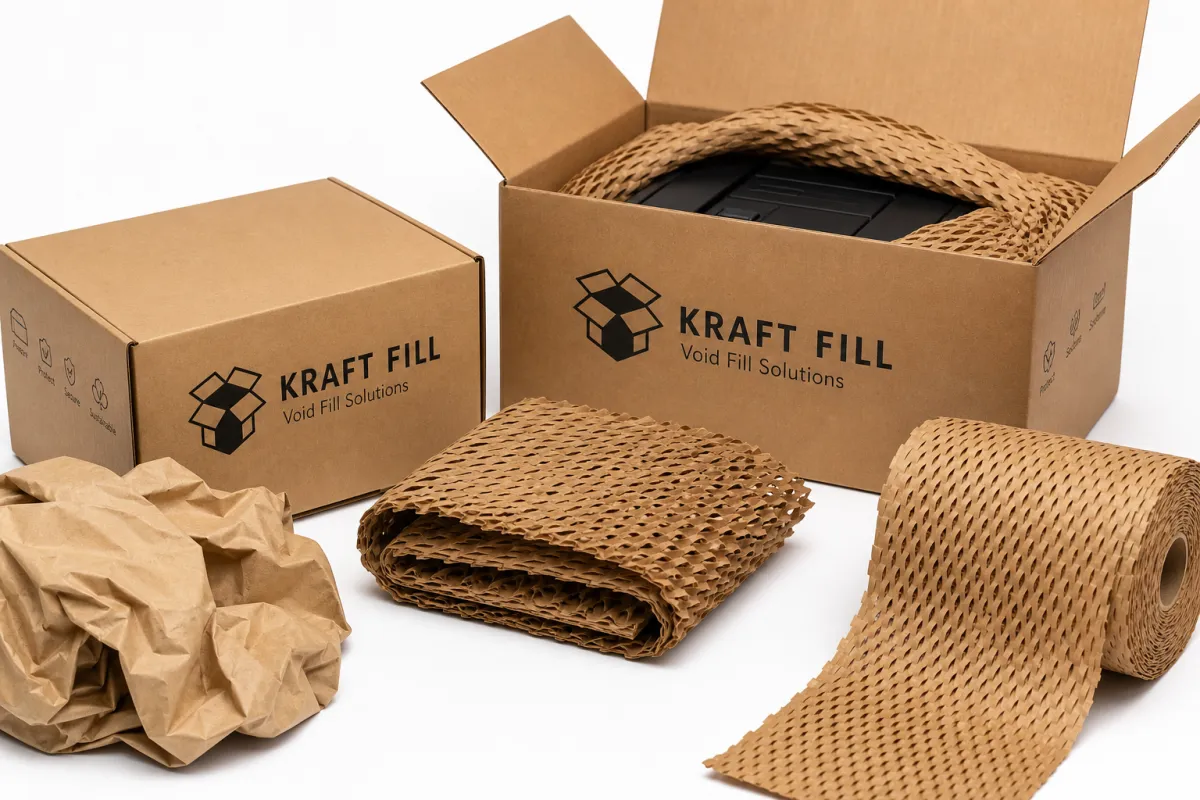
A kraft paper void fill supplier does more than ship paper by the pallet. The better ones help you Choose the Right grade, reel format, dispenser style, and storage approach for your packing station. That matters because kraft paper behaves differently depending on basis weight, crimping style, reel tension, and how much force the packer uses inside a carton made from corrugated cardboard.
At the basic level, kraft paper void fill is a paper-based dunnage method. The paper is dispensed, crumpled, or formed into a compressible mass that fills empty space in the carton. Once it is in place, it helps stop lateral movement, reduce settling during transit, and keep the product centered. A reliable kraft paper void fill supplier should be able to explain whether your application needs light void stabilization, stronger bracing, or a mix of paper and inserts.
That role matters more than a lot of buyers expect. Some suppliers only sell the paper. Others support the whole setup: dispensers, tabletop stands, powered feed units, spare parts, service guidance, and usage planning. A mature kraft paper void fill supplier will also talk through reel lengths, core size, paper grades, and operator workflow, because a good paper spec can still perform badly if the feed path is awkward or the roll changes happen every thirty minutes.
Here is the practical version. The supplier is not just filling a purchase order. They are helping you build a repeatable packing method that people can actually run without improvising. That is a lot harder than it sounds, especially in a mixed-SKU warehouse where one station may ship a tiny kit and the next one is packing a larger, heavier carton. A good kraft paper void fill supplier ties those pieces together so you do not overspend on equipment or underspec the paper.
Packout quality is usually a system issue, not just a paper issue. If the paper is too soft, too slippery, or too awkward to dispense, the operator will overfill the box or skip it entirely. Then the product moves the same way it did before. Same problem, shinier packaging.
Sustainability claims need the same level of care. Many buyers want packaging that supports recycled materials goals, FSC certified sourcing, or broader biodegradable packaging strategies. Kraft paper can fit those goals well, especially when it contains post-consumer waste content. But the details still matter: paper grade, recovery options, ink coverage if any, and how the package is handled by carriers and customers.
If you want a baseline for testing and paper stewardship, the ISTA site is useful for distribution testing guidance, and the FSC site is a solid starting point for certification basics. A serious kraft paper void fill supplier should be comfortable talking in that language instead of tossing around fuzzy green claims.
I've seen teams buy a nice-looking paper spec and then discover the packers hate feeding it because the dispenser sits in the wrong spot. That is not a paper failure. That is a layout failure. The difference matters.
How kraft paper void fill works in real packaging lines
There are two common ways a kraft paper void fill supplier supports a packing operation. One is manual or bench-based fill, where the packer pulls paper, crumples it, and places it into the carton by hand. The other is a dispenser or machine that feeds paper on demand, usually for higher throughput or for operations that want more consistent pack quality across shifts. Both can work. The right one depends on volume, labor, and how standardized your cartons are.
Manual fill is often the easiest place to start. It costs less up front, takes little training, and lets you see how the paper behaves Before You Buy equipment. A manual setup can fit small ecommerce teams, custom kitting stations, or warehouses that ship mixed products in a lot of different carton sizes. A careful kraft paper void fill supplier will not push a machine if a simple bench dispenser does the job.
Automated and semi-automated systems make sense when line speed is higher or labor cost is climbing. They feed paper on demand, cut cycle time, and reduce the motion that leads to fatigue. On a busy shift, that matters. A packer who has to tug, crumple, and tear paper hundreds of times per hour is gonna slow down long before the machine does. A good kraft paper void fill supplier should think about ergonomics as much as material cost.
The protection mechanism is simple, and that is part of the appeal. Paper occupies empty space, but it also compresses and rebounds enough to hold products in position. That limits the small shifts that cause scuffing, corner damage, or a box opening with the contents leaning against one side wall. A competent kraft paper void fill supplier should be able to show how much paper is typically used per carton and what kind of fit to expect for different product weights.
Kraft paper performs well with light to medium-weight goods, mixed-SKU orders, and shipments where presentation matters. It pairs nicely with corrugated cardboard mailers, retail-ready kits, and ecommerce orders where a clean paper look feels more intentional than loose plastic material. It also suits brands that want packaging made from kraft paper and other paper-based components rather than a mixed-material filler that is harder to explain to the customer.
The limits are real. Very heavy items, sharp metal edges, brittle ceramics, or highly fragile glass may need a more engineered combination of corner blocks, inserts, cushioning, or tighter carton design. A careful kraft paper void fill supplier will say that plainly instead of pretending one paper format works for everything. In packaging, honesty is useful. It saves money, and it saves face.
For testing, I like to look at three simple indicators: Does the carton close without force? Does the product stay centered after a shake test? Does the paper hold during shipping vibration, or does it settle and open a pocket after the first movement? Those questions line up with common distribution-test thinking in ISTA and ASTM D4169-style trial planning, even if your operation never sends every SKU through a formal lab program.
One more detail gets missed a lot: not all paper feed paths behave the same. A roll that performs beautifully at one station can snag at another if the dispenser angle is wrong or the operator has to twist too far to reach it. A dependable kraft paper void fill supplier should help you plan the physical placement of the dispenser, the height of the work surface, and the replenishment path so the system feels natural during a busy shift.
Key factors to compare before you choose a kraft paper void fill supplier
The fastest way to narrow down a kraft paper void fill supplier is to compare paper performance, supply stability, equipment fit, and support depth side by side. Price matters, but it should not be the only filter. A cheap roll that collapses in the carton, jams in the dispenser, or arrives late every third order is not a bargain. It is a headache with a purchase order attached.
Paper performance comes first. Compare basis weight, stiffness, crumple behavior, and how well the paper springs back after it is formed. Some papers feel soft and fluffy, which can help fill irregular voids. Others feel denser and hold shape better inside a larger carton. A thoughtful kraft paper void fill supplier should be willing to send samples in the actual width and grade you would use on the line.
Supply consistency matters just as much. If a supplier changes reel length, paper width, or outer packaging without warning, packers notice immediately. That can lead to downtime, wasted partial rolls, and confusion on the floor. Ask any kraft paper void fill supplier about lead times, minimum order quantities, and how they manage continuity if your usage suddenly spikes after a sales jump.
Equipment fit is the third big filter. Some suppliers support tabletop dispensers, some support floor units, and some are tied to specific machine platforms. You want to know whether the paper feeds at the right speed, whether the machine footprint suits the station, and whether maintenance is simple enough for in-house staff. A strong kraft paper void fill supplier will talk openly about what the machine can and cannot do.
Service depth separates a transactional vendor from a real partner. The better kraft paper void fill supplier will ask about your carton mix, current damage rate, line speed, and labor constraints before making a recommendation. That kind of conversation saves time later because the supplier is helping fit the material to the operation instead of forcing the operation around the material.
Use a scorecard if the decision starts to get fuzzy. A simple five-point review works well:
- Paper quality: does it hold shape, fill voids, and stay consistent lot to lot?
- Availability: are reels in stock, and is lead time stable?
- Equipment compatibility: does it work with your existing dispenser or machine?
- Support: will the kraft paper void fill supplier help with trials and troubleshooting?
- Total cost: does the setup reduce labor, damage, or rework enough to justify the price?
Buyers also need to think about sustainability claims carefully. If the supplier says the paper is FSC certified, ask whether that applies to the grade you are buying and whether documentation is available. If they talk about recycled content, ask how much comes from post-consumer waste versus other recovered fiber streams. That level of detail is normal. A solid kraft paper void fill supplier should not mind.
It is also smart to ask how the paper behaves in the wider packaging system. If you are using labels, inserts, void fill, and cartons sourced from different places, the whole packout can become inconsistent. The most helpful kraft paper void fill supplier will consider whether the paper complements your branded mailers, your tape choice, and your corrugated board grade so the carton feels deliberate rather than patched together.
Kraft paper void fill supplier pricing and cost factors
Pricing from a kraft paper void fill supplier is easier to understand if you split it into paper cost, equipment cost, freight, storage, and operating labor. That sounds basic, but many teams focus only on the reel price and miss the larger picture. If the paper is slightly cheaper but takes longer to dispense, you may end up spending more per order. The invoice does not tell the whole story.
For planning purposes, a manual bench setup is usually the lowest upfront option. You might only need a dispenser, a cutter, and paper rolls, which keeps entry cost fairly modest. Semi-automatic units sit in the middle. Fully powered systems can require a more serious investment, especially if you want higher throughput, simpler roll changes, or integration with a packing line. A candid kraft paper void fill supplier will explain where your operation sits on that range instead of pushing the priciest choice.
| Setup type | Best fit | Typical upfront spend | Operational notes |
|---|---|---|---|
| Manual bench dispenser | Low to moderate volume, many carton sizes | Low | Simple, flexible, and easy to trial with a kraft paper void fill supplier |
| Semi-automatic feed unit | Growing ecommerce or warehouse pack stations | Moderate | Improves speed and consistency, but still needs operator training |
| Powered machine system | High-volume, repeatable lines | Higher | Best when labor savings and carton throughput can be measured clearly |
That table is only a starting point, because the real cost of a kraft paper void fill supplier relationship shows up in labor minutes, damage claims, and the amount of paper used per carton. If a packer needs two extra seconds to make the paper behave in the box, that can matter a great deal over a full shift. If your cartons arrive with fewer breakages, the savings may easily outweigh a slightly higher roll price.
It helps to ask for cost in the language of your own pack profile. Request estimates based on cartons per hour, average void size, and how much paper the average order consumes. A good kraft paper void fill supplier can often turn that into a simple usage forecast, such as rolls per week or cases per month, which helps purchasing forecast more accurately.
Here are a few specific questions worth asking before you sign anything:
- What is the price per roll or pallet at my likely volume tier?
- How does freight change if I order by the pallet instead of mixed cases?
- Will the kraft paper void fill supplier hold the same specification over time?
- What are the minimum order quantities, and how do they affect inventory?
- Do you provide maintenance guidance or spare parts for the dispenser?
Storage is another cost factor that gets overlooked. Paper takes space, but the amount is manageable if the supply chain is planned. A high-density pallet arrangement can be easier to live with than bulky plastic dunnage, and many buyers appreciate that the material feels aligned with recycled materials and paper recovery goals. If your brand wants packaging that reads cleaner and simpler to the end customer, a kraft paper void fill supplier may also help support that story without drifting into empty claims.
For operations teams, the best cost model is the one that includes hidden labor. If a dispenser saves five seconds per carton and you ship thousands of cartons a week, that adds up fast. If the supplier is only selling paper and not helping with station design, you may miss that savings entirely.
Step-by-step process for sourcing and implementation
The best way to work with a kraft paper void fill supplier is to treat sourcing like a small packaging project rather than a one-time product order. That means starting with real data, testing on real cartons, and rolling out in controlled stages instead of changing the whole operation on day one. Nice in theory, chaotic in practice if you skip the test.
Step 1: Run a packaging audit. Measure carton sizes, product weights, breakage points, current dunnage use, and pack station speed. If your line handles a mix of mailers and larger corrugated cardboard cartons, separate those into buckets. A strong kraft paper void fill supplier can use that information to recommend the right format instead of sending a generic proposal.
Step 2: Build a realistic test list. Do not test only the easiest orders. Pick the highest-risk SKUs, the odd-shaped products, and the carton sizes that tend to look overpacked or underfilled. A useful kraft paper void fill supplier should send sample reels or trial equipment and help you decide whether the paper is meant for bracing, cushioning, or simple void stabilization.
Step 3: Measure pack performance. During the trial, watch three things closely: pack speed, operator comfort, and carton integrity. If the paper works but the process slows the line, that is still a problem. If the product stays stable but the operator hates the dispenser, adoption will suffer. A practical kraft paper void fill supplier understands that the human part of the process matters as much as the paper itself.
Step 4: Compare damage and usage. Track the number of cartons using the new paper, the number of claims or returns, and the approximate paper consumed per order. You do not need a giant spreadsheet to start, but you do need a baseline. Without it, it is hard to tell whether the new kraft paper void fill supplier setup reduced damage or just shifted costs around.
Step 5: Review the equipment fit. Look at roll changes, maintenance, operator reach, and where the waste stream lands. If the machine sits too far from the natural packing motion, people will skip it. If the roll change is awkward, throughput will drop during busy periods. A thoughtful kraft paper void fill supplier will help you refine these details before the final purchase.
Step 6: Launch in a controlled way. Start with one pack area or one SKU family. Give the team time to learn the paper behavior, then expand if the data looks good. That phased rollout is usually safer than a broad changeover because it gives you room to adjust pack patterns, dispenser placement, and replenishment frequency. That is exactly where a good kraft paper void fill supplier earns its keep.
Most teams can review samples within a few days, run a small pilot in one to two weeks, and then finalize supply terms after they see actual performance. That timeline is not fixed, because complex lines and multi-site operations take longer, but it is a practical planning window. If a kraft paper void fill supplier cannot support that cadence, ask why.
A realistic implementation also includes operator training. Keep it short and visual. Show people how much paper to use, where to place it inside the box, what a good fill looks like, and what to do if the roll binds. The paper itself may be simple, but process consistency is what turns a material into a packing standard. A good kraft paper void fill supplier will usually help with training material or at least provide a clear usage guide.
From a buyer’s point of view, the safest path is to compare at least two options from two different suppliers using the same carton profile, the same test period, and the same success criteria. That keeps the decision grounded. It also helps you see whether the difference is the material, the equipment, or the support you are getting from the kraft paper void fill supplier.
If your team wants a cleaner rollout, start with the one product family that causes the most damage or the most awkward packout. Solve that first. Once the method works there, the rest of the line usually gets easier.
Common mistakes when buying void fill paper
One of the most common mistakes is buying on price alone. A low-cost reel from a kraft paper void fill supplier can look attractive until the paper tears too easily, bunches badly, or requires so much force that packers use more of it just to feel safe. The cheapest option on paper can become the most expensive choice on the packing bench. That is a familiar story.
Another mistake is failing to test across carton variation. A product that sits perfectly in one box size may shift in the next larger size if the paper does not fill the full void volume. This is especially true in operations with many corrugated cardboard sizes, because the box shape changes the way the paper compacts. A careful kraft paper void fill supplier will ask for carton dimensions before making a recommendation for exactly that reason.
Operator ergonomics are easy to ignore and hard to forgive. If the dispenser is too high, too low, or too far from the natural packing motion, workers will adapt by doing the fastest thing available, not the best thing. That can create a bottleneck that no one notices until order volume rises. A reliable kraft paper void fill supplier should think about station layout, not just material specs.
Another common problem is skipping the damage baseline. Without a starting number, you cannot tell whether the new setup improved protection or simply changed how you measure problems. You also cannot prove return on investment if claims go down by a small but meaningful amount. This is why a disciplined kraft paper void fill supplier conversation usually begins with current performance, not with a price sheet.
Some buyers also assume all paper void fill is interchangeable. It is not. One grade may crumple beautifully but feed poorly through a machine. Another may dispense quickly but fail to hold heavier products in position. A smart kraft paper void fill supplier will explain the tradeoffs instead of trying to force one grade into every use case.
There is also the sustainability trap: making broad claims without checking the paper chain. If a buyer wants the material to support recycled content goals, they need to know whether the product is sourced from post-consumer waste, whether it is truly FSC certified, and whether the rest of the package still makes sense from a recovery standpoint. A serious kraft paper void fill supplier should be able to answer those questions clearly.
Another mistake is underestimating the change management piece. Even a small switch can create resistance if the new method slows the team for the first week. People may revert to overpacking or using the old material because it feels familiar. The best kraft paper void fill supplier will help you ease into the change with a short pilot, practical training, and a feedback loop from the packers themselves.
Finally, do not forget the package as a whole. Void fill works best when carton size, product orientation, tape strength, and cushioning all support one another. If the box is too large, the paper has to do too much. If the product is poorly oriented, even excellent paper cannot fully stabilize it. A dependable kraft paper void fill supplier will keep pointing you back to the full pack system, which is usually where the real savings are found.
Expert tips and next steps for choosing a kraft paper void fill supplier
If I had to reduce the decision to one principle, it would be this: the right kraft paper void fill supplier should make the packaging line cleaner, faster, and more reliable, not just cheaper on the invoice. That is the standard. If the paper looks good but the operation gets slower, the choice needs another look.
Start with a short checklist that covers the things that matter most in the real world:
- Define your carton sizes, product weights, and fragile points.
- Ask the kraft paper void fill supplier for paper specifications and sample reels.
- Test on your highest-risk SKUs before you roll out broadly.
- Track damage rates, labor minutes, and paper usage per order.
- Compare at least two suppliers using the same test criteria.
If you want to make the decision even clearer, use a scorecard with five columns: price, lead time, consistency, equipment support, and customer service. Give each supplier the same score based on the same trial, not based on a sales call. That simple discipline keeps a kraft paper void fill supplier review from turning into guesswork.
It is also smart to phase the launch. Start with one packing area or one product family, then expand after you confirm that the paper holds the product in place, the team likes the dispenser, and the damage numbers move in the right direction. A good kraft paper void fill supplier will not push you to convert everything at once if the line is not ready.
For sustainability-minded brands, a kraft paper approach can fit nicely with recycled materials goals, especially if the paper includes recovered fiber and the supplier can document sourcing responsibly. Just remember that the packaging story still has to work operationally. A material that looks good in a brochure but jams in the station is not helping anyone. The better kraft paper void fill supplier choice balances both sides.
Honestly, that balance is what separates a decent purchase from a dependable supply relationship. You want the paper to crumple properly, the machine to feed predictably, the workers to like using it, and the boxes to arrive looking like someone cared. That is especially true if you are trying to align with biodegradable packaging expectations without adding unnecessary plastic into the system.
If you are still deciding, ask one final question: would this kraft paper void fill supplier help me reduce risk, or would they only help me buy a roll? The best answer should be the first one. The supplier should be able to support pack testing, carton fit, line setup, and replenishment planning so your shipping area becomes more stable over time.
Choose well, and kraft paper becomes more than filler. It becomes part of a clean, predictable shipping process that protects the product, supports the brand, and keeps the pack station moving at a pace people can actually sustain. The practical next step is simple: test two suppliers against the same carton, the same product, and the same damage baseline, then pick the one that improves protection without making the line annoying to run. That is the real value of a strong kraft paper void fill supplier.
Frequently Asked Questions
How do I know if a kraft paper void fill supplier is right for my products?
Check whether the kraft paper void fill supplier can match your carton sizes, product fragility, and pack speed with a paper format that actually holds items in place. Ask for samples, test them on your highest-risk SKUs, and watch for movement after the box is closed. It is also smart to ask whether they help with the dispenser or machine choice, because a supplier that only sells paper may leave the workflow unfinished.
What affects kraft paper void fill supplier pricing the most?
Paper grade, reel size, order volume, and freight usually shape the base price from a kraft paper void fill supplier. Equipment needs, service support, and minimum order quantities can change the total cost significantly. The real business impact also includes labor time, damage rates, and how much paper your packers use per order, so the lowest invoice price is not always the lowest total cost.
How long does it take to switch to kraft paper void fill?
A simple manual setup from a kraft paper void fill supplier can often be tested quickly, sometimes within a few days once samples arrive. A full rollout with equipment, operator training, and process changes usually takes longer and benefits from a short pilot. The best timeline starts with a trial, then adjusts paper usage and station workflow before expanding sitewide.
Is kraft paper void fill better than air pillows?
Kraft paper void fill is often better when you want a firmer hold, a paper-based presentation, or stronger stabilization for mixed-SKU cartons. Air pillows can be lighter and faster for certain low-fragility applications, but they do not always brace products as firmly. The right choice depends on carton fill, product weight, pack speed, and whether you want cushioning or mainly void stabilization, so a good kraft paper void fill supplier should help you compare both options honestly.
What should I ask a kraft paper void fill supplier for before I buy?
Ask for paper specifications, expected usage rates, lead times, and compatibility with your current dispensers or machines. Request sample reels or trial cartons so you can test pack speed and protection in your own operation. Ask how they support troubleshooting, replenishment planning, and scale-up after the first order, because a strong kraft paper void fill supplier should stay useful after the sale is done.
What is the safest way to choose a supplier if I am still unsure?
The safest path is to compare at least two options from a kraft paper void fill supplier using the same carton profile, the same test period, and the same success criteria. That keeps the decision grounded in actual performance instead of assumptions. If the winner reduces movement, holds up through shipping, and fits the pack station without slowing the team, you are probably looking at the right partner for the long haul.