Buyer Fit Snapshot
| Best fit | Wholesale Tissue Paper Sheets for Shipping and Branding projects where brand print, material claims, artwork control, MOQ, and repeat-order consistency need to be specified before quoting. |
|---|---|
| Quote inputs | Share finished size, material target, print colors, finish, packing count, annual reorder estimate, ship-to region, and any compliance wording. |
| Proofing check | Approve dieline scale, logo placement, barcode or warning zones, color tolerance, closure strength, and carton packing before bulk production. |
| Main risk | Vague material claims, crowded artwork, missing packing details, or unclear freight terms can make a low unit price expensive after revisions. |
Fast answer: Wholesale Tissue Paper Sheets for Shipping and Branding should be specified like a repeatable production item. The safest quote records material, print method, finish, artwork proof, packing count, and reorder notes in one written spec.
Production checks before approval
Compare the actual filled-product size with the drawing, then confirm tolerance on folds, seals, hang holes, label areas, and retail display edges. Reserve space for logos, QR codes, warning copy, and material claims before decorative graphics fill the panel.
Quote comparison points
Review material grade, print process, finish, sampling route, tooling charges, carton quantity, and freight assumptions side by side. A quote is only useful when the supplier can repeat the same color, closure quality, and packing count on the next order.
Wholesale Tissue Paper Sheets are one of those packaging details that quietly shape the customer’s first impression long before the product is touched. A clean fold, a sheet that lands square in the box, and a color that fits the brand can make a simple shipment feel finished instead of rushed, and that matters in a packing room where labor, scrap, and presentation are always competing for attention. Custom Logo Things works with buyers who need packaging that holds up in real warehouse conditions, not just in a polished mockup, and wholesale tissue paper sheets fit that job well.
Pre-cut sheets help teams move with less hesitation, cut down on handling, and keep every station working from the same standard. The value shows up in retail bags, e-commerce mailers, gift sets, and replenishment cartons alike. Buyers comparing packaging options often start on the Wholesale Programs page, then narrow the size, print, and packing format based on how the material will actually be used on the line.
The strongest packaging choices are often the ones that stay out of the way. They save small pockets of time, reduce the little annoyances that slow a packer down, and make every order look like it came from the same operation. Wholesale Tissue Paper Sheets do that well once the spec matches the product and the packing flow.
Why Wholesale Tissue Paper Sheets Cut Packing Waste
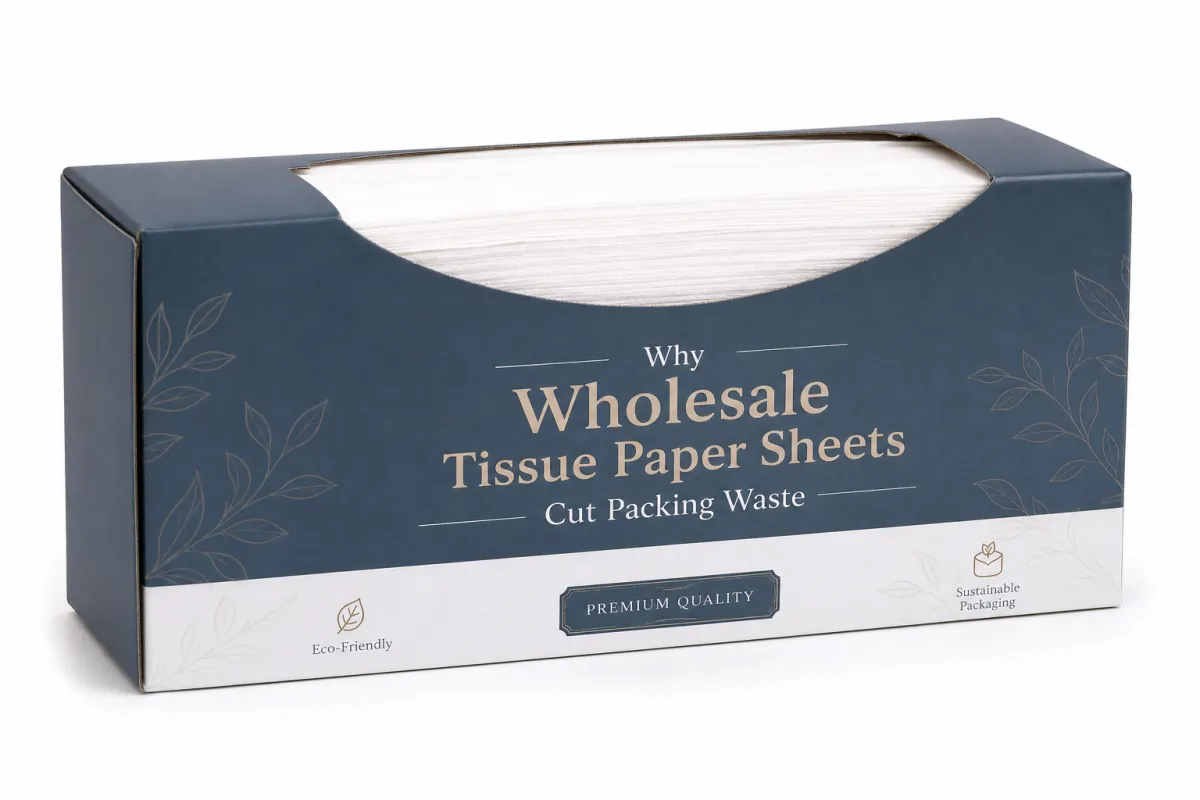
A folded garment can look crisp or careless depending on how the tissue is handled. That seems minor until you multiply it across a fulfillment line. Wholesale tissue paper sheets reduce trimming, measuring, and rework that often come with tissue rolls, especially in packing areas where operators need a steady rhythm and do not have time for guesswork. A pre-cut sheet arrives ready for use, so the station does not depend on someone estimating length, tearing uneven edges, or tossing off-cuts all day long.
Roll-fed tissue can slow a line in ways that never show up in a quote sheet but show up immediately in production. Every cut creates scrap. Every adjustment adds motion. With wholesale tissue paper sheets, the material is already sized for a known product or carton, which makes training easier and keeps the result more uniform from one shift to the next. That consistency matters for brands with multiple SKUs, because one station may pack a blouse, another may handle a gift set, and both can still create the same branded presentation.
There is a light protection side to the material as well, even though tissue is not a cushioning product. Wholesale tissue paper sheets help reduce surface scuffing on coated boxes, printed cartons, folded garments, and cosmetic items with delicate finishes. The paper can keep light products from shifting too much in the box, and it gives packers a cleaner way to separate layers without adding bulk. For retail-ready shipments, that mix of presentation and light protection often hits the right balance.
Buyers usually feel the value most in repeatability. A company shipping hundreds of orders a day across several stations needs material that arrives flat, clean, and true to size. A quarter-inch variation may seem small on a spec sheet, yet inside the box it can expose a corner or force a different fold pattern. I have stood in packing areas where that tiny mismatch slowed everyone down, and it always starts with the same complaint: the tissue should have fit better. Over time, wholesale tissue paper sheets help the operation feel tighter and more controlled.
The lowest line item is not always the best value. In a busy packing room, the better material is the one that keeps the line moving, reduces scrap, and looks right every time a customer lifts the lid.
For companies working to reduce waste across the full packaging stack, the paper choice should be considered alongside carton size, fill method, and shipping route. If the outer pack is already sized correctly, wholesale tissue paper sheets support that efficiency instead of fighting against it. That is why many buyers bring tissue into the sourcing conversation early rather than treating it as a last-minute detail.
Wholesale Tissue Paper Sheets Product Details and Uses
Wholesale tissue paper sheets are pre-cut paper sheets supplied in standard or custom dimensions for wrapping, packaging, and presentation. They may be plain white, colored, or printed with a logo or pattern depending on the project. In a shipping environment, the same sheet format can support apparel, cosmetics, gift boxes, subscription kits, and small specialty items without changing the handling method.
The most common use is simple wrap. A garment, folded accessory, or boxed item is placed in tissue, then tucked into a mailer or carton so the opening experience feels finished. Wholesale tissue paper sheets also work as carton liners, interleaving sheets between layers, or outer wrap for seasonal bundles. For brands that sell through retail and direct-to-consumer channels, one sheet format can support both if the size is chosen with care.
The material has limits, and clear expectations help buyers make a better choice. Wholesale tissue paper sheets are not a substitute for corrugated structure, foam, bubble, or molded cushioning where true impact resistance is needed. They will not solve drop damage on their own. What they do provide is light surface protection, a cleaner unboxing experience, and a more controlled presentation. For many apparel and gift brands, that is exactly the job.
Here are a few common applications where wholesale tissue paper sheets tend to perform well:
- Apparel packaging: folded shirts, scarves, socks, sleepwear, and accessories.
- Cosmetics and beauty: boxed skincare, fragrance sets, and sample kits.
- Gift and seasonal sets: ready-to-open bundles, holiday packaging, and promotional kits.
- Subscription boxes: repeatable branded presentation across monthly shipments.
- Retail wrap: folding tissue around products for shelf presentation or pickup bags.
Many buyers assume the material is only for luxury brands. It is not. Wholesale tissue paper sheets make sense anywhere the pack-out needs to stay fast, neat, and predictable. A mid-market e-commerce brand can see the same benefits as a premium label, because the gains show up in labor and packing accuracy as much as in appearance. If the team is trying to keep a line moving without adding a lot of setup time, this is one of those low-drama materials that does its job and gets out of the way.
Size selection should follow the product footprint rather than a random paper standard. A shirt may work well with a 20 x 30 sheet, while a larger gift set may need 24 x 36 or more. If a team uses one sheet size across several items, wholesale tissue paper sheets can simplify training, as long as the common size still wraps the product cleanly. Oversized sheets add material cost; undersized sheets create awkward folds. The best choice usually sits in the middle.
For buyers comparing supply structures, it helps to source tissue alongside other branded packaging. The same planning conversation can cover box inserts, mailer labels, and paper wrap. That is one reason many procurement teams review our Wholesale Programs as a bundle instead of item by item. It keeps the spec aligned and reduces the chance that one packaging piece gets approved without considering the rest of the line.
Wholesale Tissue Paper Sheets Specifications That Matter
Spec work is where a tissue order stays smooth or turns into a production headache. With wholesale tissue paper sheets, the first details to confirm are sheet size, paper weight, opacity, color, and cut accuracy. Those are the items that affect handling most. If the sheet is too thin, it may tear during folding. If the cut is off, the stack will not sit squarely in the carton. If the color drifts, the brand presentation can look uneven from box to box.
Paper weight often gets discussed as thickness, but in packaging terms the better question is how the sheet behaves in the hand. A lighter grade may drape nicely for delicate apparel, while a slightly heavier grade can feel more substantial for retail wrap. Wholesale tissue paper sheets should be matched to the use case instead of chosen only because a number sounds premium. Some jobs need an ultra-light sheet. Others need something a little sturdier so the packer is not fighting wrinkles and tears.
Cut tolerance deserves more attention than many buyers give it. A sheet that is off by even a small amount can create stack problems, especially if the line uses automated or semi-automated dispensers. With wholesale tissue paper sheets, a consistent cut keeps the edges aligned, helps stacks sit flat, and makes the handoff cleaner at the packing station. That is one reason size approval matters before production starts.
Packing format matters too. Ask about ream count, carton count, pallet configuration, and whether cartons are protected against moisture during transit and storage. Tissue paper is light, yet it still needs to arrive flat and clean. If the warehouse is humid or cartons sit for long periods, the sheets can curl, wave, or pick up edge damage. Good wholesale tissue paper sheets should be packed to protect the paper surface and preserve the stack shape through shipping.
Before approving a run, buyers should confirm the following checklist:
- Final dimensions: exact finished size, including tolerance expectations.
- Finish: plain, colored, printed, or specialty surface treatment if needed.
- Color standard: brand reference, sample, or approved swatch.
- Print area: logo size, repeat pattern, and clear space requirements.
- Packing format: reams, cartons, pallet count, and shipping method.
It also helps to think about the end use in technical terms. If the tissue goes into a box that must pass transit testing, the outer pack may be evaluated under programs such as ISTA methods. Tissue is not the structural test item, but it still needs to fit the overall pack design. A sheet that sheds fibers, sticks, or tears too easily can create handling issues even if the carton itself performs well.
For sustainability-minded buyers, source details matter too. If the paper must support responsible sourcing goals, ask for FSC alignment and documentation tied to the material supply chain. The FSC organization is a useful reference point when reviewing paper sourcing claims. That does not change how wholesale tissue paper sheets look or handle, but it can matter to customers and retail partners who track sourcing standards closely.
Wholesale Tissue Paper Sheets Pricing, MOQ, and Quote Basics
Pricing for wholesale tissue paper sheets comes down to a handful of variables that are easy to understand once they are laid out clearly. Paper grade matters. Sheet size matters. Color, print coverage, carton packing method, and artwork complexity influence the final number too. A plain white stock sheet is usually the least expensive option, while a fully printed custom sheet with a large logo repeat and tight color matching will sit higher.
MOQ changes based on whether the order is stock size or custom size, and whether the sheets are plain, colored, or printed. Standard sizes and simple colors may allow lower thresholds. Custom cut sizes and printed runs usually require more material planning and setup, so the minimum can rise. That is normal. Buyers should ask for the MOQ early so they can decide whether the order is a test run, a replenishment, or a full program launch.
Here is a practical comparison that many buyers find useful when deciding which version of wholesale tissue paper sheets fits the job:
| Option | Typical Use | Common MOQ | Approx. Unit Cost | Lead Time |
|---|---|---|---|---|
| Stock white sheets | Basic apparel wrap, liners, and everyday shipping | 2,500-5,000 sheets | $0.03-$0.06 per sheet | Often 7-12 business days |
| Colored sheets | Branded presentation, gift wrap, and retail packaging | 5,000-10,000 sheets | $0.05-$0.09 per sheet | Often 10-15 business days |
| Printed logo sheets | Premium unboxing, seasonal campaigns, and brand reinforcement | 10,000+ sheets | $0.08-$0.18 per sheet | Often 12-20 business days |
The exact figures depend on size, paper weight, print coverage, and packing format, so these numbers should be treated as planning ranges rather than fixed quotes. Even so, they help buyers think in operational terms. A slightly higher sheet price can lower the total cost of packing if the line moves faster and scrap drops. That is especially true with wholesale tissue paper sheets used at repeatable pack stations.
A quote request moves faster when the buyer sends complete information the first time. The most useful details are sheet dimensions, quantity, destination, print requirements, and the target use case. If the order is for shipping, retail wrap, or kitting, say that clearly. A supplier can recommend the right paper behavior more accurately when the end use is defined. That is one of the simplest ways to keep wholesale tissue paper sheets on schedule and on spec.
One mistake buyers make is judging the quote only by sheet cost. The better test is total operational cost. If a lower-priced sheet tears during wrapping, arrives curled, or forces workers to add a second layer for opacity, the cheaper option stops being cheap. A slightly better wholesale tissue paper sheets spec can lower labor, reduce scrap, and make the finished package more consistent across the run.
If you are comparing tissue against other packaging purchases, it can help to group the item with the broader sourcing plan. The Wholesale Programs page is a practical place to line up packaging needs by volume, timing, and brand use case before requesting quotes. That keeps procurement from splitting related materials into separate timelines that do not match the same launch date.
Wholesale Tissue Paper Sheets Process, Timeline, and Lead Time
The order process for wholesale tissue paper sheets is usually simple, but speed depends on how complete the first request is. A good workflow starts with the inquiry, moves into spec review, artwork check, proofing, sampling if needed, production, packing, and shipment. Each step can move quickly when the information is clean. Each step can also stall when dimensions, colors, or print details are still open.
Lead time depends on stock availability, custom color requirements, print complexity, approval speed, carton labeling, and shipping method. A plain sheet on a standard size may move faster than a custom printed format with multiple ink layers. If a buyer needs wholesale tissue paper sheets for a launch window, the biggest help to the schedule is finalizing art early and answering proof questions without delay.
A realistic planning window often looks like this:
- Inquiry to quote: 1-2 business days if the spec is complete.
- Proof review: 1-3 business days depending on art changes.
- Production: often 7-12 business days for simpler runs, longer for printed custom work.
- Packing and dispatch: 1-3 business days after production completes.
Those windows are not promises for every order, because paper supply, print load, and freight conditions can shift. Still, they are useful for planning. If the order is simple, wholesale tissue paper sheets can move quickly. If the order needs custom colors and a logo repeat with tight brand matching, expect more time for approvals and production checks. The people who stay happiest with the schedule are usually the ones who get the artwork and dimensions locked early.
There is also a real difference between a one-time order and a replenishment program. A repeat buyer who keeps the same dimensions and print spec on file can usually move faster because the supplier already knows the approved format. That matters for retailers and e-commerce brands that reorder through the year. Stable spec control makes wholesale tissue paper sheets easier to replenish without rebuilding the setup each time.
Communication during the order matters more than buyers sometimes realize. A short, clear brief prevents avoidable back-and-forth. The fastest requests usually include:
- Exact sheet size
- Paper color or print direction
- Total quantity
- Delivery destination
- Needed arrival date
- Artwork file type and brand color references
Once the proof is approved, the job should move with little drift. That matters when the tissue supports a product launch, seasonal campaign, or retail opening. If packaging arrives late, the launch loses some of its visual lift. Reliable wholesale tissue paper sheets supply protects the timeline as much as the presentation.
Why Choose Custom Logo Things for Tissue Paper Sheets
Custom Logo Things is a strong fit for buyers who want packaging to be practical, not decorative for its own sake. That matters with wholesale tissue paper sheets, because the best result usually comes from matching the paper to the actual packing job instead of chasing features that do not improve performance. Clean cuts, stable stacks, color control, and clear proofing are the details that affect daily use. Those are the details worth paying for.
Consistency is one of the biggest advantages of working with a supplier that understands packaging operations. A box of wholesale tissue paper sheets should arrive flat, square, and easy to load into the packing area. If the stack is uneven or the color drifts from carton to carton, the line feels it immediately. That is why technical control matters more than broad claims. The buyer needs paper that behaves the same way every time.
Another advantage is guidance on right-sizing the order. Some buyers assume they need a heavier or more elaborate sheet than the product actually calls for. Others choose a sheet that is too light and then wonder why it tears or looks thin in the box. Practical support helps avoid both mistakes. For wholesale tissue paper sheets, the best advice is usually simple: pick the paper weight that supports the presentation, confirm the size against the packed item, and make sure the color or print works under the lighting where customers will open it.
That kind of guidance is more useful than hype. In real packaging work, there is no reward for overbuilding a paper insert. The only questions that matter are whether it packs quickly, looks clean, and arrives on time. Custom Logo Things approaches wholesale tissue paper sheets with that same logic. A buyer should know what the material does well, what it does not do, and how it fits into the rest of the packing line.
Clear communication during quoting and proofing is another place where a good supplier earns trust. If the order needs to align with a shipping schedule or a retail launch window, the team should know that up front. That changes how the job is planned, how proofs are prioritized, and how the packing format is confirmed. Strong wholesale tissue paper sheets programs are built on that kind of detail handling rather than generic promises.
Here is a simple way to think about supplier fit:
- Look for clean execution: accurate sizing, neat stacking, and predictable packing.
- Look for practical advice: sizing and paper weight recommendations tied to use, not sales language.
- Look for timeline discipline: proof timing, production windows, and shipping updates that make planning easier.
- Look for honest limits: tissue is for presentation and light protection, not heavy cushioning.
That honest framing is what buyers need. If a supplier tells you exactly how wholesale tissue paper sheets will perform, where they fit, and where they do not, it becomes much easier to buy with confidence. For a packaging manager, that is worth more than a flashy description. It also keeps the conversation grounded in the real job the paper is supposed to do, which is usually the part that saves a team from overbuying or choosing the wrong spec.
Next Steps for Ordering Wholesale Tissue Paper Sheets
The fastest way to order wholesale tissue paper sheets is to bring a complete spec to the first quote request. Confirm the sheet size, color, quantity, print needs, and delivery destination before asking for pricing. That sounds basic, and it is also the step that saves the most time. A precise brief shortens the quote cycle, reduces proof revisions, and gets the order moving sooner.
The next decision is whether the order should be stock or custom. Stock sheets usually help when the goal is speed, lower setup complexity, or a straightforward packing requirement. Custom wholesale tissue paper sheets make more sense when the brand needs a specific color, logo placement, or a sheet size that fits the product exactly. The right answer depends on how the packaging will be used day after day, not on what sounds premium in a catalog.
After the spec is confirmed, approve the proof quickly and lock the delivery window. If the artwork is still changing, production slows down. If the destination changes after approval, freight planning can slip. Strong wholesale tissue paper sheets orders move best when one person owns the approval path and keeps the decision chain short.
Think about storage and handling before the cartons arrive as well. Tissue should be stored flat in a dry area, away from moisture and compression. That protects the stack and keeps the sheets ready for the line. If the order is printed or colored, stable storage helps preserve appearance and reduces curl. Once wholesale tissue paper sheets are in the building, they should be easy to grab, easy to count, and easy to pack without extra setup.
For brands that want a broader packaging plan, it helps to group tissue with other custom paper and retail items under one sourcing conversation. The Wholesale Programs page is a practical starting point for that kind of planning, especially when tissue, printed inserts, and branded shipping supplies all need to land on the same schedule.
Custom Logo Things is ready for buyers who want the order handled carefully from quote to shipment, with specs that make sense in the warehouse and at the point of unboxing. If you need wholesale tissue paper sheets for shipping, retail wrap, or branded packaging, send the details clearly and the sourcing process becomes easier. The most reliable orders are the ones with the best information up front, and that is usually how the fastest wholesale tissue paper sheets projects get done.
What is the typical MOQ for wholesale tissue paper sheets?
MOQ usually depends on whether the sheets are stock size or custom, and whether they are plain, colored, or printed. Standard wholesale tissue paper sheets often allow lower minimums, while custom sizes and printed runs usually need a larger commitment because of setup and material planning. If you are testing a new format, ask whether a smaller pilot run is possible before moving into a larger replenishment order.
Are wholesale tissue paper sheets better than tissue rolls for packing lines?
Sheets are usually faster for repeatable pack-out because staff do not need to cut material at the station. They also reduce off-cut waste and help keep every package looking uniform across shifts and locations. Rolls can still make sense for irregular or variable wrapping needs, but wholesale tissue paper sheets are often the cleaner choice for standard shipping and retail presentation.
Can wholesale tissue paper sheets be custom printed with a logo?
Yes, printed sheets are common for branding, and the artwork should be finalized before proofing starts. Print coverage, ink count, and color matching can affect both unit cost and lead time. It helps to provide vector artwork and any brand color references early so the proof stage moves faster and the final wholesale tissue paper sheets match the intended look.
What sheet sizes are most common for wholesale tissue paper sheets?
Common sizes depend on the product being wrapped, with apparel, gift, and mailer applications often using different footprints. Choose the size based on the item footprint, the number of folds needed, and how much overhang you want for presentation. If multiple product sizes ship from the same facility, a standardized sheet size can simplify packing and reduce training time for wholesale tissue paper sheets.
How should wholesale tissue paper sheets be stored before use?
Store cartons flat in a dry area away from moisture, direct heat, and heavy compression. Keep packs sealed until use so the sheets stay clean, flat, and easier to handle on the packing line. If the sheets are printed or colored, stable storage conditions help preserve appearance and reduce curl or waviness across the wholesale tissue paper sheets inventory.
Do wholesale tissue paper sheets replace protective packaging?
No. Tissue supports presentation and light surface protection, but it is not a substitute for structural cushioning, void fill, or transit-tested packaging when a product needs real impact resistance. If the shipment is fragile, the tissue can be part of the system, just not the whole system. That distinction saves a lot of headaches later and keeps wholesale tissue paper sheets in the role they handle best.