Buyer Fit Snapshot
| Best fit | Wholesale Printed Tissue Paper Sheets for Custom Brands projects where brand print, material claims, artwork control, MOQ, and repeat-order consistency need to be specified before quoting. |
|---|---|
| Quote inputs | Share finished size, material target, print colors, finish, packing count, annual reorder estimate, ship-to region, and any compliance wording. |
| Proofing check | Approve dieline scale, logo placement, barcode or warning zones, color tolerance, closure strength, and carton packing before bulk production. |
| Main risk | Vague material claims, crowded artwork, missing packing details, or unclear freight terms can make a low unit price expensive after revisions. |
Fast answer: Wholesale Printed Tissue Paper Sheets for Custom Brands should be specified like a repeatable production item. The safest quote records material, print method, finish, artwork proof, packing count, and reorder notes in one written spec.
Production checks before approval
Compare the actual filled-product size with the drawing, then confirm tolerance on folds, seals, hang holes, label areas, and retail display edges. Reserve space for logos, QR codes, warning copy, and material claims before decorative graphics fill the panel.
Quote comparison points
Review material grade, print process, finish, sampling route, tooling charges, carton quantity, and freight assumptions side by side. A quote is only useful when the supplier can repeat the same color, closure quality, and packing count on the next order.
Wholesale printed Tissue Paper Sheets do one job very well: they make a product look considered before a customer even touches it. That first reveal matters more than many brands admit, and a cheap-looking wrap can pull down an otherwise premium order faster than a weak box insert. I have seen good products get read as average simply because the tissue looked thin, wrinkled, or off-brand.
For ecommerce, boutiques, subscription boxes, and gift packaging, wholesale printed Tissue Paper Sheets are one of the easiest branding upgrades to justify. They add visible value, hide the product at first glance, and keep the packing process simple enough for a busy fulfillment team. If you want a packaging change people actually notice, this is usually a better spend than another layer of decorative extras that do little besides add cost.
Custom Logo Things works with brands that need packaging to look polished without turning the packing line into a science project. That means practical specs, repeatable print quality, and order quantities that make sense for real buying cycles. If you are comparing options through our Wholesale Programs, start with the sheet size and the product use case. Everything else gets easier after that.
Wholesale printed tissue paper sheets: small spend, big shelf impact
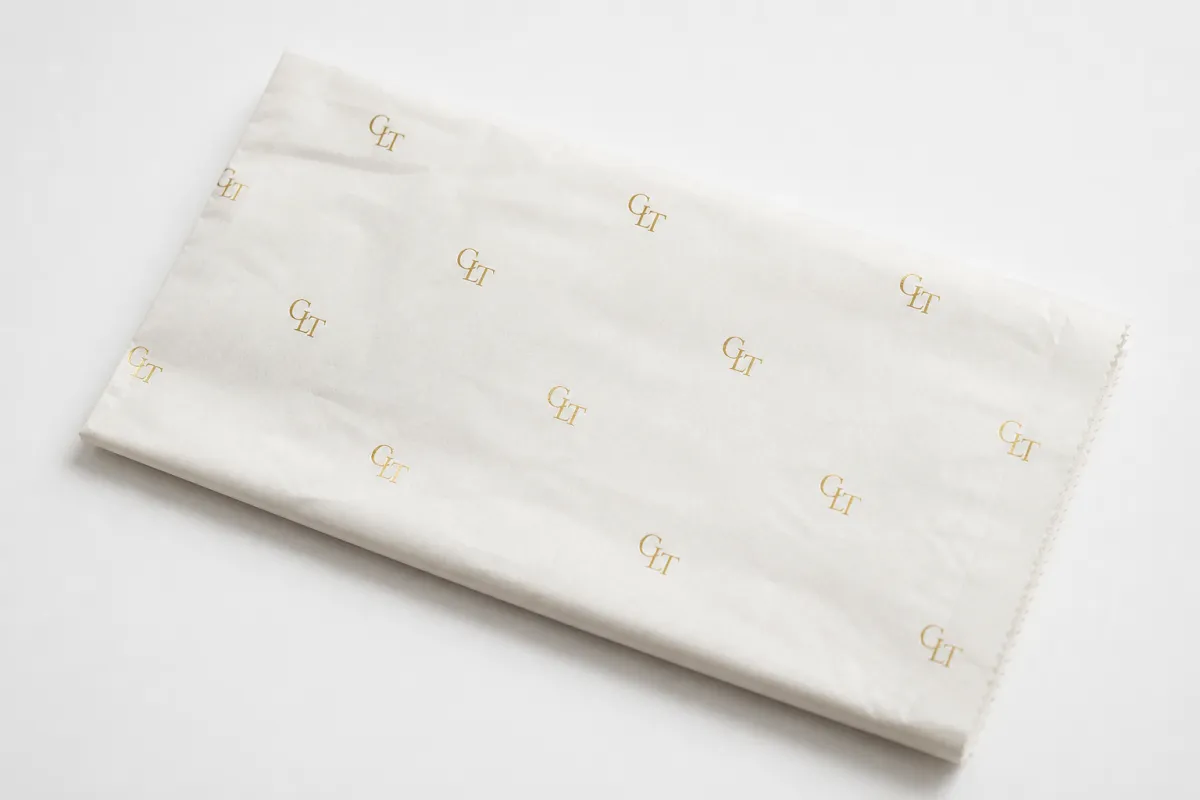
Customers notice the wrap before they notice the box insert. That matters because wholesale Printed Tissue Paper sheets are often the first branded surface a buyer sees inside the package. If the tissue looks thin, dull, or mismatched, the whole unboxing feels cheaper. The visual cue does the work without needing a speech around it.
For retail shelves, ecommerce shipments, and gift packaging, wholesale Printed Tissue Paper sheets carry a lot of perception for a relatively small spend. A custom mailer or rigid box can deliver a bigger structural upgrade, but tissue usually gives faster brand payoff for repeat orders and social media photos. It also adds very little weight, so the shipping impact stays low. That matters when your margin is being watched by someone who has not packed a box in their life.
From a packaging buyer’s point of view, tissue is one of the cleanest ways to signal care without adding assembly complexity. Fold, wrap, place, close. That is the basic workflow. A logo repeat or pattern can turn a plain product into a branded experience, and the customer still gets a straightforward opening ritual instead of a pile of packaging parts that need explaining.
Wholesale Printed Tissue Paper sheets also work because they do two jobs at once. They protect the merchandise from scuffs and dust, and they create a deliberate reveal. That reveal matters for apparel, candles, cosmetics, gift sets, and jewelry because those categories benefit from an organized first impression. If the product sits loose in the box, the customer reads that as casual. If it is wrapped in branded tissue, the package feels planned.
A printed sheet that folds cleanly and survives packing is better than a fancy design that tears on the first corner. Pretty does not pay the freight bill. Usable does.
There is also a cost discipline angle. Wholesale printed tissue paper sheets generally cost far less than a structural packaging redesign, and the artwork can often be reused across multiple product lines. That makes tissue a practical way to test brand presentation before committing to a larger packaging overhaul. If you are rolling out a seasonal collection or a new ecommerce channel, this is a sensible place to start.
For brands that want a clean sustainability story, tissue can also be a better fit than heavier packaging upgrades. Recycled-content options, FSC-aligned sourcing, and acid-free tissue are available depending on the run. The point is not to pretend tissue solves everything. It does not. It can still be a lighter, smarter branding move than overbuilding the box.
Industry references help here too. If you are comparing shipping protection or transit expectations, the testing logic used by ISTA gives useful context for package performance. If your brand needs certified fiber sourcing, FSC is the standard buyers usually ask about. Tissue is not just decoration. The spec matters.
Put simply, wholesale printed tissue paper sheets create visible impact without making your packaging line fussy. That combination is why they show up so often in ecommerce, boutique retail, and gift programs that need a premium feel without premium waste.
What wholesale printed tissue paper sheets are made for
Wholesale printed tissue paper sheets are pre-cut tissue sheets printed with a logo, pattern, monogram, or brand message so every order gets the same visual treatment. That consistency is the point. No cutting on the fly. No guessing whether the sheet will fit. No awkward trim pile building up on the packing table.
Most buyers use wholesale printed tissue paper sheets for apparel, cosmetics, candles, gift sets, jewelry, and ecommerce shipments that need a polished unboxing moment. Apparel brands like the soft fold and wide coverage. Cosmetics buyers usually want a tighter fit with less excess. Jewelry and small accessories often need thinner, cleaner tissue with good opacity so the product stays hidden until the reveal. Candle brands often want a sheet that protects corners and keeps wax residue from touching the outer box.
The material choices are not complicated, but they do matter. Lightweight tissue is easier to fold and gives a softer presentation. Slightly heavier tissue is easier for warehouse teams to handle because it does not crumple as fast. Acid-free tissue makes sense for sensitive goods and long-term storage. Recycled-content tissue can support sustainability goals without forcing you into a rough, gray-looking sheet that ruins the presentation. A brand can care about the planet and still want the package to look good. Those are not opposing ideas.
Print style is another decision point. Some brands want a one-color logo repeat across the full sheet. Others choose a centered mark for a cleaner, calmer look. Edge printing can be subtle and elegant if the design is minimal. Full-sheet coverage creates a stronger branded impact, but it can also push the cost higher and make color consistency more noticeable. That is fine if the artwork is tight. It is less fine if the logo file is a mess and the brand colors are half guessed.
For many buyers, wholesale printed tissue paper sheets are less about decoration and more about presentation control. They hide the product at first glance, create a branded stage, and keep the customer from seeing random packing materials before they see the actual item. If you sell giftable products, that matters a lot. A gift should feel like a gift, not a warehouse sample with ribbon.
Buyers should also look beyond the logo. Opacity matters because thin tissue can telegraph the product shape too clearly. Tear resistance matters because the sheet needs to survive folding, stacking, and the occasional rushed pack job. Fold quality matters because a sloppy crease makes the whole order look cheap. And yes, sheet size matters more than most first-time buyers expect. Too small, and the product looks cramped. Too large, and you waste material and packing time.
There is a practical side to brand control too. Wholesale printed tissue paper sheets can support a campaign launch, a holiday release, a subscription box refresh, or a retail relaunch without changing the rest of the packaging system. That flexibility is useful because not every product line deserves a full box redesign. Sometimes a clean tissue update is the smarter move.
One more buyer point: do not treat tissue as an afterthought. It is a packaging surface with real visibility. If the design is off-center, the repeat is awkward, or the size is wrong, customers notice immediately. They may not know what went wrong technically, but they know the brand looks less polished. That is enough to hurt repeat orders.
Wholesale printed tissue paper sheets specifications that matter
If you are comparing wholesale printed tissue paper sheets, start with the specs that actually affect use, not the fluffy sales language. The key items are sheet size, tissue weight, print area, ink coverage, repeat pattern setup, and how the sheets are packed for delivery. That list is shorter than a typical packaging pitch deck, and far more useful.
Sheet size should match the product and the folding method. Smaller sheets are common for jewelry, cosmetics, and small gift items because they wrap neatly without a lot of waste. Mid-size sheets fit most accessory and candle orders. Larger sheets are better for apparel, apparel boxes, and layered presentation wrapping where you want a generous fold and enough overlap to close the bundle cleanly. A 15 x 20 inch sheet can be perfectly adequate for small goods. A 20 x 30 inch or larger format makes more sense for apparel and broader presentation work.
Tissue weight affects both feel and performance. Lighter stock has a softer hand and folds with less resistance, which is useful for premium presentation. Heavier stock is easier to handle, tears less readily, and can feel more durable in a warehouse. In practice, many printed tissue jobs sit in the 17gsm to 22gsm range, with the exact choice depending on whether the priority is elegance, handling, or protection. There is no magic number. The right weight depends on the product and the pack team.
Color is where a lot of buyers get annoyed, usually because they expected tissue to behave like coated paper. It does not. Wholesale printed tissue paper sheets are porous, so CMYK output can shift slightly compared with a glossy carton or a coated insert. Pantone matching is possible in some cases, but the closer you are to a precise brand color, the more important proofing becomes. If your brand color is a deep blue or a pale blush, ask for a proof. Guessing is not a color strategy.
Print coverage also changes the look and the cost. A simple one-color repeat is usually the most economical. A more complex multi-color design can raise the unit price because registration, ink use, and press setup get more demanding. Full-sheet coverage creates a strong visual statement, but it is also the easiest way to expose a weak file. If the repeat is not clean, the whole sheet looks off. If the artwork is crowded, you are gonna see it in the final stack.
Packaging format matters more than many buyers expect. Wholesale printed tissue paper sheets can arrive flat-packed or in folded bundles, depending on the supplier and the warehouse preference. Flat-packed sheets are straightforward to store and easy to count. Folded bundles can be easier for some packing lines because they take less shelf space. Stack count per pack also matters because it affects how quickly the team can pull a bundle and move on. The faster the pack line, the more important this detail becomes.
Here is a simple way to compare common options:
| Option | Typical Use | Common Size Range | Print Style | Practical Notes |
|---|---|---|---|---|
| Entry test run | Launch orders, samples, pilot SKUs | 15 x 20 in to 20 x 30 in | 1-color logo repeat | Best for checking fit and color before scaling |
| Core wholesale run | Regular replenishment | 17 x 22 in to 20 x 30 in | 1-2 colors or centered brand mark | Good balance of cost, look, and packing speed |
| Premium presentation run | Gift sets, boutiques, PR kits | 20 x 30 in or larger | Full coverage or repeating pattern | Higher visual impact, more sensitive to artwork quality |
| Volume procurement | Multi-channel replenishment | Custom to product line | Repeat print with controlled ink coverage | Lower unit cost once specs are locked |
Wholesale printed tissue paper sheets should also be reviewed for stack flatness, sheet consistency, and print registration. If the sheets are badly cut, every fold becomes a fight. If the print drifts, the logo ends up sitting half a centimeter off where it should be. That may sound small. It is not. In packaging, small errors are the ones people can see from across the room.
If sustainability is part of the buying brief, ask for recycled content, FSC-aligned sourcing, and any relevant compliance documents before the order is placed. This is also where a buyer should ask how the tissue is packed for transit. A well-made sheet can still arrive bent if the carton spec is weak. Ask for the carton count, the inner wrap method, and whether the supplier uses protective outer packaging for long-distance freight.
For brands comparing wholesale printed tissue paper sheets against other custom packaging, the spec sheet should always include the final use case. “Retail tissue” is too vague. “20 x 30 inch, 17gsm, one-color repeating logo, flat-packed in bundles of 250” is a real order. One gets quotes. The other gets clarifying questions.
Wholesale printed tissue paper sheets pricing, MOQ, and quote basics
Pricing for wholesale printed tissue paper sheets is driven by a handful of variables that actually move the number: sheet size, print colors, print coverage, paper grade, finishing, packaging format, and total order quantity. That is the short version. If someone gives you a quote without asking those details, the quote is not useful yet. It is a placeholder dressed up like an answer.
MOQ is where buyers either relax or get surprised. Lower minimums are useful for testing, but unit cost usually drops hard once the order moves into real wholesale quantity. Many buyers start with a few hundred sheets for a launch or seasonal trial, then move into the low thousands once the design is approved and the fit is confirmed. Larger annual buys can push pricing down further, especially if the artwork stays the same across multiple replenishment cycles.
To give you a practical range, small test runs can land around $0.20 to $0.45 per sheet depending on size, coverage, and complexity. Mid-volume orders often fall closer to $0.08 to $0.22 per sheet. Larger wholesale runs can drop lower, sometimes into the $0.06 to $0.15 range if the spec is straightforward and the quantity is high enough. Those numbers are not a promise. They are a buying reality check. Tissue is cheap per unit, but setup costs still have to be spread across the run.
Here is the part many buyers miss: unit price is not the same as landed cost. Freight, customs, sampling, and repacking can move the final number fast. A sheet that looks cheap on a quote can become less attractive once you add shipping by carton, import handling, or the cost of fixing a packing format that your warehouse does not like. Always ask for the cost at your delivery location, not just the factory gate number.
For comparison, here is a simplified pricing view:
| Order Tier | Typical MOQ | Common Unit Range | Best For | Tradeoff |
|---|---|---|---|---|
| Test order | 300-1,000 sheets | $0.20-$0.45 | New artwork, new product lines | Higher unit cost, lower commitment |
| Mid wholesale order | 2,000-5,000 sheets | $0.08-$0.22 | Replenishment and seasonal use | Better value, some setup commitment |
| Larger volume order | 10,000+ sheets | $0.06-$0.15 | Multi-channel retail programs | Lowest cost, less flexibility if artwork changes |
Wholesale printed tissue paper sheets quote requests should include exact dimensions, artwork files, target quantity, preferred delivery location, and any color requirements. If you are vague, pricing will be vague. If you are precise, the comparison becomes real. That is how you avoid the endless back-and-forth where nobody is sure whether the number reflects the same product twice.
A useful quote packet usually includes three things. First, the finished sheet size. Second, the print style, such as one-color repeat, centered logo, or full-sheet coverage. Third, the quantity split, if you want multiple SKUs or sizes quoted side by side. That way you can compare a 17gsm one-color order against a 22gsm full-coverage order without pretending they are the same thing.
One more practical note: wholesale printed tissue paper sheets get cheaper with scale, but only if the spec stays stable. Changing the size, the logo placement, or the print coverage every reorder makes costs jump around. Brands that keep their sheet spec locked usually get cleaner pricing over time and fewer production surprises.
Production process and lead time for wholesale printed tissue paper sheets
The production path for wholesale printed tissue paper sheets is straightforward, but only if the buyer sends usable artwork and approves proofs on time. The normal flow is quote, artwork review, digital proof, sample approval if needed, production, drying and packing, then shipment. Skip the approval bottleneck and the job usually moves. Drag the proof stage out and the calendar starts eating your margin.
Proofing matters because tissue is thin and forgiving only in theory. A logo that looks fine on a screen can shift in scale, registration, or contrast once it is printed on porous paper. Small alignment errors become obvious quickly. A design with tiny text can lose clarity. A pattern with too much density can feel muddy. That is why buyers should treat the proof like a production document, not a formality.
Typical lead time depends on quantity, season, print method, and packaging format. A clean, simple order with fast approval may move in roughly 12 to 15 business days after proof approval. Larger runs, custom folding, special packing, or color matching can push that to 20 business days or more. If the artwork needs revision, add time before production even starts. The calendar does not care about your launch date. It just keeps going.
For brands that need transit confidence, packaging validation matters too. A supplier that understands handling expectations and stacking risk will usually ask better questions about carton strength and palletization. If your order has to survive distribution, it helps to think in terms of real shipping conditions instead of assuming every carton lives a gentle life. That is where transit testing frameworks from ISTA are useful. They keep the conversation grounded.
Several variables can add days to the schedule. Large quantities need longer print runs and more drying time. Seasonal surges create queue pressure. Multi-color artwork can require tighter press setup and more inspection. Custom folding or retail-ready bundling adds handling steps. If your order requires special inserts or mixed sheet counts, that is another layer of work the supplier has to plan around.
Here is the buyer behavior that most often speeds things up: clean files, clear spec sheets, and fast proof approval. Buyers who send vector artwork, defined brand colors, and exact sheet dimensions usually get better turnaround than buyers who treat the design file like a puzzle. “Can you make it pop?” is not a production instruction. It is a mood.
Wholesale printed tissue paper sheets are also easier to produce consistently when the design is simple. A one-color repeat can run with fewer complications than a complex multi-color pattern. If you want the schedule as short as possible, keep the art file clean, the print coverage controlled, and the packing format standard. That is the practical route.
For launch planning, I usually recommend building in a buffer. If you need the product in hand for a campaign, give yourself more time than the best-case quote. Proofing delays happen. Freight can shift. A holiday shipping window can stretch the timeline without warning. A buyer who plans for a realistic lead time usually sleeps better.
The real point is this: wholesale printed tissue paper sheets are not complicated to produce, but they are easy to slow down with sloppy inputs. Good artwork, clear specs, and quick approvals keep the job moving. That is the difference between a packaging order and a packaging headache.
Why buyers choose our wholesale printed tissue paper sheets
Buyers usually come to Custom Logo Things for one reason: they want wholesale printed tissue paper sheets that look consistent from order to order. Consistency is not glamorous, but it is the thing that keeps a brand looking real. A tissue sheet should match the proof, fold properly, and show up ready to use. If any of those three fail, the product stops feeling premium fast.
We focus on clear quoting and straightforward spec guidance because packaging buyers do not need a pile of jargon. They need to know what the sheet size means, what the print style will look like, how the tissue will feel in hand, and whether the order quantity makes financial sense. That is the actual job. Everything else is sales theater.
Another reason buyers stick with wholesale printed tissue paper sheets is flexibility. Some brands need a test run of a few hundred sheets before committing. Others want a larger recurring order with the same art repeated across multiple product families. The right supplier should be able to support both without turning every request into a special case. If you are launching a seasonal collection, you should not have to rebuild the entire packaging spec from scratch.
Packaging experience matters because tissue sits at the intersection of presentation and fulfillment. A supplier that understands retail presentation will care about print placement and color balance. A supplier that understands shipping will care about carton strength and stack behavior. A supplier that understands both will save you from rework. That is where real value shows up. Not in vague promises. In fewer mistakes.
Wholesale printed tissue paper sheets are also easier to buy well when the supplier has a practical view of what brands actually need. For example, some customers want a dense logo repeat for full coverage. Others want a light pattern that disappears enough to let the product stay visually dominant. Some want recycled content. Some want a softer hand. Some want the cheapest usable sheet. Those are all valid. The good news is that they are all quoteable when the brief is clear.
We also pay attention to order handling. Flat-packed bundles, sensible stack counts, and clean carton labeling make a real difference for warehouse teams. If the packing line can pull a bundle, open it, and move on without sorting, the buyer saves time every day the product is in use. That is a better result than overdesigning a package that looks nice in a mockup and slows everything down in real life.
For brands comparing options through our Wholesale Programs, the question is usually not “Can you make it?” The question is “Can you make it at the right size, with the right look, at the right quantity, and without forcing the team to rethink the packing process?” That is the standard we try to meet.
Wholesale printed tissue paper sheets should do three things well: reinforce the brand, protect the product, and keep packing simple. If a supplier can do that reliably, the rest of the conversation gets a lot easier.
Next steps for ordering wholesale printed tissue paper sheets
If you are ready to order wholesale printed tissue paper sheets, start with the basics. Gather the finished sheet size, your preferred quantity, the logo or artwork files, your brand colors, and the type of product you plan to wrap. That information lets the quote reflect the real job instead of some imaginary version of it.
Request a sample or a digital proof before you place a larger run, especially if this is your first tissue order or your first attempt at brand-color matching. Tissue can look different from one stock to another, and the only way to verify fit is to see it against the actual product. A mockup helps. A real sample helps more.
Compare two or three spec options, not ten. Buyers often make the mistake of overcomplicating the decision and then stall out because every version looks only slightly different. That is wasted time. Focus on the options that change the real outcome: size, paper weight, print coverage, and quantity. If the team can agree on those four things, the rest usually falls into place.
A clean order flow looks like this: send artwork, confirm specs, review the quote, approve the proof, and lock the delivery window. That sounds simple because it is. The hard part is discipline. The brands that move fastest are the ones that keep the file clean and make decisions quickly.
For brands using wholesale printed tissue paper sheets to upgrade presentation without overhauling the packing line, the best move is usually the same: keep the spec sharp, keep the design readable, and keep the order quantity aligned with real demand. There is no prize for making tissue more complicated than it needs to be.
If you want a smart starting point, send the dimensions, artwork, and target quantity to Wholesale Programs and ask for a quote built around your product line. That keeps the conversation practical and gets you closer to a packaging spec your team can actually use.
Wholesale printed tissue paper sheets remain one of the easiest ways to make a package feel branded, intentional, and ready for retail. The practical takeaway is simple: lock the sheet size first, confirm the paper weight and print coverage next, then approve a proof before you place the full run. That order of operations saves time, saves money, and keeps the finished sheets doing what they are supposed to do.
What is the MOQ for wholesale printed tissue paper sheets?
MOQ usually depends on size, print coverage, and number of colors, but many wholesale printed tissue paper sheets runs start in the low hundreds to low thousands of sheets. Smaller orders are useful for testing a design or checking fit. Larger orders usually bring the unit price down enough to make repeat buying easier.
How much do wholesale printed tissue paper sheets cost per sheet?
Unit cost changes with paper weight, sheet size, print complexity, and total quantity. Simple one-color repeat jobs are usually cheaper than full-coverage or multi-color prints, and smaller runs carry a higher per-sheet price. For planning, it is common to see small runs around $0.20 to $0.45 per sheet and larger wholesale orders in the $0.06 to $0.22 range, depending on the spec.
How long does production take for wholesale printed tissue paper sheets?
Lead time depends on proof approval, quantity, and print method, but most jobs move faster when artwork is final and the spec is locked early. A simple order may move in about 12 to 15 business days after approval, while larger or more complex wholesale printed tissue paper sheets orders can take longer. Rush work may be possible, but clean files and quick approvals are the easiest way to keep the schedule tight.
Can I match my brand colors on wholesale printed tissue paper sheets?
Yes, but color matching depends on the printing method and tissue stock, so exact Pantone matching should be confirmed during proofing. Send brand color codes and ask for a digital proof or printed sample before approving the full run. That step matters because tissue is porous and can shift color differently than coated packaging.
What artwork file do you need for custom wholesale printed tissue paper sheets?
Vector files are best because they scale cleanly and keep logos sharp on thin tissue paper. Include font outlines, brand colors, and repeat pattern instructions so the printer can place the design correctly. If you are comparing wholesale printed tissue paper sheets for a launch or a reorder, clean artwork is the fastest way to get a quote that actually matches the finished product.