Cheap labels get expensive fast. If you are checking Woven Labels Unit Cost for fitness brands, the useful question is not “How low can this go?” It is “Will this label survive sweat, stretch, friction, and washing without making the garment look like a bargain-bin mistake?”
Fitness apparel is rough on branding details. Neck labels rub. Waistband labels flex. Side-seam tags get pulled, washed, dried, and stuffed into gym bags. Customers do not baby their training clothes. Shocking, I know.
A woven label is small, but it carries a lot of weight. It identifies the brand, sits against skin, keeps size and care information readable, and has to match the rest of the line after repeat production. Smart buyers look at unit cost, construction, and repeatability together. Separate those three, and the cheapest quote starts to look suspiciously expensive.
What woven labels unit cost for fitness brands actually buys
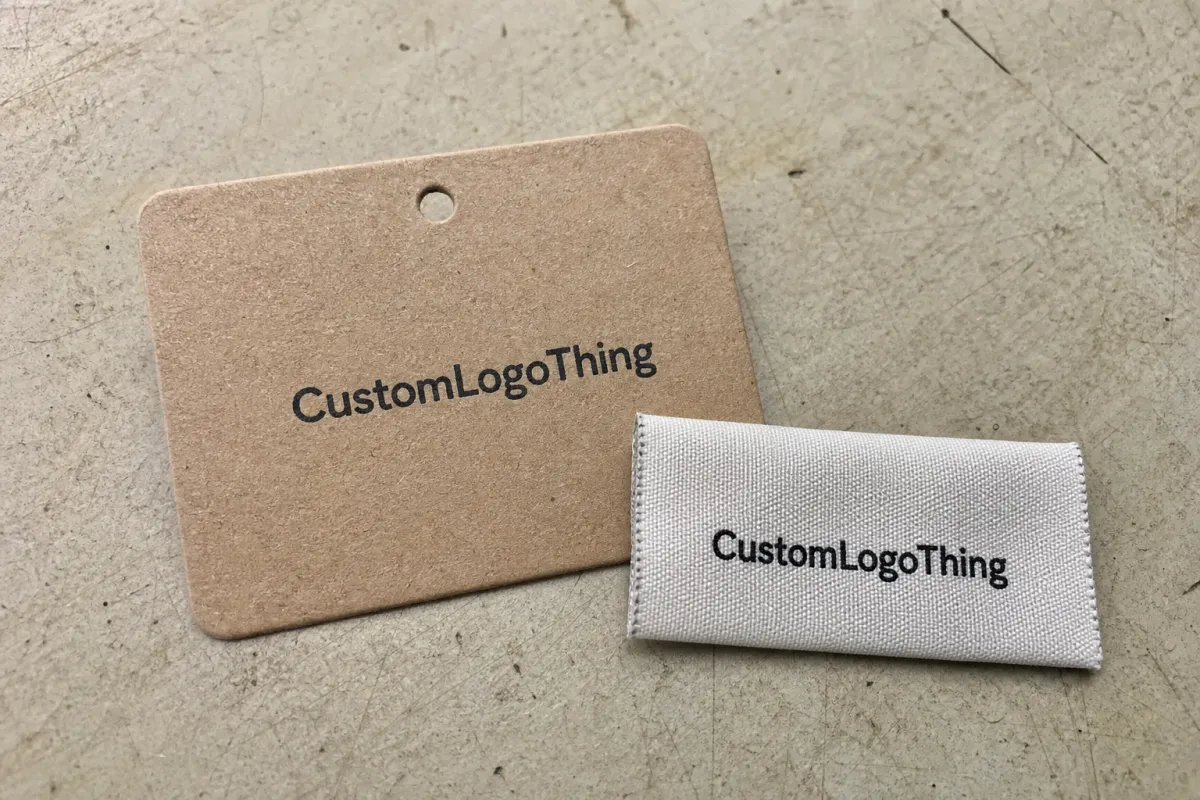
The lowest label price is often the easiest mistake to approve. If the label frays after six washes, scratches the back of a neck, or turns a sharp logo into thread soup, the saved cents no longer matter. The garment feels lower quality. The brand takes the hit.
Label pricing usually reflects thread count, label size, fold type, edge finish, color count, weave density, and setup complexity. A 20mm x 50mm center-fold damask label with two colors is not priced like a 40mm x 70mm multicolor label with dense artwork, end folds, and a soft backing. Same category. Different animal.
For many fitness apparel orders, basic woven labels may land around $0.06-$0.18 per piece at higher quantities. Detailed damask labels with finer weaving, more colors, or special finishing can move into the $0.18-$0.45 range. Small runs can climb above that because setup charges and machine time do not magically disappear just because the order is tiny. Machines are rude like that.
The label also has to survive the way activewear is used. A cotton lifestyle tee may be washed once a week. A gym tee might be washed after every workout, sometimes in warm water, sometimes with aggressive detergent, sometimes tossed into a dryer on high because customers live dangerously.
Buyer reality: A woven label is not decoration on performance apparel. It is part of the customer experience. If it scratches, curls, fades, or frays, people notice.
Consistency matters too. A label should look clean on first wear and still look clean after the tenth wash. That means choosing a weave and finish that fit the garment, not chasing the lowest cost per piece as if all labels behave the same.
Durability details that matter on gym apparel
Label construction changes comfort, appearance, and durability. Damask, satin, and taffeta are the common options, and they do not behave the same on activewear.
Damask woven labels are usually the safest fit for fitness brands that need sharp logo detail and a smoother hand feel. They use finer threads, so small text, icon marks, and detailed logos read better. For leggings, sports bras, compression tops, hoodies, and premium tees, damask is often worth the higher unit cost.
Satin woven labels have a smoother, shinier surface. They can look polished on retail garments, especially fashion-led fitness collections, but they may snag or show wear faster in high-friction zones depending on placement and construction.
Taffeta labels are more basic. They are often stiffer and less refined, yet they can work well for care labels, size tabs, or budget-conscious items where the label does not sit directly against sensitive skin. Entry-level team uniforms and promotional gym tees do not always need a premium damask label. Not glamorous. Practical.
| Label Type | Best Use | Typical Feel | Buyer Tradeoff |
|---|---|---|---|
| Damask | Premium fitness wear, leggings, sports bras, hoodies | Soft, dense, detailed | Higher unit cost, better logo clarity |
| Satin | Retail apparel, lifestyle fitness collections | Smooth, glossy | Elegant look, less ideal for heavy abrasion zones |
| Taffeta | Care labels, size tabs, budget runs | Stiffer, simpler | Lower cost, less refined feel |
Edges deserve more attention than they usually get. A rough heat-cut edge can feel sharp inside a neck seam or waistband. Tight weaving helps prevent loose threads, and clean finishing reduces itching on leggings, sports bras, tees, and hoodies.
Logo clarity depends on contrast and thread density. A tiny gray logo on a black label might look tasteful on screen, then disappear in real life. For small marks, use clear contrast and avoid type under 5-6 points unless the supplier confirms it can weave cleanly.
There is also a tradeoff between fine detail and heavier construction. Fine damask handles logos beautifully, while denser, thicker builds may hold up better through aggressive laundering. For broader handling and package-performance thinking, standards groups like ISTA are useful because they push buyers to evaluate real-world movement, pressure, and shipping conditions rather than showroom appearance alone.
Size, fold, and finish specs for fitness uniforms and retail wear
Size affects both look and cost. A larger woven label uses more material, more weaving time, and often more finishing labor. That pushes unit pricing up, especially on dense artwork or multicolor designs.
Common fitness apparel label sizes often sit between 15mm and 35mm tall for neck labels, 10mm and 25mm tall for side tabs, and 25mm to 60mm wide depending on the logo. For waistband labels, buyers often choose a low-profile size around 15mm x 45mm or 20mm x 50mm so the mark stays readable without adding bulk.
Fold type matters because placement matters. A pretty label in the wrong fold is still wrong.
- Center fold: Common for neck labels, hem labels, and side seams. The fold sits at the top, and the sewn edges are tucked into the seam.
- End fold: Good for flat placement on tees, hoodies, joggers, and bags. The ends fold under for a cleaner sewn look.
- Loop fold: Useful for side-seam branding, accessories, and labels that need visibility on both sides.
- Straight cut: Works for patches, heat application, or labels sewn flat on all sides.
Finish choices change comfort. Laser cut edges can give a clean, precise finish with less fraying. Heat cut is common and efficient, but the temperature and pressure need control so edges do not feel hard. Sewn edges create a more finished look, though they add labor and may increase bulk.
For athletic apparel, a clean spec usually beats an oversized label trying too hard. Neck labels around 20mm x 50mm, side tabs around 15mm x 30mm, and waistband labels around 15mm x 45mm are useful starting points. Not rules. Starting points.
If the label sits against skin, ask for a soft damask construction and confirm edge feel. If the label goes on outerwear, bags, or accessories, you can usually tolerate more structure and thickness. That flexibility can keep cost under control while still delivering a strong brand mark.
Woven labels pricing, MOQ, and unit cost levers
Pricing gets clearer once the spec is clear. Vague quote requests produce vague pricing, and vague pricing is how buyers end up comparing apples, oranges, and one suspiciously cheap lemon.
The main cost drivers are quantity, size, thread colors, weave density, fold style, finishing, backing, and artwork complexity. A label with six thread colors, tiny lettering, and a special fold will cost more than a two-color logo label in a standard center fold. No mystery there.
MOQ is another big lever. Many woven label suppliers set minimums around 500-1,000 pieces for basic orders, while better pricing often starts around 2,500-5,000 pieces. For larger apparel runs, 10,000 pieces and up can bring stronger bulk pricing, especially if the spec is stable.
| Quantity | Typical Unit Cost Range | Best Fit | What To Watch |
|---|---|---|---|
| 500-999 pieces | $0.22-$0.65+ | Launch tests, samples, limited drops | Setup charges hit harder |
| 1,000-2,499 pieces | $0.14-$0.38 | Small brand runs, team apparel | Artwork changes can erase savings |
| 2,500-4,999 pieces | $0.09-$0.26 | Growing fitness lines | Lock specs before ordering |
| 5,000-10,000+ pieces | $0.06-$0.20 | Retail programs, repeat SKUs | Storage and reorder timing |
These ranges are realistic starting points, not promises. Final pricing depends on the actual artwork, dimensions, finishing, delivery schedule, and supplier production setup. If someone quotes a complex premium label at a magically low price, ask what corners are being cut. There is usually a corner. Sometimes several.
A slightly higher quote can save money if it reduces defects, returns, or reorders caused by poor readability. Paying $0.04 more per label on a 3,000-piece run adds $120. If that prevents a full reorder because the logo came out muddy, the math is not complicated.
To get a useful quote, send the logo artwork, exact dimensions, fold type, quantity, backing preference, thread color references, and target delivery date. If you already sell through retail or ship packaged apparel, review sustainability and sourcing expectations too. For paper-based packaging around the garment, FSC certification may matter to buyers, even though woven labels themselves are usually textile-based.
Comparing options across Custom Labels & Tags is easier when the quote reflects the actual garment use instead of a generic label pulled from a dusty sample book.
Artwork checks and approval steps before production
Bad artwork makes bad labels. The weave can only reproduce what the file gives it, and thread has limits that a screen preview politely ignores.
Send vector artwork when possible: AI, EPS, SVG, or a clean PDF. High-resolution PNG files can work for simple marks, but vector files give the production team cleaner edges and better control. If your logo has gradients, shadows, hairline text, or tiny distressed texture, expect simplification. Woven labels are not tiny billboards. They are thread.
Approval should cover four things before production starts: artwork proof, size confirmation, color match, and placement review. Thread is not ink, so exact Pantone matching is not always possible. A close thread match is common, but the final look depends on thread stock, weave density, and contrast against the label background.
- Thin type: Avoid tiny letters below 5-6 points unless confirmed by the supplier.
- Fine lines: Lines under 0.3mm may break up or disappear in weaving.
- Too many colors: More colors can increase cost and reduce clarity on small labels.
- Low contrast: Tone-on-tone labels look premium only if customers can still read them.
Request a pre-production sample if the label sits against skin, uses detailed artwork, or belongs to a premium line. A digital proof may be enough for a simple reorder with locked specs, but first-time orders deserve more caution. Skipping a sample to save a few days can be acceptable for a basic size tab. For a flagship sports bra label that touches skin? That is gambling with customer comfort.
For buyers comparing woven label costs, artwork discipline can lower price without cheapening the product. Fewer thread colors, cleaner lines, and a sensible label size can reduce tooling fees while improving readability.
Production process, turnaround, and lead time from approval to delivery
The production flow is straightforward when the buyer has the spec ready: quote, mockup, proof approval, optional sample, weaving, cutting, folding, finishing, inspection, packing, and shipping. Each step can move quickly. Each step can also stall if decisions are unclear.
Typical new woven label orders often take about 10-18 business days after proof approval, depending on quantity, complexity, and shipping method. A pre-production sample can add 5-10 business days. Reorders with no changes often move faster because the artwork, thread colors, dimensions, and fold style are already locked.
Rush orders are possible in some cases, but rush production usually costs more and leaves less room for revisions. If a launch date is fixed, build in approval time. A buyer who waits four days to approve a proof should not act shocked when delivery moves four days too. Time is not a coupon code.
Fitness brands lose days in predictable ways. The logo file is low resolution. The buyer says “standard size” without giving measurements. The garment factory needs the labels by a specific date, but nobody shares that date upfront. The fold style is not confirmed. The color reference is a screenshot from a phone. All fixable. All annoying.
A clean order packet prevents most of this. Include artwork, size, fold, quantity, backing, delivery address, target arrival date, and any garment factory packing requirements. If labels need to be bagged in rolls of 1,000 or bundles of 500, say that before production finishes.
For brands managing broader apparel programs, label production should be coordinated with trim, packaging, and final packing schedules. Examples on the Case Studies page show how consistent brand details support a finished product line rather than floating around as afterthoughts.
Why fitness brands reorder when specs stay locked
Reorders are where disciplined brands win. Once the label spec is approved and tested, keep it locked unless there is a real reason to change it.
Consistent woven labels help collections stay uniform across tees, joggers, outerwear, bags, socks, and accessories. If every production run has a slightly different black thread, a slightly different label width, or a slightly different fold, the line starts to look patched together. Customers may not know why something feels off. They still feel it.
Spec drift is a quiet problem. It happens when a supplier substitutes material, changes thread density, adjusts fold depth, or interprets artwork differently on a reorder. One small shift may not matter. Several small shifts create a visible mismatch. For fitness brands selling repeat SKUs, that is not cute.
A reliable supplier keeps production notes: label size, fold style, thread references, weave type, edge finish, packing method, and approved proof. That reduces friction on reorders and helps protect launch schedules. If a supplier cannot repeat a basic woven label consistently, they are not a partner. They are a vending machine with email.
Practical support matters too. A good supplier will question a 70mm neck label for a lightweight tank, suggest a softer edge for a waistband, or flag artwork that will not weave cleanly. Generic sales talk is easy. Useful production advice saves money.
Reliable reorders also protect packaging timelines. Labels often need to arrive before cut-and-sew completion, final packing, or retail distribution. If they arrive late, the whole line waits. That is why Woven Labels Unit Cost for fitness brands should include dependability, not just the lowest number in a spreadsheet.
How to compare quotes without buying the wrong label
Before asking for pricing, gather the basics. You need logo artwork, order quantity, label dimensions, fold style, target delivery date, and any comfort requirements. If the label sits against skin, say so. If it goes on a hoodie sleeve, say that too. Placement changes the right construction.
Compare quotes using the same spec sheet. A $0.09 label and a $0.16 label may not be the same product. One might include damask weaving, clean folds, and proper finishing. The other might be a rougher construction with weaker detail. If the specs are different, the price comparison is mostly theater.
Ask whether the quote includes setup charges, sampling, proofing, packing, and shipping. Confirm the MOQ for the exact label, not a generic minimum. For larger runs, ask about bulk pricing at 2,500, 5,000, and 10,000 pieces so you can see where the cost per piece actually drops.
Order a sample or production proof for premium fitness apparel, tight-detail logos, or any label that touches skin. For a simple reorder, a digital proof may be enough if the specs have not changed.
The fastest way to lower wasted spend is to stop guessing. Send the artwork, size, fold, quantity, and deadline, then judge the quote against the actual label your garments need.
FAQ
What affects woven labels unit cost for fitness brands the most?
Quantity is usually the biggest lever because higher runs spread setup charges across more pieces. Thread count, label size, color changes, fold style, and finishing also change the unit cost. Detailed artwork, special backing, and tight color matching can push pricing higher.
What MOQ should a fitness brand expect for woven labels?
Many suppliers set an MOQ around 500-1,000 pieces, though the best pricing often starts around 2,500-5,000 pieces. Small runs can make sense for launches, samples, or limited drops, but the cost per piece will be higher. Ask for the MOQ on your exact spec.
How long does production usually take after artwork approval?
Simple woven label orders often take about 10-18 business days after proof approval. Complex artwork, samples, large quantities, revisions, or rush shipping can change that timeline. Reorders usually move faster because the production details are already approved.
Which fold works best for workout apparel labels?
Center folds and end folds are common for neck labels, side seams, and hem branding. Loop folds can work well for accessories or labels that need visibility on both sides. Choose the fold based on placement, comfort, seam construction, and how visible the brand mark should be.
Can I get a sample before placing a full woven label order?
Yes. For premium fitness wear, it is often worth it. A sample helps confirm size, texture, edge comfort, color contrast, and logo readability before full production. Use one when the label touches skin or the artwork has fine detail.


