Woven sewing labels personalized: what buyers should notice first
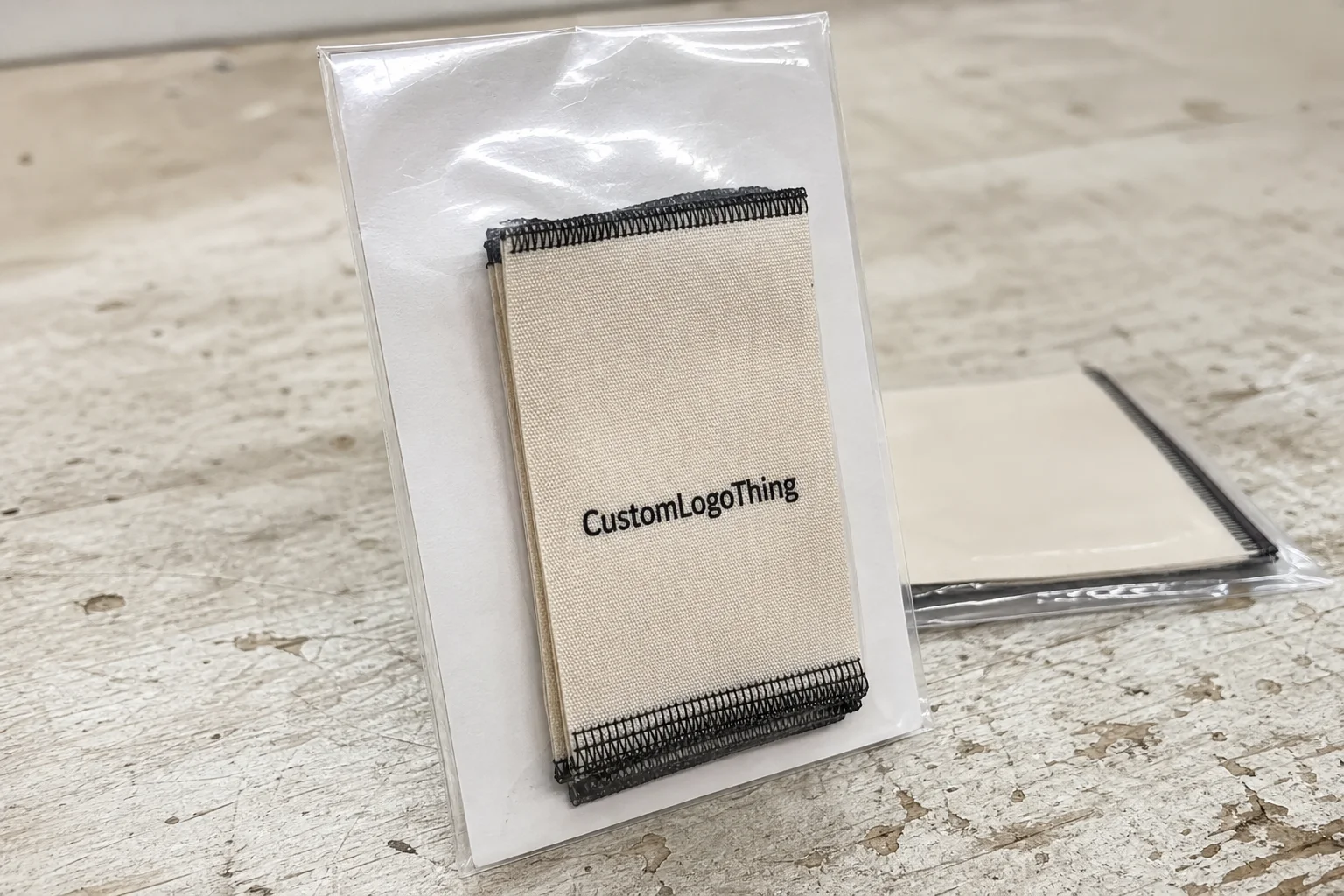
Woven Sewing Labels personalized may be small, but they carry more weight than their size suggests. Customers touch them every time they wear, wash, or inspect the garment, so the label has to look clean, feel acceptable, and keep its shape through use.
That is why experienced buyers treat labels as a spec, not just decoration. Comfort matters, but so do legibility, sewing speed, edge behavior, and wash durability. A label that looks good in a mockup can still be the wrong choice if it scratches, curls, or slows the sewing line.
The important choices are not always obvious from a product photo. Thread density affects how crisp the artwork appears. Fold style changes how the label sits in the seam. Color count affects both clarity and cost. The same logo can look very different depending on whether it is woven as damask, satin-style, or a simpler straight-cut label.
The better question is not whether the label looks nice in isolation. It is whether it performs inside the actual product. A premium hoodie, a children's tee, and a tote bag put different demands on the same component, so the label should match the garment, not just the brand mood.
“A label can look excellent in a proof and still feel bulky in hand. Good specs usually sit between sharp detail and practical comfort.”
When labels need to coordinate with hang tags, care labels, or other trim, the full package should be planned together. Matching scale, finish, and tone reduces the chance of inconsistent branding later. For buyers comparing formats before locking a run, Custom Labels & Tags is a useful starting point.
How the sew-in label process works from artwork to approval
The process starts with artwork, not weaving. A supplier should review the logo file, remove tiny defects, and convert the design into a weave simulation. That first proof matters because thread does not reproduce artwork the way print does. Thin lines, gradients, and delicate serif fonts often need to be simplified before they can survive at label size.
Scale is usually the first problem. A logo that works on a website can collapse once it is reduced to a 30 mm or 40 mm label. Woven construction has limits, and the more detail or color transitions the artwork contains, the more likely the final label is to lose clarity.
Once the pattern is digitized, the supplier usually sends a proof or sample. Review it at actual size. Zooming in on a screen can hide problems that become obvious in hand. Check the text, spacing, border, fold, and contrast between background and logo.
Late changes are expensive. A small correction before loom setup is manageable. A correction after production starts can mean a new sample, more setup time, and a delivery date that slips. For woven sewing labels personalized, approval discipline matters as much as design.
If the label must coordinate with hang tags, swing tags, or other trims, that should be settled early. The sewing schedule should not be forced to solve a branding decision that should have been made upstream.
Weave, fold, and backing choices that change the final label
The weave structure is the foundation. Most buyers compare damask and satin-style woven labels, and the difference matters more than the names suggest. Damask usually gives finer detail and cleaner text at smaller sizes. Satin-style constructions can create a softer, slightly lustrous surface, but they do not always hold ultra-fine line work as well.
Fold style changes both appearance and function. A center fold works well for neck seams and side seams because it wraps neatly and can show information on both sides. An end fold creates a more finished edge and keeps one visible face. A straight cut label is useful when the brand only needs a small woven tab or when the label is inserted into another component, but the edge treatment still has to be planned so it does not fray or feel sharp.
Backing is easier to overlook than weave or color, but it affects comfort and wear. A label inside a heavy jacket lining can tolerate a different edge treatment than one sewn into a thin tee or a baby garment. If the product touches skin directly, softness matters more. If the label is hidden, durability and clean sewing may matter more.
The practical choice depends on use case, not preference in the abstract. A label that looks premium on a jacket can feel wrong on a lightweight knit. A label that is ideal for a hoodie may be too stiff for a children's item.
Visual hierarchy matters too. Two or three high-contrast colors are often easier to read than five low-contrast ones, especially at small size. The strongest labels are the ones that still look intentional after the design has been reduced to thread.
For products that will be washed often, durability is not optional. A good woven label should resist abrasion, flexing, and repeated laundering without curling or blurring. Ask how the supplier checks edge integrity, color consistency, and stitch stability before packing. Standards used in adjacent packaging and logistics work, including shipment testing frameworks such as ISTA, reinforce the same point: the component should be evaluated in the environment it will actually face.
| Option | Typical use | Visual quality | Comfort | Relative cost |
|---|---|---|---|---|
| Damask weave, center fold | Apparel brands needing sharp text and a clean seam finish | High | Good | Medium |
| Satin-style weave, end fold | Fashion items where a softer sheen matters | Medium to high | Very good | Medium to high |
| Straight cut, simple logo | Budget-conscious programs and internal branding | Medium | Depends on edge finish | Lower |
| Fine weave, multiple colors | Premium garments with detailed artwork | Very high | Good | Higher |
Cost, MOQ, and quote drivers: what changes the unit price
Pricing for woven sewing labels personalized usually comes down to five variables: size, color count, weave density, fold type, and quantity. Artwork cleanup can also affect the quote if the original file needs to be redrawn for thread reproduction. Comparing unit price alone is weak because two quotes can look similar while including very different setup, proofing, and finishing work.
A realistic price for a standard woven label order at around 5,000 pieces often falls near $0.18 to $0.28 per unit, depending on the spec. Smaller runs usually cost more per piece because setup work is spread across fewer labels. Add finer detail, more colors, or a more complex fold, and the number moves up.
Minimum order quantity deserves careful reading. Some suppliers quote a low MOQ and then recover margin through setup charges or tighter revision terms. Others become more competitive at 10,000 pieces because the production run is easier to optimize. A useful comparison asks whether the offers are actually the same product. If size, fold, finish, or color count differs, the price comparison is mostly noise.
To normalize quotes, buyers should check:
- Finished dimensions in millimeters or inches.
- Number of thread colors included in the price.
- Whether folding, cutting, and finishing are included.
- Whether setup, sampling, proofing, and shipping are separate.
- Whether artwork changes after approval trigger a new charge.
Hidden cost usually shows up in the parts of the order that feel secondary at first. Rush production costs more. Multiple proof rounds cost more. Special edge treatments can cost more. The label itself may be a small line item, but the supporting work can affect landed cost more than buyers expect.
For narrow-margin products, the cheapest label is not always the lowest-risk option. A slightly higher unit price can be justified if it improves sewing speed, reduces rejections, or avoids a second proof cycle. That is especially true for garments where the label is visible enough to influence perceived quality.
Production steps and turnaround: what the schedule really looks like
Turnaround is easier to manage once the sequence is clear. A typical order moves through intake, artwork refinement, proofing, loom setup, weaving, cutting or folding, inspection, and packing. Each step is simple on its own. Delays usually come from unclear artwork or slow approval.
First-time orders for woven sewing labels personalized usually take longer because the artwork has to be translated into a production-ready pattern. A reasonable timeline is often 12 to 15 business days after proof approval, though order size, artwork complexity, and queue position can stretch or compress that window. Repeat orders are usually faster because the spec already exists.
Three things create most schedule risk: source files that are not clean enough to weave well, delayed proof review on the buyer side, and late-stage changes after the sample has been accepted. None of that is unusual. It is simply how component production works when the spec is still moving.
Schedule pressure becomes more serious when labels sit on the critical path for a launch, photo shoot, or seasonal drop. If the garment cannot be packed until the label is attached, one missing trim component can stall the whole run. The same logic applies to printed cartons or insert cards.
“The safest schedule assumes at least one revision. If everything clears on the first pass, the buffer remains intact.”
Ask what the quoted production time actually includes. Some suppliers count only weaving and finishing. Others include proofing and freight. Those are very different promises, so a quote that looks quick on paper may not be quick once approval and shipping are added.
Common mistakes that make personalized labels look cheap or fail early
The most common mistake is too much text in too little space. Buyers want the logo, brand name, size, care instructions, origin line, and sometimes a slogan on one small label. The weave cannot hold all of that cleanly, so the text gets crowded and the label starts to look improvised.
Poor contrast is next. If the thread colors are too close together, the artwork can disappear from normal viewing distance even if it looks acceptable on a screen. Digital proofs flatter weak color relationships; thread needs clearer separation to stay readable after weaving and stitching.
Another issue is mismatching the fold or edge finish to the garment fabric. A stiff edge inside a lightweight knit feels very different from the same edge inside a jacket. Labels are small, but the wearer notices them quickly if they scratch, twist, or sit awkwardly against the skin.
Screen-only approval is a frequent source of regret. A proof at actual size is the real test. Place it against the garment, hold it at arm's length, and check whether the logo still reads clearly and whether the label looks like part of the product or an afterthought.
There is also a brand-level risk that appears after the label leaves the factory. If it frays, twists, or becomes scratchy after a few washes, customers read that as lower quality across the whole garment. The textile may be fine, but the label can still drag the perceived value down.
Next steps for a cleaner spec and faster ordering
The fastest way to reduce revisions is to start with three inputs: the logo file, the finished label size, and the exact fold or placement. Those three decisions eliminate most back-and-forth because they define the production problem before anyone starts guessing.
From there, a short internal checklist helps. How often will the garment be washed? Will the label sit against skin? Is the goal premium presentation or efficient mass production? Does the label need size or care information, or only brand identification? Those answers influence the spec more than a mood board ever will.
When comparing suppliers, ask for a proof at actual size, a stage-by-stage timeline, and a quote that separates setup from unit cost. That makes the offers easier to compare honestly. A cheaper unit price is not useful if it hides proofing charges, revision fees, or slower production that risks the delivery date.
It also helps to compare two versions side by side before locking the order. One may use a finer weave and a cleaner edge. Another may be simpler and cheaper. The right decision depends on the garment, the margin, and how the product will be handled after purchase.
The value of woven sewing labels personalized is not that they are flashy. It is that they turn a tiny component into a visible quality signal. That only works when the weave, fold, and finish are chosen on purpose.
Before comparing quotes, line up finished size, fold type, and color count first. Price matters, but only after the spec is fixed.
FAQ
What do woven sewing labels personalized usually include?
Most include a logo, brand name, size, or care details, depending on how much room the label allows. The strongest versions keep the text tight and readable so the weave stays clear after sewing and washing.
Are personalized woven labels better than printed labels for durability?
Woven labels usually hold detail and color stability better through repeated washing. Printed labels can work for simpler artwork, but their wear pattern depends on the fabric and the ink system used.
What fold type should I choose for a sew-in label?
Center fold works well for side seams and neck seams where the label needs to sit neatly on both sides. End fold is useful when the label should show a finished edge and remain visible from one side.
How do I compare quotes for woven sewing labels personalized?
Compare finished size, number of colors, fold type, and total quantity rather than the headline price alone. Check whether setup, proofing, finishing, and shipping are included so the quote is truly comparable.
How long does production usually take for custom woven labels?
First-time orders usually take longer because the artwork has to be prepared, proofed, and approved before weaving starts. Repeat orders are often faster when the same spec and artwork can be reused without changes.


