Plastic Bags

Ziplock Pouch Custom Orders: Pricing, MOQ, and Lead Time
✍️ Sarah Chen 📅 May 27, 2026 📖 13 min read 📊 2,685 words
Ziplock Pouch Custom Orders: Pricing, MOQ, and Lead Time

A ziplock pouch custom order looks straightforward on paper. In practice, it is a stack of small decisions that shape price, shelf life, shipping performance, and how the pouch feels in a customer’s hand. The zipper gets attention because people notice it first. The film structure, seal width, and closure profile do most of the actual work.

That gap between appearance and performance is where many packaging projects drift. A pouch for powdered supplements does not need the same construction as one for coffee. Greasy snacks stress seals differently from dry goods. Hardware needs puncture resistance. Cosmetics often need a cleaner finish and better scuff resistance. One format, many jobs. The spec has to answer the right job, not just the visual brief.

For buyers comparing packaging options, the safest approach is to start with the product and the handling route, then build the design around those realities. That usually saves money later because the first quote is closer to the actual requirement. It also reduces the odds of a reprint caused by a pouch that looked good in proof and failed in use.

A cheap pouch is expensive the moment it leaks, splits, or feels flimsy in the customer’s hand.

Ziplock Pouch Custom Orders: Pricing, MOQ, and Lead Time

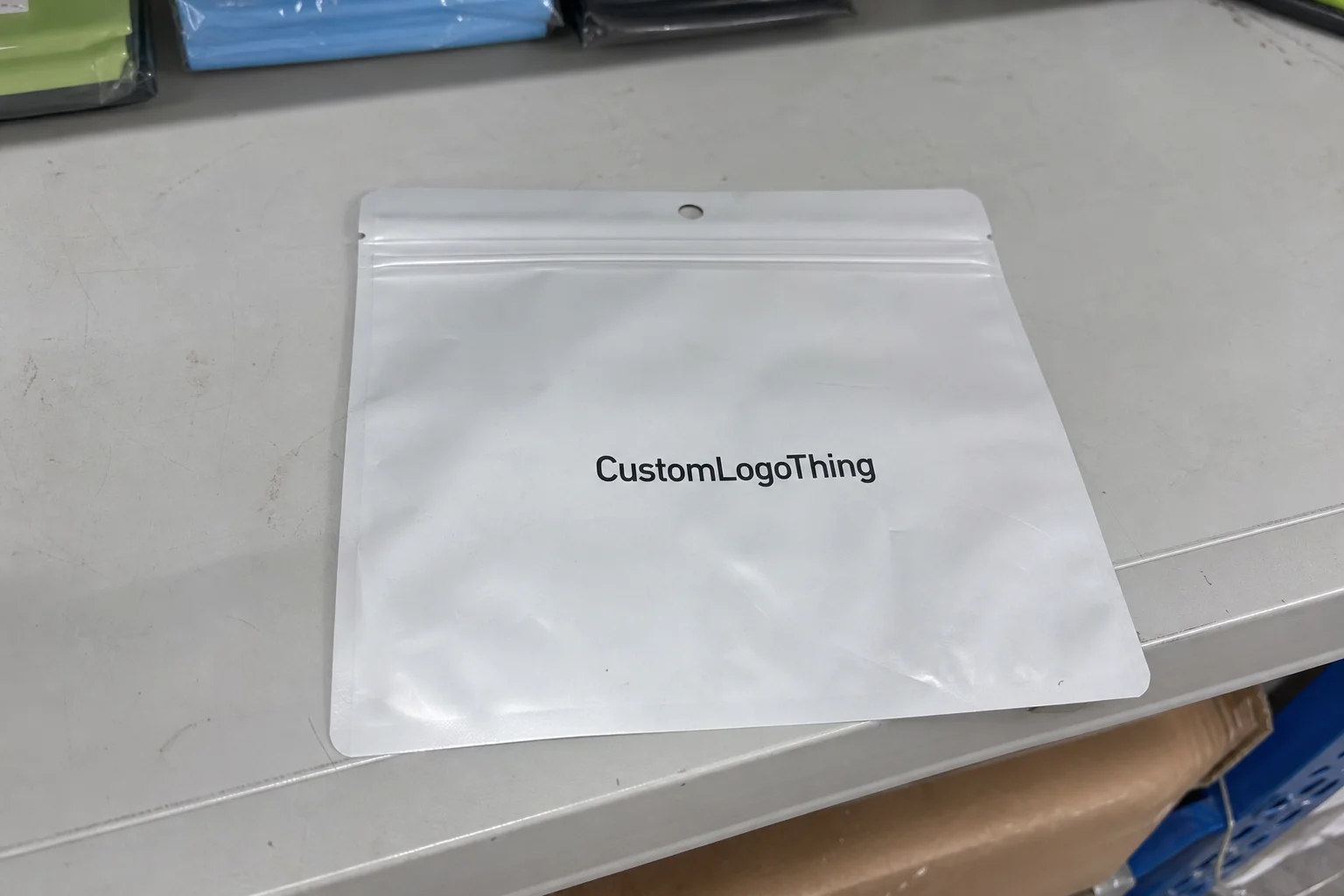
What a Ziplock Pouch Custom Order Actually Covers - CustomLogoThing packaging example

Cost is shaped by more than print coverage. Size, film construction, zipper type, finish, gusset style, and barrier level all move the quote. A small clear pouch with modest print is one thing. A larger matte laminated pouch with a premium zipper, full-coverage graphics, and a hang hole is another. Add heavier film or a special barrier layer and the materials alone can change the budget by a noticeable margin.

MOQ is where expectations often break. Lower quantities usually carry a higher unit price because setup costs are spread over fewer bags. That includes proofing, plates or cylinders, color matching, and machine setup. Once the run gets larger, unit price drops, but not forever. After the factory has absorbed the fixed work, the curve flattens. Bigger volume helps, yet structure changes usually save more than volume alone.

Lead time depends on complexity and how clean the brief is. A simple run with standard film and limited print can often move in about 12-15 business days after proof approval. Laminated pouches, specialty finishes, or multi-layer barrier builds tend to run closer to 18-25 business days. Freight sits outside production time, so a short manufacturing schedule does not guarantee an early arrival if shipping is tight.

For buyers who need a larger packaging system, the pouch should be treated as one component, not the whole answer. Sometimes the pouch handles the product well, while an outer carton or shipping box handles branding and transit protection. That split is often cheaper and cleaner than forcing one format to do every job.

How the Zip Closure, Film, and Seal Work Together

The zipper is the feature customers notice. The top seal, side seals, and bottom seal decide whether the pouch actually holds up. If the top seal is weak, the pouch can leak even with a good zipper. If the side seals are inconsistent, the bag can split under load. If the bottom seal is too narrow for the fill weight, stress shows up fast.

Film choice changes the entire feel of the package. Clear PE is common for basic visibility, dry goods, and low-complexity retail use. It is practical, flexible, and usually less expensive than laminated structures. Laminated barrier films add protection against moisture, oxygen, and odor transfer, which matters for coffee, spices, supplements, and powders. Metallized layers block light better and often produce a more premium look. Matte and soft-touch finishes change both appearance and scuff resistance, though they add cost and may alter how the pouch handles in transit.

Film stiffness matters more than many buyers expect. A softer film can feel easy to open, but it may crease more and feel less stable on shelf. A thicker film can protect better and feel more substantial, but it may resist folding or cost more than the product can justify. There is no universal best structure. There is only the right balance for the product, the fill weight, and the route it takes to the customer.

Product behavior matters too. Greasy items can interfere with seals. Powder can work into seal areas and create weak points. Sharp components can puncture inner layers. Moist products put more pressure on barrier performance and seal consistency. The packaging spec has to reflect the product, not the other way around.

For distribution testing, many buyers follow ISTA packaging test standards to check how the finished package handles compression, vibration, and drop conditions. That is especially useful for e-commerce and retail replenishment, where the pouch may sit inside a carton, a mailer, or a mixed distribution chain.

Cost, MOQ, and Unit Price: What Changes the Quote

The biggest price drivers are usually visible if you know where to look. Size, print colors, film structure, zipper type, gusset style, and finish are the main ones. A single-color clear pouch is simpler than a fully printed matte pouch with a premium zipper and specialty die cut. A large pouch uses more material, but the cost increase is not linear because setup and press time are still part of the equation.

MOQ is not arbitrary. It is a function of setup, waste, and production efficiency. Low-volume runs cost more per unit because the factory still has to prepare plates, match colors, approve proofs, and stabilize the line. If the run is large enough, those fixed costs fade into the background. If it is not, they stay visible in the quote.

These ranges are rough reference points for custom pouch orders. Exact numbers depend on dimensions, coverage, and finishing choices, but the table gives a realistic starting point.

Structure Best For Typical MOQ Rough Unit Price at 5,000 pcs Notes
Clear PE zip pouch Dry goods, small parts, sample kits 3,000-5,000 $0.12-$0.22 Lowest complexity; limited barrier
Laminated matte pouch Supplements, cosmetics, premium retail 5,000+ $0.18-$0.35 Better shelf feel; higher print and finish cost
Metallized barrier pouch Coffee, spices, odor-sensitive products 5,000-10,000 $0.22-$0.45 Stronger protection, usually more setup
Heavy-duty gusseted pouch Bulk fills, refills, denser products 5,000+ $0.25-$0.50 More material, more stable shelf presence

Hidden costs deserve attention. Artwork cleanup can take time even if it is not billed as a separate line item. Plate or cylinder charges may apply depending on the print method. Sampling is usually worth the time because it catches fit and seal issues before a production run starts. Freight can swing based on carton count, destination, and delivery timing. Compliance checks can add another step. A quote that ignores these items is not a bargain. It is incomplete.

For teams comparing packaging formats, it helps to look beyond the pouch itself. A pouch, carton, and label should be priced as a system if they are all part of the same product line. That view is more useful than chasing the lowest number on a single component.

Production Steps and Lead Time: From Artwork to Delivery

The production sequence is usually simple, but it becomes messy when details are missing. A normal job moves through brief, dieline, artwork review, proofing, material approval, production, inspection, packing, and shipping. Each step is small. Together, they determine whether the order lands on time or slips because someone approved the wrong dimensions.

The most common delays are predictable. Vague artwork files create proof revisions. Missing pouch dimensions stall the dieline. Late approvals push the job to the next slot. Spec changes after proof approval can reset the schedule because material, print setup, or zipper sourcing may need to change. Once the factory starts moving, last-minute changes are expensive in both time and money.

A clean run is much easier. Final dimensions should be locked before artwork is sent. Fill weight should be stated clearly. Closure type should be chosen early. If the pouch must run on a machine, that requirement belongs in the first brief, not after proof approval. The less the factory has to guess, the more reliable the schedule becomes.

Rush work is possible, but only when the specification is settled. If the file is clean and the structure is standard, the schedule can compress. If the brief is still shifting, “rush” just means the team is trying to solve preventable problems faster. That is not a production advantage.

For most packaging buyers, the real question is not whether production can start quickly. It is whether the pouch can be manufactured, packed, and shipped without a late change that forces a reprint. That is where disciplined spec control pays back.

Specs That Matter More Than Pretty Artwork

The first specs to settle are the practical ones: pouch dimensions, fill weight, zipper style, film thickness, and whether a hang hole is needed. Artwork should sit on top of those choices, not replace them. A well-designed pouch can still fail if it is too small for the product or too light for the fill.

Finish affects more than appearance. Gloss tends to look brighter and more retail-ready, but it can show scuffs. Matte feels restrained and photographs well, yet it may mute color slightly. Soft-touch coating gives a premium feel, but it raises cost and can change handling during shipping. None of those finishes is objectively better. The right one depends on where the pouch will sit and how often it will be touched.

Barrier performance deserves more scrutiny than it usually gets. Oxygen barrier helps protect freshness and slow oxidation. Moisture barrier keeps powders, snacks, and supplements stable. Light protection matters for formulas that degrade under exposure. If the product is sensitive, the barrier layer contributes more to shelf life than the graphics do.

Compliance should be stated before the order goes to production. If the pouch touches food, the materials and inks need to be suitable for that use. If the product needs child-resistant features, the brief should say so plainly. If the pouch is part of a regulated product line, the factory needs those rules early. For paper-based outer packaging claims, organizations like FSC are relevant to forest-based materials, not plastic film by default. That distinction matters because buyers often mix material claims that do not belong to the same structure.

A good package is controlled, not decorative. It carries the product safely, opens the way the customer expects, and survives the route it is about to take.

Common Mistakes That Turn a Good Pouch Into a Bad One

The first mistake is guessing the size. A pouch that is too tight can split at the seam or make filling miserable. A pouch that is too large wastes film and looks loose on shelf. If fill weight varies, the pouch should be tested with the actual product and the actual fill range, not a placeholder sample that happens to weigh less.

The second mistake is weak artwork preparation. Low-resolution logos, unoutlined fonts, and vague color references slow down proofing and create printing surprises. Vector files are the baseline. If the brand color matters, define it properly. “Blue” is not a specification. A Pantone reference or a locked CMYK target is much safer.

The third mistake is underestimating seal performance. Powder can contaminate seal areas. Grease can interfere with closure function. Heavy fills stress the bottom seal. If the pouch is meant for repeated opening, the zipper and seal system need to work together. The pouch should survive normal handling without becoming a customer complaint.

The fourth mistake is changing specs after approval. Every post-proof change affects cost and timing. A new dimension changes material use. A different finish changes setup. A zipper swap can affect sourcing. Buyers often see these as small edits. On the production side, they are real disruptions.

The fifth mistake is skipping transit testing. If the pouch is going into e-commerce, distributor storage, or mixed freight, ask how it will be tested. ISTA-style thinking catches weak points before they become a damage claim. A pouch that looks clean in a mockup but fails in transit is not a finished solution.

For brands managing multiple formats, the same discipline should carry through to package branding. A pouch, carton, and label should feel like they were designed from one brief, not three separate conversations.

Next Steps Before You Request a Quote

Before asking for pricing, gather the essentials: product weight, dimensions, target quantity, artwork files, closure type, finish preference, and any compliance requirements. If you already have a sample pouch, include it. If the pouch has to fit a machine, say that immediately. If it needs to match another item in the line, that belongs in the first paragraph of the brief.

A one-page vendor brief is usually enough. List the pouch size, material preference, print areas, zipper style, fill weight, and the packaging goal. Keep it direct. A spec sheet is more useful than a long brand statement because it lets the factory quote something real instead of filling gaps with assumptions.

If the product is fragile, if the pouch will be used in a filling line, or if the packaging is changing from another format, ask for samples or a prototype. Catching a size or seal issue early is cheaper than discovering it after a full production run. That is especially true for branded packaging that has to work beside custom printed boxes or other coordinated formats.

For a ziplock pouch custom order, the best comparison is usually not “cheapest versus most expensive.” It is baseline versus stronger barrier versus premium finish. Those three options show the tradeoffs clearly. From there, the right choice is the pouch that protects the product, fits the route, and keeps the quote within a rational range.

How much does a custom ziplock pouch cost?

Price depends on size, film structure, print complexity, zipper type, and quantity. Simple clear pouches can sit in the low cents per unit at volume, while laminated barrier pouches with premium finishes cost more because they use more material and more setup time. As the run gets larger, unit cost usually falls because fixed setup is spread over more pouches.

What is the minimum order quantity for a ziplock pouch custom run?

MOQ varies by factory and construction, but custom printed pouches often start in the low thousands. Basic clear pouches may allow smaller runs, while specialty barrier films, matte finishes, or custom zipper options usually push the minimum higher. More complex builds generally leave less room for small quantities.

How long does production usually take?

Simple pouch jobs can move faster, while printed, laminated, or specialty barrier bags take longer. A practical range is often 12-15 business days after proof approval for straightforward runs, and longer for more complex specs. Artwork approval is usually the part that slows things down, not the press itself.

What material should I choose for a custom ziplock pouch?

Choose based on the product’s real needs first: moisture, oxygen, light, grease, puncture, or odor protection. Clear PE works for basic visibility and simple dry goods, while laminated barrier films are better for shelf life and product protection. If the item is sensitive, the barrier layer matters more than the graphics.

What files do I need to start a ziplock pouch custom quote?

Send a logo file, pouch dimensions, quantity, fill weight, closure preference, and any compliance requirements. If you already have a dieline or sample, include it. That reduces back-and-forth and helps the supplier quote the right structure instead of a placeholder version.

If the spec is tight and the brief is honest, a ziplock pouch custom order is much easier to quote, produce, and ship without preventable problems.

Get Your Quote in 24 Hours
Contact Us Free Consultation

Warning: file_put_contents(/www/wwwroot/customlogothing.com/storage/cache/blog/2e9f63a3447f054a6977af5e8c2d7c4c.html): Failed to open stream: Permission denied in /www/wwwroot/customlogothing.com/inc/blog/PageCache.php on line 20


