The first mistake buyers make with an apparel snapback caps material guide is treating the decision like a color pick. Fabric, visor board, reinforcement, sweatband, and closure all change how the cap wears, holds shape, and survives production. A cap can look sharp in a render and still feel cheap in hand if the build is wrong.
That gap between image and physical sample is where most sourcing problems start. A snapback is small, but its materials work in layers. The outer fabric affects appearance. The front reinforcement sets the silhouette. The visor board controls the brim's rebound. The inside finishes decide whether the cap feels worth the money after a few hours on a head.
Most cap failures begin before decoration. If the base build is off, embroidery only makes the issue easier to see.
What this apparel snapback caps material guide really controls
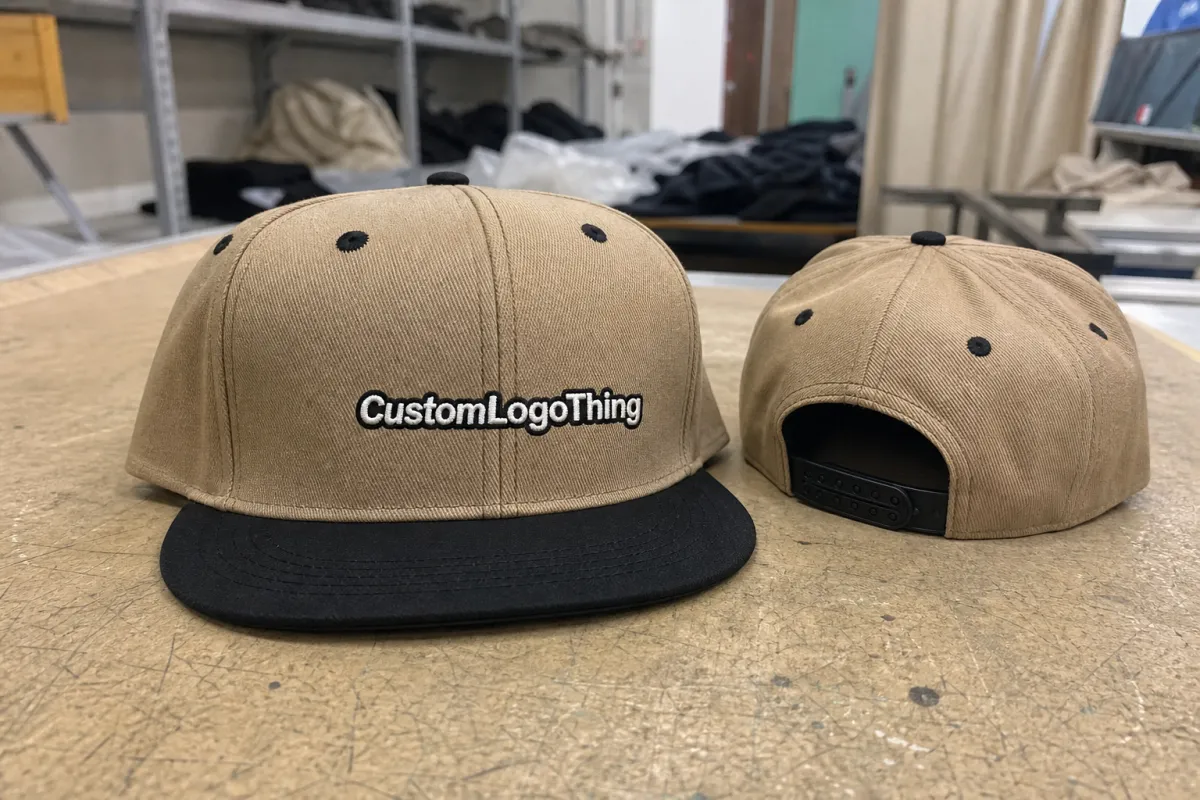
A snapback cap is usually a structured cap with a flat or slightly curved brim and an adjustable closure at the back. That sounds simple until the first sample arrives and the buyer sees how much the materials shape the result. Cotton twill, polyester, wool blends, mesh panels, and different reinforcements all behave differently under stitch tension, heat, and wear.
The crown fabric controls drape, stiffness, color depth, and how well the cap recovers after packing. The visor board controls whether the brim snaps back cleanly or starts to droop at the edges. The sweatband determines comfort and moisture handling. The closure changes fit range, resale perception, and how often the cap survives repeated adjustments. Small differences here create large differences on the head.
From a sourcing standpoint, this is not a fashion-only problem. It is a specification problem. A cap that looks premium in a product shot can still feel light, shiny, or too rigid if the material stack is wrong. That is why an effective apparel snapback caps material guide should focus on what buyers physically touch, not just what photographs well.
Core components to watch:
- Crown fabric - controls silhouette, texture, and how consistent the color looks across a run.
- Visor board - controls firmness, edge quality, and how well the brim rebounds.
- Sweatband - controls comfort, moisture absorption, and the feel against the forehead.
- Seam tape - helps the inside hold together cleanly and resist fraying.
- Closure hardware - affects fit range, durability, and perceived value.
Do you really want the cheapest board deciding the whole silhouette?
How the crown, visor, and closure work together
The front panels are where the cap earns its shape. A structured snapback usually relies on buckram or a similar interfacing behind the crown fabric so the front panels stay upright instead of collapsing into a soft dome. Two caps can use the same outer fabric and still feel completely different because one has proper reinforcement and the other does not.
The visor deserves the same scrutiny. Buyers usually want a brim that feels firm without turning brittle. Good visor board should keep a clean line, flex enough to survive handling, and recover after bending without leaving ugly dents. If it is too soft, the cap loses the crisp snapback profile. If it is too rigid, the brim can feel cardboard-like and awkward in wear.
Closures are not a final-second decision. A plastic snap is common, low cost, and dependable for most bulk runs. A metal snap usually raises the perceived value, but it adds cost and can feel less forgiving if the fit range is tight. Strap closures create a different profile. Velcro is quick and practical, though many retail buyers see it as lower value. The right choice depends on the audience and how the cap will be used.
Decoration changes the equation too. Dense embroidery needs a stable base so the stitches do not pull the front panel out of shape. Heat transfer prefers smooth, even surfaces. Woven patches and embroidered patches need a crown that can hold weight without puckering. If the body fabric is too soft, the decoration can look fine at approval and then start fighting the cap after packing and wear.
That is why the best material decisions are not made in isolation. Crown fabric, visor board, and closure should be chosen as a set. If one part is premium and the others are budget-grade, the cap feels inconsistent even if the quote looks tidy.
Fit changes everything.
Key factors that decide the right cap build
Start with fabric family. Cotton twill gives the familiar cap hand feel most buyers recognize. It usually sits in a practical middle ground for cost and performance, and it handles embroidery well. Polyester brings stronger color consistency, better abrasion resistance, and lower shrink risk. Wool blends lean toward heritage styling, with a texture that reads more premium in fashion-led drops. Mesh panels improve airflow and make more sense for warm-weather use or outdoor promotions.
Then decide whether the cap needs a structured front. Structured caps usually perform better for retail, team merch, and any brand that wants a firm silhouette on display. Unstructured builds feel more relaxed, but they rarely give the same visual authority. Buyers often ask for a premium look, then approve a construction that slouches the minute it leaves the mold.
Climate matters more than many mockups suggest. Hot weather favors lighter fabrics, better airflow, and a sweatband that actually absorbs moisture. Cooler climates can support heavier materials, deeper color saturation, and richer surface texture. A useful apparel snapback caps material guide should force that conversation early, because the wrong climate choice leads to fast wear complaints.
Audience matters just as much. Streetwear buyers notice silhouette, texture, and color depth quickly. Promotional buyers usually care more about unit cost, delivery certainty, and repeatability. Those priorities are not in conflict; they are simply different buying goals. If the cap is for daily wear, comfort and durability matter. If it is a giveaway, consistency and price usually win.
One cap, many expectations.
Material families in plain language
Cotton twill: classic feel, reliable embroidery base, and predictable performance on most runs. Typical body weights often sit around 260-360 gsm depending on hand feel and structure.
Polyester: durable, color-stable, and easier to keep consistent across larger quantities. Matte finishes are usually safer than glossy ones for a more premium read.
Wool blend: heritage look, more texture, and a stronger shelf presence. The tradeoff is higher cost and a slightly longer approval process.
Mesh-backed builds: better airflow, lower heat buildup, and a casual profile that suits outdoor or sport-adjacent use.
Step-by-step material selection for a new cap run
Begin with the use case. Retail drop, employee gift, teamwear, promotional giveaway, or event merch each sets a different ceiling for price, comfort, and durability. If the use case is unclear, every sample round becomes a negotiation with no fixed target. That is how orders drift.
Next, choose the crown fabric before anything else. Once that is locked, match the visor board and closure so the rest of the build feels intentional. A common failure is spending on one visible element and accepting weak choices on the rest. The cap then feels like a compromise instead of a product with a clear spec.
Request swatches or a physical prototype before final approval. Screens flatten texture, soften edges, and hide weight differences. They also lie about shine. A brushed cotton twill, a dense polyester, and a wool blend can all look reasonable online while feeling completely different in hand. If the cap will be sold in more than one channel, compare a safe option, a premium option, and a cost-saving option side by side before making a final call.
Test decoration on the exact material you plan to use. Embroidery density, stitch direction, and thread choice all interact with the crown in ways that are easy to miss on a flat mockup. A logo that sits cleanly on one fabric can pucker on another. Heat-applied graphics can also react badly to coatings or surface sheen. Why wait for the full run to find that out?
Finally, confirm the inside details. Sweatband type, seam tape, label placement, and folding behavior all affect the perceived quality of the cap. These elements are easy to overlook because they do not dominate the product photo, but they shape the first real impression.
Cost, MOQ, and unit cost tradeoffs to expect
Material choices do not only change the feel of the cap. They also change the economics. Cotton twill and standard plastic snaps usually keep pricing within a comfortable range for larger runs. Premium wool blends, metal snaps, specialty boards, and custom internal trims can push unit cost up quickly, especially when the order quantity is small.
MOQ is often tied to material sourcing, not just factory preference. A mill may require a minimum for a custom fabric color. A board supplier may want a larger batch to justify cutting a different thickness. Closure hardware can also carry its own minimum order. Buyers sometimes focus on the factory quote and miss these upstream limits, which creates delays later.
Higher perceived value is not always expensive in the right place. Sometimes a matte polyester body with a clean sweatband and a stronger visor board looks more premium than a loosely stitched wool blend with weak finishing. The trick is to spend where the eye and hand notice the difference.
Simple upgrades can be efficient.
If the order is promotional, consistency should usually outrank novelty. If the order is retail, the budget should favor the parts customers touch first. That means the crown, front reinforcement, and visor deserve more attention than decorative extras that sound impressive on a quote sheet.
Process, turnaround, and lead time from sample to ship
Sampling takes longer when the material stack is complicated. A basic spec may move quickly, while custom fabric finishes, special board weights, or nonstandard closures add more review cycles. Each adjustment can trigger a new sample, and each sample adds time.
Approval gets easier when the spec is exact. If the fabric weight, panel count, visor shape, closure type, and inside finishes are all defined early, production runs with fewer surprises. If those choices are vague, factories often fill in the gaps with their default materials, and those defaults may not match the buyer's intent.
Lead time also depends on decoration. High-density embroidery, patch application, and multi-step finishing can slow production after the material stage is already locked. That is normal. What slows projects more than anything else is waiting until the final sample to decide that the cap should have been built differently.
Plan for one round of correction.
Once the production sample is approved, the remaining timeline is usually a mix of material availability, sewing capacity, finishing, and packing. Built-in slack helps absorb shipping delays, holiday congestion, and supplier backorders without forcing a rushed compromise.
Common material mistakes that hurt the final cap
The biggest mistake is choosing fabric by image alone. A shiny twill may look good under studio lights but feel cheap in person. A soft-touch finish may photograph beautifully and still show marks too easily in everyday use. Photos help, but they cannot replace handling the material.
Another common error is underbuilding the front panel. If the reinforcement is too light, embroidery can distort the crown and the cap loses its shape after a few wears. The result is a product that looks fine in the box and tired on the head.
Buyers also overlook the visor board. A weak brim makes the whole product feel less deliberate. A board that is too stiff can be just as bad, because it fights the natural movement of the cap and leaves crease lines after packing.
Closure choice can hurt resale value too. Plastic is practical, but a premium target audience may expect a different finish. On the other hand, a metal snap on a price-sensitive promotion can waste budget without changing the customer's opinion. The wrong upgrade is still a mistake.
And then there is the inside. Scratchy tapes, rough seams, and cheap sweatbands quietly ruin comfort. They do not always show in a photo, but they show up fast in wear complaints and return feedback.
Expert tips for locking the spec and ordering next
Always write the cap spec as if a stranger will build it. That means naming the fabric family, weight range, front reinforcement, visor type, closure, and internal finishing. If any part of the build is left to assumption, the final product can drift.
Ask for side-by-side samples whenever possible. One version should represent the safest cost target, another should show the premium ceiling, and a third should reflect the likely production spec. Seeing them together makes tradeoffs obvious in a way a quote never will.
Keep decoration and construction in the same conversation. A bold logo can make sense on a structured crown, while a subtler mark may be better on a softer body. The cap and the artwork should support each other instead of competing for attention.
Do not chase novelty unless it solves a real problem. A small material upgrade that improves comfort or durability is usually worth more than an exotic finish that only looks different in the sample room. Practical wins tend to age better.
When the spec is locked, move quickly. Good materials go out of stock, and small indecisions become schedule risks. If the sample already answers the important questions, it is usually better to place the order than to keep polishing the idea.
FAQ
What is the best fabric for a snapback cap? Cotton twill is the most common choice because it balances cost, structure, and embroidery performance. Polyester is a strong alternative when color consistency and durability matter more.
Are structured snapbacks better than unstructured ones? Structured caps usually hold shape better and read more premium on shelf or on camera. Unstructured caps feel softer and more relaxed, which works for different audiences.
Does the visor board really matter? Yes. It changes how the brim looks, feels, and recovers after bending. A poor board can make an otherwise solid cap feel cheap.
Can I mix premium and budget materials? You can, but the balance has to make sense. If one element is noticeably better than the rest, the whole cap can feel uneven.
What should I approve first? Start with the crown fabric and front structure, then confirm the visor, closure, and inside finishes. That sequence reduces rework and keeps the spec aligned with the goal.
How do I avoid sample surprises? Ask for real swatches, test decoration on the exact material, and review at least one physical prototype before mass production. That is the fastest way to catch problems early.


