This acrylic beanies embroidery cost guide is for Buyers Who Need a real number before approving artwork. The hat is only part of the bill. Knit density, stitch count, digitizing, setup, sample requests, freight, and quantity all affect the final price. Miss one of them and the quote will look cleaner than the invoice.
A basic acrylic beanie can still look sharp if the logo size matches the knit, the digitizing is clean, and the placement leaves enough room for the fabric to move.
Why embroidered acrylic beanies can be a smart bulk buy
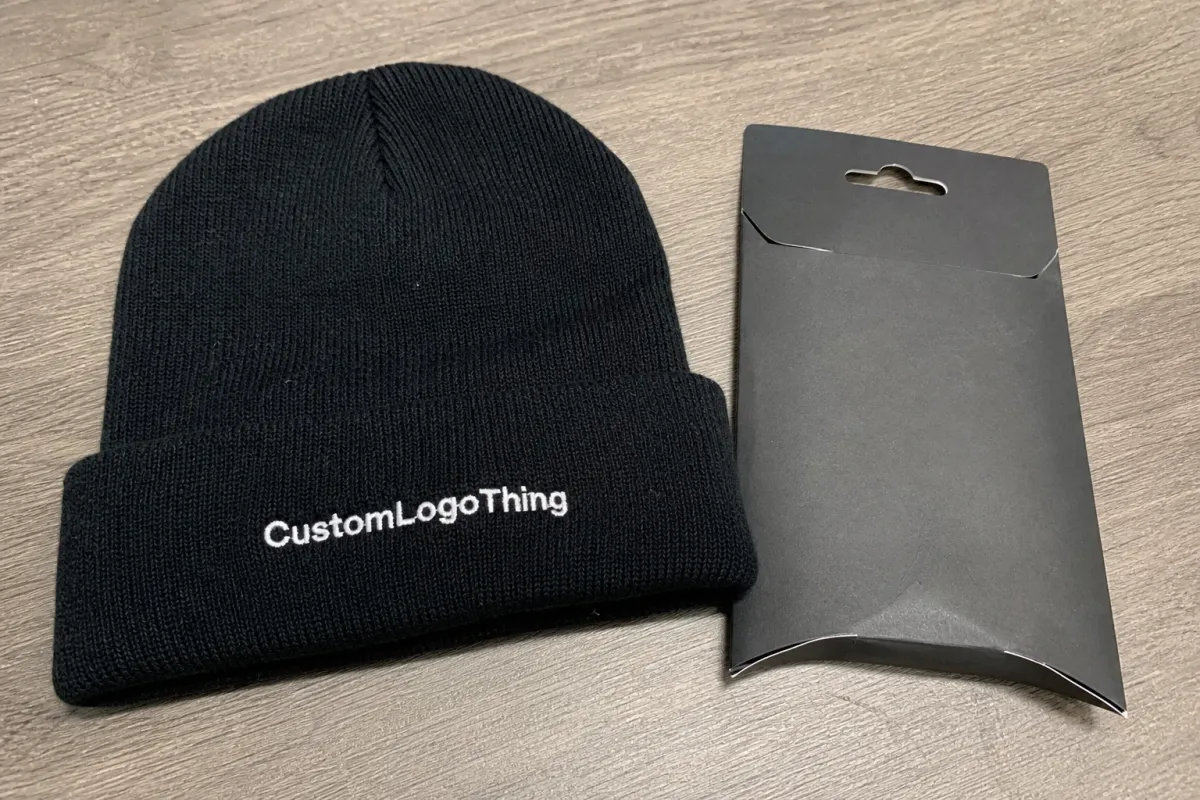
Acrylic beanies stay popular because they are predictable. The yarn is easy to source, colors are usually consistent, and the same style can be reordered without the drift that shows up in more temperamental materials. For teams, winter events, and merchandise programs, that predictability matters as much as the headline price.
Acrylic also gives buyers a practical balance of cost and appearance. On a cuffed beanie, a clean embroidered logo can read polished and retail-ready without turning the blank into an expensive item. That makes it useful for Bulk Orders That need to stay inside a fixed budget.
The other advantage is flexibility. Acrylic beanies work for employee uniforms, promotional giveaways, school spirit wear, and low-risk retail drops because the style is familiar and easy to wear. A compact logo on the cuff is usually the safest route because it is readable, durable, and straightforward to repeat.
Seasonal programs also benefit from the way acrylic behaves in supply. Standard styles are often stocked in enough volume to support lower minimums and quicker restocks. That gives buyers more room to test a design without committing to a huge run.
Material and embroidery choices that change the finish
Not every acrylic beanie handles embroidery the same way. A tighter rib knit usually supports cleaner edges, while a softer or looser knit can let stitches sink slightly into the surface. That does not make the beanie inferior. It just means the artwork has to be sized and digitized for the actual fabric, not for a mockup.
Flat embroidery is the default for a reason. It is durable, direct, and usually the best fit for a simple logo or wordmark. For most cuff placements, flat embroidery gives the strongest mix of price and finish. 3D puff can work on some beanies, but it is far less forgiving on soft knit surfaces and is usually a poor choice for small text or fine detail.
Material texture matters more than many buyers expect. A brushed, fuzzy, or oversized rib can hide detail and make thin letters disappear. A smoother knit gives the needle a better base to work against, which usually means less distortion and less puckering. Standard acrylic is common because it is stable and affordable, while blends may feel different under tension.
Thread choice is another small detail that changes the result. Polyester thread is usually the safer workhorse because it handles wear and washing well. Thread sheen affects how premium the logo reads, but shine alone does not fix poor digitizing or weak backing.
Bold shapes usually embroider well. Thin serif text, tiny icons, and crowded multi-color art are where trouble starts. In those cases, a woven label or patch may look better than forcing the whole logo into stitches. The cheapest method is not always the one that survives real wear.
Fit, gauge, and decoration specifications to confirm before quoting
The fastest way to get a useful quote is to lock the spec before anyone starts estimating. The main variables are beanie height, cuff depth, knit gauge, logo size, placement, and whether the decoration lands on the cuff or the body. Miss those details and the quote can change after the proof stage.
- Beanie height: Low-profile, mid-profile, and slouch shapes need different placement logic.
- Cuff depth: A deeper cuff usually gives embroidery more room and better readability.
- Knit gauge: A tighter gauge usually supports finer detail than a bulky, open knit.
- Logo size: Provide measurements in inches, not just a visual estimate from a mockup.
- Placement: Center front, side cuff, and dual-location branding all change cost and complexity.
A digital mockup can hide problems. A design that looks balanced on a flat screen may be too dense once it is translated into stitches on a stretchy knit. Thin lines close together, small text, and sharp interior corners are the first things to fail.
Size is not only about aesthetics. Too much coverage on a cuff can make the knit pull and the logo warp when the beanie is worn. Too little coverage can make the branding feel weak or lost. The right size is the one that stays legible after the fabric stretches and is packed.
Placement affects production in a direct way. A single cuff logo is efficient. Add a second location, a second thread color set, or left-right symmetry, and the sewing time rises quickly. That affects pricing, but it also affects quality control because every extra step is another chance for misalignment.
Some logos do better as a woven label or patch. That is especially true if the knit is loose, the art is detailed, or the brand wants a quieter retail look. Direct embroidery is still the best answer for many orders, but the best answer is the one that fits the fabric instead of fighting it.
Acrylic beanies embroidery cost, MOQ, and quote factors
Here is the part buyers usually want first: what does it cost? A typical decorated acrylic beanie can land somewhere around $3.50 to $8.50 per piece in bulk, though that range moves with quantity, stitch count, artwork complexity, blank quality, and whether freight is included. A simple one-color logo on a stocked blank sits near the low end. A dense, multi-color, or multi-placement design can climb quickly.
Setup fees matter more than many buyers expect. Digitizing is often a one-time cost and can range from a modest fee for simple art to a higher charge for dense or detailed logos. If a supplier says "free setup," the cost is usually getting absorbed somewhere else, so it still pays to ask what is included.
MOQ is another part of the equation. For stocked acrylic beanies with one-location embroidery, minimums are often manageable. In the market, that can mean anything from 48 to 100 pieces, sometimes more, depending on the supplier and the blank. Once the design needs extra colors, special packaging, or a less common beanie style, the minimum can rise.
Order quantity changes the math in a predictable way. A 100-piece order pays more per unit because setup is spread across fewer hats. At 500 pieces or more, the unit cost often improves, but only if the artwork stays efficient. If the logo is dense enough to slow the machine down, the savings from volume are partly offset by production time.
Buyers should ask for an itemized quote. That makes comparison much easier. A useful breakdown usually includes:
| Quote item | Why it matters | Typical buyer question |
|---|---|---|
| Blank beanie price | Sets the base material cost | Is this a standard acrylic style or a heavier knit? |
| Digitizing / tooling fees | Prepares artwork for production | Is the stitch file already on hand? |
| Decoration cost | Depends on stitch count, colors, and placement | How many stitches and how many locations are included? |
| Sampling | Useful for new art or new blank styles | Is a pre-production sample required and how much does it cost? |
| Freight | Can change landed cost materially | Is shipping included or billed separately? |
A second way to compare pricing is by decoration method. Flat embroidery is usually the cheapest and safest for most cuff logos. Woven labels sit in the middle and tend to work well on small or detailed art. Leather patches lean more retail and can look strong on heavier knits, but they do not suit every brand. 3D puff usually carries the highest complexity and is the least forgiving on stretchy beanies.
For budgeting, think in landed cost, not just unit cost. A quote that looks slightly higher on paper may still win if the supplier has clear setup terms, realistic freight, and a sample process that does not drag the schedule. A cheap line item is not a bargain if it turns into rework or late delivery.
Production steps, proofing, and turnaround expectations
Most orders move through the same chain: artwork intake, digitizing, proofing, sample approval if needed, bulk embroidery, finishing, packing, and shipment. If the starting file is clean, the process is smoother. Vector art, confirmed placement, thread color references, and a clear blank color save time immediately.
Turnaround depends on approval speed as much as sewing time. For a stocked blank with a simple logo, production can often move in roughly 7 to 15 working days after approval. Complex orders take longer. Multiple colors, special packaging, or a harder-to-source beanie color can stretch the timeline.
Rush service only works well when the basics are already settled. If the art is final, the blank is in stock, and the proof can be approved quickly, a supplier can move the order through the queue with less friction. If any of those pieces are missing, the rush fee usually rises.
Quality checks should happen before bulk sewing starts. A good production team will verify stitch density, placement, and thread color against the proof. They should also confirm whether the knit needs extra stabilization so the embroidery does not pull the fabric out of shape. On softer beanies, that step matters.
Packaging and shipping deserve a quick look too. If the beanies are heading to retail shelves, events, or resale channels, carton quality matters. Rough transit can crush the cuff or crease the logo. For buyers who need certification references, ISTA guidance can help with transit testing, and FSC-certified materials may matter if packaging requirements include paper inserts or cartons.
The point is simple: speed is useful only when the approved sample matches the bulk run. Fast production with bad stitch registration is not a win.
How to compare suppliers on stitch quality, consistency, and service
Price gets attention first, but it should not get the final vote. Stitch quality, consistency, and communication decide whether the order is easy to repeat. A supplier with solid digitizing will keep edges clean, avoid puckering, and maintain enough thread coverage to make the logo feel finished.
Ask for finished photos, not just artwork proofs. A mockup can hide a lot. A sewn sample shows whether the thread sheen is too bright, whether the knit is buckling, and whether the logo still reads clearly after the fabric is stretched. If a supplier can only show flat art, that is not enough proof for a decorated knit product.
Reorders are where supplier quality becomes obvious. The second run needs to match the first run in beanie shade, stitch density, logo size, and placement. A reliable partner understands that and keeps the production notes organized. If the artwork is too detailed for the knit, a careful supplier should say so instead of pushing through a bad spec.
Communication shows up in the quote itself. Clear suppliers separate blank cost, decoration cost, tooling, freight, and sample charges. They tell you whether the MOQ is based on the blank style or the decorated item. They explain any limits on logo complexity or thread count before the proof stage. That kind of clarity saves time and prevents the surprise of a quote that changes after approval.
There is also a quality-control question behind every order: what gets checked before shipping? A decent answer should include placement, color match, thread trimming, and overall appearance across the run. No production line is perfect. The better ones explain their tolerance limits instead of pretending there are none.
What to send for a faster quote and cleaner reorder
If the goal is a quick and accurate quote, send the artwork in vector format, the target quantity, the beanie color, the logo placement, and the needed arrival date. Those five details eliminate most of the back-and-forth. If you already know the use case, include that too. Retail, staff uniforms, and giveaways do not always need the same decoration choice or the same finish level.
A budget range helps more than people think. It tells the supplier whether to price the most efficient embroidered option or a more polished finish. If the order is cost-sensitive, say that plainly. If the goal is a retail-style piece that can hold up in a merchandising program, say that too.
For reorders, save the production notes. Keep the exact logo size, the placement measurements, the thread color references, and the beanie style name together. That makes the next run cleaner and reduces the chance of drifting away from the original approved sample.
The simplest rule is still the best one: lock the spec before production starts. That keeps the acrylic beanies embroidery cost guide grounded in actual production choices, not guesswork. Once the size, stitch method, and quantity are clear, the pricing becomes much easier to trust.
What affects acrylic beanies embroidery cost the most?
Stitch count is usually the biggest driver because dense artwork takes longer to sew and often needs more digitizing work. Quantity matters next, since larger orders spread setup charges across more hats. Extra placements, rush timing, and sample requests can also move the total up fast.
What is a normal MOQ for embroidered acrylic beanies?
MOQ depends on the supplier, the blank style, and the decoration method. For simple one-location embroidery, minimums are often in the 48 to 100 piece range, though some programs go lower or higher. Always ask whether the minimum is based on the blank, the decorated style, or the total across colors.
How big should the logo be on an acrylic beanie?
The safe size depends on cuff depth, knit gauge, and how much the beanie stretches in wear. Many cuff logos work best when kept compact so the stitching stays readable and the fabric does not pucker. A proof with actual measurements is the best way to confirm the size before production.
How long does production usually take after approval?
Simple orders on stocked blanks can often move in about 7 to 15 working days after proof approval. Larger or more complex runs take longer, especially if the blank color is special-order or the design needs extra sampling. Shipping time still needs to be added on top of production time.
Should I choose embroidery, a patch, or a woven label for acrylic beanies?
Embroidery is the classic choice for a durable logo on the knit. Patches handle more detail and can sit better on softer or looser beanies. Woven labels are a clean option for small branding and are often the better call when the logo is too detailed for direct stitching.
For buyers comparing options, the real answer is not just which method looks best on a mockup. It is which method fits the knit, stays readable, and keeps the finished order inside budget without creating avoidable production problems.

