A Trucker Caps Reorder plan is usually the cheaper, safer path because the fit, decoration, and sell-through are already proven. That means less sampling, fewer approval loops, and less risk of paying to rediscover a cap you already know works.
For branded merch, apparel programs, and retail basics, repeat buying is not about doing less work. It is about using the last run as data. The buyer’s job is to keep the next order close enough to the approved sample that inventory stays consistent and customers do not notice a shift.
Why Reorders Beat Starting Over on Trucker Caps
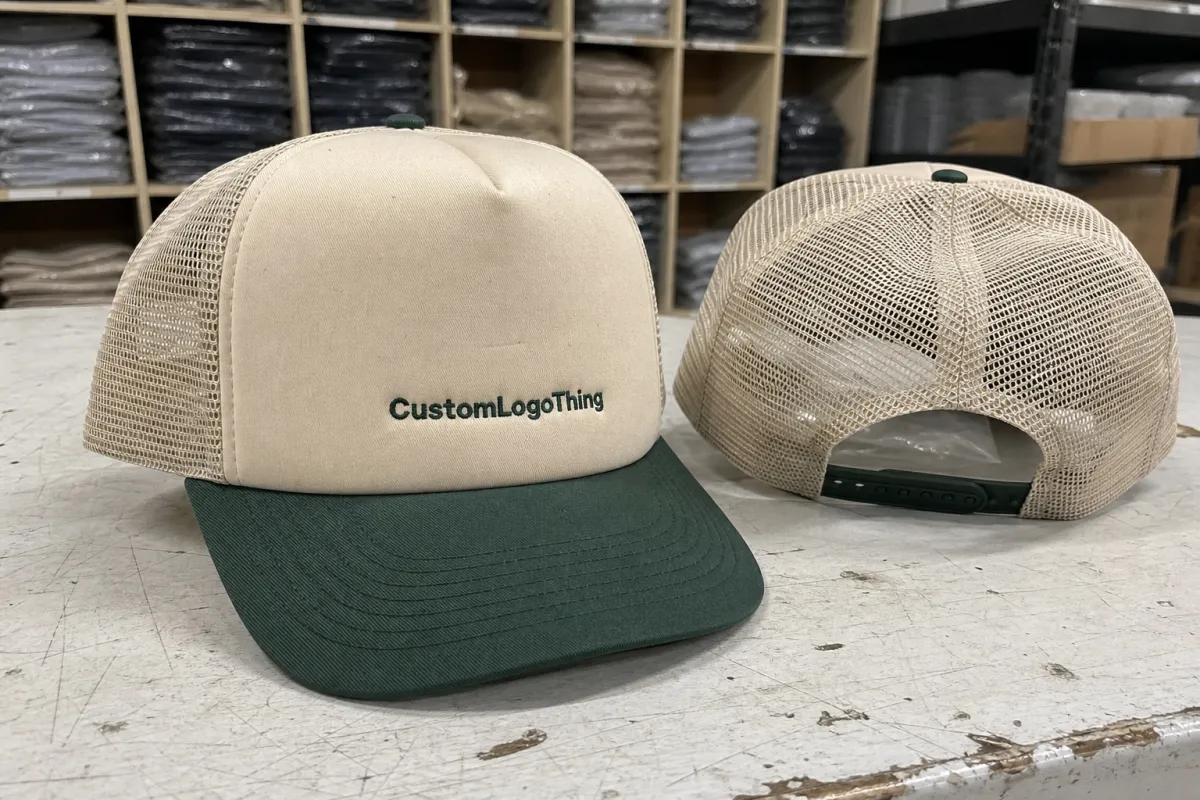
A repeat run moves faster because the mold, crown shape, mesh, and decoration method are already established. That usually means fewer samples, fewer revision cycles, and less debate over whether a slightly different profile is “close enough.” On a cap that already sold, close enough often is not enough.
Starting over adds costs that are easy to miss: new sampling, extra art checks, a fresh round of measurements, and more time spent making sure the logo still lands correctly on the front panel. Those small steps turn a restock into a development project.
From a buyer’s perspective, the main advantage of a trucker Caps Reorder Plan is margin protection. You already have sales data, return notes, and color performance. If black and navy outsold orange by four to one, there is no reason to guess again.
Repeat orders also reduce decision fatigue. If a style had strong sell-through in 8 to 12 weeks, the cleanest move is to restock it before the shelf goes cold. That is especially true when the customer already responded well to the exact combination of crown shape, mesh, and decoration.
For teams managing larger procurement programs, it helps to keep the reorder tied to a fixed sourcing baseline. Our Wholesale Programs page explains how volume changes the buying process. The point is simple: once a cap is proven, the reorder should be treated like a controlled production run, not a new experiment.
Reorders are also easier to forecast. If the last 500-piece run cleared in 11 weeks, and the top three colors made up most of the sales, you have enough evidence to size the next order without relying on memory or a mood.
Product Details Buyers Need to Lock Before the Next Run
The biggest mistake in a repeat order is assuming the supplier will “remember the cap.” That is not a spec. Lock the exact build: structured or unstructured front panel, mesh type, crown height, visor curve, and closure style. Those details decide fit, shelf appearance, and how the decoration reads in real use.
Start with the last approved sample or spec sheet. Use the sample as the visual reference and the sheet as the measurable reference. Confirm what stays fixed: logo placement, patch size, thread colors, woven label dimensions, underbill color, sweatband material, and any printed tape or seam finishing. These are the details that turn “same cap” into “not quite the same cap.”
Small changes matter more than people expect. A different sweatband color changes the interior look. A darker underbill can make the logo photograph differently. A different seam finish can affect comfort on long wear. None of that sounds dramatic until someone compares the reorder side by side with the original.
Use the final artwork file, not a screenshot or a file pulled from a random folder. Confirm Pantone references if the cap uses spot colors, and verify whether the decoration is embroidery, woven patch, printed patch, or direct print. If the art has to fit inside a border, give exact dimensions. “About the same” is how production slips.
“If the previous run sold well, do not touch five things just because you are placing a second order. Change only what has to change.”
Keep the approved sample, PO, final proof, and a set of photos together in one record. That makes the next reorder faster and gives you a clean reference if the factory changes staff, equipment, or material lot.
Specs That Change Fit, Decoration, and Retail Appeal
Trucker caps are not interchangeable. Crown height changes how the cap reads on the head: a higher crown feels more classic and casual, while a lower crown can look cleaner and more retail-friendly. If you ignore that detail, the reorder can look different from the approved sample and sit differently on the customer.
Mesh density matters too. A tighter mesh can feel more refined and can support a cleaner-looking front panel. A looser mesh often breathes better, but it can look less premium if the material weight is too light. Foam-front construction also affects image quality because it helps the panel hold shape for bold logos and flat embroidery.
Closure choice changes both cost and fit range. Snapback is common because it is familiar, adjustable, and economical on repeat runs. Velcro works for some programs, but it can feel less premium and may wear out faster. A buckle or metal clasp can improve retail feel, but it usually adds cost and may slow production.
Buyers should keep a short spec checklist with the reorder file:
- Crown height: measure from brim to top button and match the approved sample.
- Front structure: structured, semi-structured, or unstructured.
- Mesh type: standard polyester mesh, softer mesh, or heavier mesh.
- Decoration limits: patch size, embroidery stitch count, print area, and thread colors.
- Color references: Pantone, hex, or physical swatch, depending on the method.
- Fit hardware: snapback, Velcro, buckle, or custom closure.
| Reorder Option | Typical Unit Price | Best For | Main Tradeoff |
|---|---|---|---|
| Exact repeat of approved cap | $2.10-$4.50 at 300-1,000 pcs | Fast restock, low risk, stable sellers | Least room for cosmetic changes |
| Same cap, new colorway | $2.25-$4.90 at 300-1,000 pcs | Color refresh without rebuilding the style | Color matching adds approval time |
| Same concept, new cap platform | $2.80-$5.80 at 300-1,000 pcs | Retail relaunch or premium positioning | New sample, new fit checks, more risk |
If your program includes paper inserts, retail tags, or carton labeling, those materials matter too. FSC-certified paper stock can be a good fit for cleaner sourcing on the packaging side, and the standards are documented at FSC. For transit testing, especially if caps are packed for e-commerce or club retail, ISTA guidance is worth reviewing.
Cost, Pricing, and MOQ Breakpoints for Repeat Orders
Pricing for a repeat run depends on the blank platform, decoration method, quantity, and whether the spec is unchanged from the prior order. If the previous run used the same art, thread, patch size, and packaging, the supplier can usually price it quickly and with fewer assumptions.
The real savings usually show up after setup cost gets spread across more units. For many cap programs, MOQs commonly sit around 100 to 300 pieces for basic repeat work, but better pricing often starts closer to 500 units and improves again at 1,000 plus.
Do not confuse unit price with landed cost. Freight, carton packing, barcode stickers, individual polybags, and rush charges can turn a neat quote into a noisy one. Ask for separate line items so you can compare real totals, not just headline numbers.
Reorders save money because setup work shrinks. Artwork approval is faster. Sampling may be skipped or reduced. Color confirmation is simpler. Even the factory spends less time on clarification emails, which is often what delays ship dates in the first place.
To control cost on a trucker caps reorder plan, keep the variables stable:
- Keep the same spec: easiest way to hold unit cost down.
- Keep the same decoration method: embroidery to embroidery, patch to patch, print to print.
- Keep the same packaging: bulk pack is cheaper than individual retail packing.
- Keep the same color list: fewer color changes usually means fewer approvals.
- Book early: rush fees are real, and they add up fast.
For a buyer, the cleanest quote request is plain: same cap as last time, same decoration, same packaging, same ship-to address, with a line for any requested changes. That gives you a quote that reflects reality instead of a sales pitch.
Process and Timeline: How the Reorder Moves Fast
A fast reorder starts with confirming the previous spec. The buyer should send the last approved sample photo, PO number, art file, quantity forecast, delivery address, and target ship date. If those items are missing, the supplier has to stop and ask questions, which slows everything down.
Some repeat runs can skip a new sample, but only if the build is unchanged and the supplier has a clean production record from the last order. If the cap shape, mesh type, closure, or decoration method changes, expect a new approval step.
- Confirm the prior spec: sample, measurements, and artwork.
- Issue the PO: quantity, colors, ship-to, and due date.
- Book materials: cap bodies, thread, patches, labels, and cartons.
- Run decoration: embroidery, print, or patch application.
- Inspect and pack: check alignment, count, and carton labeling.
- Release shipment: final carton count and tracking details.
Lead time depends on complexity, but a clean repeat order often lands in the 2 to 4 week range before shipping. Add more time if the cap needs special colors, new labels, or a different packaging format. New materials, holiday congestion, or port delays can push that longer.
Build in a shipping buffer. If the customer needs stock on a certain date, do not promise the warehouse will receive it exactly when the factory says it leaves. Transit is a variable, not a guarantee.
For standards-minded buyers, quality and transit control should not be an afterthought. If you are shipping retail-ready units or e-commerce cartons, ask whether the supplier can reference ISTA-style drop and vibration expectations or a similar internal testing method.
Quality Checks, Packaging, and Supplier Controls That Matter
Repeat orders fail in the same places first orders fail: logo alignment, stitch density, panel symmetry, mesh consistency, and closure function. The difference is that on a reorder, failure is more annoying because everyone assumed the answer was already known. Use the same inspection checklist every time.
Inspect decoration under daylight or a neutral inspection light, not only under a warm warehouse bulb. Embroidery can shift visually if the thread sheen changes. Patch edges can look cleaner or rougher depending on the adhesive and heat application.
Packaging choices need the same level of control. Bulk packing is fast and economical. Individual polybags help if the caps are going to retail or distribution with barcode scanning. Carton labeling matters because it controls warehouse handling and reduces receiving errors.
Keep one approved reorder record with photos, measurements, Pantone references, artwork files, and the last PO. Store it in one place. If the supplier changes account staff or the production line shifts, that record becomes the anchor for the next run.
A reliable supplier should send pre-shipment photos or a final inspection summary before the caps leave the factory. If they cannot show you what is going out, assume you will be the one discovering the problem later.
Quality control ties directly to fewer claims and fewer returns. It also protects the reorder timeline. If a shipment lands with the wrong logo placement or a carton count mismatch, the lost time usually snowballs into replacements and stock gaps.
If your buying team needs a quick reference for common sourcing questions, keep our FAQ handy. It helps separate routine reorder issues from the cases that really do require a new sample or a new quote.
Next Steps to Place a Clean Reorder Without Delays
Before asking for pricing, gather the last approved sample, previous order details, quantity forecast, shipping address, and any updated artwork. That keeps the request specific and reduces back-and-forth.
Then confirm exactly what stays fixed and what can change. Be precise about crown height, mesh, patch size, underbill color, and packaging. If the answer is yes, say yes. If the answer is no, say no before production starts.
Ask for a quote that breaks out unit cost, MOQ, timeline, packaging, and freight. That lets you compare suppliers on real terms instead of chasing the lowest headline number. A cheap quote with a high rush fee or expensive carton packing is not actually cheap.
Approve the proof quickly, book the production slot, and keep a transit buffer. If the reorder is tied to a promotion, event, or retail reset, do not cut the timeline so tight that one delayed carton throws off the launch.
The fastest trucker caps reorder plan starts with the last approved spec, a realistic quantity, and a firm ship date. Keep the spec stable, keep the paperwork clean, and the reorder should feel like a controlled restock instead of a new headache.
How do I size a trucker caps reorder plan for the next sales cycle?
Use the last 60 to 90 days of sell-through, not a gut feeling. Cover about 8 to 12 weeks of demand and add a 10% to 15% buffer for the top-selling colors so the reorder does not run out immediately.
Can I reorder trucker caps if I only have the old sample or photos?
Yes, if the sample or photos are clear enough to verify structure, decoration, and color references. A previous PO, logo file, and measurement notes make the quote more accurate and reduce the chance of a spec mismatch.
What MOQ should I expect for a repeat trucker cap order?
Common MOQs often land in the 100 to 300 piece range for basic repeat programs, depending on decoration and construction. Keeping the exact same spec can lower the barrier, while mixed colors or new packaging often push it higher.
How long does a trucker caps reorder usually take?
A clean repeat order with approved artwork often moves in about 2 to 4 weeks before shipping. New materials, new colors, or label changes can add time, so do not promise inventory too early.
What changes force a new quote or sample on a reorder?
Changes to crown shape, mesh type, closure, logo placement, or packaging usually trigger a new quote. If the color match, labeling, or decoration method changes, expect sample approval before production starts.