Baseball Caps Ecommerce Brand Order, Built to Sell
Baseball Caps Ecommerce Brand Order: What Makes It Retail-Ready
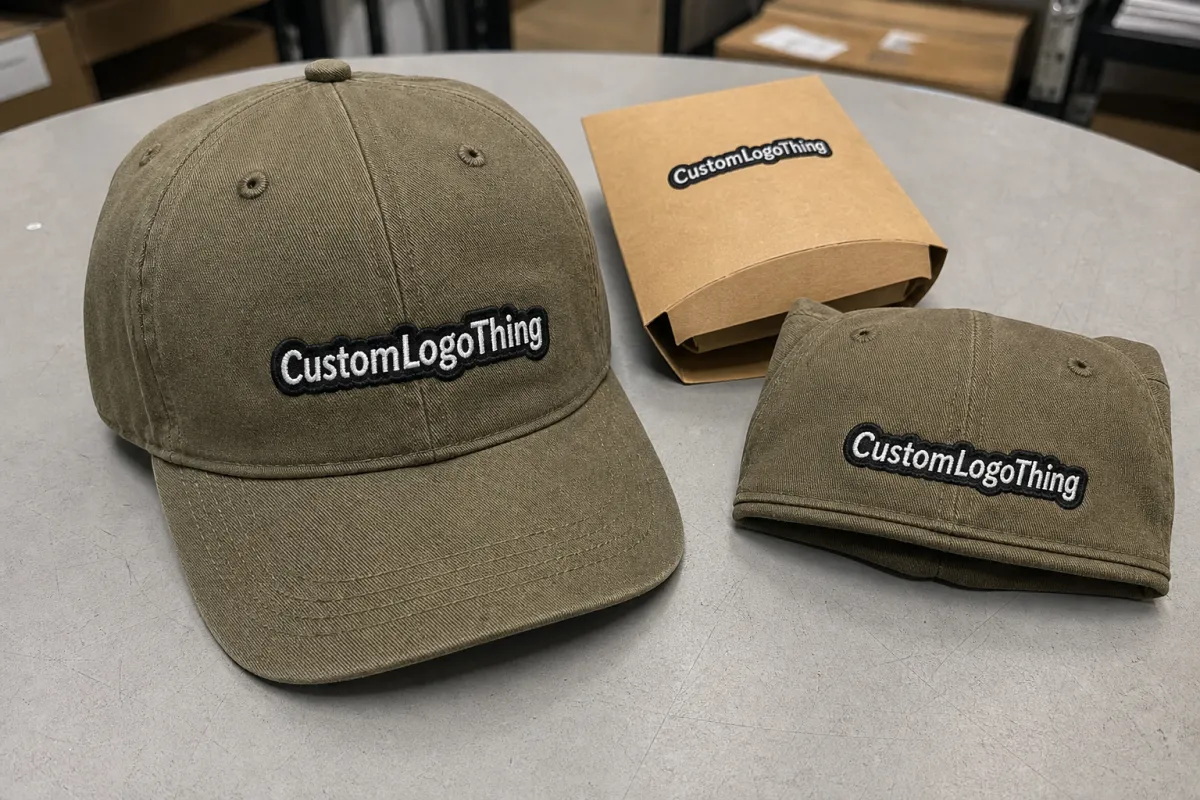
Online shoppers judge a cap before they read a product bullet. Crown shape, brim curve, front logo placement, closure detail, and perceived fabric weight all show up in the first image. That is why a baseball caps ecommerce brand order needs to be planned like sellable inventory, not treated like a quick promotional giveaway.
A cap has structure. That matters. Compared with flat soft goods, a well-built cap gives the customer more visible evidence of quality: a shaped front panel, a clean embroidery field, a closure that looks intentional, and enough dimensional detail to support strong product-page photography.
If the cap collapses awkwardly on a model or the brim looks warped in a flat lay, perceived value drops fast. The logo may be attractive. The product still looks cheap.
For ecommerce brands, the core issue is not only decoration. It is repeatable product quality. You need consistent fit across units, clean logo execution, dependable reorder specs, carton organization that makes receiving easier, and packaging that can move into fulfillment or kitting without extra handling. A brand selling direct-to-consumer cannot afford to open 40 cartons and find mixed closures, crooked patches, or inconsistent crown profiles two days before launch.
Custom Logo Things helps buyers translate visual branding into real cap construction choices: cotton twill or performance fabric, 5-panel or 6-panel build, flat embroidery or 3D puff, woven label or printed hang tag, individual bagging or bulk carton packing. The right specification starts with commercial facts: selling channel, target retail price, order quantity, artwork complexity, delivery window, and whether the cap has to coordinate with an existing hoodie, tee, jacket, or broader apparel line.
Practical rule: if the cap is meant to be sold, not handed out, treat every detail as part of the product value. Fit, decoration, label treatment, and packing all affect brand recognition and reorder confidence.
Cap Styles That Fit Ecommerce Merch, Drops, and Brand Stores
The first silhouette decision usually shapes the finished product more than buyers expect. A 5-panel camp-style cap feels different from a structured snapback before any logo is added. A dad hat photographs softer and more casual. A trucker cap gives more volume and ventilation. A performance cap signals utility, golf, running, travel, or outdoor use.
For a first baseball caps ecommerce brand order, narrow the launch to one or two proven silhouettes instead of spreading budget across six shapes. Inventory gets cleaner. Product photos stay consistent. Customer feedback becomes easier to read. If 300 units sell across two colors and one fit, that result tells you more than 300 units scattered across eight experimental SKUs.
| Cap Style | Best Use | Buyer Notes |
|---|---|---|
| 5-panel cap | Streetwear, outdoor drops, minimal logos | Clean front panel helps patches and centered artwork sit neatly. |
| 6-panel dad hat | Lifestyle merch, casual brand stores | Unstructured crown feels soft but may not stand tall in flat-lay photos. |
| Structured snapback | Bold logo programs, sports-inspired collections | Higher crown gives dimensional product shots and supports 3D puff embroidery. |
| Trucker cap | Outdoor, workwear, event retail | Mesh back lowers fabric weight and adds ventilation, but changes perceived style. |
| Performance cap | Fitness, golf, running, travel | Polyester, nylon, and stretch fabrics need decoration methods matched to heat and movement. |
Crown height, front panel structure, and brim shape should be selected deliberately. A flat brim can support a streetwear look, while a pre-curved brim often feels more approachable for lifestyle buyers. Structured fronts hold shape better in product photography. Unstructured cotton caps can look premium, but only if the fabric has enough body and the decoration is scaled properly.
Color selection affects reorder planning. Black, navy, khaki, white, charcoal, and forest green tend to work as evergreen stock because they pair with more apparel. Bolder colors can make a drop feel fresh, but they are better handled as limited runs unless order history already shows the audience buys them consistently.
One quiet inventory trap: too many colorways with too little depth. Ten colors at 24 units each may look exciting on a line sheet. In fulfillment, it can create thin availability, uneven sell-through, and dead stock in the slow shades. Start with the fit and decoration style most likely to move, then expand once real order data shows what customers prefer.
Materials, Decoration Methods, and Logo Placement Details
Material tells the hand-feel story. Cotton twill gives the familiar retail comfort most buyers recognize immediately. Brushed cotton has a softer touch and a more lived-in look. Polyester blends hold shape well and can reduce wrinkling. Mesh backs give trucker caps ventilation. Performance fabrics, often polyester or nylon blends, are better for outdoor and athletic positioning because they can support lighter construction and moisture management.
Fabric weight is not just a spec-sheet number. Too light, and the crown can appear limp. Too heavy, and the cap may feel stiff or hot, especially in warm-weather categories. Cotton twill in a mid-weight range is common for lifestyle caps, while lighter synthetic fabrics are more appropriate for running, golf, and travel styles. A cap built for a $32 brand-store item does not need the same material logic as one sold as technical outdoor gear.
Decoration needs the same level of scrutiny. Flat embroidery is versatile and handles many logos cleanly. 3D puff embroidery works best on bold marks with enough open area for foam underneath the stitch. Woven patches are strong for small lettering and fine detail. Leatherette patches add texture and a more rugged look. Printed patches can carry gradients or artwork that thread cannot reproduce. Heat transfer may suit certain performance caps, but it should be tested against fabric stretch, heat sensitivity, and wash expectations.
Here is the common failure: a logo that looks perfect on a screen does not automatically translate to thread on a curved crown. Thread has thickness. Fine lines close up. Tiny type can fill in. A center seam can interrupt small details. On structured caps, decoration sits over a shaped surface, not a flat sheet of paper.
That is why a good cap order includes artwork review before bulk production. Not after cartons arrive.
Placement is not limited to the front panel. Side embroidery can add brand identity without overwhelming the main mark. Rear arch text above a buckle can photograph well. Woven closure labels, interior taping, sweatband branding, and hang tags create useful product-page close-ups. Every decoration location should earn its place: another photo, another premium bullet point, or another cue that supports brand consistency.
- Small lettering: flat embroidery or woven patches usually hold detail better than puff.
- Bold logo marks: 3D puff can add height, especially on structured fronts.
- Fine illustrations: woven or printed patches often reproduce detail more cleanly.
- Premium texture: leatherette or embroidered patches can raise perceived value.
- Interior branding: sweatband labels, taping, and hang tags improve the unboxing experience.
Specifications to Lock Before Sampling or Bulk Approval
A complete cap specification protects the order. Before sampling or bulk approval, confirm panel count, crown profile, structure, brim type, fabric weight, fabric color, closure, size range, decoration size, decoration location, label details, packing method, and carton labeling. A one-page spec sheet can prevent expensive confusion later.
Small changes create large production differences. Switching from unstructured to structured panels changes the way embroidery sits on the crown. Moving a patch up 10 mm can put it too close to the top seam. Changing from a metal buckle to a plastic snapback affects both style and customer expectation. Even a brim change from flat to pre-curved can shift product photography and how the cap sits on the head.
Closures deserve more thought than they usually get. Plastic snapbacks are adjustable and familiar for streetwear. Metal buckles create a cleaner lifestyle look and pair well with dad hats. Hook-and-loop closures fit utility, workwear, or some performance programs, although they may feel less premium for fashion retail. Fitted sizing can be excellent for the right audience, but it adds inventory complexity because small, medium, large, and extra-large demand rarely sells evenly.
Use Pantone references when brand color accuracy matters. Fabric lots, thread, patches, and printed labels may reflect light differently, so a perfect match across all surfaces is not always realistic. Still, documented color targets reduce avoidable drift. For sustainability claims or paper-based hang tags, buyers may also ask about responsible sourcing through organizations such as the Forest Stewardship Council.
Quality checkpoints should be plain and measurable: stitch density, logo alignment, seam cleanliness, brim symmetry, loose thread trimming, closure function, label placement, bagging accuracy, and carton labeling. Ecommerce buyers should care because returns are expensive, reviews are public, and a reorder needs to match the approved cap as closely as production allows.
Ask for the defect standard before production if the order is large or the launch window is tight. What counts as unacceptable embroidery skew? How much color variation is tolerable? Are cartons sorted by SKU, color, or mixed assortment? These questions sound dull until a warehouse team is trying to separate inventory by hand under a launch deadline.
Pricing, MOQ, and Unit Cost Factors for Custom Caps
Pricing depends on quantity, cap construction, material choice, decoration method, number of decoration locations, artwork complexity, packaging requirements, freight method, duties, and delivery destination. A basic embroidered cotton cap in a larger run can price very differently from a structured cap with puff embroidery, side logo, custom taping, woven label, hang tag, individual bag, and special carton sorting.
MOQ should be treated as a commercial tool, not just a barrier. Lower quantities can be useful for testing a drop, especially if the brand is still learning fit preference and retail price tolerance. Larger runs usually reduce unit cost and make custom trims more realistic. Simple logo programs may be feasible at lower quantities, while fully custom caps with special fabric, private labels, custom interior taping, or unique packaging often need more volume to make production sense.
Common cost drivers include 3D puff embroidery, oversized patches, multiple logo placements, metallic thread, custom sweatband labels, branded polybags, retail hang tags, and individual SKU sorting. These details can be worth paying for if the target retail price supports them. If a cap is intended to sell at $28, the decoration plan may need to be leaner than a cap positioned at $42 or $48.
A useful quote request for a baseball caps ecommerce brand order should include quantity, cap style, artwork files, decoration preference, delivery location, deadline, and packaging needs. Share the target selling price or margin goal if you have one. That gives Custom Logo Things enough context to recommend a commercially realistic spec instead of quoting the most decorated version possible.
| Specification Level | Typical Features | Commercial Fit |
|---|---|---|
| Value retail | Standard cap body, one front embroidery, bulk packed | Good for testing demand and keeping unit cost controlled. |
| Mid-range brand store | Front embroidery or patch, side detail, hang tag, individual bagging | Good balance for ecommerce brands selling branded merch regularly. |
| Premium drop | Custom labels, interior taping, patch program, branded bag, carton sorting | Best when retail price and product storytelling support the added cost. |
Ask whether sampling, digitizing, setup, freight, duties, and special packing are included or listed separately. Clear quote structure prevents surprises. For brands planning multiple SKUs, Wholesale Programs can also help organize cap orders around repeat purchasing, carton planning, and broader merchandise needs.
One more calculation belongs in the buying conversation: landed cost. A cap that looks inexpensive before freight, duties, packaging, and receiving labor may not stay inexpensive once it reaches the shelf or fulfillment center. Ecommerce margins are often won or lost in these quieter line items.
Process and Timeline From Artwork to Finished Inventory
The order flow is straightforward, but each step needs attention: inquiry and spec review, artwork check, quote, sample or digital proof, sample approval when required, bulk production, quality control, packing, shipping, and delivery. Production scheduling starts after approvals and payment terms are settled, not when the first idea is mentioned.
Timeline depends heavily on early decisions. Vector artwork speeds review. Clear Pantone references reduce back-and-forth. Standard cap bodies usually move faster than fully custom construction. Custom labels, special trims, unusual fabrics, and physical sample revisions add time. A simple repeat order may move quickly after proof approval, while a premium first-time retail program may need extra days for sampling and review.
The proofing stage is technical. Embroidery digitizing turns artwork into stitch paths, stitch direction, density, underlay, and trim points. Patch artwork needs edge type, backing, size, attachment method, and color decisions. Placement has to be checked against panel seams and crown curvature. For more structured review methods, packaging and transport testing groups such as ISTA offer useful perspective on how products and cartons are evaluated through distribution, even though cap-specific packing is usually simpler than fragile goods packaging.
A physical sample is worth considering if the cap will be photographed, sold at a premium price, or repeated across future seasons. A digital proof may be enough for a simple reorder or a basic front-logo program, but it cannot fully show crown feel, fabric hand, or how a patch sits on the curve. Sampling costs money. So do bad photos, product-page uncertainty, and a full run built from an untested assumption.
Build in time after delivery. Receiving, counting, product photography, SKU setup, barcode or label review, fulfillment testing, influencer seeding, and campaign scheduling can take longer than expected. A cap that arrives on Friday is not automatically ready for a Monday drop if the team still needs to count cartons, shoot detail photos, and test how the item packs with other products.
How Custom Logo Things Helps Reduce Ordering Risk
A good manufacturer does more than put a logo on a blank. Custom Logo Things helps ecommerce buyers reduce ordering risk through clear specification review, practical decoration recommendations, transparent quoting, sampling guidance, and production checks before shipment. That coordination matters because cap construction, decoration, labels, and packing all interact.
Common problems are predictable. Oversized embroidery can distort on curved panels. Thin artwork can disappear in thread. A patch can look balanced on a mockup but feel too large once placed on a low crown. Mixed cap structures can make a product page look inconsistent. Poor packing can create extra warehouse handling, especially if colors and SKUs are not organized clearly by carton.
Manufacturing knowledge helps balance what looks strong in a mockup with what can be produced cleanly and repeated consistently. That is the practical advantage. Not hype. Better decisions early reduce rework later.
Custom Logo Things can support woven labels, hang tags, branded bags, carton organization, and pack-outs that make receiving and fulfillment easier. Those details support the unboxing experience and help protect brand consistency across repeat orders. If you want examples of how custom products can be planned around actual brand needs, the Case Studies section is a useful place to review different project types.
The best fit is an ecommerce brand that wants a custom product built to sell, not a low-cost blank with decoration added at the last minute. The value comes from practical coordination across materials, decoration, quality control, and order planning.
Next Steps Before You Place Your Cap Order
Before requesting a quote, gather the details that shape the order. Choose the cap silhouette, confirm the target retail price, collect logo files, decide on a preferred decoration method, estimate order quantity, define packaging needs, and set the required delivery window. If you are not sure which cap structure fits the brand, say that plainly. A good spec can be recommended from your audience, price point, and artwork.
- Preferred silhouette: dad hat, snapback, trucker, 5-panel, performance cap, or another style.
- Artwork files: vector files are best, with PNG or PDF references if available.
- Color targets: Pantone references, previous samples, or brand guide details.
- Decoration goals: flat embroidery, 3D puff, woven patch, leatherette patch, printed patch, or mixed placements.
- Packing needs: bulk packed, individual polybag, hang tag, branded bag, SKU sorting, or carton labeling.
- Commercial details: order quantity, target retail price, delivery location, and deadline.
To compare options without slowing the order, request three versions: one recommended spec for best value, one premium spec for retail impact, and one simplified spec if the launch budget is tight. That gives you a real buying range instead of a vague quote. If you have questions about artwork files, MOQ, or repeat ordering, the FAQ page can help with basic preparation before you send details.
Ask early about repeat-order consistency. Ecommerce brands often need the same cap restocked after the first drop sells through, and repeat accuracy depends on documented specs: cap structure, fabric, thread colors, decoration size, placement, closure, labels, packing method, and approved sample references. Some variation can happen between fabric lots, but documentation keeps the order controlled.
A baseball caps ecommerce brand order is easiest to quote accurately when quantity, artwork, cap style, decoration goals, packaging needs, delivery location, and deadline arrive together. Send those checklist details to Custom Logo Things, and the team can recommend materials, decoration methods, MOQ direction, pricing structure, and a realistic production schedule for a cap built to sell.
FAQ
What information do I need for a baseball caps ecommerce brand order quote?
Provide order quantity, preferred cap style, logo files, decoration method, color requirements, delivery location, target deadline, and any packaging needs. If you have a target retail price or margin goal, share it so the specification can be built around a realistic unit cost instead of an overbuilt sample that does not fit the business plan.
What MOQ should an ecommerce brand expect for custom baseball caps?
MOQ depends on cap construction, decoration method, and custom trim requirements. Simpler logo programs are generally easier to produce at lower quantities, while custom labels, specialty fabrics, multiple decoration locations, and special packaging usually make more sense at larger quantities because setup and handling costs spread across more units.
How long does a custom cap order usually take from proof to delivery?
Timing depends on artwork approval, sampling needs, material availability, production queue, quality control, and shipping method. Plan extra time after delivery for receiving, counting, photography, SKU setup, product-page writing, and fulfillment preparation, especially if the cap is part of a larger ecommerce launch.
Which logo method is best for ecommerce baseball caps?
Flat embroidery is versatile for many logos, 3D puff works well for bold marks, woven patches handle fine detail, and leatherette or printed patches can create a stronger premium product-page story. The best choice depends on logo detail, cap style, target price, and how the finished cap needs to photograph.
Can I reorder the same custom caps after my first ecommerce drop?
Yes. Repeat orders are easier when the original specs are documented, including cap structure, fabric, thread colors, decoration size, placement, closure, labels, and packing method. Some variation can occur between material lots, so clear specifications and approved samples help keep reorders as consistent as possible.