A cuffed beanie can outlive the box it arrived in by months. Sometimes by a full cold-weather season. That is why a cuffed beanies subscription brand order deserves more scrutiny than a basic giveaway item. The box gets opened once; the beanie may sit by the front door, ride in a gym bag, appear in subscriber photos, and carry your logo through repeated wear.
For subscription brands, that repeat use is the commercial argument. A beanie is compact enough for fulfillment, practical enough to avoid the junk-drawer problem, and visible without asking customers to dress like a walking advertisement. The difference between a forgettable insert and a member favorite usually comes down to real production choices: yarn, cuff height, logo method, packing format, delivery date, and the finish level your customers already associate with the brand.
Why a Cuffed Beanies Subscription Brand Order Works for Retention
Retention merchandise works best when it feels useful first and branded second. A cuffed beanie fits most adults, ships without complex sizing, and provides a predictable surface for decoration. From an operations standpoint, that matters. Every added size, fold, barcode, or fulfillment exception creates labor somewhere in the chain.
A beanie can fit seasonal drops, loyalty gifts, influencer mailers, employee kits, and premium subscriber tiers. It is especially strong for outdoor, wellness, coffee, apparel, sports, grooming, pet, and lifestyle subscription programs because it feels connected to daily routines rather than tacked onto the box as promotional filler.
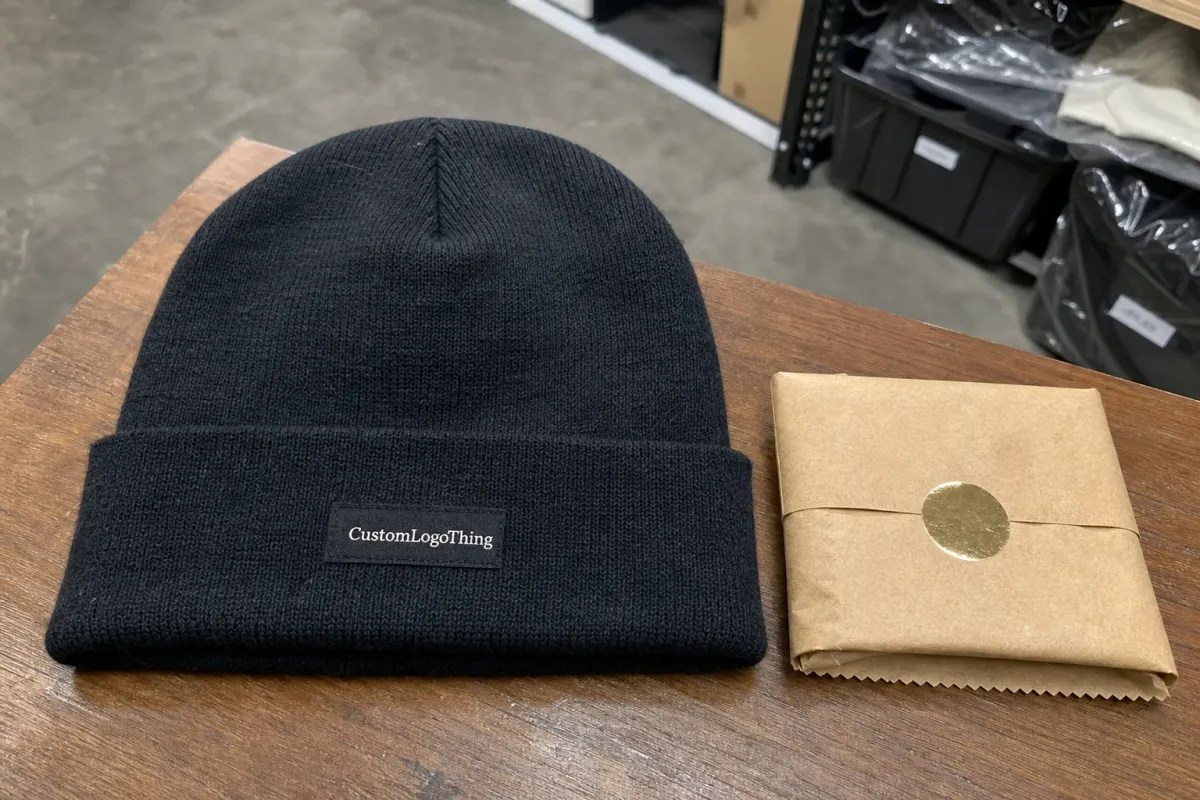
The cuff is the working surface. On most rib-knit beanies, a 2.5-inch to 3.5-inch cuff gives the logo a stable panel that sits flatter than the crown. That makes placement more predictable than decorating across stretched knit fabric or forcing a mark onto a curved cap front with seam distortion.
Practical rule: if the beanie is supposed to raise customer perception after unboxing, do not buy only on the lowest unit price. Buy on fit, decoration durability, packing accuracy, and whether the finished piece looks like something a subscriber would actually wear twice a week.
Subscription operations also favor beanies because the carton footprint is manageable. Depending on knit weight and fold style, a master carton may hold 100 to 200 units. Individual beanies often fit cleanly into monthly boxes without crushing other contents. That helps keep pick-and-pack steps predictable, particularly when a 3PL needs carton labels, SKU labels, exact count packs, or logo-facing folds.
There is a marketing reason too, but it should not be overstated. A logo on a beanie will not repair weak retention on its own. It can, however, reinforce a membership moment when the product feels seasonally relevant, well made, and coordinated with the rest of the box.
Product Details That Make a Cuffed Beanie Feel Retail-Ready
Most subscription buyers start with a classic acrylic rib knit because it is cost-effective, holds saturated color, and has enough recovery to fit a broad adult size range. A standard 1x1 or 2x2 rib knit gives stretch without looking too thin. Heavier winter-weight knits feel more substantial in the hand. Fine-gauge acrylic styles can look cleaner and more fashion-oriented, although they show less texture.
Material changes the read quickly. Acrylic is common for promotional and retail-style beanies because it balances price, availability, and color range. Wool blends feel warmer and more premium, but they increase cost and may not suit customers sensitive to itch. Cotton blends can feel soft, yet they stretch and recover differently, so fit should be checked before bulk approval. Recycled yarn options are available for some programs, but shade consistency, documentation, and availability need early confirmation if sustainability claims are part of the unboxing story.
Cuff depth deserves more attention than it usually gets. A 3-inch cuff gives room for a woven label, faux leather patch, or embroidered logo up to roughly 2.25 inches wide, depending on the artwork shape. A 2-inch cuff can feel modern and low-profile, but it limits larger marks and can make a patch look crowded.
Finished height matters as well. A shorter beanie creates a snug, athletic fit. A taller body gives a relaxed streetwear profile, especially if the crown has a little slouch. Those silhouettes photograph differently and attract different customers. If a subscription brand has a defined apparel point of view, the beanie should not fight it.
Color planning is another quiet schedule risk. Stock yarn colors are usually faster and cleaner for smaller runs. Custom-dyed yarn can support closer brand consistency, but it often requires higher minimums, longer lead times, and tolerance discussions. Textile color rarely behaves exactly like ink on coated paper. A deep forest green, for example, can shift once knit texture, lighting, and neighboring box components enter the picture.
- Direct embroidery: best for simple marks, block letters, and clean icons.
- Woven labels: better for fine detail, small text, and multi-color logo systems.
- Faux leather patches: strong retail feel, often debossed or laser-etched.
- Rubber patches: useful for athletic, outdoor, youth, and streetwear-influenced brands.
- Printed hang tags: helpful for story, care instructions, QR codes, and campaign messaging.
Comfort decides whether the beanie earns repeat wear. Check stretch recovery, crown seam placement, warmth level, and the inside feel against the forehead. A beanie that looks right in a mockup but feels scratchy after 20 minutes will not help retention.
Logo Placement, Decoration Method, and Artwork Specifications
The cuff is the main branding zone, but the best decoration method depends on the artwork. A one-color icon with thick lines may embroider cleanly. Fine taglines, tiny registered marks, gradients, and thin scripts usually perform better as a woven label or patch. This is where buyers often save time by approving a simplified beanie version of the logo instead of forcing a full brand lockup into a small decoration field.
For a clean cuffed beanies subscription brand order, artwork should be supplied as vector art: AI, EPS, SVG, or a production-ready PDF. Pantone references or close color targets help with thread, label, patch, and yarn matching. Minimum text height depends on the method, but lettering under 0.16 inch often loses clarity in embroidery. Stitch-friendly line thickness matters too; hairline artwork may need to be thickened before digitizing.
Placement should match the brand tone. A centered front cuff gives the most familiar retail presentation and broad visibility. A side cuff is quieter and can feel more premium for lifestyle brands. Double-sided labeling can work for merch kits that may be photographed from different angles, although it adds cost and quality-control checkpoints. If the beanie itself should stay subtle, a removable hang tag can carry campaign copy without making the product feel overbranded.
| Decoration Method | Best For | Typical Cost Impact | Production Watchout |
|---|---|---|---|
| Embroidery | Simple logos, initials, bold icons | Often moderate; stitch count drives cost | Small text and fine lines can fill in |
| Woven Label | Detailed marks, multi-color branding, small type | Setup plus label unit cost | Label size must fit cuff height cleanly |
| Faux Leather Patch | Retail look, outdoor style, premium tiers | Moderate to higher depending on size and finish | Patch stiffness must suit the knit stretch |
| Rubber Patch | Sport, streetwear, kids, active brands | Often higher for new molds or special colors | Material compatibility and attachment method matter |
Durability is practical, not mysterious. Embroidery is stitched into the knit, so it can hold up well, but it also compresses the fabric. Woven labels preserve detail and keep the cuff flexible. Patches add structure to a soft surface, which can look excellent if the patch weight is balanced. Heat-applied elements need correct pressure, dwell time, and material compatibility; otherwise, edge lift can appear after wear or laundering.
Approval steps reduce risk. Digital mockups help with layout, but a pre-production sample or decoration proof gives better evidence for new artwork. For woven labels and patches, a strike-off can confirm thread, substrate, color, and scale before bulk production. For larger or recurring programs, that approval file becomes the control point for future runs.
Specifications to Confirm Before You Request a Quote
A vague request produces a vague quote. Before asking for pricing on a cuffed beanies subscription brand order, gather the details a production team needs to compare real options instead of guessing. The quote will arrive faster, and the first price will be closer to the final landed cost.
- Target quantity and acceptable quantity range, such as 500, 1,000, 2,500, or 5,000 units.
- Beanie style, including rib knit, fine gauge, heavyweight knit, recycled yarn, cotton blend, or wool blend.
- Yarn color target, with Pantone reference if brand matching is required.
- Cuff height, finished beanie height, and preferred fit, such as snug, standard adult, or oversized streetwear.
- Decoration method, logo size, placement, and art file format.
- Packaging requirements, delivery location, and required in-hands date.
Most cuffed beanies are one size for adults because knit stretch covers a broad range. Not always. Youth sizing, oversized fashion fits, and athletic snug fits should be specified early because they affect dimensions, sampling, and sometimes the base style itself.
Material tradeoffs should be discussed in plain terms. Acrylic is often the easiest balance of price, color, and availability. Wool blends can lift perceived value, but the hand feel should be checked if the subscriber base is sensitive to itch. Cotton blends feel soft but may not spring back like acrylic after repeated wear. Recycled yarn may support brand identity goals, yet it can require more planning around certificates, yarn lots, and color availability.
Packaging is part of the order, not an afterthought. Some subscription brands want individual polybags for protection and scanning. Others prefer paper belly bands, printed hang tags, UPC labels, SKU stickers, kitting inserts, or bulk-packed cartons to reduce plastic. If your fulfillment center needs 50 units per inner carton, specific carton marks, or beanies folded with the logo facing up, include that before quoting.
For packaging and distribution testing, standards from organizations such as ISTA can be useful reference points, especially if beanies are part of a larger merch kit that will move through parcel networks. If paper components are part of the presentation, FSC sourcing may also matter for printed tags or belly bands.
MOQ, Pricing, and Unit Cost Factors for Branded Beanies
Pricing depends on the base beanie, yarn, stock versus custom color, decoration method, logo complexity, quantity, packaging, sample needs, and freight destination. A stock acrylic cuffed beanie with simple embroidery may price very differently from a custom-dyed heavyweight knit with a debossed faux leather patch, printed hang tag, UPC label, and fulfillment-ready carton sorting.
MOQ is usually lower for stock beanies with standard decoration. Custom knit colors, custom yarn, private labels, specialty patches, and special packaging often raise minimums because material and setup waste must be spread across enough units. Practical quantity breaks often appear around 250, 500, 1,000, 2,500, and 5,000 units, though the exact break depends on the style and supplier program.
As a working range, basic decorated beanies can sometimes land around $4.50 to $8.50 per unit at moderate quantities. More retail-finished programs with custom labels, patches, upgraded yarns, or individual packing may sit closer to $7.50 to $14.00 or more. Freight, duties if applicable, rush labor, and 3PL prep can change the landed number. Treat ranges as planning numbers, not a quote.
| Cost Driver | Why It Changes Price | Buyer Tip |
|---|---|---|
| Embroidery Stitch Count | More stitches increase machine time and thread use | Simplify small details before digitizing |
| Patch Material | Leather-look, rubber, woven, and specialty patches have different setup costs | Ask for two patch sizes if budget is tight |
| Custom Yarn Color | Dyeing adds lead time, minimums, and color approval steps | Compare stock colors before committing to custom dye |
| Individual Packing | Bagging, labeling, folding, and carton sorting add labor | Send 3PL rules before pricing |
| Rush Production | Compressed schedules can require priority labor or faster freight | Approve artwork and samples as early as possible |
The cheapest beanie is not always the lowest-cost choice for a subscription brand. If it arrives late, sheds threads, fits poorly, or creates receiving exceptions at the fulfillment center, the savings disappear quickly. Customer complaints carry a cost too, even when they never appear on the purchase order.
To get a useful quote, send the target quantity, logo file, preferred decoration, beanie color, delivery ZIP code, required arrival date, and packing or labeling rules. If you have an existing merchandise program, Custom Logo Things can align the order with broader buying plans through Wholesale Programs.
Production Process and Timeline from Sample to Delivery
A clean order follows a predictable path: spec review, artwork cleanup if needed, quote confirmation, digital mockup, sample or decoration proof, approval, material allocation, bulk production, quality checks, packing, and shipment. Skipping steps may feel faster. Usually it moves risk to the end of the schedule, where corrections cost more.
Stock beanie samples can often move faster than custom builds. If the blank is available and the decoration is standard embroidery or a sewn label, proofing may be fairly direct. Custom yarn, new patch construction, private labels, special hang tags, or unusual fold-and-pack requirements add setup time before the buyer can approve the final look.
Typical decorated stock programs may need around 10 to 20 business days after final proof approval, depending on quantity and workload. More customized programs can run 25 to 45 business days or longer, especially if yarn dyeing, patch molds, international freight, or multiple approval rounds are involved. The safer planning habit is to work backward from the subscription box packing date, not from the public launch date.
Several things slow production. Late artwork changes are the most common. Unclear Pantone targets, unavailable yarn colors, complex patch construction, missing shipping instructions, and 3PL labels that arrive after packing has started can also cause avoidable delays. A cuffed beanies subscription brand order runs better when the commercial, creative, and fulfillment teams agree on specs before production opens.
Quality control should check cuff alignment, logo position, decoration consistency, loose threads, stitch trimming, stretch recovery, color consistency, packing counts, and carton marks. For branded merchandise tied to subscription boxes, carton accuracy is not a small detail. If a receiving team expects 100 units per carton and the shipment arrives with mixed counts, the rework can affect the full kitting schedule.
Build buffer. The beanies may still need to travel to a 3PL, pass receiving, move through inventory, get packed into boxes, and ship to subscribers on a fixed calendar. Even a strong production run can get squeezed if freight and fulfillment time are ignored.
How Custom Logo Things Supports Subscription Brand Buyers
Custom Logo Things works with branded merchandise and packaging programs where presentation, production accuracy, and fulfillment details all matter. A beanie may be apparel, but for subscription brands it also behaves like a packaging-adjacent item. It affects the unboxing experience, customer perception, and how the full kit feels in hand.
The useful work starts before the purchase order. That means reviewing logo artwork against decoration options, checking whether embroidery or a woven label is the better choice, discussing yarn and cuff style, and clarifying MOQ and price breaks. It also means asking how the item must be packed, labeled, counted, and delivered.
Production-minded communication is practical. Instead of broad claims about softness or premium quality, the discussion should connect decisions to the actual knit, patch, label, stitch count, carton pack, and delivery schedule. If a 2.75-inch cuff gives the patch better balance than a 2-inch cuff, that is the kind of detail worth settling before the sample is made.
Repeat drops deserve the same discipline. Approved specs can be kept consistent, seasonal colors can be planned earlier, and reorder windows can be set before inventory runs low. Small changes between batches, such as a slightly different yarn shade or a patch that moves 0.25 inch, can be noticeable when subscribers compare photos online. Brand consistency is easier to protect when the order history is clear.
For buyers evaluating broader branded packaging or merchandise programs, the Case Studies page can help frame how production decisions affect presentation, while the FAQ page is useful for common ordering questions. The aim is not to make a beanie order complicated. The aim is to make every visible and operational detail support the subscriber experience.
Next Steps to Place a Clean Beanie Order
Start with the style. Decide whether the beanie should feel classic, athletic, premium, fashion-forward, or sustainability-focused. Then confirm the quantity range, select a decoration direction, prepare vector artwork, define packaging needs, and share the in-hands date before asking for final pricing.
- Choose the beanie construction, material, cuff height, and target color.
- Confirm the estimated quantity and any acceptable price-break quantities.
- Select embroidery, woven label, faux leather patch, rubber patch, or hang tag branding.
- Send vector artwork with Pantone or close color references.
- Share packaging rules, carton labeling requirements, delivery location, and 3PL instructions.
- Confirm whether the order is a one-time drop, seasonal campaign, or recurring replenishment.
If you are undecided, ask for comparisons. Embroidery versus woven label can change the finished look and cost. Stock color versus custom color can change the schedule. Individual bagging versus bulk packing can affect both unit price and fulfillment labor. Those are not minor choices on a high-volume subscription run.
Approve a physical sample when the beanie is part of a premium subscriber tier, new brand launch, influencer kit, or retail-style member gift. A photo can show placement, but it cannot fully show hand feel, stretch, cuff tension, or patch stiffness. For higher-stakes orders, that sample is cheap insurance.
A well-planned beanie order starts with clear specs, realistic timing, and decoration choices that match how subscribers will actually wear the item. Get those pieces right, and the beanie becomes more than a box insert. It becomes a practical, visible extension of the brand.
FAQ
What is the usual MOQ for a custom cuffed beanie subscription brand order?
MOQ depends on whether you choose stock beanies or fully custom production. Stock styles with standard embroidery or labels usually support lower quantities, while custom yarn colors, private labels, and specialty patches require higher minimums. The fastest way to confirm MOQ is to share your style, quantity target, logo method, and packaging needs in the quote request.
How long does a branded cuffed beanie order take for subscription boxes?
Timeline varies by decoration and customization level. Stock beanies with embroidery or sewn labels are generally faster than custom knit colors or new patch programs. Build in time for proofing, sample approval, bulk production, freight, 3PL receiving, and final kitting so the beanies arrive before the subscription box packing date.
Which logo method works best for cuffed beanies in subscription merch?
Embroidery works well for simple logos with clean shapes, woven labels are better for fine detail or small text, and patches add a more structured retail look on the cuff. The best choice depends on logo complexity, desired finish, budget, and how prominent the branding should feel to subscribers.
Can cuffed beanies be packed ready for a fulfillment center?
Yes, orders can be planned with individual bags, folded presentation, hang tags, UPC or SKU labels, carton labels, and pack counts that match fulfillment center requirements. Share your 3PL instructions before quoting so labor, labeling, and carton configuration are included accurately.
What details help get an accurate quote for custom cuffed beanies?
Send the estimated quantity, artwork file, beanie color, material preference, decoration method, packaging requirements, shipping destination, and required arrival date. If you are comparing options, ask for side-by-side pricing on stock versus custom color, embroidery versus label or patch, and bulk pack versus individually packed units for your cuffed beanies subscription brand order.