Beauty Kit Carton Inserts Supplier: How to Choose Right
A beautiful box can still feel cheap the moment a customer shakes it and hears glass tap side to side, and that is exactly where a beauty kit carton inserts supplier earns its keep. The outer carton may print beautifully, but if the bottles lean, the jars rattle, or the hero item arrives tilted in the cavity, the whole kit loses presence before the lid is even fully open.
What a beauty kit carton inserts supplier is solving on the shelf
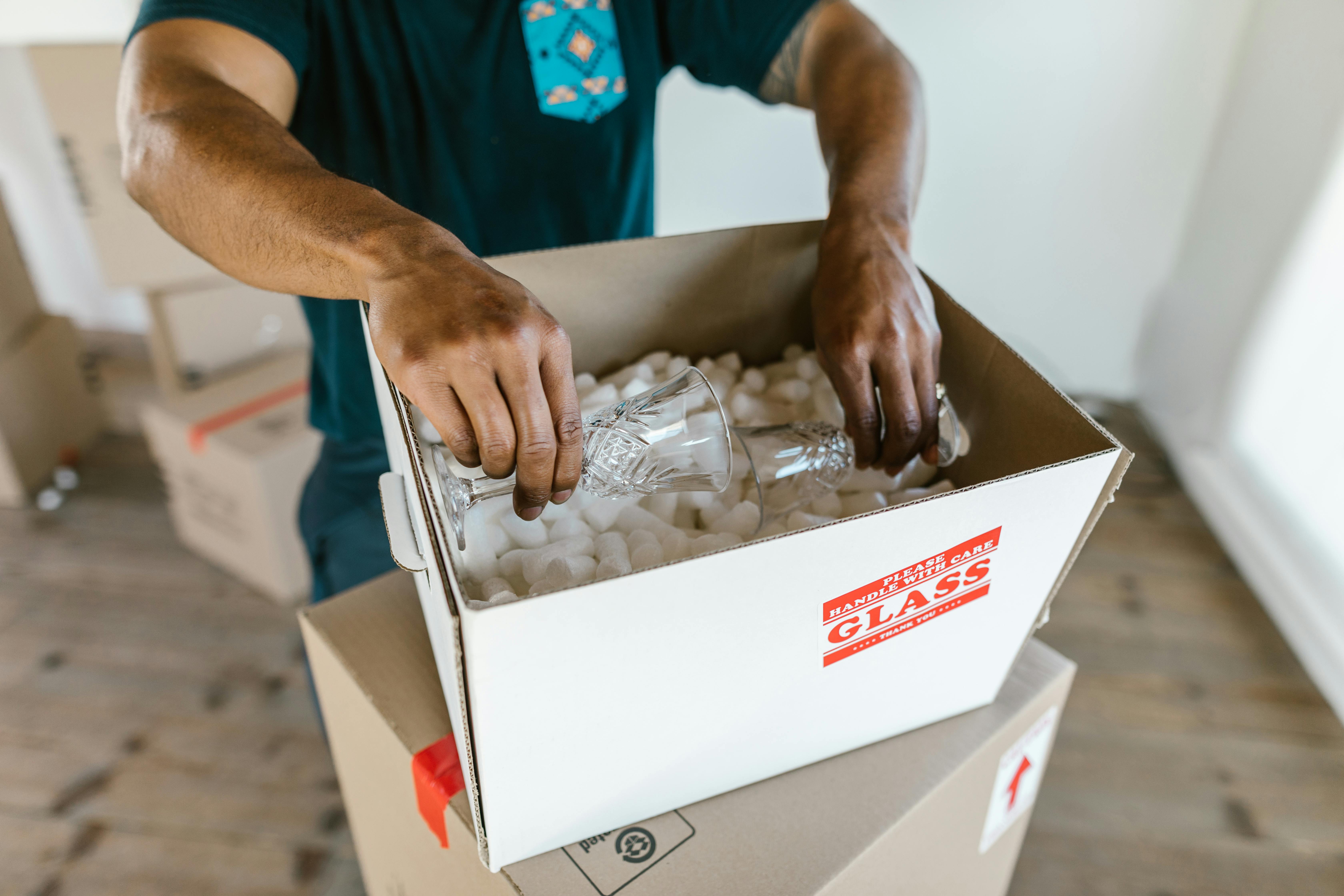
From a packaging buyer's point of view, the insert is doing far more than filling empty space. A strong beauty kit carton inserts supplier is solving three problems at once: protection in transit, presentation at first open, and dependable packing speed on the line. If any one of those slips, the kit starts to feel less like a premium set and more like a loose bundle of parts held together by print and hope.
Picture a skincare trio with a serum, cream, and cleanser inside a rigid carton. The carton graphics may look elegant, but if the serum bottle slides into the cream jar during shipping, the customer notices immediately. The inner structure is what keeps each component in its lane. That is why a beauty kit carton inserts supplier has to think about more than dimensions on a spec sheet. The supplier has to read the whole use case: glass or plastic, filled weight, cap height, label thickness, and whether the kit will be opened in-store, shipped direct to consumer, or both.
One small geometry change can do more for perceived value than a print upgrade. A tighter shoulder cut, a cleaner reveal line, or a tray that presents the hero product first can lift the unboxing experience in a way customers feel instantly. Too many brands miss that point. They invest in soft-touch lamination, foil, and rich artwork, then place those beautiful components in an insert that lets everything wobble. The eye sees luxury, but the hand feels uncertainty.
A dependable beauty kit carton inserts supplier should also help translate brand goals into physical structure. If the brief says "premium but natural," the insert may need crisp folds, fiber-forward board, and restrained exposure. If the brief says "high-end gift set," the cavity arrangement may need a more theatrical reveal, with the main item centered and the accessories stepping out in a deliberate order. Either way, the insert is part of the story the buyer tells with the product.
Shelf handling matters as well. A kit that survives warehouse movement but arrives crooked on display still needs work. Retail teams rotate cartons, restock them, and sometimes open them to check contents. A thoughtful beauty kit carton inserts supplier builds for those realities. The result is a package that feels composed from factory packing all the way to consumer opening.
The quiet inserts are usually the best ones. They do their job without calling attention to themselves, yet the whole kit feels more expensive because the contents stay aligned, visible, and protected. That is the real value a beauty kit carton inserts supplier brings to the shelf.
How a beauty kit carton inserts supplier turns measurements into a secure fit
A good fit starts with real measurements, not label claims or rough estimates. A beauty kit carton inserts supplier should ask for the actual overall height, maximum diameter, shoulder profile, closure type, and any irregular features such as pumps, droppers, or angled caps. The nominal bottle size printed on the container rarely tells the full story, because the cap can add 8 mm to 20 mm, labels can change friction, and glass shoulders often sit wider than buyers expect.
The strongest suppliers work from tolerance, not wishful thinking. They know that a 50 mL jar may vary slightly from run to run, and that a tube with a soft shoulder can compress differently than a rigid bottle. A fit that is too loose creates movement, tapping, and abrasion. A fit that is too tight slows the pack line and can even scuff printed labels or crack a brittle component. The sweet spot is a controlled hold: enough resistance to keep the part stable, but not so much friction that operators need to force every unit into place.
A seasoned beauty kit carton inserts supplier will usually recommend one of several structure families depending on the kit:
- Paperboard inserts for lighter kits, simple cavity layouts, and efficient folding on manual or semi-automatic lines.
- Die-cut trays for cleaner presentation and repeatable locating points around bottles, jars, and small accessories.
- Folded partitions for sets that need separation but not a lot of vertical rigidity.
- Corrugated supports when the product weight, shipping distance, or retail handling makes extra stiffness worth the cost.
The supplier also has to think about the unboxing sequence. That sounds soft, but it is structural work. The first thing a customer sees when the carton opens should be intentional. The hero item may need to sit at the top center, while the supporting pieces nest around it in a clear hierarchy. A beauty kit carton inserts supplier that understands presentation will map the reveal so the customer does not open the box to a cluttered cluster of parts. The best sequence feels calm, readable, and designed.
Operator behavior matters just as much. If the cavity orientation is confusing, the packing team will hesitate. If a tray has too many tiny folds, the line slows down. If the insert requires special muscle memory, mistakes rise. A smart beauty kit carton inserts supplier balances fit, protection, and packing logic so the insert is not just technically correct but also practical on the floor. Nobody wants a line that feels fussy when it should be moving.
That is why structure development should always include a real sample, even for a simple kit. A flat dieline can look perfect and still fail to hold a pump bottle upright once the carton is closed. Physical testing is the only reliable way to know whether the cavity depth, tab position, and fold sequence actually support the set. If a supplier skips that step, I get pretty cautious.
Beauty kit carton inserts supplier pricing, MOQ, and unit cost
Pricing is easier to understand once you break it into the parts a beauty kit carton inserts supplier really charges for. Material choice is only the starting point. The quote also reflects die-cutting complexity, folding labor, gluing or locking requirements, print coverage if the insert is visible, packing method, and any prototype revisions needed to get the fit right. A simple folded paperboard insert can be economical, but once the structure includes multiple cavities, locking tabs, or tight registration around several components, the price climbs in a way that is completely normal.
MOQ has a direct effect on unit cost. Setup time, cutting tools, sample work, and machine adjustment all need to be spread across the run. A 3,000-piece order almost always carries a higher piece price than a 20,000-piece order because the fixed costs are distributed over fewer inserts. A practical beauty kit carton inserts supplier should show price breaks at multiple volumes so the buyer can see where the step-down happens. That makes budgeting much easier, especially if the brand is trying to compare pilot launch quantities with a larger retail rollout.
For a rough planning range, these numbers are common for custom beauty sets, though every project depends on the exact geometry, board grade, and assembly method:
| Insert type | Typical unit cost at 5,000 pcs | Strength and handling | Best fit |
|---|---|---|---|
| Simple folded paperboard insert | $0.12-$0.22 | Light to moderate support, fast to assemble | Small skincare kits, light tubes, non-fragile accessories |
| Die-cut multi-cavity tray | $0.18-$0.32 | Cleaner positioning, stronger visual control | Gift sets, mixed-component beauty bundles |
| Rigid or reinforced board insert | $0.28-$0.55 | Higher stiffness, better protection for glass | Serums, heavy creams, premium kits |
| Corrugated support insert | $0.22-$0.40 | Better crush resistance, better shipping stability | Longer transit routes, ecommerce shipments, heavier sets |
Those numbers only help if the buyer also understands the risk side of the equation. Saving two or three cents per unit on a fragile kit can be expensive if breakage climbs from almost nothing to even a small percentage of the run. That is the tradeoff a serious beauty kit carton inserts supplier will explain plainly. A cheap insert is not cheap if it damages product, creates returns, or slows the fill line.
Where the supplier can create value is in matching the structure to the product mix. For example, if the kit uses one heavy glass bottle and three light accessories, the insert does not need the same material everywhere. A good design may reinforce only the main cavity, letting the smaller cavities stay lean. That kind of targeted engineering can keep the beauty kit carton inserts supplier quote efficient without sacrificing protection.
If the insert is hard to load, it is hard to trust. The best quote is not always the lowest number; it is the one that balances fit, speed, and damage control with enough margin to ship confidently.
For buyers comparing vendors, the smartest question is not "What is your cheapest price?" It is "What do I get at 3,000 units, 5,000 units, and 10,000 units?" A transparent beauty kit carton inserts supplier should answer that with material details, tooling assumptions, and assembly expectations, not just a single line item that hides the real cost structure.
If your insert is visible through a window or forms part of the customer-facing interior, that can also affect printing and finish costs. A printed insert with solid coverage, accurate color, and a clean fold line takes more control than an unprinted white insert. That does not mean print is bad; it just means the buyer should price the whole package honestly, not only the board blank. Otherwise the quote looks tidy and the budget gets messy later.
Beauty kit carton inserts supplier process and timeline
A reliable beauty kit carton inserts supplier will usually move through a clear sequence: brief review, measurement check, structure recommendation, dieline development, prototype creation, sample approval, production, finishing, and shipment. The sequence sounds simple, but a lot can slow it down. Incomplete dimensions, unclear product weight, last-minute artwork changes, or a sample that needs several fit corrections can add days or even weeks.
The first stage should be a careful intake. The supplier needs more than the outer carton size. They need the inner carton dimensions, the exact component list, the quantity target, the ship-to country, and whether the pack is for retail display, ecommerce shipping, or both. A good beauty kit carton inserts supplier will also ask about whether the product arrives pre-labeled or unlabeled, because label thickness can change cavity pressure enough to matter on tight fits.
A sensible timeline for a standard beauty kit often looks like this, assuming the brief is complete and the structure is not unusually complex:
- Sample development: 5-7 business days after full specs are approved.
- Sample revision if needed: 2-5 business days per change cycle.
- Production after approval: 12-18 business days for a typical custom run.
- Shipping: depends on origin, destination, and mode, with air faster and sea more economical.
Those ranges can stretch if the project needs special tooling, heavy print coverage, or repeated structural changes. A dependable beauty kit carton inserts supplier should say that early, not after the buyer has already promised a launch date to sales, retail, or marketing teams. Clear communication is a quality signal in this category. If the supplier warns that a revision will take three additional days, that is a good sign. Silence is the problem.
Testing matters as much as timing. For transit-sensitive kits, ask whether the supplier can support packaging checks aligned with ISTA methods such as ISTA procedures, or at least simulate drop, vibration, and compression in a practical way. Not every project needs formal certification, but every project benefits from some kind of real handling test. If the kit is going into a more sustainability-focused program, check material options against guidance from the Forest Stewardship Council and verified recycled content claims before you print anything permanent.
A strong beauty kit carton inserts supplier will keep the buyer informed at each checkpoint. The most helpful messages usually cover three things: what was approved, what changed, and what the next risk is. That kind of visibility is not a luxury. It is the difference between a launch that feels controlled and a launch that turns into a chain of last-minute calls.
One more practical point: plan sample and production lead times separately. Buyers sometimes build only one calendar for the entire kit and forget that the insert can become the bottleneck. If the carton artwork is ready but the insert geometry is still being tuned, the entire launch waits. A seasoned beauty kit carton inserts supplier helps prevent that by treating the structure as a project milestone, not a minor accessory.
Common mistakes when working with a beauty kit carton inserts supplier
The first mistake is measuring only the body of the product and ignoring everything that sticks out. Closures, pumps, droppers, domes, neck rings, and even thick label seams all affect the true height and width the insert needs to accommodate. A beauty kit carton inserts supplier that designs from incomplete dimensions will often end up overcompensating with extra space, and extra space usually means movement.
The second mistake is approving a structure from a flat drawing alone. A dieline can look elegant and still fail under real load. Paperboard has memory, tabs behave differently once folded, and stacked components create pressure that does not show up in a PDF. A practical beauty kit carton inserts supplier will push for a physical prototype because real fit reveals real behavior. That is especially true for kits with multiple tall items or mixed weights, where top-heavy balance becomes a serious issue.
The third mistake is choosing the cheapest material before any transit test. Damage rates often rise when a fragile set is packed into an insert that looks adequate but has weak retention. A kit that leaves the packing station looking neat can still arrive with cracked caps or rubbed labels after a few impacts in the shipping chain. A good beauty kit carton inserts supplier should encourage drop testing, compression checks, or at least side-by-side sample comparison before anyone commits to the low-cost option.
The fourth mistake is forgetting the packing line. If the insert requires workers to twist, compress, or guess which way a component faces, the line slows down. That is not only a labor issue. It also creates variability. One operator may load the set perfectly while another loads it slightly off center, and suddenly the inner presentation shifts from unit to unit. A thoughtful beauty kit carton inserts supplier will build the structure so it is obvious where each piece goes.
The fifth mistake is treating the insert like it is invisible. If the insert is open to view, the color, board edge, print density, and fold lines all affect how the customer perceives the kit. A perfectly functional insert can still feel off-brand if the interior palette clashes with the outer carton or if the edges look rough. A skilled beauty kit carton inserts supplier should review the presentation as part of the package, not as an afterthought.
There is also a sustainability mistake that comes up often. Buyers sometimes ask for recycled content, recyclability, or lighter weight materials without checking whether the claim can be supported. That creates avoidable risk. If you want the insert to carry an environmental message, choose a material path that can actually be documented, preferably with a clear chain of custody and sensible post-use expectations. A dependable beauty kit carton inserts supplier will help you stay accurate instead of optimistic.
Clean projects usually start with honest constraints: target cost, target schedule, shipping mode, and realistic product data. That gives the beauty kit carton inserts supplier room to solve the problem properly instead of guessing under pressure. It sounds simple, but that one habit saves more grief than any fancy structural trick.
Expert tips for materials, finishes, and retail-ready presentation
Material choice should reflect both product behavior and brand personality. A matte paperboard insert feels restrained and modern. A coated board insert can feel cleaner and a little more polished. Corrugated support suggests strength, which is useful for ecommerce or heavier sets, but it can also change the unboxing tone if it is too visible. A good beauty kit carton inserts supplier will not simply ask what is cheapest; they will ask what the brand wants the consumer to feel at the moment the carton opens.
For lighter kits, 300-350gsm SBS or C1S artboard may be enough if the cavities are well designed and the components are not especially fragile. For heavier glass-based kits, a reinforced board, laminated structure, or corrugated insert can be worth the extra spend because it reduces crush risk and helps the kit hold its shape through distribution. The right beauty kit carton inserts supplier will match board caliper and structure to the product instead of forcing one material to solve every case.
Finish matters more in beauty than in many other categories because the consumer is highly visual. Soft-touch coating, accurate color reproduction, and tight edge folding all influence the feeling of care. On a visible insert, a dull ink patch or a rough fold can drag the whole package down, even if the products are secure. A strong beauty kit carton inserts supplier understands that interior finish is still part of brand communication.
Use the insert to support hierarchy. Put the hero product where the eye lands first. Let the supporting pieces frame it rather than fight it. If there is a spatula, card, or travel accessory, give it a clear home so it looks intentional instead of wedged in as an afterthought. That is how a beauty kit carton inserts supplier helps a kit feel curated, not crowded.
Here are a few practical material and finish choices that tend to work well:
- FSC-certified board for brands that need verified fiber sourcing.
- Water-based coatings where odor, recyclability, or indoor handling are concerns.
- Minimal ink coverage on the insert if the goal is a quieter, premium look.
- Color-controlled print when the insert is visible through a window or open-top display.
- Reduced material build if the kit can hold safely without overengineering.
That sustainability conversation deserves accuracy. Recycled content is not the same thing as curbside recyclability, and neither claim should be used casually. Check local recovery realities and material specs before making a label claim, and compare your plan with guidance from organizations such as the EPA on recycling systems and waste reduction. A credible beauty kit carton inserts supplier should be comfortable discussing what is supportable and what is merely attractive marketing language.
One more detail buyers sometimes forget: edge quality. On high-visibility kits, the cut edge can be surprisingly noticeable, especially on lighter board or darker print. Clean dies, good scoring, and stable board selection help the insert feel purposeful. It is a small thing, but in beauty packaging small things are what customers notice first. That tiny crispness is often what separates "nice enough" from "yes, this feels premium."
Next steps before you request quotes from a beauty kit carton inserts supplier
Before you ask for pricing, gather the information that will let a beauty kit carton inserts supplier quote accurately. That means final or near-final product dimensions, actual filled weights, photographs of every component, the inside dimensions of the outer carton, quantity targets, ship-to location, and any compliance requirements tied to retail or ecommerce. If the supplier has to guess at the product footprint, the quote will be less useful and the sample cycle will take longer.
Good photos help more than most buyers expect. Show the front, back, top, and side of each component, and mark the hero item, accessory pieces, and any fragile elements. If a pump locks in a certain direction or a cap has a broad shoulder, say so. A beauty kit carton inserts supplier can design around a real object much faster than around a vague description.
Ask for at least two structure options. Maybe one is simpler paperboard with a lower unit cost, and the other is a reinforced tray that protects better. Maybe one loads faster, while the other presents more elegantly. Seeing the options side by side makes the decision practical instead of emotional. A good beauty kit carton inserts supplier should be able to explain the cost, protection level, and shelf presentation of each option without hiding behind generic promises.
Request a fit sample before volume production. A prototype tells you whether the insert truly holds the set, whether the unboxing order feels right, and whether operators can pack it efficiently. That sample often pays for itself by preventing a costly rework later. A beauty kit carton inserts supplier that welcomes sampling is usually more useful than one that pushes straight to production.
It also helps to write the decision rules down. If the insert must stay under a certain cost, say so. If it must support a drop test, specify that. If the customer-facing cavity cannot scratch a coated bottle, state it clearly. The better the brief, the cleaner the quote, and the easier it is to hold everyone accountable later. That is how a beauty kit carton inserts supplier becomes a technical partner instead of just a vendor sending board blanks.
Finally, confirm the approved specification in writing before the run starts. Lock the dimensions, board grade, finish, color expectations, quantity, and packaging method. Then make sure the factory knows which version is final. That one step prevents a lot of confusion, especially in projects where several people review samples and opinions change along the way. In the end, a good beauty kit carton inserts supplier gives you clarity, not just cartons.
Frequently Asked Questions
What should I send a beauty kit carton inserts supplier for an accurate quote?
Send exact item dimensions, filled weights, clear photos of every component, and the inside dimensions of the outer carton. A beauty kit carton inserts supplier also needs the target quantity, ship-to location, and any special requirements such as retail display, ecommerce shipping, or fragile glass handling. If the insert will be printed, include the branding rules and any finish preferences so the quote reflects the real job instead of a rough guess.
Does a beauty kit carton inserts supplier need final packaging artwork before sampling?
Not always, but the structural measurements should be locked first so the sample reflects the real fit. Artwork can follow after the insert geometry is approved, although it helps to keep barcode placement, logo area, and regulatory copy in view from the start. If the insert itself will carry print, a beauty kit carton inserts supplier should share a print-ready checklist early so color and registration do not slow approval later.
How do I decide between paperboard and a more rigid insert?
Use paperboard for lighter kits, clean folds, and products that do not need heavy structural support. Choose a more rigid insert if the set contains glass, heavier bottles, or mixed components that can shift during shipping. A beauty kit carton inserts supplier should be willing to support a sample drop test or transit simulation so the material choice is based on performance, not appearance alone.
How does MOQ affect pricing for beauty kit carton inserts?
Lower quantities usually cost more per piece because setup, tooling, and sample labor are spread across fewer units. At higher volumes, the unit price often improves, especially if the structure is efficient and the run can move through one workflow without repeated changes. A beauty kit carton inserts supplier should give you pricing at several quantity levels so you can see the breakpoints clearly.
What is a realistic timeline for custom beauty kit inserts?
A realistic schedule includes brief review, sample development, approval, production, and shipment, and each step depends on how complete the specs are. Simple inserts move faster, while multi-cavity trays or repeated fit revisions add time. A beauty kit carton inserts supplier should help you build in buffer time so the insert does not delay the rest of the launch.
For beauty packaging, the best results usually come from clear measurements, honest material choices, and a supplier who treats the insert as part of the product experience, not a hidden extra. If you work that way, a beauty kit carton inserts supplier becomes one of the most useful partners in the whole project, because the fit, protection, and presentation all start to line up before production ever begins. The practical takeaway is simple: lock the real dimensions, test a sample, and judge suppliers on how well they balance fit, speed, and retail presentation rather than on the lowest quote alone.

