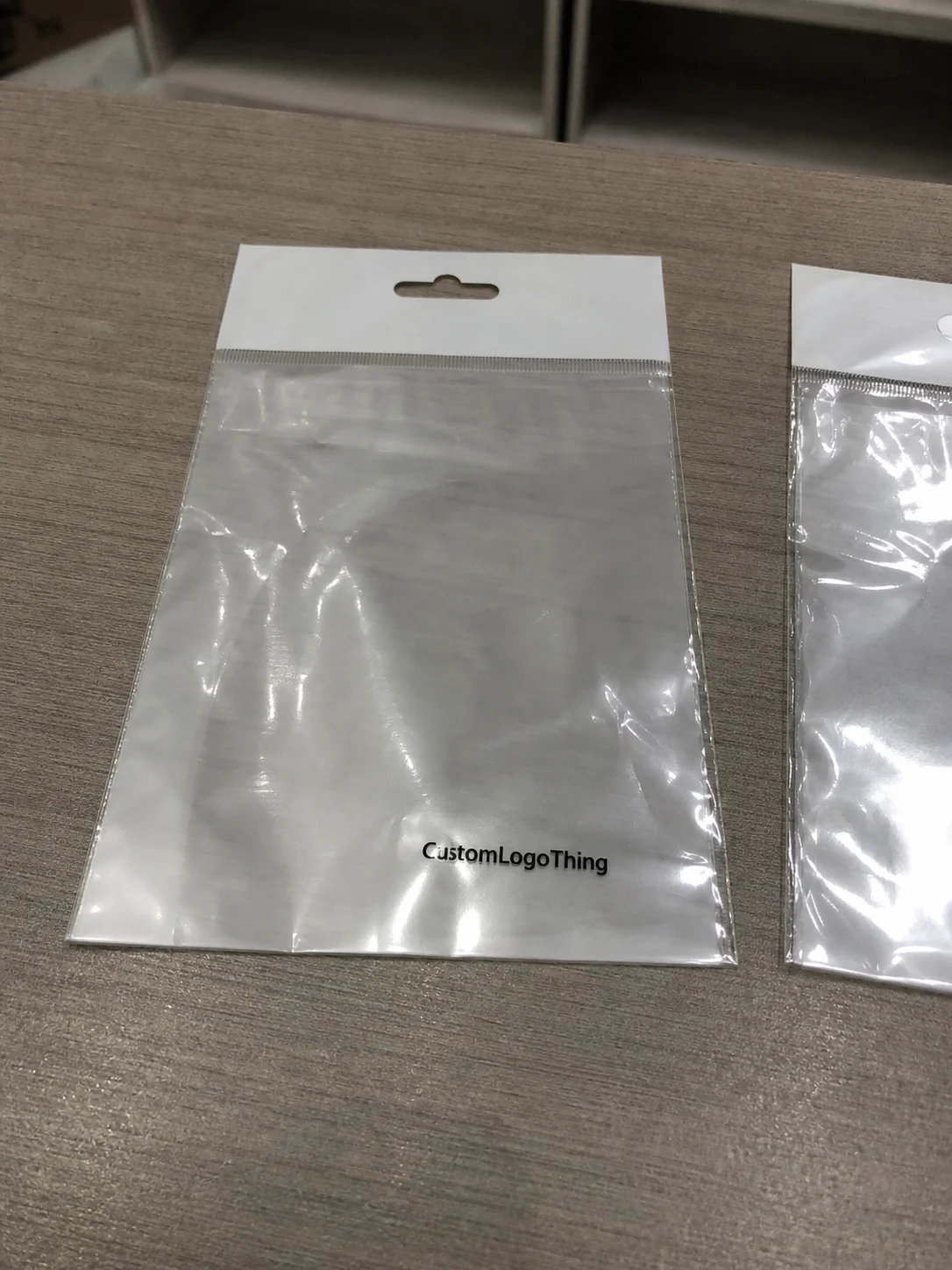
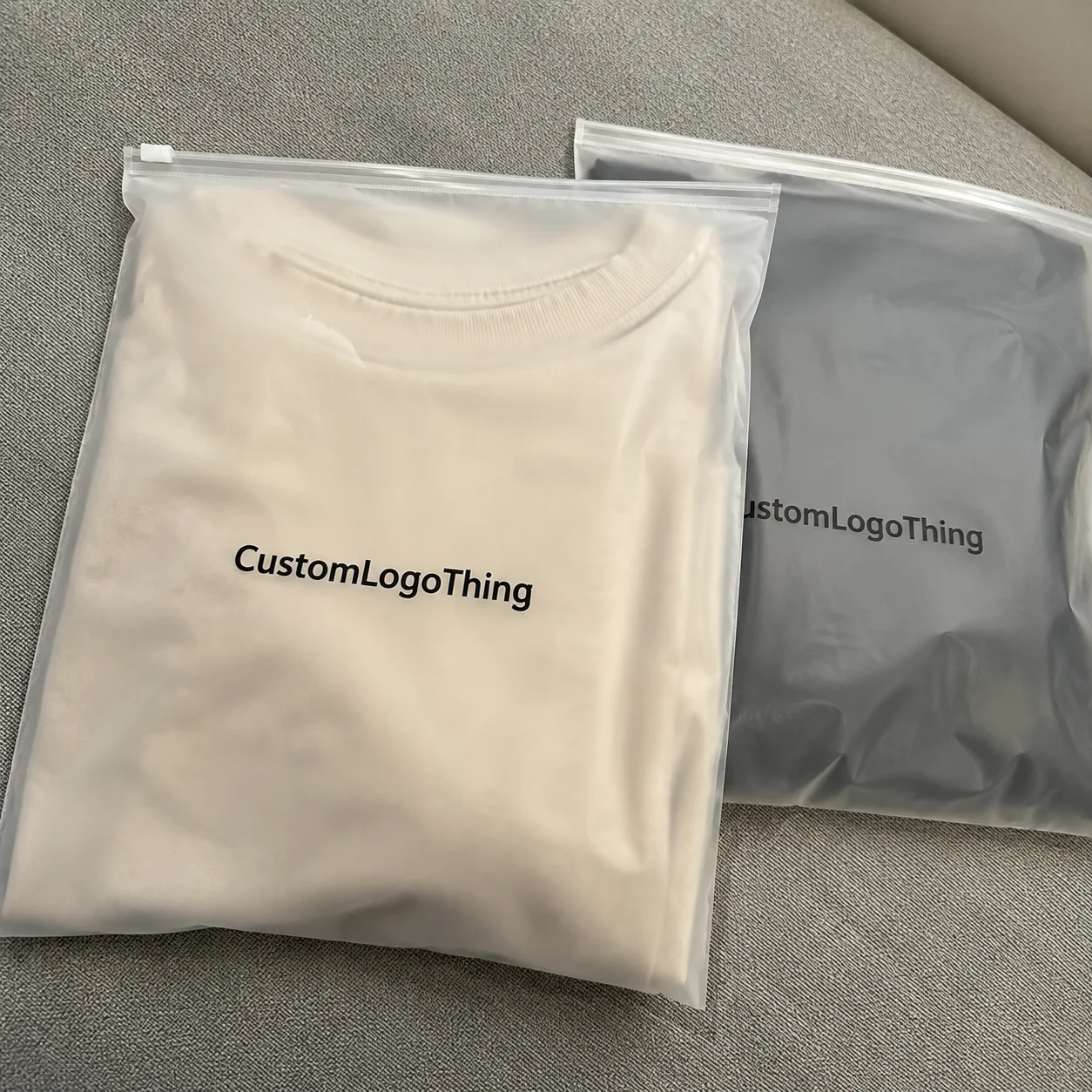
Two Frosted Zipper Bags can look almost identical on a screen. One stands upright cleanly, carries a logo with sharp edges, and closes with the small, confident snap buyers remember. The other wrinkles, clouds unevenly, or feels thin the moment product goes inside.
That gap is why a practical frosted Zipper Bags Material guide matters before samples, artwork approvals, or quote comparisons. Many quotes that appear equivalent are built on different film structures, zipper profiles, sealant layers, and production assumptions. The differences rarely show up in a thumbnail image. They show up after filling, stacking, scanning, shipping, and opening the bag for the tenth time.
Frosted Zipper Bags Material Guide: What the Film Really Does
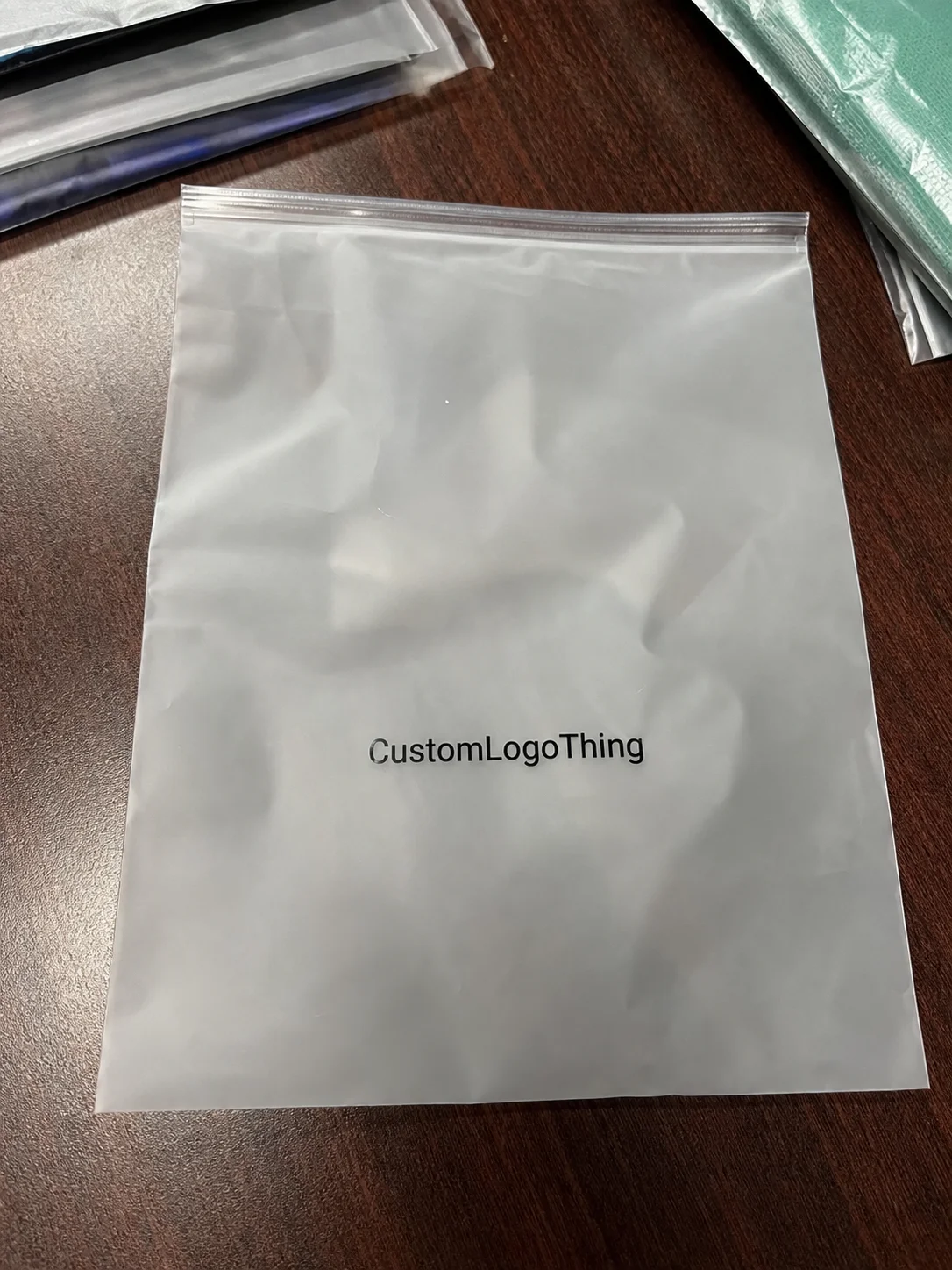
Frosted zipper bags are resealable plastic bags made with a matte, hazy, or semi-translucent film surface. Brands use them for apparel, accessories, cosmetic tools, sample kits, small hardware, stationery, refill packs, and dry retail items because the finish softens the product view without hiding everything. Compared with standard clear poly, the surface reflects less light and feels quieter in the hand. A small package can read as more controlled, more deliberate, and sometimes more expensive than it is.
The frosted effect usually comes from the film structure, resin blend, surface texture, or matte treatment. It is not just a white haze printed over clear plastic. That distinction matters. True frosted material changes clarity, stiffness, scuff behavior, heat-seal response, and ink appearance.
A light frost may still reveal product color and shape. Medium frost creates privacy while leaving enough information for recognition. Heavy frost gives a cleaner presentation but can reduce barcode contrast, hide texture, or make a dark product look dull behind the film. Appearance and performance are tied together. Treating them as separate decisions is how good-looking samples turn into weak production bags.
Formats vary more than many buyers expect. Flat zipper bags suit apparel, documents, insert kits, and small accessories. Stand-up matte zipper pouches work when the pack needs shelf presence, especially if the bottom gusset and film stiffness are strong enough to hold shape after filling. Three-side seal zipper bags fit flat items and samples. Slider-style bags can help with repeated consumer access, although they add bulk near the closure. Small accessory bags often use simple press-to-close profiles because the fill weight is low and the opening is narrow.
Most weak packaging decisions start earlier than people think. Not during overseas transit. Not on the packing bench. At the moment a buyer approves a polished photo instead of testing a material with the real product inside.
Practical rule: judge frosted zipper bags with the product inside, under the lighting where they will be sold or packed, after opening and closing the zipper at least 10 times. A flat empty sample only tells part of the story.
How Frosted Film, Zippers, and Seals Work Together
A frosted zipper bag is a small engineered system. The outer surface controls appearance and print behavior. The inner sealant layer creates heat-seal strength. The zipper profile gives the customer repeated open-and-close function. If one part is poorly matched, the whole bag feels wrong, even when the film looks attractive.
Polyethylene, usually called PE, is a common starting point for soft, flexible, economical frosted poly bags. It has a friendly hand feel, seals at manageable temperatures, and works well for many lightweight retail items. Polypropylene, including PP and BOPP structures, tends to feel crisper and stiffer, with better clarity where the film is not heavily frosted. PET-based laminates usually improve print definition and structure, especially when the bag needs a polished retail face or stronger dimensional stability.
Multi-layer laminated films combine materials for performance. A typical laminated pouch might use a printable outer web, an adhesive layer, and an inner PE sealant web. Some structures add barrier layers for moisture, oxygen, aroma, or grease resistance. That extra engineering increases cost, but it can be the difference between a pouch that protects the product and a pouch that only looks good on the first day.
Matte-finished film scatters light. The result is less glare, fewer obvious fingerprints, and fewer mirror-like reflections. Translucent resealable bags soften visibility so the product is suggested rather than fully exposed. Brands comparing frosted film packaging with clear poly face a direct trade: less glare and more privacy, with less raw clarity.
Zipper selection changes daily use. Press-to-close zippers are common and cost-effective. They come in different profiles, from light tracks for small items to heavier tracks for thicker pouches. Slider zippers can improve usability on wider bags, but they add material cost, may require different converting setup, and create a bulkier closure area that can interfere with flat packing.
Heat sealing is where factory reality shows up. Bottom seals, side seals, top areas above the zipper, and gusset seals all need the right combination of temperature, dwell time, and pressure. Too little heat gives weak seals. Too much heat distorts the film, warps the zipper, or creates brittle seal edges. ASTM test methods, including seal strength and tensile testing approaches published through ASTM International, give suppliers and buyers a shared language for evaluating performance instead of relying only on hand feel.
Thicker material is not automatically better. A properly matched 3 mil to 4 mil PE structure may outperform a stiff single-layer film that creases, seals poorly, or makes the zipper hard to close. In laminated pouches, total thickness may be expressed in microns, such as 90 to 140 microns. The layer mix often matters more than the headline number. Ask what each layer does, not just how thick the total film appears on a quote.
What to Compare Before Ordering
A useful material review should compare film type, thickness or gauge, frost level, opacity, stiffness, puncture resistance, seal strength, zipper style, print method, and barrier needs. If the bag must resist moisture, oxygen, aroma, grease, or sharp product edges, say that early. A supplier cannot design around a requirement they never received.
Film thickness should match the job. Lightweight items such as decals, cards, spare buttons, flat apparel pieces, and small sample kits may work well in thinner PE or PP structures. Heavier goods, sharp-cornered accessories, refill products, or bags used inside shipping cartons may need stronger gauge film or laminated construction. For mailer-style handling, compare the bag with outer packaging such as corrugated cardboard inserts or cartons. The bag and the shipping pack share the protection work.
Frost level is both a branding choice and a usability choice. Light frost gives more product visibility and helps shoppers confirm color or shape. Medium frost balances privacy with recognition. Heavy frost creates a clean, minimal presentation, but it can hide product texture and make color matching harder. The right level depends on what the customer needs to see before buying.
Print behavior deserves careful attention. Matte surfaces often make colors look softer than the same ink on glossy film. Bright logos may need white ink backing, especially on translucent material where the product color can show through the print. Fine type, thin rules, QR codes, and barcodes should be tested at actual size. A barcode that scans on a PDF proof may fail after the film curves around a filled product or passes over a zipper ridge.
Product compatibility can be painfully specific. Dry goods need cleanliness and barrier. Apparel needs a smooth hand, scuff resistance, and enough body to avoid looking cheap. Cosmetic tools may introduce powder, oil, or abrasion. Hardware pieces can puncture corners or rub ink. Sample kits often face repeated opening by sales staff, retail associates, or customers, so zipper fatigue becomes part of the buying decision.
| Material Direction | Typical Feel | Best Fit | Watchouts |
|---|---|---|---|
| Frosted PE | Soft, flexible, economical | Apparel, accessories, flat items, light retail packs | May feel limp in larger sizes without enough gauge |
| Frosted PP or BOPP | Crisper, stiffer, cleaner fold | Stationery, small kits, display packaging, items needing shape | Seal and crack resistance must be checked for the exact structure |
| Frosted PET laminate | Structured, premium, better print holdout | Retail pouches, refill packs, cosmetics, higher-value goods | Higher cost and more complex recyclability claims |
| Barrier laminate | Firm, protective, engineered | Moisture-sensitive, aroma-sensitive, oily, or heavier products | Requires clear performance targets before quoting |
Photos are useful for early screening. Physical samples tell the truth. Hand feel, haze, zipper resistance, print contrast, and scuff response are hard to judge on a monitor, especially if the product will be sold under bright store lighting or packed tightly in a carton.
Cost, Pricing, MOQ, and Unit Cost Drivers
Pricing starts with material structure, then moves through size, thickness, zipper type, print coverage, number of colors, finish requirements, order quantity, and added features. Hang holes, tear notches, vents, reinforced seals, rounded corners, and special carton packing all affect cost. Some changes look minor on a drawing but require slower converting speeds or extra setup.
Plain frosted PE zipper bags are usually the most economical option. Custom printed frosted bags sit in the middle, especially if the print uses one or two colors and the size is close to a standard format. Laminated frosted pouches with barrier layers, custom sizing, gussets, specialty zippers, or high-coverage artwork cost more per unit because they use more material, more setup, and tighter process control.
MOQ, or minimum order quantity, is tied to film sourcing, press setup, plate or cylinder preparation where applicable, machine changeover, and the amount of material needed to run stable production without excessive waste. Very short runs can carry a high unit cost because setup time does not shrink just because the order is small. A 2,000-piece order may be possible for some stock-size printed bags. Fully custom laminated pouches often make more sense at 5,000, 10,000, or higher quantities, depending on supplier setup and material availability.
Unit cost usually drops as quantity increases. Setup time, proofing, print preparation, and machine changeover are spread across more bags. Raw material still matters, so the price does not fall forever, but the first cost break can be meaningful. As a broad buyer-side comparison, a simple custom printed frosted PE bag will often quote below a stand-up laminated pouch of the same face size. A specialty slider zipper may add a noticeable premium because the closure itself costs more and may slow converting.
Hidden pricing factors catch buyers often. Oversized artwork coverage can increase ink use and drying control. Heavy white ink laydown can change both cost and production speed. Exact color matching may require drawdowns or extra proofing. Rush production can disrupt normal scheduling. Freight can be driven by carton volume as much as weight because empty bags, especially gusseted or slider styles, do not always pack densely.
For a clean quote, prepare finished bag size, usable inside dimensions, material preference if known, product weight, print colors, quantity range, zipper type, frost level, packing method, and whether the bag must stand, hang, ship, or simply organize items. If sustainability language matters, ask separately about recycled materials, post-consumer waste content, or mono-material structures before artwork is finalized. This is where a frosted zipper bags material guide earns its keep: it turns loose preferences into comparable quote details.
Production Steps, Timeline, and Lead Time Expectations
The typical process follows a practical order: confirm bag size and use case, choose material and zipper style, prepare artwork, review dielines or proofs, approve samples if needed, print the film or prepare the material, convert the film into bags, inspect, pack, and ship. Each step can be straightforward. Skipped details tend to return later as delays.
Lead time depends heavily on the project path. Stock-size frosted bags with a simple custom print can move faster because the base bag or film structure may already be available. Fully custom sizing takes longer because the supplier has to set up converting dimensions and confirm tolerances. Specialty laminated film may need more time for material preparation, adhesive curing, print approval, and pouch conversion.
Artwork readiness has a large effect on schedule. Clean vector logos, defined color references, barcode requirements, safe zones, and clear front and back orientation reduce proofing cycles. If the logo arrives as a low-resolution PNG, the prepress team may need to rebuild it before plates, screens, or digital print files can be prepared. That can add days before production even starts.
Sampling comes in levels. Material swatches help judge film feel and frost level. Blank bag samples help test size, fit, fill allowance, and zipper grip. Printed samples or pre-production proofs are useful when logo sharpness, color accuracy, barcode scanning, or retail presentation is critical. For larger retail programs, one extra proofing step is cheaper than a full run with a barcode sitting too close to the zipper track.
Inspection points should be specific. Check zipper alignment, seal consistency, print registration, haze uniformity, cut accuracy, bag count, carton labeling, and whether the bags open cleanly without blocking or sticking. If the pack will ship through parcel networks, ask whether outer cartons should be tested under ISTA procedures from the International Safe Transit Association, especially for heavier fills or retail-ready cartons.
Build in time for fill testing. Automated packing lines may need a flatter zipper profile, a specific coefficient of friction, or tighter size tolerance. Hand-packed bulky goods need extra headspace. Retail staff may repeatedly open a sample bag, so the zipper needs to tolerate real handling rather than one careful closure at a conference table.
Timelines should also include decision time on the buyer side. Slow artwork approval, unclear dimensions, or late changes to barcode placement can stretch a simple order. A realistic schedule includes proof review, sample transit if required, production, quality control, export packing, freight, and receiving time. The production clock rarely starts when the first email is sent. It starts when the supplier has enough approved information to make the correct bag.
Common Material Mistakes That Cause Bag Problems
The most common mistake is choosing frosted material only by appearance. A buyer sees a soft matte look, approves it from a photo, and later discovers the bag is too limp, too cloudy, too slippery, or not strong enough once the product is filled and handled. Looks matter. Performance decides whether the package survives daily use.
Copying another brand's bag is risky. Two bags can share the same frosted look but use different gauges, laminates, sealant layers, and zipper profiles. One may be a mono-material PE bag. Another may be a PET/PE laminate with a matte outer web. They can behave very differently under weight, heat, moisture, folding, and repeated opening.
Undersizing causes many avoidable failures. Product dimensions alone are not enough. Zipper bags need headspace, fill allowance, seal area, and room for the customer to grip the top without stressing the closure. A flat product that measures 6 by 8 inches may still need a noticeably larger finished bag if it has thickness, corners, hang tags, or an insert card.
Print mistakes are easy to make on frosted surfaces. Fine reverse text can fill in. White ink may be needed where color has to pop. Artwork placed too close to zipper tracks, seals, gussets, or curved fill areas can distort after packing. Matte film will not reproduce color exactly like glossy film, so brand color expectations should be checked with physical proofing if the color is sensitive.
Closure mistakes create daily frustration. A light zipper on a heavy product can pop open. A slider zipper may be convenient but too bulky for a flat apparel pack. A zipper placed too low can reduce usable fill space. A zipper placed too high may leave too little top area for gripping or hang-hole placement.
There is also the sustainability trap: asking for recycled content, mono-material construction, high barrier, heavy white ink, premium stiffness, and low cost in the same brief. Some combinations are possible. Others create trade-offs. Recycled content can affect clarity or consistency. Barrier layers can complicate recyclability. Mono-material structures may limit stiffness or print options. The right answer depends on which claim or performance target actually matters.
Test like a customer, not like a spec sheet. Put real product in the bag. Close and open it repeatedly. Stack it. Drop it lightly from counter height if that matches normal handling. Rub the print area. Scan the barcode under actual lighting. View the bag next to the outer packaging, whether that is a retail carton, a kraft paper wrap, or a corrugated cardboard shipper. Small tests reveal problems that drawings hide.
Build a Spec a Supplier Can Quote
A useful spec starts with the product, not the bag. Gather product dimensions, product weight, desired visibility level, retail or shipping requirements, and the handling conditions the bag will face. Will customers open it before purchase? Will it hang on a peg? Will it sit in a bin? Will it be packed inside a subscription box with other items pressing against it? A supplier can only quote accurately when the intended use is clear.
Choose two or three sample directions instead of forcing one final guess. For example, compare a lighter frosted PE option, a stiffer frosted PP option, and a laminated frosted pouch if barrier or premium structure matters. That gives you a real feel for differences in stiffness, haze, print contrast, zipper resistance, and cost. Side-by-side comparison is especially useful for new product launches, where brand presentation and packing behavior are still being tested.
Prepare a simple spec sheet with finished size, inside usable size, material preference, thickness target if known, zipper type, print colors, artwork placement, quantity range, packing method, and compliance or labeling needs. If environmental claims matter, ask whether the structure can include recycled materials, whether post-consumer waste content is available, and whether a mono-material option is realistic. Be careful with biodegradable packaging claims; many flexible films require specific industrial conditions to break down, and unsupported claims can create compliance problems.
Ask direct supplier questions. Is the frost film-based or coating-based? Does the material accept the planned print method? What seal strength is expected? Is the zipper appropriate for the fill weight? What proofing or sampling step is recommended? If paper components are part of the total pack, such as insert cards or cartons, ask whether FSC certified paperboard is available and whether claims should be documented through the Forest Stewardship Council chain-of-custody system.
The decision rule is simple: choose the material that protects the product, opens and reseals cleanly, carries the artwork well, and fits the order quantity. Do not choose only the film that looks best in a catalog photo. A good frosted zipper bags material guide should leave you with a usable spec, not just a list of plastics, because the best bag matches product, presentation, process, and budget.
FAQ
What is the best material for frosted zipper bags?
For soft, economical bags, frosted PE is often a practical starting point. For a crisper feel and better shelf structure, PP or laminated films may be a better fit. Products needing moisture, aroma, puncture, or premium presentation performance may require multi-layer laminated frosted materials. The best choice depends on product weight, desired visibility, print needs, closure style, and whether the bag must hang, stand, ship, or be reused.
Are frosted zipper bags recyclable?
Some mono-material PE frosted zipper bags may be recyclable through appropriate plastic film collection streams, depending on local programs and contamination rules. Laminated frosted bags with mixed materials are harder to recycle because the layers are bonded together for strength, barrier, or print performance. Zippers, inks, labels, and product residue can affect recyclability, so confirm the material structure before making any recycling claim.
How thick should custom frosted zipper bags be?
Lightweight items can often use thinner film, while heavier, sharper, or frequently handled products usually need a stronger gauge or laminated structure. Thickness should be chosen with seal strength, zipper function, stiffness, and product fit in mind, not just hand feel. A thicker single-layer bag may still perform poorly if the zipper or seals are not matched to the product. Physical samples with the real product inside are the most reliable way to confirm thickness.
Do frosted zipper bags cost more than clear zipper bags?
They can cost more when the frosted effect requires specialty film, matte treatment, custom printing, or laminated construction. Simple frosted PE bags may be close in cost to comparable clear bags, especially at higher quantities. Pricing changes with size, thickness, zipper style, print coverage, order quantity, and finishing details. To compare fairly, quote clear and frosted options with the same dimensions, gauge, print, and quantity.
Can logos and barcodes print clearly on frosted zipper bags?
Yes, but artwork should be prepared for the softer, lower-glare surface of frosted film. White ink backing may be needed behind logos or colors that must stay bright and opaque. Fine text, small icons, QR codes, and barcodes should be tested at actual size before full production. Keep critical artwork away from zipper tracks, seals, gussets, and curved fill areas where distortion can occur.